
Every crystal, mineral, fossil, meteorite, and handcrafted piece is selected with purpose. Whether you’re building a museum-worthy mineral collection, searching for a meaningful gift, decorating your home with natural beauty, or beginning your journey into the world of geology, you’ll discover authentic specimens with stories worth sharing.
Over 15 shows a year throughout the Southwest. Check to see if we are coming to a show near you!
Home > Blog > Minerals Blog | Crystal Guides, Geology & Metaphysical Meaning > Native Silver from Cobalt, Ontario, Canada
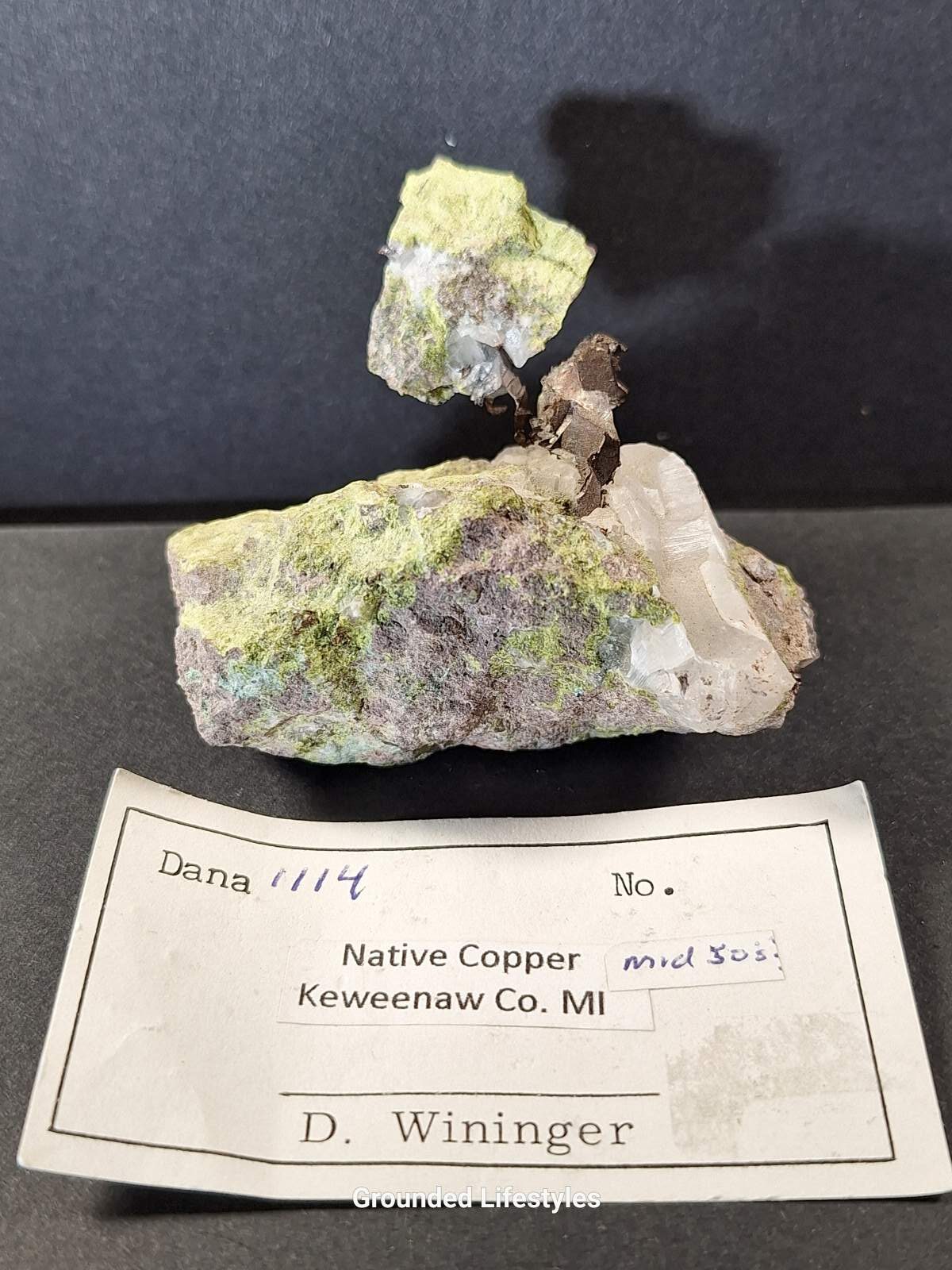
Donald Wininger Collection
Some minerals attract attention through colors, others through crystal shape. Native silver commands attention because it looks unmistakably like what it is; Metal.
A freshly exposed surface may shine with a cold white brilliance. Thin veins appear to have been poured through the rock. Delicate wires curl away from the matrix like frozen threads, while thicker masses form jagged leaves and branching structures that seem almost organic. Yet these forms were not carved, hammered or bent by human hands. They grew underground. Atom by atom.
The native silver specimens from Cobalt, Ontario, preserved in the Donald Wininger Collection, originated in one of the great mineral discoveries of the twentieth century. Beginning in 1903, extraordinarily rich silver veins transformed a remote railway construction area into an internationally important mining district. The Cobalt camp eventually produced hundreds of millions of ounces of silver and helped establish northern Ontario as a major mining region. For miners, the metal represented wealth. For geologists, it represented an unusual hydrothermal system.
For collectors, it became something else entirely: evidence that under extraordinary conditions, nature can create a precious metal specimen more sculptural than anything made in a refinery.
Mineral: Native Silver
Chemical Formula: Ag
Mineral Class: Native Elements
Crystal System: Isometric, also called cubic
Typical Crystal Habits:
Color: Silver-white when fresh, commonly tarnishing gray, brown or black
Streak: Silver-white
Luster: Metallic
Hardness: Approximately 2½–3 on the Mohs scale
Specific Gravity: Approximately 10.5
Cleavage: None
Fracture: Hackly
Tenacity: Malleable, ductile and sectile
Transparency: Opaque
Primary Locality Featured: Cobalt Silver Camp, District of Timiskaming, Ontario, Canada
Common Cobalt Associations:
The mineral assemblage of the Cobalt veins is particularly known for native silver occurring with carbonate gangue and a diverse group of nickel-cobalt arsenide minerals.
A mineral label can sometimes hold an entire chapter of history. Native Silver — Cobalt, Ontario, Canada
Those few words connect a specimen to railway construction, prospecting camps, underground workings, mining fortunes, scientific study and more than a century of mineral collecting. The silver may appear as bright metallic patches distributed through the matrix, as narrow seams following fractures or as irregular forms embedded within carbonate minerals. On some specimens, the silver is immediately visible. On others, a slight change in angle allows hidden metallic surfaces to flash from within the darker rock. That visual contrast is part of the appeal.
Silver does not merely sit upon the matrix. It records the pathways followed by ancient mineralizing fluids. Each seam marks a fracture. Each branching structure marks a route through which silver-bearing solutions moved. Each contact between silver and calcite preserves a moment when the chemistry of those fluids changed and metallic silver began to precipitate. The specimen is therefore more than an example of a precious metal.
It is a three-dimensional map of fluid movement beneath the Earth’s surface. Provenance adds another layer of importance. Cobalt specimens collected during earlier periods may preserve material from workings that are inaccessible, altered or no longer productive. When an original locality is documented, the specimen becomes part of both geological and mining history.
Native silver is elemental silver that occurs naturally as a mineral. Its chemical formula is simply: Ag
The term native element refers to a mineral composed principally of a single chemical element rather than a compound of several elements. Native gold, native copper, native sulfur and native silver are familiar examples.
This is unusual because most metallic elements react readily with other elements in the Earth’s crust. Iron combines with oxygen to form minerals such as hematite and magnetite. Lead commonly combines with sulfur to form galena. Zinc occurs predominantly in minerals such as sphalerite.
Silver can also occur in compounds, including sulfides, sulfosalts and tellurides. Under the correct chemical conditions, however, silver ions are reduced to neutral metallic atoms. Those atoms join together and crystallize as native silver. Nature has effectively separated the metal from its dissolved chemical form. No furnace was required. No crucible was needed. No human refiner was present. Only fractured rock, reactive minerals, hydrothermal fluids and time.
In mineralogy, native does not refer to the geographical origin of a specimen. It describes the element’s chemical state. Silver atoms within native silver have not been combined into a mineral compound such as silver sulfide. They occur predominantly as elemental metal, although natural specimens may contain small amounts of mercury, copper, gold, antimony or other elements. This distinction is important.
A rock may contain silver without containing visible native silver. The metal can be concealed inside microscopic sulfide minerals or incorporated into more complex silver-bearing compounds. At Cobalt, however, silver was sometimes deposited in unusually rich metallic concentrations. It formed thick vein material, leaves, plates, dendritic masses and spectacular wires. That abundance helped make Cobalt exceptional.
Most precious-metal mining begins with a problem. The desired metal is present, but it is chemically trapped. Ore must be removed from the ground. It must be crushed. The valuable minerals must be separated. The metal must then be extracted through physical or chemical processing. Cobalt’s native silver tells a different story.
Deep underground, mineral-rich fluids moved through cracks in ancient rock. These fluids carried silver in dissolved form. As temperature, pressure and fluid chemistry changed, the dissolved silver could no longer remain in solution. Silver ions gained electrons and became neutral silver atoms. Those atoms attached themselves to other silver atoms. One became two. Two became a cluster. Clusters became grains. Grains became seams, sheets, wires and metallic masses. By the time miners reached the vein, the silver had already been separated from much of its original dissolved chemistry.
Nature had performed the refining.
This does not mean every piece of Cobalt ore consisted of pure silver. The veins contained a complex mixture of carbonate minerals, arsenides, sulfides, sulfosalts and other materials. Nevertheless, some sections were extraordinarily rich in visible native metal. The district became famous for carbonate veins containing native silver alongside nickel- and cobalt-bearing arsenides. The result was not simply silver-bearing rock. It was rock through which silver appeared to have been stitched.
Native silver looks metallic because its atoms share electrons in a structure known as metallic bonding.
Rather than remaining tightly attached to individual atoms, some electrons move relatively freely through the crystal structure. This mobility produces several familiar properties.
Light interacting with the mobile electrons is strongly reflected, creating silver’s characteristic brightness.
Electrons move readily through the metal, making silver an exceptionally effective electrical conductor.
Energy also passes efficiently through the structure, allowing silver to conduct heat rapidly.
Silver can be flattened into sheets without immediately breaking.
The metal can be drawn into thin wires.
A knife can cut or shave silver rather than causing it to crumble like a brittle mineral. These properties help distinguish native silver from superficially similar gray metallic minerals. A brittle arsenide may shatter. Silver bends. A sulfide may produce powder. Silver flattens. A hard metallic mineral may resist a blade. Silver can often be cut.
Collectors should not perform destructive tests on an important specimen, but these properties explain why silver behaves so differently from many of the minerals surrounding it.
A small native silver specimen can feel surprisingly heavy. Its specific gravity is approximately 10.5, meaning it is more than ten times as dense as an equal volume of water. By comparison, quartz has a specific gravity of roughly 2.65 and calcite approximately 2.7. This means a silver-rich matrix specimen may feel unusually substantial even when relatively small.
The weight becomes especially noticeable in leaf silver, dense vein material and thick metallic masses. Collectors sometimes recognize a rich specimen before clearly seeing all its silver simply because it feels heavier than an ordinary piece of carbonate-bearing rock.
Weight alone cannot confirm identification, particularly when dense arsenide minerals are also present. In combination with metallic luster, malleability and geological context, however, it becomes a useful observation.
Fresh native silver is typically silver-white. Historic specimens often are not. Exposure to sulfur-bearing compounds can produce a thin surface coating of silver sulfide, gradually changing the appearance to:
This surface layer is commonly called tarnish. Tarnish does not necessarily mean the specimen is dirty, damaged or poorly preserved. On an old Cobalt specimen, it may represent decades of natural aging. Darkened recesses can also emphasize the texture of wires, leaves and branching masses.
Some specimens retain bright protected surfaces where silver remained enclosed within calcite or matrix. When the surrounding material breaks away, a fresh metallic interior may be revealed beside older tarnished surfaces.
The contrast allows collectors to see the specimen’s history written across the metal itself.
Iron rust usually involves the production of crumbly iron oxides that can continue weakening the underlying metal. Silver behaves differently.
Its familiar dark coating generally results from a reaction with sulfur compounds rather than the oxygen-driven corrosion normally associated with rust. The resulting surface film may be extremely thin, yet its color can dramatically alter the specimen’s appearance. For collectors, that patina is often part of the object.
It records exposure to mine air, storage cabinets, paper labels, wooden drawers, handling and the atmosphere of changing environments. Removing it may reveal brighter metal, but it can also erase part of the specimen’s visual history. An old silver specimen should not automatically be made to look new. Its darkness may be evidence of age. Its uneven tones may reveal protected growth surfaces. Its patina may help distinguish a historically collected specimen from recently exposed material. The silver has not lost its story. It has recorded it.
The Cobalt deposits occur within ancient rocks of the Canadian Shield. Silver-bearing veins cut several rock types, including Archean volcanic rocks, sedimentary rocks of the Gowganda Formation and sheets or intrusions of Nipissing diabase. The veins are generally narrow, steeply oriented carbonate-filled fractures containing native silver and complex nickel-cobalt arsenide mineralization. This geometry is important.
The district was not built around one enormous silver body. Its wealth occurred in networks of comparatively narrow veins. A vein could be astonishingly rich but only a short distance wide. Miners therefore had to follow the mineralization underground with great precision. A slight turn or interruption could mean the difference between exceptionally valuable ore and nearly barren rock.
Calcite and other carbonates filled many of the fractures. Native silver developed within, along or beside those carbonate veins. Nickel- and cobalt-bearing arsenides formed part of the same complex mineral system.
The white carbonate, dark arsenides and bright silver created one of mining’s most recognizable ore assemblages.
The name can be confusing. The town of Cobalt became world famous for silver, yet it carries the name of a different metal.
Cobalt-bearing minerals occurred with the silver ores, particularly within the complex arsenide assemblage. Early prospectors and mine workers encountered minerals associated with cobalt even though silver became the district’s economic prize.
This mineral partnership created a locality where the name describes one component of the ore while history remembers another. Cobalt gave the town its name. Silver gave it its fame.
Cobalt’s mining history began not with a carefully planned silver exploration program but with construction of the Temiskaming and Northern Ontario Railway.
In the summer of 1903, railway workers encountered silver-bearing material near the developing rail line. Ernest Darragh and James McKinley are associated with one of the foundational discoveries, while other important finds followed quickly as the significance of the district became apparent.
The discovery changed northern Ontario. Prospectors arrived. ad claims were staked. mines opened ad buildings appeared beside rocky hills and lakes.
What had been an isolated construction corridor became a mining settlement known across the financial world.
The Cobalt Silver Camp expanded within a remarkably compact area. Parks Canada describes the historic district as encompassing portions of the Town of Cobalt and Coleman Township, preserving mines, buildings and landscape features associated with the early twentieth-century silver boom. The principal activity was concentrated within an area of less than thirteen square kilometres. Beneath that small surface area lay veins capable of reshaping Canadian mining.
By the middle of the decade, Cobalt had become a full-scale boomtown. The district attracted miners, engineers, investors, merchants, speculators and laborers. Mining companies raised capital, sank shafts and followed silver-bearing veins beneath the rocky landscape. The importance of Cobalt extended far beyond the town itself.
The camp helped demonstrate the mineral potential of northern Ontario, encouraged further exploration and contributed expertise, investment and infrastructure that supported later discoveries elsewhere in the province. The success of Cobalt challenged assumptions that major precious-metal deposits would not be found in the region and helped stimulate exploration toward districts that later became famous for gold.
Production totals vary depending on the geographic boundaries and time periods used by different sources. The Town of Cobalt reports more than 420 million ounces during the camp’s first sixty years, while the University of Waterloo Earth Sciences Museum cites an eventual total of approximately 460 million ounces. Broader treatments that include the Cobalt-Gowganda area report still larger totals.
Regardless of the accounting boundary, the conclusion is clear. Cobalt was not a minor occurrence. It was one of the great silver districts.
The richest Cobalt material was valuable because of the silver it contained. Much of it was crushed, milled or smelted. That economic success created an unintended loss for mineralogy: spectacular natural structures disappeared into processing systems designed to recover metal rather than preserve crystals.
Fortunately, miners, geologists and collectors recognized that some specimens deserved to survive intact. Leaves of silver were saved. Wire specimens were set aside. Rich vein sections entered institutional and private collections.
Historical examples eventually became recognized not merely as ore but as classic mineral specimens representing one of the world’s defining native-silver localities. The Cobalt Mining Museum now describes its holdings as the world’s largest display of native silver ore, preserving the connection between the town and the metal that shaped it. The transformation is remarkable.
What miners once measured by recoverable ounces, collectors now evaluate by crystal form, matrix, patina, mineral association and provenance. Ore became artifact., metal became sculpture. and a mining product became part of Canada’s geological heritage.
Every great mineral locality has a story.
Some are discovered by geologists searching for a particular mineral.
Others are found almost by accident.
Cobalt belongs to the second group.
When construction crews began building the Temiskaming and Northern Ontario Railway in 1903, no one expected they were about to uncover one of the richest native silver districts ever discovered. What began as an engineering project quickly became a mining boom that transformed a quiet stretch of northern Ontario into one of the world’s most famous silver camps.
More than a century later, collectors still seek specimens from Cobalt—not simply because they contain silver, but because they represent one of the defining localities for native silver collecting.
The specimen preserved in the Donald Wininger Collection comes from this remarkable chapter in Canadian mining history.
Most silver mines recover silver from microscopic grains hidden inside sulfide minerals.
Cobalt was different.
Miners often encountered silver that was immediately recognizable as metal. Bright metallic veins cut through white calcite. Delicate wires projected into open cavities. Thin sheets and branching masses appeared to have been carefully crafted by an artist rather than formed by nature.
Although silver occurred with cobalt- and nickel-bearing arsenide minerals, the district became famous because exceptionally rich pockets of native silver could be mined directly from the veins.
For collectors, few localities have produced specimens with the same combination of beauty, history and scientific importance.
Nearly 2.2 billion years ago, ancient rocks beneath what is now northern Ontario were fractured by powerful geological forces.
Much later, hot mineral-rich fluids circulated through these fractures, carrying dissolved silver along with cobalt, nickel and other elements.
As those fluids cooled and reacted with the surrounding rocks, silver could no longer remain dissolved.
Instead, it crystallized as native metal.
Rather than forming one massive body of silver, nature filled countless narrow fractures with metallic veins, leaves and delicate crystal growths.
Every native silver specimen from Cobalt preserves a small portion of that underground plumbing system.
When collectors admire a silver vein crossing white calcite, they are looking at the exact pathway followed by ancient hydrothermal fluids millions of years ago.
One of the reasons Cobalt specimens are instantly recognizable is the striking contrast between brilliant silver and the surrounding matrix.
The most classic specimens contain:
This natural contrast creates specimens that are as visually appealing as they are scientifically important.
In many pieces, the silver appears to have been painted across the rock. In reality, every metallic vein marks a fracture where mineral-rich fluids once flowed before depositing silver atom by atom.
It is geology frozen in time.
Perhaps the most surprising feature of Cobalt silver is that it often doesn’t resemble metal at all.
Instead, it resembles nature.
Silver forms:
At first glance these appear bent or twisted. They were not. These remarkable shapes actually grew as silver crystallized inside open spaces within the veins.
Collectors prize these specimens because every wire records uninterrupted crystal growth inside a tiny underground cavity. Once broken, that growth can never be replaced.
The finest wire silver from Cobalt remains among the most recognizable native silver specimens in the world.
The Cobalt district consisted of dozens of productive mines, each with its own history and character.
Some of the best-known include:
Collectors are always excited when a specimen retains the name of the individual mine rather than simply “Cobalt, Ontario.” Mine attribution tells a much richer story and helps place the specimen within the history of the district.
As many of the historic workings are now inaccessible or long closed, original locality information has become increasingly valuable.
During the height of the silver boom, miners were paid to recover silver—not preserve beautiful specimens.
Countless magnificent pieces disappeared into stamp mills and smelters. Only a small percentage were recognized as exceptional enough to save. Many survived because miners quietly set them aside. Others entered museum collections. Some found their way into the hands of knowledgeable collectors who appreciated their beauty long before mineral collecting became widespread.
Today, every historic Cobalt specimen represents something that escaped the crusher. That alone makes them special.
Native silver occurs in many places around the world.
Cobalt occupies a special place because it combines nearly everything collectors seek.
Historic Locality
Cobalt is one of the world’s classic native silver districts.
Outstanding Crystal Habits
Wire silver, leaves and dendrites are among the finest ever found.
Beautiful Contrast
The combination of bright silver against white calcite creates exceptionally displayable specimens.
Historic Provenance
Many specimens can be traced to famous mines that operated during the great Canadian silver boom.
Limited Supply
Most historic mines closed decades ago, making quality specimens increasingly difficult to obtain.
For these reasons, Cobalt native silver has remained highly desirable for museums, advanced collectors and anyone assembling a classic Canadian mineral collection.
One of the qualities that makes the Donald Wininger Collection so enjoyable to explore is its connection to the great classic localities of North America. A specimen like this is far more than a piece of native silver. It represents one of Canada’s most celebrated mining districts. It preserves a fragment of a silver vein that formed deep underground hundreds of millions of years after the surrounding rocks were created.
It survived the mining process when countless similar pieces became bullion. It retained its locality, allowing future collectors to appreciate not only its beauty but also its place in geological history. Most importantly, it reminds us why provenance matters.
A label reading “Native Silver – Cobalt, Ontario, Canada” tells a story that extends far beyond chemistry. It speaks of railway builders who unknowingly uncovered a fortune, miners who followed impossibly rich veins through the Canadian Shield, and collectors who recognized that some treasures were worth preserving exactly as nature created them.
For more than a century, collectors have searched for specimens from the legendary Cobalt Silver Camp.
While the mines were developed for the value of the silver they produced, the specimens that survived tell a different story. They represent a unique moment in Canadian mining history when exceptional pieces of native silver were recognized as something far more valuable than ore.
Today, classic Cobalt specimens are admired not for the ounces of silver they contain, but for their beauty, rarity, provenance and connection to one of the world’s most celebrated silver districts.
Ask ten mineral collectors what makes a great Cobalt silver specimen and you’ll likely receive ten slightly different answers.
Some are captivated by delicate wire silver that seems to defy gravity.
Others prefer broad metallic leaves emerging from brilliant white calcite.
Many appreciate the dramatic contrast between bright native silver, dark arsenide minerals and snowy carbonate matrix.
There is no single “perfect” specimen.
Instead, experienced collectors look for a combination of qualities that tell the geological story while creating an attractive display piece.
The specimen preserved in the Donald Wininger Collection reflects exactly why Cobalt has remained a favorite among collectors for generations. It is more than native silver—it is a tangible connection to one of the most important mining discoveries in Canadian history.
Every specimen is different, but several characteristics consistently influence collector appeal.
Well-developed wire silver, branching dendrites and delicate metallic leaves are among the most sought-after growth forms.
These natural sculptures demonstrate uninterrupted crystal growth within open fractures and cavities.
The finer and more complex the growth, the more desirable the specimen often becomes.
Many collectors prefer silver that remains attached to its original host rock.
Matrix provides geological context and often creates striking visual contrast.
The classic Cobalt combination of bright silver against white calcite with darker arsenide minerals is instantly recognizable.
A specimen that preserves its original vein relationships tells a much richer story than an isolated fragment of metal.
Native silver is surprisingly soft.
Fine wires can bend if handled carelessly.
Thin leaves may break.
Because of this, undamaged specimens are increasingly difficult to find.
Collectors value pieces that retain their original crystal forms without significant damage or repairs.
Perhaps no factor has become more important than provenance.
A specimen simply labeled “Cobalt, Ontario” is desirable.
A specimen identified as coming from the Nipissing Mine, La Rose Mine, Coniagas Mine, or another historic producer tells a far richer story.
Original collection labels, old dealer tags and documented ownership add historical significance that cannot be recreated.
For collectors, provenance transforms a beautiful mineral into a documented piece of mining history.
Unlike many modern mineral localities, the famous Cobalt mines are no longer producing the spectacular specimens that once entered collections.
During the mining boom, most native silver was treated as ore.
Only exceptional pieces escaped the crusher.
As the years passed:
Every specimen preserved from those early operations became a little more significant.
Many of today’s finest Cobalt specimens have remained in private collections for decades before reappearing on the market.
That limited supply continues to make classic Cobalt material highly desirable.
One of the first things new collectors notice is that not every Cobalt specimen appears bright silver.
Many display soft gray, charcoal or nearly black surfaces.
This is perfectly natural.
Over time, silver develops a thin tarnish caused by exposure to sulfur compounds in the environment.
Rather than reducing a specimen’s appeal, this natural patina often enhances its character.
Many experienced collectors prefer untouched specimens because the surface records decades—or sometimes more than a century—of natural aging.
A brilliant polished specimen may look attractive.
An untouched historic specimen tells a story.
Although silver is a metal, collector-quality specimens deserve careful handling.
Native silver is much softer than many common minerals and can be damaged surprisingly easily.
To help preserve your specimen:
Avoid harsh chemical cleaners or aggressive polishing compounds.
Removing natural tarnish may permanently alter the specimen’s appearance and reduce its historical character.
For classic locality specimens, conservation is generally preferable to restoration.
Fact: Many historic specimens develop a natural gray or black patina over time. This is completely normal and often preferred by collectors.
Fact: Crystal habit, aesthetics, provenance and overall presentation are often more important than the amount of silver present.
Fact: Natural patina frequently adds character and reflects the specimen’s age. Many collectors choose not to remove it.
Fact: Individual mines produced different styles of mineralization, making documented locality information highly valuable.
Fact: Native silver occurs in many mining districts, but classic specimens from historic localities such as Cobalt remain among the most recognizable and collectible examples.
Throughout history, silver has been associated with clarity, intuition, reflection and inner wisdom.
In traditional metaphysical practices, native silver is often believed to encourage emotional balance, enhance intuition and promote clear communication.
Some practitioners also associate silver with lunar energy, seeing it as a symbol of calmness, protection and spiritual insight.
These beliefs are part of long-standing cultural and metaphysical traditions and are not supported by scientific evidence. Collectors and museums value native silver primarily for its geological origin, historical importance and natural beauty.
Most native silver is predominantly silver but commonly contains small amounts of other elements such as copper or mercury.
The Cobalt Silver Camp became one of the world’s richest native silver districts after its discovery in 1903 and played a major role in the development of northern Ontario’s mining industry.
Silver crystallized in open fractures and cavities where uninterrupted growth produced delicate wire-like forms.
Generally, no.
Historic specimens are usually best left in their natural condition unless conservation is absolutely necessary.
Original locality information connects a specimen to a specific mine, helping preserve its geological and historical significance.
Yes, but classic historic specimens become increasingly difficult to obtain as they remain in museum and private collections.
Native silver from Cobalt represents far more than a valuable metal. It tells the story of one of Canada’s greatest mining discoveries. It preserves the pathways of ancient hydrothermal fluids that deposited silver deep within the Canadian Shield.
It reminds us that some of the finest mineral specimens ever found survived only because someone recognized their beauty before they reached the smelter. The specimen preserved in the Donald Wininger Collection carries that history forward.
It connects collectors with a legendary mining district, demonstrates the remarkable ways nature can crystallize a precious metal and reminds us why provenance is every bit as valuable as the mineral itself. Some specimens are admired because they are beautiful and others because they are rare. Classic native silver from Cobalt is treasured because it is both.
Native silver is just one chapter in the remarkable story of Earth’s mineral treasures. We invite you to continue exploring the Mine to Mind series, where each article follows a specimen from its geological origins to its place in a collector’s cabinet. Enjoy more from the Donald Wininger Collection: dolomite, fluoro-richterite, zircon crystal, hexagonite, sand calcite, uranophane herkimer diamonds, realgar and more. Along the way you’ll discover the science, history and human stories that make every mineral unique.
If you’re attending one of the upcoming gem and mineral shows, stop by the Grounded Lifestyles booth to see selections from the Donald Wininger Collection in person. Nothing compares to viewing these classic specimens under natural light, where the metallic brilliance and intricate crystal growth reveal details that photographs simply cannot capture.
This native silver specimen is part of the Donald Wininger Collection, a three-generation mineral collection spanning specimens acquired from the 1940s through the 2000s. The collection includes minerals from historic localities across the United States, Canada, Mexico and beyond, with many specimens dating from the height of American mineral collecting in the 1950s and 1960s.
Explore available specimens from the Donald Wininger Collection and discover historic minerals, classic localities and pieces that preserve decades of collecting history.

At Grounded Lifestyles, our love for crystals began in the peaceful flow of Reiki and energy healing sessions — where we saw how natural stones could amplify intentions, restore balance, and bring comfort. But the more time we spent with these treasures, the more curious we became about their origins. That curiosity led us into the fascinating world of geology and mineral specimen collecting. We fell in love not just with the energy of crystals, but with the science and artistry of their creation — the intricate crystal structures, the vibrant mineral hues, and the wonder of holding a piece of Earth’s history in our hands.