
Every crystal, mineral, fossil, meteorite, and handcrafted piece is selected with purpose. Whether you’re building a museum-worthy mineral collection, searching for a meaningful gift, decorating your home with natural beauty, or beginning your journey into the world of geology, you’ll discover authentic specimens with stories worth sharing.
Over 15 shows a year throughout the Southwest. Check to see if we are coming to a show near you!
Home > Blog > Minerals Blog | Crystal Guides, Geology & Metaphysical Meaning > South Dakota Sand Calcite
The Donald Wininger Collection
Every collector remembers the first time they picked up a South Dakota sand calcite.
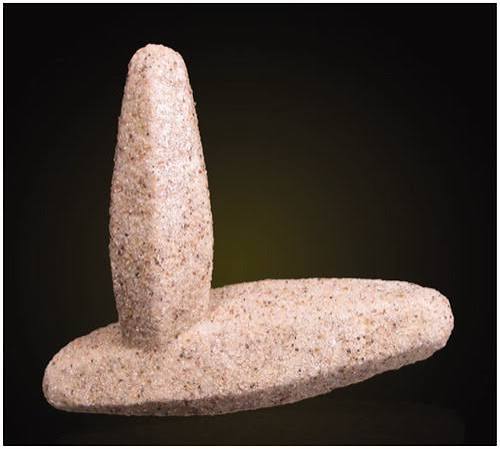
At first glance, it almost seems impossible. A perfectly formed calcite crystal appears to be packed full of ordinary sand, as though someone buried a crystal in a sandbox and waited for nature to finish the job. It challenges everything we think we know about how crystals grow.
Of course, that’s exactly what makes these specimens so captivating.
The sand isn’t glued to the outside. It wasn’t poured into a cavity. Every grain became part of the crystal naturally while it was growing millions of years ago.
The specimen featured in this article comes from the Donald Wininger Collection, a remarkable three-generation family collection assembled by Donald Wininger, his father, and his grandfather. As we continue sharing this extraordinary collection, our goal isn’t simply to showcase beautiful minerals—it is to preserve the stories, geology, and collecting history that make each specimen unique.
Some minerals impress because of their size.
Others because of their rarity.
South Dakota sand calcite does both while telling one of the most unusual geological stories in North America.
Mineral: Calcite
Variety: Sand Calcite
Chemical Formula: CaCO₃
Crystal System: Trigonal
Historic Locality: Allen, South Dakota (historic dealer label)
Classic Collecting Area: Rattlesnake Butte (Devil’s Hill), Jackson County, South Dakota
Geological Age: Oligocene–Miocene deposits containing much older quartz sand
Collector Appeal: ★★★★★
Difficulty to Replace: High
Historic Significance: Excellent
The Donald Wininger Collection represents far more than a group of beautiful mineral specimens.
It tells the story of three generations of collectors who spent decades searching for remarkable examples from many of North America’s most famous mineral localities. Long before online auctions and social media connected collectors around the world, specimens were acquired through field collecting, mineral clubs, trades, and friendships that often lasted a lifetime.
Many of the minerals in this collection were obtained during the 1950s and 1960s, preserving examples from localities that have since changed dramatically—or disappeared entirely.
Among these treasures are several exceptional South Dakota sand calcites.
These crystals represent one of the most recognizable collector minerals ever found in the American Midwest. Their unusual appearance has fascinated geologists and collectors for generations, and they continue to be among the most frequently admired specimens in display cases and museum collections.
As these remarkable pieces begin their next chapter through Grounded Lifestyles, we’re honored to preserve both the specimens and the remarkable history they represent.
At first glance, sand calcite almost appears impossible.
How can a crystal be filled with loose sand while still maintaining perfectly developed crystal faces?
The answer lies in one of nature’s most fascinating examples of crystal growth.
Sand calcite is not a separate mineral species. It is ordinary calcite—calcium carbonate—that crystallized within loose quartz sand. As the crystal grew, individual grains of sand became enclosed within the developing crystal structure, creating one of the most distinctive appearances found in the mineral world.
Unlike surface coatings, where foreign material sticks to the outside of a crystal after it forms, the quartz grains inside South Dakota sand calcite became incorporated naturally during growth. Every grain was already present as calcium-rich groundwater slowly deposited layer after layer of calcite around it.
The result is extraordinary. Sharp crystal faces. Perfect rhombohedrons. And thousands of tiny grains of ancient sand permanently suspended inside. Each specimen is essentially a geological time capsule.
Most collector minerals are appreciated because they display exceptional color, transparency, or crystal form.
Sand calcite attracts attention for an entirely different reason.
It makes people ask questions.
Almost everyone who sees one for the first time asks some version of the same thing:
“How did the sand get inside the crystal?”
That curiosity is exactly what has made South Dakota sand calcite one of the most enduring educational minerals found in museum collections, classrooms, and private displays.
Unlike minerals that require specialized geological knowledge to appreciate, sand calcite tells its story visually.
The specimen invites conversation before anyone even reads the label.
For experienced collectors, these crystals represent one of nature’s finest demonstrations that crystal growth is a dynamic geological process rather than a static object frozen in time.
To understand these remarkable crystals, we need to travel back more than thirty million years.
The landscape of what is now western South Dakota looked nothing like the rolling prairies visitors see today.
Instead, broad river systems flowed across the region, depositing enormous quantities of quartz sand, volcanic ash, silts, and gravels that would eventually become part of the famous White River Group and related sedimentary formations.
The climate shifted repeatedly between wetter and drier periods. Groundwater moved slowly through thick deposits of loose sand. That groundwater carried dissolved calcium carbonate. Whenever conditions changed—through evaporation, pressure changes, or chemical reactions—the dissolved calcium carbonate began to precipitate. Tiny calcite crystals formed. Most remained microscopic. Others continued growing for thousands of years. Eventually, some reached sizes large enough to become the remarkable specimens collectors prize today.
But one important question remains.
Why didn’t the sand prevent the crystal from growing?
This is one of the questions geologists are asked most often. It seems intuitive that sand grains should interrupt crystal growth. Instead, the opposite happened.
As calcite began crystallizing from groundwater, the crystal lattice expanded outward molecule by molecule. Individual quartz grains were simply engulfed as growth continued. The crystal did not dissolve the sand. It did not replace the sand. Instead, the quartz grains became passive inclusions—tiny passengers trapped inside an expanding calcite crystal.
Because quartz is chemically stable under these conditions, the grains remained unchanged while calcite continued growing around them. This process is remarkably similar to insects becoming trapped in tree resin that later hardens into amber. The difference is that, instead of resin flowing around the object, a crystal lattice gradually enclosed each grain as it expanded outward over long periods of geological time.
The result is one of nature’s most remarkable examples of inclusion growth.
Every grain of sand enclosed within these crystals preserves a tiny fragment of an ancient landscape that existed millions of years before humans ever walked the Great Plains.
One of the first things collectors notice when comparing South Dakota sand calcite specimens is that the locality on the label isn’t always the same.
One specimen may read Allen, South Dakota.
Another may be labeled Rattlesnake Butte.
Others reference Devil’s Hill, Interior, or simply Jackson County.
So which one is correct?
The answer is that they all can be.
During the early and mid-twentieth century, mineral dealers frequently labeled specimens using the nearest town, the nearest post office, the ranch where permission was obtained, or the actual collecting site. There was no universally accepted standard for locality labels as there is today.
Many specimens entering private collections during the 1940s through the 1960s were simply marked Allen, South Dakota because Allen served as a familiar community associated with the region. Other collectors preferred to identify the actual collecting area near Rattlesnake Butte (also historically called Devil’s Hill) in Jackson County.
Today, modern mineral references tend to use the more precise geological locality, but historic labels remain an important part of a specimen’s story. Rather than viewing different labels as conflicting information, collectors often see them as evidence of the specimen’s journey through the history of mineral collecting.
For vintage specimens like those in the Donald Wininger Collection, preserving the original label is every bit as important as preserving the crystal itself.
Unlike many famous mineral discoveries that began with mining operations, South Dakota sand calcite was discovered because observant people noticed something unusual weathering out of soft sedimentary rocks.
Imagine walking across the South Dakota Badlands and seeing what appears to be an ordinary calcite crystal lying on the ground. You pick it up, brush away the dirt, and realize the crystal itself is full of sand.
The first reaction is disbelief. The second is curiosity. Throughout the twentieth century, these remarkable crystals became favorites among amateur collectors, university geology departments, museums, and mineral dealers because they challenged conventional ideas about crystal growth.
Unlike brightly colored gemstones or metallic ore minerals, sand calcite didn’t attract attention because of its value. It attracted attention because it was unlike anything most people had ever seen.
Calcite is one of the most common minerals on Earth. Sand calcite is not. The combination of geological conditions required to produce these crystals is extraordinarily uncommon.
Several ingredients had to come together at precisely the right time:
South Dakota provided exactly that environment. Although calcite with inclusions can be found elsewhere in the world, the size, quality, abundance, and distinctive appearance of South Dakota specimens have made them the standard by which all other sand calcites are judged. Collectors around the world immediately recognize them.
During the 1940s through the 1970s, collecting South Dakota sand calcite became something of a rite of passage for Midwestern mineral enthusiasts.
Families traveled the back roads of western South Dakota with rock hammers, buckets, and maps copied from mineral club newsletters. Weekends often began before sunrise. Collectors searched weathered slopes after spring rains, carefully watching for crystals that erosion had exposed. Unlike hard-rock mining, collecting often depended on patience. One hillside might yield nothing for hours. Then, suddenly, a perfectly formed crystal would appear half buried in loose sediment. Many collectors remember that moment for the rest of their lives. Some specimens entered museum collections. Others became treasured family heirlooms. Still others—like those in the Donald Wininger Collection—were carefully preserved with their original labels, allowing future generations to appreciate not only the crystal itself but also its history.
One reason sand calcite became so popular is that no two specimens are identical. Some crystals contain extremely fine quartz grains that create a smooth tan appearance. Others contain coarser sand, producing dramatic textures visible across every crystal face. Some developed as simple rhombohedrons.
Others formed complex intergrown crystal groups that appear almost sculptural. Collectors quickly learned that every specimen told a slightly different geological story. Rather than searching for “the best” crystal, many enthusiasts assembled collections that demonstrated the incredible diversity of crystal forms produced within the same locality.
Collectors occasionally assume that because sand calcite formed over a large area, new specimens are easy to obtain. The reality is quite different. Many classic collecting sites have experienced decades of weathering, erosion, private ownership, and collecting pressure. Access to some historic areas has become restricted.
Other exposures have simply produced most of the easily accessible material. As a result, well-preserved vintage specimens have become increasingly desirable. Many of today’s finest examples aren’t newly collected. They are being rediscovered through historic collections assembled decades ago. That makes collections like the Donald Wininger Collection especially significant.
They preserve specimens acquired during an era when many classic localities were still actively producing exceptional material.
If two sand calcite specimens appear nearly identical, why might one command considerably greater interest among experienced collectors? The answer is often provenance. Imagine two specimens. The first has no label. No one knows where it came from or who owned it. The second retains its original handwritten locality label, a dealer tag from the 1960s, and documentation showing it belonged to a respected private collection.
Although the crystals themselves may be nearly identical, the documented specimen preserves something the other cannot—its history. Minerals are pieces of Earth’s history. Provenance preserves their human history. Together, they create a complete story. That philosophy lies at the heart of the Donald Wininger Collection.
Perhaps the greatest lesson these remarkable specimens teach is that mineral collecting isn’t simply about owning beautiful objects.
It is about curiosity.
Every crystal begins with a question.
How did it form?
Why here?
Why this shape?
Why this color?
Why has this locality become famous?
South Dakota sand calcite answers all of those questions while inspiring countless new ones. Few minerals invite conversation quite like these remarkable crystals. Even after decades of studying geology, experienced collectors still find themselves picking one up, turning it slowly in the light, and wondering how nature managed to accomplish something that seems almost impossible.
One of the greatest joys of mineral collecting is that your perspective changes over time.
Beginning collectors often ask, “What’s the rarest mineral?”
Experienced collectors usually ask a different question:
“What’s the best example of this mineral?”
South Dakota sand calcite perfectly illustrates that difference.
Although the mineral species itself—calcite—is one of the most abundant minerals on Earth, these particular crystals represent one of nature’s most unusual methods of crystal growth. Their appeal isn’t based on chemical rarity but on geological uniqueness, historic locality, and the story each specimen tells.
A fine sand calcite specimen is often the centerpiece of a display because it sparks conversation. Visitors inevitably ask how the sand became trapped inside the crystal, giving the collector an opportunity to explain one of geology’s most fascinating processes.
Every collector develops personal preferences, but several characteristics consistently distinguish exceptional South Dakota sand calcite specimens.
The finest specimens display well-developed rhombohedral crystals with crisp edges and undamaged faces. Chips and broken corners are common because calcite has perfect cleavage, making intact examples increasingly desirable.
Collectors appreciate balance as much as size.
A smaller specimen with attractive crystal arrangement, contrasting textures, and pleasing proportions will often be preferred over a much larger but less attractive example.
The defining characteristic of these specimens is, of course, the sand itself.
Collectors generally seek crystals where the inclusions are clearly visible throughout the crystal rather than concentrated in isolated areas. Uniformly distributed quartz grains emphasize the remarkable way the crystal developed.
Many historic specimens were removed from their surrounding sediment decades ago.
Today, collectors often prize examples that still preserve portions of their original matrix because they provide additional geological context and are becoming increasingly difficult to find.
Perhaps nothing separates a good specimen from a great one more than documentation.
Original locality labels…
Old dealer tags…
Handwritten collection numbers…
Photographs…
Correspondence…
These seemingly simple pieces of paper often become just as valuable historically as the crystal itself.
The Donald Wininger Collection preserves many of these connections, allowing today’s collectors to own not just a mineral specimen, but a documented piece of collecting history.
The sand was glued onto the crystal.
No adhesives are involved.
Every grain became enclosed naturally as calcite slowly crystallized from calcium-rich groundwater over millions of years.
The sand entered cracks after the crystal formed.
If that were true, the sand would occur only in fractures.
Instead, quartz grains are distributed throughout the crystal, demonstrating they became trapped during crystal growth.
These crystals formed inside sandstone.
The crystals formed within loose, unconsolidated sand saturated by groundwater. That difference explains why individual sand grains could become incorporated as the crystal expanded.
All sand calcites look alike.
No two specimens are identical.
Differences in grain size, groundwater chemistry, crystal growth rates, and available space produced tremendous variation in color, shape, transparency, and texture.
These crystals are common because calcite is common.
Calcite is abundant.
South Dakota sand calcite is not.
The unique geological conditions required to produce these specimens occurred in only a handful of locations and are not actively producing collectible material today.
Yes.
Sand calcite is genuine calcite (CaCO₃). The name “sand calcite” refers to calcite crystals that naturally enclosed quartz sand as they grew.
Yes.
The quartz grains became trapped during crystal growth and are enclosed within the calcite, not simply attached to the surface.
South Dakota produced unusually large, well-formed crystals with abundant, evenly distributed sand inclusions. Their quality and historical importance have made them the benchmark for this variety.
Historic labels often referenced the nearest town, ranch, or shipping point rather than the precise collecting locality. Modern references generally identify the classic collecting area near Rattlesnake Butte in Jackson County, while older labels may simply read Allen, South Dakota.
Only in very limited circumstances.
Many classic collecting sites are no longer accessible because of private ownership, conservation, or decades of collecting activity. Most high-quality specimens entering today’s market come from older collections.
Provenance preserves the history of a specimen.
Original labels and collection records document where a mineral was found and who cared for it through the years. For historic localities, that information often becomes as valuable as the specimen itself.
Yes, but gently.
Dust should be removed with a soft brush or compressed air designed for collectibles. Avoid acidic cleaners, which will dissolve calcite, and never use abrasive methods that could scratch the crystal faces.
Generally, no.
While calcite from some localities fluoresces under ultraviolet light, South Dakota sand calcite is not typically collected for fluorescence. Its appeal lies in its remarkable inclusions and crystal form.
Rarely.
Because of calcite’s softness and perfect cleavage, collector specimens are almost always left in their natural crystal form.
Minerals should always be purchased because they inspire appreciation for geology and natural history.
That said, documented specimens from classic localities—particularly those with strong provenance—have historically remained desirable because they represent finite geological resources that cannot simply be replaced.
Some minerals impress us with dazzling color. Others with exceptional size. South Dakota sand calcite captures our imagination for an entirely different reason.
It tells a story.
Each crystal records the slow movement of groundwater through ancient sediments, the chemistry that allowed calcite to grow around loose quartz grains, and millions of years of geological history preserved within a single specimen. Just as importantly, these crystals also tell the story of the people who collected them.
For decades they occupied shelves, display cases, and mineral cabinets, sparking conversations among friends, inspiring young collectors, and reminding generations that the Earth still holds extraordinary surprises.
The specimens preserved within the Donald Wininger Collection continue that tradition today. As they find new homes, they carry with them not only the history of an ancient landscape but also the legacy of three generations who believed these remarkable pieces of nature were worth preserving.
If this article sparked your curiosity about geology and mineral collecting, we invite you to continue exploring the resources available through Grounded Lifestyles.
Visit our Mine to Mind blog for educational articles about minerals, geology, fossils, lapidary, and collecting.
Browse our Free Crystal & Mineral eBook Library for in-depth educational resources designed to help collectors expand their knowledge.
Explore our Minerals Collection to discover carefully curated specimens from classic localities around the world.
You can also learn more about our upcoming appearances by visiting our Gem & Mineral Shows page, where we’ll be sharing many specimens from the Donald Wininger Collection in person.
These South Dakota sand calcite specimens are part of the Donald Wininger Collection, a three-generation mineral collection spanning specimens acquired from the 1940s through the 2000s. The collection includes minerals from historic localities across the United States, Canada, Mexico and beyond, with many specimens dating from the height of American mineral collecting in the 1950s and 1960s.
Explore available specimens from the Donald Wininger Collection and discover historic minerals, classic localities and pieces that preserve decades of collecting history.

At Grounded Lifestyles, our love for crystals began in the peaceful flow of Reiki and energy healing sessions — where we saw how natural stones could amplify intentions, restore balance, and bring comfort. But the more time we spent with these treasures, the more curious we became about their origins. That curiosity led us into the fascinating world of geology and mineral specimen collecting. We fell in love not just with the energy of crystals, but with the science and artistry of their creation — the intricate crystal structures, the vibrant mineral hues, and the wonder of holding a piece of Earth’s history in our hands.