
Every crystal, mineral, fossil, meteorite, and handcrafted piece is selected with purpose. Whether you’re building a museum-worthy mineral collection, searching for a meaningful gift, decorating your home with natural beauty, or beginning your journey into the world of geology, you’ll discover authentic specimens with stories worth sharing.
Over 15 shows a year throughout the Southwest. Check to see if we are coming to a show near you!
Home > Blog > Minerals Blog | Crystal Guides, Geology & Metaphysical Meaning > Dolomite from New York, Ohio & Missouri
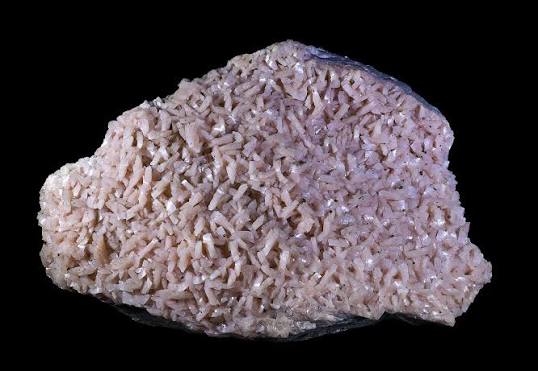
Donald Wininger Collection
Some minerals are immediately recognizable.
Quartz, Pyrite, Fluorite.
Dolomite is different.
Collectors often encounter it early in their journey, yet many spend years believing that every tan rock labeled “dolomite” is the same material. Only later do they discover that some of the world’s most elegant crystal specimens are also dolomite.
Open a display case in any major mineral museum and you’ll likely find delicate white saddles from Missouri, sparkling curved crystals from New York, or lustrous specimens from Ohio resting beside minerals worth many times their value. Their beauty is understated. Their geology is fascinating. And their story begins hundreds of millions of years before the first collector ever picked one up.
The specimens featured in this article come from the Donald Wininger Collection, a remarkable three-generation family collection assembled by Donald Wininger, his father, and his grandfather. Their original labels identify only New York, Ohio, and Missouri, reflecting a common practice among collectors and dealers during the mid-twentieth century.
While modern collectors often seek precise quarry names and GPS coordinates, these historic labels remain an important part of each specimen’s provenance. They remind us that collecting has evolved over time, and that preserving the original history of a specimen is every bit as important as identifying its exact origin.
Mineral: Dolomite
Mineral Group: Carbonates
Chemical Formula: CaMg(CO₃)₂
Crystal System: Trigonal
Common Crystal Habits:
Hardness: 3.5–4
Collector Appeal: ★★★★☆
Historic Significance: Exceptional
Specimens Featured: Historic examples labeled New York, Ohio, and Missouri from the Donald Wininger Collection.
Historic collections often preserve more than minerals. They preserve collecting traditions.
During much of the twentieth century, it was common for mineral dealers to label specimens with only the state where they originated. A collector purchasing a specimen at a gem show in 1955 might receive a label reading simply “Ohio” or “Missouri.” At the time, that information was considered perfectly adequate.
Today, collectors understandably value more precise locality data. Yet these older labels tell an important story of their own. They reflect how specimens were bought, sold, and appreciated by earlier generations.
Rather than replacing those labels with modern assumptions, the Donald Wininger Collection preserves them exactly as they were received. That commitment to authenticity allows us to appreciate not only the minerals themselves but also the history of the hobby.
The three dolomite specimens featured here may not identify a specific quarry, but together they represent three of America’s most productive and historically significant dolomite-producing regions.
Few minerals create as much confusion as dolomite. Part of the confusion comes from the fact that dolomite is both a mineral and the name commonly used for a rock. The mineral dolomite is calcium magnesium carbonate, with the chemical formula CaMg(CO₃)₂. The rock composed primarily of that mineral is properly called dolostone.
In everyday conversation—even among geologists—the rock is often called “dolomite,” which explains why many collectors believe the two terms mean exactly the same thing. Technically, they do not.
A specimen displaying sparkling crystals in a mineral cabinet is composed of the mineral dolomite. A mountain made primarily of that mineral is composed of the rock dolostone.
Understanding that distinction immediately clears up one of the most common misconceptions in mineral collecting.
Dolomite has fascinated geologists for more than two centuries because it presents one of sedimentary geology’s great mysteries. Laboratory experiments show that dolomite does not form easily under normal surface conditions. Yet enormous layers of dolostone exist around the world.
Entire mountain ranges—including Italy’s famous Dolomites—are built largely from this mineral.
How did so much dolomite form?
This question became known as the “Dolomite Problem.” Modern research suggests that many ancient dolostones formed when magnesium-rich fluids slowly replaced calcium within existing limestone. In other environments, dolomite crystallized directly from highly saline waters or through the influence of microorganisms living in carbonate-rich sediments. Although scientists continue to study the details, one fact is clear:
Dolomite records a unique set of geological conditions that cannot easily be reproduced today.
Most collector-quality dolomite did not crystallize when the surrounding rock was first deposited. Instead, beautiful crystals developed much later. As groundwater rich in calcium, magnesium, and carbonate ions moved through fractures and cavities, conditions occasionally became perfect for crystal growth. Because these cavities remained open, crystals were able to develop freely.
Slow growth produced sharp faces. Chemical variations influenced color. Tiny changes in temperature or fluid chemistry altered crystal shape. That is why specimens from different regions often appear completely different even though they are composed of exactly the same mineral. Some form graceful saddle-shaped crystals. Others develop sharp rhombohedra. Some remain snow white. Others become tan, pink, gray, or nearly transparent.
Every specimen records the unique environment in which it grew.
Although the specimens in the Donald Wininger Collection are labeled simply New York, Ohio, and Missouri, each state is internationally recognized for producing distinctive dolomite specimens.
Rather than representing a single locality, these specimens illustrate how one mineral can reflect three very different geological histories.
One of the greatest lessons dolomite teaches is that the same mineral can develop entirely different personalities depending on where it forms.
The specimens preserved in the Donald Wininger Collection are labeled simply New York, Ohio, and Missouri. While the exact quarries or mines are unknown, each state is recognized worldwide for producing distinctive dolomite specimens that reflect very different geological environments. Together, they tell a remarkable story spanning nearly half a billion years of Earth’s history.
New York is one of the most geologically diverse states in the country, and that diversity is reflected in its dolomite.
In the northern part of the state, the Adirondack Lowlands expose rocks more than a billion years old that were transformed during the Grenville mountain-building event. Marble deposits, calc-silicate rocks, and complex metamorphic environments have produced outstanding dolomite associated with minerals such as diopside, scapolite, tremolite, titanite, apatite, and calcite.
Farther west, another geological story unfolds.
The Lockport Dolomite, deposited during the Silurian Period roughly 425 million years ago, records a warm tropical sea that once covered much of New York. Over millions of years, groundwater circulated through fractures and cavities, allowing dolomite crystals to slowly develop inside open spaces within the rock.
Collectors often recognize New York dolomite by its:
For generations, New York has produced specimens admired for their elegance rather than dramatic size, making them favorites among collectors who appreciate subtle crystal forms.
Ohio shares part of its geological history with New York.
During the Silurian and Devonian periods, much of what is now Ohio lay beneath warm, shallow seas filled with coral reefs, brachiopods, crinoids, trilobites, and countless other marine organisms. As these sediments hardened into limestone and dolostone, later groundwater slowly dissolved portions of the rock, creating natural cavities. These openings became ideal environments for crystal growth.
Mineral-rich solutions deposited dolomite alongside calcite, fluorite, celestite, pyrite, and other minerals that today make Ohio quarries famous among collectors. Unlike many sedimentary minerals that occur as thin coatings, Ohio dolomite frequently forms beautifully developed crystals lining cavities within the host rock.
Collectors appreciate Ohio specimens for their:
Some of Ohio’s finest specimens have come from limestone and dolostone quarries where industrial mining unexpectedly revealed spectacular crystal pockets.
As with many classic American localities, commercial quarrying provided collectors access to minerals that otherwise would have remained hidden beneath hundreds of feet of rock.
If one state has become synonymous with collector-quality dolomite, it is Missouri.
The Ozark Plateau contains enormous sequences of Cambrian and Ordovician carbonate rocks that have undergone extensive mineralization over hundreds of millions of years. These rocks became pathways for mineral-rich fluids carrying lead, zinc, iron, barium, and other elements. As those fluids cooled, they deposited an extraordinary variety of minerals within fractures and solution cavities. Among the most beautiful were dolomite crystals.
Missouri specimens are especially famous for their graceful saddle-shaped crystals, a distinctive habit produced by slight curvature during crystal growth. Unlike perfectly flat crystal faces, saddle crystals gently curve as they develop, giving them an elegant sculptural appearance that is instantly recognizable to experienced collectors.
Colors range from brilliant white to soft cream, honey brown, gray, and occasionally delicate pink. Some specimens display transparent edges. Others sparkle with countless tiny crystal faces that reflect light from every angle. Missouri’s extensive lead-zinc districts—including the world-famous Viburnum Trend and earlier mining regions—have produced museum-quality dolomite for well over a century.
Collectors are often surprised that dolomite from these three states can appear so different. The reason lies in the environment where the crystals formed.
Although the chemical formula remained the same, each locality experienced unique combinations of:
Even small changes in these conditions altered crystal habit. One cavity produced broad saddle crystals. Another produced sharp rhombohedra. A third generated sparkling drusy coatings. Nature followed the same chemical recipe while creating remarkably different results. That diversity is one of the reasons dolomite remains such a rewarding mineral to collect.
Dolomite rarely occurs alone. Instead, it forms part of larger mineral assemblages that reflect the chemistry of the surrounding rocks. Common associated minerals from New York, Ohio, and Missouri include:
Perhaps the most common companion mineral, calcite often occurs alongside dolomite as crystals, cavity linings, or massive carbonate deposits.
Purple, yellow, and colorless fluorite commonly accompanies dolomite in many carbonate-hosted mineral deposits, particularly in New York and parts of Ohio.
Ohio’s Silurian rocks are especially famous for beautiful blue celestite occurring with dolomite in crystal-lined cavities.
Missouri’s lead-zinc districts frequently produced sphalerite alongside dolomite, reflecting the hydrothermal fluids responsible for mineralization.
Missouri’s rich lead deposits often contain dolomite as a gangue mineral surrounding brilliant cubic galena crystals.
Pyrite occurs throughout many carbonate-hosted environments and frequently adds metallic contrast to pale dolomite crystals. Together these minerals illustrate that dolomite formed within dynamic geological systems rather than in isolation. Each association helps reconstruct the chemical conditions present when the crystals developed.
At first glance, dolomite may seem less dramatic than brightly colored fluorite or large quartz crystals. Yet experienced collectors understand that its importance lies in its versatility. It can be elegant. It can be sculptural. It can provide striking contrast for associated minerals. Most importantly, it records the history of ancient seas, groundwater movement, and chemical change with remarkable clarity.
The three specimens preserved in the Donald Wininger Collection—though labeled only by state—demonstrate that one mineral can tell three very different geological stories. Each represents a unique chapter in the evolution of North America’s carbonate landscapes. Each reminds us that locality shapes character, even when the mineral itself remains the same.
Dolomite has long been one of the quiet achievers of the mineral world. It rarely commands headlines at major mineral shows, and it is seldom the centerpiece of museum exhibits. Instead, it often plays a supporting role—growing alongside fluorite, galena, sphalerite, calcite, or celestite. Yet experienced collectors know better.
Given enough time, almost every serious mineral collection develops a place for exceptional dolomite.
Why?
Because few minerals display such an incredible variety of crystal habits while remaining instantly recognizable. A specimen may consist of delicate white saddle crystals from Missouri, sparkling cream-colored rhombohedra from New York, or lustrous tan crystals from Ohio, yet each represents the same mineral species.
That diversity makes dolomite endlessly interesting. The three specimens preserved in the Donald Wininger Collection demonstrate exactly that principle. Although their original labels identify only New York, Ohio, and Missouri, together they illustrate how geology shapes beauty. Each specimen records a different environment, a different geological history, and a different chapter in the story of North American mineral collecting.
Sometimes the most educational specimens are not the rarest. They are the ones that teach us to look more closely.
Collectors evaluate dolomite much differently than beginners often expect. Rather than focusing on size alone, experienced collectors consider several characteristics together.
Dolomite is famous for its variety.
Collectors appreciate:
Well-developed crystal form often contributes more to desirability than overall specimen size.
High-quality dolomite displays a bright vitreous to pearly luster.
Fresh crystal faces should reflect light evenly without appearing dull or weathered.
Although white and cream are the most familiar colors, collector specimens also occur in:
Uniform color generally increases visual appeal, although subtle zoning may add character.
Dolomite becomes especially desirable when accompanied by other minerals.
Classic combinations include:
These combinations often create striking contrast between crystal shapes, colors, and textures.
Because dolomite has perfect rhombohedral cleavage and a hardness of only 3½ to 4, crystal edges chip easily.
Sharp crystal faces, undamaged edges, and complete crystal groups are therefore highly desirable.
Historic labels continue to play an important role.
The original state labels accompanying the Donald Wininger Collection specimens preserve their collecting history exactly as earlier generations received them.
Although the specific quarry is unknown, the labels remain authentic records of the specimens’ provenance and reflect the collecting practices of their time.
Fact: Dolomite is a mineral. Dolostone is a rock composed primarily of the mineral dolomite. Although the terms are often used interchangeably in everyday conversation, they have different geological meanings.
Fact: While both are carbonate rocks, limestone consists primarily of calcite, whereas dolostone is composed mainly of the mineral dolomite. Many dolostones formed when magnesium-rich fluids chemically altered pre-existing limestone.
Fact: Although massive dolostone is widespread, collector-quality dolomite frequently forms beautiful crystals within cavities, fractures, and hydrothermal veins.
Fact: Collector value depends on aesthetics, crystal quality, locality, rarity, associated minerals, and provenance. Outstanding cream, pink, tan, or honey-colored specimens can be just as desirable as brilliant white examples.
Fact: Crystal habit depends on the chemistry of the mineralizing fluids, temperature, pressure, available space, and growth rate. These differences explain why specimens from New York, Ohio, and Missouri often appear remarkably different despite sharing the same chemical composition.
Throughout history, dolomite has been associated with qualities of balance, resilience, and stability. While these traditions are not supported by scientific evidence, they remain an important aspect of how many people appreciate natural minerals.
Traditionally, dolomite has been associated with:
Its quiet appearance has often been interpreted as a reminder that strength is not always dramatic and that enduring change frequently occurs gradually, much like the geological processes that created the mineral itself.
The mineral dolomite is common worldwide, but attractive, well-crystallized collector specimens are much less common. Museum-quality crystal groups from classic American localities remain highly sought after.
The famous saddle-shaped crystals develop because slight distortions occur during crystal growth. These gentle curves are a natural characteristic of many dolomite crystals and are one of the mineral’s most recognizable features.
Many mineral dealers and collectors during the mid-twentieth century labeled specimens only by state or general region. Rather than replacing those historic labels with unsupported assumptions, the Donald Wininger Collection preserves the original provenance exactly as it was received.
Dolomite itself is often weakly fluorescent or non-fluorescent, although some specimens display fluorescence depending on trace impurities. Associated minerals such as calcite or fluorite may fluoresce much more strongly.
No. Like other carbonate minerals, dolomite reacts with acids. Although it reacts more slowly than calcite with cold dilute hydrochloric acid, acidic cleaners should be avoided because they can damage crystal faces and reduce luster.
Yes. Dolomite is an important industrial mineral used in construction aggregate, cement production, agriculture, refractory materials, steel manufacturing, glass production, ceramics, and as a source of magnesium.
A specimen’s provenance documents its origin and history. Original labels, dealer tags, and collection records provide scientific value while connecting the specimen to earlier generations of collectors. In historic collections such as the Donald Wininger Collection, preserving that provenance is part of preserving the specimen itself.
Absolutely. Dolomite introduces collectors to carbonate mineralogy, crystal habits, geological processes, and the importance of locality. It is both scientifically interesting and visually rewarding, making it an excellent addition to collections at every level.
Dolomite teaches one of the most important lessons in mineral collecting:
Appearances can be deceiving.
At first glance, it may seem like a simple white or tan mineral. Look closer, and it becomes a record of ancient tropical seas, changing groundwater chemistry, mountain-building events, and hundreds of millions of years of geological evolution. The three specimens preserved in the Donald Wininger Collection illustrate that beautifully.
Though labeled only New York, Ohio, and Missouri, each represents one of America’s classic carbonate regions. Together they demonstrate how the same mineral can respond to different geological environments while maintaining its essential identity.
They also remind us that collecting is about preserving history. Sometimes that history is written in crystals. Sometimes it is written on an old handwritten label. Both deserve to be protected.
As caretakers of these specimens, we preserve not only remarkable examples of Earth’s natural artistry but also the legacy of the collectors who recognized their value decades ago. Long after specific quarry names have been forgotten, these specimens continue to teach, inspire, and connect us with the extraordinary geological story beneath our feet.
Every specimen in the Treasures from the Donald Wininger Collection opens a window into Earth’s history. Explore Hexagonite, Sand Calcite, Fluor-Richterite, Blue Celestite, Serpentine Zircon, Uranophane, Orange Celestite, Herkimer Diamonds. Continue exploring the Mine to Mind educational blog to learn about classic American mineral localities, browse our collection of historic mineral specimens, discover our educational eBooks, and visit us at upcoming gem and mineral shows, where you’ll have the opportunity to see many of these remarkable specimens in person.
These historic dolomite specimens are part of the Donald Wininger Collection, a three-generation mineral collection spanning specimens acquired from the 1940s through the 2000s. The collection includes minerals from historic localities across the United States, Canada, Mexico and beyond, with many specimens dating from the height of American mineral collecting in the 1950s and 1960s.
Explore available specimens from the Donald Wininger Collection and discover historic minerals, classic localities and pieces that preserve decades of collecting history.

At Grounded Lifestyles, our love for crystals began in the peaceful flow of Reiki and energy healing sessions — where we saw how natural stones could amplify intentions, restore balance, and bring comfort. But the more time we spent with these treasures, the more curious we became about their origins. That curiosity led us into the fascinating world of geology and mineral specimen collecting. We fell in love not just with the energy of crystals, but with the science and artistry of their creation — the intricate crystal structures, the vibrant mineral hues, and the wonder of holding a piece of Earth’s history in our hands.