Every crystal, mineral, fossil, meteorite, and handcrafted piece is selected with purpose. Whether you’re building a museum-worthy mineral collection, searching for a meaningful gift, decorating your home with natural beauty, or beginning your journey into the world of geology, you’ll discover authentic specimens with stories worth sharing.
Over 15 shows a year throughout the Southwest. Check to see if we are coming to a show near you!
Home > Blog > Minerals Blog | Crystal Guides, Geology & Metaphysical Meaning > Zircon Crystals from the Saranac Mine Bancroft Ontario
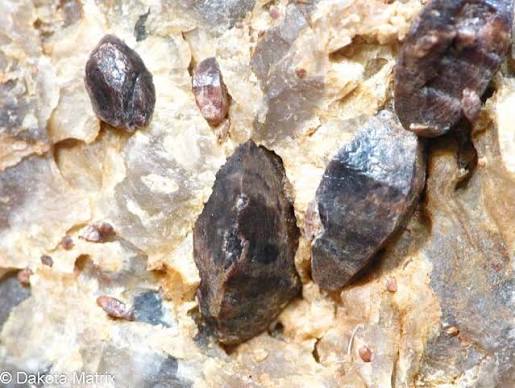
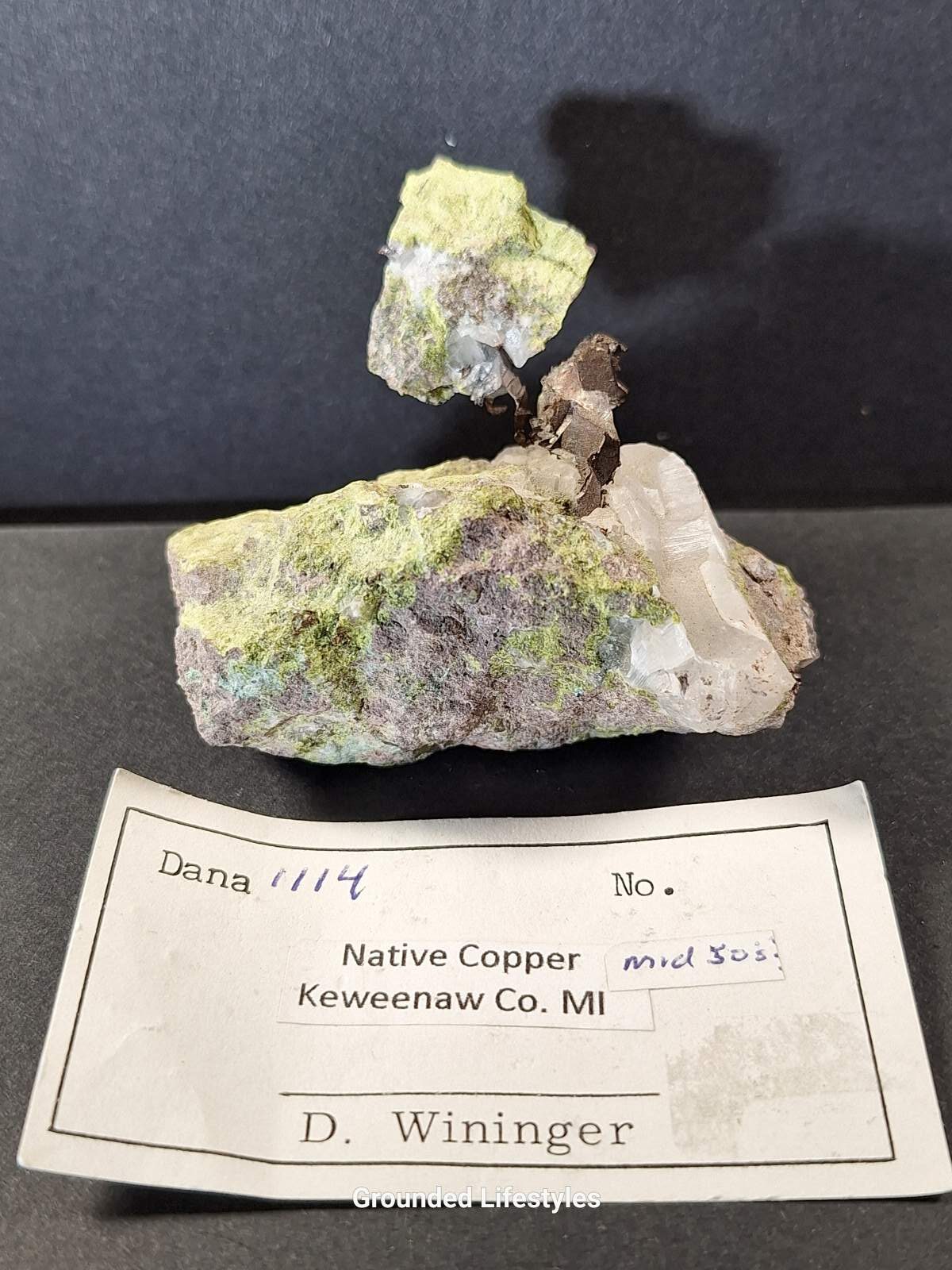
Donald Wininger Collection
Some minerals are admired for their color. Others for their rarity. Zircon is admired because it tells time. Not hours or years, but billions of years.
Long before dinosaurs walked the Earth, before the Atlantic Ocean existed, and before the first flowering plants evolved, zircon crystals were already quietly recording the history of our planet atom by atom. Few collectors realize that the same mineral sitting in a display cabinet has helped scientists determine the age of Earth’s oldest crust, reconstruct ancient mountain-building events, and better understand the evolution of continents.
The specimens featured in this article come from the Saranac Mine near Bancroft, Ontario—one of Canada’s best-known zircon localities. Preserved in the Donald Wininger Collection, they represent far more than attractive crystals. They are survivors of over one billion years of geological change and natural radioactive decay.
Their edges have softened. Their crystal structure has slowly changed. Yet they continue to tell one of Earth’s oldest stories.
Mineral: Zircon
Chemical Formula: ZrSiO₄
Mineral Group: Nesosilicates
Crystal System: Tetragonal
Typical Crystal Habit:
Color
Hardness: 7.5
Specific Gravity: 4.6–4.7
Distinctive Characteristics
Every historic collection contains a few specimens that immediately capture attention. Not because they are the largest. Not because they are the most colorful. But because they represent something extraordinary.
The zircon crystals from the Saranac Mine belong in that category. Collected decades ago and preserved within the Donald Wininger Collection, these specimens connect three generations of collectors with one of Ontario’s classic mineral localities. Their labels identify the famous Saranac Mine near Bancroft, a locality that became known during the uranium exploration boom of the 1950s. At first glance, the crystals appear relatively modest compared to Bancroft’s spectacular apatites or titanites.
Look closer. The brilliant luster. The geometric crystal faces. The subtly rounded edges. Each feature tells part of a story that began more than one billion years ago and continues today.
Although many people recognize the name because of cubic zirconia jewelry, natural zircon is an entirely different mineral. Zircon is a zirconium silicate with the chemical formula ZrSiO₄.
It crystallizes in the tetragonal crystal system, producing elegant prismatic crystals capped by pyramidal terminations. Unlike cubic zirconia—a synthetic material developed in the twentieth century—natural zircon has existed almost since the beginning of Earth’s history.
It forms in:
Its extraordinary hardness and chemical stability allow zircon to survive geological processes that destroy many other minerals. As mountains erode and continents change, zircon crystals often endure, carrying with them an atomic record of when they originally formed. Few minerals possess such remarkable longevity.
Perhaps no mineral has suffered more from mistaken identity. Natural zircon and cubic zirconia share only part of a name. They are not related.
| Natural Zircon | Cubic Zirconia |
|---|---|
| Natural mineral | Laboratory-made material |
| Zirconium silicate | Zirconium oxide |
| Forms over millions to billions of years | Manufactured in hours |
| Contains natural geological history | Artificial gemstone |
| Often contains uranium and thorium | Non-radioactive |
Natural zircon is one of geology’s most important minerals. Cubic zirconia is simply a man-made diamond simulant. Confusing the two would be like confusing natural marble with cultured marble countertops.
If there were a hall of fame for minerals, zircon would occupy one of its highest honors. Geologists depend on zircon more than almost any other mineral because it acts as an extraordinarily reliable natural clock. When zircon crystallizes from molten rock, its crystal structure readily accepts tiny amounts of uranium. What it almost completely rejects is lead.
That distinction is crucial.
As time passes, the uranium atoms trapped within the crystal slowly decay into lead at precisely known rates. Because scientists know how quickly this process occurs, they can compare the amount of uranium remaining with the amount of lead produced and calculate when the crystal formed.
This technique—known as uranium-lead (U-Pb) dating—is one of the most accurate methods available for determining the age of rocks. It has transformed our understanding of Earth’s history.
Using zircon, scientists have dated volcanic eruptions, mountain-building events, continental collisions, and even tiny mineral grains more than 4.3 billion years old, making them among the oldest known materials formed on Earth. The zircon crystals from the Saranac Mine are much younger by comparison, dating to approximately 1.06 billion years ago during the Grenville Orogeny. Even so, they have been keeping time for over a billion years.
That remarkable journey is recorded atom by atom within each crystal.
To understand the zircon crystals of the Saranac Mine, we must travel back more than one billion years to one of the greatest mountain-building events in North American history.
The Grenville Province stretches across much of eastern Canada and into parts of the northeastern United States. Today it forms the geological backbone of the Bancroft region, exposing rocks that were once buried deep beneath towering mountain ranges comparable in scale to the modern Himalayas.
During the Grenville Orogeny, immense continental collisions subjected ancient rocks to extraordinary temperatures and pressures. Magma intruded into the crust, older rocks recrystallized, and mineral-rich fluids circulated through fractures and marble-hosted zones. These processes created the complex assemblages of pegmatites, skarns, marbles, and gneisses that have made Bancroft one of the world’s premier destinations for mineral collectors.
Among the minerals that crystallized during this remarkable period was zircon—small in size, but destined to become one of geology’s greatest storytellers.
Nestled within the rolling Precambrian hills northwest of Bancroft, Ontario, the Saranac Mine occupies a special place in Canadian mineral collecting. Unlike many famous mines that were developed primarily for gold, silver, or base metals, the Saranac Mine gained attention during the uranium exploration boom of the 1950s. Prospectors searching for radioactive minerals soon realized the property contained unusually large zircon crystals enriched with uranium and thorium.
Although the mine never became a major commercial producer, it quickly earned an international reputation among mineral collectors and researchers. Today, the Saranac Mine is remembered less for the ore it produced and more for the extraordinary mineral specimens it revealed. For collectors, it remains one of Bancroft’s classic zircon localities.
The story of the Saranac zircon crystals began approximately 1.06 billion years ago, during the final stages of the Grenville Orogeny. By this time, enormous continental collisions had already built mountains that may have rivaled today’s Himalayas. Deep beneath those mountains, temperatures exceeded several hundred degrees Celsius while pressures reached levels almost impossible to imagine. Rocks flowed rather than fractured. Minerals recrystallized. Molten granite slowly forced its way upward through the ancient crust.
As these granitic magmas cooled, they became increasingly enriched in elements that did not easily fit into the crystal structures of common rock-forming minerals.
Geologists refer to these as incompatible elements, and they include:
As cooling continued, these elements became concentrated within the final portions of the magma, eventually forming coarse-grained bodies known as pegmatites. Pegmatites are famous for producing exceptionally large crystals because they cool slowly while containing abundant water and other volatile components that allow atoms to move freely during crystallization. Within these pegmatites, zircon found ideal conditions for growth.
Most zircon crystals found in ordinary granite measure only fractions of a millimeter. Many require a microscope to see clearly. The Saranac Mine is different. Its zircon crystals commonly reach several centimeters in length, with some historic specimens growing even larger. Several factors contributed to their impressive size.
First, the pegmatitic magma cooled exceptionally slowly, allowing crystals to continue growing over long periods.
Second, the magma remained rich in zirconium, ensuring a continuous supply of the elements needed to build zircon crystals.
Finally, water-rich fluids circulating through the pegmatite lowered the viscosity of the remaining melt, making it easier for atoms to migrate toward growing crystal faces. The result was a collection of beautifully formed tetragonal crystals that continue to impress collectors today.
Like many localities in the Bancroft district, the Saranac Mine owes much of its fame to the uranium exploration rush that swept across Canada during the 1950s. Following the Second World War, demand for uranium increased dramatically as governments searched for new sources of nuclear fuel.
Exploration companies spread across the Canadian Shield with Geiger counters in hand, investigating every hint of radioactivity. The Saranac property became one of many prospects explored during this period.
Although economically significant uranium deposits failed to materialize, the exploration exposed remarkable mineralized zones containing zircon, allanite, thorite, and other radioactive minerals. Ironically, the specimens collected during exploration ultimately became more valuable to mineral collectors than the mine ever became to the uranium industry. Today, the Saranac Mine is remembered as a classic mineral locality rather than a successful uranium producer.
One of zircon’s remarkable characteristics is its ability to incorporate trace amounts of uranium and thorium into its crystal structure. When zircon forms, zirconium atoms occupy specific positions within the crystal lattice. Because uranium and thorium atoms have similar chemical behavior, a small number can substitute for zirconium during crystallization. To the growing crystal, the substitution is almost seamless. To geologists, however, it creates something extraordinary.
Unlike many radioactive minerals where uranium occurs as a major component, zircon usually contains only trace amounts—often measured in hundreds or thousands of parts per million. Yet even these tiny concentrations are enough to slowly alter the crystal over immense spans of time.
The radioactivity is generally very low and poses little hazard when specimens are handled responsibly. The real significance lies not in the amount of radiation emitted today, but in the cumulative effect of more than one billion years of radioactive decay.
Most minerals are shaped by forces outside themselves.
Heat, Pressure, Groundwater, Weathering.
Zircon is different.
Many Bancroft zircons have been quietly changing from the inside out ever since they formed. Every uranium or thorium atom trapped within the crystal eventually undergoes radioactive decay. During that process, tiny alpha particles are released. Each particle travels only a microscopic distance before colliding with nearby atoms, knocking them out of their orderly positions within the crystal lattice.
A single decay event causes almost no noticeable damage. But now imagine that process continuing every second…
For more than one billion years.
Over that immense span of time, billions upon billions of these microscopic impacts gradually disrupt the crystal’s internal atomic structure. Mineralogists call this remarkable process metamictization.
One of the first things experienced collectors notice about many Bancroft zircons is that the crystal edges often appear softer than expected. Perfect zircon crystals possess crisp, razor-sharp edges and smooth, highly reflective faces. Many Saranac specimens do not. Instead, the edges appear gently rounded. The faces may seem slightly frosted. The luster can become muted. Fine internal fractures sometimes develop. For decades, collectors assumed this was simply the result of weathering.
Modern mineralogy tells a different story. The crystals are not primarily being worn away from the outside. They are slowly changing from the inside.
As radiation damages the crystal lattice, portions of the once-perfect structure become disordered. This damaged material occupies slightly more space than an undisturbed crystal lattice, producing subtle expansion and internal stress. Over geological time, those stresses contribute to softened crystal edges, tiny fractures, and a loss of the sharp, mirror-like surfaces the crystals originally possessed.
The overall crystal shape remains remarkably intact, but its finest details gradually become less distinct. In essence, the zircon has spent more than a billion years quietly reshaping itself.
It is one of the few minerals where collectors can literally see the effects of radioactive decay recorded in the crystal’s appearance.
The same uranium responsible for metamictization is also what makes zircon invaluable to science. When a zircon crystal forms, it incorporates uranium but excludes almost all lead. As uranium atoms slowly decay through a series of radioactive steps, they eventually become stable lead isotopes.
Because the decay rates of uranium are constant and well understood, every zircon becomes a remarkably precise geological clock. Scientists carefully measure the ratio of uranium to lead within individual zircon crystals to determine when the crystal originally formed. This technique, known as uranium-lead (U-Pb) dating, has revolutionized geology by providing some of the most accurate ages available for rocks and geological events.
The Saranac zircons have helped researchers better understand the timing of the Grenville Orogeny and the evolution of pegmatites in the Bancroft district. More broadly, zircon crystals from around the world have revealed the ages of mountain belts, volcanic eruptions, continental collisions, and even some of Earth’s oldest surviving crust.
It is remarkable to think that the same crystal admired in a display cabinet is also one of science’s most trusted record keepers.
Although zircon is the star of the Saranac Mine, it formed within a complex geological environment rich in other fascinating minerals.
Collectors may also encounter:
A thorium silicate that often occurs with zircon in radioactive pegmatites and contributes to the locality’s scientific importance.
A dark rare-earth mineral commonly enriched in cerium, lanthanum, uranium, and thorium, frequently associated with Grenville pegmatites.
Large crystals of microcline and perthite form much of the pegmatite host rock and provided the framework within which zircon crystallized.
Quartz filled late-stage pockets and fractures, often accompanying zircon and feldspar in the final stages of pegmatite crystallization.
Dark mica occurs throughout many Bancroft pegmatites and reflects the high-temperature conditions under which the rocks formed.
The pegmatites intruded ancient Grenville marbles, creating contacts that locally concentrated unusual mineral assemblages and contributed to the remarkable diversity of the Bancroft mineral district.
Together, these minerals tell the story of an evolving magmatic system that concentrated rare elements and produced one of Canada’s most celebrated mineral localities.
Few minerals bridge the worlds of science and collecting as completely as zircon. To a mineral collector, it is a beautifully formed crystal from one of Canada’s most celebrated mineral districts. To a geologist, it is a record of ancient mountain-building. To a geochronologist, it is one of the most accurate natural clocks ever discovered. To a physicist, it is a remarkable example of how radioactive decay can slowly alter a crystal from within.
Very few minerals can tell all of those stories simultaneously. That is what makes the Saranac Mine zircon so extraordinary.
The specimens preserved in the Donald Wininger Collection are more than attractive display pieces. They are tangible fragments of the Grenville Orogeny, preserving evidence of continental collision, pegmatite formation, radioactive decay, and more than a billion years of Earth’s history.
Every softened edge. Every slightly frosted crystal face. Every subtle fracture. These are not imperfections. They are the visible fingerprints of geological time. Perhaps the greatest lesson these specimens teach is patience. Human history spans only a few thousand years. These crystals have existed for over one billion. That perspective alone is enough to inspire wonder.
Zircon is appreciated for much more than its size. Experienced collectors evaluate several characteristics when examining specimens from the Saranac Mine and other Grenville localities.
Well-formed tetragonal crystals with complete prism faces and symmetrical pyramidal terminations are especially desirable.
Even crystals showing moderate metamictization remain highly collectible if their overall form is well preserved.
Fresh zircon possesses an exceptionally bright, almost adamantine luster.
Because radiation damage gradually affects the crystal surface, specimens retaining strong natural luster are especially prized.
Saranac zircons most commonly occur in:
Subtle color zoning is not uncommon and often reflects changes in crystal chemistry during growth.
Unlike many minerals where damage reduces value, moderate metamictization is actually part of the geological story.
Collectors often appreciate specimens that clearly display the gradual effects of radiation while still preserving recognizable crystal faces.
Each specimen represents a different stage in a process that has been unfolding for over one billion years.
Many collectors prefer zircon displayed naturally within its pegmatite matrix.
Matrix specimens reveal the crystal’s geological environment and often include associated minerals that enhance both scientific and aesthetic value.
Historic locality labels add significant importance. Because many Bancroft localities have changed ownership, become overgrown, or are no longer accessible, older specimens with documented provenance have become increasingly desirable.
The original labels preserved with the Donald Wininger Collection maintain an important connection to the history of Canadian mineral collecting.
Fact: They share part of a name but are entirely different materials. Zircon is a naturally occurring zirconium silicate mineral. Cubic zirconia is a laboratory-produced zirconium oxide developed as a diamond simulant.
Fact: Many zircon crystals contain only trace amounts of uranium and thorium. While these elements make the mineral naturally radioactive, the radiation levels of most collector specimens are low. As with any mineral containing radioactive elements, good collecting practices—such as avoiding unnecessary prolonged close contact and washing hands after handling dusty specimens—are sensible precautions.
Fact: Not necessarily. Many Bancroft zircons have undergone metamictization, a process in which billions of years of internal radioactive decay gradually disrupt the crystal structure, softening edges and reducing luster while preserving the crystal’s overall shape.
Fact: Zircon occurs in many igneous and metamorphic rocks worldwide. However, large, well-formed collector crystals such as those from the Bancroft district are much less common and remain highly sought after.
Fact: Quite the opposite. Zircon is arguably the most scientifically important mineral used in modern geology. Uranium-lead dating of zircon has revolutionized our understanding of Earth’s age, continental evolution, volcanic activity, and mountain-building events.
Throughout history, zircon has been associated with wisdom, endurance, and clarity. While these traditions are part of various cultural and spiritual practices rather than scientific evidence, they remain meaningful to many collectors.
Traditionally, zircon has been associated with:
Its incredible age has inspired many to view zircon as a symbol of resilience, reminding us that lasting strength often develops gradually over immense periods of time.
Yes. Transparent zircon has been used as a gemstone for centuries and is prized for its brilliance and fire. Most Saranac Mine specimens, however, are collected for their mineralogical significance rather than as gem material.
The Saranac Mine produced unusually large, well-formed zircon crystals enriched in uranium and thorium. Combined with the geological importance of the Bancroft district, these specimens have become classics among Canadian mineral localities.
Metamictization is the gradual destruction of a crystal’s internal atomic structure caused by its own natural radioactivity. Over immense spans of time, alpha particles emitted during radioactive decay disrupt the orderly crystal lattice, producing rounded edges, frosted surfaces, and internal fractures while leaving the external crystal shape largely intact.
Partially. Scientists can restore the crystal structure of metamict zircon by carefully heating it to high temperatures in a laboratory, a process known as annealing. Heating allows displaced atoms to return to more orderly positions, restoring much of the original crystal lattice. However, collectors generally value natural specimens in their original condition because metamictization records over a billion years of geological history. Altering that history would remove one of the crystal’s most fascinating characteristics.
Yes. Collector specimens are generally safe to own and display. As with all naturally radioactive minerals, they should be handled responsibly, kept out of the reach of small children, and stored in well-ventilated display cabinets if part of a larger radioactive mineral collection.
Few minerals preserve geological information as reliably as zircon. Its resistance to weathering, ability to incorporate uranium while excluding lead, and exceptional durability make it one of the most valuable tools available for understanding Earth’s history.
No. The degree of metamictization depends on several factors, including the concentration of uranium and thorium, the age of the crystal, and its thermal history. Some crystals remain relatively well ordered, while others have experienced extensive radiation damage.
Zircon’s robust chemical composition and exceptional resistance to weathering allow it to endure erosion, metamorphism, and sedimentary recycling. A single zircon crystal may survive multiple cycles of mountain building and erosion, carrying its original age record through each chapter of Earth’s geological history.
Few minerals have transformed our understanding of Earth as profoundly as zircon.
Within each crystal is a record that spans more than a billion years—a story written not in words, but in atoms. Long after mountain ranges have eroded, oceans have opened and closed, and entire ecosystems have vanished, zircon continues to preserve the evidence of the events that shaped our planet.
The zircon crystals from the Saranac Mine embody that remarkable legacy. Formed during the Grenville Orogeny, enriched with uranium and thorium, and slowly reshaped by their own natural radioactivity, they offer collectors a rare opportunity to hold a piece of deep geological time.
The specimens in the Donald Wininger Collection remind us that a mineral’s value extends far beyond its appearance. Their original labels preserve the history of the collectors who recognized their importance decades ago, while the crystals themselves preserve a record of events that occurred over a billion years before humans ever walked the Earth.
Every softened edge tells of countless radioactive decays. Every crystal face reflects conditions deep within an ancient mountain belt. Every specimen connects the curiosity of today’s collectors with one of the most powerful scientific tools ever discovered. That is what makes zircon truly extraordinary.
Every specimen in the Treasures from the Donald Wininger Collection reveals another chapter in Earth’s remarkable history. Dolomite, Serpentine, Blue Celestite, Fluoro-Richterite, Hexagonite, Sand Calcite, Uranophane, Herkimer Diamonds, North Vernon Calcite and more. Continue exploring the Mine to Mind educational blog to discover classic mineral localities, learn the geology behind historic specimens, browse our educational eBooks, and visit us at upcoming gem and mineral shows, where many of these remarkable pieces can be seen in person.
These Saranac Mine zircon crystals are part of the Donald Wininger Collection, a three-generation mineral collection spanning specimens acquired from the 1940s through the 2000s. The collection includes minerals from historic localities across the United States, Canada, Mexico and beyond, with many specimens dating from the height of American mineral collecting in the 1950s and 1960s.
Explore available specimens from the Donald Wininger Collection and discover historic minerals, classic localities and pieces that preserve decades of collecting history.
At Grounded Lifestyles, our love for crystals began in the peaceful flow of Reiki and energy healing sessions — where we saw how natural stones could amplify intentions, restore balance, and bring comfort. But the more time we spent with these treasures, the more curious we became about their origins. That curiosity led us into the fascinating world of geology and mineral specimen collecting. We fell in love not just with the energy of crystals, but with the science and artistry of their creation — the intricate crystal structures, the vibrant mineral hues, and the wonder of holding a piece of Earth’s history in our hands.