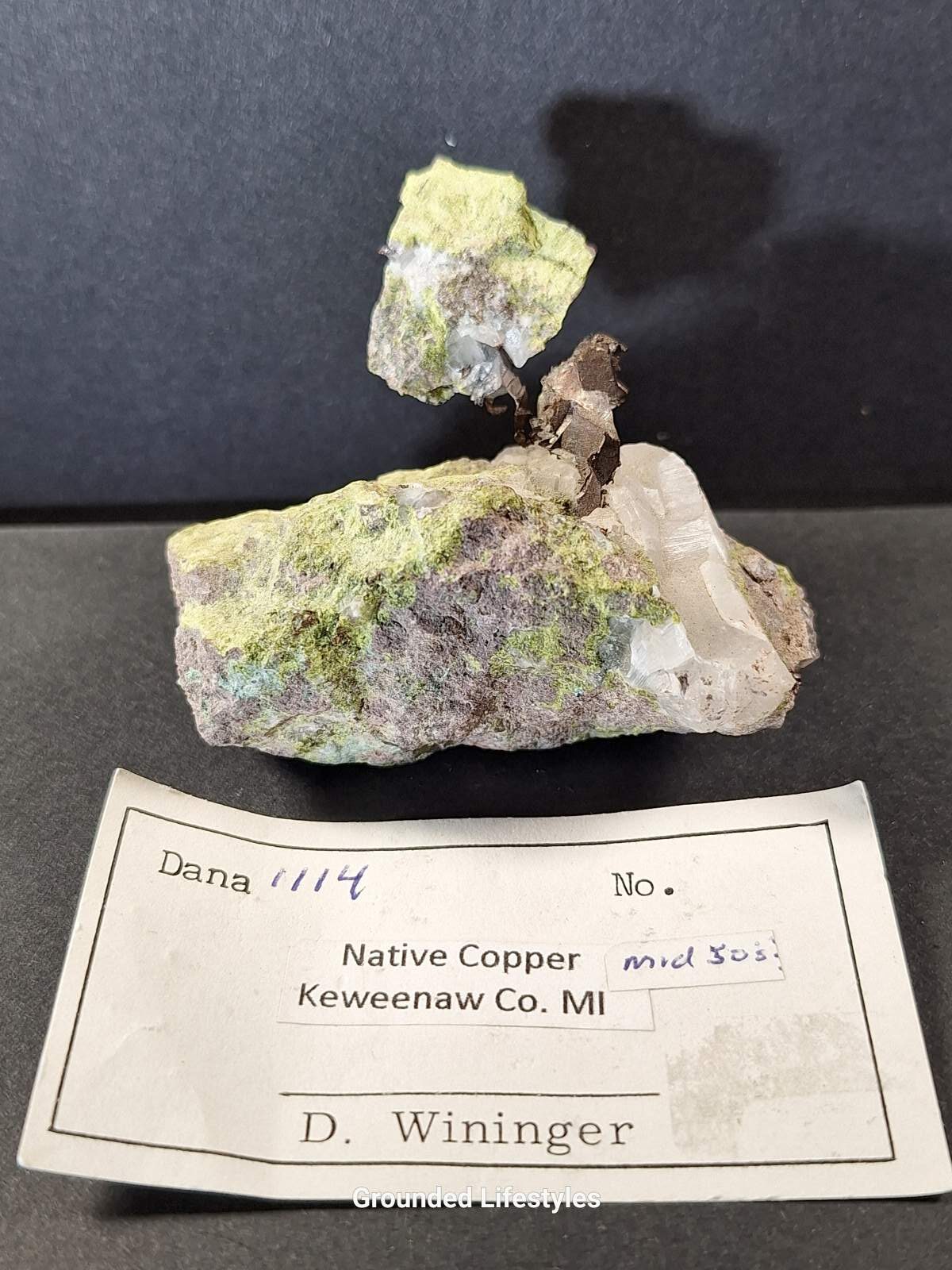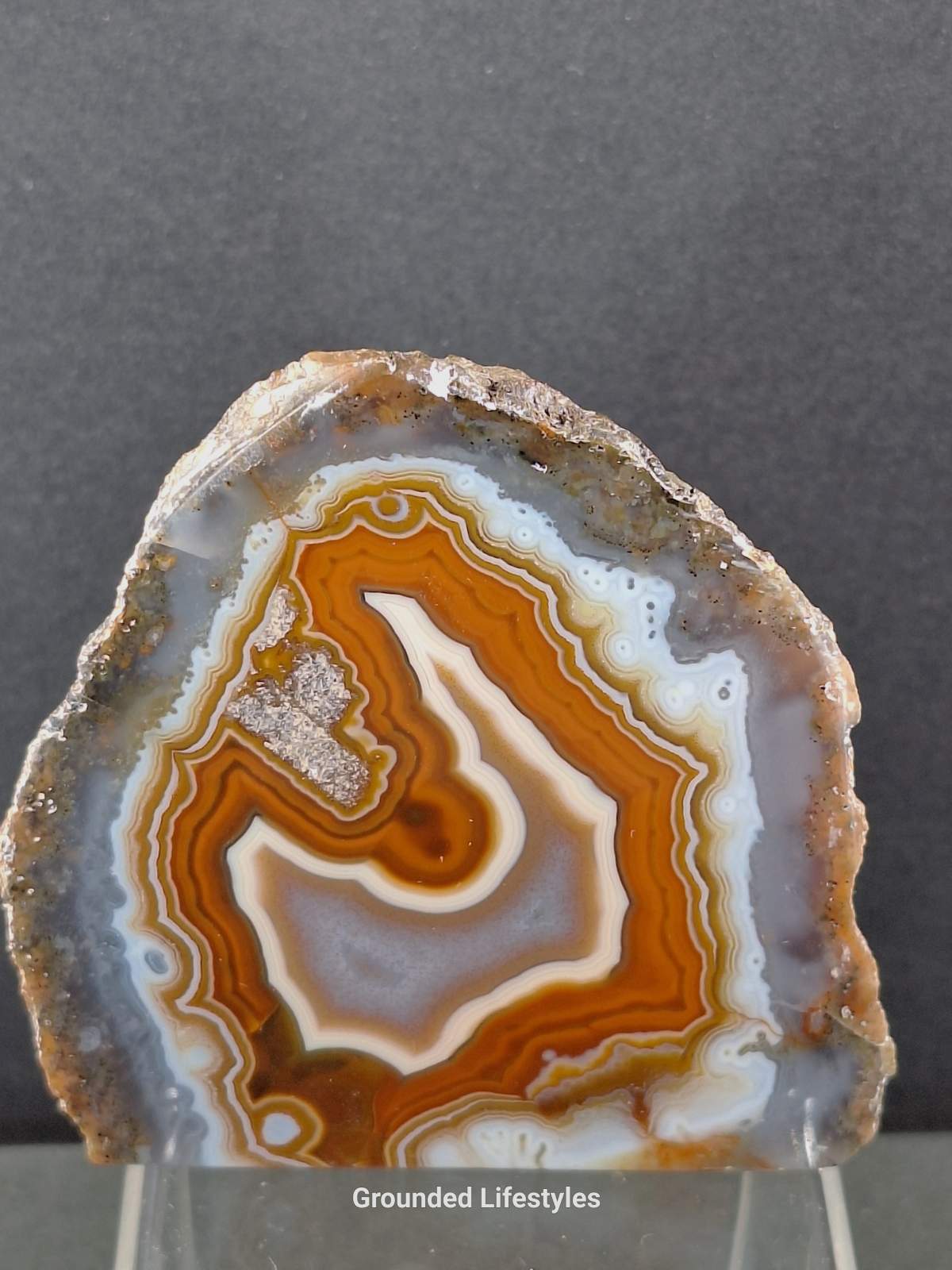

Every crystal, mineral, fossil, meteorite, and handcrafted piece is selected with purpose. Whether you’re building a museum-worthy mineral collection, searching for a meaningful gift, decorating your home with natural beauty, or beginning your journey into the world of geology, you’ll discover authentic specimens with stories worth sharing.
Over 15 shows a year throughout the Southwest. Check to see if we are coming to a show near you!
Home > Blog > Minerals Blog | Crystal Guides, Geology & Metaphysical Meaning > Donald Wininger Collection > Wulfenite of Arizona and Mexico
The Donald Wininger Collection
Few minerals belong visually to the American Southwest quite as naturally as wulfenite. Its yellow, honey, orange and red crystals seem almost borrowed from the desert itself, yet the beauty of a good wulfenite specimen goes well beyond color. Some crystals are remarkably thin and transparent, standing on matrix like tiny panes of colored glass. Others are thick, substantial plates with broad faces and deep orange color. Still others grow in crowded groups, sometimes accompanied by mimetite, calcite or other minerals that developed as the original ore deposit slowly changed near the Earth’s surface. For collectors, those differences are important because wulfenite is a mineral whose appearance can be strongly tied to where it grew.
The Donald Wininger Collection offers an especially interesting way to explore that story because it contains wulfenite from both Arizona and Mexico, including material from Gleeson, Arizona, and Los Lamentos, Chihuahua, as well as Mexican specimens whose original labels identify the country but not a specific mine. Rather than treating those unidentified pieces as a problem to be solved by guessing, they are a reminder of how older mineral collections were assembled. A collector might purchase a specimen at a mineral show, obtain it through an exchange or receive it from another collector with nothing more than “Wulfenite – Mexico” written on a small card. Decades later, the specimen remains genuine Mexican wulfenite even if the precise mine name has disappeared from its history.
That matters with wulfenite because Arizona and Mexico contain a remarkable number of occurrences. Some mines became internationally famous and developed recognizable collecting reputations, but color and crystal shape overlap enough that appearance alone should never be used to invent provenance. A thick orange Mexican crystal may resemble material from Los Lamentos without actually coming from Los Lamentos, just as an attractive orange-red Arizona plate should not automatically be labeled Red Cloud. In a historic collection, preserving what is actually known is far more valuable than making a label sound more precise.
Wulfenite is lead molybdate, PbMoO₄, and belongs to the tetragonal crystal system. Its most familiar form is the thin square or rectangular plate that has made the mineral instantly recognizable to generations of collectors. Those crystals can be extraordinarily delicate, sometimes thin enough for light to pass through them easily. Wulfenite is not limited to that form, however. Crystals can become thick and blocky, develop pyramidal modifications or grow into complicated groups in which the simple square outline is less obvious.
The colors are equally varied. Yellow, honey, orange and red-orange are the classics, although brownish and more subdued tones occur as well. Chemically pure wulfenite would be colorless, so the colors collectors prize reflect small changes in chemistry and crystal structure during growth. Those changes are one reason specimens from different deposits can develop such distinctive appearances even though they are all the same mineral species.
The more interesting part of the story is that wulfenite usually did not form when the original metal deposit was created. Many of the great Arizona and Mexican localities began as hydrothermal ore systems containing minerals such as galena along with other lead, silver, copper and zinc minerals. These primary ores formed underground under conditions very different from those found near the surface. Much later, erosion exposed the upper portions of the deposits to oxygen-rich groundwater, and minerals that had been stable underground began to break down.
This weathered portion of an ore body is known as the oxidation zone, and it can become one of the most mineralogically colorful parts of a mine. Elements released from older minerals are carried short distances through fractures and cavities before being recombined into new mineral species. Lead from galena may eventually appear in cerussite, anglesite, mimetite, pyromorphite, vanadinite or wulfenite depending on what other elements are available and what the local chemical conditions allow.
Wulfenite develops when lead and molybdate are brought together under suitable oxidizing conditions. Where open cavities are available, the crystals can grow freely instead of remaining microscopic grains trapped inside solid rock. The result can be a pocket lined with orange or yellow crystals even though the mine itself was opened for entirely different metals. This is one of the great ironies of mineral collecting: some of the specimens that eventually make a mine famous among collectors were little more than beautiful interruptions to the people trying to extract commercial ore.
The dry climate of the Southwest helped preserve these oxidation zones. Arizona and northern Mexico contain numerous metal deposits subjected to long periods of weathering in relatively arid conditions, allowing extraordinary suites of secondary minerals to develop. Wulfenite is part of that larger family of desert minerals, appearing alongside species such as mimetite, vanadinite, cerussite, azurite, malachite and smithsonite. The same general process occurred across many deposits, but the results were never identical. Differences in host rock, original ore minerals, groundwater chemistry and available trace elements gave individual districts their own mineralogical character.
Arizona’s relationship with wulfenite is unusually strong. Hundreds of occurrences have been recorded across the state, although only a fraction produced the quality of specimens that became famous internationally. The mineral’s association with Arizona became so strong that in 2017 it was designated the official state mineral.
The most celebrated name is undoubtedly the Red Cloud Mine in western Arizona. Red Cloud produced the kind of wulfenite that became a standard against which other specimens were compared: brilliant red to red-orange plates, often transparent and highly lustrous, standing dramatically from contrasting matrix. In the finest examples, light passing through a crystal intensifies the color and makes the edges appear almost illuminated. These specimens entered important collections long ago, and Red Cloud remains one of the classic American mineral localities.
The mine was not developed because somebody wanted red crystals for display cabinets. It was a lead-silver mining property, and the wulfenite formed in the oxidized portions of that larger ore system. As happened at many classic mineral localities, commercial mining inadvertently opened the underground spaces where collectors’ specimens had grown. Once a good pocket was discovered, miners or collectors had an opportunity to save specimens before continued mining destroyed them or sent them into the ore-processing stream.
Farther east, the Mammoth-Saint Anthony Mine at Tiger became another legendary Arizona locality. Tiger produced a remarkable variety of secondary minerals, including wulfenite in colors ranging from pale yellow to orange and red. Its specimens demonstrate particularly well why locality collecting can become so absorbing. Wulfenite may occur with mimetite, descloizite, mottramite, calcite and other species, turning a single piece of matrix into a record of several stages of chemical change within the deposit.
Western and southern Arizona contain still more classic names. The Old Yuma Mine, despite its name, is located near Tucson and produced notable wulfenite along with other secondary minerals. The Rowley Mine in Maricopa County became known for colorful oxidized-zone mineralization that includes wulfenite among a much broader suite. Mines within the Castle Dome and Silver districts also contributed specimens to the collector market. Arizona has many additional reported occurrences, but listing every small prospect would obscure what is more interesting: a relatively small number of deposits produced the exceptional pockets that collectors remember generations later.
A mine can expose an enormous amount of rock without ever encountering a world-class mineral pocket. Crystals need the right chemistry, enough time and, importantly, enough open space to develop. A cavity may remain sealed for geological ages before a mining face finally reaches it. When that happens, the entire production from an exceptional pocket might represent an event that will never be repeated. This is why old locality specimens can become increasingly important even when wulfenite itself is not an exceptionally rare mineral.
The wulfenite from Gleeson, Arizona, in the Donald Wininger Collection brings the story into southeastern Arizona and a mining landscape very different from the better-known Red Cloud locality. Gleeson lies in Cochise County within the historic Turquoise Mining District, also known as the Courtland-Gleeson district. Today the old town is remembered as part of Arizona’s mining past, but the surrounding hills contain numerous workings that produced copper, lead, silver and a diverse suite of secondary minerals.
Wulfenite has been documented at several workings around Gleeson, including the Gleeson Mine and nearby properties such as the Tom Scott, Silver Bill, Defiance and Mystery workings. The district produced crystals in yellow, honey and butterscotch shades as well as more transparent examples. They need not resemble the fiery red plates of Red Cloud to be desirable. In fact, the contrast is exactly what makes locality collecting interesting. Different ore systems took the same basic elements and produced wulfenite with noticeably different appearances.
The Wininger specimen also illustrates why older labels should be treated carefully. If a historic label identifies a piece simply as “Gleeson, Arizona,” that is useful provenance and should be preserved exactly as written. It would be tempting to compare the specimen visually with photographs from individual mines and then assign it to whichever working appears most likely, but several properties in the district produced wulfenite. Unless an original label or other reliable documentation identifies the mine, Gleeson is the honest and historically appropriate locality.
That restraint is especially important with estate collections. The objective should not be to make every label as detailed as possible. It should be to preserve the information that traveled with the specimen. A modest handwritten label that has remained beside a mineral for sixty or seventy years can contain more trustworthy information than a beautifully printed modern label based on an assumption.
The geological border between Arizona and Mexico is, of course, nonexistent. The same broad region contains mountain ranges, faults, intrusive rocks and metal deposits extending across the political boundary, and northern Mexico developed some of the finest oxidized lead deposits ever encountered by mineral collectors. Wulfenite flourished there as spectacularly as it did in Arizona, but often with a noticeably different appearance.
Mexico’s great contribution to wulfenite collecting is not simply that it produced more orange crystals. Individual localities developed distinct reputations. Some became known for thick, substantial plates, while others became famous for wulfenite growing with mimetite or other secondary minerals. Among these deposits, Los Lamentos in Chihuahua and the Ojuela Mine at Mapimí, Durango, became two of the most important names.
For the Donald Wininger Collection, Los Lamentos is particularly relevant because the collection contains wulfenite from this famous locality. It is a wonderful counterpart to the Gleeson material because the two specimens represent different sides of the Southwestern wulfenite story.
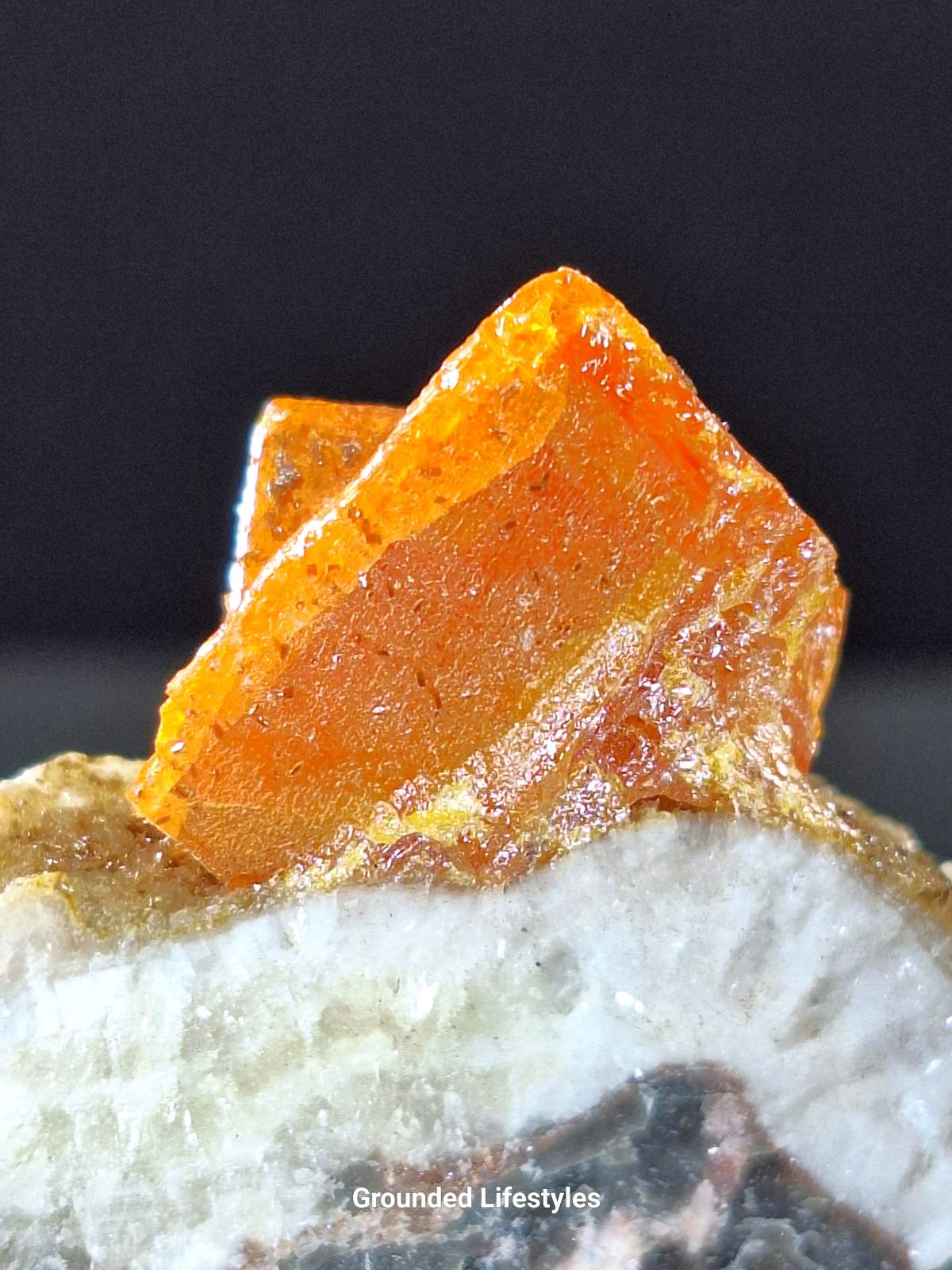
Los Lamentos wulfenite is difficult to confuse with the mental image many people have of delicate windowpane crystals. The locality became celebrated for rich orange, caramel and butterscotch crystals that can be considerably thicker and more substantial than the thin plates associated with some Arizona mines. Broad crystal faces and strong color give the best specimens a visual weight that makes them immediately impressive even when the individual crystals are not enormous.
The important wulfenite occurred within the oxidized portion of the Erupción-Ahumada ore system in the Los Lamentos Mountains of Chihuahua. Lead-rich primary ores underwent extensive alteration near the surface, and the resulting oxidized zones produced wulfenite along with cerussite and other secondary minerals. The geology followed the same broad principle seen in Arizona—the destruction of an older ore body providing the ingredients for a younger generation of minerals—but the particular chemistry and physical environment produced a style of wulfenite that became strongly associated with Los Lamentos.
The collecting history is equally important. Significant specimen production occurred during the twentieth century, particularly from the 1920s through the early 1960s, with later recoveries adding additional material. That period overlaps directly with the era represented by much of the Donald Wininger Collection. A vintage Los Lamentos specimen is therefore not simply an example from a famous Mexican locality; it may also belong to the period when the mine’s classic material was actively circulating among dealers and collectors.
This is where an old collection begins to tell us more than a newly assembled group of specimens can. A modern collector can certainly purchase a fine Los Lamentos wulfenite today, but a specimen that has remained in a collection for decades carries another layer of history. It passed through the mineral trade closer to the time when the locality was producing the material that established its reputation.
Travel south into Durango and the Ojuela Mine at Mapimí introduces a different kind of wulfenite collecting. Ojuela is one of the world’s great mineral localities, famous not because of a single species but because of the astonishing variety of minerals produced within its extensive oxidized ore zones.
Wulfenite from Ojuela occurs in yellow, orange and brownish shades and can take several crystal forms, but some of the locality’s most memorable specimens owe their appeal to association rather than to wulfenite alone. Green or yellow-green mimetite can grow beside orange or yellow wulfenite, producing a combination that is both visually dramatic and mineralogically revealing. Calcite and dark iron oxides may provide additional contrast.
These associations allow us to see something that a single isolated crystal cannot show as clearly. An ore deposit does not experience one simple chemical event. Conditions change. Water moves through different pathways. Elements become available and then disappear. One mineral begins growing, another follows, and sometimes one generation partly covers another. A specimen containing several species can preserve that sequence on a surface only a few inches across.
For a collector, this is why matrix specimens can be far more interesting than isolated crystals. The matrix is not merely something holding the wulfenite upright. It is part of the geological evidence.
The San Francisco Mine in Sonora is another important Mexican wulfenite locality and has produced impressive specimens, including examples associated with mimetite. Other occurrences are known across Sonora, Chihuahua, Durango and additional mining regions. Collectively, they create a problem that anyone working with an old estate collection eventually encounters: the specimen whose label says nothing more than “Mexico.”
It can be extremely tempting to solve that mystery visually. Thick orange crystals suggest Los Lamentos. A certain association might suggest Ojuela. The temptation becomes stronger when comparison photographs look convincing.
But resemblance is not proof.
Wulfenite habits overlap among localities, and the same general colors can appear in multiple deposits. Unless a specimen has an original mine label, documented collection record or some other reliable provenance, an exact locality should not be added simply because the specimen looks right.
The unidentified Mexican wulfenite in the Donald Wininger Collection should therefore remain identified as Mexico unless additional documentation is discovered. That does not diminish the specimen. It preserves the difference between what is known and what is suspected, which is one of the foundations of responsible mineral collecting.
Once you have seen enough wulfenite, one question becomes unavoidable. How can the same mineral produce a paper-thin red plate in one deposit and a thick orange crystal somewhere else?
The answer lies in the environment in which the crystal grew. Wulfenite may always have the basic formula PbMoO₄, but natural crystal growth is influenced by far more than the final formula. The concentration of lead and molybdate in solution, temperature, acidity, trace elements, available space and the rate at which chemical conditions change can all influence growth. Even the surface on which a crystal begins forming can affect its final shape.
Color responds to these small differences as well. Pure wulfenite is colorless, while natural specimens develop their familiar yellows, oranges and reds through subtle chemical substitutions and structural effects. That is why color can sometimes suggest a locality but cannot prove one.
For a collector, this variation is the real reason wulfenite remains interesting after the first specimen. If every locality produced identical orange squares, there would be little reason to build a specialized collection. Instead, a tray containing Red Cloud, Tiger, Gleeson, Los Lamentos and Ojuela can look like a study in how differently nature can interpret one chemical formula.
Large crystals attract attention, but size is only one part of evaluating wulfenite. Crystal form, color, luster, transparency, condition, placement on matrix, associated minerals and locality all contribute to the quality of a specimen. A small crystal standing perfectly on matrix can be more compelling than a much larger plate crowded into an unattractive group.
Condition deserves particular attention because wulfenite is not a durable mineral. It has a Mohs hardness of roughly 2.5 to 3 and is brittle. Thin crystals that survived extraction from a mine, transportation, mineral shows and decades of storage without losing their edges deserve some respect. Chips are common, especially on older specimens, and damage should always be considered in relation to the size, age and rarity of the piece.
Transparency can be especially beautiful in thin crystals. Hold a good orange or red plate toward a light source and the appearance may change completely as light moves through the crystal. Thick Los Lamentos material offers another kind of appeal, relying more on rich color, broad faces and physical presence than on delicate transparency.
Associated minerals can add considerably to the specimen. The classic Ojuela combination of wulfenite and mimetite is an obvious example, but attractive calcite, cerussite or other secondary minerals may provide contrast while also helping tell the geological story.
Locality then adds history. A fine wulfenite from Red Cloud is not desirable merely because Red Cloud is famous; Red Cloud became famous because it produced extraordinary wulfenite. The same principle applies to Los Lamentos and the other classic districts. A locality name has value when it connects a specimen to a recognized geological and collecting history.
With older material, provenance adds another dimension. A mid-century specimen accompanied by its original label has survived not only as a mineral but as part of the culture of mineral collecting. The label may tell us where it was found, and the age of the collection may tell us something about when it entered the market.
Wulfenite should be handled with more care than its bold appearance might suggest. Thin crystals are particularly vulnerable, and even thicker crystals can chip along their edges. The safest approach is to handle a specimen by solid matrix whenever possible and avoid touching the crystals themselves.
Cleaning should be equally conservative. An old specimen that has accumulated a little dust does not necessarily need aggressive cleaning. Brushes can catch beneath thin plates, water may affect old labels or adhesives, and chemical cleaners can react unpredictably with associated minerals. Estate specimens have already survived decades of movement and storage; preserving what has survived should take priority over making them look newly mined.
The same principle applies to labels. Keep the original label even if a new one is created for display. A stained card with faded handwriting may look insignificant, but if it is the only record connecting a specimen to Gleeson or Los Lamentos, it is part of the specimen’s value.
Wulfenite has also developed a place in modern metaphysical traditions, where it is commonly associated with creativity, motivation, confidence and the ability to bring ideas into tangible form. Orange and yellow specimens are often symbolically connected with enthusiasm and creative energy. These are traditional spiritual associations rather than scientifically demonstrated properties, but they are part of the way some collectors and crystal enthusiasts choose to relate to the mineral.
Interestingly, the actual geology of wulfenite provides its own powerful symbolism. Wulfenite is quite literally a mineral born through transformation. An older ore deposit begins to break down as groundwater and oxygen enter it. Minerals that once formed deep underground become unstable. Their elements are released and rearranged, and under the right circumstances those ingredients create something completely new.
The bright orange crystal in a display case exists because an older mineral was altered.
The science is every bit as interesting as the symbolism.
Wulfenite is only one part of the much larger mineral story preserved in the Donald Wininger Collection. Built across three generations, the collection brings together specimens from classic mining districts throughout the United States, Canada and Mexico, many with the kind of locality and collecting history that gives older minerals their lasting appeal.
Continue through the Donald Wininger Collection Articles to explore more of the mines, geology and collector stories represented in the archive. You can also browse the Donald Wininger Collection to see available specimens from the estate and discover pieces that connect directly to the history preserved throughout the collection.

At Grounded Lifestyles, our love for crystals began in the peaceful flow of Reiki and energy healing sessions — where we saw how natural stones could amplify intentions, restore balance, and bring comfort. But the more time we spent with these treasures, the more curious we became about their origins. That curiosity led us into the fascinating world of geology and mineral specimen collecting. We fell in love not just with the energy of crystals, but with the science and artistry of their creation — the intricate crystal structures, the vibrant mineral hues, and the wonder of holding a piece of Earth’s history in our hands.