
Every crystal, mineral, fossil, meteorite, and handcrafted piece is selected with purpose. Whether you’re building a museum-worthy mineral collection, searching for a meaningful gift, decorating your home with natural beauty, or beginning your journey into the world of geology, you’ll discover authentic specimens with stories worth sharing.
Over 15 shows a year throughout the Southwest. Check to see if we are coming to a show near you!
Home > Blog > Minerals Blog | Crystal Guides, Geology & Metaphysical Meaning > Apatite from the Yates Mine, Otter Lake, Quebec
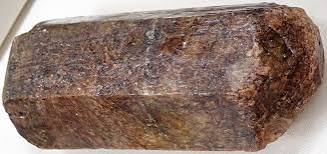
Donald Wininger Collection
The apatite specimen from the Donald Wininger Collection carries a familiar old Canadian label: Yates Mine, Otter Lake, Quebec. To a locality collector, that name already gives the piece importance. Yates is associated with fluorite, calcite, scapolite, diopside, titanite and an unusually varied group of uranium- and thorium-bearing minerals. Yet the apatite from this site deserves attention for a reason that could not have been known to the people who first extracted it.
For decades, collectors valued Yates apatite primarily for its crystal form, color and association with orange or salmon-colored calcite. The crystals commonly occur as well-developed hexagonal prisms, sometimes partly enclosed by the carbonate matrix in which they formed. What appeared to be a handsome but straightforward example of a widespread mineral eventually became the subject of detailed mineralogical study.
Researchers cut and polished fluorapatite prisms from the locality and examined the material trapped inside them. The crystals contained microscopic globules and complex intergrowths of carbonate, silicate and sulfate minerals. One studied prism even enclosed a visible globule of orange calcite resembling the surrounding matrix. These were not simply stains or later material that had entered fractures. They were interpreted as portions of the crystal-forming medium captured while the apatite was still growing.
The result changed the way the occurrence could be understood. These apatite crystals were not passive occupants of an ordinary calcite vein. They had preserved fragments of their own birthplace.
That is the central story of this specimen.
Yates apatite is valuable as a classic Canadian mineral, but it is also a geological container. Its inclusions carry evidence that the enclosing orange calcite was once part of an unusual carbonate-rich melt produced during the closing stages of a continental collision nearly one billion years ago. What looks solid and settled today began in an environment of extreme heat, deformation, melting, reaction and rapid crystallization.
The property lies northwest of the community of Otter Lake in Quebec’s Pontiac region, within the Central Metasedimentary Belt of the Grenville Province. Historical accounts indicate that the site was worked in the early twentieth century for mica and fluorite. Mineralization at the property was reported by 1907, decades before uranium exploration transformed the workings and gave the locality its best-known name.
This early history places Yates within a wider period of mining across western Quebec and eastern Ontario. Numerous small operations pursued mica, feldspar, apatite and fluorite in a landscape underlain by ancient metamorphic rocks. These were not always large, long-lived mines. Many were pits, trenches and short underground workings opened where a useful mineral concentration or exceptionally coarse vein could be followed.
The direction of exploration changed during the uranium boom of the 1950s. Yates Uranium Mines Incorporated explored the property from 1953 through 1956 and identified six radioactive zones known as the Matte, Camp, Lake, Belanger, Cliff and Belisle zones. The Matte zone received drilling, underground exploration and bulk sampling, while additional drilling was completed elsewhere on the property. A 1979 assessment described the site as nine miles northwest of Otter Lake and documented a network of mineralized zones rather than one simple orebody.
The exploration history matters because “Yates Mine” can suggest a single underground mine with one uniform deposit. In reality, the property contained several mineralized settings. Radioactive minerals occurred in marble and fluorite-rich units, marble-pyroxenite or calc-silicate rocks, and possibly pegmatitic bodies. That diversity helps explain the number of mineral species associated with the locality and the different appearances found among surviving specimens.
At the Matte prospect, trenches exposed a band several feet thick composed largely of calcite marble with fluorite and smaller amounts of apatite, pyroxene and phlogopite. The marble ranged from cream to salmon in color, while purple fluorite appeared in bands, fragments and coarser clusters. The 1979 report described apatite and dark silicate minerals as shattered porphyroblasts within this deformed marble-fluorite unit. Radioactive minerals, including uranothorite, thorite and allanite, were distributed irregularly through the rock.
This description gives the Donald Wininger specimen a useful setting. Apatite did not occur in isolation. It belonged to a mineral association shaped by carbonate rock, fluorine-rich material, high-grade metamorphism and later structural disturbance. Depending on where an individual specimen originated within the property, its matrix and associated minerals may preserve part of that more complicated history.
Although uranium brought substantial exploration, Yates did not become one of Canada’s great producing uranium mines. Its lasting importance developed in another direction. Openings created for commercial investigation exposed mineral associations that attracted collectors, and specimens dispersed into clubs, museums and private cabinets. The locality became known not for one overwhelmingly dominant display mineral but for the range of material that could emerge from its calcite-rich zones.
Fluorapatite became one of its most recognizable classics.
The rocks around Otter Lake belong to the Grenville Province, a vast geological belt created during a series of mountain-building events that culminated roughly one billion years ago. At that time, continental fragments converged during the assembly of the supercontinent Rodinia. Rocks were buried, heated, compressed, folded and recrystallized at great depth.
The landscape now visible in western Quebec is the eroded interior of that ancient mountain system. The peaks have long disappeared. What remains are rocks that once occupied the deeper parts of the crust.
At Yates, these include paragneiss, marble and calc-silicate rocks intruded or modified by later granitic material. A government assessment described the area as underlain by paragneiss and marble of the Grenville Supergroup together with younger granitic intrusions. The broader metasedimentary sequence includes marble, calc-silicate rock, amphibolite, quartzite and several varieties of gneiss.
For many years, mineralized carbonate bodies in the Grenville were interpreted mainly as veins deposited from hot fluids or as unusual altered layers within older sedimentary rock. The origin of the calcite-rich “vein-dikes” found at Yates and related localities remained difficult to explain. They could contain large, sharply formed crystals enclosed in calcite, yet their textures did not always fit neatly into the conventional categories of pegmatite, hydrothermal vein or ordinary metamorphic marble.
The apatite provided evidence for a different interpretation.
In the 2019 study of Yates fluorapatite, researchers examined prisms enclosed by orange-to-pink calcite. Microscopic inclusions within the apatite contained intricate, tightly intergrown assemblages of carbonate, silicate and sulfate minerals. Some early-formed minerals appeared to have been partly dissolved and replaced as the inclusions cooled. These miniature assemblages differed from the relatively simple calcite matrix outside the apatite crystals.
The researchers concluded that the apatite grew in a silicocarbonatitic melt.
That term is technical, but the underlying idea is understandable. Marble is a metamorphic rock formed when limestone or dolostone recrystallizes. Under sufficiently high temperatures—and with water present—carbonate rock may begin to melt. That carbonate melt can then react with or dissolve portions of nearby silicate-rich gneiss. The resulting liquid is no longer purely carbonate; it contains both carbonate and silicate components, together with fluorine, phosphorus and other elements capable of forming an unusual suite of minerals.
At Yates, the proposed melt originated through partial melting, or anatexis, of marble during the late stages of the Grenville mountain-building episode. As it interacted with the surrounding gneiss, it acquired a more silicate-rich composition. The study also proposed that an externally derived fluid contributed fluorine and possibly uranium and thorium to the system.
This interpretation explains several features that make the occurrence distinctive.
First, it accounts for apatite crystals enclosed directly in calcite. The apatite was not necessarily deposited long after the carbonate matrix. Both were parts of one evolving melt system.
Second, it explains the tiny inclusions. As a fluorapatite crystal grew, it selected calcium, phosphorus and fluorine from the surrounding liquid. Elements that did not fit readily into the apatite structure accumulated in a thin boundary layer near the crystal surface. Small portions of that enriched liquid became trapped inside the growing crystal. When the inclusions cooled, their contents crystallized into multiple microscopic minerals packed together like pieces in a mosaic.
Third, the evidence suggests that growth could be rapid. Degassing—loss of a volatile phase from the melt—may have caused the system to crystallize quickly. This helps explain how a prism could capture globules of the surrounding carbonate-rich material rather than allowing them to escape or fully react.
The apatite therefore records both the composition of the melt and the physical circumstances of its growth. Its outer crystal form tells one part of the story; the trapped inclusions tell another.
The study placed this event during the Rigolet stage, the late phase of the Grenville orogeny. Subsequent research on the region’s varicolored marbles has continued to examine melting in carbonate-rich crustal rocks, treating Yates as an important example rather than a mineralogical curiosity.
This is what could happen at Yates that could not happen in an ordinary sedimentary deposit. The locality combined carbonate rock, extreme metamorphic heat, water, nearby silicate-rich wall rock and chemically distinctive fluids during a major continental collision. That combination created a short-lived melt capable of growing large fluorapatite prisms and sealing part of itself inside them.
“Apatite” is a group name rather than the current formal name of a single mineral species. The apatite-group structure can contain fluorine, chlorine or hydroxyl in one of its principal sites. Material documented from Yates is chiefly identified as fluorapatite, with the formula Ca₅(PO₄)₃F. Historical specimen labels, however, commonly use the simpler and still familiar name apatite.
The distinction is useful for accurate description, but it should not overshadow the specimen. On an older label, “apatite, Yates Mine” is not an error that erases the piece’s history. It reflects the naming conventions used by generations of collectors.
Yates fluorapatite commonly appears as prismatic crystals in calcite-rich matrix. Green is especially associated with the locality, though individual pieces vary in saturation, transparency and surface condition. Documented associations include calcite, fluorite, pyroxene-group minerals, titanite and diopside-hedenbergite-series minerals.
The orange or salmon-colored calcite is especially informative when present. It is not merely a contrasting background added to improve the specimen’s appearance. It belongs to the geological event that produced the apatite. A specimen retaining that matrix preserves the relationship between crystal and host, making it more useful for understanding the occurrence than an isolated prism with no locality label.
Collectors may evaluate a Yates apatite through several connected features rather than by size alone.
A clearly developed hexagonal prism provides immediate visual evidence of the mineral’s crystal structure. Complete terminations are desirable, although crystals partly enclosed by calcite can be equally representative of the occurrence. Natural contact areas should not automatically be mistaken for damage; a crystal that formed against the matrix will not display a free face where growth space was unavailable.
Surface quality also varies. Some prisms have bright, reflective faces, while others are frosted, etched, fractured or partly recrystallized. The historical mining report’s description of shattered apatite porphyroblasts shows that not all breakage happened during extraction. The marble-fluorite unit experienced deformation and plastic flow during its geological history, and some crystals were fractured before anyone opened the workings.
This distinction matters when examining an older specimen. A repaired termination or fresh mining break affects condition differently from an ancient healed fracture or an irregular area caused by contact with calcite. A knowledgeable assessment considers how the crystal grew and what the surrounding rock endured.
Association minerals can add interest without requiring a crowded specimen. Purple fluorite against orange calcite and green fluorapatite creates one of the locality’s most recognizable combinations. Dark pyroxene or diopside may provide additional contrast. Titanite, phlogopite and other minerals broaden the geological context when correctly identified.
Labels deserve the same scrutiny as the crystal. “Yates Mine,” “Yates uranium property,” “Yates prospect” and similar forms may all appear in older records. The property has also been described historically in Huddersfield Township, Pontiac County or Pontiac Regional County Municipality, depending on the era and source. Variations in administrative terminology do not necessarily indicate different localities.
A label written near the time a specimen entered a collection is especially valuable. It can preserve a locality attribution that would be difficult to reconstruct after the specimen becomes separated from its records. Dealer labels, mineral-club exchange tags, catalogue numbers and estate inventories may establish a chain of ownership even when the original field label is absent.
For the Donald Wininger specimen, its greatest strength may be the combination of mineral and locality rather than any single aesthetic measurement. A crystal from Yates brings together a recognizable occurrence, a complicated mining history, a scientifically important formation environment and a collecting tradition that extended through much of the twentieth century.
That is a substantial amount of history for one apatite specimen to carry.
No surviving specimen can explain the precise decision that placed it in a collector’s cabinet. Unless Donald recorded when and why he obtained this apatite, any answer must remain an informed interpretation rather than a fact.
The collection itself offers a clue. Donald Wininger and the two generations before him did not preserve only spectacular display pieces. The collection includes specimens tied to particular mines, quarries and regional collecting traditions. Some are important because they document a mineral species; others preserve a locality that may no longer be represented by newly collected material.
Yates apatite fits naturally within such a collection.
It comes from a mine with several different identities. The site began as a source of industrial minerals, became a uranium prospect during the atomic era and endured as a destination known to mineral collectors. The apatite belongs to every phase of that history. It was one of the minerals encountered before uranium became the central commercial objective, one of the accessories documented in the radioactive marble-fluorite unit, and one of the crystals that later gave the locality a reputation beyond ore exploration.
A collector working during the middle decades of the twentieth century would not have known the full story now revealed by modern microscopy. What could be recognized was the specimen’s origin: a well-known Grenville locality producing distinctive apatite in colored calcite.
That may have been enough. Locality collecting depends on an understanding that the identity of a specimen is partly geographic. Fluorapatite is not rare as a mineral species. An unlabeled green apatite prism might be attractive but difficult to place. Attach Yates Mine to it, and the specimen joins a specific geological association and a documented chapter of Quebec mining history.
Donald’s decision to retain the piece also preserved an opportunity for later interpretation. Scientific knowledge does not remain fixed. Specimens gathered for their appearance or locality can acquire new importance when analytical techniques improve or when geologists revisit an old occurrence with a different question.
The research on Yates fluorapatite illustrates this perfectly. Crystals that had been known to collectors for decades eventually provided physical evidence for marble melting and the creation of a silicocarbonatitic liquid in the deep Grenville crust. The discovery did not require a newly found mineral. It required someone to look more closely at a familiar one.
Old collections make that possible. They retain material after mines close, workings collapse, exposures weather or collecting conditions change. A properly labeled specimen becomes a permanent sample of a locality that researchers can compare, reanalyze and reinterpret. Even when a piece never enters a laboratory, it preserves evidence that would otherwise have been reduced to a photograph or a sentence in an old report.
This is one reason provenance matters beyond monetary value. It keeps the geological evidence attached to the place that produced it.
The Yates property continues to be discussed within regional mineral clubs, and organized visits have occurred in recent years. That means it should not be described simply as a permanently inaccessible or completely exhausted locality. Access conditions can change, however, and a historical mine or prospect should never be entered or collected without current permission, local guidance and appropriate safety precautions.
Older specimens remain especially attractive because they may document material from zones exposed during earlier phases of trenching or underground work. A specimen collected during uranium exploration may have come from rock no longer visible at the surface. Even where collecting continues, the exact context of historic material may be impossible to reproduce.
For this reason, original labels should remain with the specimen. They should not be discarded because the handwriting is faded, the mineral name is dated or the locality uses an older jurisdiction. Place old tags in an archival envelope if they are too fragile to display. A modern label can clarify current nomenclature while preserving the wording of the original.
A useful modern entry might read:
Fluorapatite
Yates Mine (Yates uranium prospect)
Otter Lake area, Pontiac RCM, Outaouais, Quebec, Canada
Ex. Donald Wininger Collection
The original “apatite” identification can remain in the catalogue notes rather than being overwritten.
Fluorapatite has a Mohs hardness of about 5, making it harder than calcite but still vulnerable to scratches from quartz and many common silicate minerals. It also has brittle behavior and imperfect cleavage. A matrix specimen should be lifted from its strongest rock base rather than by a projecting crystal.
Calcite requires additional care. Acids will attack it, and even mild acidic household cleaners can dull or etch the surface. Ultrasonic cleaning is inappropriate for a fractured or matrix-bound specimen because vibration may dislodge crystals or open existing weaknesses. Water cleaning should be conservative, particularly when the piece contains unknown secondary minerals, old repairs or a friable matrix.
A soft brush and controlled air are usually adequate for routine dusting. Any heavier cleaning should begin with close inspection under magnification. Historic specimens do not need to look newly mined. Soil in a crevice, an old collection number or a stable coating may be part of the object’s history and should not automatically be removed.
Because the property contains uranium- and thorium-bearing minerals, the specimen should also be checked rather than assumed to be nonradioactive merely because its principal mineral is apatite. Fluorapatite itself is not necessarily a radiation concern, but matrix or associated grains may include radioactive species documented from Yates. A basic survey meter can identify whether special handling or storage considerations are warranted. The 1979 investigation recorded uranothorite, thorite and allanite in the marble-fluorite unit and other radioactive minerals elsewhere on the property.
When no elevated reading is detected, ordinary mineral-cabinet precautions are generally appropriate. When radioactivity is present, the specimen should be labeled accurately, stored away from regularly occupied spaces and handled according to its measured activity and mineral stability. Powder, loose fragments and dust should be avoided.
These precautions protect both the specimen and its history.
Mineral: Fluorapatite, historically labeled apatite
Formula: Ca₅(PO₄)₃F
Crystal system: Hexagonal
Typical Yates occurrence: Prismatic crystals in orange, pink or salmon-colored calcite-rich material
Documented associations: Calcite, fluorite, pyroxene-group minerals, diopside, titanite, phlogopite and several uranium- or thorium-bearing species
Locality: Yates Mine or Yates uranium prospect, northwest of Otter Lake, Pontiac RCM, Outaouais, Quebec, Canada
Historic commodities: Mica and fluorite during the site’s early workings; uranium and thorium during mid-twentieth-century exploration
Primary collecting interest: Classic Canadian locality, attractive fluorapatite crystals, distinctive calcite matrix and unusual geological origin
Most important label note: Preserve older names and jurisdictional descriptions rather than replacing them
Care: Avoid acids, ultrasonic cleaning, hard brushing and lifting the specimen by an exposed crystal
Safety: Test matrix specimens for radioactivity because radioactive accessory minerals are documented at the property
Apatite is traditionally associated with motivation, learning, communication and the pursuit of new ideas. Green varieties are often linked in modern metaphysical practice with balance, renewal and a stronger connection to the natural world.
These associations are cultural and spiritual interpretations rather than scientifically demonstrated properties. They should not be used as substitutes for medical or mental-health care.
For this particular specimen, the most meaningful connection may be less abstract. Yates apatite rewards curiosity. Its outward form is attractive, but its deeper importance only emerged when researchers investigated what the crystal had trapped during growth. In that sense, it serves as an unusually fitting symbol for close observation and continued learning.
Documented studies identify the notable Yates prisms as fluorapatite. Older collectors and labels commonly used the broader name “apatite,” which remains understandable in historical collection records.
Its importance comes from more than color or crystal form. Researchers found complex melt inclusions inside fluorapatite prisms and interpreted them as evidence that the crystals grew in a silicocarbonatitic melt created partly through the melting of marble.
The crystal-forming event is associated with the late Grenville orogeny, close to one billion years ago. Geochronological work cited in later studies places relevant Yates events around the Rigolet stage of the Grenville mountain-building cycle.
No. The property was initially worked for minerals including mica and fluorite and was later explored extensively for uranium and thorium. Apatite became important mainly as a mineral specimen rather than as the principal twentieth-century ore target.
No. Many inclusions are microscopic and require prepared sections and specialized analytical equipment to study. A specimen can be representative of the occurrence without showing a visible inclusion.
The orange-to-pink calcite forms the matrix around many Yates fluorapatite prisms. Research supports a more complex origin involving a carbonate-rich melt rather than treating the color simply as superficial staining. Iron-bearing material may influence coloration, but the entire calcite association is geologically significant.
Fluorapatite is not automatically radioactive. However, uranium- and thorium-bearing minerals occur at the property, so matrix specimens should be checked individually rather than judged by appearance.
It should not be characterized categorically as closed. Organized mineral-club visits have taken place, but access is conditional and can change. Collectors should obtain current permission and follow local safety requirements.
The Yates Mine apatite in the Donald Wininger Collection was preserved before researchers knew everything it contained.
At the time it entered a cabinet, its reasons for being kept were likely visible: a recognizable crystal, an important Quebec locality and a mineral association characteristic of the Grenville region. Those qualities remain. What has changed is our ability to read the evidence held inside the crystal.
The fluorapatite prisms captured droplets and boundary-layer material as they grew. Those inclusions survived the cooling of the melt, the erosion of an ancient mountain belt, the opening of the mine and decades of movement through human hands. Under magnification, they revealed that marble at Yates did more than recrystallize. It partially melted, reacted with surrounding rock and formed a chemically unusual liquid capable of producing the crystals collectors later recovered.
Few specimens offer such a direct link between appearance and origin.
The mine’s twentieth-century history also gives the piece another dimension. Yates moved through changing ideas of what made the property valuable. Mica and fluorite first drew attention. Radioactive minerals inspired exploration during the uranium era. Collectors then recognized that the site’s lasting contribution might be the mineral specimens exposed along the way.
Apatite connects all three histories.
It occurred within the marble-fluorite system that attracted early mining, stood beside the uranium- and thorium-bearing minerals investigated in the 1950s, and became one of the locality’s most enduring collector species. Later, it helped geologists understand the extraordinary event that made the occurrence possible.
That is why an old labeled specimen matters.
Its importance is not limited to what can be seen across a display case. The crystal is also an archive—one that preserved part of a vanished melt for almost a billion years and carried it forward until someone knew how to read it.
In the Donald Wininger Collection, the Yates apatite is not simply another green crystal. It is the surviving witness.
Apatite is just one chapter in the remarkable story of Earth’s mineral treasures. We invite you to continue exploring the Mine to Mind series, where each article follows a specimen from its geological origins to its place in a collector’s cabinet. Enjoy more from the Donald Wininger Collection: dolomite, fluoro-richterite, zircon crystal, hexagonite, sand calcite, uranophane, Native Silver from Cobalt and more. Along the way you’ll discover the science, history and human stories that make every mineral unique.
If you’re attending one of the upcoming gem and mineral shows, stop by the Grounded Lifestyles booth to see selections from the Donald Wininger Collection in person. Nothing compares to viewing these classic specimens under natural light, where the metallic brilliance and intricate crystal growth reveal details that photographs simply cannot capture.
This Yates Mine apatite is part of the Donald Wininger Collection, a three-generation mineral collection spanning specimens acquired from the 1940s through the 2000s. The collection includes minerals from historic localities across the United States, Canada, Mexico and beyond, with many specimens dating from the height of American mineral collecting in the 1950s and 1960s.
Explore available specimens from the Donald Wininger Collection and discover historic minerals, classic localities and pieces that preserve decades of collecting history.
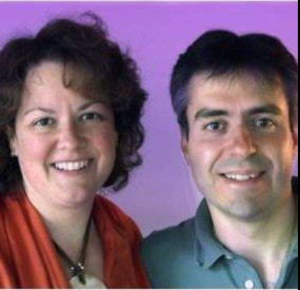
At Grounded Lifestyles, our love for crystals began in the peaceful flow of Reiki and energy healing sessions — where we saw how natural stones could amplify intentions, restore balance, and bring comfort. But the more time we spent with these treasures, the more curious we became about their origins. That curiosity led us into the fascinating world of geology and mineral specimen collecting. We fell in love not just with the energy of crystals, but with the science and artistry of their creation — the intricate crystal structures, the vibrant mineral hues, and the wonder of holding a piece of Earth’s history in our hands.