
Every crystal, mineral, fossil, meteorite, and handcrafted piece is selected with purpose. Whether you’re building a museum-worthy mineral collection, searching for a meaningful gift, decorating your home with natural beauty, or beginning your journey into the world of geology, you’ll discover authentic specimens with stories worth sharing.
Over 15 shows a year throughout the Southwest. Check to see if we are coming to a show near you!
Home > Blog > Minerals Blog | Crystal Guides, Geology & Metaphysical Meaning > Serpentine from the Ropes Gold Mine, Michigan
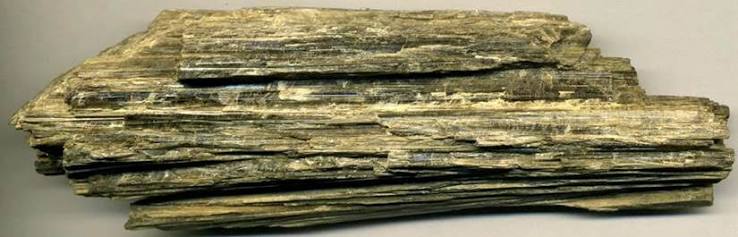
Donald Wininger Collection
Some specimens are admired because of brilliant crystals. Others because of exceptional rarity.
Serpentine from the Ropes Gold Mine earns its place in a collection for a different reason—it tells one of the oldest geological stories on Earth.
At first glance, it may seem modest compared to sparkling quartz or vibrant fluorite. Its smooth green surface and waxy luster don’t immediately suggest that it originated deep within Earth’s mantle nearly 2.7 billion years ago or that it comes from the site of Michigan’s first successful commercial gold mine. Yet that is precisely what makes it remarkable.
The specimen featured here comes from the Donald Wininger Collection, a three-generation family collection assembled by Donald Wininger, his father, and his grandfather during the golden age of American mineral collecting. More than simply preserving attractive specimens, the collection preserves the stories behind the localities that shaped the hobby. Few localities combine ancient geology and mining history as completely as the Ropes Gold Mine.
Every piece of serpentine from this historic property is a reminder that extraordinary stories are often hidden beneath quiet surfaces.
Rock Name: Serpentine
Primary Minerals: Antigorite, lizardite, and other serpentine-group minerals
Mineral Group: Serpentine Group (Phyllosilicates)
Historic Locality: Ropes Gold Mine, near Ishpeming, Marquette County, Michigan
Geologic Province: Marquette Greenstone Belt, Superior Craton
Age of Host Rocks: Approximately 2.7 billion years
Color: Shades of green from pale olive to deep emerald
Luster: Waxy to silky
Collector Appeal: ★★★★☆
Historic Significance: Exceptional
Difficulty to Replace: Moderate to High
One of the greatest strengths of the Donald Wininger Collection is its diversity.
Alongside spectacular crystal specimens are pieces chosen because they represent places that changed the history of geology and mineral collecting. These are localities whose stories are every bit as valuable as the minerals themselves.
The Ropes Gold Mine is one of those places.
Specimens from this historic Michigan mine were collected during a time when visitors could still acquire material from one of the Midwest’s most significant mining districts. Many retain original handwritten labels, preserving not only where they came from but also the history of the collectors who recognized their importance.
Today, those specimens provide a tangible connection to a mine that helped establish Michigan as a gold-producing state while exposing rocks that record some of the earliest chapters in Earth’s history.
One of the first surprises many collectors encounter is that serpentine is not a single mineral. Instead, the name refers to a group of closely related minerals that form when magnesium-rich rocks undergo a remarkable geological transformation known as serpentinization.
The serpentine group includes three principal minerals:
Each has the same basic chemical composition but differs in crystal structure and physical appearance. Most massive green specimens from the Ropes Gold Mine are composed primarily of antigorite, although historic labels almost always identify them simply as “serpentine.” That traditional labeling remains entirely appropriate for collectors, but understanding the distinction adds another layer of appreciation for these specimens.
Rather than representing one mineral, they record an entire geological process.
The story of serpentine begins far below Earth’s surface. Long before the rocks of northern Michigan existed as dry land, portions of Earth’s upper mantle consisted of dense ultramafic rocks rich in olivine and pyroxene.
These rocks formed under enormous temperatures and pressures where water was almost entirely absent. Then something extraordinary happened. As tectonic plates shifted and fragments of oceanic crust were uplifted, water penetrated deep fractures within these mantle rocks. That water triggered a series of chemical reactions.
Olivine and pyroxene slowly altered into serpentine minerals. The transformation changed nearly every aspect of the rock. Its color shifted from dark gray to vibrant shades of green. Its density decreased. Its texture became smoother. Its surface developed the waxy luster collectors recognize today.
This remarkable process, known as serpentinization, continues to occur in parts of the world where oceanic mantle rocks are exposed to circulating groundwater.
The specimen from the Donald Wininger Collection represents one chapter of that transformation—one that began billions of years ago and eventually became part of Michigan’s remarkable geological heritage.
The Ropes Gold Mine lies within the Marquette Greenstone Belt, one of the oldest geological provinces in North America. These rocks formed approximately 2.7 billion years ago, during the Archean Eon—a time when Earth’s continents were still developing and life consisted only of microscopic organisms living in ancient oceans.
The greenstone belt preserves a complex sequence of volcanic rocks, sedimentary deposits, iron formations, and intrusive bodies that have been altered through multiple episodes of mountain building and metamorphism. For geologists, the region provides an invaluable record of early continental evolution.
For mineral collectors, it has produced an extraordinary variety of minerals and ores, including iron, gold, quartz, sulfides, and serpentine. Few places in the Midwest preserve such an ancient geological history so beautifully.
Although serpentine is the focus of this article, the locality itself owes its fame to another mineral entirely.
Gold.
In the late nineteenth century, the discovery of gold-bearing quartz veins transformed the Ropes property into Michigan’s first commercially successful gold mine. Those veins cut through ancient altered ultramafic rocks, schists, and associated formations within the Marquette Greenstone Belt.
As miners pursued the precious metal, they exposed beautiful masses of green serpentine that would eventually become collector specimens in their own right. The relationship between gold and serpentine is more than coincidence.
Both are products of the same long geological history—a history shaped by tectonic activity, hydrothermal fluids, and immense spans of geological time. Without those ancient processes, neither the gold nor the beautiful green serpentine would exist.
Few mining properties have played a more important role in Michigan’s history than the Ropes Gold Mine. While the Upper Peninsula is known worldwide for its vast iron and copper deposits, relatively few people realize that Michigan also experienced a successful gold mining era. At the center of that story was a modest property a few miles southwest of Ishpeming that proved gold could be mined profitably in the Lake Superior region.
For collectors, the Ropes Gold Mine represents far more than a source of serpentine. It is a locality where ancient geology, economic history, and mineral collecting intersect. Every specimen from the mine carries the story of one of North America’s oldest rock formations and one of Michigan’s most ambitious mining ventures.
The history of the mine begins with Julius A. Ropes, a businessman and investor from Ishpeming who became interested in reports of gold occurring within the ancient rocks of the Marquette Greenstone Belt during the late nineteenth century.
Prospectors had found traces of gold throughout the district for years, but most discoveries proved too small or too erratic to support commercial mining. Ropes believed otherwise. After acquiring mining claims and financing exploration, his confidence was rewarded when drilling and underground work identified quartz veins containing free gold and sulfide mineralization. Construction of the mine soon followed, and by 1881 the property had become Michigan’s first commercially successful gold mine.
For a state already famous for copper and iron, the discovery attracted widespread attention. Newspapers hailed the possibility of a new mining industry, investors poured money into exploration, and prospectors searched neighboring properties in hopes of repeating the success. Although few mines matched the Ropes operation, its discovery permanently secured its place in Michigan mining history.
Unlike the spectacular gold nuggets often associated with placer deposits in the American West, the Ropes Mine produced lode gold.
Here, gold occurred within quartz veins that cut through ancient volcanic and ultramafic rocks. Hot hydrothermal fluids circulating deep beneath the Earth’s surface deposited quartz along fractures while simultaneously carrying dissolved gold, pyrite, arsenopyrite, and other minerals. Over millions of years these veins solidified, locking microscopic and visible gold within the quartz.
Recovering the precious metal required crushing the ore, concentrating the heavier minerals, and extracting the gold through milling processes that were advanced for their time.
Although the quartz veins received most of the attention, the surrounding altered ultramafic rocks—now transformed into beautiful green serpentine—record the same geological events that made the gold deposit possible.
One of the most interesting aspects of the Ropes Gold Mine is the close relationship between the gold deposit and the surrounding serpentinized rocks.
Originally, these rocks were rich in olivine and pyroxene, minerals that crystallized deep within Earth’s mantle. Over immense spans of time they were altered by hot, chemically active fluids that transformed them into serpentine. These same tectonic events fractured the rocks and created pathways for later hydrothermal solutions carrying silica and gold.
The result was a remarkable geological association:
For geologists, the mine is an outstanding example of how multiple geological processes spanning hundreds of millions of years can combine to produce an economically significant ore deposit.
Like many historic mines, the Ropes Gold Mine experienced periods of prosperity followed by closure as economics, technology, and gold prices changed.
Operations expanded during the late nineteenth century as additional ore was discovered. Underground workings followed the quartz veins deeper beneath the surface, while milling facilities improved recovery of the fine gold contained within the ore. As richer sections became exhausted and operating costs increased, production slowed.
The mine eventually ceased regular operation, only to attract renewed interest decades later as improvements in mining technology and higher gold prices encouraged additional exploration. Throughout the twentieth century, various companies evaluated the remaining reserves. Although limited production resumed at different times, the property never again reached the prominence of its early years.
Today the Ropes Gold Mine remains an important historical site, remembered as Michigan’s pioneering commercial gold mine and studied for the insights it provides into Archean gold deposits.
While the mine’s history is centered on gold, collectors know the locality for a much broader range of geological treasures.
Specimens from the Ropes Mine often include:
Milky white quartz forms the famous gold-bearing veins and remains one of the most common associated minerals.
Often called “fool’s gold,” pyrite occurs throughout the deposit and served as an important indicator of mineralization for early miners.
This silver-white iron arsenic sulfide is closely associated with many of the gold-bearing veins and played a significant role in understanding the deposit’s geology.
Copper-iron sulfides occur locally within the hydrothermal system, reflecting the complex chemistry of the mineralizing fluids.
Remnants of the ancient ultramafic rocks and metamorphic history are preserved in magnetite-bearing zones throughout portions of the district.
Hydrothermal alteration produced additional soft green minerals alongside serpentine, illustrating the extensive chemical changes that affected the host rocks.
Together these minerals tell a far richer story than gold alone. They reveal a dynamic geological environment where deep mantle rocks, volcanic activity, metamorphism, hydrothermal fluids, and tectonic forces interacted over billions of years.
Long after commercial mining declined, the Ropes property continued to attract mineral collectors, geology students, and mining historians.
Historic dumps occasionally yielded attractive serpentine, quartz, and sulfide specimens. Local rock clubs organized educational trips, and many collectors acquired pieces through mineral dealers who specialized in Lake Superior material.
It was during this period that many specimens now found in established collections—including the Donald Wininger Collection—were obtained.
Unlike freshly mined commercial material, these specimens often came with handwritten labels identifying the locality, the date acquired, or the dealer from whom they were purchased. Those labels have become an important part of the specimen’s provenance, preserving a tangible link to the collecting community of the mid-twentieth century.
Because relatively little collector material entered the market compared with minerals from famous crystal-producing localities, provenance is especially valuable for specimens from the Ropes Gold Mine.
An original label reading “Ropes Gold Mine, Ishpeming, Michigan” immediately connects a specimen to one of the state’s most historically significant mining properties.
For specimens preserved within the Donald Wininger Collection, that provenance extends even further. It links the specimen to three generations of dedicated collectors who recognized that the significance of a mineral often lies as much in its locality and history as in its appearance.
A polished piece of green serpentine may seem simple at first glance.
Knowing that it comes from Michigan’s first successful gold mine transforms it into something far more meaningful.
Not every specimen in a mineral collection needs to sparkle.
Some earn their place because they represent a locality that changed the course of mining history.
Serpentine from the Ropes Gold Mine is one of those specimens.
At first glance, it may seem understated compared to amethyst, fluorite, or celestite. Its appeal lies in its rich green color, smooth texture, and subtle waxy luster rather than brilliant crystal faces. Yet experienced collectors often pause when they see a specimen labeled “Ropes Gold Mine.”
They understand what that label represents.
It represents one of the oldest exposed pieces of Earth’s crust in North America.
It represents Michigan’s first successful commercial gold mine.
It represents the remarkable geological processes that transformed mantle rock into serpentine while concentrating gold within quartz veins.
Most importantly, it represents a locality that tells a story few other specimens can match.
The example preserved in the Donald Wininger Collection is more than an attractive piece of green rock. It is a preserved chapter of American mining history, collected during an era when classic localities were still accessible and when collectors recognized the importance of preserving specimens with documented provenance.
Sometimes the greatest value of a specimen isn’t measured by rarity or price.
It’s measured by the story it preserves.
Although serpentine is often considered a common rock, specimens from historic mining localities such as the Ropes Gold Mine are evaluated differently.
Collectors generally prefer specimens displaying rich shades of emerald, olive, or deep forest green. Uniform color with natural variation often creates the most attractive display pieces.
Serpentine accepts an excellent polish.
Historic specimens are frequently found either in their natural state or polished to reveal the mineral’s beautiful color and silky texture.
A high-quality polish should enhance the stone without obscuring its natural character.
Fine-grained serpentine with a smooth, waxy appearance is generally considered more desirable than heavily fractured material.
Some specimens display attractive veining created by later mineralization, adding visual interest.
Specimens retaining quartz veins, sulfides, or evidence of the gold-bearing geological system are especially interesting because they illustrate the relationship between serpentine and the mine’s economic history.
Original labels significantly enhance collector interest.
A handwritten tag identifying the specimen as coming from the Ropes Gold Mine immediately establishes historical context and links the piece to one of Michigan’s best-known mining localities.
For specimens from the Donald Wininger Collection, provenance becomes part of the specimen’s continuing story.
Fact: Serpentine is a group of closely related minerals, including antigorite, lizardite, and chrysotile. Most historic collector specimens are simply labeled “serpentine,” which is both traditional and acceptable.
Fact: Serpentine owes its color primarily to iron contained within its mineral structure, not copper. Variations in iron content help produce shades ranging from yellow-green to dark emerald.
Fact: At the Ropes Mine, most of the gold was found within quartz veins that cut through serpentinized ultramafic rocks. The serpentine and gold are closely associated geologically, but the gold does not typically occur within the serpentine itself.
Fact: Although Michigan is best known for copper and iron, the Ropes Gold Mine proved that economically viable gold deposits existed in the Upper Peninsula and became the state’s first successful commercial gold mine.
Fact: Serpentine occurs worldwide in many geological settings. What makes Ropes Mine specimens special is their association with a historically significant gold mine and the ancient rocks of the Marquette Greenstone Belt.
For centuries, serpentine has been valued not only for its beauty but also for the symbolism many cultures have associated with the stone. While these traditions are not supported by scientific evidence, they remain an important aspect of how many people appreciate serpentine.
Traditionally, serpentine has been associated with:
Its rich green color has long symbolized growth, resilience, and the renewing power of the natural world.
Whether admired for its geological significance or its traditional symbolism, serpentine continues to occupy a unique place among collector stones.
Serpentine is generally considered a rock composed primarily of serpentine-group minerals, although the term is also commonly used informally to describe those minerals collectively. Most collector specimens consist predominantly of antigorite, lizardite, or chrysotile.
The Ropes Gold Mine is recognized as Michigan’s first commercially successful gold mine. It also exposed some of the oldest rocks in North America and produced specimens that are now valued by both collectors and historians.
Serpentine itself is relatively common worldwide. However, specimens from historically significant localities such as the Ropes Gold Mine are much less common and are sought after because of their provenance and connection to Michigan’s mining history.
Yes. Serpentine is widely used as an ornamental stone because it accepts a beautiful polish that highlights its rich green color and silky texture.
Some members of the serpentine group, particularly chrysotile, occur in fibrous forms that are classified as asbestos. The massive decorative serpentine typically collected from the Ropes Gold Mine is not the same as loose commercial asbestos fiber. As with all rocks, avoid creating or inhaling dust when cutting or grinding specimens.
Warm water, mild soap, and a soft cloth are generally all that is needed. Harsh chemicals and abrasive cleaners should be avoided to preserve the specimen’s polished surface and natural luster.
Original labels preserve a specimen’s provenance, documenting where it was collected or acquired. For historic localities like the Ropes Gold Mine, this information enhances both scientific and collector value.
Absolutely. While it may not be rare as a material, serpentine from a classic locality with documented provenance represents an important piece of geological and mining history, making it a meaningful addition to many collections.
Few specimens connect so many chapters of Earth’s story.
The serpentine from the Ropes Gold Mine began as ultramafic rock deep within Earth’s mantle nearly 2.7 billion years ago. Through the movement of tectonic plates, the circulation of hot fluids, and the immense forces of mountain building, it was transformed into the smooth green rock we recognize today.
Millions of years later, those same geological events created fractures that filled with quartz and concentrated gold, leading to the discovery of Michigan’s first successful commercial gold mine. The specimen featured in the Donald Wininger Collection carries both stories. It represents the ancient evolution of our planet and the determination of the miners, geologists, and collectors who recognized the importance of preserving pieces of that history.
Mineral collecting is often viewed as a search for beautiful objects. In reality, it is a way of preserving places. Every specimen records a locality. Every locality tells a story.
The Ropes Gold Mine is one of those places whose legacy extends far beyond the gold it produced. It reminds us that even a quiet piece of green serpentine can preserve the memory of ancient oceans, mountain-building events, pioneering miners, and generations of collectors who understood that history is worth holding in your hand.
The Treasures from the Donald Wininger Collection series Blue Celestite, Sand Calcite, Fluor-Richterite, Hexagonite, Realgar, Herkimer Diamonds, Zircon explores the geology, history, and collector significance of specimens from some of North America’s most celebrated mineral localities. Continue your journey through our Mine to Mind educational blog, browse our historic mineral specimens, explore our educational eBooks, and visit us at upcoming gem and mineral shows, where many specimens from the Donald Wininger Collection will be on display.
This Ropes Gold Mine serpentine is part of the Donald Wininger Collection, a three-generation mineral collection spanning specimens acquired from the 1940s through the 2000s. The collection includes minerals from historic localities across the United States, Canada, Mexico and beyond, with many specimens dating from the height of American mineral collecting in the 1950s and 1960s.
Explore available specimens from the Donald Wininger Collection and discover historic minerals, classic localities and pieces that preserve decades of collecting history.

At Grounded Lifestyles, our love for crystals began in the peaceful flow of Reiki and energy healing sessions — where we saw how natural stones could amplify intentions, restore balance, and bring comfort. But the more time we spent with these treasures, the more curious we became about their origins. That curiosity led us into the fascinating world of geology and mineral specimen collecting. We fell in love not just with the energy of crystals, but with the science and artistry of their creation — the intricate crystal structures, the vibrant mineral hues, and the wonder of holding a piece of Earth’s history in our hands.