

Every crystal, mineral, fossil, meteorite, and handcrafted piece is selected with purpose. Whether you’re building a museum-worthy mineral collection, searching for a meaningful gift, decorating your home with natural beauty, or beginning your journey into the world of geology, you’ll discover authentic specimens with stories worth sharing.
Over 15 shows a year throughout the Southwest. Check to see if we are coming to a show near you!
Home > Blog > Meteorites Blog | Space Rocks, Collecting & Meaning > Meteorites 101: Identifying, Collecting & Preserving Space Rocks
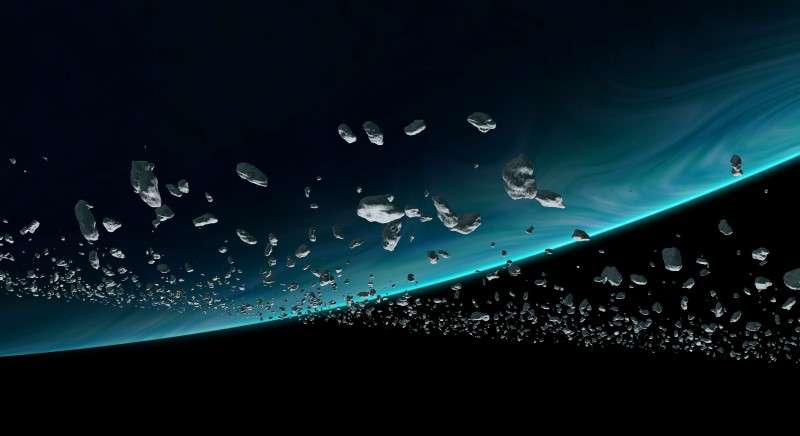
Meteorites are among the few objects we can collect that formed somewhere beyond Earth. Most originated within asteroids, while a much smaller number have been identified as material blasted from the Moon or Mars. They record the formation of the Solar System, asteroid collisions, planetary differentiation, atmospheric entry, impact, and sometimes thousands or even hundreds of thousands of years of weathering after reaching Earth’s surface.
That remarkable history also makes meteorites easy to misunderstand. A heavy magnetic rock is not automatically a meteorite. A dark crust does not guarantee extraterrestrial origin, and an etched geometric pattern does not establish that a specimen came from the specific meteorite named on a seller’s label. Real identification relies on several lines of evidence, while formal classification often requires laboratory analysis.
Collecting requires the same combination of curiosity and caution. A well-documented ordinary chondrite can be a more meaningful specimen than an expensive unidentified “space rock,” while an iron meteorite with beautiful internal structure can become badly damaged if it is stored in a humid environment. Provenance, classification, legality, condition, and preservation all matter.
This guide brings those pieces together. It explains what to look for when identifying a possible meteorite, how the major meteorite families differ, what collectors should consider before buying, how meteorite hunting rules work in the United States, and how to preserve specimens once they enter a collection. For a deeper look at the science behind individual groups, our Meteorite Classification guide provides the next level of detail.
The terminology is easier once the object’s location is understood. A meteoroid is a natural object traveling through space, generally smaller than an asteroid. When it enters an atmosphere and produces the visible streak of light we see from the ground, that phenomenon is called a meteor. If part of the object survives atmospheric passage and reaches the surface, the surviving material is a meteorite.
Most meteorites recovered on Earth originated within asteroids. Collisions break those bodies apart, and some fragments eventually enter orbits that cross Earth’s path. A smaller number of meteorites have been launched from the Moon and Mars by large impacts powerful enough to accelerate rocks beyond those worlds’ escape velocities.
This distinction matters because people sometimes search for meteorites after ordinary meteor showers. Most meteor showers are produced by tiny particles associated with comets, and those fragile grains usually burn up high in the atmosphere rather than reaching the ground as collectible meteorites.
A bright fireball, however, can sometimes represent a larger body capable of surviving atmospheric entry. Modern camera networks can reconstruct trajectories and predict possible strewn fields, allowing organized searches to begin shortly after a fall.
A freshly fallen stony meteorite commonly develops a thin dark coating known as fusion crust. The outermost surface heats intensely during atmospheric entry and melts briefly as material is stripped away. Once the meteorite slows enough for severe heating to stop, that thin melted layer solidifies.
Fresh fusion crust may appear black, dark brown, matte, slightly glassy, or ashy depending on the meteorite and its condition. The crust is usually thin rather than a thick layer of melted rock. A chipped area may reveal a much lighter interior beneath it.
Fusion crust changes after the meteorite reaches Earth. Weathering can turn black surfaces brown or rusty, and on very old finds the original crust may disappear almost completely. This is one reason recent witnessed falls can look dramatically different from meteorites that have spent thousands of years in a desert or glacial environment.
Collectors value well-preserved fusion crust because it records atmospheric entry and can make a specimen visually distinctive. A complete stone covered with primary crust may command more interest than several broken fragments from the same fall, but crust alone does not authenticate a meteorite. Terrestrial rocks can have dark rinds, desert varnish, weathering coatings, or burned surfaces that look convincing to an inexperienced eye.
Many iron meteorites and some other meteorites develop rounded depressions known as regmaglypts. These thumbprint-like features result from uneven ablation as material is removed from the surface during atmospheric passage.
Fresh examples can be especially striking on iron meteorites. Sikhote-Alin, which fell in 1947, produced beautifully sculpted individuals with deep regmaglypts, ridges, and other atmospheric features.
Older meteorites require more caution. Terrestrial corrosion can enlarge cavities and reshape a surface until weathering depressions resemble atmospheric regmaglypts. A 50,000-year-old Canyon Diablo fragment, for example, has experienced a very different history from a Sikhote-Alin individual recovered shortly after its fall.
The presence of convincing regmaglypts can support meteorite identification, particularly when combined with other features, but their absence tells us very little. Many genuine meteorites have no obvious regmaglypts at all.
One of the most common beginner tests is a magnet, and there is a good reason for that. Many meteorites contain iron-nickel metal and will attract a magnet. Iron meteorites respond strongly, while many ordinary chondrites respond more weakly because the metal occurs as smaller dispersed grains.
The problem is that many terrestrial materials are magnetic too. Magnetite, some hematite-rich rocks, industrial slag, manufactured iron, and other materials can react strongly to a magnet while having nothing extraterrestrial about them.
A magnet should therefore be treated as one piece of evidence rather than a yes-or-no meteorite test.
Collectors should also avoid unnecessarily dragging a strong magnet across a valuable specimen. For basic identification, a small magnet suspended on a string can detect attraction without scratching the surface or repeatedly contacting the meteorite.
Some meteorites contain relatively little metal and may respond only weakly. That means a poor magnetic response cannot automatically eliminate a possible meteorite either.
Iron meteorites can feel surprisingly heavy because iron-nickel metal is much denser than most terrestrial rocks. Stony meteorites can also feel somewhat dense because many contain metal grains.
This is another useful clue but not a proof. Terrestrial iron ores, magnetite, industrial material, and slag can all be unusually dense.
A better approach is to combine density with the rest of the specimen’s characteristics. A dense object with a weathered rusty surface, strong magnetism, and obvious industrial bubbles is probably telling a different story from a dense metallic object with convincing natural morphology and established meteorite provenance.
Experienced collectors learn to evaluate the specimen as a whole rather than trying to find one decisive field test.
Many stony meteorites are chondrites, named for the small rounded objects called chondrules preserved within them. These structures formed through brief melting events in the young Solar System before being incorporated into asteroid parent bodies.
On a broken or prepared surface, chondrules may appear as tiny circles or rounded grains with different colors and textures from the surrounding matrix. Some are easy to see with the naked eye, while others require magnification.
Not every chondrite displays dramatic chondrules. Thermal metamorphism on the parent body can blur their boundaries, and weathering can make them harder to recognize.
Chondrites may also contain small shiny grains of iron-nickel metal. On a clean cut surface, these metallic flecks can provide another useful clue.
The combination of chondrules, dispersed metal, mineral chemistry, and texture is much more significant than any one feature alone. Formal classification then determines whether a specimen belongs to an H, L, LL, carbonaceous, enstatite, or other chondrite group.
Achondrites are meteorites that lack ordinary chondritic textures and generally represent material that experienced melting, differentiation, or igneous processing.
This makes them difficult for beginners because many look remarkably similar to terrestrial igneous rocks.
The Tatahouine Meteorite, for example, is a diogenite dominated by pale green orthopyroxene and looks more like an unusual crystalline rock than the stereotypical image of a meteorite. Its classification connects it with the HED meteorite family associated with asteroid Vesta.
Lunar meteorites can resemble terrestrial breccias or volcanic rocks, while Martian meteorites include several igneous rock types that cannot be identified reliably by appearance alone.
This is one reason extravagant claims about “Moon rocks” or “Mars meteorites” should never be accepted from appearance or magnetism. Planetary meteorite identification requires sophisticated chemical, mineralogical, and isotopic evidence.
Iron meteorites consist predominantly of iron-nickel metal and are among the easiest meteorites to recognize once they have been properly prepared and documented.
Many octahedrite irons display a Widmanstätten structure when a cut surface is carefully polished and etched. The geometric bands are produced by intergrowths of kamacite and taenite that formed during extraordinarily slow cooling inside an extraterrestrial parent body.
The pattern is not created during atmospheric entry and acid does not manufacture it. Etching simply reveals a crystallographic structure already present within the metal.
Different meteorites produce very different patterns. Muonionalusta and Gibeon are famous IVA irons with fine structures, while Sikhote-Alin displays much coarser metallic crystallization.
Not every iron meteorite shows a Widmanstätten pattern, so its absence is not proof that an iron specimen is fake. Structural classes such as hexahedrites and ataxites behave differently.
For a specimen you value, cutting and etching should be left to an experienced meteorite preparator. Poor cutting, polishing, etching, neutralization, or drying can permanently damage a specimen and encourage corrosion.
Pallasite meteorites are among the most visually dramatic meteorites because they combine iron-nickel metal with olivine crystals. Thin slices can transmit light through the olivine, producing the famous stained-glass appearance associated with specimens such as Esquel, Imilac, Fukang, Brenham, and Seymchan.
Pallasites were traditionally described as simple core-mantle boundary samples, although modern research indicates that their formation is more complicated, with impact mixing playing an important role in at least the Main Group pallasites.
Mesosiderites form another major stony-iron group. Unlike the relatively orderly metal-and-olivine appearance of many pallasites, mesosiderites are breccias containing mixtures of silicate rock and metallic material produced through major collisional processing.
Neither group should be identified from a seller’s description alone. Provenance and recognized classification remain essential.
A genuine meteorite identification usually comes from several characteristics agreeing with one another rather than one dramatic feature.
A possible fresh stony meteorite might have thin fusion crust, an irregular shape, appropriate density, mild magnetic attraction, and a broken surface displaying chondrules and metallic grains. An iron meteorite might combine extreme density, metallic composition, natural atmospheric sculpting, and a documented etched structure.
Just as important are negative clues.
Large gas bubbles or vesicles are strongly associated with terrestrial volcanic rocks and industrial slag rather than most meteorites. A specimen covered with frothy melted-looking holes should immediately raise suspicion.
Quartz is also generally a warning sign in an alleged ordinary meteorite. Bright obvious terrestrial crystals, obvious industrial glass, manufactured shapes, or metal slag textures deserve skepticism.
The meteorite-hunting community uses the term meteorwrong for terrestrial rocks and manufactured materials commonly mistaken for meteorites. Learning meteorwrongs is arguably as useful as memorizing genuine meteorite characteristics because most suspected meteorites people encounter will turn out to be terrestrial.
Beginners are sometimes advised to grind a corner, perform aggressive streak tests, cut the specimen, apply acid, or file through the surface. These methods may expose useful information, but they can also permanently remove fusion crust and reduce collector or scientific value.
If a stone has a potentially important natural surface, destructive testing should not be the first choice.
Good photographs, accurate weight and dimensions, location information, magnet response, and careful visual inspection can often determine whether professional evaluation is warranted before anything is cut.
If a specimen does need a window ground or a section removed for analysis, that work should be performed intentionally and documented. A properly prepared analytical surface has a purpose; an unnecessary gouge made during a home identification experiment simply damages the meteorite.
Recognizing something as probably meteoritic and assigning an official classification are different tasks.
Formal classification may require petrographic examination, electron microprobe analysis, oxygen isotopes, trace-element chemistry, metallography, or other laboratory methods depending on the type of specimen.
The result might be something relatively straightforward such as H5 ordinary chondrite or something far more specialized.
Our Meteorite Classification guide explains what labels such as H5, CM2, diogenite, IAB-MG, IIAB, IVA, and pallasite actually mean.
For collectors, the distinction is important because an unclassified stone should not be sold as a specific rare type merely because someone believes it resembles one.
Meteorites are often described as either falls or finds.
A fall is associated with an observed meteorite event and recovery. Winchcombe fell in Britain in 2021, Sikhote-Alin fell in Russia in 1947, and Tatahouine fell in Tunisia in 1931.
A find is discovered later without a witnessed record of the fall. Gibeon, Muonionalusta, and many desert meteorites fall into this category.
Falls often have advantages for science because the date of arrival is known and recently recovered material may have experienced relatively little terrestrial contamination. This is especially important for fragile carbonaceous meteorites such as Winchcombe.
That does not mean a fall is automatically more valuable than a find. An exceptional historical find, rare classification, large oriented iron, unusual provenance, or spectacular prepared specimen can be worth far more than an ordinary witnessed fall.
Fall status is one part of a meteorite’s story, not a universal pricing rule.
Provenance is the documented history connecting a specimen with a recognized meteorite.
A strong provenance might include an original collection label, dealer invoice, finder information, museum exchange record, auction documentation, estate records, photographs, or other evidence establishing chain of custody.
This becomes especially important after a meteorite is cut. A fragment of Gibeon and a fragment of another fine octahedrite can look similar once prepared. The pattern can help establish meteoritic origin, but it does not necessarily identify the exact named meteorite.
The same problem becomes even greater with tiny fragments. A one-gram piece of lunar meteorite may look indistinguishable to a casual observer from many terrestrial rocks. Its identity depends heavily on analytical classification and documentation.
Never throw away old labels simply because they look worn or unattractive. A handwritten card can carry more historical information than a modern printed certificate.
Collectors frequently encounter the abbreviation TKW, meaning Total Known Weight. This generally refers to the total amount of material recognized from a named meteorite.
TKW helps provide context for availability. Winchcombe has an extraordinarily small recovered mass compared with Sikhote-Alin or Canyon Diablo, so those meteorites naturally occupy very different collecting markets.
TKW should not be interpreted as an exact measure of how much material remains available for private ownership. Some material may reside in museums, research institutions, private collections, or specimens that have been consumed during analysis and preparation.
Nor does low TKW automatically mean a specimen is more valuable. Scientific interest, aesthetics, fall history, provenance, market demand, preparation, and condition can all outweigh raw scarcity.
It is best viewed as one useful piece of context rather than a price formula.
Meteorites can fall anywhere, but some environments are dramatically better for finding them.
Deserts are productive because weathering can be relatively slow and dark meteorites may contrast with light-colored ground. Dry lake beds and broad open surfaces can concentrate material visually and make systematic searching easier.
Polar regions are scientifically important because meteorites become concentrated on ice surfaces through glacial movement, although collecting there is controlled through research programs rather than casual tourism.
Recent calculated strewn fields can be especially productive when camera networks have recorded a fireball and researchers can estimate where surviving fragments landed.
The most important practical rule is that promising geology does not override land ownership or collecting law. Before searching, determine exactly who owns or manages the land.
The Bureau of Land Management has a specific meteorite policy for eligible federal public lands.
On BLM lands open to casual meteorite collection, an individual may collect meteorites without a permit or fee for personal use, up to a maximum of 10 pounds per person per year. The material must be something the collector can easily hand carry.
Casual collecting is surface collection only. Motorized and mechanical equipment cannot be used for casual collection, although metal detectors are permitted.
Meteorites collected casually under this rule are for personal use and cannot be bartered or sold. Commercial collecting requires a different authorization, and scientific or educational collecting follows another permitting process.
Not every parcel managed by BLM is open. Developed recreation sites, certain conservation areas, wilderness areas, locations closed under land-use plans, and other specially protected areas can prohibit casual collection.
The BLM rule therefore does not mean “meteorites on federal land are free to take.” Collectors must confirm that the specific parcel is BLM-managed and open to meteorite collecting before removing anything.
Meteorites generally belong to the owner of the surface estate where they are found, so permission is essential on private property. A collector should never assume that undeveloped land is public simply because there is no fence nearby.
State lands follow state-specific rules and may require permits or prohibit removal.
Tribal lands are sovereign lands. Collecting without authorization is inappropriate and may violate tribal law.
National Parks and many other protected federal areas prohibit removing natural objects, including rocks and meteorites. Similar restrictions may apply in monuments, conservation lands, archaeological areas, and other protected sites.
When in doubt, identify the parcel and managing authority before collecting rather than trying to determine legality after a specimen has already been removed.
Meteorite law varies considerably around the world. Some countries treat meteorites as protected national heritage, restrict export, require permits, or claim State ownership.
Namibia protects meteorites such as Gibeon under national heritage law. Argentina also regulates meteorite recovery and export, which is particularly relevant to Campo del Cielo.
This does not mean every specimen of those meteorites already circulating internationally is illegal. Material entered collections under different laws and circumstances over many decades.
It does mean collectors should take provenance seriously and be skeptical when sellers claim newly recovered protected material without documentation.
A meteorite’s scientific importance does not erase the laws or cultural heritage of the country where it was recovered.
The meteorite market contains excellent dealers, old collections, scientifically documented specimens, casual sellers, misidentified rocks, exaggerated claims, and outright fakes.
The safest purchases usually begin with a seller who understands meteorite classification and provenance and is willing to explain exactly what is being offered.
A listing should identify the named meteorite when known, classification where established, specimen weight, and relevant locality or fall information. Treatments such as cutting, polishing, etching, resin stabilization, repairs, or coatings should be disclosed when they materially affect the specimen.
Be cautious with vague phrases such as “possible lunar meteorite,” “unclassified Martian,” “space crystal,” or “museum grade” when they substitute for recognized classification.
Extraordinary classifications require extraordinary documentation. A seller cannot determine that a stone is Martian simply because it is unusual, green, magnetic, or found in a desert.
Meteorite prices vary enormously, and simple price-per-gram charts become outdated quickly.
Classification matters, but it is only one component. Recovered mass, provenance, witnessed-fall status, scientific significance, morphology, fusion crust, preparation, terrestrial weathering, aesthetics, stability, specimen size, and market availability can all change what collectors are willing to pay.
A sculpted Sikhote-Alin individual with exceptional regmaglypts may be much more desirable than ordinary shrapnel of the same weight. A translucent pallasite slice may command attention because of crystal quality and preparation. A tiny Winchcombe fragment can be significant because the total recovered mass is extremely small and the fall is scientifically important.
Historic labels can also create value. A specimen connected with an early scientific collection may be far more interesting than equivalent anonymous material.
The best approach is to buy the specimen and its history, not merely a classification abbreviation or price-per-gram comparison.
Many stony meteorites are reasonably durable, but they are not maintenance-free.
Ordinary chondrites often contain metallic iron grains that can oxidize under humid conditions. Weathered cracks may also hold salts that encourage deterioration after a specimen enters a collection.
Carbonaceous chondrites can be much more delicate. Fine-grained matrix, hydrated minerals, and fragile structures make aggressive cleaning inappropriate, particularly for scientifically important material.
Tatahouine provides another example. Its coarse orthopyroxene grains can separate mechanically, so a protective specimen box is more useful than repeated handling.
Dry cleaning should generally be the first approach. A soft brush or air bulb can remove loose dust without introducing water.
I would not recommend routinely washing meteorites with distilled water. Even stony meteorites can contain metal, sulfides, salts, cracks, or fragile alteration products, and water can create problems that are not obvious immediately. When a specimen requires more than gentle dry cleaning, the treatment should be based on its actual classification and condition.
Moisture and salts are the principal enemies of iron meteorites.
A dry and stable storage environment is more important than chasing one supposedly universal relative-humidity number. Some irons tolerate ordinary indoor conditions quite well, while others begin corroding aggressively because of terrestrial chlorides, cracks, sulfides, prior preparation, or weathering history.
Cut and etched surfaces need particular attention because fresh metal is exposed directly to the environment. Fingerprints introduce salts and oils, so repeated handling should be minimized.
Desiccant can help inside an enclosed case if it is monitored and regenerated or replaced. Simply dropping a packet of silica gel into a display and forgetting about it is not meaningful humidity control.
Some collectors and conservators use microcrystalline wax or other reversible protective coatings on prepared iron. These can reduce moisture contact but should not be used to hide active corrosion.
Fresh orange rust, flaking, expanding cracks, staining around inclusions, or recurring corrosion after cleaning indicate that a specimen needs more than cosmetic treatment.
Pallasites combine the conservation problems of iron with the mechanical fragility of large olivine crystals.
The metallic framework can corrode, while fractures within the crystals can expand or cause pieces to loosen. Thin translucent windows may be particularly vulnerable if a slice is supported poorly.
A pallasite should be stored dry and supported evenly rather than balanced on one narrow point. Large slices may require specialized stands or frames that distribute weight across the metal.
Some specimens are resin stabilized or backed during preparation. Proper stabilization can preserve fragile material and is not automatically a defect, but it should be disclosed.
Our complete Pallasite Meteorites guide explores these preservation issues in greater detail.
Meteorites are natural-history specimens, and excessive restoration can remove much of what makes them interesting.
Grinding away an entire weathered exterior to reveal shiny metal may destroy atmospheric or terrestrial history. Over-polishing can erase subtle structures, while poor re-etching can turn a clean iron surface into a corrosion problem.
Clear hardware-store coatings may yellow, crack, trap contamination, or become difficult to remove later.
Conservation should aim to stabilize the specimen rather than make every meteorite look new.
This is particularly important for historic pieces. Old paint markings, accession numbers, collection labels, cut surfaces, and even some early preparation marks may be part of the specimen’s documented history.
Good meteorite display begins with identification.
A useful label might include the meteorite name, classification, locality, whether it was a fall or find, fall date where known, and specimen weight. For scientifically interesting material, parent-body information can also be included.
Comparative displays are especially effective. A Sikhote-Alin individual beside a Canyon Diablo fragment shows the difference between a recent witnessed iron fall and an ancient crater-forming impact. Muonionalusta beside Gibeon demonstrates two IVA irons with different terrestrial histories. Tatahouine beside Lunar and Martian meteorites introduces differentiated planetary materials.
Lighting should reveal the specimen without creating unnecessary heat. Pallasites can benefit from transmitted light, while etched irons are often best under reflected light that emphasizes metallic structure.
Our Museum-Style Crystal, Fossil & Meteorite Displays article offers additional ideas for combining specimens, labels, stands, and lighting.
Meteorites also appeal to people who incorporate natural materials into meditation, Reiki, chakra work, intention-setting, or other metaphysical traditions. Their verified extraterrestrial origin naturally lends itself to symbolism involving perspective, transformation, resilience, grounding, origins, and connection with the larger cosmos.
Iron meteorites are commonly associated in modern metaphysical traditions with grounding and the Root Chakra because of their density and metallic character, while their extraterrestrial origin leads some practitioners to connect them with Third Eye or Crown Chakra work involving perspective and awareness.
Different meteorites can inspire different symbolic interpretations. Winchcombe’s water-altered carbonaceous history may suggest origins and transformation, while Sikhote-Alin’s dramatic fragmentation can symbolize resilience and change. Pallasites combine metal and olivine and may be interpreted through themes of integration or balance.
These are modern spiritual interpretations rather than scientifically demonstrated effects. Keeping that distinction clear allows the verified science and personal symbolic meaning to coexist without presenting metaphysical traditions as medical or mineralogical facts.
Look for several compatible characteristics rather than one decisive test. Fusion crust, appropriate density, magnetism, chondrules, metallic grains, regmaglypts, and a lack of obvious vesicles can all contribute to identification. Professional analysis may be required for confirmation and formal classification.
No. Many contain enough iron-nickel metal to attract a magnet, but strength varies considerably. Magnetism is useful evidence, not proof.
No. Fresh meteorites can have dark fusion crust, but terrestrial rocks can also develop black weathering rinds, burned surfaces, or desert varnish.
Most meteorites do not contain the abundant rounded gas bubbles typical of industrial slag or vesicular volcanic rocks. Obvious frothy vesicles are generally a warning sign rather than a positive meteorite feature.
The traditional broad categories are stony meteorites, iron meteorites, and stony-iron meteorites. Scientific classification divides these further into many groups and subgroups.
It is a crystallographic structure created by extremely slow cooling of iron-nickel metal. Proper polishing and etching reveal the pre-existing kamacite and taenite pattern.
No. Many octahedrites do, but other structural classes do not show the same pattern.
No. Falls have important scientific and provenance advantages, but value depends on many other factors, including classification, rarity, size, morphology, condition, aesthetics, recovered mass, and historical provenance.
TKW means Total Known Weight, referring to the known recovered mass associated with a named meteorite.
On BLM land specifically open to casual meteorite collecting, an individual may collect surface specimens for personal use up to 10 pounds per person per year. Non-motorized and non-mechanical methods are required, although metal detectors are allowed. Casually collected meteorites cannot be sold.
Not under the casual-collection rule. Casual meteorite collection is limited to the surface. Different permits apply to scientific and commercial collecting.
No. Material collected under the casual-use provision is for personal use and cannot be bartered or sold.
Routine washing is not recommended. Water can affect metal grains, sulfides, salts, fragile matrix, and weathered cracks. Gentle dry cleaning is usually the safer starting point unless the specimen’s classification and conservation needs are known.
Keep them consistently dry, minimize handling, monitor for rust, and use appropriately maintained desiccant in enclosed cases where necessary. Some prepared specimens may benefit from reversible conservation coatings.
Meteorites are not generally dangerous radioactive objects simply because they came from space. They contain naturally occurring isotopes like terrestrial rocks do, and ordinary collector specimens do not require radiation precautions solely because they are meteorites.
Yes. Industrial slag, magnetite, hematite, manufactured iron, terrestrial rocks, and etched metals may be misrepresented as meteorites. Provenance and recognized classification are especially important for high-value specimens.
Meteorite collecting becomes much more rewarding once the specimen is understood as evidence rather than novelty. Fusion crust records atmospheric entry, chondrules preserve processes from the beginning of the Solar System, iron structures reveal extraordinarily slow cooling, and shock features document collisions powerful enough to fracture planetary bodies. Even terrestrial weathering becomes part of the story, showing what happened after an extraterrestrial object became part of Earth’s geology.
Identification therefore begins with observation but should end with restraint. Magnetism, density, fusion crust, regmaglypts, and interior texture are useful clues, yet none should be treated as proof by itself. Rare classifications such as Lunar, Martian, or unusual achondritic material require scientific evidence, not a convincing online description.
The same discipline applies to purchasing. Classification matters, but provenance often determines whether a named specimen can be trusted. Old labels, collection records, dealer history, recognized classification, and responsible sourcing should remain with the meteorite for as long as the specimen exists.
Preservation matters just as much. Iron meteorites need protection from moisture and salts, fragile stones should not be washed or repeatedly handled, and pallasites require attention to both metallic corrosion and crystal stability. Conservation should preserve the meteorite’s history rather than polishing every specimen into something that looks new.
Collectors who also search for meteorites in the field have an additional responsibility to understand land ownership and collecting rules before removing anything. On eligible BLM lands, casual surface collection is allowed within specific limits, but that rule does not apply to every parcel of federal, state, tribal, protected, or private land.
From there, meteorite collecting can develop in many directions. Explore the Winchcombe Meteorite for a modern carbonaceous fall, Tatahouine for a diogenite associated with asteroid Vesta, Pallasite Meteorites for olivine and extraterrestrial metal, or the classic irons Gibeon, Muonionalusta, Sikhote-Alin, Campo del Cielo, and Canyon Diablo.
For the scientific framework connecting all of these meteorites, continue with Meteorite Classification. You can also browse the complete Grounded Lifestyles Meteorite Articles for additional guides covering famous falls, planetary meteorites, impact science, care, identification, and collecting.
To explore documented meteorite and tektite specimens available through Grounded Lifestyles, visit our Meteorites & Tektites Collection, or continue learning through our Free E-Book Library.

At Grounded Lifestyles, our love for crystals began in the peaceful flow of Reiki and energy healing sessions — where we saw how natural stones could amplify intentions, restore balance, and bring comfort. But the more time we spent with these treasures, the more curious we became about their origins. That curiosity led us into the fascinating world of geology and mineral specimen collecting. We fell in love not just with the energy of crystals, but with the science and artistry of their creation — the intricate crystal structures, the vibrant mineral hues, and the wonder of holding a piece of Earth’s history in our hands.

