

Every crystal, mineral, fossil, meteorite, and handcrafted piece is selected with purpose. Whether you’re building a museum-worthy mineral collection, searching for a meaningful gift, decorating your home with natural beauty, or beginning your journey into the world of geology, you’ll discover authentic specimens with stories worth sharing.
Over 15 shows a year throughout the Southwest. Check to see if we are coming to a show near you!
Home > Blog > Meteorites Blog | Space Rocks, Collecting & Meaning > Lunar Meteorites: From the Moon to Earth
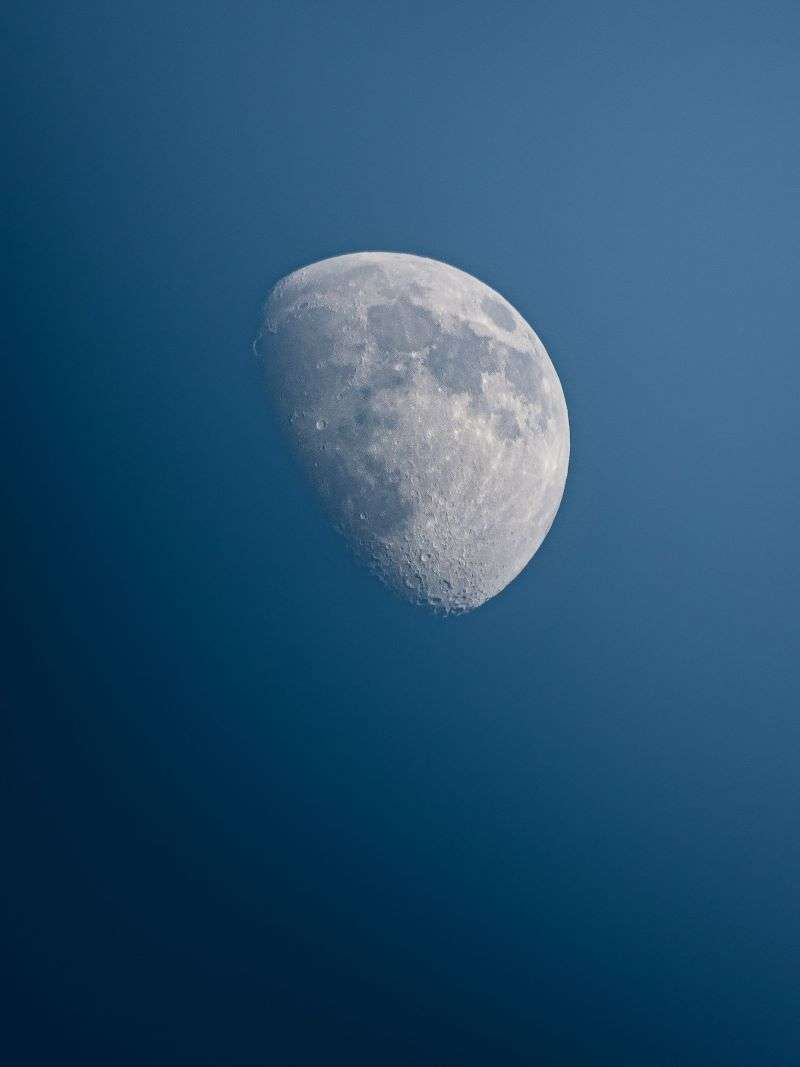
Lunar meteorites are genuine pieces of the Moon that reached Earth without the help of a spacecraft. They were excavated from the lunar surface by powerful impacts, accelerated beyond the Moon’s gravity, spent time orbiting through space, and eventually crossed Earth’s path and survived atmospheric entry. What begins as a geological event on the Moon can therefore end with a small gray or black fragment resting in an Antarctic ice field, a desert, a laboratory drawer, or a private collection.
Their importance goes far beyond the novelty of owning a “Moon rock.” Lunar meteorites expand the geological record available from the Moon beyond the places visited by the Apollo astronauts and Soviet Luna missions. Returned mission samples came from a relatively limited number of sites on the lunar near side, while meteorites may have been launched from many different regions across both the near and far sides. In that sense, lunar meteorites provide a naturally delivered sampling system that complements the carefully documented rocks brought back by spacecraft.
For collectors, lunar meteorites are also a good lesson in why provenance and scientific classification matter more than appearance. Many lunar meteorites are not visually dramatic. Some resemble ordinary gray breccias, weathered terrestrial rocks, or dark basalt. Nothing about appearance alone proves lunar origin. Their identity rests on mineralogy, chemistry, oxygen isotopes, trace elements, and comparison with known lunar material collected during space missions.
This guide explores how lunar meteorites form, how rocks can escape the Moon, the major kinds of lunar material found on Earth, how scientists know the specimens really came from the Moon, what they reveal about lunar geology, and what collectors should understand before purchasing or caring for one.
A lunar meteorite is a rock that originated on the Moon, was ejected naturally by an impact, and later fell to Earth as a meteorite.
That definition sounds simple, but the process behind it is remarkable. The Moon has no thick atmosphere to slow incoming asteroids, so impactors can strike the surface at tremendous velocity. Large collisions excavate rock from the crust and regolith, fracture surrounding material, produce melt and glass, and eject debris over enormous distances.
Most ejecta falls back onto the Moon. A small fraction, however, receives enough energy to exceed the lunar escape velocity of approximately 2.38 kilometers per second. Once that happens, the fragment can enter an independent orbit around Earth or the Sun.
Some of those fragments eventually encounter Earth.
Lunar meteorites are therefore not rocks that simply “fell off” the Moon. They are survivors of violent impact excavation followed by orbital transport and another high-speed encounter with a planetary atmosphere.
Lunar meteorites could not have been identified confidently without direct samples from the Moon.
Between 1969 and 1972, the Apollo missions returned hundreds of kilograms of lunar rocks, soil, and core samples from six landing sites. The Soviet Luna program later returned additional material robotically from three locations.
Those samples established the mineralogical and chemical characteristics of lunar rocks in terrestrial laboratories. Scientists could study oxygen isotopes, mineral chemistry, trace elements, glass compositions, exposure histories, and other properties in material whose lunar origin was certain.
When unusual meteorites were later found on Earth with those same distinctive characteristics, researchers finally had a reference library against which they could compare them.
This is fundamentally different from trying to identify a meteorite by color or texture. Lunar origin is established because the material matches the known geochemical system of the Moon.
The first recognized lunar meteorites therefore changed meteorite science dramatically. Suddenly, researchers realized that natural impacts had been delivering unsampled lunar material to Earth long before humans traveled there.
It is tempting to think of the Moon as one type of gray rock, but lunar geology is diverse.
The bright highlands are dominated by ancient feldspar-rich crust, much of it associated with anorthositic rocks formed early in lunar history. The darker maria are broad volcanic plains created when basaltic lava filled large impact basins. Between and across those terrains lies a regolith composed of crushed rock, mineral grains, glass, impact melt, and fragments created during billions of years of bombardment.
Large impacts continuously mixed these materials.
As a result, many lunar meteorites are breccias, rocks assembled from fragments of multiple older rocks. A single small lunar breccia may contain bits of ancient crust, impact melt, mineral grains, glass, and fragments from different geological events.
This makes lunar meteorites particularly valuable because one specimen can contain a miniature record of many episodes in lunar history.
Many lunar meteorites are classified as feldspathic breccias, meaning they contain predominantly feldspar-rich material associated with the lunar highlands.
The lunar highlands preserve some of the Moon’s oldest crust. Much of this material is rich in plagioclase feldspar and related anorthositic rock types that formed during the early differentiation of the Moon.
According to the leading lunar magma-ocean model, the young Moon experienced extensive melting. As the molten material cooled, dense minerals sank while relatively buoyant plagioclase floated upward and contributed to the formation of an early crust.
Later impacts shattered that crust repeatedly.
A feldspathic breccia may therefore contain fragments of very ancient highland material mixed together through countless impact events. Rather than representing one clean piece of intact bedrock, many meteorites preserve a geological mixture.
For collectors, these specimens can look deceptively ordinary. Their pale and dark fragments, irregular clasts, and fine matrix may resemble terrestrial breccias, which is another reason laboratory classification is essential.
The Moon’s dark maria are enormous plains of basaltic volcanic rock. They formed when magma rose from the lunar interior and flooded low areas, particularly large impact basins.
Lunar mare basalts differ from terrestrial basalts in important chemical and mineralogical ways, but visually they can look quite similar.
Some lunar meteorites are composed primarily of mare basalt or basaltic material, providing natural samples of volcanic provinces not represented by Apollo landing sites.
These rocks reveal that lunar volcanism was not one uniform event. Different basaltic units formed at different times and from chemically distinct magma sources.
Iron, magnesium, titanium, pyroxene, olivine, feldspar, and accessory minerals vary among lunar basalts, allowing scientists to reconstruct melting conditions and mantle composition.
A basaltic lunar meteorite is therefore not merely “dark Moon rock.” It is a sample of ancient volcanism from another planetary body.
Many lunar meteorites cannot be described simply as either highland rock or mare basalt because impacts have mixed different materials together.
A polymict breccia contains fragments of several different rock types. This can include feldspathic highland material, basalt, impact melt, mineral fragments, glass, and pieces of earlier breccias.
The Moon is particularly good at producing breccias because its surface has been bombarded for billions of years. An impact breaks rocks apart; later impacts mix those fragments with other material; still later events can fracture the resulting breccia again.
This repeated reworking can produce rocks with extraordinarily complicated histories.
For scientists, a polymict lunar meteorite can be more informative than a visually uniform rock because its clasts may sample several geological environments at once.
For collectors, the same feature makes prepared slices especially interesting. A cut surface can reveal sharply contrasting fragments that are difficult to appreciate on a weathered exterior.
Large lunar impacts generate enough heat to melt portions of the target rock.
That molten material can cool into impact-melt rock or act as a matrix binding fragments together into an impact-melt breccia. The Meteoritical Bulletin recognizes several specific lunar classifications reflecting these kinds of materials, including melt breccias and mixed basaltic or gabbroic breccias.
Impact melt is scientifically important because it can preserve information about the timing of large collisions.
Radiometric dating of melt produced by major impacts has helped scientists reconstruct portions of the Moon’s bombardment history, although interpreting individual ages can be complicated because rocks may have experienced multiple later events.
The Moon’s cratered appearance makes this history visible from Earth, while meteorites allow portions of those impact products to be examined directly in laboratories.
The lunar surface also contains a great deal of impact-generated and volcanic glass.
Tiny glass beads can form when impact melt is sprayed into droplets and cools rapidly. Other glass beads were produced by ancient volcanic eruptions that launched molten droplets above the lunar surface.
These materials are scientifically valuable because glass can trap chemical information about the melt from which it formed.
However, individual glass spherules should not be confused with a major standalone category of lunar meteorite in the same sense as feldspathic breccias or basaltic rocks. They are commonly components within lunar soils and breccias.
A meteorite may contain lunar glass without being simply classified as a “glass meteorite.”
Some lunar meteorites preserve material derived from the lunar regolith, the loose layer of fragmented rock and dust covering the Moon.
Regolith is created through continuous bombardment by meteorites and micrometeorites. Because the Moon lacks significant weather, running water, and active plate tectonics, impact gardening is one of the dominant processes modifying its surface.
Regolith breccias form when loose surface material becomes compacted and lithified, often through the heat and pressure generated by impacts.
These rocks can contain mineral fragments, rock clasts, glass, agglutinates, and particles affected by long exposure at the lunar surface.
They may also preserve solar-wind gases implanted into exposed grains.
That means a regolith breccia can contain information not only about lunar rocks but also about the Moon’s interaction with the space environment.
The Moon’s escape velocity is approximately 2.38 kilometers per second, much lower than Mars’ escape velocity of about 5 kilometers per second and Earth’s escape velocity of roughly 11.2 kilometers per second.
Even so, ordinary geological processes cannot simply launch Moon rocks to Earth.
Hypervelocity impacts provide the necessary energy.
When an asteroid strikes the lunar surface, shock waves pass through the crust and accelerate material outward. Some fragments can leave the impact site fast enough to escape lunar gravity without being completely melted or vaporized.
Once free of the Moon, the fragment may enter Earth orbit temporarily or enter an independent Solar orbit. Orbital interactions can then eventually bring it into Earth’s atmosphere.
The trip does not necessarily take one simple straight path from Moon to Earth. Some fragments arrive relatively quickly on astronomical timescales, while others remain in space much longer.
Cosmic-ray exposure studies help researchers reconstruct parts of this journey.
No, and this is one of the most important corrections to the older version of this article.
It is tempting to assign lunar meteorites to famous craters such as Tycho, Copernicus, Imbrium, or Serenitatis, but in most cases scientists cannot identify the exact crater that launched a particular meteorite.
The Moon contains an enormous number of impact structures, and a meteorite arriving on Earth usually carries no direct label revealing its launch point.
Researchers can sometimes use composition, age, remote-sensing data, cosmic-ray exposure history, and crater-ejection modeling to suggest possible source regions. Those efforts are scientifically valuable, and future spacecraft observations may narrow the possibilities further.
But a broad claim that lunar meteorites “originate from Tycho” or that Mare Imbrium “produces” particular meteorites goes beyond what is established for most specimens.
The better scientific approach is to connect the meteorite with a geological terrain or rock type—feldspathic highlands, mare basalt, mixed breccia, impact melt—unless there is strong evidence for a more specific source.
Apollo and Luna samples are among the most valuable geological collections ever assembled, but their geographic coverage is limited.
All six Apollo landing sites are on the lunar near side, and several were deliberately chosen to address particular scientific questions within accessible equatorial and mid-latitude regions.
Lunar meteorites are different because impacts can eject material from virtually anywhere on the Moon.
That means some lunar meteorites may represent regions never visited by astronauts or robotic sample-return missions, including parts of the far side and geological terrains poorly represented in the returned collections.
This creates a powerful scientific combination.
Mission samples offer exact geological context: scientists know where astronauts collected them, what nearby rocks looked like, and which geological unit was being sampled.
Meteorites usually lack that precise context, but they provide much broader geographic sampling.
Each approach supplies something the other cannot.
The highlands dominate much of the Moon’s bright surface and preserve extremely ancient crust.
Large amounts of this crust consist of rocks rich in plagioclase feldspar, particularly anorthositic material.
The formation of this crust is closely tied to the idea of an early lunar magma ocean. After the Moon formed, much of its outer portion may have been molten. As this magma cooled, dense minerals crystallized and sank, while buoyant plagioclase rose toward the surface.
The resulting feldspar-rich crust became one of the oldest major geological units on the Moon.
Subsequent impacts shattered and redistributed that crust.
Feldspathic lunar meteorites can therefore preserve fragments of material formed during the earliest major stages of lunar differentiation.
For someone holding a tiny highland breccia today, that means the pale mineral fragments may represent pieces of crust nearly as old as the Moon itself.
The dark plains visible from Earth are called maria, from the Latin word for seas. Early observers mistook them for bodies of water, but they are actually vast basaltic lava plains.
Large impacts first created basins in the lunar crust. Later, magma rose through fractures and flooded some of those low areas, creating extensive volcanic plains.
Different mare basalts formed at different times and contain different amounts of titanium, iron, magnesium, and other elements.
Apollo astronauts sampled several basaltic terrains directly, but lunar meteorites extend that record.
A basaltic lunar meteorite recovered in a desert on Earth may therefore provide material from a volcanic province never visited during the Apollo era.
This is one reason lunar meteorites continue to matter even though astronauts already brought Moon rocks home.
The far side of the Moon differs noticeably from the near side.
It has a thicker crust, far fewer extensive maria, and a heavily cratered highland surface. NASA observations continue to explore why this hemispheric difference developed and what it reveals about the Moon’s thermal and crustal evolution.
Because lunar meteorites can theoretically originate from anywhere on the surface, some may provide samples from geological environments more representative of the far side than the Apollo collection.
Determining exact launch locations remains difficult, but the possibility expands the scientific value of meteorites as a global lunar sampling mechanism.
Future sample-return missions from the far side and polar regions will provide new reference material that may help researchers interpret lunar meteorites even more precisely.
No single visual feature identifies a lunar meteorite.
The strongest evidence comes from a combination of mineral chemistry, bulk composition, oxygen isotopes, trace elements, rock textures, and comparison with Apollo and Luna samples.
Lunar rocks possess characteristic chemical relationships developed through the Moon’s unique history of differentiation, volcanic activity, and prolonged impact processing.
Many lunar meteorites are also depleted in certain volatile elements compared with typical terrestrial rocks, reflecting the conditions under which the Moon formed and evolved.
Oxygen isotope measurements help distinguish lunar rocks from most meteorite parent bodies, while mineral chemistry can reveal relationships with known lunar feldspars, pyroxenes, olivines, basalts, and breccias.
The critical point for collectors is that none of this can be established by holding an unknown rock next to a photograph.
A suspected lunar meteorite requires laboratory analysis.
Not reliably.
Many ordinary meteorites contain enough metallic iron to react strongly to a magnet or metal detector. Lunar meteorites generally contain far less metallic iron than common ordinary chondrites and do not behave like typical iron meteorites.
Some lunar material may still produce a detector response depending on composition and equipment, but metal detecting is not a lunar-meteorite identification method.
Most lunar meteorites have been discovered in environments where meteorites can be recognized visually and accumulated over long periods, particularly Antarctica and major desert regions.
The challenge is that a lunar stone may look very much like an ordinary terrestrial rock.
Finding one therefore requires far more than simply locating something magnetic.
Antarctica has been extraordinarily important to meteorite science.
Meteorites falling onto the ice can become buried in moving glaciers. In certain regions, ice flow carries those stones toward natural barriers where ablation removes ice and leaves meteorites concentrated at the surface.
Dark meteorites are also visually conspicuous against blue or white ice.
This process creates meteorite concentration zones where scientific teams can recover specimens systematically.
Antarctic meteorite programs have contributed enormously to planetary science because specimens are collected with detailed records and distributed for research through organized scientific systems.
Several historically important lunar meteorites were discovered in Antarctica, helping establish the field of lunar meteorite research.
Hot deserts have also become major sources of lunar meteorites.
The Sahara, Arabian Peninsula, and other arid environments preserve meteorites relatively well compared with humid regions. Sparse vegetation and light-colored ground make unusual stones easier to see.
A large number of lunar meteorites have received Northwest Africa, or NWA, names because they were recovered from desert regions in northwestern Africa.
This creates both opportunities and limitations.
Commercial searching has brought important meteorites into scientific study and private collections, but many NWA stones entered dealer networks without precise find coordinates. When exact locality information is lost, part of the terrestrial geological context disappears permanently.
A properly classified NWA lunar meteorite remains genuinely lunar, but strong documentation about its recovery and chain of custody can make one specimen more useful and desirable than another.
Lunar meteorites and Apollo samples are both genuine Moon rocks, but their collecting status is fundamentally different.
Apollo samples were collected by NASA astronauts and remain government-owned scientific material. They are not ordinary commercial collectibles.
Lunar meteorites arrived on Earth naturally and, depending on where they were recovered and applicable law, some can legally enter private collections.
That distinction is important because advertisements occasionally use vague phrases such as “Apollo Moon rock” or “NASA Moon material” to create misleading impressions.
A privately owned classified lunar meteorite does not need an Apollo connection to be extraordinary. Its natural journey from Moon to Earth is a completely different and scientifically meaningful history.
Collectors should be especially skeptical of unsupported claims involving supposed Apollo material.
Lunar Meteorites and Mars Meteorites are often discussed together because both provide genuine samples from known planetary bodies.
Their identification histories, however, are different.
Lunar meteorites can be compared directly with rocks physically returned from the Moon by Apollo and Luna missions. Martian meteorites were identified through mineralogy, chemistry, isotopes, crystallization histories, and gases trapped within some specimens that match measurements of the Martian atmosphere.
The Moon also has much weaker gravity than Mars, so lunar rocks require substantially less velocity to escape.
Their geology differs as well. Martian meteorites include volcanic rocks, cumulates, ancient crustal material, and breccias from a planet that had an atmosphere and extensive evidence of past water. Lunar meteorites sample a smaller airless body dominated by impact processing, ancient highlands, mare volcanism, and regolith development.
A collection containing both represents two very different planetary environments delivered naturally to Earth.
Tatahouine provides another useful comparison.
Tatahouine is a diogenite associated with asteroid Vesta, a differentiated asteroid that developed a crust, mantle-like silicate regions, and metallic core early in Solar System history.
Like lunar meteorites, HED meteorites from Vesta are igneously processed achondrites. Both demonstrate that once a body melts and differentiates, meteorites can preserve very different geological layers and processes.
The difference is scale and geological setting.
The Moon formed into a much larger planetary body with a global crust, enormous impact basins, widespread basaltic volcanism, and billions of years of surface reworking. Vesta is a smaller asteroid whose HED meteorites preserve another form of early planetary differentiation.
Comparing the two helps collectors understand that meteorite classification is really a form of planetary geology.
One of the most characteristic features of the lunar meteorite collection is the abundance of brecciated material.
The Moon lacks the plate tectonics, active erosion, rainfall, rivers, and biological soil processes that continually recycle much of Earth’s surface. Instead, impact bombardment has been the dominant surface-modifying process for billions of years.
Every significant collision breaks and mixes rock.
Over time, fragments are crushed, buried, shocked, heated, melted, excavated, and lithified repeatedly.
A breccia can therefore preserve pieces of many previous lunar rocks in one specimen.
This is why an apparently chaotic lunar meteorite may be especially valuable scientifically. Its complexity is not damage in the collector sense; it is a geological record of the environment in which it formed.
Lunar meteorites commonly preserve evidence of intense impact shock.
Shock can fracture minerals, transform feldspar into glassy material, generate melt, deform crystal structures, and create breccias.
These features are part of the Moon’s normal geological history because its surface has endured impacts throughout nearly its entire existence.
The launch event that eventually sent a meteorite toward Earth adds another potential shock episode.
A lunar meteorite may therefore preserve evidence from ancient impacts long before ejection as well as the collision responsible for launching it from the Moon.
Studying those features can help researchers reconstruct both local geology and the broader impact history of the lunar crust.
Once a lunar fragment is ejected into space, cosmic radiation begins interacting with exposed minerals and producing measurable isotopes.
Scientists use those products to calculate cosmic-ray exposure ages, which provide information about how long a rock existed as a relatively small object exposed in space.
Lunar meteorites can have relatively short transit times compared with some asteroid meteorites because the Moon is already close to Earth, but individual histories vary and orbital evolution can become complicated.
As with Martian meteorites, several different ages can describe one lunar specimen.
The rock may have crystallized billions of years ago, been incorporated into a breccia during a later impact, been launched from the Moon much more recently, and then spent an additional period weathering on Earth before discovery.
Understanding which age is being discussed prevents considerable confusion.
Lunar meteorites help researchers investigate some of the biggest questions in lunar science.
How did the first crust form? How extensive was the lunar magma ocean? How did the mantle evolve chemically? When did major impacts occur? How long did volcanism continue? Why is the far side so different from the near side?
No single meteorite answers all of these questions.
Instead, each specimen contributes one piece to a much larger dataset that includes Apollo and Luna samples, orbital spectroscopy, gravity measurements, crater counts, seismic data, and modern spacecraft observations.
Meteorites are particularly valuable when they appear to sample lithologies underrepresented in mission collections.
The most scientifically important lunar meteorite is therefore not necessarily the most beautiful or largest one. An unusual chemistry or rare rock type may matter far more than visual appearance.
Scientists would like direct samples of the lunar mantle because they could help test models of lunar differentiation and magma-ocean crystallization.
Large impacts are capable of excavating deeply, and orbital observations have identified olivine-rich material around some major basins and crater structures that may expose deeper crust or mantle-related rocks.
However, confidently identifying a lunar meteorite as a direct mantle sample is difficult.
NASA notes that even Apollo samples have not been definitively established as pieces of the lunar mantle, although impacts should theoretically bring deeper material toward the surface.
This is another area where careful wording matters.
An olivine-rich lunar meteorite should not automatically be marketed as “Moon mantle” unless the scientific evidence for that interpretation is strong.
A suspected lunar meteorite cannot be authenticated reliably through a checklist of visual traits.
It may possess fusion crust if relatively fresh. It may be a breccia. It may contain pale feldspathic fragments or dark basaltic material. It may be unusually dense or surprisingly ordinary.
None of those characteristics proves lunar origin.
Unlike many ordinary chondrites, lunar meteorites generally do not contain abundant metallic iron, so strong magnetism is not expected as a universal feature.
Regmaglypts are also not a useful defining criterion.
Laboratory analysis is essential, particularly oxygen isotopes, mineral chemistry, trace-element relationships, and petrographic examination.
Any seller claiming to have an “unclassified lunar meteorite” based only on appearance should therefore be treated with extreme caution.
Most collectors will never personally identify a lunar meteorite from an unknown field stone. Instead, they will purchase a small fragment cut from material that has already been classified scientifically.
That means provenance becomes critical.
Documentation should connect the fragment with a recognized meteorite name and classification. Dealer invoices, collection labels, specimen numbers, previous ownership history, and copies or references to classification information can all strengthen that connection.
Tiny planetary fragments are especially dependent on documentation because visual identification may become nearly impossible once a large stone has been divided into gram- or milligram-sized pieces.
Never discard labels simply because a new display card looks better.
The paper trail is part of the specimen.
Fixed dollar ranges are not useful for an evergreen collector guide because the meteorite market changes and individual specimens vary enormously.
Classification matters, but several other factors influence demand. These include the named meteorite, total known mass, specimen size, fusion crust, preparation, rarity of the lithology, provenance, scientific interest, condition, and current market availability.
A common feldspathic breccia represented by substantial material may have a different market from an unusual basaltic specimen or a meteorite represented by only a very small total mass.
Complete or partly crusted stones can also attract a different collector audience from thin slices or tiny fragments.
A larger lunar meteorite is not automatically better. A small specimen from an unusual and well-documented lithology can be far more scientifically interesting than a larger piece of more widely available material.
Collectors should therefore evaluate the specific named meteorite rather than shopping simply for “a lunar meteorite by the gram.”
The safest approach begins with a seller who can identify the meteorite by its recognized name and classification.
Ask what larger mass the specimen came from, whether documentation accompanies it, and whether the piece has been cut, polished, stabilized, repaired, or otherwise prepared.
A listing should not depend on vague claims such as “tested Moon rock,” “NASA confirmed,” or “found near a crater” without explaining what scientific classification supports the statement.
The recognized meteorite name can be checked through the Meteoritical Bulletin Database, which maintains the official nomenclature used by the scientific meteorite community.
Tiny fragments can be perfectly legitimate, but their authenticity depends heavily on chain of custody.
For expensive material, provenance is not an optional bonus. It is central to the purchase.
Lunar meteorites should be treated as scientific specimens rather than decorative stones.
Most do not require the same aggressive humidity control as iron meteorites, but dry and stable storage remains sensible. Small fragments should be protected from loss, abrasion, contamination, and unnecessary handling.
Fusion crust should never be polished away merely to make a specimen appear cleaner.
Breccias may contain friable matrix or small fragments that can detach if handled repeatedly, while thin slices can fracture if mounted poorly.
Water, oils, commercial stone cleaners, ultrasonic cleaners, and polishing compounds should generally be avoided unless conservation is being performed by someone who understands the exact material.
A labeled membrane box, specimen jar, or well-supported display mount can preserve a small lunar fragment while still allowing it to be viewed.
Our Meteorites 101: Identifying, Collecting and Preserving Space Rocks guide provides broader meteorite-care information.
Lunar meteorites benefit from context because their appearance alone may not communicate their importance.
A display label can include the meteorite’s official name, lunar classification, recovery region, specimen weight, and a short explanation of the represented rock type.
For example, a feldspathic breccia can be displayed with an image of the lunar highlands, while a mare basalt can be paired with an image showing the Moon’s dark volcanic plains.
A comparative display can be even more effective.
Placing Lunar, Martian, and Vesta-related meteorites together shows how rocks from different differentiated worlds can reach Earth naturally. A chondrite beside them demonstrates the contrast between primitive early Solar System material and rocks altered through planetary melting and crust formation.
This approach turns a tiny fragment into part of a much larger planetary story.
Within modern metaphysical traditions, Moon-associated stones naturally carry symbolism connected with reflection, cycles, intuition, transition, emotional awareness, receptivity, and changing phases of life. A genuine lunar meteorite adds an unusual dimension because the association with the Moon is geological fact rather than a name based on color or appearance.
For meditation or intention-setting, someone may use a lunar meteorite as a symbolic object representing perspective, quiet observation, adaptation, or movement through personal cycles.
Contemporary chakra traditions may associate Moon-related materials with the Crown or Third Eye Chakras, while others connect lunar symbolism with emotional awareness and inward reflection.
Within Reiki or other energy traditions, the meteorite may be used simply as a focal object carrying the symbolism of an ancient material that traveled from the Moon to Earth.
Its actual journey already provides a rich metaphor. The rock formed on another world, endured repeated impacts, was eventually launched from the lunar surface, traveled through space, survived atmospheric entry, and became part of Earth’s geological environment.
These associations belong to modern spiritual traditions rather than scientifically demonstrated effects of lunar material.
Yes. Their mineralogy, chemistry, oxygen isotopes, trace-element relationships, and similarities with Apollo and Luna samples establish their lunar origin.
Large impacts launched lunar rocks fast enough to exceed the Moon’s escape velocity of about 2.38 kilometers per second. Some eventually entered Earth-crossing trajectories and survived atmospheric entry.
No. Lunar meteorites arrived on Earth naturally. Apollo samples were deliberately collected on the Moon and returned by spacecraft.
Apollo samples remain controlled government scientific material rather than ordinary commercial collectibles. Authentic lunar meteorites are a separate category because they reached Earth naturally.
Common classifications include feldspathic breccias, basaltic or gabbroic material, mixed breccias, regolith breccias, and impact-melt rocks. Individual meteorites may contain several lunar lithologies.
Specific source-crater assignments are generally uncertain. Researchers may propose possible source regions for some meteorites, but most cannot be confidently tied to one named crater.
No, but brecciated material is very common because impacts have repeatedly broken and mixed the lunar crust.
Meteorites may come from areas of the Moon never sampled by Apollo or Luna missions, potentially including far-side and otherwise underrepresented terrains.
No. Appearance alone cannot establish lunar origin. Laboratory mineralogical, chemical, petrographic, and isotopic evidence is required.
Some may show minor magnetic response, but lunar rocks generally contain less metallic iron than many ordinary meteorites. Magnetism is not a reliable lunar identification test.
A detector may react to some material, but it is not an effective method for distinguishing lunar meteorites from other rocks. Visual searching in productive meteorite environments has historically been far more important.
Important specimens have been recovered from Antarctica and major desert regions, including Northwest Africa and the Arabian Peninsula. They can theoretically fall anywhere on Earth.
NWA means Northwest Africa, a nomenclature designation used for meteorites recovered in that region when more precise geographic naming is unavailable or inappropriate.
Yes. They represent a very small portion of the total meteorite record compared with ordinary asteroid-derived meteorites.
No. Classification, provenance, total known mass, rock type, scientific interest, fusion crust, preparation, and market availability can be more important than size alone.
Yes. Mare basalts are volcanic rocks produced by ancient lunar lava flows, and basaltic material occurs within the lunar meteorite record.
Some regolith breccias contain lithified fragments of lunar surface soil, glass, mineral grains, and other regolith materials.
Some meteorites contain minerals potentially related to deeper lunar material, but confidently identifying direct mantle samples is difficult. Claims should be evaluated cautiously.
Modern metaphysical traditions may associate lunar meteorites with intuition, reflection, cycles, transition, receptivity, and broader perspective. These are symbolic spiritual interpretations rather than scientifically established effects.
Lunar meteorites are extraordinary not because they always look extraordinary, but because of what their geology proves. A small brecciated fragment recovered from an Antarctic ice field or African desert may contain pieces of crust formed billions of years ago on the Moon, impact melt created during ancient collisions, volcanic basalt from a lunar lava flow, or regolith grains exposed at the surface before a later impact launched the rock into space.
Their story also shows how much planetary science depends on context. Apollo and Luna missions gave researchers carefully documented samples from known locations, making it possible to establish the mineralogical and chemical fingerprint of lunar material. Meteorites then broadened that record by delivering samples that may have originated far beyond the limited areas visited by those missions.
That is why exact crater claims should be treated cautiously. Most lunar meteorites cannot currently be assigned with confidence to Tycho, Copernicus, Imbrium, or another famous feature. Their scientific value does not depend on inventing that precision. Knowing that a feldspathic breccia represents ancient highland material or that a basaltic meteorite records lunar volcanism is already an extraordinary amount of geological information.
For collectors, provenance is what preserves that story after a meteorite is divided into smaller specimens. A tiny gray chip does not visually announce that it came from the Moon. Its recognized classification, meteorite name, dealer or collection records, and connection with scientifically analyzed material are what establish its identity.
Lunar meteorites also fit naturally into a broader planetary collection. Compare them with Mars Meteorites to see how impact ejecta can transfer rocks from another planet to Earth, or explore Tatahouine to compare Moon geology with a diogenite associated with differentiated asteroid Vesta.
For the larger scientific framework, continue with Meteorite Classification and Meteorites 101: Identifying, Collecting and Preserving Space Rocks.
Explore the complete Grounded Lifestyles Meteorite Articles for additional guides covering planetary meteorites, iron meteorites, famous falls, impact science, identification, collecting, and care. To connect that educational material with specimens available through Grounded Lifestyles, visit our Meteorites & Tektites Collection.

At Grounded Lifestyles, our love for crystals began in the peaceful flow of Reiki and energy healing sessions — where we saw how natural stones could amplify intentions, restore balance, and bring comfort. But the more time we spent with these treasures, the more curious we became about their origins. That curiosity led us into the fascinating world of geology and mineral specimen collecting. We fell in love not just with the energy of crystals, but with the science and artistry of their creation — the intricate crystal structures, the vibrant mineral hues, and the wonder of holding a piece of Earth’s history in our hands.

