

Every crystal, mineral, fossil, meteorite, and handcrafted piece is selected with purpose. Whether you’re building a museum-worthy mineral collection, searching for a meaningful gift, decorating your home with natural beauty, or beginning your journey into the world of geology, you’ll discover authentic specimens with stories worth sharing.
Over 15 shows a year throughout the Southwest. Check to see if we are coming to a show near you!
Home > Blog > Meteorites Blog | Space Rocks, Collecting & Meaning > Campo del Cielo Meteorite: Argentina Iron Fall
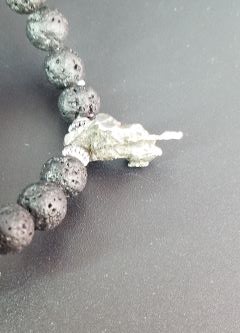
Across the Gran Chaco of northern Argentina lies one of the most remarkable meteorite sites on Earth. Known as Campo del Cielo, or “Field of the Sky,” the region contains a long scatter of iron meteorites and impact craters created when a large extraterrestrial iron body entered Earth’s atmosphere thousands of years ago, fragmented, and sent massive pieces into the landscape. Some of those pieces weighed only kilograms, while others were enormous masses measured in tonnes, giving Campo del Cielo a scale that few meteorite sites can match.
For collectors, Campo del Cielo is familiar because smaller fragments have circulated internationally for decades, making genuine iron meteorite material accessible to people who may never own a rare witnessed fall such as Winchcombe. Familiarity, however, can obscure how extraordinary Campo really is. These meteorites are not simply inexpensive pieces of iron from space. They belong to the IAB complex of iron meteorites, preserve an ancient history of metal and silicate material in the early Solar System, and arrived on Earth during an impact event that left multiple craters across the Gran Chaco. Their terrestrial history then continued through Indigenous knowledge of the region, European colonial expeditions, scientific investigations, large-scale excavations, museum collections, private collecting, and eventually modern Argentine heritage protections.
Campo del Cielo therefore offers several stories at once. Its internal mineralogy tells us about an ancient extraterrestrial parent body, its weathered exterior records thousands of years on Earth, its crater field preserves evidence of atmospheric fragmentation and impact, and its human history demonstrates how meteorites can become part of the cultural identity of the places where they fall. For someone beginning a meteorite collection, Campo can be an accessible first iron. For an experienced collector, a well-provenanced specimen with strong natural morphology, unusual inclusions, or historical documentation can be much more significant.
Campo del Cielo refers both to the meteorites and to the broader impact region in northern Argentina. The meteorites are predominantly iron-nickel metal and are classified within the IAB complex, a scientifically interesting family of iron meteorites notable in part because many contain silicate and other nonmetallic inclusions. This makes their history more complicated than the simplified picture of every iron meteorite being nothing more than a fragment of a clean metallic asteroid core.
Iron meteorites do preserve evidence of metal segregation and extraordinarily slow cooling within early planetary bodies, but the IAB complex appears to have experienced a more complicated sequence involving metal, silicates, heating, impact disruption, mixing, and reassembly. Campo del Cielo therefore gives collectors an opportunity to move beyond the basic “iron meteorites came from asteroid cores” explanation and appreciate how dynamic the early asteroid population actually was.
The metal is dominated by iron with several percent nickel, accompanied by cobalt, phosphorus, sulfur, and trace elements that help scientists classify meteorites chemically. Campo specimens can also contain troilite, graphite, silicates, phosphides, and other inclusions. These nonmetallic components are scientifically important because they preserve information that metal alone cannot provide, and they can also affect how individual specimens weather after thousands of years in the terrestrial environment.
When suitable Campo material is cut, polished, and etched, its iron-nickel structure can reveal broad metallic patterns produced by very slow cooling. These structures formed long before the meteorite encountered Earth. The dark, rusty exterior familiar to collectors came much later, after the fragments had spent several thousand years interacting with soil, groundwater, oxygen, and the seasonal climate of northern Argentina.
Readers who want to understand where IAB irons fit among chondrites, achondrites, pallasites, planetary meteorites, and other irons can continue with our Meteorite Classification guide.
The Campo del Cielo event occurred roughly 4,000 to 5,000 years ago, during the mid-Holocene, although published age estimates vary depending on the material and dating method examined. That is young compared with the approximately 4.5-billion-year history of the extraterrestrial material itself, but ancient on the scale of recorded meteorite falls. Unlike Sikhote-Alin, whose 1947 arrival was witnessed and scientifically documented almost immediately, Campo’s impact had already become part of the landscape long before European written records reached the region.
The incoming body did not simply produce one enormous crater containing one intact meteorite. It fragmented and produced a long strewn field containing multiple impact structures and widely distributed masses. Research into the site has documented numerous craters across an elongated region extending for many kilometers. Differences in crater dimensions reported over the years partly reflect how individual depressions have been defined, mapped, excavated, and interpreted, so it is more useful to understand Campo as a multi-crater impact field than to reduce its importance to one particular crater measurement.
The impact geometry has received considerable scientific attention because the distribution of the craters and meteorite masses indicates an unusually shallow trajectory. A low-angle arrival, combined with atmospheric fragmentation, helps explain why the event produced an elongated field rather than one conventional circular crater. Reconstructions of prehistoric impacts necessarily carry more uncertainty than a modern event recorded by cameras and instruments, so exact figures for entry angle, velocity, and original mass should be treated as modeled estimates rather than eyewitness measurements.
Whatever the precise initial dimensions, the original meteoroid was clearly enormous. The surviving masses alone include some of the largest individual meteorites ever recovered, while much additional material was lost through atmospheric ablation, fragmentation, corrosion, burial, and thousands of years of human activity. The amount of surviving iron demonstrates that Campo del Cielo was not an ordinary small meteorite fall but a major event capable of delivering extraordinarily large masses to the ground.
Two names dominate modern discussions of Campo del Cielo: El Chaco and Gancedo. Both are immense iron meteorites recovered from the Campo field, and together they demonstrate the extraordinary scale of the original event. El Chaco became internationally famous as one of the world’s largest known meteorite masses, while Gancedo, excavated in 2016, weighed more than 30 tonnes and joined the small group of truly gigantic individual meteorites known from Earth.
The exact ranking of the world’s largest meteorites can become confusing because published weights have sometimes changed after excavation, cleaning, improved measurement, or reassessment. For collectors, the important point is not whether one Campo mass occupies second, third, or another place on a particular list. What matters is that several enormous pieces survived the same prehistoric event and remained buried or partially buried in the Gran Chaco for thousands of years.
Other named Campo masses add to that story, and many smaller specimens have entered museums and private collections. This extraordinary size range—from small fragments that can fit into a specimen box to masses requiring heavy equipment to excavate—allows Campo del Cielo to demonstrate how differently fragments from one meteorite event can behave after atmospheric breakup.
The giant masses also help explain why Campo del Cielo occupies such an important place in Argentina’s natural heritage. These are not merely commercially useful sources of meteorite iron; they are major geological and cultural objects physically connected with a specific landscape and impact event.
A Campo del Cielo specimen looks very different from a freshly recovered iron such as Sikhote-Alin because it has spent several thousand years on Earth. Its exterior may be dark brown, black, reddish, heavily oxidized, rounded, pitted, or covered with a stable-looking weathering patina. Cavities may develop where inclusions or more reactive portions of the meteorite have weathered away, and fractures can allow corrosion to penetrate well below the visible surface.
This terrestrial alteration is part of Campo’s history rather than simply damage. The meteorite arrived as extraterrestrial iron, but everything that happened afterward reflects its interaction with the Gran Chaco environment. Soil chemistry, moisture, oxygen, salts, mineral inclusions, burial depth, and the individual fragment’s condition all influence how it survives.
Collectors should therefore avoid expecting every authentic Campo specimen to resemble a freshly fallen iron with a pristine black fusion crust. Much of the material has been terrestrialized to some degree, and its natural patina can be an important part of its appearance. Aggressive grinding, polishing, or artificial surface treatment may make a specimen look cleaner, but it can also remove evidence of its long terrestrial history.
At the same time, weathering creates practical concerns. Iron corrosion can continue after a specimen enters a collection, especially when salts and moisture remain within cracks or porous areas. A Campo specimen that appears stable in a dry environment may begin deteriorating if moved into high humidity, making long-term care an important part of responsible ownership.
The human history of Campo del Cielo began long before European expeditions reached the Gran Chaco. Indigenous peoples of the region were aware of the unusual masses of iron, and historical accounts make clear that knowledge of the material did not begin with Spanish colonial authorities. The name commonly rendered as Piguem Nonralta has been associated in historical literature with the idea of a “Field of the Sky,” although translations, spellings, and interpretations of Indigenous terminology should be approached carefully rather than treated as a simple modern label.
This is an area where popular meteorite stories sometimes become more confident than the surviving historical evidence allows. Claims that specific Indigenous communities universally worshipped the meteorites, made particular weapons from them, or assigned one exact spiritual meaning should not be repeated without strong ethnographic or archaeological support. What can be said more responsibly is that local Indigenous knowledge of the unusual iron preceded European documentation and played an important role in bringing the site to colonial attention.
Spanish colonial authorities became interested in reports of an enormous mass of iron during the sixteenth century, and an expedition was organized in 1576. Later expeditions attempted to locate, describe, sample, or exploit the masses, sometimes under the mistaken hope that the material might contain valuable silver. The meteorites gradually became objects of scientific investigation as understanding of extraterrestrial iron developed.
This long history makes Campo del Cielo different from a meteorite discovered purely through modern scientific fieldwork. Indigenous knowledge, colonial exploration, early metallurgy, developing ideas about meteorites, national heritage, museum collecting, and modern planetary science have all intersected at the same site. A well-documented Campo specimen therefore belongs to a human story as well as a geological one.
Campo del Cielo is scientifically important because the IAB complex does not fit comfortably into the simplest model of iron meteorites as clean pieces of completely differentiated metallic cores. IAB meteorites can contain silicate inclusions and other components that point toward a more complicated parent-body history involving partial melting, metal segregation, impact processing, and mixing.
That complexity is useful because the early Solar System was not a tidy sequence in which every asteroid formed, differentiated, cooled, and remained intact. Collisions began while planetary bodies were still evolving, and those collisions could disrupt partially differentiated objects, mix metal and silicate material, expose deep interiors, and create new bodies assembled from fragments of older ones. Meteorites preserve pieces of that chaotic history.
Campo also contributes to impact science because its elongated crater field provides evidence for how a large iron object fragmented and struck Earth at a relatively shallow angle. Researchers can compare the distribution of meteorites, crater dimensions, buried material, and impact features to models of atmospheric breakup and low-angle impact.
For collectors, this gives even a small Campo fragment a scientific context that extends far beyond its metallic composition. The specimen is part of a parent-body story, an atmospheric-entry story, an impact story, and a terrestrial-weathering story, all preserved within the same piece of material.
Campo del Cielo specimens are often described as regmaglypted because many display rounded depressions reminiscent of the thumbprint-like features seen on iron meteorites. Atmospheric ablation can certainly contribute to sculpted surfaces, but several thousand years of terrestrial corrosion complicate the appearance of Campo specimens. Weathering can enlarge depressions, remove inclusions, round edges, and create cavities that did not look the same when the meteorite first reached the ground.
For this reason, not every depression on a Campo specimen should automatically be interpreted as a pristine atmospheric regmaglypt. Some surfaces preserve genuine ablation morphology that was subsequently modified by weathering, while others owe much of their present appearance to corrosion after burial. The distinction is not always obvious without considering the specimen as a whole.
This makes natural Campo individuals particularly interesting to study. A collector can examine patina, cavities, edges, remaining surface sculpture, fractures, and areas where weathering has exposed different internal materials. Instead of seeing corrosion only as a flaw, the specimen can be read as a record of thousands of years of interaction between extraterrestrial metal and Earth’s environment.
Exceptional natural forms can still command strong collector interest, especially when the shape is visually balanced and the provenance is secure. As with Sikhote-Alin, morphology matters, but the processes producing the final appearance are not identical because the two meteorites have radically different terrestrial ages.
Cutting a Campo specimen reveals a different side of the meteorite. Beneath the weathered exterior is iron-nickel metal containing structures and inclusions that formed before the meteorite ever reached Earth. Proper polishing and etching can reveal broad kamacite-taenite relationships commonly described as a coarse Widmanstätten-type pattern, while sulfides, graphite, silicates, and other inclusions may interrupt the metallic matrix.
These inclusions can be visually fascinating because they break up the regularity of the metal and provide evidence of Campo’s complex parent-body history. They can also create challenges for cutting and preservation. Some inclusions or surrounding fractures may be more vulnerable to corrosion, and a freshly exposed surface has none of the protective patina developed naturally over thousands of years.
Comparing Campo with Gibeon or Muonionalusta is particularly instructive because the etched patterns differ noticeably. Gibeon and Muonionalusta are often selected for jewelry and decorative slices because of their striking geometric structures, while Campo can appear coarser and more interrupted by inclusions. That does not make it inferior; it reflects a different composition and thermal history.
A natural individual and an etched slice therefore tell complementary stories. The exterior records atmospheric and terrestrial processes, while the interior reveals mineralogical and structural information dating back to the meteorite’s extraterrestrial history.
Campo del Cielo and Sikhote-Alin are both famous iron meteorites available to collectors, but placing them side by side demonstrates why the history of a specimen matters as much as its classification. Sikhote-Alin fell in 1947 and was recovered beginning almost immediately, so many specimens retain relatively fresh atmospheric sculpting. Campo del Cielo fell several thousand years ago and spent the intervening time weathering in the Gran Chaco.
Sikhote-Alin is classified as an IIAB iron, whereas Campo belongs to the IAB complex, so their internal chemical and structural histories also differ. The exterior distinction can be just as dramatic. A sculpted Sikhote-Alin individual may display deep, comparatively fresh regmaglypts and flow-related features, while Campo commonly carries a heavy terrestrial patina and corrosion-modified cavities.
Their impact histories provide another useful comparison. Sikhote-Alin produced a witnessed atmospheric breakup and crater field that could be investigated immediately, whereas Campo’s prehistoric event has had to be reconstructed from surviving craters, meteorite distribution, geological evidence, and dating. One gives scientists a modern observed iron fall; the other preserves a prehistoric impact landscape.
For collectors, owning examples of both provides far more educational value than simply acquiring two iron meteorites. Together they demonstrate how fall age, chemistry, weathering, recovery history, and impact circumstances transform the appearance and meaning of extraterrestrial metal.
Canyon Diablo provides another useful comparison because it is associated with one of the world’s most famous impact structures, Meteor Crater in Arizona. Both Campo and Canyon Diablo are iron meteorites connected with major impact events, but the resulting landscapes are very different.
Meteor Crater is dominated by one spectacular crater, while Campo del Cielo consists of an elongated field containing numerous impact structures. Differences in incoming-body behavior, trajectory, fragmentation, and impact conditions produced very different geological results.
The comparison is particularly valuable for anyone interested in impact science because it demonstrates that large iron meteoroids do not all strike Earth in the same way. One may retain enough integrity to create a dominant crater, while another fragments extensively and distributes its energy across a broader field.
This is also why meteorite articles should not be reduced to chemical classification alone. The physical event that delivered a meteorite to Earth can be just as important as the composition of the extraterrestrial material itself.
Campo del Cielo has long been popular with beginning collectors because small specimens have historically been much more accessible than many rare meteorites. A genuine natural fragment provides the weight and metallic character people expect from an iron meteorite while connecting the owner with a major prehistoric impact site. That accessibility should not be confused with a lack of collector value, because quality varies enormously.
Collectors generally evaluate natural Campo specimens according to morphology, condition, stability, size, patina, visible inclusions, and provenance. A balanced sculptural individual with convincing natural surfaces can be more desirable than an irregular lump of greater mass, while an etched slice with interesting inclusions may appeal to someone interested in mineralogy rather than external form.
Older collection history has become increasingly important because of Argentina’s modern protections surrounding meteorites. Documentation showing that material has circulated internationally for many years can strengthen provenance and provide historical context. Original labels, invoices, collection cards, photographs, and dealer records should therefore be kept with the specimen.
The market also contains polished, cleaned, wire-wrapped, drilled, tumbled, and otherwise modified Campo material. These forms can be perfectly legitimate, particularly for jewelry or metaphysical use, but modification should be disclosed. A collector purchasing natural morphology needs to know whether the exterior has been aggressively cleaned or reshaped, just as a jewelry buyer should know that exposed iron requires maintenance.
Campo del Cielo requires more sourcing awareness than many older meteorites because Argentina now treats meteorites as protected cultural and natural heritage. Unauthorized removal from protected areas and unauthorized export are not appropriate sources for new commercial inventory, and the existence of older Campo material in international collections does not mean unrestricted collecting continues today.
Large quantities of Campo entered private and institutional collections during earlier periods, which is why legitimate legacy material remains available outside Argentina. The difficulty is that appearance alone cannot establish when a specimen was recovered or exported. Provenance therefore becomes particularly valuable, especially for larger or more significant pieces.
For a collector or retailer, the sensible approach is to favor established material with a documented history rather than supporting questionable new extraction. Older dealer stock, established private collections, and specimens with records predating modern restrictions provide a clearer path than material accompanied by vague claims of recent recovery.
Legal requirements can also change and differ between jurisdictions, so buyers should not treat a general article as legal advice for a particular transaction. What remains constant is the value of documentation. A meteorite with a transparent collection history is easier to evaluate scientifically, ethically, historically, and commercially.
Campo del Cielo requires realistic expectations about corrosion because it is an iron meteorite that has already spent thousands of years weathering on Earth. A dark patina may look stable while cracks, inclusions, or internal salts remain capable of supporting additional oxidation when environmental conditions change. Moving a specimen from a relatively dry collection into a humid room can sometimes reveal problems that were previously inactive.
Keeping the meteorite dry is the most important preventive measure. Protective display cases or specimen boxes can help, and desiccant is useful when properly maintained. Frequent handling should be minimized because fingerprints introduce moisture and salts onto exposed metal, particularly on cut or polished surfaces.
Cut slices require additional attention because fresh metal is exposed directly to the environment. Microcrystalline wax or another appropriate conservation coating may be used on prepared iron surfaces, but a coating should not be treated as a substitute for controlling humidity. Active corrosion needs to be addressed rather than simply covered.
Jewelry presents a greater challenge because sweat, skin oils, rain, hand washing, swimming pools, and ordinary daily wear repeatedly expose the iron to moisture and salts. Campo can certainly be incorporated into wearable pieces, but buyers should understand that an iron meteorite is not maintenance-free jewelry and may develop patina or corrosion if repeatedly exposed.
Campo works particularly well in natural-history displays because its dark patina and substantial weight give even a relatively small specimen visual presence. A simple stand or specimen mount usually works better than an elaborate setting because the natural surface should remain visible. A label identifying Campo del Cielo, Chaco/Santiago del Estero, Argentina; Iron meteorite, IAB complex immediately gives the object a geological context.
A cut and etched slice can be displayed beside a natural individual to show the difference between terrestrial exterior and extraterrestrial interior. Adding Sikhote-Alin or Canyon Diablo creates an even stronger educational display because the viewer can compare different iron classifications, fall histories, surface conditions, and impact events.
Large collections benefit from preserving documentation alongside the specimen rather than hiding labels in a drawer. An old handwritten collection card may be visually modest, but it can establish decades of provenance and become an important historical object in its own right.
Our guide to Museum-Style Crystal, Fossil & Meteorite Displays explores additional ways to combine specimens, labels, lighting, and stands while keeping the natural object at the center of the presentation.
Campo del Cielo has become popular within modern metaphysical practice because its physical story naturally lends itself to symbolism involving grounding, transformation, endurance, connection, protection, and cosmic perspective. The specimen is literally extraterrestrial iron that traveled through space, survived atmospheric entry and impact, and then remained embedded in Earth’s landscape for thousands of years. That history gives practitioners a meaningful symbolic framework without requiring claims that the meteorite produces scientifically measurable healing effects.
Its dense iron composition often leads to associations with the Root Chakra, where it may symbolize stability, physical presence, strength, and connection with the Earth. At the same time, its extraterrestrial origin encourages some practitioners to use Campo in Third Eye or Crown Chakra meditation as a reminder of perspective, awareness, and connection with a universe far larger than everyday experience. The combination of these ideas—an object originating beyond Earth yet physically grounded within it—is one reason Campo has become especially appealing in meditation and Reiki settings.
Some people use a Campo specimen as a focus during periods of major personal transition because the meteorite’s own history can symbolize disruption followed by endurance. Others place it on an altar, desk, or meditation space as a reminder to remain grounded while exploring spiritual or philosophical questions. These meanings belong to modern metaphysical traditions and individual practice rather than to scientifically established properties of iron-nickel metal.
Its symbolism becomes more interesting when it is connected with the actual specimen rather than generic “space energy.” A piece of Campo has endured planetary formation, asteroid disruption, interplanetary travel, atmospheric fragmentation, impact, millennia of burial and weathering, and eventual recovery. For someone who uses natural objects symbolically, that real history already provides an unusually rich language of change, survival, time, and perspective.
Campo del Cielo is a prehistoric meteorite impact and strewn-field region in northern Argentina containing numerous masses of iron meteorite and multiple impact structures. The meteorites are classified within the IAB complex.
The field lies in the Gran Chaco region of northern Argentina, extending across areas associated with Chaco and Santiago del Estero provinces.
Scientific dating places the impact broadly around 4,000 to 5,000 years ago during the mid-Holocene. The extraterrestrial material itself is vastly older and originated during the early history of the Solar System.
Many tonnes have been recovered, including individual masses weighing tens of tonnes. El Chaco and Gancedo are among the enormous known Campo masses, while many smaller specimens have also entered institutional and private collections.
Campo del Cielo is an iron meteorite belonging to the IAB complex. Its metal can contain sulfides, graphite, silicates, phosphides, and other inclusions that reflect a complicated parent-body history.
Prepared sections can reveal coarse iron-nickel structures after cutting, polishing, and etching. The appearance differs from finer-patterned irons such as Muonionalusta and should be understood as a reflection of composition and cooling history rather than a measure of quality.
The meteorites have spent several thousand years exposed to terrestrial weathering. Iron reacts with moisture and oxygen, while cracks, salts, sulfides, and other inclusions can provide pathways for additional corrosion.
Campo material that entered international collections legitimately remains widely owned and traded, but Argentina protects meteorites and restricts unauthorized removal and export today. Collectors should favor established material with clear provenance and verify the requirements applying to any particular transaction.
Campo is a prehistoric IAB-complex iron that has weathered on Earth for several thousand years. Sikhote-Alin is an IIAB iron that fell in Russia in 1947 and was recovered soon afterward, so many Sikhote-Alin specimens retain much fresher atmospheric features.
Campo is not rare by meteorite standards because many tonnes have been recovered. Exceptional natural shapes, significant masses, unusual inclusions, older documented specimens, and pieces with strong provenance can nevertheless be highly collectible and difficult to replace.
Modern metaphysical traditions commonly associate Campo with grounding, transformation, strength, endurance, protection, cosmic connection, and perspective. These are symbolic spiritual interpretations rather than scientifically demonstrated effects.
Campo del Cielo is easy to underestimate because smaller specimens have been available to collectors for so long. A dark, heavy piece of Campo sitting in a specimen box may not initially seem as dramatic as a polished pallasite or a freshly sculpted Sikhote-Alin individual, yet its history extends from the formation and disruption of an ancient extraterrestrial parent body to a prehistoric impact that left a chain of craters across northern Argentina. The specimen’s weathered surface then records several thousand additional years of interaction with Earth’s soil, water, atmosphere, and eventually human communities.
Its scientific importance is equally layered. Campo belongs to the IAB complex, whose mixture of metal and nonmetallic material preserves a more complicated parent-body history than the old simplified idea that every iron meteorite is merely a clean fragment of an asteroid core. The impact field adds another dimension, allowing scientists to investigate fragmentation, shallow-angle impact, crater formation, and the distribution of enormous surviving masses. A cut section and a natural individual can therefore tell very different parts of the same story.
Campo’s human history deserves the same care. Indigenous knowledge of the unusual iron predates European documentation, while Spanish colonial expeditions, later scientific investigations, major excavations, museum displays, international collecting, and modern Argentine heritage protections have continually changed the way people interact with the site. That history is a reminder that meteorites do not cease being connected with a place simply because individual fragments enter collections around the world.
For collectors, Campo del Cielo provides an excellent lesson in looking beyond rarity. Its relatively large recovered mass makes authentic specimens accessible, but morphology, stability, inclusions, provenance, condition, and historical documentation can make one piece much more significant than another. The best specimen is not necessarily the largest or cleanest; it is the one whose features and history can be understood and preserved.
Continue exploring iron meteorites through Sikhote-Alin, Canyon Diablo, Gibeon, and Muonionalusta. For the broader science behind these classifications and their parent bodies, continue with Meteorite Classification and Meteorites: Ancient Space Rocks That Fall to Earth.
Explore the complete Grounded Lifestyles Meteorite Articles for additional guides covering meteorite science, historic falls, planetary origins, identification, collecting, and care. To connect the educational side of meteorite collecting with specimens available through Grounded Lifestyles, visit our Meteorites & Tektites Collection.

At Grounded Lifestyles, our love for crystals began in the peaceful flow of Reiki and energy healing sessions — where we saw how natural stones could amplify intentions, restore balance, and bring comfort. But the more time we spent with these treasures, the more curious we became about their origins. That curiosity led us into the fascinating world of geology and mineral specimen collecting. We fell in love not just with the energy of crystals, but with the science and artistry of their creation — the intricate crystal structures, the vibrant mineral hues, and the wonder of holding a piece of Earth’s history in our hands.

