

Every crystal, mineral, fossil, meteorite, and handcrafted piece is selected with purpose. Whether you’re building a museum-worthy mineral collection, searching for a meaningful gift, decorating your home with natural beauty, or beginning your journey into the world of geology, you’ll discover authentic specimens with stories worth sharing.
Over 15 shows a year throughout the Southwest. Check to see if we are coming to a show near you!
Home > Blog > Meteorites Blog | Space Rocks, Collecting & Meaning > Winchcombe Meteorite Britain 2021
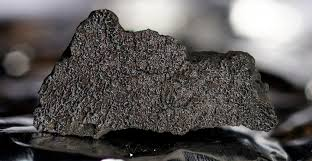
On the evening of February 28, 2021, a brilliant fireball crossed the sky over the United Kingdom before fragments of an unusually important meteorite fell around the town of Winchcombe in Gloucestershire, England. Cameras captured the event from multiple locations, eyewitnesses reported the fireball, and by the following morning a family in Winchcombe had discovered a dark, powdery pile of material on their driveway. Scientists quickly realized that this was much more than another meteorite fall. The fragments belonged to a rare CM2 carbonaceous chondrite, a primitive, water-altered meteorite containing material that preserves evidence from the earliest history of our Solar System.
Winchcombe became scientifically exceptional not simply because of what it was, but because of how quickly it was recovered. Some of the first material was collected within hours and before significant rainfall could alter it, giving researchers access to unusually fresh carbonaceous meteorite material with comparatively little terrestrial contamination. That made Winchcombe particularly valuable for studying water-bearing minerals, organic compounds, asteroid alteration, and the possible contribution of carbonaceous asteroids to the water and prebiotic chemistry of early Earth.
For collectors, Winchcombe is also a reminder that meteorite importance cannot be judged by size, dramatic metal structure, or visual beauty alone. The entire recovered mass was only about 602 grams, and much of that material has been preserved for scientific research. A small dark fragment of Winchcombe may look far less spectacular than a polished pallasite or etched iron meteorite, yet scientifically it represents something extraordinary: a naturally delivered sample of a primitive carbon-rich asteroid recovered quickly enough for researchers to study it almost as though it had been returned by a spacecraft.
The Winchcombe fireball appeared at approximately 21:54 GMT on February 28, 2021, crossing the sky over Gloucestershire and surrounding areas as the incoming meteoroid entered Earth’s atmosphere and fragmented. The event was recorded by cameras belonging to meteor-observation networks as well as security cameras, dashcams, and doorbell cameras, giving researchers an unusually detailed record of the object’s atmospheric trajectory. Hundreds of eyewitness reports added further information, demonstrating how modern meteorite recovery increasingly combines professional science with observations made by ordinary people.
Those recordings became important almost immediately because researchers could use them to estimate where surviving meteorite fragments were likely to have landed. The following morning, the Wilcock family discovered a black, ashy-looking pile on their driveway in Winchcombe. The material looked surprisingly fragile for something that had just survived atmospheric entry, but that fragility is characteristic of some carbonaceous meteorites, whose fine-grained interiors bear little resemblance to the dense metallic meteorites many people imagine when they hear the word “meteorite.”
Additional fragments were subsequently recovered from gardens, fields, roadsides, and other locations around Winchcombe and nearby communities. The combination of camera observations and rapid public cooperation allowed researchers and search teams to recover material before prolonged exposure to British weather could significantly change its chemistry. For a carbonaceous meteorite containing hydrated minerals and organic compounds, every hour spent exposed to rain, soil, handling, and biological contamination can complicate later analysis, making the speed of the Winchcombe recovery especially valuable.
The fall also ended a long gap in British meteorite history. Winchcombe was the first meteorite recovered in the United Kingdom since the Glatton meteorite fell in 1991, and it became the first recovered carbonaceous chondrite fall in the country. Its arrival therefore had both scientific and cultural significance, bringing meteorite recovery into homes and communities rather than limiting the story to laboratories and remote collecting expeditions.
Winchcombe is officially classified as a CM2 carbonaceous chondrite, a classification that tells us a great deal about both its composition and its history. Carbonaceous chondrites are stony meteorites containing relatively primitive Solar System material, including carbon-bearing compounds and minerals that preserve evidence of early processes occurring within small planetary bodies. Chondrites are named for the presence of chondrules, small rounded mineral structures that formed during the earliest stages of Solar System history and later became incorporated into asteroid material.
The “CM” designation places Winchcombe within the Mighei-type carbonaceous chondrites, a group named after the Mighei meteorite that fell in Ukraine in 1889. CM meteorites are particularly important because they contain abundant fine-grained matrix material, hydrated minerals, carbon-bearing compounds, and evidence that liquid water once interacted extensively with rock inside their parent asteroids. The “2” in CM2 indicates substantial aqueous alteration, meaning minerals within the asteroid were chemically changed by water before the material ever reached Earth.
Winchcombe is not perfectly uniform. Detailed study has revealed multiple lithologies within the meteorite, reflecting different degrees or styles of alteration within the parent material. Some portions are more strongly altered than others, and the meteorite is brecciated, meaning different pieces of material were broken, mixed, and incorporated together before the fragment eventually left its asteroid. Rather than representing a simple untouched rock, Winchcombe preserves evidence of an asteroid with a complicated history involving water, impact disruption, mixing, and reassembly.
This is one reason meteorite classification is so useful to collectors. Names such as CM2, H5, eucrite, pallasite, or iron meteorite are not simply labels for appearance; they connect individual specimens to larger planetary processes. Our guide to Meteorite Classification explores how scientists divide meteorites into groups and what those classifications reveal about their parent bodies.
One of the most important scientific discoveries from Winchcombe concerns water. Researchers studying the meteorite found abundant hydrated minerals produced when water reacted with rocky material on its parent asteroid. The Natural History Museum has reported that approximately 11 percent of Winchcombe by weight consists of extraterrestrial water, although that water is largely chemically bound within hydrated minerals rather than sitting inside the meteorite as free liquid.
Even more important is the isotopic composition of that water. Hydrogen occurs in different isotopic forms, and the relative proportions preserved in extraterrestrial material can be compared with terrestrial water. Measurements of Winchcombe showed a hydrogen-isotope composition similar to that of water on Earth, providing additional evidence that carbonaceous asteroids may have contributed an important portion of Earth’s water during the planet’s early history.
This does not mean scientists have demonstrated that one particular class of asteroid supplied all of Earth’s oceans. Earth’s water has a complicated origin, and researchers continue studying the relative contributions of material already present during planetary formation and material delivered later by asteroids and other bodies. Winchcombe nevertheless provides unusually direct evidence that water-rich carbonaceous asteroids carried material chemically compatible with at least part of Earth’s water inventory.
For collectors, the distinction between “water-bearing” and “containing liquid water” is important. Winchcombe is often described simply as a meteorite containing extraterrestrial water, which is broadly true, but most of that water is incorporated into minerals formed through ancient water-rock reactions. Those hydrated minerals preserve evidence that liquid water once existed within the parent asteroid and chemically transformed its original minerals billions of years before a fragment landed in Gloucestershire.
Winchcombe also contains carbon-bearing organic material, which makes it valuable for studying chemistry that occurred before life developed on Earth. Researchers have identified a diverse inventory of extraterrestrial organic compounds within carbonaceous meteorites, and Winchcombe’s rapid recovery provides an unusually clean opportunity to distinguish material originating in space from contamination introduced after landing.
This subject requires careful language because finding organic molecules in a meteorite does not mean that scientists have found life. In chemistry, “organic” refers broadly to carbon-containing compounds, many of which can form naturally without biological activity. Carbonaceous meteorites demonstrate that complex carbon chemistry occurs throughout the Solar System and that asteroids can deliver organic material to planetary surfaces.
That distinction makes Winchcombe more scientifically interesting rather than less so. If water-bearing minerals and organic compounds can develop and coexist within primitive asteroids, then some of the chemical ingredients available on early Earth did not necessarily have to originate here. Asteroid impacts could have added additional water and carbon-bearing compounds to the young planet, contributing to the chemical environment in which later prebiotic processes occurred.
Winchcombe therefore belongs to a much larger scientific question: how did a young rocky planet acquire the water and chemical ingredients necessary for the environment we know today? Meteorites cannot answer that question alone, but carbonaceous falls such as Winchcombe provide actual physical material with which scientists can test competing ideas.
Although Winchcombe contains primitive Solar System material, describing it simply as an unchanged piece of the early Solar System would be misleading. Its parent asteroid experienced extensive alteration after the original mineral and dust components came together. Water reacted with minerals, impacts broke material apart, different rock fragments became mixed, and portions of the asteroid were reassembled into brecciated material.
Researchers describe Winchcombe as a regolith breccia, meaning it contains fragments representing material that had been disrupted and mixed within or near the surface environment of its parent body. This tells us that the asteroid was not geologically inactive in the sense of remaining untouched after formation. Although it never became a large differentiated planet with a metallic core and rocky mantle, it still experienced chemical alteration and impact processing over immense spans of time.
Water played a particularly important role. Ice incorporated into the young asteroid could melt as internal conditions changed, allowing liquid water to react with silicate minerals and produce hydrated phases such as phyllosilicates. These reactions changed the mineralogy and texture of the original material before later impacts fractured and redistributed it.
The result is a meteorite that preserves several stages of asteroid evolution at once. Some of its components reach back toward the earliest Solar System, while others record alteration that occurred after the parent body assembled. Later collisions then added another chapter before the small meteoroid that became Winchcombe was eventually separated from its parent and sent onto an Earth-crossing trajectory.
The extensive camera coverage of the 2021 fireball allowed researchers to reconstruct Winchcombe’s atmospheric trajectory and estimate its orbit before it encountered Earth. This is especially valuable because most meteorites are discovered long after they fall, leaving scientists without direct observations of the path they followed through space.
Orbital analysis connects Winchcombe with the outer region of the main asteroid belt, where primitive carbonaceous asteroids are abundant. Dynamical processes and collisions can gradually move fragments away from stable main-belt orbits until gravitational resonances place them on trajectories capable of crossing Earth’s orbit.
Studies of Winchcombe’s exposure history suggest that the small meteoroid spent a relatively short period traveling through space after being liberated from a larger body before reaching Earth. Cosmogenic nuclides, which form when material is exposed to cosmic radiation in space, provide scientists with a way to investigate how long a meteorite existed as a smaller exposed object after separation from its parent asteroid.
Combining orbital information with laboratory chemistry is especially powerful because researchers can connect a physical meteorite with the region of the Solar System from which it likely originated. For a broader introduction to how meteorites travel from asteroids to Earth and what happens during atmospheric entry, see our guide to Meteorites: Ancient Space Rocks That Fall to Earth.
Winchcombe is frequently discussed alongside material returned from asteroids by spacecraft, particularly samples collected by Japan’s Hayabusa2 mission from asteroid Ryugu. The comparison does not mean Winchcombe and Ryugu are identical. Instead, both provide scientists with exceptionally valuable carbon-rich, water-altered material that can be analyzed with comparatively strong control over contamination and terrestrial weathering.
Sample-return missions offer the cleanest possible context because material is collected directly from an asteroid and transported to Earth inside carefully controlled systems. Meteorites normally arrive under much messier circumstances. They fall through Earth’s atmosphere, land on soil, ice, roads, buildings, or water, and may remain exposed for years, centuries, or even thousands of years before being found.
Winchcombe narrowed that gap because researchers knew exactly when it fell and recovered some material within hours. The first fragments had experienced Earth’s atmosphere and landing, but they had not spent years reacting with rainwater, soil, microbes, fertilizers, road salts, or other terrestrial contaminants. Scientists could therefore compare naturally delivered asteroid material with carefully returned spacecraft samples and better understand what changes occur during atmospheric entry and terrestrial exposure.
NASA’s OSIRIS-REx return of material from asteroid Bennu has made these comparisons even more valuable. Ryugu, Bennu, Winchcombe, and other carbonaceous meteorites do not tell exactly the same story, but together they provide multiple windows into primitive, carbon-rich asteroid material and the chemical evolution of the early Solar System.
Meteorite weathering begins as soon as a specimen reaches Earth’s surface. Iron-bearing minerals can oxidize, salts can migrate, water can enter fractures, and terrestrial organic material can contaminate surfaces and pores. These changes are particularly troublesome in carbonaceous meteorites because the material scientists most want to study—hydrated minerals and organic compounds—is also especially sensitive to contamination and environmental alteration.
The rapid Winchcombe recovery preserved an unusually clear boundary between extraterrestrial chemistry and terrestrial exposure. Researchers knew the exact fall date, could identify where individual pieces were recovered, and had access to material collected before substantial rainfall. That combination makes Winchcombe far more scientifically useful than a carbonaceous meteorite discovered decades after its fall with no known terrestrial history.
The event also demonstrates why meteorite recovery networks have become so important. Camera systems can calculate probable fall zones quickly enough for search teams to begin looking while the material is still fresh. Public reporting adds another layer because meteorites do not necessarily land in remote deserts; they can fall into gardens, fields, driveways, roofs, roads, and communities where local residents may become the first people to encounter them.
Winchcombe is therefore as much a citizen-science story as it is a meteorite story. Without camera networks, rapid communication, informed members of the public, and cooperation between residents and scientists, much of the recovered material might have remained unidentified until weather had substantially altered it.
Collectors accustomed to polished iron meteorites or bright olivine-filled pallasites may be surprised by Winchcombe’s appearance. Fresh pieces typically have a dark fusion crust surrounding a very fine-grained, dark interior, and many fragments are small, angular, and comparatively fragile. Chondrules can be present without being immediately obvious to the naked eye because the meteorite contains abundant fine matrix and has undergone extensive aqueous alteration.
The fusion crust formed during atmospheric entry, when intense heating affected the outermost surface as the meteoroid traveled through the atmosphere at tremendous speed. This heating is largely a surface phenomenon; the interior of a meteorite does not melt completely during a normal fall. Fresh carbonaceous fusion crust can be exceptionally delicate, making careful handling important for both scientific specimens and collector fragments.
Winchcombe’s modest appearance is an excellent reminder that visual drama and scientific importance are different qualities. A large etched iron slice can immediately display a spectacular Widmanstätten pattern, while a tiny piece of carbonaceous chondrite may look like little more than a dark crumb. Yet the latter can preserve hydrated minerals, organic compounds, isotopic information, and primitive Solar System material that makes it enormously valuable to planetary science.
The official total recovered mass of Winchcombe is only about 602 grams, distributed among many fragments, and a substantial majority of that material is preserved in institutional collections for research, curation, and public education. This makes legitimate private collector material extremely limited compared with meteorites whose recovered masses are measured in kilograms or tons.
That scarcity needs to be understood in context. Winchcombe is not desirable merely because relatively little exists; it is desirable because a very small recovered mass is attached to an exceptionally well-documented fall with major scientific significance. Its classification, rapid recovery, orbital reconstruction, carbonaceous composition, water-bearing mineralogy, organic chemistry, and place in modern British meteorite history all contribute to its importance.
Collectors considering a Winchcombe fragment should place provenance above size. Documentation establishing that a tiny specimen genuinely came from the recognized Winchcombe fall is essential because an unidentified black carbonaceous fragment cannot be authenticated by appearance alone. Chain of custody, dealer reputation, collection history, and supporting documentation become increasingly important as the amount of material decreases and the price per gram rises.
Claims such as “hammer stone” deserve additional scrutiny. In meteorite collecting, a hammer stone is a specimen known to have struck a human-made object or structure, and that history can increase collector interest dramatically. Because Winchcombe famously landed on a driveway and other developed areas, documentation connecting a particular fragment with a known impact location should be preserved carefully rather than accepted solely from a seller’s description.
Very few collectors will ever own Winchcombe, but understanding it can make someone a better meteorite buyer. Carbonaceous chondrites are scientifically important and often physically fragile, which means classification and provenance should matter more than finding the largest piece available at the lowest price.
When buying any meteorite, collectors should look for a recognized name, classification, reliable source, and documentation connecting the specimen to an accepted meteorite. For particularly scarce falls, a specimen should ideally have a traceable history through a respected collection, dealer, institution, or recognized recovery.
This is where education and collecting naturally meet. Our Meteorite Classification guide explains the major meteorite families, while our broader Meteorites: Ancient Space Rocks That Fall to Earth article provides additional context for understanding falls, finds, fusion crust, parent bodies, and identification.
Collectors interested in acquiring documented extraterrestrial material can also explore the Grounded Lifestyles Meteorites & Tektites Collection, where available material is presented with its classification, locality, fall or find information, and collector context whenever that information is known.
A genuine Winchcombe fragment should be treated as a delicate scientific and historical specimen rather than a stone intended for frequent handling. Its matrix-rich carbonaceous material can be friable, and repeated contact risks damaging fusion crust, loosening grains, introducing oils and moisture from the skin, or separating tiny fragments from the specimen.
A small protective specimen box, membrane box, or sealed display capsule provides a safer environment while still allowing the meteorite to be viewed. Humidity should be controlled, particularly for meteorites containing minerals susceptible to terrestrial alteration, and the specimen should be protected from condensation, water, and unnecessary temperature changes. A small desiccant packet may be appropriate in a properly designed storage container, although it should not physically contact the specimen.
Documentation should be stored just as carefully as the meteorite itself. Original labels, dealer information, collection cards, photographs, certificates, and acquisition records can become an important part of the specimen’s value. A meteorite without its provenance can lose much of the historical context that distinguishes it from visually similar material.
For display ideas that combine preservation with natural-history presentation, see our guide to Museum-Style Crystal, Fossil & Meteorite Displays.
Winchcombe is primarily important because of its planetary science, but meteorites also hold symbolic significance for people who work with stones through meditation, Reiki, intention-setting, or other metaphysical traditions. In that context, Winchcombe’s actual geological story provides more than enough material for meaningful interpretation without inventing ancient traditions or assigning scientifically unsupported physical effects to the meteorite.
Its most natural symbolism is connected with origins, perspective, transformation, water, ancestry, and connection across immense spans of time. The material from which Winchcombe formed reaches back toward the earliest history of the Solar System, while the hydrated minerals inside it preserve evidence of water moving through a primitive asteroid billions of years ago. Someone using the stone symbolically might therefore view it as a reminder that transformation can happen slowly, that apparently small events can carry enormous histories, or that the materials making up our planet are connected with a much larger planetary system.
Within Reiki or meditation practice, Winchcombe could also be used as a focal object for contemplating scale and perspective. A fragment weighing only a fraction of a gram represents material older than Earth in its present form, altered on an asteroid, separated through collision, transported through interplanetary space, and finally delivered to one small town in England. That history can provide a powerful symbolic framework without requiring the claim that the meteorite produces a measurable healing effect.
Some modern practitioners may choose to associate meteorites with the Third Eye or Crown Chakras because of their connection with cosmic perspective, awareness, and contemplation, while Winchcombe’s water-rich history may inspire additional symbolic associations with emotional reflection or change. These are modern metaphysical interpretations rather than mineralogical properties, and individual practice varies considerably.
Winchcombe has become an exceptional teaching specimen because its story connects astronomy, geology, chemistry, planetary science, meteorite recovery, citizen science, and public participation. A classroom discussion can begin with a fireball captured on a doorbell camera and quickly expand into asteroid orbits, atmospheric entry, hydrated minerals, isotope chemistry, organic molecules, and the origin of Earth’s water.
The Natural History Museum in London curates the principal scientific collection and has made Winchcombe an important part of its meteorite research and public education. The meteorite’s local history is also preserved in Winchcombe itself, where the community’s role in recovery has become part of the story. Even a portion of the driveway associated with the first recovery was preserved, creating an unusual physical connection between an extraterrestrial specimen and the ordinary surface on which it completed its journey.
For collectors, this museum context reinforces why provenance matters. A meteorite is not merely a piece of extraterrestrial material; a documented fall can connect a specimen to an exact date, atmospheric event, recovery location, individual finder, scientific investigation, and sometimes even a specific place where the meteorite struck Earth.
Winchcombe is officially classified as a CM2 carbonaceous chondrite. It contains primitive Solar System material, hydrated minerals produced through ancient water-rock reactions, carbon-bearing organic compounds, and multiple lithologies reflecting a complex parent-asteroid history.
The meteorite fell on February 28, 2021, following a widely observed fireball over the United Kingdom at approximately 21:54 GMT. Fragments were recovered around Winchcombe and neighboring areas in Gloucestershire.
The official recovered mass is approximately 602 grams. The material was distributed among numerous fragments, with most of the important mass preserved for institutional curation, scientific research, and education.
Winchcombe combines a rare carbonaceous classification with exceptionally rapid recovery and extensive observational data from its fall. Researchers could study fresh water-bearing and organic-rich material with relatively little terrestrial weathering while also using camera observations to reconstruct the meteoroid’s trajectory and pre-impact orbit.
Yes, although most of the water is not free liquid. Approximately 11 percent of the meteorite by weight has been described as extraterrestrial water largely incorporated into hydrated minerals produced by ancient water-rock reactions on its parent asteroid.
Winchcombe provides important supporting evidence because the hydrogen-isotope composition of its extraterrestrial water is similar to terrestrial water. This strengthens the hypothesis that carbonaceous asteroids contributed some of Earth’s water, although the complete origin of Earth’s oceans remains a broader scientific question.
No. Winchcombe contains extraterrestrial organic compounds, but organic chemistry is not the same thing as biological life. Its importance lies partly in demonstrating that carbon-bearing compounds relevant to prebiotic chemistry can form and exist in asteroid material independently of terrestrial biology.
Orbital reconstruction indicates that the meteoroid originated from the asteroid population associated with the outer main belt before dynamical processes eventually placed it on an Earth-crossing orbit.
Legitimate privately held fragments can exist, but the available material is extremely limited because the total recovered mass was only about 602 grams and most scientifically important material is curated institutionally. Provenance is essential when evaluating any specimen offered as Winchcombe.
Modern metaphysical interpretation may associate Winchcombe with origins, transformation, cosmic perspective, water, connection, and reflection because of its ancient Solar System history and water-altered mineralogy. These meanings are symbolic spiritual traditions rather than scientifically demonstrated effects of the meteorite.
Winchcombe demonstrates why meteorites should never be judged solely by appearance. Its dark, fragile fragments lack the metallic brilliance of an iron meteorite or the translucent olivine of a pallasite, yet those modest pieces preserve information about some of the largest questions in planetary science. Inside less than a kilogram of recovered material, researchers found evidence of ancient water-rock reactions, primitive Solar System matter, organic chemistry, impact mixing, asteroid evolution, and extraterrestrial water with an isotopic composition closely resembling water on Earth.
The circumstances of the fall make the story even more remarkable. Cameras recorded the fireball, scientists reconstructed its path, members of the public helped identify and recover fragments, and some material reached researchers before British rain could substantially alter it. Instead of spending decades weathering unnoticed on Earth’s surface, Winchcombe moved from asteroid to atmosphere to driveway to laboratory with an unusually well-documented history.
For collectors, that history provides a valuable lesson about what gives a meteorite meaning. Classification, provenance, recovery circumstances, scientific importance, and documentation can matter far more than size or visual drama. A tiny, carefully documented carbonaceous fragment may tell a more extraordinary planetary story than a much larger specimen with little known history.
Winchcombe also provides a natural starting point for understanding meteorites more broadly. Continue with Meteorites: Ancient Space Rocks That Fall to Earth for an overview of meteorite origins, falls, finds, and parent bodies, then explore our Meteorite Classification guide to understand how carbonaceous chondrites fit within the larger meteorite family. Readers interested in material from differentiated planetary bodies can continue with Lunar Meteorites and Martian Meteorites, while Pallasite Meteorites provide a dramatic contrast between primitive carbonaceous material and meteorites formed within differentiated asteroids.
Explore the complete Grounded Lifestyles Meteorite Articles for additional guides covering meteorite science, classification, historic falls, planetary origins, collecting, identification, and care. To connect that educational material with documented specimens available to collectors, visit our Meteorites & Tektites Collection.

At Grounded Lifestyles, our love for crystals began in the peaceful flow of Reiki and energy healing sessions — where we saw how natural stones could amplify intentions, restore balance, and bring comfort. But the more time we spent with these treasures, the more curious we became about their origins. That curiosity led us into the fascinating world of geology and mineral specimen collecting. We fell in love not just with the energy of crystals, but with the science and artistry of their creation — the intricate crystal structures, the vibrant mineral hues, and the wonder of holding a piece of Earth’s history in our hands.

