

Every crystal, mineral, fossil, meteorite, and handcrafted piece is selected with purpose. Whether you’re building a museum-worthy mineral collection, searching for a meaningful gift, decorating your home with natural beauty, or beginning your journey into the world of geology, you’ll discover authentic specimens with stories worth sharing.
Over 15 shows a year throughout the Southwest. Check to see if we are coming to a show near you!
Home > Blog > Meteorites Blog | Space Rocks, Collecting & Meaning > Tibetan Tektite & Cintamani Stone: Geology, Meaning and the Collector Market
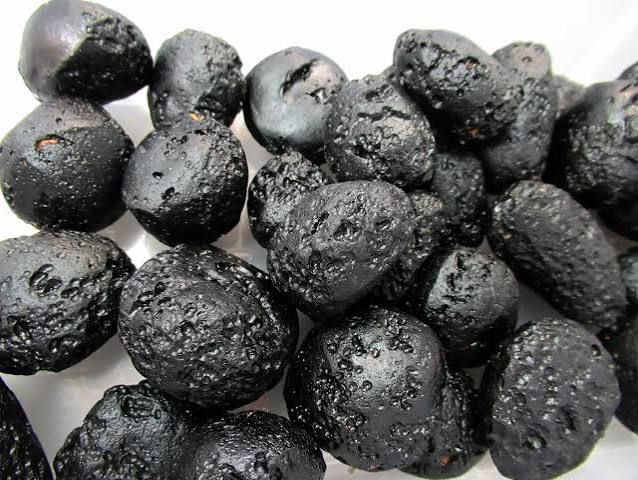
The name Tibetan tektite carries an immediate sense of mystery. Dark natural glass, the high landscape of the Tibetan Plateau, stories of stones from the sky, and modern associations with the legendary Cintamani Stone have combined to create a material that occupies an unusual place between geology, collecting, and metaphysical tradition. Specimens sold under names such as Tibetan Tektite, Tibetan Cintamani, Cintamani Stone, or Tibetan Obsidian are increasingly encountered in crystal shops and online markets, where descriptions may present them as extraterrestrial objects, ancient tektites, sacred stones, or fragments of a legendary jewel.
The scientific picture is considerably more complicated, and in many ways more interesting. Genuine volcanic obsidian occurs on the Tibetan Plateau and has been documented through modern geochemical research. Archaeological studies have identified several chemically distinct varieties of Tibetan obsidian, demonstrating that people transported and used this volcanic glass across considerable distances. What has not been scientifically established is a recognized Tibetan tektite strewn field or a geological connection between the natural glass marketed as “Tibetan tektite” and the legendary Cintamani jewel of Buddhist and Hindu traditions.
For collectors, that distinction matters because tektite, obsidian, meteorite, and Cintamani are not interchangeable terms. Tektite describes a particular type of natural glass created from terrestrial material during a hypervelocity impact. Obsidian is volcanic glass formed when silica-rich lava cools rapidly. Meteorites are extraterrestrial rocks or metal that survive atmospheric entry. Cintamani, meanwhile, belongs primarily to religious and symbolic tradition as the legendary wish-fulfilling jewel.
A specimen can still be beautiful, collectible, culturally interesting, and meaningful within contemporary metaphysical practice without being a meteorite or scientifically recognized tektite. Understanding what is known—and what remains unverified—allows collectors to appreciate Tibetan natural glass without requiring an unsupported extraterrestrial story.
Material marketed as Tibetan tektite is generally dark brown to black natural-looking glass that may be translucent around thin edges when held against strong light. Pieces can have rounded, irregular, pitted, grooved, or weathered surfaces, which helps explain why they are sometimes compared with tektites.
Commercial descriptions vary considerably. One seller may identify the material as a Tibetan tektite, another as Tibetan obsidian, while metaphysical dealers may use names such as Tibetan Cintamani, Cintamani Stone, Tibetan Cintamani Tektite, or simply Cintamani. Some descriptions go considerably further and claim that the material fell from space, came from a meteorite impact, represents an ancient cosmic glass, or is physically connected with the legendary wish-fulfilling jewel described in Buddhist tradition.
Those names should not be treated as scientific classifications.
At present, Tibetan tektite is best understood as a commercial or metaphysical term unless an individual specimen has analytical evidence demonstrating an impact-glass origin. The Tibetan Plateau unquestionably contains natural volcanic glass, and peer-reviewed archaeological research has chemically characterized several distinct obsidian varieties from the region. That provides a well-documented terrestrial geological explanation for at least some natural glass occurring in Tibet, whereas a recognized Tibetan tektite strewn field has not been established.
This does not mean that every object sold as Tibetan tektite has been collected from one known Tibetan obsidian source, nor does it establish that all commercially available material is identical. The marketplace name is broad, provenance can be weak, and material sold under the same trade name may not always share the same geological source. That uncertainty is itself one of the reasons careful labeling matters.
The existence of obsidian on the Tibetan Plateau is not speculation. Researchers studying archaeological artifacts from Tibet have used X-ray fluorescence and neutron activation analysis to characterize their chemistry and investigate where the glass originated.
A major study examining artifacts from archaeological sites across the Plateau identified five chemically distinct varieties of obsidian. The researchers were also able to identify the geological source of one variety near Balung Tso in south-central Tibet. Patterns in the archaeological material showed that some obsidian had been transported hundreds of kilometers, demonstrating that volcanic glass was an important resource within prehistoric networks across this difficult high-altitude landscape.
This evidence is important when evaluating modern claims about Tibetan natural glass because it establishes something that is sometimes overlooked in commercial descriptions: Tibet has genuine terrestrial volcanic glass.
Obsidian forms when silica-rich volcanic melt cools quickly enough that atoms do not have sufficient time to organize into a conventional crystalline mineral structure. The result is an amorphous natural glass rather than a crystalline rock composed entirely of visible mineral grains.
Different volcanic systems produce obsidians with different trace-element signatures, which is why archaeologists can sometimes match an obsidian artifact with its geological source even after it has traveled hundreds of kilometers. The glass may look similar to material from another region while preserving a chemical fingerprint tied to the volcanic environment in which it formed.
For collectors, this is far more useful than relying on color or surface texture alone.
To understand why the Tibetan tektite name requires caution, it helps to understand what a tektite actually is.
Tektites are natural glasses formed when a sufficiently energetic extraterrestrial object strikes Earth at hypervelocity. The impact generates enormous pressure and temperature, melting terrestrial target material and ejecting some of that melt away from the impact region. The material cools into glass while being transported through the atmosphere or along ballistic trajectories.
Tektites are therefore overwhelmingly terrestrial material transformed by an extraterrestrial impact. They are not themselves meteorites.
Recognized tektite populations are connected through chemistry, age, geographic distribution, and impact history. Moldavites belong to the Central European strewn field associated with the Ries impact, while bediasites and Georgiaites belong to the North American field associated with the Chesapeake Bay impact. Ivory Coast tektites are linked with the Bosumtwi crater, and the enormous Australasian strewn field includes indochinites, australites, philippinites, and related material, although its source crater remains unidentified.
The classification does not come simply from a piece of glass being dark, old, pitted, rounded, or found in an unusual place. Establishing a tektite requires geological and geochemical evidence consistent with impact formation and a recognized or defensible strewn-field context.
Our Tektites vs. Meteorites guide explores these distinctions in greater depth and also examines the increasingly confusing collector market for natural glasses sold under tektite-related names.
A scientifically recognized Tibetan tektite strewn field has not been established in the same sense as the Central European, North American, Ivory Coast, or Australasian tektite fields.
That is an important distinction because Tibet’s location can make an impact origin sound superficially plausible. The Tibetan Plateau lies within Asia, and the enormous Australasian tektite distribution extends across a vast portion of Southeast Asia and beyond. However, geography alone cannot establish that an unidentified natural glass belongs to that event.
A specimen needs more than an Asian locality and a tektite-like appearance.
The Australasian tektites have characteristic chemical compositions, ages, physical properties, and geological relationships that allow researchers to recognize them as related impact products. A natural glass from Tibet would need comparable analytical evidence before it could responsibly be incorporated into that framework.
Until such evidence exists for material sold commercially as Tibetan tektite, describing it simply as a recognized tektite gives the collector more certainty than the science supports.
Obsidian and tektite can look surprisingly similar, particularly when both have spent long periods exposed to weathering.
Fresh obsidian typically has a smooth glassy fracture and may be black, brown, gray, greenish, reddish, or patterned depending on composition and inclusions. Once exposed at Earth’s surface, however, weathering, abrasion, chemical alteration, freeze-thaw cycles, sediment movement, and human handling can modify that original appearance considerably.
A naturally weathered obsidian cobble may become rounded and pitted. Its glossy surface may turn matte or frosted, while thin areas can transmit brown or smoky light. Those features can make the specimen resemble tektites that have undergone their own long terrestrial weathering histories.
Tektites can likewise display grooves, pits, sculptural forms, rounded shapes, and translucent edges, but those characteristics alone are not diagnostic. Some tektite surfaces reflect primary formation and aerodynamic history, while others have been extensively modified by terrestrial chemical weathering after landing.
This is why photographs and visual descriptions are inadequate for confidently converting an unusual glass into a tektite.
Chemistry, trace elements, water content, internal structures, inclusions, age, and geological context provide much stronger evidence.
Surface pitting is one of the most commonly misunderstood characteristics in the natural-glass market.
Collectors understandably associate deeply sculpted Moldavite with impact glass, while rounded indochinites and other tektites can display grooves, pits, and unusual surface textures. That visual association sometimes leads sellers to identify any naturally pitted glass as a tektite.
The problem is that terrestrial weathering can also produce pits and sculptural surfaces.
Obsidian can undergo hydration, chemical alteration, abrasion, mechanical erosion, and differential weathering. Glass exposed for long periods in harsh environments may acquire a surface completely different from its original fresh fracture.
This same principle is important when evaluating Saffordite, another natural glass frequently described in the collector market using tektite terminology even though geological evidence favors weathered volcanic glass.
Surface character can make a specimen interesting, but it should not substitute for geology.
No scientific evidence establishes commercially sold Tibetan tektite as a meteorite.
Meteorites are actual extraterrestrial rocks or metallic material that traveled through space before surviving atmospheric entry. Their mineralogy and chemistry reflect asteroid, lunar, Martian, or other extraterrestrial parent bodies.
Tektites are different because they consist primarily of Earth material melted during an extraterrestrial impact.
Obsidian is different again because it forms through terrestrial volcanism.
A dark glass cannot therefore be described accurately as a meteorite simply because it is believed to have a cosmic association. If the material is volcanic glass, it remains terrestrial even if modern spiritual traditions connect it symbolically with the heavens.
For a broader look at genuine extraterrestrial material and how meteorites are classified, explore Meteorites: Ancient Space Rocks That Fall to Earth and our practical Meteorites 101 guide.
The most fascinating—and most easily confused—part of the Tibetan tektite story involves the Cintamani, also spelled Chintamani.
Cintamani is an important legendary and symbolic jewel within Buddhist and Hindu traditions. The Sanskrit term cintāmaṇi is commonly translated as the wish-fulfilling jewel or wish-fulfilling gem, and within Buddhist traditions it can symbolize the teachings and qualities of the Buddha, awakened mind, compassion, or the fulfillment of spiritual aspiration.
In Buddhist iconography, the wish-fulfilling jewel may be associated with bodhisattvas including Avalokiteshvara and Ksitigarbha, while Tibetan Buddhist language also uses the idea of a wish-fulfilling jewel metaphorically in reference to the Buddha, one’s teacher, and the nature of mind.
This is a rich religious and philosophical tradition, but it does not establish a mineral species called Cintamani.
Nor does it demonstrate that a particular black natural glass currently sold in the crystal market is the physical Cintamani of Buddhist tradition.
That distinction deserves to be stated clearly because the modern market frequently blends the two ideas until a symbolic religious jewel becomes a geological claim.
Stories involving sacred objects descending from the heavens occur in many religious and mythological traditions, and Tibetan Buddhist tradition contains narratives involving sacred objects arriving in extraordinary ways.
Modern Cintamani marketing sometimes takes these narratives literally and connects them with meteorites, tektites, Sirius, extraterrestrial civilizations, Shambhala, or particular pieces of black glass.
Those claims should be separated from established history.
The traditional cintāmaṇi is fundamentally a legendary and symbolic wish-fulfilling jewel, not a scientifically identified meteorite or tektite. Religious imagery does not provide a chemical composition, geological locality, age, or physical specimen that can be matched scientifically with material being mined or collected today.
It is therefore reasonable to discuss the Cintamani tradition when explaining the metaphysical meaning attached to Tibetan natural glass, but it would be misleading to state that modern Tibetan tektite specimens have been scientifically or historically proven to be the legendary Cintamani Stone.
The spiritual tradition and the physical geology can coexist without forcing one to prove the other.
Modern esoteric literature has greatly expanded the Cintamani story, sometimes connecting the jewel with Shambhala, hidden masters, extraterrestrial origins, Sirius, spiritual transformation, and the evolution of humanity.
Shambhala itself has deep roots within Tibetan Buddhist tradition, particularly the Kalachakra teachings, but many modern Western interpretations of Shambhala combine Buddhist ideas with later Theosophical, occult, New Age, and esoteric traditions.
The same layering has occurred with Cintamani.
A traditional Buddhist symbol of a wish-fulfilling jewel became increasingly interpreted as a literal hidden object, cosmic stone, meteorite, or spiritually powerful extraterrestrial material. In the modern crystal market, that process eventually helped produce the idea that certain natural glasses could physically be “Cintamani Stones.”
Collectors do not need to reject those modern spiritual interpretations if they find them meaningful, but the distinction between traditional religious symbolism, later esoteric belief, and geological classification should remain visible.
A geological description answers what a material physically is. A spiritual tradition addresses what people believe it represents or how they choose to work with it.
Those are different questions.
The archaeological history of actual Tibetan obsidian deserves far more attention than it receives in the modern Cintamani market because it gives the material a genuine human story without requiring an extraterrestrial origin.
Scientific analysis of obsidian artifacts from archaeological sites across the Tibetan Plateau has demonstrated that prehistoric people acquired, transported, and worked volcanic glass. Researchers identified several chemically distinct obsidian groups, and some artifacts traveled hundreds of kilometers from their geological sources.
That movement is significant when we consider the environment in which it occurred. The Tibetan Plateau is one of the world’s highest and most demanding inhabited landscapes, with low oxygen, cold temperatures, enormous distances, and difficult terrain. Moving stone resources across such an environment tells archaeologists something about mobility, exchange, resource knowledge, and human adaptation.
Obsidian was useful because it fractures conchoidally and can produce extremely sharp edges, making it valuable for cutting tools and projectile technology. People throughout the world recognized this property independently wherever suitable volcanic glass was available.
Tibetan obsidian therefore already has a substantial archaeological and cultural history. Calling it “only obsidian” actually understates how interesting it is.
One particularly important discovery came from chemical sourcing work that connected an archaeological obsidian variety with a geological source near Balung Tso in south-central Tibet.
Researchers compared trace-element compositions of archaeological artifacts and natural geological material, allowing them to establish a source relationship that visual inspection alone could never provide.
This is exactly the kind of evidence collectors should keep in mind when evaluating claims about natural glass.
Geology is strongest when several independent lines of evidence agree. Appearance can suggest possibilities, but chemistry can distinguish volcanic sources that look almost identical.
The Balung Tso work does not prove that every specimen marketed today as Tibetan tektite comes from Balung Tso, and it should not be used that way. Instead, it demonstrates that genuine volcanic glass sources exist on the Plateau and that Tibetan obsidian has a scientifically documented geological and archaeological context.
Unless a modern specimen carries reliable locality information or has been chemically compared with known sources, assigning it to a specific Tibetan volcanic occurrence would go beyond the available evidence.
The comparison with Saffordite is particularly useful because both materials demonstrate how commercial names can move faster than geological research.
Saffordite is an informal collector name applied to naturally weathered glass found in southeastern Arizona. Its rounded forms, translucent brown to lavender coloration, and sculpted surfaces led to claims that it might be a tektite or other impact material, yet the stronger geological interpretation places it among terrestrial volcanic glasses or pseudotektites rather than scientifically recognized tektites.
Tibetan tektite occupies a comparable position in the marketplace. Dark natural glass with an unusual surface and an exotic locality can easily acquire an impact story, particularly when that story becomes connected with spiritual traditions.
In both cases, the better collecting practice is to distinguish what can be demonstrated from what remains a trade name or metaphysical interpretation.
Neither material becomes less interesting when described accurately.
Libyan Desert Glass provides the opposite comparison because its impact origin is supported by substantial geological evidence.
LDG is an exceptionally silica-rich natural glass from Egypt’s Great Sand Sea that formed roughly 29 million years ago. Researchers have documented extreme-temperature and high-pressure mineral transformations within the glass, providing strong evidence for formation during a hypervelocity impact even though the source crater remains unidentified.
This is an important lesson in how science handles uncertainty.
Scientists can say with considerable confidence that Libyan Desert Glass is impact-related while simultaneously acknowledging that they do not know where its crater is.
With Tibetan tektite, the evidentiary situation is different. Genuine Tibetan volcanic glass is scientifically documented, while comparable evidence establishing a recognized Tibetan impact-glass population has not been demonstrated.
Uncertainty does not mean that every possibility is equally likely. It means the strength of the claim should match the strength of the evidence.
Moldavite provides an even clearer contrast because its impact history is exceptionally well established.
Moldavite is part of the Central European tektite strewn field associated with the Ries impact approximately 14.8 million years ago. Its age, chemistry, geographic distribution, and relationship with the crater have been studied extensively.
A collector purchasing genuine Moldavite is therefore purchasing material belonging to a scientifically recognized tektite population.
A collector purchasing Tibetan tektite is purchasing material sold under a trade name whose impact classification has not been established to that same scientific standard.
That difference should be reflected in descriptions, labels, and pricing discussions.
Calling Tibetan natural glass “Tibetan tektite” as a recognized trade name can be useful when explaining what buyers will encounter in the market, but the geological qualification should accompany it.
Another useful comparison is Agni Manitite, also called Agni Mani, a dark natural glass sold primarily from Indonesia.
Like Tibetan tektite, Agni Manitite is frequently marketed as a tektite, Cintamani Stone, or spiritually powerful impact glass. Indonesia’s position within the enormous Australasian tektite region can make that claim sound plausible, but geographic location alone cannot convert volcanic glass into tektite.
The same principle applies in Tibet.
Whether a glass formed through volcanism or impact is a geological question that requires evidence. Trade names, metaphysical traditions, surface appearance, and proximity to a known tektite region cannot answer that question independently.
We will examine Agni Manitite separately because its modern collector story illustrates many of the same challenges surrounding natural-glass identification.
Colombianite, sometimes spelled Columbianite in the collector market, represents another natural glass frequently connected with Cintamani and tektite terminology.
Dark to translucent material from Colombia is sold under descriptions ranging from natural glass to tektite, impact glass, pseudotektite, and Cintamani Stone. As with Tibetan material, commercial certainty often exceeds the scientific evidence available for the claimed impact origin.
These materials have become linked because the modern metaphysical market increasingly groups unusual natural glasses according to symbolic ideas of transformation, cosmic connection, and manifestation rather than according to geological formation.
That can be useful for discussing spiritual practice, but collectors should still maintain separate geological labels.
Moldavite, Libyan Desert Glass, Saffordite, Colombianite, Agni Manitite, and Tibetan natural glass should not all become “tektites” simply because they share a marketplace.
Evaluating material sold as Tibetan tektite begins with provenance rather than metaphysical claims.
Ask where the specimen was collected, whether the seller knows its actual geological locality, whether documentation accompanied the original material, and whether any analytical work supports the identification. A statement such as “from Tibet” is useful only to the extent that the chain of provenance is trustworthy.
Surface appearance should be evaluated carefully but not overinterpreted. Natural glass may display conchoidal fractures, pits, grooves, rounded surfaces, translucent edges, bubbles, inclusions, flow structures, or weathering. None of those characteristics independently demonstrates impact formation.
Collectors should also be cautious with certificates that merely repeat a seller’s description. A printed card identifying something as “Tibetan Cintamani Tektite” does not constitute scientific classification unless the person or laboratory issuing it performed meaningful analytical work and explains the evidence supporting that conclusion.
For higher-value specimens, chemical characterization or professional gemological examination can provide far more useful information than a trade certificate.
Not necessarily.
A specimen can be genuine natural glass while being sold under a scientifically imprecise trade name.
This distinction is important because collectors sometimes assume there are only two possibilities: either the entire commercial story is correct or the specimen must be artificial glass.
There is a third possibility, and it is common throughout the mineral and gemstone market. The physical material can be genuine while the name, locality, formation story, or metaphysical history attached to it has become exaggerated.
If a specimen is genuine Tibetan volcanic glass, it is still a natural geological object. If it comes with reliable provenance from a documented Tibetan locality, it may also carry significant collector and archaeological interest.
The problem arises only when uncertain information is presented as established fact.
Collectors interested in Tibetan natural glass should decide what aspect of the material attracts them.
A geology-focused collector may prefer specimens with strong locality information and conservative labeling. An archaeological collector may be interested in documented obsidian sources and the history of material transport across the Tibetan Plateau. A natural-glass collector may appreciate the opportunity to compare Tibetan material with obsidian from other volcanic regions.
Meteorite and impact-glass collectors may collect Tibetan tektite specifically because it illustrates the boundary between recognized impact glass and commercially named pseudotektite-like material.
Metaphysical collectors may value the material primarily because of its modern Cintamani associations.
None of these collecting approaches is inherently incompatible with the others as long as the label distinguishes established geology from interpretation.
If material sold as Tibetan tektite is natural volcanic glass, it should be cared for much like other obsidian.
Glass can produce extremely sharp edges when broken and can chip if struck against a hard surface. Thin areas, projections, weathered surfaces, and internal fractures deserve particular care.
For collector specimens, gentle dry cleaning with a soft brush is usually preferable to aggressive scrubbing or chemical treatment. A lightly dampened cloth may be appropriate for stable material, but naturally weathered surfaces should not be polished simply to make them look more glassy.
Surface weathering is part of the specimen’s geological history.
Jewelry should be protected from hard impact, and wire settings should not place excessive pressure on thin edges. As with Libyan Desert Glass and Moldavite, a natural individual and a polished or drilled jewelry piece serve different purposes. One preserves more original geological surface, while the other emphasizes the glass’s color and wearable qualities.
Within contemporary metaphysical practice, Tibetan Cintamani is commonly associated with manifestation, spiritual transformation, intuition, expanded awareness, protection, meditation, and connection with higher consciousness. Its dark appearance often leads practitioners to combine grounding symbolism with the more expansive spiritual themes associated with the Cintamani name.
The legendary wish-fulfilling jewel provides a natural symbolic framework for intention-setting and manifestation practices. Rather than understanding “wish fulfilling” as a literal geological property of the glass, contemporary practitioners may use the object as a focus for clarifying intentions, identifying personal goals, or maintaining attention during meditation.
Its Tibetan association has also led to frequent connections with the Crown and Third Eye Chakras, particularly in practices involving meditation, spiritual awareness, intuition, or contemplation. Dark specimens may simultaneously be associated with the Root Chakra because black stones are commonly used symbolically for grounding within modern crystal traditions.
Within Reiki, a Tibetan Cintamani stone may be placed near a meditation area, held during intention work, or incorporated into a crystal layout according to the practitioner’s tradition.
These practices are modern metaphysical uses and should not be confused with the scientific properties of obsidian or with documented historical Tibetan Buddhist use of the same physical material.
The traditional Cintamani becomes easier to appreciate when we stop trying to identify it as a particular rock.
A wish-fulfilling jewel works powerfully as a religious symbol precisely because a jewel represents something precious, enduring, luminous, and difficult to obtain. Within Buddhist traditions, the imagery can point toward wisdom, compassion, awakened mind, the Dharma, or spiritual realization rather than merely material wealth.
This symbolic interpretation also creates a more respectful connection between traditional Cintamani imagery and modern metaphysical practice.
Someone may choose Tibetan natural glass as a personal symbol of the wish-fulfilling jewel without claiming that geology has proved the object to be the legendary Cintamani.
That distinction preserves both traditions. Science can describe the physical material, while spiritual practice can describe the meaning a person gives to it.
Accurate labeling matters particularly for materials such as Tibetan tektite because the collector market often sits at the intersection of geology and spirituality.
A customer interested in metaphysical properties may still care whether a specimen is volcanic glass, impact glass, or meteorite. A meteorite collector certainly will. Someone purchasing a Cintamani stone for meditation may appreciate its symbolism without wanting to be told an unsupported story about extraterrestrial origins.
Responsible descriptions can accommodate all of these audiences.
A seller might describe a specimen as “Tibetan Tektite, a trade name for Tibetan natural glass commonly associated with Cintamani traditions; a scientifically recognized tektite origin has not been established.”
That language preserves the name customers recognize while providing the geological qualification they need.
For Grounded Lifestyles, this approach is especially appropriate because our goal is to connect geological education with collecting and metaphysical traditions rather than pretend those perspectives must compete with one another.
Tibetan tektite is a trade and metaphysical name applied to dark natural glass associated commercially with Tibet. A scientifically recognized Tibetan tektite population has not been established, while genuine volcanic obsidian is documented on the Tibetan Plateau.
There is currently insufficient scientific evidence to treat commercially sold Tibetan tektite as a recognized tektite population comparable with Moldavite, Australasian tektites, bediasites, Georgiaites, or Ivory Coast tektites.
Genuine volcanic obsidian occurs on the Tibetan Plateau, and several chemically distinct varieties have been documented scientifically. Without analytical data for an individual commercial specimen, however, it is better not to claim that every object sold as Tibetan tektite comes from one particular obsidian source.
No evidence establishes commercially sold Tibetan tektite as a meteorite. Meteorites are extraterrestrial rocks or metal, whereas obsidian is terrestrial volcanic glass.
Cintamani, or cintāmaṇi, is the legendary wish-fulfilling jewel found in Buddhist and Hindu traditions. Within Buddhism it also carries important symbolic meanings associated with spiritual fulfillment and the qualities of awakened beings.
There is no scientific or historical evidence establishing modern Tibetan natural glass as the physical legendary Cintamani jewel. The connection belongs primarily to modern metaphysical and commercial traditions.
Religious and later esoteric stories sometimes contain celestial imagery surrounding sacred objects, but this should not be treated as geological evidence that a modern glass sold as Cintamani is a meteorite or tektite.
Yes. Peer-reviewed geochemical research has documented several distinct varieties of obsidian used at archaeological sites on the Tibetan Plateau, including one geological source identified near Balung Tso in south-central Tibet.
A recognized Tibetan tektite strewn field has not been established in the same scientific framework as the major classic tektite fields.
Yes, as long as the specimen was legally obtained and accurately represented. Collectors should pay particular attention to provenance because the commercial name alone does not establish geological locality or formation.
Visual examination alone may not be enough. Surface pitting, dark color, translucency, and conchoidal fracture can occur in natural volcanic glass as well as other glasses. Reliable provenance and analytical chemistry provide much stronger evidence.
No. Moldavite is a scientifically recognized tektite associated with the Ries impact approximately 14.8 million years ago. Tibetan tektite is a commercial name whose impact origin has not been scientifically established.
No. Libyan Desert Glass has strong geological evidence for formation during a hypervelocity impact approximately 29 million years ago, although its source crater remains unknown. Comparable impact evidence has not been established for Tibetan tektite.
No, although both provide useful examples of natural glass marketed with tektite-related terminology. Saffordite is an Arizona natural glass best interpreted as weathered volcanic material rather than a recognized tektite.
Modern metaphysical traditions associate Tibetan Cintamani with manifestation, spiritual transformation, intuition, meditation, protection, grounding, and expanded awareness. These are spiritual and symbolic traditions rather than scientifically demonstrated physical or medical effects.
Tibetan tektite becomes more interesting, rather than less interesting, when the scientific uncertainty is acknowledged. Instead of another simple story about a mysterious black stone falling from space, it opens a much broader discussion about how natural glass is identified, how archaeological chemistry can trace obsidian across enormous landscapes, how commercial names develop, and how religious symbols acquire new meanings when they enter the modern crystal market.
The Tibetan Plateau unquestionably has a genuine history of volcanic glass. Archaeological research has demonstrated that people used multiple chemically distinct obsidians and transported some material across remarkable distances. That evidence gives Tibetan obsidian a legitimate geological and human history without requiring it to be extraterrestrial.
The Cintamani tradition adds another layer, but it should remain where the historical evidence places it: within the rich symbolic world of Buddhist and Hindu traditions. The wish-fulfilling jewel is a powerful religious image, yet no scientific evidence identifies one particular modern black glass as that legendary object.
Collectors can therefore appreciate both stories without combining them into a claim neither geology nor history supports.
Tibetan tektite sits at one of the most interesting boundaries in the natural-glass collector market because its commercial identity is much more certain than its geological one. The name is well established among crystal and metaphysical sellers, yet a recognized Tibetan tektite strewn field and scientifically demonstrated impact origin for the material sold under that name have not been established.
What science does establish is that the Tibetan Plateau contains genuine volcanic obsidian. Archaeological research has identified multiple chemically distinct varieties and traced one source to the Balung Tso region, while artifacts demonstrate that people transported Tibetan obsidian across substantial distances. That gives natural Tibetan glass a legitimate geological and archaeological story that deserves to be understood on its own terms.
The Cintamani connection belongs to another equally interesting tradition. The cintāmaṇi, the legendary wish-fulfilling jewel of Buddhist and Hindu traditions, carries centuries of spiritual symbolism, while modern metaphysical communities have extended that imagery to particular natural glasses used for meditation, manifestation, transformation, and spiritual practice. There is no need to dismiss that modern tradition, but neither is there a reason to turn it into an unsupported geological claim.
For collectors, the most useful label is therefore one that preserves both recognition and accuracy: Tibetan tektite can be acknowledged as the familiar trade name, while the underlying material should be described conservatively as Tibetan natural glass or volcanic glass unless analytical evidence demonstrates otherwise.
This same question appears throughout the natural-glass market. Libyan Desert Glass has strong evidence of impact formation even though its crater remains undiscovered. Saffordite demonstrates how weathered volcanic glass can acquire a tektite-like appearance. Moldavite represents a scientifically established tektite, while Colombianite and Agni Manitite occupy their own complicated positions between geology, trade terminology, and modern metaphysical tradition.
Our Tektites vs. Meteorites pillar guide brings these materials together and explains why meteorites, recognized tektites, impact glasses, volcanic glasses, and commercially named pseudotektites should not be treated as one geological category. For the extraterrestrial side of the subject, continue with Meteorites: Ancient Space Rocks That Fall to Earth or Meteorite Classification.
Browse our complete Meteorite Articles for additional research on meteorites, tektites, impact glasses, planetary geology, identification, collecting, and care.
To connect the educational side of the subject with specimens available through Grounded Lifestyles, explore our Meteorites & Tektites Collection, where meteorites, tektites, impact-related materials, and other collector specimens can be explored alongside the geology and history that make them meaningful. You can also browse the broader Grounded Lifestyles Shop for minerals, fossils, crystals, natural history specimens, jewelry, and other collector material.

At Grounded Lifestyles, our love for crystals began in the peaceful flow of Reiki and energy healing sessions — where we saw how natural stones could amplify intentions, restore balance, and bring comfort. But the more time we spent with these treasures, the more curious we became about their origins. That curiosity led us into the fascinating world of geology and mineral specimen collecting. We fell in love not just with the energy of crystals, but with the science and artistry of their creation — the intricate crystal structures, the vibrant mineral hues, and the wonder of holding a piece of Earth’s history in our hands.

