
Filter By Categories
Recent Post

Check Out Our Store

Variety

Every crystal, mineral, fossil, meteorite, and handcrafted piece is selected with purpose. Whether you’re building a museum-worthy mineral collection, searching for a meaningful gift, decorating your home with natural beauty, or beginning your journey into the world of geology, you’ll discover authentic specimens with stories worth sharing.

Over 15 shows a year throughout the Southwest.  Check to see if we are coming to a show near you!

Rubellite Tourmaline Red & Pink Elbaite
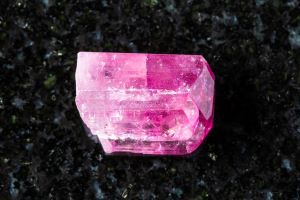
sample of raw rubellite

Tourmaline is famous for producing almost every color imaginable, but its red and richly saturated pink crystals occupy a particularly distinctive place within the family. Known in the gem trade as Rubellite, these tourmalines range from warm pinkish red through raspberry, magenta, purplish red and deeper wine-colored shades. Some become transparent gemstones with exceptional brilliance, while others remain natural crystals whose color zoning, vertical striations, mineral associations and pegmatite history are more important to a collector than whether the material could ever be faceted.

Rubellite is not a separate mineral species. It is a traditional gem and trade name applied to red and strongly pink tourmaline, most commonly within lithium-rich members of the tourmaline group such as Elbaite and Fluor-elbaite. Manganese plays an important role in creating many of these colors, but the final appearance can also involve oxidation state, color centers, natural irradiation, crystal chemistry and the conditions present while the crystal was growing. That complexity is one reason Rubellite should be understood as part of the larger tourmaline story rather than simply described as “red tourmaline.”

For collectors, the differences between individual specimens can be substantial. A transparent raspberry-colored crystal from a Brazilian pegmatite presents a very different geological object from an included red prism on pale albite or lepidolite matrix, while a pink crystal transitioning into green may preserve several stages of pegmatite evolution in a single specimen. The most interesting Rubellites often combine color with locality, crystal form, matrix, zoning and provenance rather than relying on color alone.

Within modern metaphysical and Reiki traditions, Rubellite has become associated with affection, vitality, emotional courage, creativity and Heart Chakra work. Those interpretations belong to contemporary spiritual practice rather than mineral physics, but they remain an important part of the way many people experience and collect red and pink tourmaline.

Collectors who want to compare Rubellite directly with the other members of this remarkably diverse mineral family can browse the Grounded Lifestyles Tourmaline Collection, where available specimens may include pink, green, black, brown, blue, multicolored and matrix tourmalines as inventory changes. Seeing several varieties together makes it much easier to appreciate how dramatically tourmaline responds to changes in chemistry and geological environment.

What Is Rubellite?

Rubellite is a red to strongly pink variety name used for tourmaline, rather than a formally defined mineral species. The term has been used for pink, red, purplish-red, orangy-red and brownish-red material, although some people within the gem trade reserve Rubellite for the richer red and highly saturated pink-red stones while describing lighter examples simply as pink tourmaline.

That difference in usage is important because there is no universally enforced mineralogical boundary at which a pink tourmaline suddenly becomes Rubellite. The name describes a recognizable color range within the family, but it does not replace chemical identification.

Most Rubellite occurs within lithium-rich tourmalines such as Elbaite and Fluor-elbaite, although red and pink coloration is not restricted absolutely to one tourmaline species. A specimen can therefore be correctly described as Rubellite in a gemological or trade context while requiring additional analytical work to determine its precise mineral species.

This is similar to other familiar tourmaline names. Indicolite describes blue tourmaline, while Watermelon Tourmaline describes a distinctive concentric color pattern. These names are useful because they describe what collectors and gem buyers actually see, but they should not be confused with formal species names such as Elbaite, Schorl or Dravite.

Our main Tourmaline: Geology, Colors, Varieties, Collecting & Meaning guide explains how those species and color varieties fit together within the larger tourmaline supergroup.

Why Rubellite Is Red

The red and pink colors associated with Rubellite are strongly connected with manganese, one of the most important color-causing elements in lithium-rich tourmaline. Manganese can occur in different oxidation states within the crystal structure, and those states interact differently with visible light, helping create colors that range from pale pink through raspberry, red and purplish red.

The process is more complicated than saying that a particular amount of manganese automatically creates Rubellite. Natural irradiation can create or modify color centers in some tourmalines, while oxidation state and interactions among different elements can alter the final appearance. The geological environment therefore influences both the chemical composition of the growing crystal and the way that composition ultimately interacts with light.

This complexity helps explain why two red tourmalines with broadly similar chemistry can look quite different. One may show a bright raspberry color with good transparency, while another becomes darker, more violet or more heavily included. Pleochroism, crystal orientation, zoning and transparency further influence what the eye sees.

The color is therefore part chemistry and part growth history, which is one of the reasons Rubellite is more interesting geologically than a simple color label might suggest.

Rubellite Versus Pink Tourmaline

The dividing line between Rubellite and ordinary pink tourmaline has never been as precise as some retail descriptions imply. A common claim says that “true Rubellite” must remain red under every type of lighting while ordinary pink tourmaline becomes pale or brown, but that is not a universal laboratory definition.

In practice, the Rubellite name is generally associated with the stronger red, purplish-red, raspberry and saturated pink-red portion of the tourmaline color range. Lighter pastel material is more often sold simply as pink tourmaline, although usage varies among dealers, collectors and gemologists.

For a collector or buyer, the better approach is to evaluate the actual stone rather than become overly concerned with an artificial boundary between two trade terms. A lively raspberry-pink gem with attractive saturation may be more desirable than a dark stone marketed aggressively as “true Rubellite,” while a natural mineral specimen may derive much of its value from crystal form, matrix and provenance regardless of the exact commercial color name attached to it.

How Rubellite Forms

Fine Rubellite is strongly associated with highly evolved granitic pegmatites, particularly lithium-rich systems capable of producing Elbaite and related tourmalines. These geological environments develop as granitic magmas evolve and elements that were not readily incorporated into earlier-forming minerals become concentrated in the remaining melt and fluid system.

Boron is essential to tourmaline formation, while lithium and manganese become especially important in the evolved pegmatites responsible for many pink and red crystals. As the chemistry changes, the tourmaline growing within the pegmatite may change as well. Earlier portions of a system can contain darker iron-rich tourmaline, while later stages become increasingly lithium- and manganese-rich and begin producing pink, red, green or multicolored material.

Pegmatites should not be thought of simply as ordinary magma that cooled very slowly. Their unusual crystals reflect a combination of highly evolved chemistry, abundant volatile components, rapid movement of elements through the system and, in some deposits, open pockets where crystals can grow without being completely restricted by surrounding minerals.

Those conditions can create remarkably large and well-formed tourmaline crystals, but they also help explain why Rubellite frequently contains fluid inclusions, growth tubes, fractures and complex zoning. These internal features are part of the geological history of the crystal rather than automatically being defects.

Readers interested in how these processes work across the mineral kingdom can continue with our Science of Crystal Formation guide.

Crystal Form and Natural Rubellite Specimens

Rubellite commonly develops the elongated, deeply striated crystal habit characteristic of tourmaline. Natural specimens may occur as individual prisms, parallel groups, clusters or crystals embedded within pegmatite matrix, where quartz, albite, feldspar, lepidolite and other minerals can create striking combinations.

Some crystals are relatively uniform in pink or red, while others preserve visible changes in color along their length or across successive growth zones. A crystal might begin nearly colorless, develop increasingly strong pink and red tones, or eventually transition into green as the chemistry of the pegmatite changes. In other specimens, the pink interior becomes surrounded by green growth and develops the classic pattern associated with Watermelon Tourmaline.

Natural matrix specimens are particularly useful to collectors because the associated minerals preserve part of the environment in which the Rubellite developed. A detached crystal can still be beautiful and important, but a crystal attached naturally to albite, quartz or lepidolite often tells a more complete geological story.

Collectors should also examine significant specimens for repairs, reconstructed clusters and damaged terminations. Repairs do not automatically make an important specimen undesirable, particularly with large historic pegmatite pieces, but they should be disclosed when known.

Pleochroism and the Way Rubellite Handles Light

Like many members of the tourmaline family, Rubellite can show noticeable pleochroism, meaning that its color changes in hue or intensity when viewed from different crystallographic directions. One orientation may appear deeper red or purplish red while another looks brighter pink or raspberry.

For mineral collectors, this makes Rubellite more dynamic than a specimen viewed only from one direction might suggest. Rotating a transparent crystal under good lighting can reveal changes in saturation and internal zoning that are not immediately visible from the front.

For lapidary artists, pleochroism becomes a practical cutting concern. The rough must be oriented so that the finished gemstone presents an attractive balance of saturation, brightness and retained weight rather than allowing an excessively dark direction to dominate the face-up appearance.

This is one reason elongated cuts appear frequently in tourmaline jewelry. The natural crystal habit and the mineral’s optical properties often work together to influence how the rough is ultimately fashioned.

Rubellite and Watermelon Tourmaline

Rubellite is closely connected with Watermelon Tourmaline because both commonly develop within evolved lithium-rich pegmatites and both can involve strong pink or red growth.

Classic Watermelon Tourmaline develops an earlier pink or red interior surrounded by later green tourmaline, producing concentric zoning that becomes particularly obvious when the crystal is cut across its length. The pink interior may resemble Rubellite in color, but the Watermelon name describes the overall zoning pattern rather than simply identifying the pink portion of the crystal.

Tourmaline can also develop longitudinal color zoning, where pink, red, green or colorless sections appear along the length of the same crystal rather than forming concentric layers.

For collectors, these specimens provide some of the clearest visual evidence that the chemistry surrounding a tourmaline crystal can change while it is still actively growing. The color pattern becomes a preserved record of the pegmatite’s evolution.

Rubellite and Paraíba Tourmaline

Paraíba Tourmaline provides another useful comparison because manganese can play an important role in both materials, but copper creates the defining difference.

Rubellite’s red and pink colors are strongly associated with manganese-related processes, while Paraíba-type Tourmaline contains copper and manganese and is defined by vivid blue, blue-green, green and related colors produced principally by copper-bearing chemistry.

Some copper-bearing tourmalines naturally contain pink, purple or violet components before heating. Heat treatment can reduce certain manganese-related absorption features and reveal stronger copper-related blue and green color, demonstrating how dramatically the balance among different chromophores can change the appearance of tourmaline.

The comparison is a useful reminder that trace elements do not operate in isolation. Copper, manganese, iron, oxidation state and treatment history can interact to create very different colors within the same broad mineral family.

Rubellite and Indicolite

Rubellite and Indicolite Tourmaline occupy very different parts of the color spectrum while often sharing the same general pegmatitic environment.

Rubellite’s pink and red colors are strongly manganese-related, whereas ordinary Indicolite’s blue and blue-green colors are primarily associated with iron-related absorption. Both can develop in evolved pegmatites, both can be transparent and strongly pleochroic, and both may preserve complex zoning within natural crystals.

Comparing the two makes tourmaline’s chemical adaptability much easier to understand. Relatively small changes in the elements available during growth can completely transform the color of the finished crystal without changing the fundamental tourmaline framework.

Rubellite, Black Tourmaline and Dravite

The contrast becomes even greater when Rubellite is compared with iron-rich Black Tourmaline or Schorl and magnesium-rich Dravite Tourmaline.

Schorl commonly occurs in granites, pegmatites and metamorphic environments where iron is abundant, producing dark crystals that are usually opaque. Dravite is magnesium-rich and is especially important in metamorphic rocks, where it commonly appears brown, golden or nearly black, although other colors occur.

Rubellite represents a very different chemical environment, particularly the highly evolved lithium- and manganese-rich pegmatites capable of producing transparent pink and red tourmaline.

Placing examples of these three materials together creates a remarkably effective mineralogical comparison. Instead of simply seeing black, brown and red crystals, the collector can see how iron, magnesium, lithium, manganese and geological setting influence different members of the same mineral family.

Brazil and the Great Rubellite Pegmatites

Brazil, particularly Minas Gerais, has produced some of the world’s most famous Rubellite specimens and gem rough. Its enormous pegmatite districts contain lithium-rich deposits capable of producing red and pink Rubellite, green Elbaite, Watermelon Tourmaline and other multicolored crystals, frequently alongside quartz, albite, feldspar and lepidolite.

The Jonas Mine became particularly famous for spectacular Rubellite specimens, including large groups of intensely colored crystals that entered major mineral collections. Other Brazilian pegmatites have produced everything from small transparent crystals to substantial matrix specimens and large quantities of cutting rough.

Size alone does not determine specimen quality, however. Crystal form, termination, color, luster, damage, repair, matrix composition and provenance all influence collector interest.

A smaller Rubellite with a documented classic locality and original label can carry more historical and geological significance than a much larger but poorly documented red tourmaline simply labeled “Brazil.”

Afghanistan and Pakistan

The pegmatites of Afghanistan and Pakistan have also produced important pink, red and multicolored tourmaline, often alongside aquamarine, spodumene, quartz, albite and other gem minerals.

Afghan material can occur as long transparent prisms with excellent luster and strong pink-to-red color, while complex zoning may preserve several stages of growth in the same crystal. Pakistan likewise produces attractive pink and red tourmalines from its pegmatite districts.

Precise locality information becomes especially valuable with specimens from these regions because material may pass through several stages of international trade before reaching a collector. A label identifying the valley, district or mine provides substantially more geological information than one listing only the country.

Mozambique and Nigeria

Modern African pegmatite deposits have contributed substantial amounts of colorful tourmaline to the international gem and mineral market. Mozambique produces pink, red, violet, green and multicolored tourmaline, including material associated with copper-bearing Paraíba-type deposits, while Nigerian pegmatites also produce attractive red and pink crystals and faceting rough.

It is better to evaluate these specimens individually than to rank entire countries according to generalized assumptions about quality. Exceptional material can come from several deposits, and the actual crystal or gemstone remains more important than the reputation attached to a country name.

Color, transparency, crystal form, condition, provenance and locality should therefore remain the basis of evaluation.

California and American Rubellite History

Southern California occupies an important place in the history of pink and red tourmaline. Beginning in the late nineteenth century, pegmatite mines in San Diego County produced substantial quantities of gem-quality material, with mines in the Pala, Mesa Grande and surrounding districts becoming internationally known.

Pink and red tourmaline from California developed an especially important export market in China during the late Qing period, when the material was used in jewelry, carvings and decorative objects. Dowager Empress Cixi became famously associated with a preference for pink tourmaline, helping make Southern California’s deposits commercially significant far beyond the United States.

George F. Kunz, the influential mineralogist and Tiffany gemologist, also helped bring American tourmaline to wider attention through his writing and promotion of material from California and Maine.

This documented history gives older American Rubellite and pink tourmaline specimens an additional dimension. A crystal with reliable mine information or an early collection label can represent not only pegmatite mineralogy but also the history of American gem mining and international gemstone trade.

Rubellite and Historical Misidentification

Before modern mineralogy could reliably distinguish gemstones through chemistry, crystallography and optical properties, red tourmaline could easily be mistaken for ruby, spinel or another red gemstone.

The famous Caesar’s Ruby associated with the Russian imperial collection is a well-known example of a historic red stone that was eventually identified as Rubellite Tourmaline rather than corundum ruby.

Examples like this also explain why vague claims about ancient civilizations using “Rubellite” should be treated carefully. Historical references to red stones do not automatically identify tourmaline because people working before modern gemology often classified gemstones largely by appearance.

Rubellite’s securely documented history becomes much clearer once tourmaline was recognized as a distinct mineral group.

Evaluating a Rubellite Mineral Specimen

Natural Rubellite specimens should be evaluated first as minerals rather than as potential gemstones. Color certainly matters, particularly when a crystal remains visibly red or pink under ordinary lighting, but crystal form, termination, luster and overall balance can be equally important.

Matrix association can add considerable collector interest. Rubellite on pale albite, quartz or lepidolite creates strong visual contrast while preserving part of the geological environment in which the tourmaline grew.

Color zoning may add another layer of interest, especially when several stages of pegmatite evolution remain visible within the crystal. A pink crystal transitioning into green or colorless growth can tell a more complicated geological story than a completely uniform crystal.

Condition should also be evaluated realistically. Natural contact areas are expected where crystals grew against neighboring minerals, while broken terminations and modern repairs represent something different. Repairs do not necessarily disqualify an important specimen, but disclosure allows the collector to make an informed decision.

Finally, locality and provenance become increasingly important as specimen quality rises. A historic label associated with a classic Brazilian, Californian or other pegmatite locality can add scientific and historical context that cannot be recovered once that information is lost.

Evaluating Faceted Rubellite

Gem-quality Rubellite is judged through a combination of color, tone, transparency, inclusions, cut, size and overall visual performance. Strong red, raspberry, magenta and purplish-red colors are generally desirable, but saturation needs to be balanced against tone so the gemstone does not become so dark that brilliance disappears.

Clarity expectations for Rubellite are somewhat more forgiving than for certain other colored gemstones because visible inclusions are relatively common in pink and red tourmaline. A strongly colored stone can remain attractive despite moderate inclusions, particularly when those inclusions do not dominate the face-up appearance or create serious durability concerns.

Eye-clean material with strong color can command a premium, but clarity should not be considered independently from color. A clean but washed-out stone may be less desirable than a moderately included Rubellite with exceptional saturation.

Size can increase value substantially when comparable color and clarity are maintained, but arbitrary thresholds such as declaring every five-carat Rubellite “extremely rare” or every ten-carat stone “museum grade” are not useful. Tourmaline crystals can reach considerable sizes, and quality must still be judged on the individual gem.

Treatments and Color Stability

The principal treatments associated with tourmaline color include heat and irradiation, although the results depend strongly on the starting chemistry of the material.

Heating can modify certain color centers or oxidation states, while irradiation can create or intensify color in some tourmalines. These processes should not be described as though every Rubellite reacts in exactly the same way.

Treatment status is also only one factor in value. An untreated stone is not automatically more desirable than a treated one if the untreated gem has poor color, weak transparency or inferior cutting. Color, overall beauty, rarity, documentation and treatment history all need to be considered together.

For significant gemstones, laboratory documentation is preferable to assumptions based on appearance. Our Guide to Crystal and Gemstone Treatments explains heating, irradiation and other enhancement methods in greater detail.

Inclusions in Rubellite

Rubellite commonly contains fluid inclusions, growth tubes, healed fractures, veils and other internal features associated with tourmaline growth.

In transparent faceted gems, heavy inclusions can reduce brilliance or create durability concerns, but moderate inclusions are common enough that buyers should not expect every richly colored Rubellite to resemble a flawless diamond. Strong color can compensate visually for inclusions that would be considered unacceptable in a pale gemstone.

Natural mineral specimens should be viewed differently. Inclusions and zoning can preserve evidence of the conditions present while the crystal was growing and may increase geological interest rather than detract from it.

Aligned growth tubes can occasionally create chatoyancy when suitable material is cut into a cabochon, producing a cat’s-eye effect. In that situation, an internal feature that might normally be regarded as an inclusion becomes the reason the gemstone is interesting.

Rubellite for Lapidary Work

Rubellite can be excellent faceting material, but the cutter must pay careful attention to pleochroism, zoning and internal fractures. Tourmaline has poor cleavage, so the main challenge is not navigating obvious cleavage planes but understanding the structure and condition of the individual rough.

Growth tubes, healed fractures and internal stress can influence how safely a crystal can be sawn and oriented. Pleochroism adds another decision because one direction may show a deeper red while another looks brighter pink or magenta.

A cutter therefore has to balance carat retention against visual performance. Preserving every possible millimeter of rough may produce a larger finished gemstone, but removing additional material can sometimes create a much livelier color and better overall result.

Included material unsuitable for transparent faceting may work well as cabochons, beads or carvings, while an attractive terminated Rubellite crystal with good provenance or matrix may be more valuable intact than after cutting.

Our Lapidary 101 for Collectors & Creators and Lapidary Raw Material Guide explore the decision between preserving natural mineral specimens and converting rough into finished material.

Rubellite in Jewelry

Rubellite’s combination of strong color and a Mohs hardness of approximately 7 to 7.5 makes it suitable for many forms of jewelry, although hardness does not make it immune to breakage. Included stones and gems with fractures deserve additional protection from impact.

Rings can showcase Rubellite beautifully but expose the gemstone to more frequent knocks than pendants or earrings. Protective settings are especially useful for heavily included stones, while cleaner material provides greater flexibility.

Warm, soapy water is generally the safest routine cleaning method. Heat can damage tourmaline, and ultrasonic or steam cleaning is not the best choice for material containing fractures or significant inclusions.

For wearable natural stones beyond Rubellite itself, browse the Grounded Lifestyles Crystal & Gemstone Jewelry collection.

Displaying Rubellite

Rubellite can become one of the strongest visual anchors in a mineral display because red and pink tourmaline responds beautifully to thoughtful lighting. Transparent crystals often benefit from a combination of reflected and transmitted light, allowing the viewer to see both the natural crystal surfaces and the depth of color within the specimen.

Matrix pieces should be positioned so the associated albite, quartz, feldspar or lepidolite remains visible rather than disappearing behind the tourmaline. The contrast between saturated red-pink crystal and pale pegmatite minerals is often an important part of the specimen’s appearance.

Dark Rubellite can lose much of its color under weak illumination, while excessive backlighting can make a crystal appear unnaturally bright. A balanced display should reveal the specimen’s actual character while still allowing transparency and zoning to be appreciated.

Our Museum-Style Crystal, Fossil & Meteorite Displays guide provides additional ideas for lighting and presenting natural-history specimens.

Building a Rubellite Collection

A Rubellite collection can be organized around geology rather than simply accumulating increasingly expensive red stones. A locality-focused collection might compare Brazilian material with Afghan, African and historic Californian specimens, allowing differences in crystal habit, matrix and pegmatite association to become part of the collection.

A chemical collection could place Rubellite beside iron-rich Black Tourmaline or Schorl and magnesium-rich Dravite Tourmaline, showing how dramatically the same tourmaline framework changes as different elements dominate its composition.

A color-focused collection could compare Rubellite with blue Indicolite and copper-bearing Paraíba Tourmaline, while Watermelon Tourmaline demonstrates how pink-red growth can become part of a multicolored sequence within a single crystal.

Building around these relationships produces a collection with a geological story rather than simply a group of attractive stones.

Metaphysical Meaning of Rubellite

Within modern metaphysical traditions, Rubellite is considered one of the more intensely heart-centered tourmalines, combining the symbolism traditionally associated with pink stones with the vitality and action associated with deeper red.

Practitioners commonly work with Rubellite when focusing on affection, emotional courage, openness, self-worth, enthusiasm and the willingness to remain emotionally present rather than withdrawing from difficult experiences. Its deeper red and magenta colors are often interpreted as more active and expressive than the softer symbolism assigned to pale pink crystals, which is why Rubellite frequently appears in practices centered on courage, passion and vitality as well as compassion.

These meanings belong to spiritual and metaphysical traditions rather than scientifically demonstrated effects of manganese-bearing tourmaline. Someone practicing Reiki, meditation or intention-setting may still use the crystal as a meaningful physical focal point without requiring a claim that the mineral directly changes emotional or physical health.

Readers interested in the broader metaphysical side of mineral collecting can also explore the Grounded Lifestyles Crystal Healing articles, where Reiki, chakras, crystal traditions and other spiritual practices are discussed in greater depth.

Rubellite and the Heart Chakra

Rubellite is most commonly associated with the Heart Chakra in contemporary crystal practice. Pink and red-pink colors are symbolically connected with affection, compassion, emotional honesty and reciprocal relationships, while the deeper red component is often interpreted as adding confidence, vitality and the willingness to act on what the heart values.

Some practitioners describe Rubellite as connecting heart-centered awareness with grounded action, making it a popular choice when the intention involves expressing affection rather than simply experiencing it internally. It may be held during meditation, placed within a Reiki practice, incorporated into a crystal grid or displayed in a personal space according to individual preference.

For a broader explanation of this symbolic system, read Aura & Chakras: Understanding Your Body’s Energy System and Chakras and Corresponding Crystals. Those articles place Heart Chakra associations within the larger seven-chakra framework rather than treating Rubellite’s symbolism in isolation.

Rubellite, Courage and Emotional Expression

Rubellite’s modern metaphysical reputation often centers on the idea of emotional courage. Rather than interpreting courage simply as forcefulness or intensity, many practitioners use the stone symbolically when focusing on the ability to communicate affection, maintain healthy boundaries, acknowledge vulnerability or pursue something meaningful despite emotional uncertainty.

The red-pink color naturally reinforces those themes because red is commonly associated with action and vitality while pink is associated with affection and emotional openness. Rubellite therefore develops a somewhat different symbolic character from blue Indicolite, which is more frequently associated with communication and introspection, or Black Tourmaline, which is more strongly associated with grounding and boundaries.

These distinctions are part of modern crystal traditions rather than measurable differences in the physical effects of the minerals, but they provide a useful framework for people who incorporate different tourmaline colors into meditation, Reiki or personal spiritual practice.

Rubellite and Zodiac Traditions

Rubellite is associated with several zodiac signs in modern crystal traditions, although these correspondences vary among practitioners and should not be presented as fixed astrological rules. The connections generally develop from the symbolic characteristics assigned to Rubellite—affection, courage, emotional expression, creativity and vitality—and how those themes are interpreted within each sign.

For Leo, Rubellite’s warmth and expressive character fit traditions centered on confidence, generosity and open-hearted self-expression. Cancer is associated more strongly with emotional sensitivity, relationships and the need to balance caring for others with maintaining personal boundaries, making Rubellite’s heart-centered symbolism a natural match.

Within Pisces traditions, Rubellite is often connected with compassion and emotional openness, while Sagittarius associations emphasize enthusiasm, optimism and the courage to pursue meaningful experiences. For Aries, the deeper red side of Rubellite fits symbolic themes involving initiative, passion and action while its pink component introduces a more heart-centered dimension.

These zodiac relationships are interpretive traditions rather than mineralogical properties. The value of linking them with Rubellite lies in helping readers explore how the same crystal is understood across different spiritual practices without confusing those traditions with the geology of the mineral itself.

Frequently Asked Questions About Rubellite

Is Rubellite a separate mineral?

No. Rubellite is a traditional trade and variety name for red and strongly pink tourmaline. Much of it occurs within lithium-rich tourmaline species such as Elbaite and Fluor-elbaite, although the color name itself does not establish the precise mineral species.

What causes Rubellite’s red color?

Manganese is the principal coloring element associated with red and pink tourmaline, while oxidation state, color centers, natural irradiation and other aspects of crystal chemistry can influence the final shade.

What is the difference between Rubellite and pink tourmaline?

There is no universally enforced scientific boundary between them. Rubellite is generally associated with stronger red, purplish-red, raspberry and saturated pink-red material, while lighter pastel stones are more commonly described simply as pink tourmaline.

Does Rubellite have to remain red in every lighting condition?

No universal gemological definition requires this. Different lighting can alter the perceived color of any gemstone, and the Rubellite name is based primarily on trade convention and the overall color of the material.

Is Rubellite rare?

Fine Rubellite combining strong color, attractive transparency, good crystal or gem quality and useful size can be uncommon and valuable, but the variety should not simply be described as universally rare.

Is Rubellite always Elbaite?

No. Much Rubellite occurs as Elbaite or Fluor-elbaite, but red and pink coloration can occur in other members of the tourmaline group.

Can Rubellite be treated?

Yes. Heat and irradiation are among the treatments that can modify tourmaline color. Treatment should be disclosed when known, particularly when purchasing valuable gemstones.

Is untreated Rubellite always more valuable?

No. Treatment status is only one factor. Color, transparency, size, cut, provenance, rarity and overall beauty can be equally or more important depending on the stone.

Is Rubellite suitable for jewelry?

Yes. Tourmaline has a Mohs hardness of approximately 7 to 7.5 and is suitable for many jewelry designs, although included stones should be protected from strong impact.

How should Rubellite be cleaned?

Warm, mild soapy water is generally the safest routine method. Avoid excessive heat and use caution with ultrasonic or steam cleaning, particularly when fractures or significant inclusions are present.

Which chakra is associated with Rubellite?

Modern metaphysical traditions associate Rubellite primarily with the Heart Chakra, where it symbolizes affection, emotional courage, compassion and heart-centered expression.

Which zodiac signs are associated with Rubellite?

Modern crystal traditions commonly connect Rubellite with Leo, Cancer, Pisces, Sagittarius and Aries, although these associations vary and are symbolic rather than mineralogical.

What does Rubellite mean metaphysically?

Rubellite is commonly associated with affection, vitality, courage, emotional openness, creativity, self-worth and Heart Chakra symbolism in contemporary crystal and Reiki traditions.

Continue Exploring the Tourmaline Family

Rubellite becomes much more interesting when it is compared directly with the other members and varieties of tourmaline rather than treated as an isolated red gemstone. Indicolite Tourmaline demonstrates how iron-related chemistry moves the family into blue and blue-green territory, while Paraíba Tourmaline shows what happens when copper becomes an important color-producing element and creates exceptionally vivid blue-to-green material.

Watermelon Tourmaline preserves pink and red tourmaline as part of a concentric growth pattern surrounded by later green material, while Dravite Tourmaline represents a magnesium-rich side of the family more strongly associated with metamorphic geology. Black Tourmaline or Schorl provides the iron-rich dark counterpart and demonstrates how dramatically tourmaline chemistry can change before reaching the highly evolved lithium-rich pegmatites responsible for much Rubellite.

For the broader geological framework connecting all of these varieties, return to our Tourmaline: Geology, Colors, Varieties, Collecting & Meaning pillar or browse the complete Tourmaline Articles collection.

Explore Tourmaline Crystals and Mineral Specimens

Rubellite shows what tourmaline can become when lithium-rich pegmatite chemistry and manganese combine to create strong pink and red colors, but the larger tourmaline family extends from opaque black Schorl and warm brown Dravite to green, blue and multicolored crystals. Browse the Grounded Lifestyles Tourmaline Collection for currently available natural tourmaline crystals, matrix specimens and collector material representing different colors, localities and growth environments. Because many specimens are individual pieces, the available selection changes as material is sold and new collections are acquired.

Collectors who want to compare tourmaline with additional natural minerals can continue into the broader Mineral Collection, while the Crystal & Gemstone Jewelry collection offers wearable natural-stone pieces as available.

Conclusion

Rubellite is easy to appreciate for its color, but its real interest goes much deeper than simply being red tourmaline. Its pink, raspberry, magenta and red tones reflect the chemistry of highly evolved pegmatite systems in which manganese became increasingly important while lithium-rich tourmaline was growing. That chemistry may be preserved as relatively uniform color, complex zoning or one stage within a multicolored crystal that continued changing as the pegmatite evolved.

For mineral collectors, Rubellite can be evaluated through crystal form, matrix, zoning, locality and provenance just as much as color. A heavily included natural crystal from a documented historic mine may carry more geological and historical meaning than a cleaner but anonymous piece, while an intact matrix specimen can preserve information that disappears once a crystal is removed and faceted.

For gem buyers and lapidary artists, the challenge is different. Color, transparency, inclusions, pleochroism and cutting orientation all interact, which means the most promising-looking rough does not automatically produce the strongest finished gemstone. Even the Rubellite name is a trade convention rather than a rigid scientific boundary, making the quality and character of the actual stone more important than arguments over whether a particular shade is sufficiently red to qualify.

For people drawn to the metaphysical side of tourmaline, Rubellite adds another layer through its modern associations with the Heart Chakra, Reiki, emotional courage and zodiac traditions involving Leo, Cancer, Pisces, Sagittarius and Aries. Those traditions can coexist with an accurate understanding of the mineral’s geology without requiring spiritual symbolism to be presented as scientific fact.

Placed alongside blue Indicolite, copper-bearing Paraíba, color-zoned Watermelon, magnesium-rich Dravite and iron-rich Schorl, Rubellite completes another part of the tourmaline story. The same basic structural framework can move from black to brown, red, pink, green, blue and combinations of several colors as chemistry changes around the growing crystal, which is ultimately what makes tourmaline one of the most compelling mineral families to collect, study and enjoy.

Grounded Collectors Club

Enjoy collecting? Join the Grounded Collectors Club for free and receive collector stories, estate collection updates, educational resources, and member-only offers.

Bring the Beauty of Earth Home

Explore our curated collection of crystals, gemstones, meteorites, and tektites in the Grounded Lifestyles online store.
Picture of Grounded Lifestyles

Grounded Lifestyles

At Grounded Lifestyles, our love for crystals began in the peaceful flow of Reiki and energy healing sessions — where we saw how natural stones could amplify intentions, restore balance, and bring comfort. But the more time we spent with these treasures, the more curious we became about their origins. That curiosity led us into the fascinating world of geology and mineral specimen collecting. We fell in love not just with the energy of crystals, but with the science and artistry of their creation — the intricate crystal structures, the vibrant mineral hues, and the wonder of holding a piece of Earth’s history in our hands.
All Posts