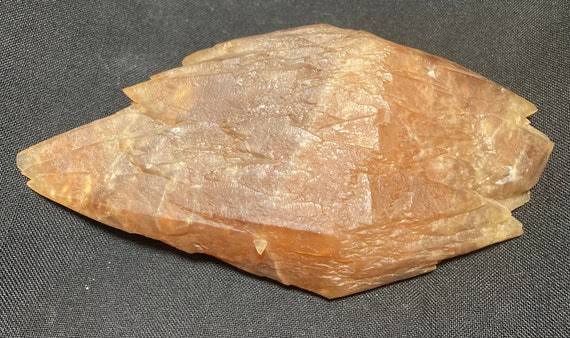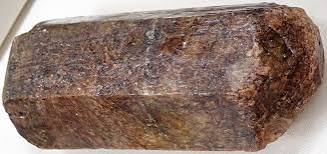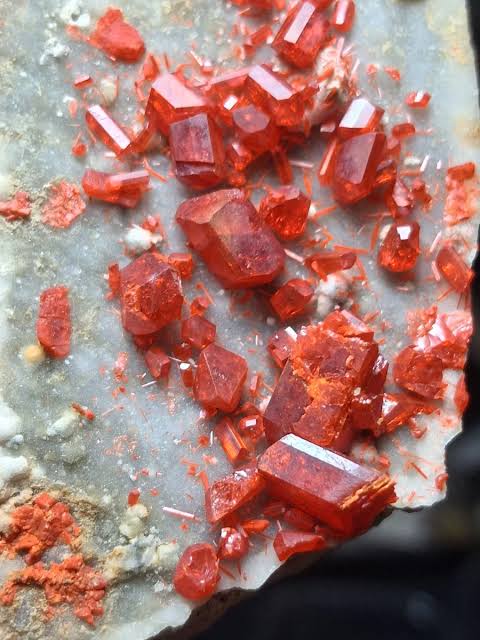

Dravite rarely receives the attention given to the electric blues of Paraíba tourmaline, the saturated reds of Rubellite, or the dramatic pink-and-green zoning of Watermelon Tourmaline, yet it is one of the most important members of the tourmaline family for understanding just how chemically and geologically diverse this mineral group can be. Most commonly encountered in shades of brown, golden brown, amber, dark yellow, and brownish black, Dravite is a magnesium-rich tourmaline that occurs particularly well in metamorphic environments where boron-bearing fluids interact with magnesium-rich rocks.
For collectors, Dravite offers something quite different from the colorful lithium-rich tourmalines that dominate the gemstone market. A good Dravite crystal may be nearly black until strong light passes through its edges and reveals warm root-beer, amber, cognac, or golden tones, while more transparent material can show striking pleochroism and enough clarity to be faceted. Well-formed specimens can also have the strongly striated prismatic habit familiar throughout the tourmaline group, sometimes with exceptional luster and sharp terminations.
Its scientific importance goes beyond color. Tourmaline is unusually sensitive to the chemistry of the environment in which it grows, and Dravite’s magnesium-rich composition makes it particularly useful in studying metamorphic rocks, boron-bearing fluids, fluid-rock interaction, and the chemical evolution of geological systems. It also demonstrates why identifying tourmaline by color alone can be misleading, because brown does not automatically mean Dravite, black does not automatically mean Schorl, and green tourmaline does not necessarily belong to the colorful Elbaite species familiar from gem pegmatites.
Within modern metaphysical traditions, Dravite has developed a very different identity from brightly colored gem tourmalines. Its earthy colors and substantial crystals have led practitioners to associate it primarily with grounding, stability, resilience, self-reflection, and a stronger sense of connection with the physical world. Those traditions add another layer of interest to a mineral whose geological story is already unusually rich.
What Is Dravite Tourmaline?
Dravite is a valid mineral species within the tourmaline supergroup. Its idealized chemical formula is NaMg₃Al₆(Si₆O₁₈)(BO₃)₃(OH)₃OH, reflecting its sodium-, magnesium-, aluminum-, boron-, and silicate-rich composition. It crystallizes in the trigonal system, has a Mohs hardness of about 7, and typically has a vitreous to sometimes resinous luster.
The magnesium occupying an important structural site is central to Dravite’s identity. In simplified terms, Dravite can be considered the magnesium analogue of Schorl, while Schorl is dominated by iron in the corresponding position. The relationship is not an abrupt boundary in nature, however, because tourmaline chemistry is remarkably flexible. Dravite and Schorl form a solid-solution series in which magnesium and iron can substitute for one another, so naturally occurring crystals may have compositions somewhere between the ideal end members.
Dravite also participates in compositional relationships with other tourmalines, including Elbaite and Uvite. This chemical flexibility is one of the reasons the tourmaline supergroup is so scientifically valuable and why visual identification has limits. A brown crystal may look like classic Dravite without being chemically close to the ideal composition, while some green or nearly black crystals may prove to be Dravite or Dravite-rich tourmaline only after analysis.
For a broader look at how these species fit together, our Tourmaline: Nature’s Rainbow Gemstone guide explores the tourmaline supergroup, its major species, colors, formation environments, and collector varieties.
Where the Name Dravite Comes From
Dravite was named in 1883 by Austrian mineralogist Gustav Tschermak for the Drava River, historically known in German as the Drau and rendered in Latin as Drave. The mineral’s type locality is Dobrova pri Dravogradu in Slovenia, near the river from which its name was derived.
That history is worth clarifying because Dravite is sometimes loosely described as being named for a broad Austrian-Slovenian Drava River region. The mineral name is specifically tied to the river associated with its Slovenian type locality.
The type-locality material may not have the visual drama of some modern collector specimens from Australia or Africa, but locality specimens have a different kind of importance. They connect the species directly with the place from which it was originally characterized and named, making well-documented material from classic localities particularly interesting to systematic mineral collectors.
Dravite Within the Tourmaline Supergroup
Tourmaline is not one mineral but a large supergroup of closely related minerals whose crystal structures can accommodate an unusually broad range of chemical substitutions. This is why tourmaline can occur in almost every color and why visually similar crystals can belong to different species.
Dravite is a sodium- and magnesium-rich member of that family. Black Tourmaline, or Schorl, is typically iron-rich, while much of the colorful transparent tourmaline familiar from gemstone deposits belongs to Elbaite, a lithium-bearing species. Uvite, another magnesium-rich tourmaline, differs from Dravite importantly in its calcium-rich chemistry.
These relationships are more complex than the simple labels used in the gem trade. Green gem tourmaline, for example, is often assumed to be Elbaite, yet some highly saturated green stones belong to Dravite-Uvite compositions enriched in chromium or vanadium. Likewise, very dark brown Dravite can appear almost indistinguishable from Schorl until its chemistry is examined.
This chemical complexity is one reason serious tourmaline collecting eventually becomes more than collecting colors. The crystals become records of the rocks and fluids from which they grew.
How Dravite Forms
Dravite is particularly associated with metamorphic rocks, including metamorphosed limestones and magnesium-rich or mafic rocks. It can occur in marble, schist, gneiss, and other rocks that have undergone substantial changes in temperature, pressure, and fluid chemistry. Boron is essential because tourmaline cannot form without it, so Dravite growth requires not merely magnesium-rich rock but also a source of boron capable of entering the metamorphic system.
This is where Dravite becomes especially interesting to geologists. Boron can move through geological environments in fluids released during metamorphism, introduced from nearby intrusive rocks, or redistributed during fluid-rock interaction. When those fluids encounter rocks with suitable magnesium, aluminum, sodium, silica, and other components, tourmaline may crystallize. Its resulting composition can preserve information about those interactions long after the fluids themselves have disappeared.
The older version of this article described Dravite too simply as an index mineral for high-temperature metamorphism. Tourmaline is more useful when treated as a chemical recorder of geological conditions rather than as a straightforward metamorphic thermometer. Its chemistry, zoning, trace elements, isotopes, and relationship with surrounding minerals can provide information about the fluids and rocks involved in its formation.
Dravite can also occur in pegmatitic environments, so it is not correct to say that it forms only around pegmatite margins while Elbaite occupies the interior. Pegmatitic Dravite is less characteristic than the lithium-rich Elbaite associated with many famous gem pegmatites, but documented Dravite does occur in pegmatites and can preserve unusual trace-element chemistry.
The broader process of how crystals nucleate and grow is covered in our Science of Crystal Formation guide.
Why Dravite Is Common in Metamorphic Rocks
The chemistry of Dravite helps explain its affinity for certain metamorphic environments. Magnesium is abundant in rocks derived from dolomitic carbonate, mafic igneous material, and some ultramafic systems, while metamorphism creates opportunities for fluids to transport boron through those rocks.
In a metamorphosed limestone or dolomitic rock, Dravite may occur with minerals characteristic of the surrounding metamorphic assemblage. In schists and gneisses it may form as individual prismatic crystals, disseminated grains, or clusters incorporated directly into the fabric of the rock. Depending on locality and geological history, associated minerals can provide valuable context for understanding the conditions under which the tourmaline developed.
Because tourmaline is mechanically and chemically durable, it can survive later geological events that alter or destroy less resistant minerals. Its internal chemical zoning may preserve multiple stages of growth, allowing a single crystal to record changing fluid compositions or metamorphic conditions over time.
For a collector, that means a Dravite on matrix can offer information that a detached crystal cannot. The surrounding rock and associated minerals help preserve the geological setting rather than presenting the tourmaline as an isolated object.
Brown, Golden, Green and Nearly Black Dravite
Brown is the color most strongly associated with Dravite, but the species has a broader range than its common nickname “brown tourmaline” suggests. Documented Dravite can range from pale brown through golden yellow, amber, reddish brown, chocolate, deep brown, and brownish black, while chromium- or vanadium-bearing material can produce striking green colors.
The causes of tourmaline color are complicated because several elements, oxidation states, charge-transfer processes, and structural effects can contribute simultaneously. Iron and titanium can play important roles in brown and yellow-brown material, while chromium and vanadium are particularly important in some green Dravite and Dravite-Uvite compositions.
This complexity is why statements such as “titanium makes Dravite golden brown” are too simple. The warm color of an individual specimen may result from interactions among several elements rather than one isolated chromophore.
The collector should therefore treat color as a visual characteristic, not a species test. A root-beer brown tourmaline may strongly suggest Dravite, but chemical composition determines whether it actually belongs to that species.
Pleochroism: Why Dravite Changes With Direction
One of Dravite’s most attractive optical properties is pleochroism, the ability to show different intensities or shades of color when viewed along different crystallographic directions.
This effect can be dramatic in transparent or translucent brown Dravite. A crystal may appear deep brown or nearly black in one orientation while becoming amber, golden brown, or considerably lighter when viewed from another direction. In faceted material, the cutter must consider this optical behavior carefully because orientation can determine whether the finished gem appears bright and warm or overly dark.
Pleochroism is common throughout the tourmaline family and contributes substantially to the appearance of Indicolite Tourmaline and many green tourmalines as well. It is another example of why tourmaline cannot be understood from a single photograph or one face of a crystal.
For specimen collectors, strong transmitted light can reveal colors that are almost invisible under ordinary room lighting. A Dravite crystal that initially appears black may suddenly reveal a deep amber or root-beer interior when illuminated correctly.
Dravite and Schorl: Similar Crystals, Different Chemistry
Dravite and Schorl can look remarkably similar, particularly when the Dravite is very dark. Both belong to the tourmaline supergroup, both commonly form strongly striated prismatic crystals, and both can occur in metamorphic environments.
The central difference is chemical. Dravite is magnesium-dominant where Schorl is iron-dominant, and the two form a continuous compositional relationship through substitution of magnesium and iron. This means nature does not always provide the clean visual boundary suggested by textbook examples.
A nearly black tourmaline cannot automatically be called Schorl simply because it is black, just as a brown specimen cannot automatically be called Dravite. Reliable species-level identification may require chemical analysis, particularly when the crystal lies near the middle of the Dravite-Schorl compositional series.
Our Black Tourmaline: Guide to Schorl explores the iron-rich side of this relationship in greater detail. Reading the two together provides a much better picture of how tourmaline chemistry works than treating black and brown tourmaline as unrelated materials.
Dravite, Uvite and Chrome Tourmaline
The relationship between Dravite and Uvite is equally important, particularly for gem collectors. Uvite is another magnesium-rich member of the tourmaline supergroup, but calcium plays an essential role in its composition. Natural crystals can fall along a Dravite-Uvite compositional series rather than matching either ideal end member perfectly.
Some of the vivid green gems marketed as chrome tourmaline belong to this Dravite-Uvite chemical neighborhood. Chromium, vanadium, or combinations of the two can produce intense green colors that look very different from the brown appearance most people associate with Dravite.
This provides an excellent reminder that gem-trade names and mineral-species names answer different questions. “Chrome tourmaline” describes a desirable appearance and coloring chemistry, while Dravite and Uvite describe mineralogical composition.
Some chromium-bearing Dravite can also show unusual color-change behavior associated with the Usambara effect, an optical phenomenon related to how strongly absorbing material changes apparent color with optical path length. This makes certain Dravite compositions interesting not only mineralogically but also from the standpoint of optical physics.
Dravite and Elbaite
Elbaite occupies a very different part of the tourmaline family and is responsible for many of the vivid gem colors most shoppers associate with tourmaline. Rubellite, Indicolite, much Watermelon Tourmaline, and many pink and green gem tourmalines are associated with lithium-bearing Elbaite.
Dravite is magnesium-rich rather than lithium-rich and is much more strongly associated with metamorphic rocks, although the geological boundaries are not absolute. The contrast between the two is useful because it demonstrates how different geological environments can produce members of the same mineral supergroup.
A vivid zoned Elbaite crystal from a granitic pegmatite and a brown Dravite crystal embedded in metamorphic matrix may look like completely different minerals at first glance, yet their underlying tourmaline structures are closely related.
This diversity is the central theme of our Tourmaline: Nature’s Rainbow Gemstone pillar article.
Important Dravite Localities
Dravite occurs in many parts of the world, and different localities appeal to collectors for very different reasons. Some are important because they produce unusually aesthetic crystals, others because they preserve scientifically interesting compositions, and still others because of their historical importance to the species.
Yinnietharra in Western Australia is one of the classic collector localities for Dravite. Crystals from the area can be large, lustrous, sharply formed, and richly brown, with some showing warm transmitted color. The locality is sufficiently important that Yinnietharra Dravite has become a familiar reference point for what high-quality brown tourmaline can look like.
Australia has produced Dravite crystals of impressive size as well as attractive individual specimens. Large size alone does not make a specimen exceptional, but a substantial crystal that retains good form, luster, termination, and provenance can make an impressive cabinet piece.
Tanzania is important for magnesium-rich tourmalines, including attractive brown, yellow-brown, and green material. The East African gem belts are chemically diverse, and some material traditionally grouped under simple color descriptions proves more complicated when analyzed. This is particularly true for green Dravite-Uvite compositions colored by chromium and vanadium.
Sri Lanka has long produced gem tourmaline from its famous alluvial gem deposits. Brown and yellow-brown magnesium-rich tourmalines occur among this material, and transparent stones can enter the faceting market rather than being preserved as crystals because alluvial transport often separates gems from their original host rocks.
Brazil also produces Dravite and related tourmalines, including well-formed collector material. Brazilian tourmaline is more famous commercially for colorful Elbaite from pegmatites, but the country’s geological diversity extends far beyond the bright pink, green, and multicolored crystals that dominate the gem trade.
The Slovenian type locality remains important for historical and systematic collections because it connects directly with the original definition and naming of Dravite. For a systematic collector, a modest specimen with reliable type-locality provenance can be more significant than a larger crystal from a more prolific locality.
In the United States, Dravite occurs at a number of metamorphic localities, including occurrences in New York and elsewhere in the Northeast. Such specimens may appeal more strongly to locality and geological collectors than to buyers seeking transparent gem material, but they demonstrate the broad range of environments in which magnesium-rich tourmaline can occur.
What Collectors Should Look for in Dravite
Dravite should be evaluated as a mineral specimen rather than according to a rigid price formula. Crystal form, termination, luster, color, transparency, matrix association, locality, damage, size, and provenance all contribute to desirability, and their importance changes depending on the type of specimen being considered.
A dark brown crystal can be an excellent specimen when it has sharp form, strong luster, an undamaged termination, and a documented classic locality. Transparent golden material may appeal to a completely different collector because of its optical properties and rarity as facetable rough. Green chromium- or vanadium-bearing material introduces yet another collecting category.
Matrix specimens deserve particular attention because they preserve geological context. A Dravite crystal emerging naturally from schist, marble, or another metamorphic rock can tell a more complete geological story than an isolated crystal, particularly when the associated minerals and locality are documented.
Damage should be evaluated realistically. Tourmaline has a Mohs hardness around 7, but hardness measures resistance to scratching rather than resistance to breakage. Large crystals can still chip or fracture, particularly at terminations or along pre-existing cracks. Old natural contacts and healed surfaces should also be distinguished from fresh modern damage whenever possible.
Does Locality Affect Dravite Value?
Locality can influence collector interest substantially, but the effect is not simply a matter of one country being more valuable than another. A locality becomes desirable because of the quality of material it produced, its geological significance, scarcity, historical importance, association with a famous mine, or some combination of those factors.
Yinnietharra is recognized for impressive Dravite specimens, while the Slovenian type locality carries historical mineralogical importance. Gemmy material from East Africa or Sri Lanka may be valued for transparency and color rather than specimen form.
Original labels can become particularly valuable with older locality specimens. A handwritten label from a previous collection may preserve mine names, historical spellings, collection dates, or provenance that would otherwise be lost. Those labels should remain with the specimen even when a new Grounded Lifestyles identification card is added.
For collectors building a systematic tourmaline suite, locality diversity can be as interesting as color diversity because each specimen represents a different geological setting.
Dravite as a Gemstone
Transparent Dravite can be faceted, although gem-quality material represents only a small portion of what occurs naturally. Brown gems may show warm amber, cognac, golden, or reddish tones, while green Dravite-Uvite material can produce exceptionally saturated stones.
Tourmaline’s hardness of approximately 7 makes it suitable for many jewelry applications, but internal fractures and inclusions should be considered when setting and wearing individual stones. Faceted Dravite is also strongly pleochroic, so cutter orientation can have a major effect on the finished color.
The darkest orientation may absorb too much light and produce an almost black face-up stone, while careful orientation can reveal warmer brown or golden color. Cutting therefore involves balancing weight retention against optical performance rather than simply following the shape of the rough.
Dravite jewelry is much less common than pink, green, blue, or multicolored Elbaite, which can make a well-cut brown or golden Dravite particularly appealing to someone looking for tourmaline outside the familiar commercial palette. Explore our Crystal & Gemstone Jewelry category for available natural-stone jewelry across the broader Grounded Lifestyles collection.
Dravite in a Mineral Collection
A well-chosen Dravite is particularly useful in a comparative tourmaline collection. Placing it near Schorl immediately demonstrates the transition from magnesium-rich brown tourmaline toward iron-rich black material, while displaying it beside Rubellite, Indicolite, Paraíba-type material, or Watermelon Tourmaline reveals the extraordinary chemical range possible within one mineral supergroup.
Lighting can make an enormous difference in display. A crystal that appears opaque under diffuse room light may reveal amber or golden translucency when illuminated from behind or at an angle. Collectors should experiment with lighting rather than assuming a dark specimen has no internal color.
Matrix specimens are often best displayed in an orientation that shows both the tourmaline and the host rock. Rather than hiding the matrix, this allows the specimen’s geological relationship to remain visible.
Our guide to Museum-Style Crystal, Fossil & Meteorite Displays offers additional ideas for displaying locality and collector specimens without overwhelming the material itself.
Dravite in Metaphysical Traditions
Within modern metaphysical practice, Dravite is most strongly associated with grounding, stability, resilience, self-awareness, and connection with the Earth. Its brown, amber, and earthy colors naturally reinforce those associations, giving it a different symbolic character from the bright pink, blue, and green varieties of tourmaline.
Practitioners often use Dravite during periods when they want to feel more settled, present, or connected with practical responsibilities. Rather than being described as an intensely protective stone in the same way Black Tourmaline often is, Dravite is generally interpreted as having a quieter grounding quality centered on steadiness and internal balance.
It is also frequently associated with introspection. In contemporary crystal traditions, Dravite may be used as a meditation stone when examining personal patterns, difficult experiences, or aspects of oneself that are easier to avoid than confront. This has led to its modern association with what is sometimes called shadow work or emotional integration.
These are metaphysical traditions rather than scientifically demonstrated effects of the mineral, but they fit naturally within the way many people use crystals as symbolic tools for reflection and intention.
Dravite, the Root Chakra and Sacral Chakra
Dravite is most commonly connected with the Root Chakra, where its earthy colors and grounding symbolism are associated with stability, belonging, security, and connection with the physical world. Some practitioners also connect warmer golden-brown or reddish material with the Sacral Chakra, particularly when using the stone symbolically for creativity, emotional awareness, or accepting change.
Within Reiki or meditation, a Dravite specimen may be placed near a practice space or held as a physical point of focus. Larger natural crystals can also function well as stationary meditation or altar pieces because their substantial form reinforces the symbolic sense of weight and grounding that practitioners associate with the mineral.
Readers interested in the broader metaphysical framework can explore our guide to the Aura and Chakras.
Dravite and Zodiac Traditions
Modern crystal traditions commonly associate brown and grounding stones with earth-oriented zodiac signs, and Dravite is often connected with Taurus, Virgo, and Capricorn because of themes involving stability, patience, practicality, structure, and persistence. Some practitioners also pair it with Scorpio when focusing on introspection and transformation.
These associations are contemporary metaphysical correspondences rather than mineralogical properties, and different practitioners may use different systems. Someone interested in zodiac-based crystal traditions can explore our individual guides to Taurus, Virgo, Capricorn, and Scorpio.
The geological identity of Dravite remains the same regardless of how someone chooses to use it symbolically, which allows collector science and metaphysical practice to coexist without confusing one for the other.
Caring for Dravite Tourmaline
Dravite’s Mohs hardness of about 7 gives it good scratch resistance, but collector crystals should still be handled carefully. Terminations can chip, projecting crystals on matrix can break, and internal fractures may weaken otherwise substantial-looking specimens.
For most stable specimens, a soft brush is sufficient for routine dust removal. Gentle water cleaning may be appropriate for uncomplicated crystals, but matrix specimens deserve more caution because associated minerals can react very differently from tourmaline. When the matrix is unknown, conservative dry cleaning is preferable to soaking or chemical treatment.
Ultrasonic and steam cleaning should not be assumed safe for every Dravite gemstone or specimen, particularly when fractures, inclusions, coatings, repaired areas, or unknown matrix minerals are present.
Strong direct sunlight is generally unnecessary for display and can also heat dark specimens significantly. Stable indoor lighting is usually better for both preservation and viewing.
Dravite, Treatments and Identification
Unlike many commercial gemstones, mineral-specimen Dravite is generally valued for its natural crystal form rather than enhancement. Faceted tourmaline, however, exists within a gemstone market where heat and other treatments may sometimes be used to alter color.
Collectors purchasing an important gem should therefore evaluate treatment disclosure, species identification, and provenance separately. A stone can be natural tourmaline while its precise species, locality, or treatment history remains uncertain.
Visual identification is particularly unreliable when separating dark Dravite from Schorl or distinguishing some green Dravite-Uvite compositions from other green tourmalines. Refractive index, specific gravity, spectroscopy, and chemical analysis can provide stronger evidence, while advanced mineralogical work may be necessary for precise species determination.
This is another reason good documentation matters. A specimen accompanied by a reliable locality and analytical identification has a stronger scientific foundation than one carrying only a color-based commercial name.
Frequently Asked Questions About Dravite
Is Dravite the same as brown tourmaline?
Dravite is frequently brown and is often called brown tourmaline, but not every brown tourmaline is necessarily Dravite. Tourmaline species are defined chemically rather than by color, so precise identification may require analysis.
What is the difference between Dravite and Schorl?
Dravite is magnesium-dominant, while Schorl is iron-dominant in an important structural site. They form a solid-solution relationship, which means intermediate compositions occur naturally and very dark specimens can be difficult to distinguish visually.
Is Dravite rare?
Dravite itself is not an exceptionally rare tourmaline species and occurs at many localities worldwide. What can be uncommon are highly transparent gem-quality crystals, exceptional terminated specimens, unusual chromium- or vanadium-bearing material, and specimens from particular important localities.
Is Dravite always brown?
No. Brown, golden brown and brownish black are characteristic, but Dravite can also occur in yellow, green, and other colors depending on composition and trace elements.
Where was Dravite first described?
The type locality is Dobrova pri Dravogradu in Slovenia. The mineral was named for the Drava River associated with that locality.
Does Dravite occur only in metamorphic rocks?
No. Metamorphic rocks are particularly characteristic environments for Dravite, including metamorphosed limestones and mafic rocks, but the species can also occur in pegmatitic and other geological settings.
Can Dravite be transparent?
Yes. Much Dravite is opaque or translucent, but transparent material occurs and can be faceted. Transparent brown, golden, yellowish, or green magnesium-rich tourmalines can be attractive collector gems.
Is Chrome Tourmaline Dravite?
Some gems sold as Chrome Tourmaline belong to Dravite-Uvite compositions containing chromium, vanadium, or both, but the trade name “Chrome Tourmaline” does not by itself establish a precise mineral species.
Is Dravite suitable for jewelry?
Yes. With a Mohs hardness around 7, transparent Dravite can be suitable for jewelry, although individual stones should still be protected from sharp impact and cleaning methods should take fractures and inclusions into account.
What does Dravite mean metaphysically?
Modern metaphysical traditions associate Dravite primarily with grounding, stability, resilience, self-reflection, emotional integration, and connection with the Earth. These are symbolic and spiritual traditions rather than scientifically demonstrated effects.
Conclusion: The Earth-Toned Side of the Tourmaline Family
Dravite may initially appear understated beside the saturated blues, greens, reds, and pinks that made tourmaline famous as a gemstone, but looking beyond color reveals a mineral with an exceptionally rich geological story. Its magnesium-dominant chemistry connects it with metamorphosed carbonate and mafic rocks, boron-bearing fluids, complex solid-solution relationships, and geological environments quite different from the lithium-rich pegmatites responsible for many of the world’s best-known gem tourmalines.
That chemistry also makes Dravite an excellent mineral for understanding the tourmaline family as a whole. Comparing it with Black Tourmaline and Schorl shows how magnesium and iron substitutions can connect brown and black tourmalines, while comparison with Rubellite, Indicolite, Paraíba Tourmaline, and Watermelon Tourmaline demonstrates how dramatically tourmaline changes as chemistry and growth environment change.
For collectors, Dravite deserves to be evaluated on its own terms rather than as a less colorful substitute for Elbaite. A sharp Yinnietharra crystal, a transparent golden gem, a chromium-bearing green specimen, a matrix piece that preserves its metamorphic setting, or a historically significant type-locality specimen can each represent a very different reason to collect the species.
Its metaphysical identity follows a similarly distinctive path. Where brightly colored tourmalines are often associated with expression, love, creativity, or spiritual awareness, Dravite’s earthy palette has made it a modern symbol of grounding, resilience, stability, and introspection. Those traditions remain separate from its mineralogical properties, but they help explain why the species appeals to people well beyond systematic mineral collecting.
Continue with our Tourmaline: Nature’s Rainbow Gemstone pillar guide to explore the wider tourmaline supergroup and the relationships among its major species and gem varieties. You can also browse the complete Grounded Lifestyles Tourmaline Articles for our guides to Schorl, Watermelon Tourmaline, Paraíba, Indicolite, Rubellite, and other members of this remarkably diverse mineral family.
To connect that education directly with specimens, explore the Grounded Lifestyles Tourmaline Collection for available tourmaline crystals and collector specimens. For a broader selection of locality minerals and natural crystal specimens, continue into our Mineral Collection.