
Every crystal, mineral, fossil, meteorite, and handcrafted piece is selected with purpose. Whether you’re building a museum-worthy mineral collection, searching for a meaningful gift, decorating your home with natural beauty, or beginning your journey into the world of geology, you’ll discover authentic specimens with stories worth sharing.
Over 15 shows a year throughout the Southwest. Check to see if we are coming to a show near you!
Home > Blog > Crystal Healing Blog | Benefits, Chakras & Reiki Stones > Crystals for Capricorn: Strengths, Weaknesses & Stones
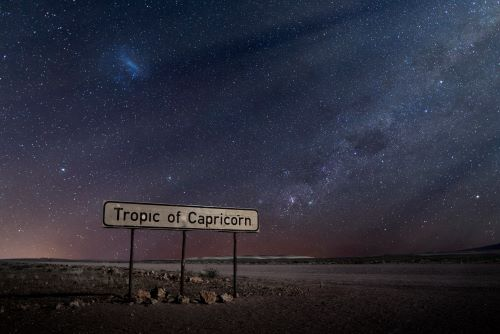
Capricorn, born between December 22 and January 19, is the zodiac’s builder, strategist, and long-range planner. Ruled by Saturn and belonging to the Earth element, Capricorn is traditionally associated with responsibility, patience, achievement, experience, and the willingness to work steadily toward something meaningful. Its Cardinal modality adds initiative to that practical nature, making Capricorn more than simply persistent; this is a sign that wants to create, organize, lead, and establish something with lasting value.
Symbolized by the Sea-Goat, Capricorn combines two very different images: the sure-footed goat climbing toward the summit and the fish tail descending into deeper waters. That symbolism gives Capricorn more complexity than its reputation for seriousness sometimes suggests. Beneath the practical exterior can be considerable intuition, sensitivity, humor, loyalty, and emotional depth, although those qualities may be revealed selectively rather than immediately.
The crystals traditionally associated with Capricorn reflect this combination. Garnet, Smoky Quartz, Onyx, Black Tourmaline, Fluorite, Hematite, and Pyrite complement the sign’s determination, focus, grounding, and ambition, while Lepidolite, Rose Quartz, Green Aventurine, Amethyst, Selenite, and Chalcopyrite introduce metaphysical themes of rest, emotional openness, optimism, spiritual reflection, and adaptability.
These crystal correspondences belong to astrology and modern metaphysical traditions, while the minerals themselves have geological and cultural histories worth knowing in their own right. Readers interested in the broader traditions surrounding crystal use can explore our Crystal Healing: History, Science, Metaphysical Beliefs & Modern Practice.
| Capricorn Correspondence | Association |
|---|---|
| Dates | December 22 – January 19 |
| Symbol | The Sea-Goat |
| Element | Earth |
| Modality | Cardinal |
| Polarity | Yin / Receptive |
| Ruling Planet | Saturn |
| Primary Chakra Associations in Modern Crystal Practice | Root & Crown |
| December Birthstones | Turquoise, Tanzanite & Zircon |
| January Birthstone | Garnet |
| Major Capricorn Crystals | Garnet, Smoky Quartz, Onyx, Black Tourmaline, Fluorite, Hematite, Pyrite, Lepidolite, Rose Quartz, Green Aventurine, Amethyst, Selenite & Chalcopyrite |
Because Capricorn crosses December and January, it is important to distinguish calendar birthstones from astrological crystal correspondences. Turquoise, Tanzanite, and Zircon are the modern December birthstones, while Garnet represents January. Onyx, Black Tourmaline, Smoky Quartz, Pyrite, Hematite, and the other stones in this guide belong to the broader metaphysical and astrological tradition surrounding Capricorn.
If you are choosing crystals specifically for Capricorn, Tumbled Stones provide an easy way to carry or combine several stones, while Crystal Points work well for meditation spaces, crystal grids, Reiki, and home displays. You can also browse the complete Grounded Lifestyles Shop for currently available crystals, minerals, jewelry, and other forms.
Capricorn’s combination of Cardinal modality and Earth element creates a personality traditionally associated with making things happen in the physical world. The sign tends to appreciate tangible progress, competence, reliability, and plans that can withstand reality rather than depending entirely upon enthusiasm. While other people may become discouraged by how long something will take, Capricorn often accepts that worthwhile goals require time.
This relationship with time is especially important because Saturn, Capricorn’s ruling planet, represents limits, responsibility, maturity, structure, and lessons acquired through experience. Capricorn energy is therefore frequently associated with mastery: not instant success, but the confidence that develops after doing something repeatedly and learning from the process.
The challenge comes when responsibility becomes excessive. Capricorn can carry obligations long after they should have been shared, postpone enjoyment until every task is finished, or become so focused on what remains undone that previous accomplishments are barely acknowledged. The sign’s crystal traditions therefore include stones associated not only with achievement but also with release, emotional openness, creativity, and rest.
Saturn is one of the oldest planets in traditional astrology because it is visible without a telescope and was known to ancient sky watchers. As the slowest-moving planet visible to the naked eye, Saturn came to represent time, boundaries, endurance, maturity, responsibility, and the consequences of choices.
Those associations fit Capricorn naturally. Saturn does not symbolize the fastest path; it represents the path built to last. Capricorn’s affinity for planning, experience, craftsmanship, career development, and long-term goals all fit comfortably within that tradition.
This is why darker and more grounded stones appear so frequently in Capricorn crystal lists. Onyx, Hematite, Black Tourmaline, Smoky Quartz, and Garnet have become metaphysical companions to Saturnian themes of endurance and stability, while lighter stones such as Rose Quartz, Amethyst, and Selenite provide contrast when discipline needs to make room for reflection or emotional openness.
Garnet has an especially strong relationship with Capricorn because it is the modern January birthstone and one of the most established metaphysical stones associated with commitment, vitality, endurance, confidence, and grounded passion.
Garnet is actually a group of related silicate minerals rather than one mineral species. Almandine, Pyrope, Spessartine, Grossular, Andradite, and Uvarovite are among the best-known members, producing colors that extend far beyond the familiar deep red. Garnets can be orange, green, pink, purple, brown, and nearly black depending on their chemistry.
Many garnets form during metamorphism, when existing rocks are transformed by changing temperature and pressure. That geological history gives Garnet an especially appealing symbolism for Capricorn: strength developed gradually through changing conditions.
Within metaphysical practice, Garnet is commonly used when determination needs renewed enthusiasm behind it. Capricorn generally understands commitment; Garnet brings the additional symbolism of passion, vitality, and remembering why the goal mattered in the first place.
Smoky Quartz is one of the most natural companions for an Earth sign. Its brown, gray, and smoky coloration develops when natural irradiation interacts with aluminum-related defects in quartz, producing shades ranging from pale smoky gray to almost opaque brown-black.
Metaphysically, Smoky Quartz is associated with grounding, release, stability, and transforming heavy or stagnant energy. For Capricorn, its usefulness lies particularly in letting go. A sign that is good at carrying responsibility may not always recognize when something no longer needs to be carried.
Smoky Quartz works naturally in a workspace, meditation area, or as an everyday stone when the intention is to remain productive without holding onto every frustration encountered along the way. Readers interested in its mineral family can explore Why Quartz Is King and our Quartz collection.
Onyx has been used for carving, jewelry, seals, cameos, and decorative objects for centuries. True Onyx is a banded variety of chalcedony characterized by relatively parallel bands, although the commercial stone market also uses the name for materials that do not strictly meet that mineralogical definition.
Within metaphysical traditions, black Onyx is associated with protection, self-mastery, boundaries, resilience, and disciplined focus. These qualities have made it one of the classic Capricorn stones.
For Capricorn, Onyx works particularly well as a personal talisman during periods requiring persistence. Its symbolism is less about pushing harder and more about remaining centered in a decision once that decision has been carefully made.
Black Tourmaline, or Schorl, is traditionally associated with grounding, energetic protection, stability, and personal boundaries. Those qualities fit Capricorn well because responsible people frequently become the people everyone else relies upon.
Schorl is the iron-rich black member of the Tourmaline group, a complex family of borosilicate minerals that occurs in many geological settings and produces an extraordinary range of compositions and colors.
For Capricorn, Black Tourmaline can symbolize the distinction between being dependable and becoming responsible for everything. It is commonly carried, placed near entrances or workspaces, or incorporated into grounding practices when stronger boundaries are part of the intention.
Learn more through our Black Tourmaline Guide to Schorl or explore our Tourmaline collection.
Fluorite is traditionally associated with clarity, organization, concentration, and sorting through complicated information. Capricorn already tends to appreciate structure, so Fluorite is particularly useful when organization has become overthinking or when a complicated project needs to be simplified.
Geologically, Fluorite is calcium fluoride and is famous for its cubic and octahedral crystal forms, beautiful color zoning, and remarkable range of colors. Purple, green, blue, yellow, colorless, and multicolored specimens are all known, and some Fluorite displays brilliant fluorescence under ultraviolet light.
For Capricorn, Fluorite works particularly well in offices, studios, workshops, and other spaces where decisions need to be made efficiently. Its metaphysical role is not to create discipline that Capricorn already possesses but to encourage clarity about where that discipline is best directed.
Hematite is an iron oxide mineral whose metallic gray specimens can look dramatically different from its characteristic reddish-brown streak. It has been important to humans for thousands of years as both an iron ore and a source of red pigment.
Within metaphysical practice, Hematite is strongly associated with grounding, stability, confidence, and connection with the physical world. It complements Capricorn during situations requiring a calm, steady presence, particularly meetings, negotiations, travel, planning, or periods of considerable responsibility.
Hematite is also a useful reminder that grounding does not always mean slowing down. Sometimes it simply means giving full attention to what is immediately in front of you rather than mentally carrying tomorrow’s responsibilities at the same time.
Pyrite is instantly recognizable for its metallic brassy color and beautifully geometric crystals. Known historically as “fool’s gold,” it is iron sulfide and commonly forms cubes, pyritohedra, octahedra, and combinations of these forms.
Modern metaphysical traditions strongly associate Pyrite with abundance, prosperity, confidence, manifestation, protection, and productive action. It therefore fits naturally with Capricorn’s relationship to career, business, long-term planning, and tangible accomplishment.
A Pyrite specimen on a desk or workspace can serve as a symbolic reminder of financial or professional goals, but its deeper Capricorn connection is purposeful effort. Prosperity in this tradition is not merely wishing for an outcome; it is connecting intention with consistent action.
Lepidolite brings something important to the Capricorn collection because its traditional metaphysical associations center on tranquility, transition, release, and emotional balance rather than productivity.
This lithium-bearing mica commonly occurs in shades of lilac, lavender, pink, gray, and silvery purple, often developing in lithium-rich granitic pegmatites. Its layered mica structure can produce a beautiful sparkling appearance.
Although lithium is part of Lepidolite’s mineral chemistry, the stone should not be treated as a natural substitute for pharmaceutical lithium. Its association with calm belongs to metaphysical crystal tradition.
For Capricorn, Lepidolite can mark the boundary between productive time and restorative time. Keeping it near a bedside, reading chair, meditation area, or another place intentionally separated from work gives the stone a clear symbolic purpose.
Rose Quartz is one of the most familiar stones associated with love, compassion, emotional openness, forgiveness, and self-love. Those themes provide an important counterbalance for Capricorn, which can sometimes express care by solving problems, providing stability, or taking responsibility rather than openly communicating emotion.
Rose Quartz is the pink variety of quartz and has been valued for jewelry, carving, and ornament for centuries. Its softer visual character also provides an appealing contrast to the black, brown, metallic, and deep red stones commonly associated with Capricorn.
Within a Capricorn practice, Rose Quartz can be used when the intention is to receive support rather than always providing it, express affection more openly, or remember that personal value is not determined entirely by productivity.
Green Aventurine introduces renewal and possibility into a crystal collection otherwise dominated by discipline and grounding. It is a quartz-rich material whose characteristic sparkle, or aventurescence, commonly comes from tiny inclusions of green mica.
Within metaphysical traditions, Green Aventurine is associated with luck, opportunity, optimism, growth, and the Heart Chakra. For Capricorn, those themes are particularly useful when careful planning begins to leave too little room for possibility.
Not every opportunity can be predicted in advance. Green Aventurine represents being prepared enough to recognize an opening while remaining flexible enough to take it.
Amethyst brings a contemplative quality to Capricorn. As the purple variety of quartz, it has a long history in jewelry, religious objects, ornament, and spiritual symbolism.
Within metaphysical practice, Amethyst is associated with meditation, intuition, tranquility, spiritual awareness, and discernment. For Capricorn, it can provide a useful shift from asking What should I accomplish next? toward considering Why does this matter to me?
That distinction makes Amethyst particularly suitable for meditation, journaling, spiritual practice, or periods of long-range reflection when Capricorn is evaluating whether an existing goal still fits the life being built around it.
Selenite is a crystalline variety of gypsum known for its translucent to transparent appearance and soft, luminous character. Because gypsum is very soft and water-sensitive, Selenite requires more careful handling than quartz or many other commonly collected crystals.
Within modern metaphysical traditions, Selenite is associated with cleansing, clarity, spiritual connection, and clearing stagnant energy. For Capricorn, it introduces the concept of lightness into a collection built largely around strength.
Selenite is commonly kept in meditation spaces, incorporated into crystal grids, or used in energetic cleansing practices. It should be kept dry and protected from scratching because its physical softness is an important part of caring for the actual mineral.
Chalcopyrite is a copper iron sulfide with a brassy metallic appearance that is sometimes confused with Pyrite. Tarnishing can produce iridescent purple, blue, green, and gold surface colors, particularly on treated or naturally altered specimens.
Within metaphysical traditions, Chalcopyrite is associated with transformation, opportunity, perception, and adapting to change. That makes it particularly useful for Capricorn during career transitions, changing plans, or situations where persistence alone is no longer enough.
Capricorn’s strength is staying the course, but mature persistence also includes recognizing when the route should change. Chalcopyrite represents flexibility without abandoning the larger purpose.
Modern crystal practice commonly connects Capricorn with the Root Chakra, which corresponds with stability, security, grounding, and physical foundations. Garnet, Onyx, Black Tourmaline, Hematite, and Smoky Quartz fit naturally into this part of Capricorn practice.
The Crown Chakra introduces purpose, reflection, and spiritual perspective through stones such as Amethyst and Selenite, while the Heart Chakra adds Rose Quartz and Green Aventurine when compassion, openness, and trust need more attention.
Rather than treating these as rigid rules, Capricorn can choose the chakra and stone according to the intention of the practice. Readers interested in exploring the system further can continue with Chakras and Corresponding Crystals and Chakra Alignment with Crystals.
Capricorn crystals can be chosen according to the situation rather than used as a single fixed set. Garnet, Onyx, Pyrite, Hematite, and Fluorite fit naturally around work, planning, leadership, and long-term goals, while Smoky Quartz and Black Tourmaline are useful when grounding and boundaries are more important.
During quieter periods, Rose Quartz, Lepidolite, Amethyst, Green Aventurine, or Selenite can shift the emphasis toward reflection, emotional openness, rest, or renewal. Combining contrasting stones can also be meaningful. Garnet with Rose Quartz brings determination together with compassion, while Pyrite with Amethyst connects practical goals with a broader sense of purpose.
Tumbled Stones are convenient for everyday carrying and meditation, while Crystal & Gemstone Jewelry keeps a chosen correspondence close throughout the day. Larger Crystal Points can become part of a workspace, meditation area, Reiki practice, or crystal grid.
For goal setting, Garnet and Pyrite make a natural pair. Rather than creating a long list of ambitions, choose one goal and identify the next concrete action required to move it forward. The stones become physical symbols of commitment and purposeful effort rather than substitutes for action.
For the end of a demanding day, Smoky Quartz can be paired with Lepidolite or Rose Quartz as part of a deliberate transition away from work. A few minutes of quiet reflection, slow breathing, or journaling can mark the point when responsibilities are intentionally set aside rather than mentally carried through the evening.
Amethyst and Garnet can also be combined during longer-term reflection. Garnet represents commitment while Amethyst represents discernment, creating a useful pairing when Capricorn needs to decide whether persistence still serves the original purpose.
Those who incorporate Reiki into their crystal practice can explore additional approaches in The Role of Reiki in Crystal Energy Work.
Capricorn’s unusual Sea-Goat symbol has roots reaching into ancient Mesopotamian celestial traditions, where a goat-fish figure was associated with the constellation that later became Capricornus. The image combined the body or forequarters of a goat with the tail of a fish, linking terrestrial and aquatic worlds.
Greek and Roman traditions later developed their own stories around Capricorn, including associations with the goat-like god Pan and the transformation of his lower body into a fish while escaping the monster Typhon. Different traditions accumulated around the constellation over time, creating the composite symbolism inherited by Western astrology.
The Sea-Goat remains one of the zodiac’s most distinctive images because it prevents Capricorn from being understood only as an Earth-bound climber. The goat represents ascent, persistence, and difficult terrain, while the fish tail introduces depth, instinct, and an older connection with water. Together they create a more complete symbol for a sign whose outward practicality can conceal considerable inner complexity.
Several stones now associated with Capricorn were valued long before modern zodiac-crystal systems developed. Garnets appear in ancient jewelry and ornament across multiple civilizations, while Onyx and other forms of chalcedony were widely carved into seals, cameos, beads, and amulets.
Hematite also has an exceptionally long human history. Its iron-rich composition made it important as an ore, while powdered hematite produced red ochre pigments used by humans for tens of thousands of years. Pyrite was used historically for producing sparks and later became famous for its superficial resemblance to gold.
These histories are valuable because they give Capricorn stones identities beyond their modern metaphysical meanings. A Garnet can simultaneously be a metamorphic mineral, a January birthstone, an ancient gemstone, a collector specimen, and a modern symbol of Capricorn endurance.
Capricorn’s Earth element makes geology particularly appropriate to this zodiac article, but the connection is most interesting when the actual mineral processes are allowed to speak for themselves.
Garnets commonly develop in metamorphic environments where existing rocks respond to changing pressure and temperature. Quartz can crystallize in many geological environments, while Smoky Quartz records the interaction of crystal defects and natural irradiation. Pyrite forms under a remarkably broad range of geological conditions, and Hematite appears in environments ranging from sedimentary iron formations to hydrothermal deposits and weathering zones.
These processes unfold on timescales far beyond ordinary human experience, making minerals natural symbols of patience, change, and endurance. For an Earth sign traditionally associated with time and long-term development, that geological perspective gives Capricorn’s crystal collection an especially fitting connection with the planet itself.
Readers interested in how minerals actually grow can continue with The Science of Crystal Formation.
The Capricorn collection contains minerals with very different physical properties, so cleaning and storage should be based on the specimen rather than a universal crystal-care rule. Quartz varieties such as Amethyst and Smoky Quartz are relatively durable, while Selenite is extremely soft and should be kept dry. Fluorite has perfect cleavage and can chip if dropped, while Pyrite should be protected from prolonged moisture because oxidation can damage the specimen over time.
Smoke, sound, intention, Reiki, and other non-contact methods are useful options for practitioners who want to cleanse stones energetically without exposing delicate minerals to water. Our guide to Burning Sage, Space Clearing & Energy Cleansing explores smoke-cleansing traditions and practical considerations in greater depth.
Good physical care preserves the mineral while allowing whatever personal or metaphysical practices surround it to continue safely.
Garnet is one of the strongest overall Capricorn choices because it is the January birthstone and has longstanding metaphysical associations with commitment, endurance, vitality, and grounded determination. Smoky Quartz, Onyx, and Black Tourmaline are also excellent choices when grounding and stability are the primary intention.
Capricorn spans December and January. The modern December birthstones are Turquoise, Tanzanite, and Zircon, while Garnet is the January birthstone. The other stones associated with Capricorn in this guide come primarily from astrological and metaphysical traditions.
Major Capricorn crystals include Garnet, Smoky Quartz, Onyx, Black Tourmaline, Fluorite, Hematite, Pyrite, Lepidolite, Rose Quartz, Green Aventurine, Amethyst, Selenite, and Chalcopyrite. Each represents a different aspect of Capricorn practice, from ambition and grounding to reflection, adaptability, and emotional openness.
Pyrite, Garnet, Fluorite, Hematite, and Onyx are popular choices for work and career intentions. Their metaphysical associations include prosperity, commitment, organization, stability, confidence, and disciplined focus.
Lepidolite, Amethyst, Rose Quartz, and Selenite are commonly chosen when the intention shifts away from productivity toward quiet, reflection, emotional openness, or rest.
Garnet, Onyx, Black Tourmaline, Hematite, and Smoky Quartz all have strong grounding traditions. Capricorn can choose among them according to personal preference, mineral form, and the particular symbolism that feels most appropriate.
Garnet, Onyx, Black Tourmaline, Hematite, and Smoky Quartz are commonly incorporated into Root Chakra practices because of their traditional connections with stability, security, grounding, and physical presence.
Yes. Garnet is the January birthstone and one of the most natural Capricorn stones, particularly for January-born Capricorns. Its metaphysical associations with endurance, commitment, confidence, and vitality also complement traditional Capricorn characteristics.
Yes. Black Tourmaline is widely associated with Capricorn in modern metaphysical practice because its grounding, protection, and boundary symbolism complements the sign’s Earth element and strong sense of responsibility.
Pyrite is especially popular for Capricorn when the intention involves prosperity, business, confidence, manifestation, or professional goals. Its striking metallic crystals also make it an attractive workspace specimen.
Yes. Garnet and Pyrite work well for goal-oriented intentions, Smoky Quartz and Lepidolite can represent release and rest, while Onyx and Rose Quartz combine strength with emotional openness. There is no need to use every Capricorn crystal simultaneously.
Choose according to what you want the stone to represent. Garnet suits commitment, Pyrite prosperity and ambition, Fluorite organization, Black Tourmaline boundaries, Smoky Quartz release, Rose Quartz emotional openness, and Amethyst reflection. The most useful stone is the one that matches the intention rather than simply the longest list of Capricorn correspondences.
Explore Tumbled Stones for carrying, meditation, Reiki, and small zodiac sets, or Crystal Points for displays, meditation spaces, and grids. You can also browse Quartz, Tourmaline, Crystal & Gemstone Jewelry, and the complete Minerals & Crystals collection.
Capricorn’s crystal collection reflects the qualities that make this Earth sign distinctive while offering plenty of room for personal choice. Garnet, Onyx, Smoky Quartz, Black Tourmaline, Pyrite, Fluorite, and Hematite are natural choices for grounding, focus, commitment, and ambition, while Rose Quartz, Lepidolite, Green Aventurine, Amethyst, Selenite, and Chalcopyrite bring different qualities into the practice when Capricorn wants something beyond its usual strengths.
Continue through the zodiac with Aquarius, Pisces, Aries, Taurus, Gemini, Cancer, Leo, Virgo, Libra, Scorpio, and Sagittarius. You can also explore Tumbled Stones, Crystal Points, Crystal & Gemstone Jewelry, the complete Grounded Lifestyles Shop, and our Free Crystal & Mineral E-Book Library.

At Grounded Lifestyles, our love for crystals began in the peaceful flow of Reiki and energy healing sessions — where we saw how natural stones could amplify intentions, restore balance, and bring comfort. But the more time we spent with these treasures, the more curious we became about their origins. That curiosity led us into the fascinating world of geology and mineral specimen collecting. We fell in love not just with the energy of crystals, but with the science and artistry of their creation — the intricate crystal structures, the vibrant mineral hues, and the wonder of holding a piece of Earth’s history in our hands.