Description
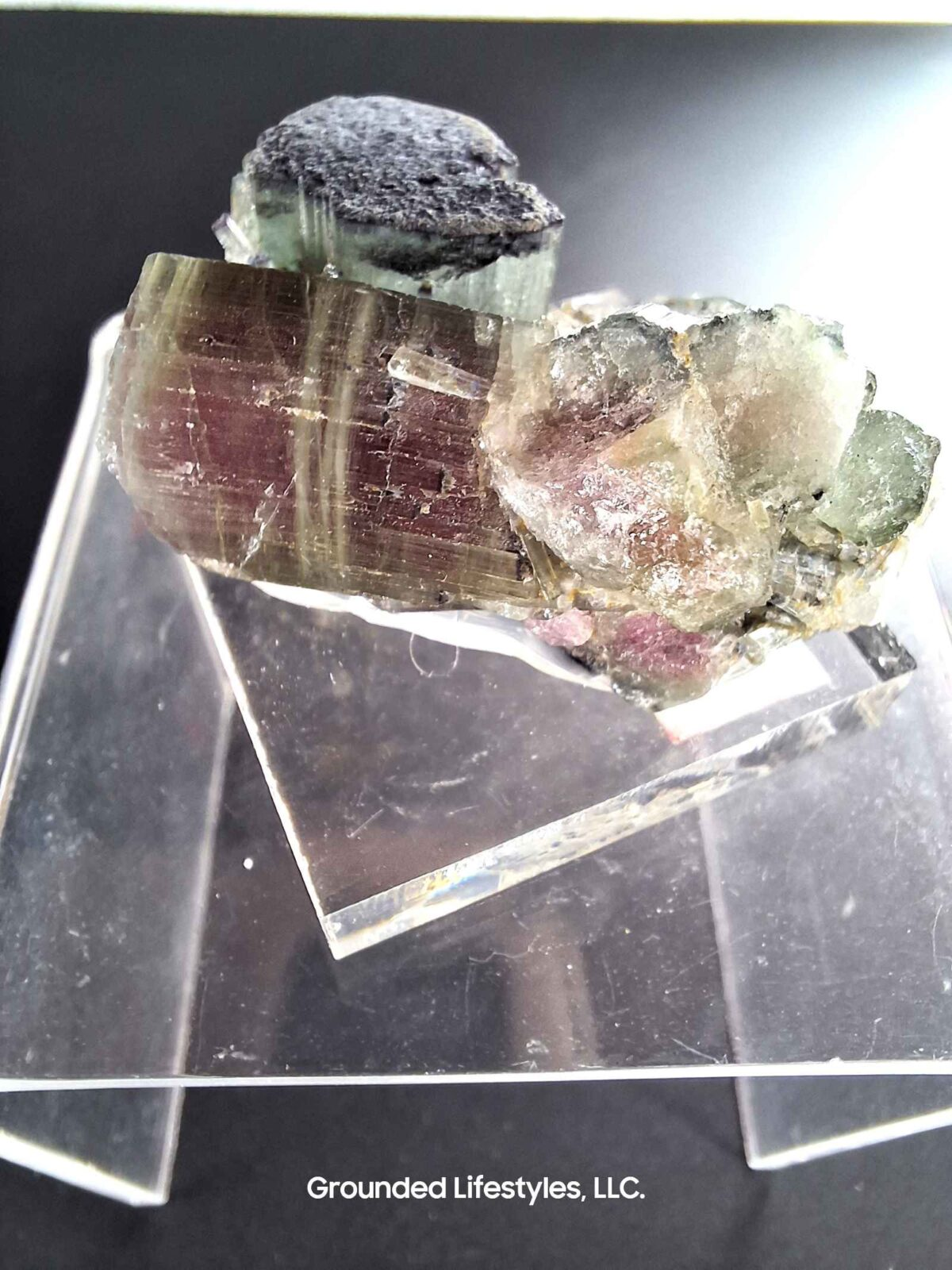
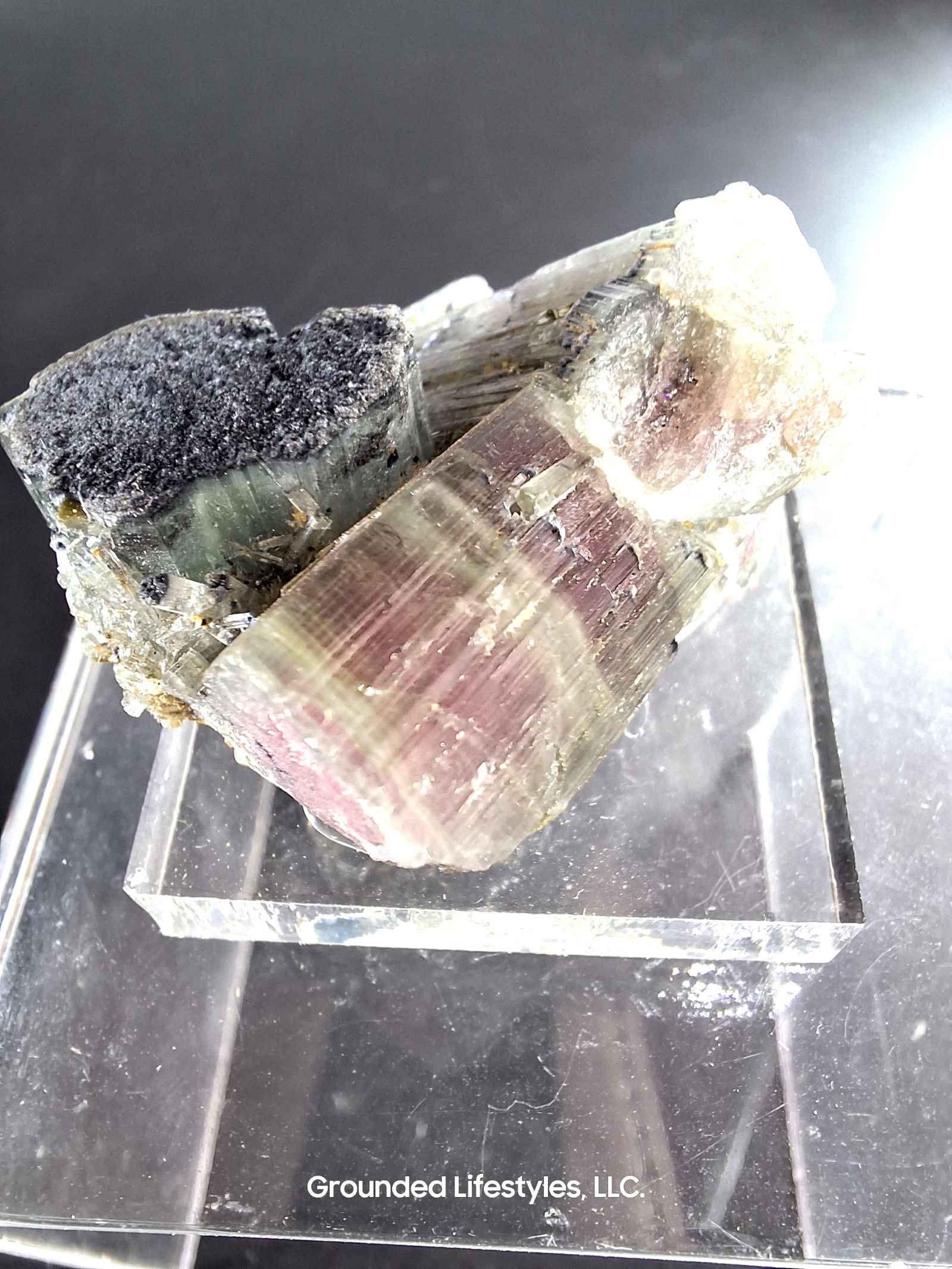
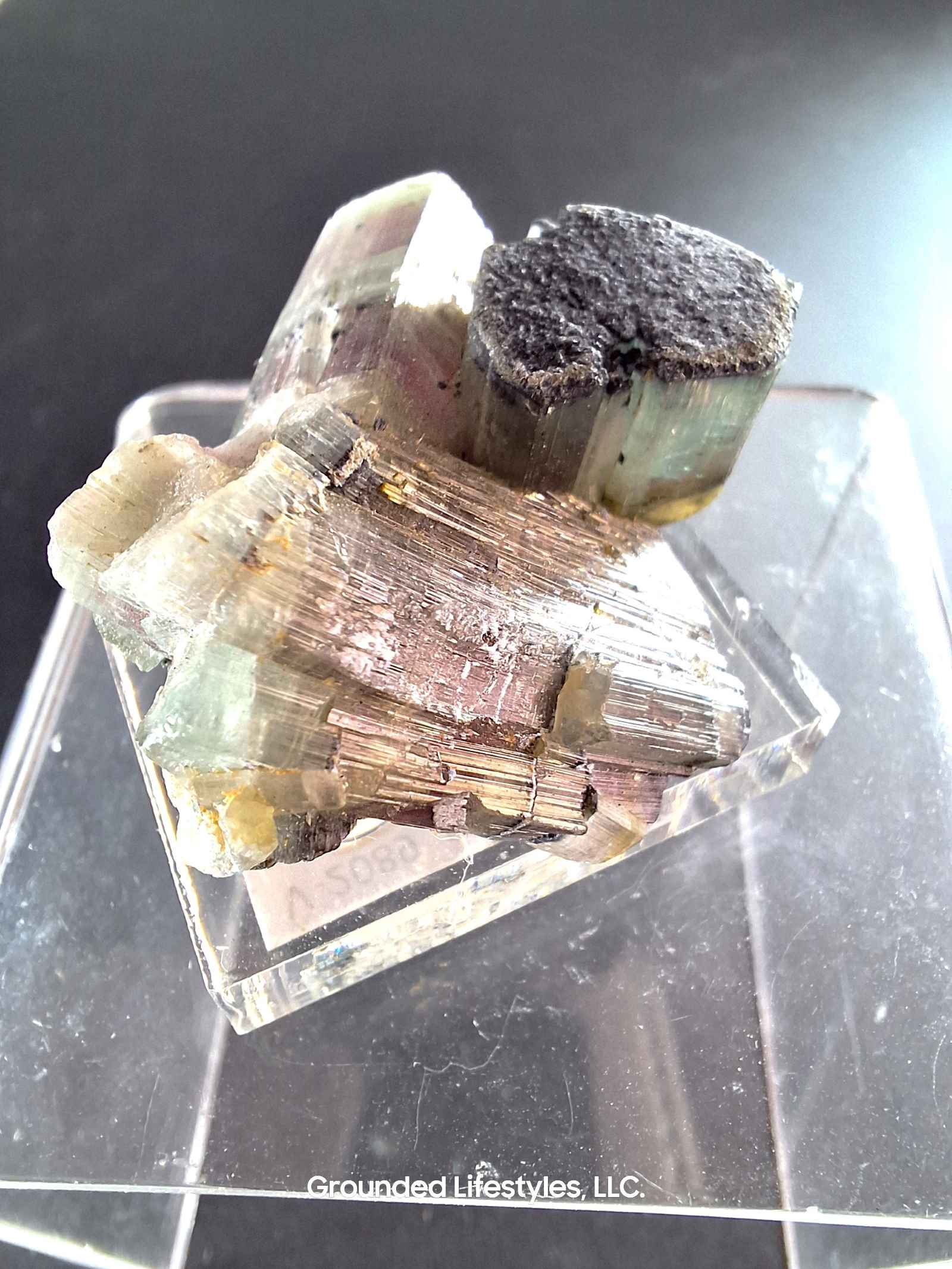
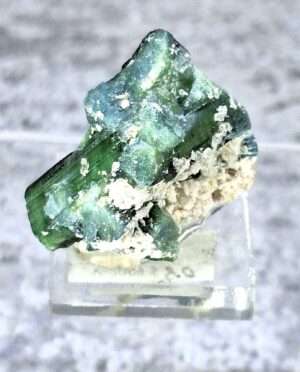
Watermelon Tourmaline Crystal Cluster – Brazil
Watermelon tourmaline is admired for one of the most distinctive color combinations in the mineral world: pink and green occurring together within a single crystal or crystal group. Named for its resemblance to the colors of a watermelon, this natural Brazilian specimen displays the contrasting color zones that make tourmaline especially interesting to collectors.
Rather than presenting a uniformly colored gemstone, this cluster reveals the changing conditions under which tourmaline crystals develop. Its pink and green coloration makes it appealing as both a mineral specimen and a natural display piece.
The Geology Behind Watermelon Tourmaline
Tourmaline is a group of complex borosilicate minerals known for an extraordinary range of colors and chemical compositions. Watermelon tourmaline is generally associated with color-zoned elbaite, a lithium-rich member of the tourmaline group.
During crystal growth, changes in the surrounding chemical environment can alter the trace elements incorporated into the developing mineral. These variations may produce different colors in successive growth zones.
Pink coloration in elbaite is commonly associated with manganese-related color centers, while green coloration may involve iron, manganese, or other factors depending on the specimen.
The familiar watermelon appearance is particularly striking when a pink interior is surrounded by green outer growth, although not every specimen displays a complete concentric pattern.
Brazilian Tourmaline Localities
Brazil is one of the world’s most important sources of gem-quality and collectible tourmaline. The state of Minas Gerais is particularly well known for its tourmaline-bearing pegmatites, which have produced specimens in shades of pink, green, blue, and combinations of several colors.
Tourmaline commonly develops in granitic pegmatites, where mineral-rich fluids and melts can create favorable conditions for the growth of complex crystals.
Brazilian deposits have supplied mineral collectors and gemstone cutters for generations, making the country an important part of tourmaline’s commercial and scientific history.
This specimen is identified as originating from Brazil; a specific mine or district has not been provided.
What Makes Watermelon Tourmaline Collectible?
Color zoning is one of the main characteristics collectors look for in watermelon tourmaline. The visual contrast between pink and green can reveal growth patterns that are less obvious in single-color crystals.
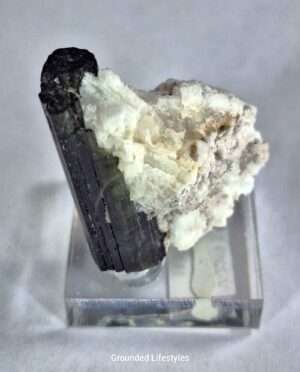
Collectors also evaluate crystal form, transparency, luster, termination quality, damage, and overall presentation. Tourmaline typically forms elongated prismatic crystals, often with distinctive lengthwise striations.
Clusters can be especially appealing because they preserve the relationship between multiple crystals rather than presenting a single isolated fragment.
The value of a specimen depends on its size, color quality, crystal condition, and locality information, as well as its overall appearance.
Metaphysical Traditions
Within modern crystal traditions, watermelon tourmaline is frequently associated with emotional harmony, compassion, and the heart chakra. Its pink and green colors are often interpreted as representing a balance between affection, growth, and renewal.
Some collectors choose watermelon tourmaline for meditation, intention setting, or personal symbolism. These associations are spiritual and cultural interpretations rather than scientifically established effects.
The specimen can also be appreciated simply for its natural color zoning and geological interest.
Display and Care
Tourmaline has a Mohs hardness of approximately 7 to 7.5, making it relatively resistant to scratching, although crystals can still chip or fracture if dropped or struck.
Display the cluster on a stable surface away from edges and high-traffic areas. Avoid prolonged exposure to strong heat, rapid temperature changes, and harsh cleaning chemicals.
Dust gently with a soft brush. If cleaning is necessary, use minimal lukewarm water and dry carefully, provided there are no fragile attachments or associated minerals that could be damaged. Avoid ultrasonic and steam cleaning.
Product Details
- Mineral: Tourmaline
- Variety: Watermelon tourmaline
- Color: Pink and green
- Formation: Color-zoned crystal growth
- Locality: Brazil
- Crystal habit: Cluster
- Mohs hardness: Approximately 7–7.5
- Intended use: Mineral collecting, display, and crystal traditions
- Dimensions and weight: 1.25 inches long by .5o inch high by 1 inch wide and is mounted on a base, The specimen weighs 18.9 grams without the base
- Exact mine or district: Cruzeiro Mine, Sao Jose da Safria, Brazil
This Brazilian watermelon tourmaline cluster offers collectors a beautiful example of natural color zoning and the remarkable variety found within the tourmaline mineral group.
Only logged in customers who have purchased this product may leave a review.


Reviews
There are no reviews yet.