Description
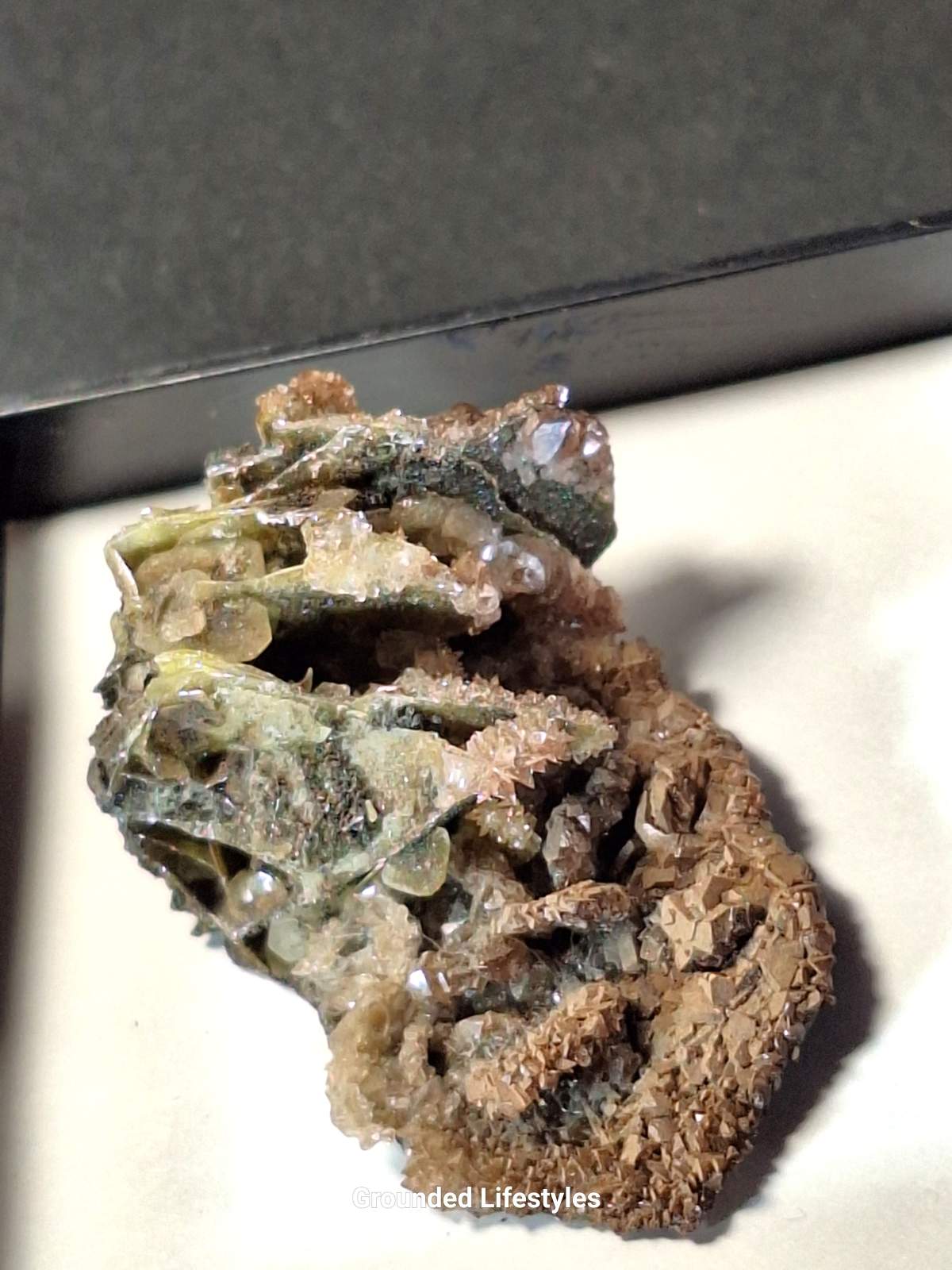
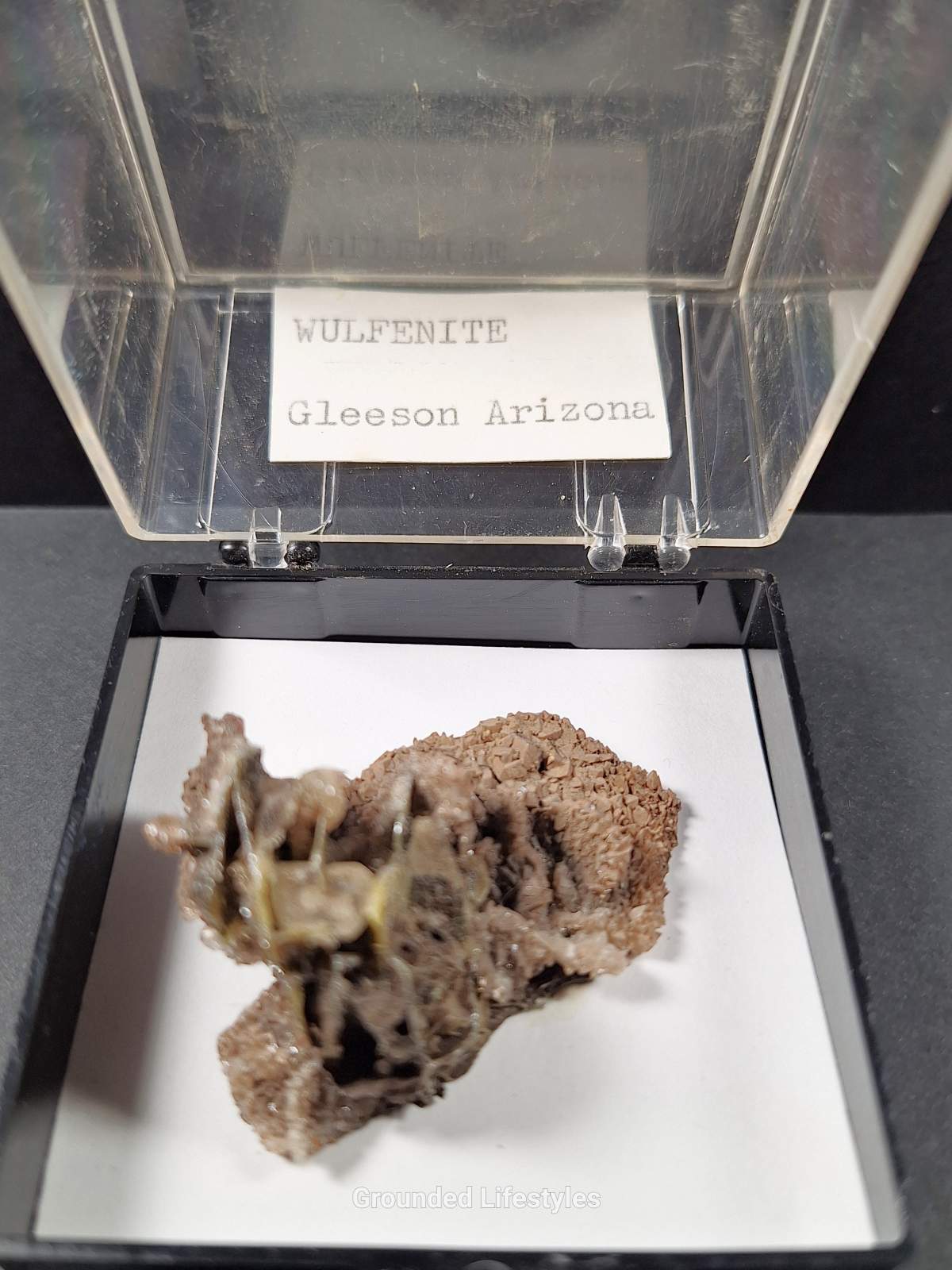
Wulfenite from Gleeson, Arizona comes from the Donald Wininger Collection and retains a locality label identifying the specimen simply as “Wulfenite – Gleeson Arizona.”
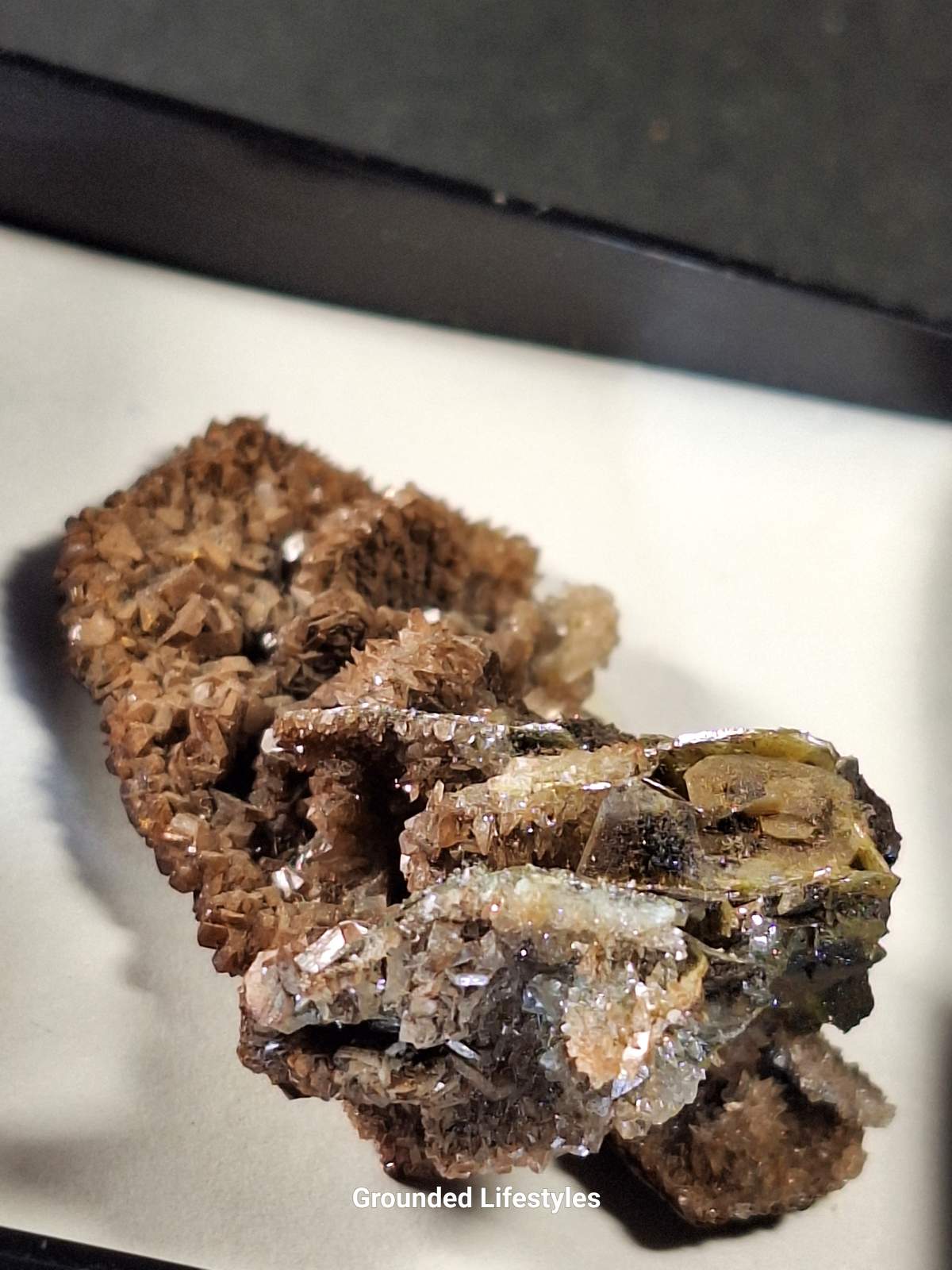
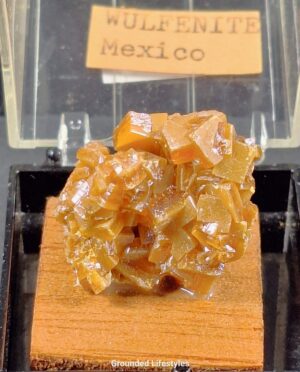
The specimen measures approximately 1.75 inches long, 0.25 inches wide, and 1 inch high and comes in the 2 × 2 × 2 inch Perky display box shown.
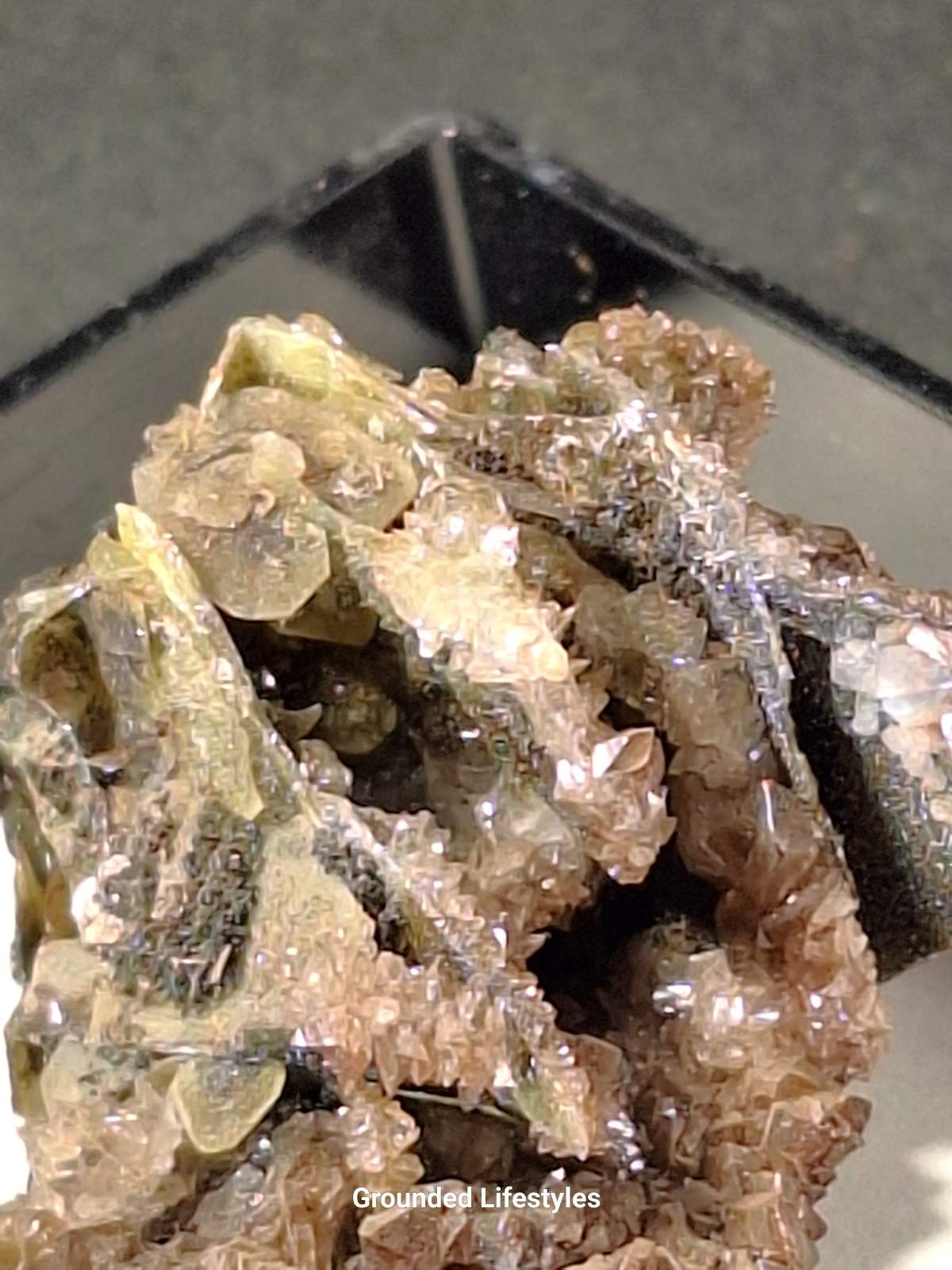
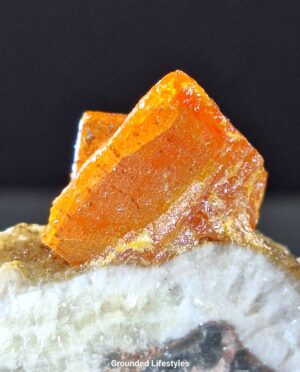
Unlike the brilliant orange Los Lamentos specimen we listed previously, this Arizona piece has a much more subdued, earthy appearance. The photograph shows Wulfenite occurring across a brown oxidized matrix, with small tabular crystal development and areas of lighter mineralization. That difference is useful: Wulfenite can look dramatically different depending upon locality and the conditions under which it crystallized.
Why Gleeson Matters to Collectors
Gleeson lies within the historic Turquoise Mining District, also called the Courtland-Gleeson Mining District, in Cochise County, southeastern Arizona.
Mining here dates to the nineteenth century. The district became an important producer of copper along with lead, silver and zinc, and mining activity helped transform the earlier settlement of Turquoise into the town known as Gleeson around 1900. The district reached its peak copper production around 1912. The lead-rich oxidized portions of several deposits also produced Wulfenite. Historic geological records document Wulfenite occurring with minerals including cerussite, anglesite, smithsonite, hemimorphite, malachite, azurite and other secondary minerals in the district.
Mineral Information
| Property |
Information |
| Mineral |
Wulfenite |
| Chemical Formula |
PbMoO₄ |
| Mineral Class |
Molybdate |
| Crystal System |
Tetragonal |
| Mohs Hardness |
2.5–3 |
| Typical Habit |
Tabular, bladed or blocky crystals |
| Luster |
Adamantine to resinous |
| Locality |
Gleeson, Turquoise Mining District |
| County |
Cochise County, Arizona |
| Collection |
Donald Wininger Collection |
How Gleeson Wulfenite Formed
Wulfenite is a secondary lead mineral, meaning it generally develops after an original lead-bearing ore deposit has been chemically altered near the Earth’s surface.
At Gleeson, oxidation affected mineralized zones hosted largely by carbonate rocks that had been intruded by igneous rocks. Oxygen-bearing groundwater altered primary ore minerals and created an assortment of secondary copper, lead and zinc minerals. Under the right conditions, lead released during this alteration combined with molybdate to form Wulfenite within fractures, cavities and seams. This oxidized environment explains why Gleeson can produce such a varied mineral assemblage rather than simply one primary ore mineral.
Are the Gleeson Mines Still Operating?
The historic mines responsible for the classic Gleeson mineral specimens are not active commercial producing mines today.
In fact, an Arizona geological report published in the 1920s noted that the district’s larger mines had already been idle since about 1920, although smaller operators and lessees continued working portions of the district afterward.
There has been later mineral exploration in the broader Courtland-Gleeson area, including substantial drilling programs beginning in the 1950s and continuing periodically afterward. That is different from the old specimen-producing mines being in active commercial operation.
Metaphysical Properties
In modern crystal traditions, Wulfenite is associated with creativity, determination, motivation and transforming ideas into action. Earthier brown and neutral-toned specimens are also symbolically associated with grounding and maintaining focus while pursuing creative goals.
These are traditional metaphysical associations and are not medical claims.
Display & Care
The included 2-inch Perky box is an important part of this specimen’s presentation. Wulfenite is relatively soft and brittle, and projecting crystals can be damaged through unnecessary handling.
Keep the specimen protected in its display box whenever possible. If cleaning becomes necessary, use only a very soft, dry brush and avoid ultrasonic cleaning or harsh chemicals.
Because Wulfenite contains lead, wash your hands after direct handling. Do not cut, grind or sand the specimen, and avoid creating mineral dust.