Description
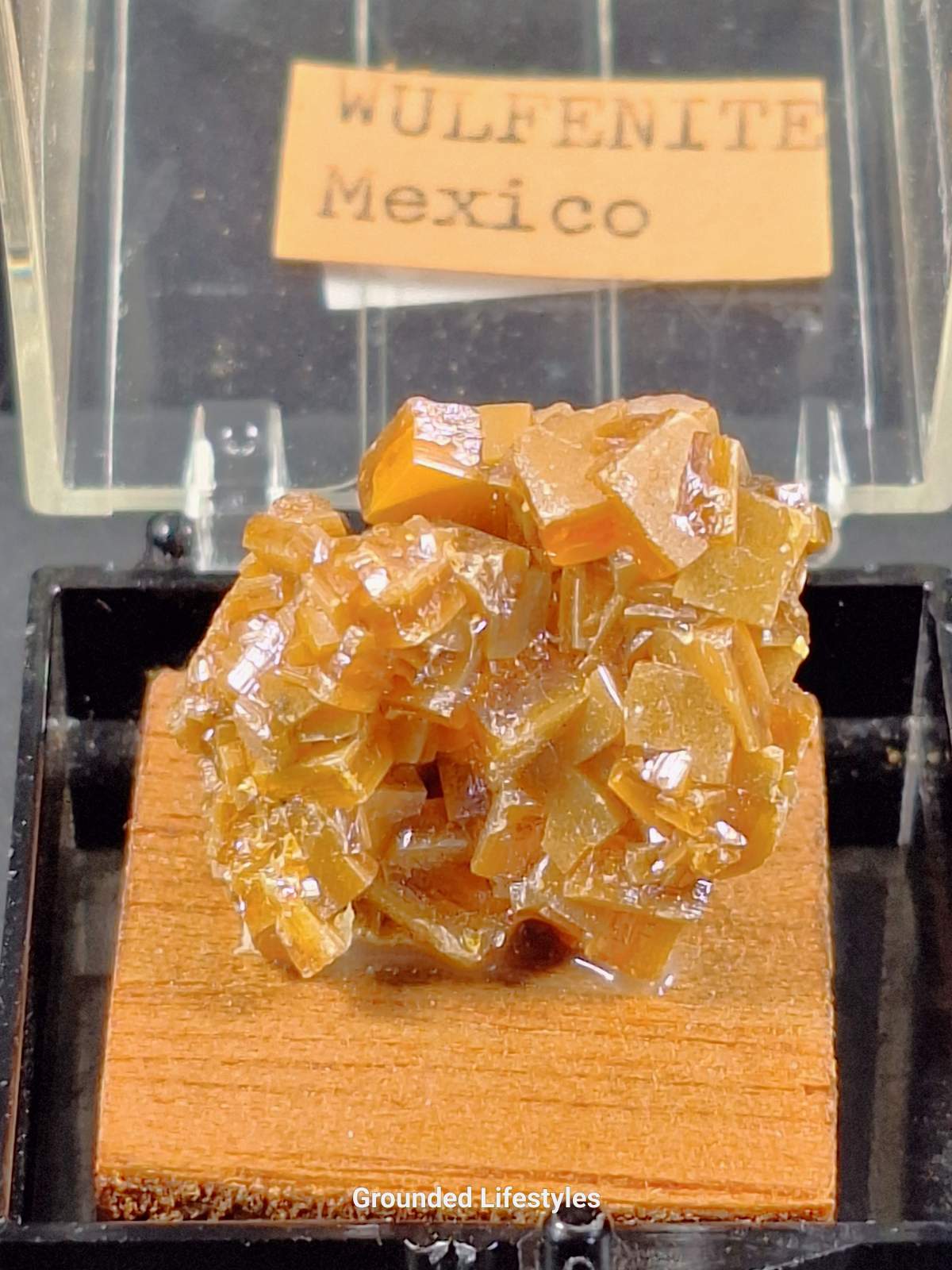
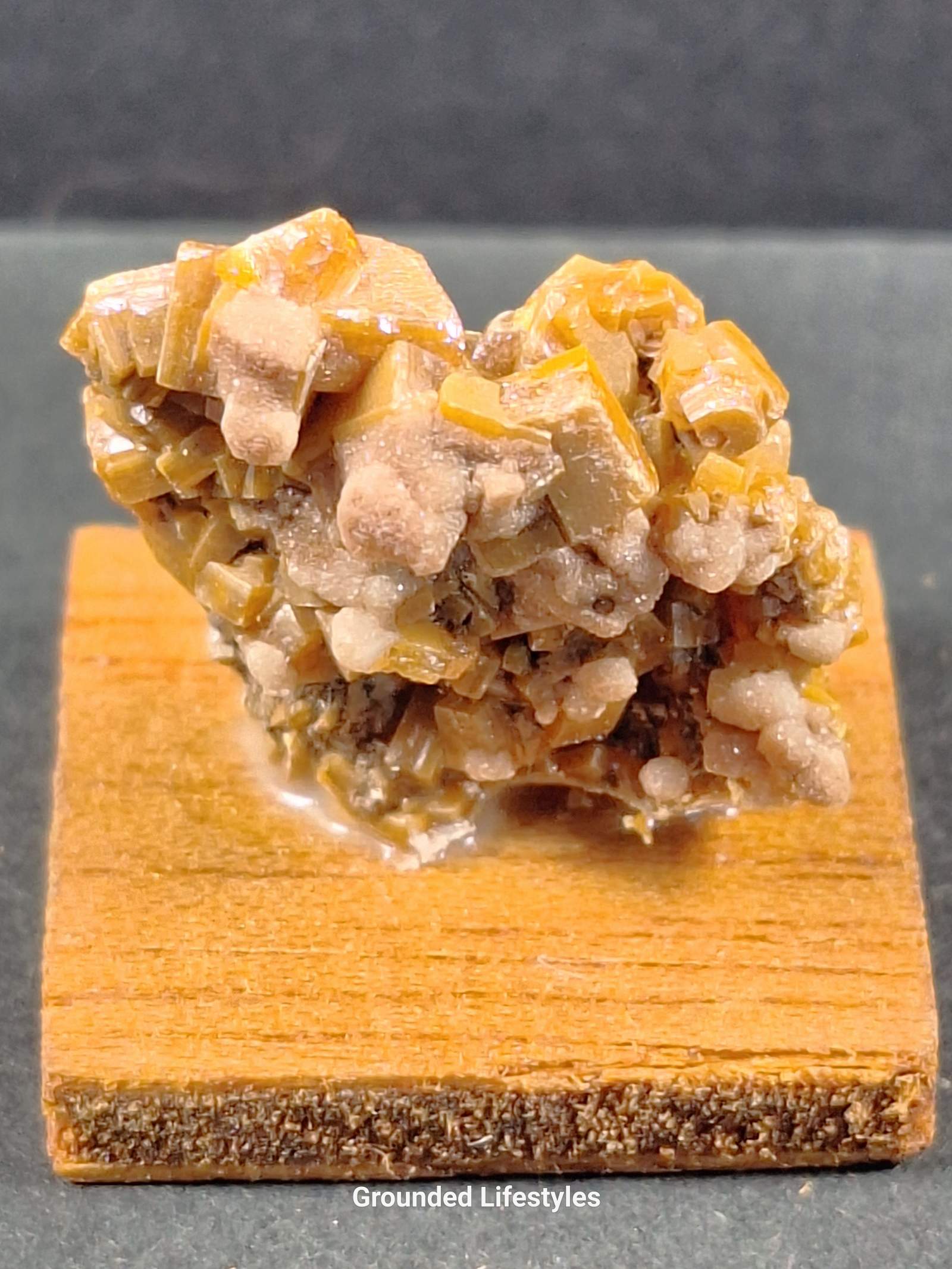
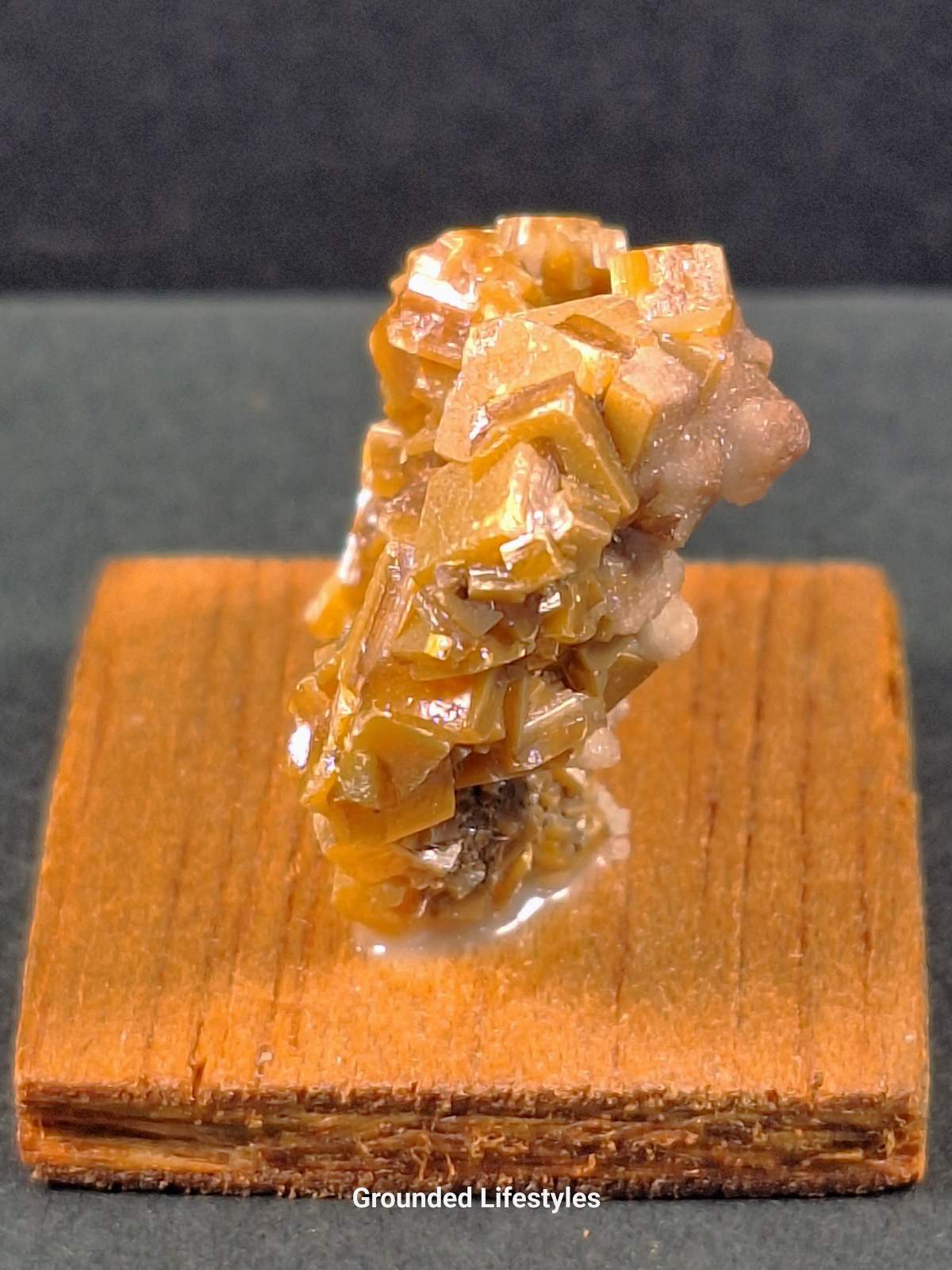
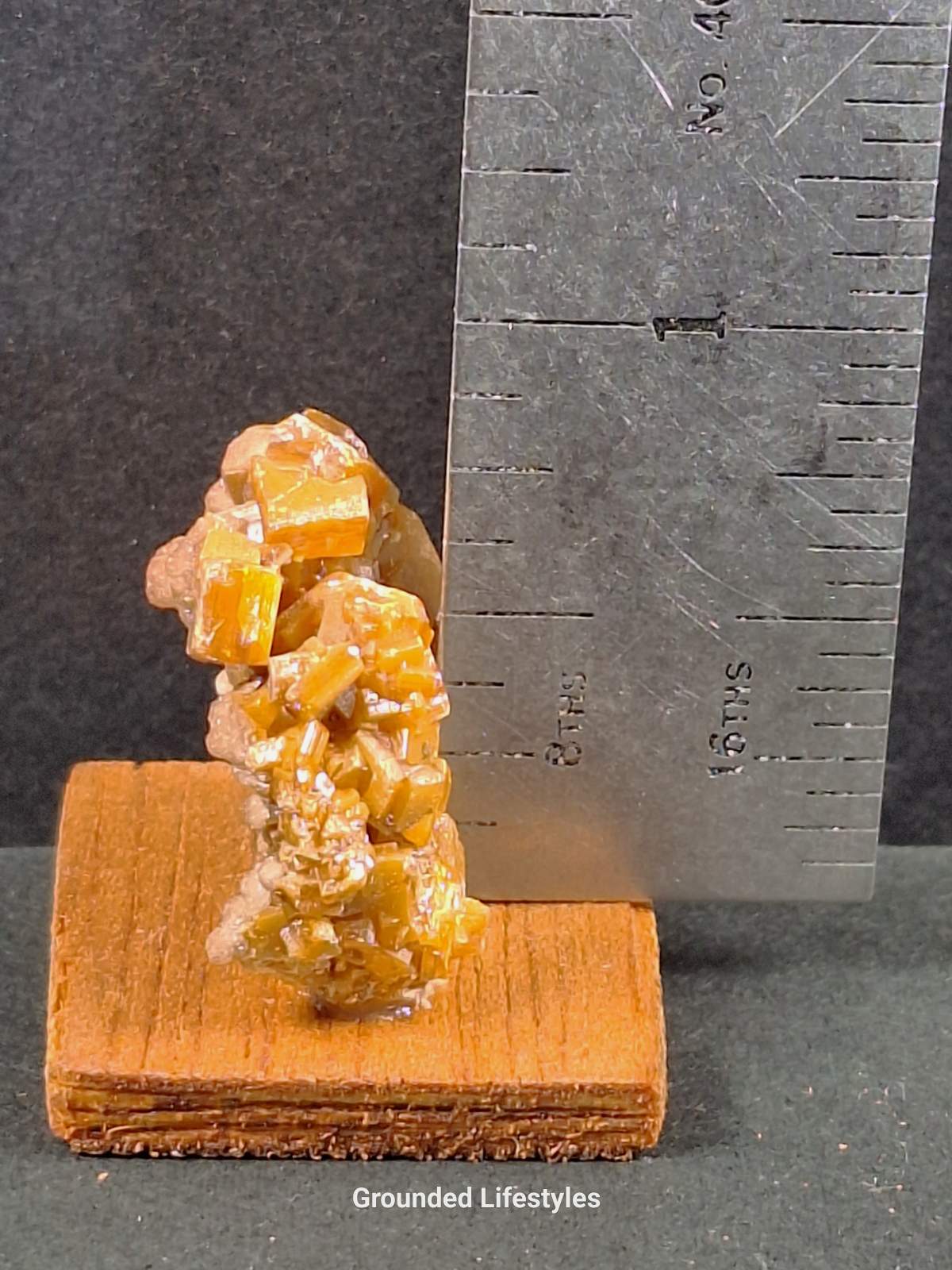
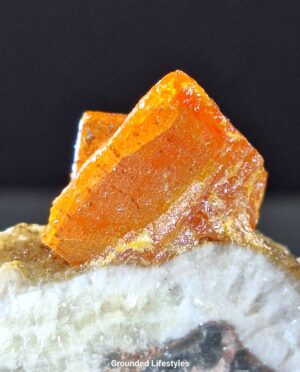
Wulfenite specimen from Mexico comes from the Donald Wininger Collection and is accompanied by locality label identifying the specimen. The specimen measures approximately 0.75 inches long, 0.75 inches wide, and 0.75 inches high and comes housed in the 1.5-inch Perky display box shown. Despite its miniature size, this is a visually substantial specimen. Numerous Wulfenite crystals have grown together into a compact three-dimensional cluster, creating layers of reflective crystal faces rather than a single isolated crystal.
What Makes This Specimen Interesting
The photograph shows a particularly attractive combination of honey-orange to orange-yellow coloration, high luster, and thick tabular to bladed crystal development.
Individual crystals overlap one another at different orientations, producing numerous reflective surfaces. Under direct light, some areas appear more transparent while thicker portions develop richer orange tones.
That variation is part of what gives natural Wulfenite its appeal. The abundance of recognizable crystals on such a compact specimen also gives it excellent miniature-cabinet presence.
Mineral Information
| Property |
Information |
| Mineral |
Wulfenite |
| Chemical Formula |
PbMoO₄ |
| Mineral Class |
Molybdate |
| Crystal System |
Tetragonal |
| Mohs Hardness |
2.5–3 |
| Luster |
Adamantine to resinous |
| Crystal Habit |
Tabular to thick bladed crystals |
| Color |
Honey-orange to orange-yellow |
| Locality |
Mexico – exact mine unknown |
| Collection |
Donald Wininger Collection |
How Wulfenite Forms
Wulfenite is a lead molybdate mineral most commonly formed in the oxidized zones of lead-bearing mineral deposits. Near the Earth’s surface, oxygen-rich groundwater alters primary lead sulfide ores such as galena. Under suitable chemical conditions, mobilized lead can combine with molybdate and recrystallize as Wulfenite within fractures, cavities, and open spaces in the altered ore body. This secondary mineralization is responsible for the spectacular yellow, orange, red-orange, and occasionally brown Wulfenite crystals prized by collectors. Mexico’s extensive lead-mining districts created particularly favorable environments for Wulfenite formation and have produced some of the world’s most celebrated examples.
Mexico and the History of Collectible Wulfenite
Mexico is one of the great countries of origin for collector-quality Wulfenite. Famous Mexican localities include Los Lamentos in Chihuahua, the Ojuela Mine in Durango, San Francisco Mine in Sonora, Erupción/Ahumada workings, and numerous other lead-mining districts. These localities have produced dramatically different crystal habits and colors, ranging from thin transparent plates to thick orange tablets and dense crystal clusters.
For this piece, however, the exact mine is unknown. Its thick orange-to-honey tabular crystals resemble habits found at several classic Mexican localities, but crystal color and habit alone are not sufficient to establish mine provenance.
Metaphysical Properties
In modern crystal traditions, Wulfenite is associated with creativity, inspiration, motivation, determination and transforming ideas into action.
Its orange coloration is also symbolically associated with enthusiasm, creative expression, confidence, and the sacral chakra.
These associations are traditional and metaphysical rather than medical claims.
Display & Care
The included 1.5-inch Perky box is particularly appropriate for this specimen. It protects the delicate crystals while allowing the dense cluster and bright reflective surfaces to remain easily visible.
Although some of the crystals appear relatively thick, Wulfenite is still soft and brittle at only about 2.5–3 on the Mohs scale. Handle the specimen by its base whenever possible and avoid touching individual crystals.
Clean only with a very soft, dry artist’s brush. Avoid ultrasonic cleaners, harsh chemicals, soaking, and unnecessary handling.
Wulfenite contains lead. It is safe for normal enclosed mineral display, but wash your hands after direct handling and never cut, grind, sand, or otherwise create mineral dust.