Description
Utah Dinosaur Bone Fossil – Polished Face
Hold a piece of prehistoric history in your hands. This genuine Utah dinosaur bone fossil preserves the internal structure of ancient bone, transformed through the remarkable process of fossilization.
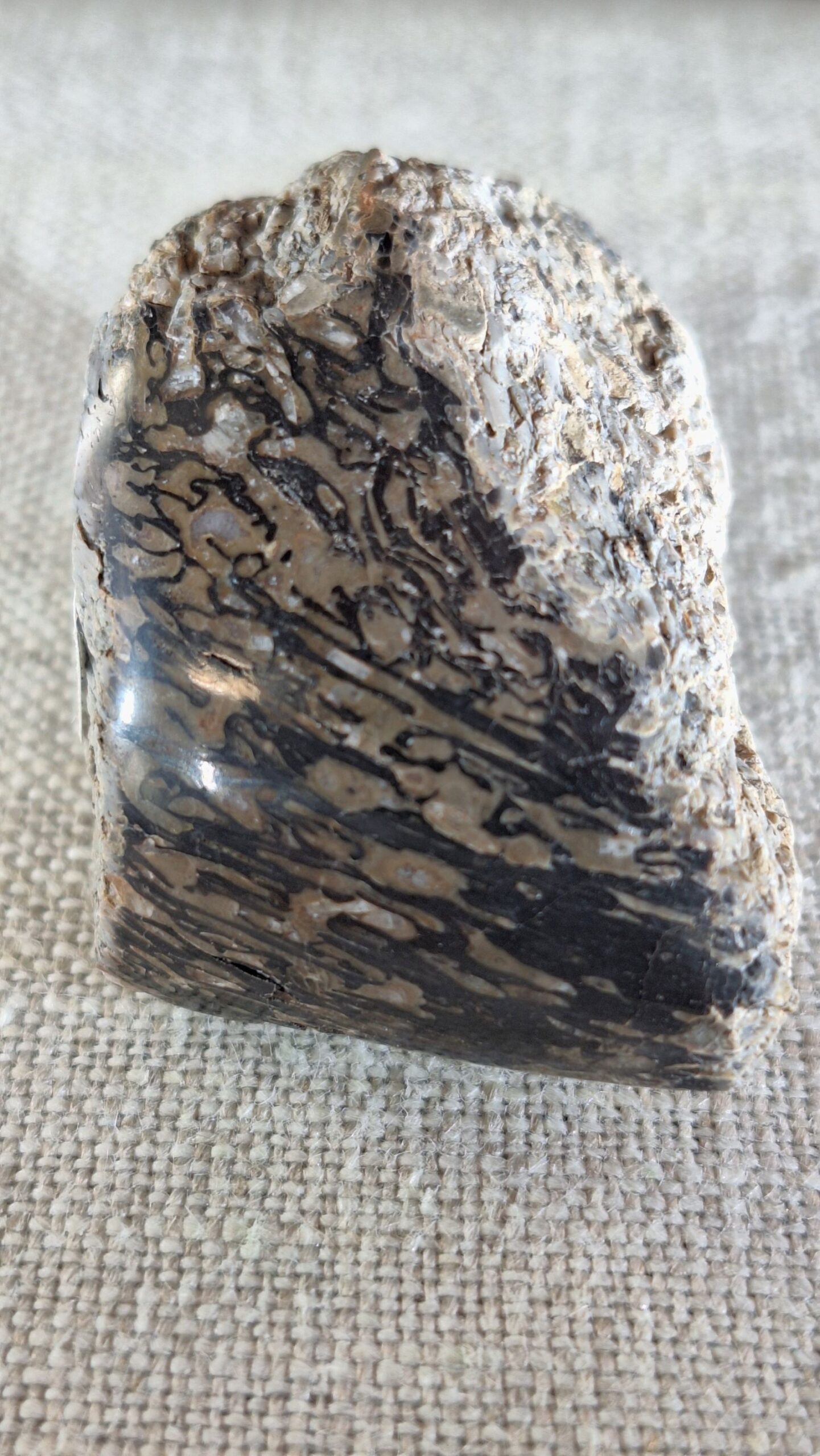
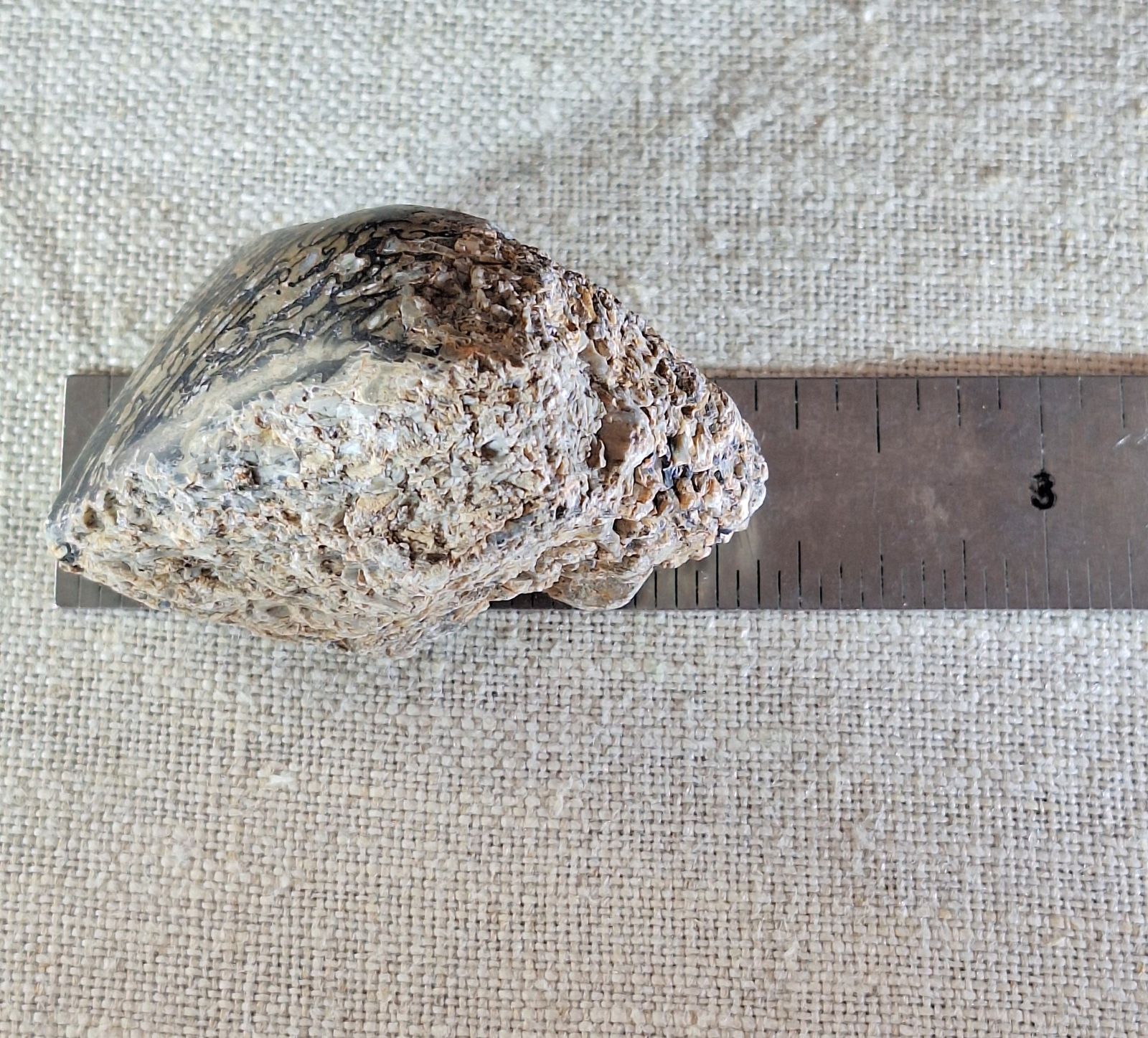
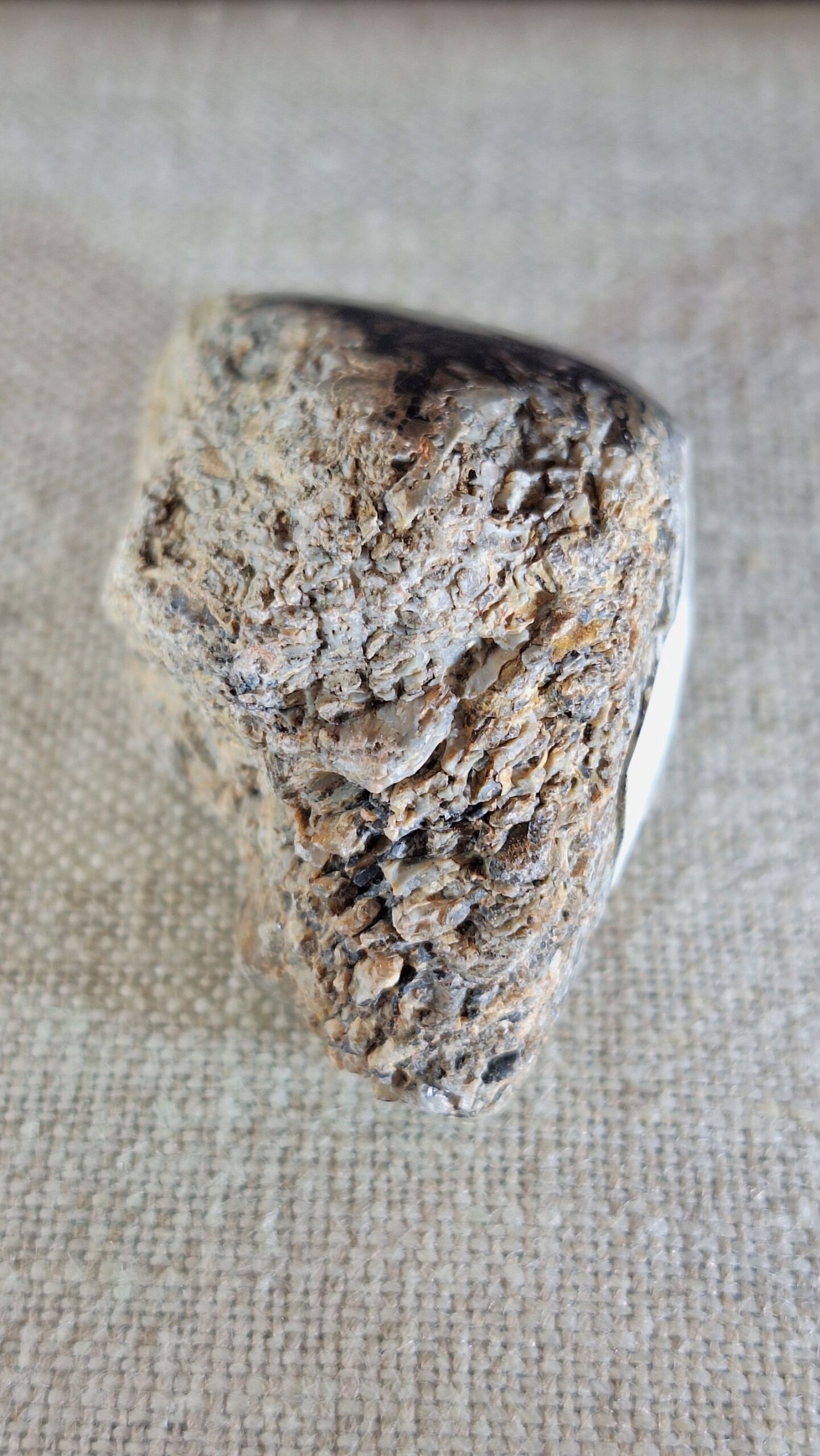
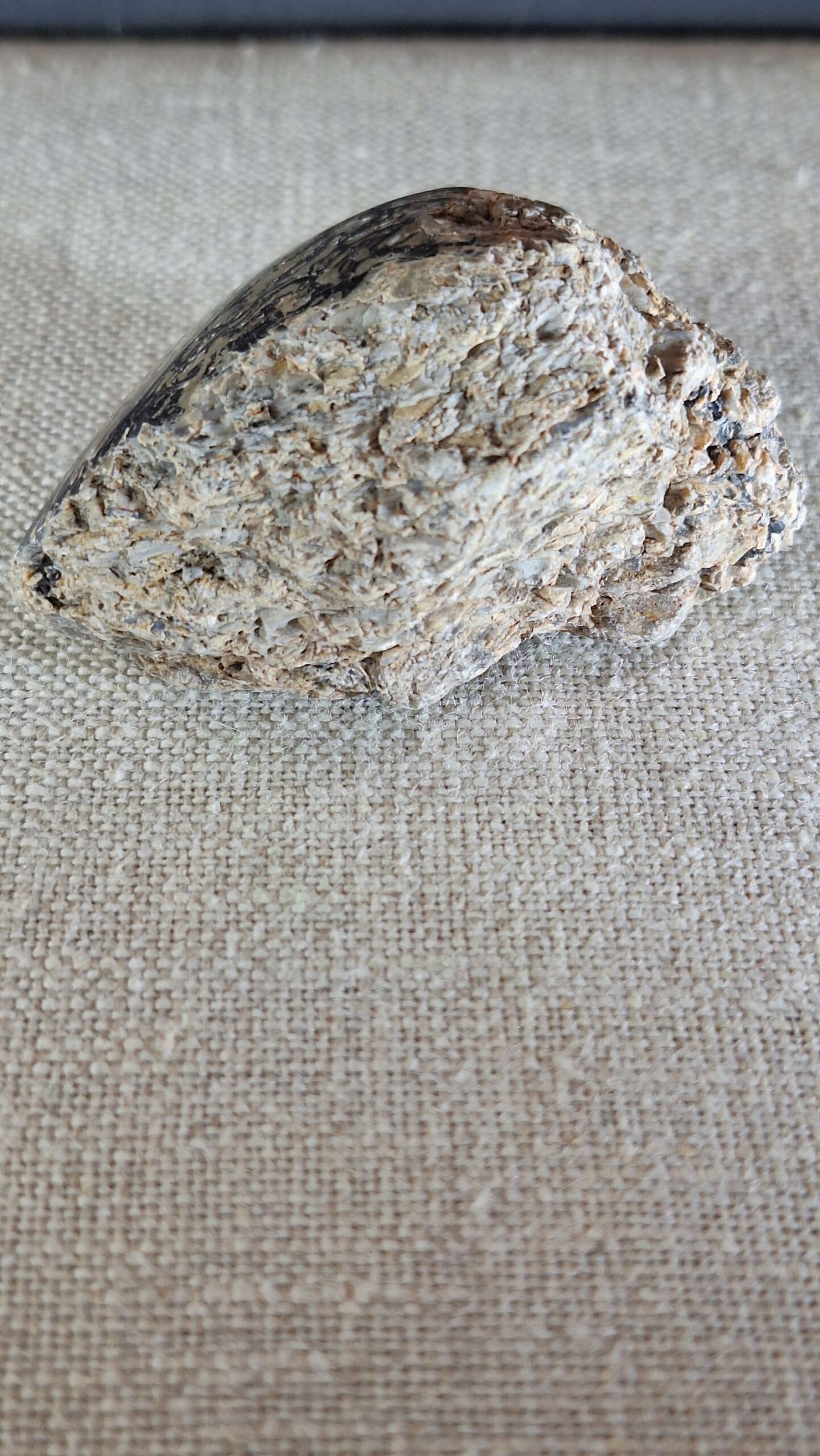
One face has been carefully polished to reveal an intricate network of dark, branching patterns surrounded by contrasting tan and earthy mineral colors. The remaining surfaces retain their natural, rough texture, creating a fascinating comparison between the fossil’s exterior and its preserved interior.
Measuring approximately 2″ × 1″ × 0.75″, this one-of-a-kind specimen offers a tangible connection to the dinosaurs that once inhabited the American West.
What Makes Polished Dinosaur Bone So Fascinating?
A dinosaur bone fossil is more than a rock shaped like a bone. Under favorable conditions, the microscopic structure of the original bone can survive the fossilization process, even as minerals gradually fill its internal spaces.
When the fossil is cut and polished, those preserved structures may become visible as intricate networks of cells, channels, and contrasting mineral patterns.
That is what makes this Utah specimen especially interesting. Its polished surface reveals a complex natural design that would be difficult to appreciate on an entirely rough piece.
Unlike a decorative stone with a random pattern, this fossil preserves evidence of an animal that lived in the distant past.
How Does Dinosaur Bone Become Fossilized?
Fossilization begins when a dinosaur’s remains are buried beneath sediment, often in an ancient river or floodplain environment.
Over long periods, mineral-rich groundwater moves through the buried bone. Minerals accumulate within its pores and other spaces, gradually hardening and preserving its internal architecture. This process is known as permineralization.
Depending on the geological conditions, fossilized bone may contain silica, iron-bearing minerals, calcite, or other mineral deposits. These can contribute to the colors and patterns visible in a polished specimen.
The result is a remarkable natural record: ancient biological structures preserved within mineralized stone.
Utah’s Remarkable Dinosaur Fossil Heritage
Utah is internationally recognized for its dinosaur discoveries. Its fossil-bearing rock formations preserve evidence of prehistoric ecosystems, including the animals, plants, rivers, and floodplains that existed millions of years ago.
Among the state’s most famous dinosaur-bearing deposits is the Morrison Formation, known for Late Jurassic dinosaurs such as Allosaurus, Apatosaurus, and Stegosaurus.
This specimen comes from Utah and represents that broader prehistoric heritage. Its particular dinosaur species and geological formation are not assigned in this listing.
Why Collect a Polished Dinosaur Bone Specimen?
For fossil collectors, the appeal lies in the preserved internal structure. For geology enthusiasts, it provides an excellent example of how mineralization can preserve biological material. And for dinosaur lovers, it is an opportunity to own a genuine fossil rather than a replica.
The combination of polished and natural surfaces makes this specimen especially suitable for:
- A personal fossil or natural history collection
- A small cabinet or tabletop display
- Educational discussions about dinosaurs and fossilization
- A distinctive gift for a dinosaur or geology enthusiast
Its compact size makes it easy to examine up close, where the details of the polished face can be appreciated.
Product Details
- Specimen: Genuine fossilized dinosaur bone
- Locality: Utah, USA
- Dimensions: Approximately 2″ × 1″ × 0.75″
- Finish: One polished face; remaining surfaces natural and rough
- Color: Contrasting dark and tan fossil patterns with earthy tones
- Shape: Natural, irregular fossil fragment
- Quantity: One individual specimen
- Display appeal: Visible internal bone structure on the polished surface
Caring for Your Fossil
Handle your dinosaur bone specimen with care and avoid dropping it onto hard surfaces. Clean gently with a dry, soft brush or cloth. Avoid acidic cleaners, prolonged soaking, and abrasive materials that could affect the fossil’s surface.
Store or display it where the polished face can be appreciated without exposing the specimen to repeated handling or accidental impacts.
Every fossil tells a story. This Utah dinosaur bone preserves part of that story in the intricate patterns of its ancient structure, offering a remarkable connection between prehistoric life and the geological processes that followed.
Only logged in customers who have purchased this product may leave a review.

Reviews
There are no reviews yet.