Description
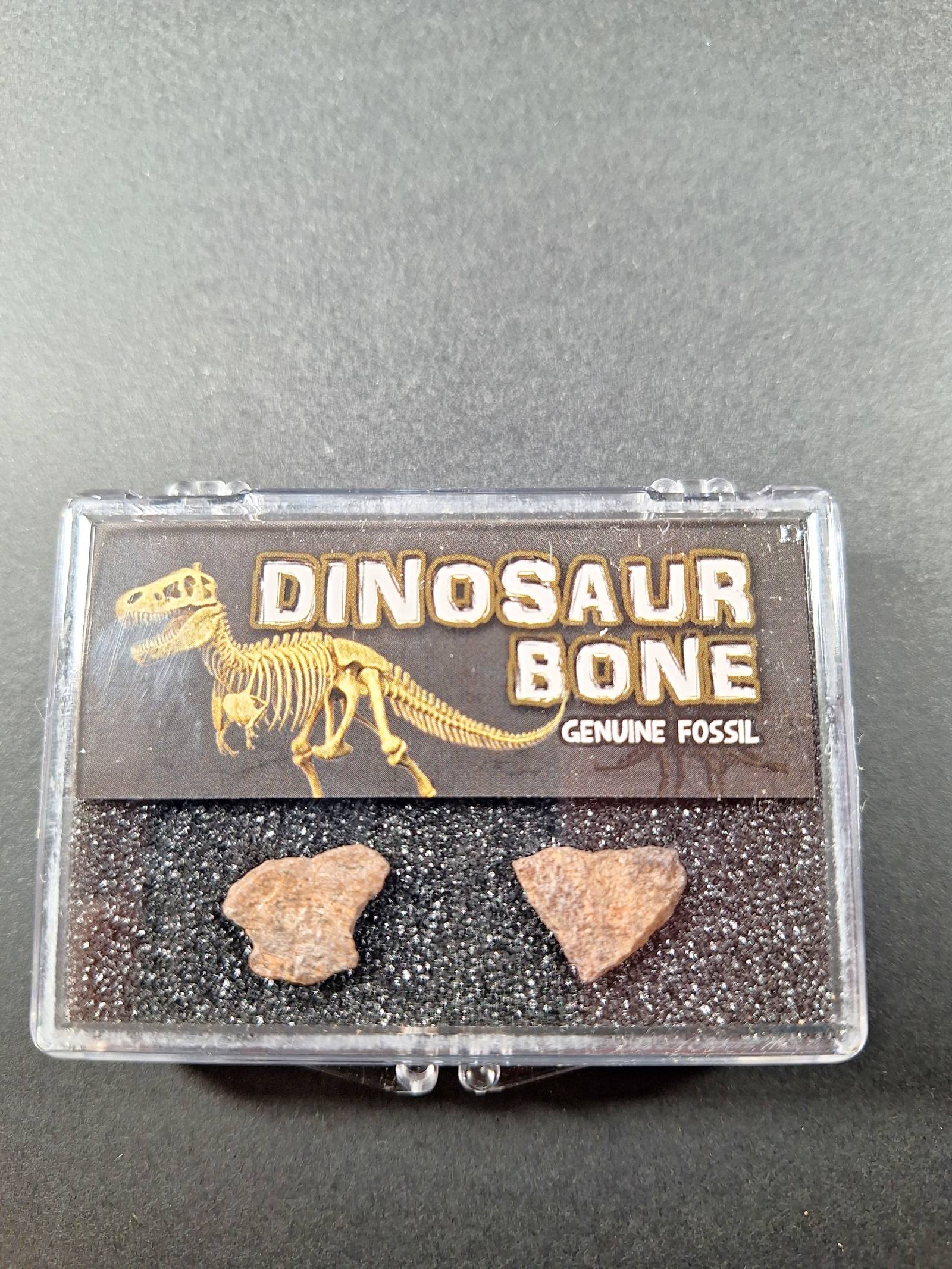
Fossilized Dinosaur Bone Fragment – Prehistoric History in a Display Case
Imagine holding a small piece of the prehistoric world. Fossilized dinosaur bone offers a tangible connection to animals that lived millions of years before humans appeared, preserving evidence of ancient skeletal structures through remarkable geological processes.
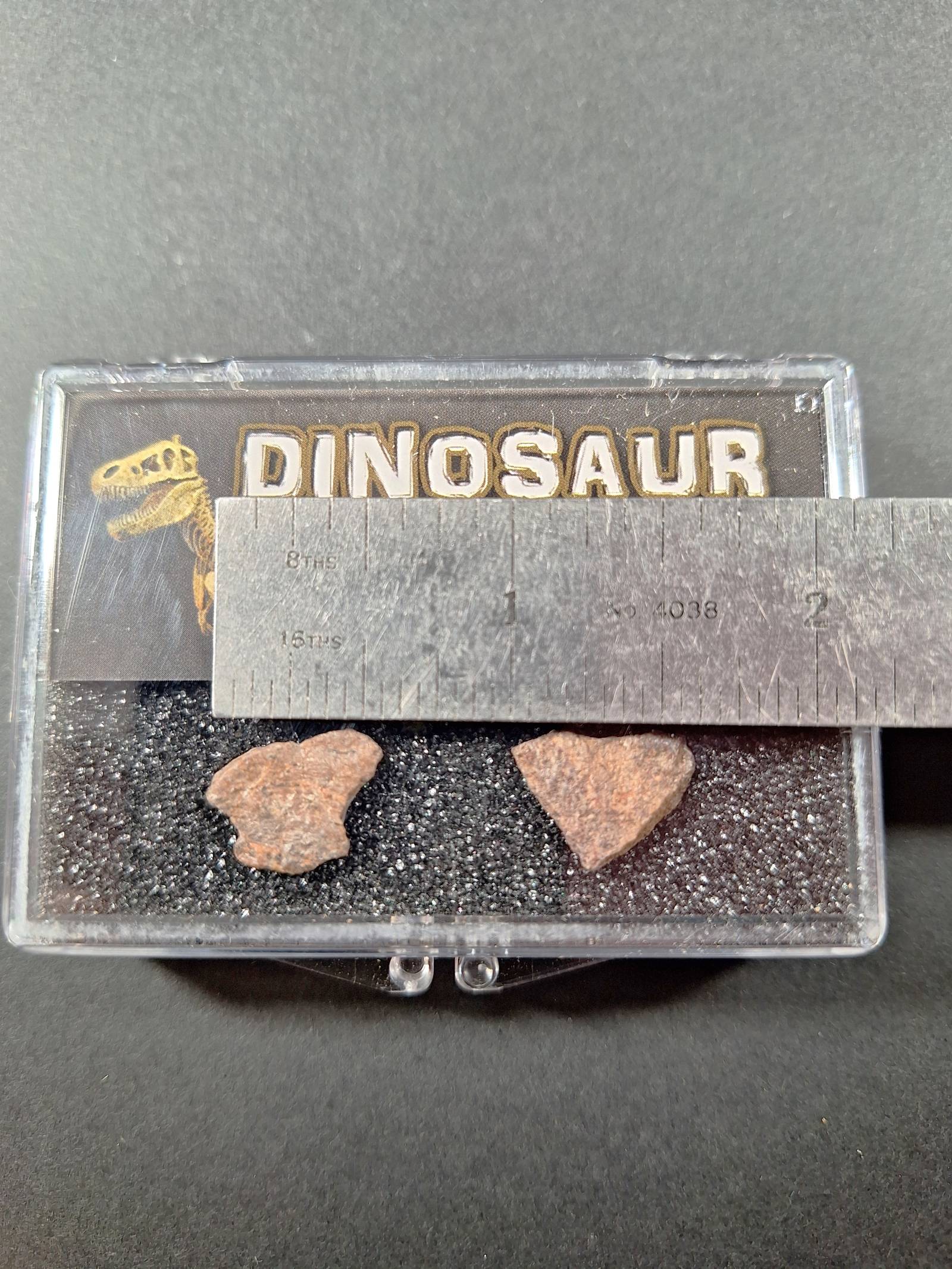
This fossilized dinosaur bone fragment is presented in a protective display case, making it a distinctive addition to a natural history collection. While large dinosaur skeletons often receive the most attention in museums, smaller fossil fragments also help illustrate how ancient remains survive burial, mineralization, and the passage of geological time.
How Dinosaur Bone Becomes Fossilized
When an animal dies, its remains normally break down through biological and environmental processes. Under favorable conditions, however, bones may be buried by sediment before they are completely destroyed.
As groundwater moves through the surrounding sediment, dissolved minerals can enter microscopic spaces within the buried bone. Over time, these minerals may accumulate and harden, helping preserve the bone’s internal structure.
This process is known as permineralization. In other cases, mineral replacement may alter portions of the original skeletal material.
Silica, carbonate minerals, and iron-bearing compounds can contribute to fossil preservation, depending on the geological environment. The exact mineral composition of this individual specimen has not been established.
Why Fossilized Bone Interests Collectors
Fossil bones are examples of body fossils, meaning they preserve parts of ancient organisms rather than traces of their activities.
Scientists examine fossil bones to investigate prehistoric anatomy, growth, movement, and evolutionary relationships. Some fossils preserve internal textures or structures that help distinguish bone from surrounding rock.
Even a small fragment can introduce collectors to the processes involved in fossil preservation. However, identifying a particular dinosaur species generally requires diagnostic features and reliable geological information.
This specimen is offered as a fossilized dinosaur bone fragment without an attribution to a particular genus or species.
Understanding Its Geological History
Dinosaurs lived during the Mesozoic Era, which extended from approximately 252 million to 66 million years ago. Their fossils occur in sedimentary deposits formed in ancient terrestrial environments, including river systems, floodplains, and lake margins.
Over millions of years, burial, mineral-rich groundwater, and geological change can preserve skeletal material in stone.
Because the collection locality and geological formation of this specimen have not been documented, a more precise age or origin cannot be responsibly assigned.
Displaying Your Fossil Specimen
The protective case provides a convenient way to display the fossil while reducing unnecessary handling. It can be incorporated into a cabinet of geological specimens, a fossil collection, or an educational natural history display.
For collectors building a broader understanding of prehistoric life, fossil bone fragments pair well with examples of fossil shells, petrified wood, trace fossils, and other preserved materials.
The case also makes the specimen easier to organize and label as part of a growing collection.
Fossil Care and Preservation
Keep the specimen in its protective case whenever possible to limit dust accumulation and accidental impacts.
Avoid soaking fossil material in water or applying household cleaners. Some fossilized bones contain natural fractures, porous surfaces, or mineral components that may be sensitive to moisture or abrasion.
Store the specimen away from prolonged direct sunlight, excessive humidity, and locations where the case could be knocked over.
A Small Specimen with a Long History
Fossilized dinosaur bone demonstrates how geological processes can preserve evidence of prehistoric animals long after their disappearance.
Whether displayed alongside other fossils or used to introduce someone to paleontology, this specimen provides a fascinating example of the relationship between ancient life and the geological record.
For collectors interested in dinosaurs, fossilization, and natural history, it offers a compact way to explore a much larger prehistoric story.
Only logged in customers who have purchased this product may leave a review.

Reviews
There are no reviews yet.