Description
Golden Fortification Coyamito Agate Half from Chihuahua, Mexico
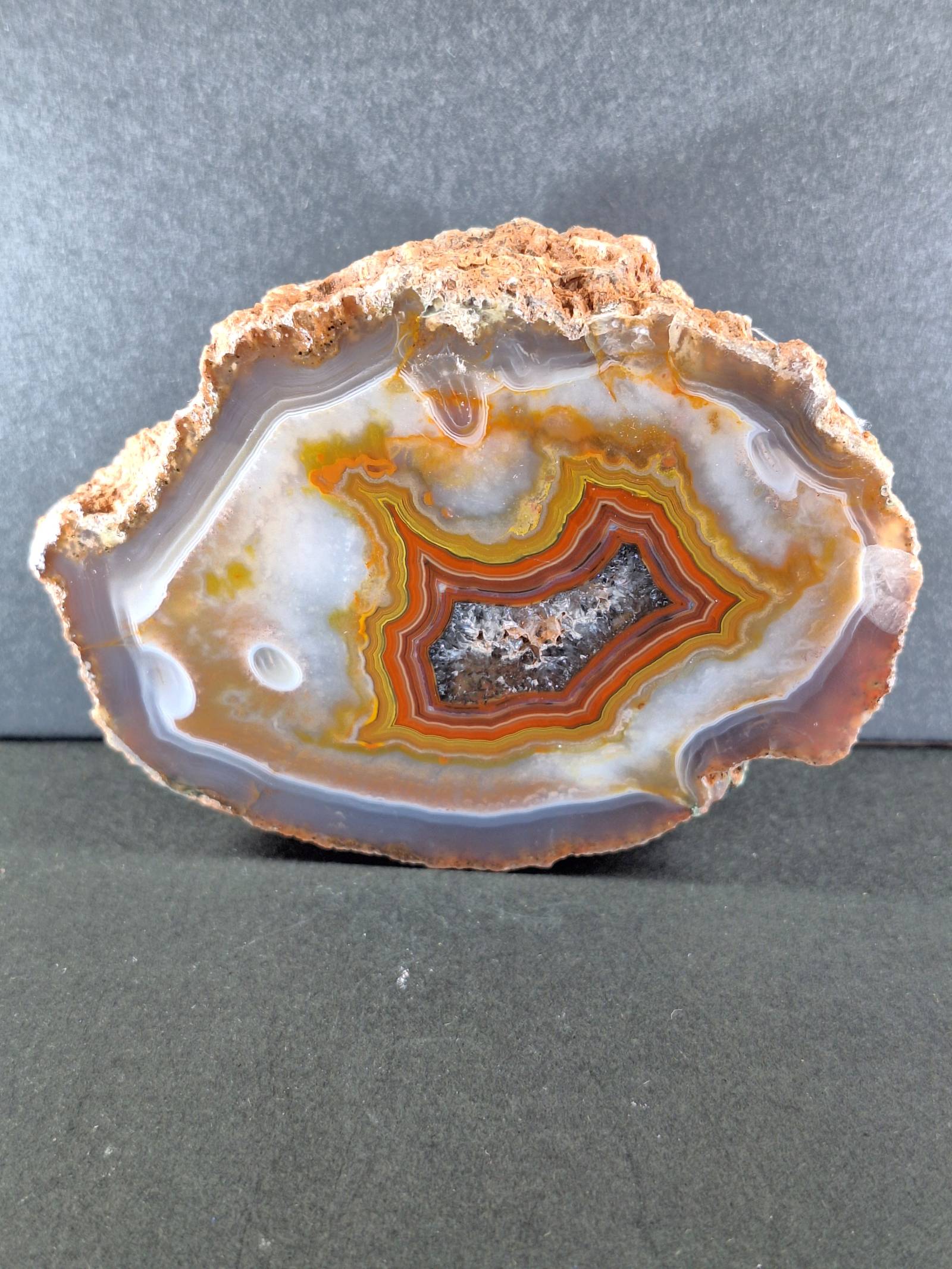
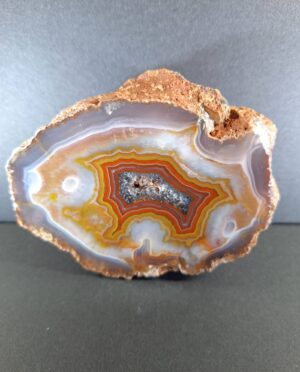
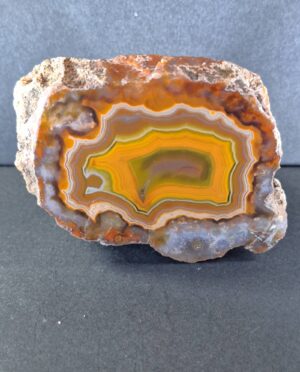
The defining feature of this Coyamito agate half is the arrangement of its golden fortification bands. Rather than forming simple, evenly spaced rings, the yellow and orange chalcedony layers create an intricate pattern that follows the changing contours of the nodule’s interior. Rust-red accents interrupt the warmer golden tones, while a crystal pocket introduces a different texture near the center of the formation.
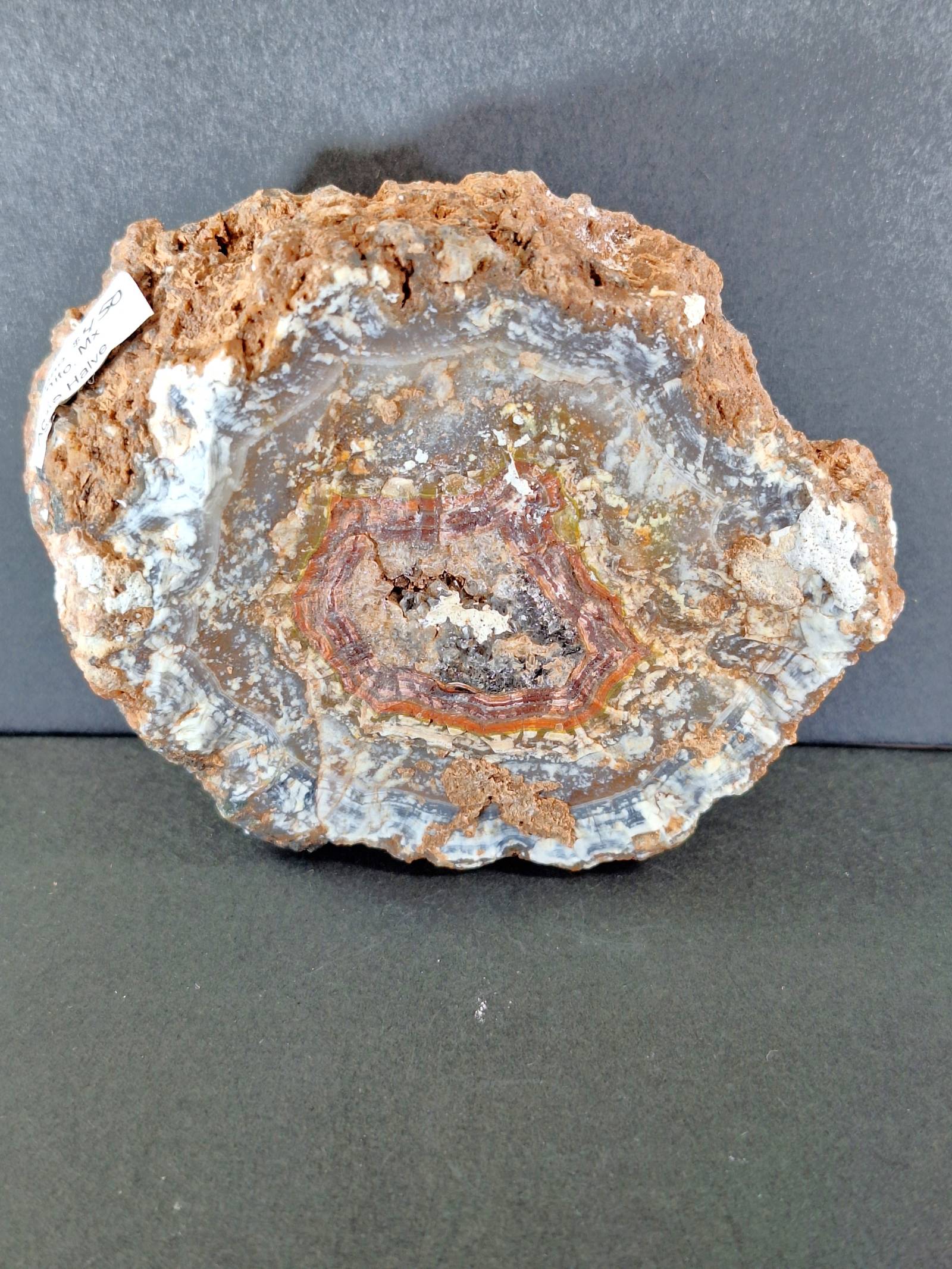
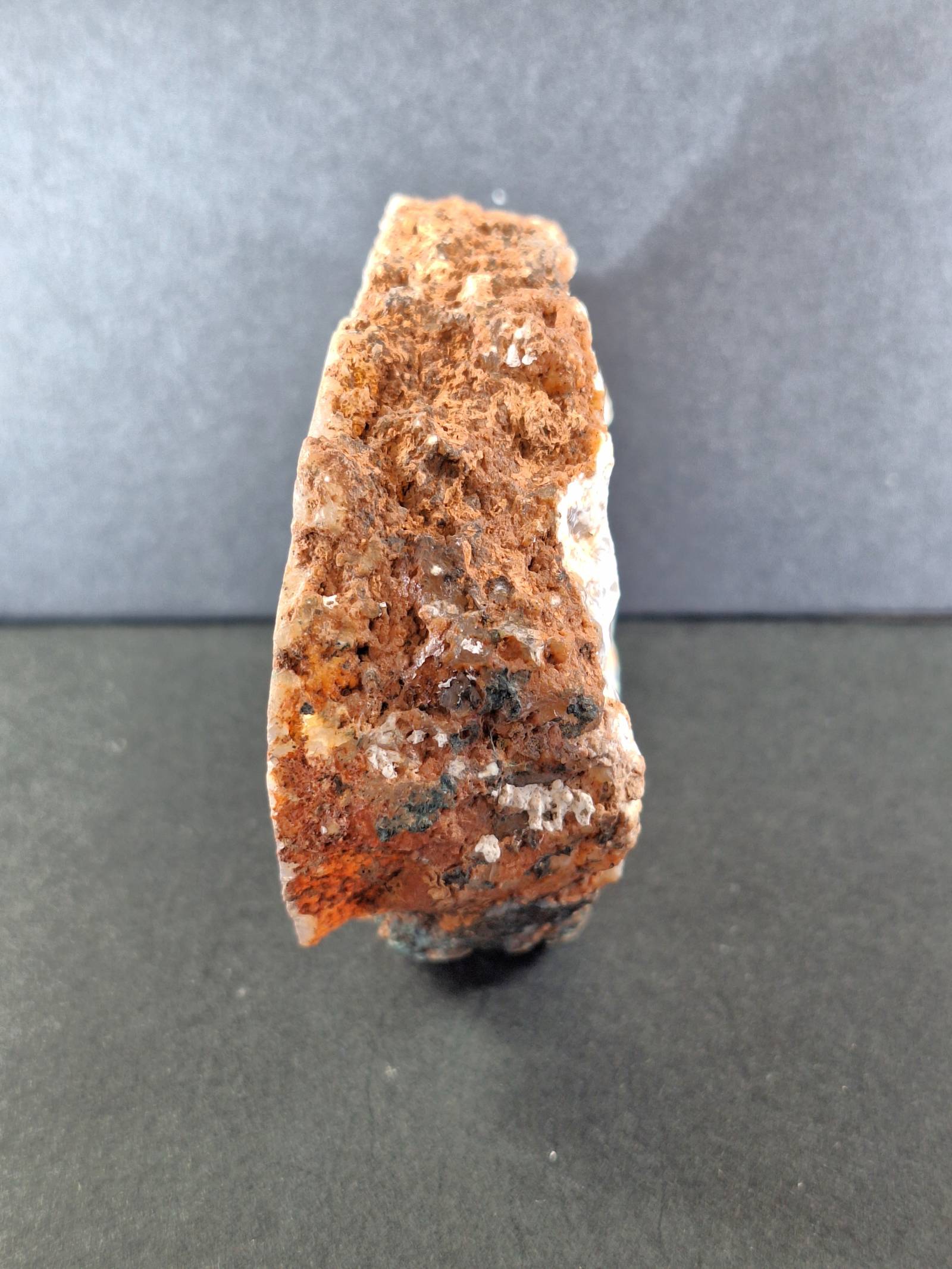
Measuring approximately 3.25 inches across its longest dimension, this individual agate half offers an interesting combination of polished patterning and natural mineral growth. The contrast between its banded face, crystalline opening, and original outer rind makes it especially rewarding to examine under changing light.
The Beauty of Fortification Banding
Fortification agate takes its name from the angular, nested outlines that can resemble the walls of an old fortress when viewed in cross-section. These patterns are not carved or painted into the stone. They developed naturally as successive layers of silica accumulated within a cavity over geological time. In this specimen, the golden bands are the dominant visual feature. Their shifting outlines create a sense of depth and movement, while the crystal pocket provides a contrasting focal point. The polished surface allows the fine banding to be examined closely, making the piece suitable for a mineral cabinet, an agate collection, or a dedicated display of Mexican lapidary material.
Coyamito Agate and the Volcanic Landscape of Chihuahua
Coyamito agate is associated with the Rancho Coyamito area of Chihuahua, Mexico, a locality recognized among collectors for producing colorful and intricately patterned agate nodules.
The agates of northern Chihuahua formed in association with ancient volcanic environments. As silica-bearing fluids moved through cavities in volcanic rock, they deposited chalcedony in successive layers. Variations in the chemistry and conditions of mineral deposition contributed to the distinctive colors and internal structures now visible when the nodules are cut.
Coyamito agates are particularly appreciated for their varied color combinations and fortification patterns. While some examples emphasize red and brown coloration, others display yellow, orange, lavender, or more subdued tones. This specimen’s golden banding provides its own recognizable character within that broader collecting tradition.
Chalcedony, Quartz, and the Crystal Pocket
Agate is composed primarily of chalcedony, a finely crystalline form of silica with the chemical formula SiO₂. Its hardness is generally about 6.5–7 on the Mohs scale.
The dense, finely layered chalcedony surrounding this specimen’s crystal pocket contrasts with the more visibly crystalline material inside the opening. This relationship offers a useful illustration of how silica can develop different textures within the same mineral-filled cavity. The colors in agate can arise from trace impurities and mineral inclusions. Iron-bearing compounds commonly contribute yellow, orange, brown, and reddish tones, although the precise coloring agents in this individual specimen have not been analytically determined.
Traditional Meaning of Golden Agate
In contemporary crystal traditions, golden and yellow-toned agates are often associated with confidence, patience, personal determination, and steady progress. Their layered structures are sometimes interpreted as symbols of gradual growth, resilience, and the passage of time. Some crystal enthusiasts use warm-colored agates during meditation or intention-setting, particularly when focusing on creativity, motivation, or maintaining a sense of balance. These interpretations are traditional spiritual associations rather than scientifically established properties.
Display and Care
The visual interest of this Coyamito agate comes from the relationship between its golden fortification pattern and the central crystal pocket. Positioning the polished face toward a gentle light source can help bring out the contrast between the smooth chalcedony and the crystalline opening. Agate is relatively durable, but its polished surface and crystal pocket should be protected from scratches and impacts. Clean the specimen with a soft cloth or brush, using a little water when necessary, and dry it thoroughly. Avoid abrasive cleaners, harsh chemicals, and sudden temperature changes.
With its intricate golden banding, contrasting crystal pocket, and recognizable Mexican locality, this Coyamito agate half offers a distinctive study in the natural architecture of chalcedony.
Only logged in customers who have purchased this product may leave a review.


Reviews
There are no reviews yet.