Description
Coyamito Agate Half – Amber and Rust Banded Specimen from Mexico
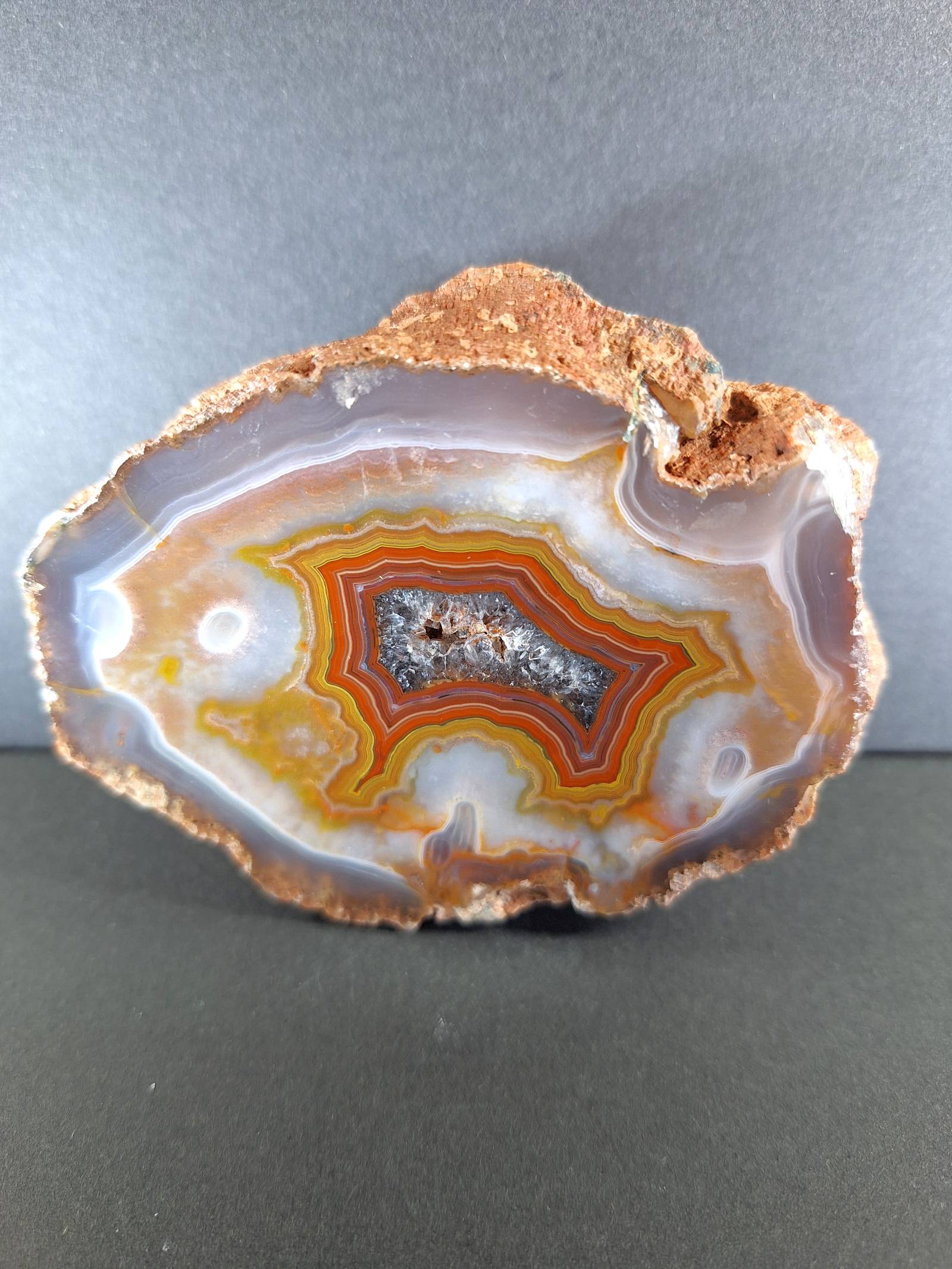
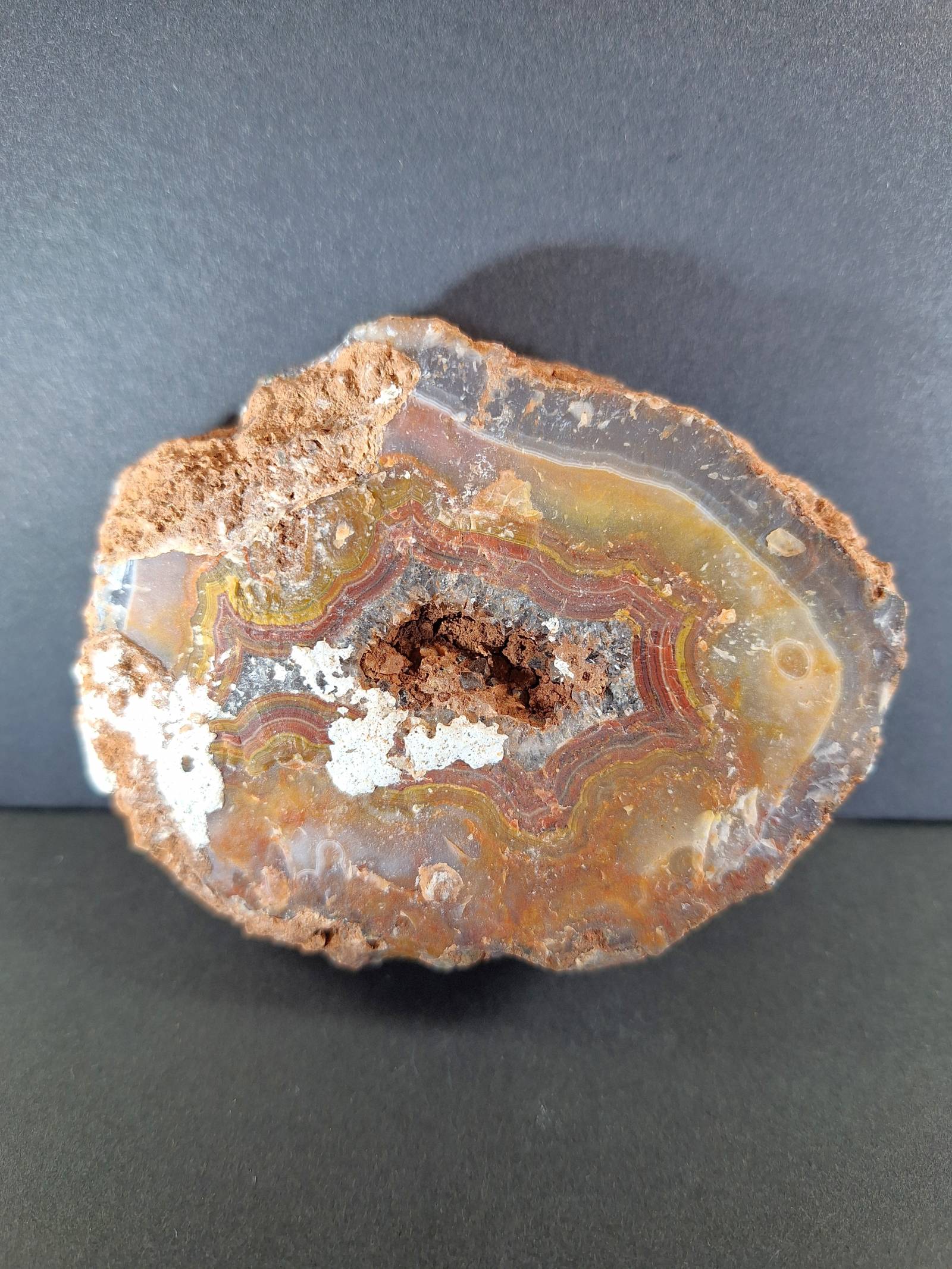
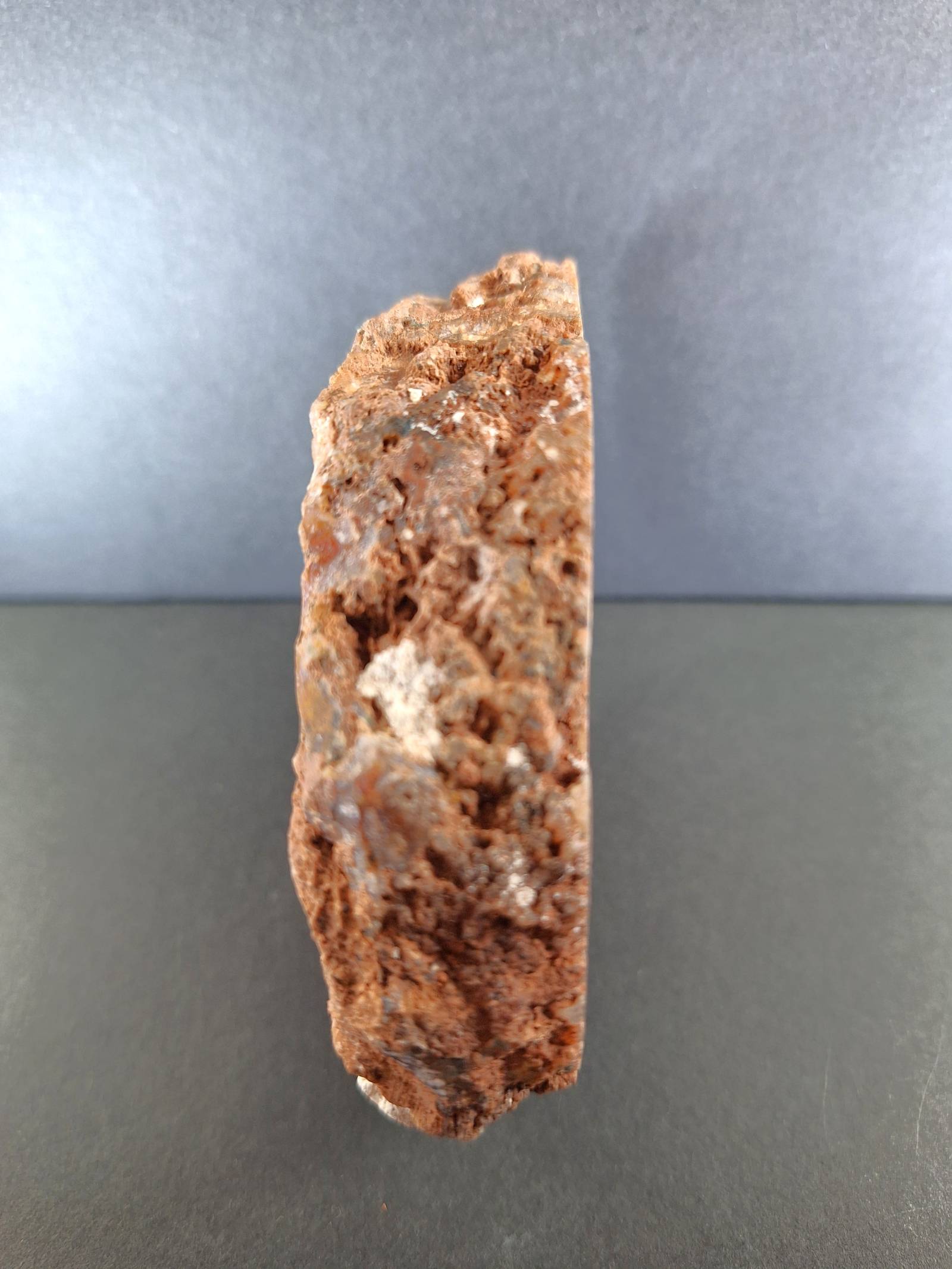
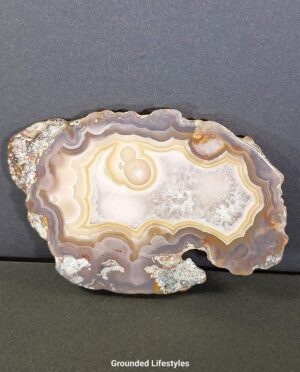
The appeal of this Coyamito agate half begins with its striking contrast of warm colors and intricate natural banding. Golden yellow, amber, orange, and rust-red layers form a series of irregular, nested patterns around a crystalline center. Gray tones add further contrast, while the natural outer rind preserves the character of the original nodule. Cut to reveal its interior, this specimen offers a close look at the mineral growth processes that make each agate unique.
Measuring approximately 3.5 × 2.5 × 1 inches, this Coyamito agate is an attractive example of the colorful banded chalcedony associated with Chihuahua, Mexico. Its combination of patterned agate and a crystalline interior makes it particularly interesting for collectors who enjoy examining the transition between fine-grained chalcedony and more visibly crystalline quartz.
Rancho Coyamito: A Celebrated Mexican Agate Locality
Coyamito agate comes from the Rancho Coyamito area in Chihuahua, northern Mexico, within the Sierra del Gallego region. This locality is well known among agate collectors for colorful nodules displaying red, orange, yellow, lavender, and contrasting bands of chalcedony.
The Rancho Coyamito deposits have attracted collectors and lapidary enthusiasts for decades. Specimens from the area can exhibit elaborate fortification patterns, mineral replacement structures, and distinctive combinations of color. The arrangement and intensity of these features vary considerably from one nodule to another, making individual pieces especially interesting to examine.
This specimen’s amber and rust coloration highlights one of the most recognizable characteristics of Mexican agates: the interplay of earthy colors with sharply defined or gently transitioning bands.
Geological Formation and Mineral Characteristics
Agate is a banded variety of chalcedony, a microcrystalline form of silica with the chemical composition SiO₂. In the Chihuahua agate deposits, silica-rich fluids gradually filled cavities within ancient volcanic rocks. Repeated episodes of silica deposition created the successive layers visible in polished agate nodules.
As conditions changed during mineral formation, variations in trace constituents, crystal growth, and the distribution of impurities contributed to differences in color and texture. Iron-bearing materials commonly contribute to the red, orange, and yellow coloration seen in many agates.
The layered structure of this specimen is an example of fortification banding, named for the angular or nested patterns that can resemble the outlines of a fortress. Its crystalline center provides an additional contrast between the surrounding chalcedony bands and more visibly crystalline silica.
Agate has a Mohs hardness of approximately 6.5–7, making it durable enough for careful handling and display while still susceptible to chipping from impacts.
Traditional Symbolism of Coyamito Agate
In contemporary crystal traditions, agate is associated with grounding, stability, patience, and balance. Its gradual, layered formation is often interpreted symbolically as a reminder that meaningful growth takes time.
Warm-toned agates, including those with amber, orange, and red coloration, are frequently associated with creativity, confidence, and personal motivation. Some crystal enthusiasts incorporate these stones into meditation or intention-setting practices, appreciating their natural patterns as visual focal points. These associations belong to spiritual and cultural traditions rather than scientifically demonstrated effects.
Care and Display
Display this Coyamito agate with its patterned face visible and protected from accidental knocks. Its natural outer rind and crystalline center provide contrasting textures, so careful positioning under soft lighting can help reveal the depth of its banding. Remove loose dust with a soft, dry brush or microfiber cloth. For more thorough cleaning, use a slightly damp cloth and dry the specimen carefully, particularly around the crystalline opening. Avoid harsh chemicals, abrasive cleaning materials, and sudden temperature changes.
This individual Coyamito agate half combines the visual appeal of polished banded chalcedony with the geological interest of one of Mexico’s celebrated agate-producing regions. Its warm coloration, natural rind, and crystalline center make it a distinctive example of northern Chihuahua’s agate-forming history.
Only logged in customers who have purchased this product may leave a review.

Reviews
There are no reviews yet.