Description
The Specimen
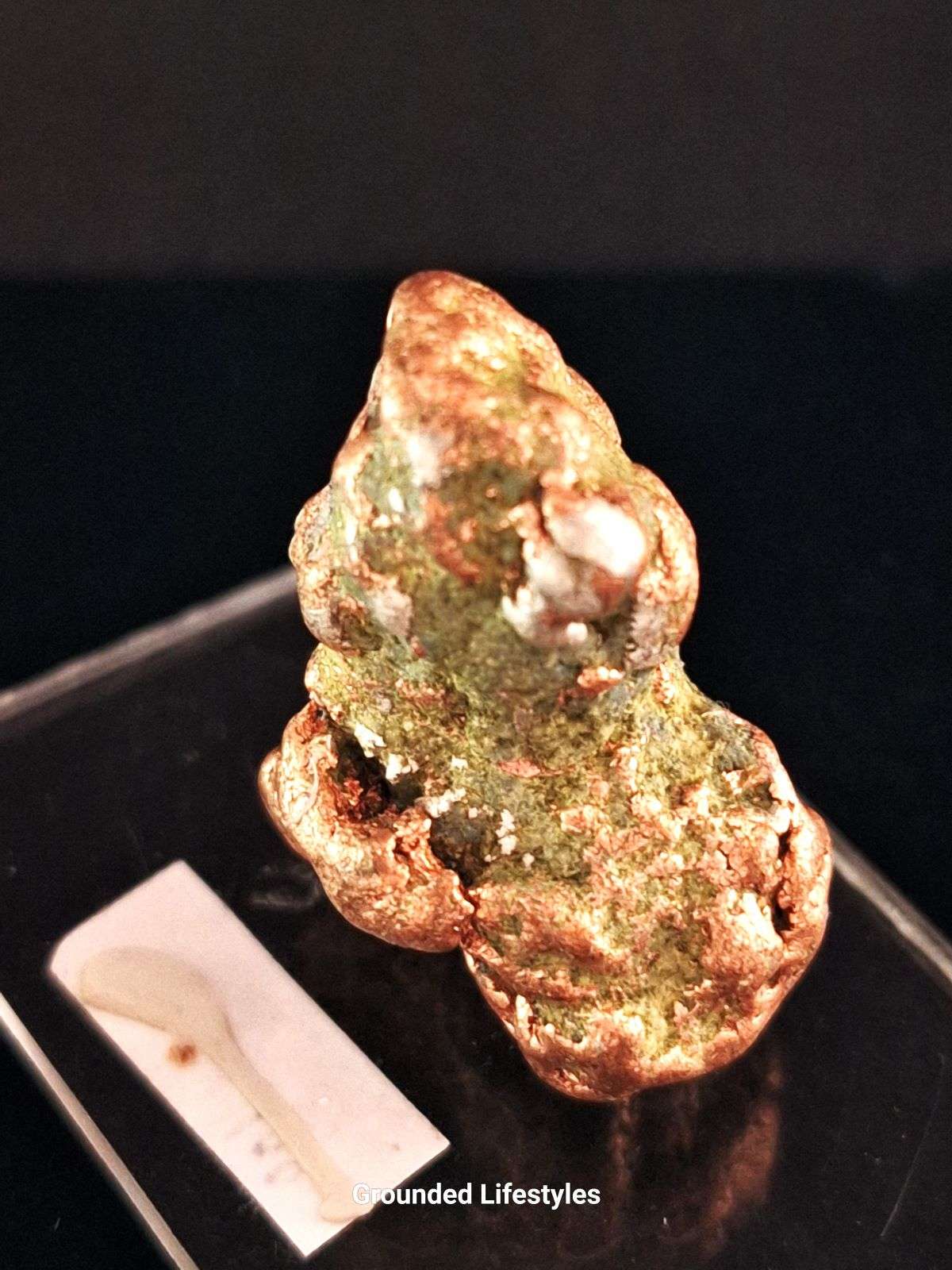
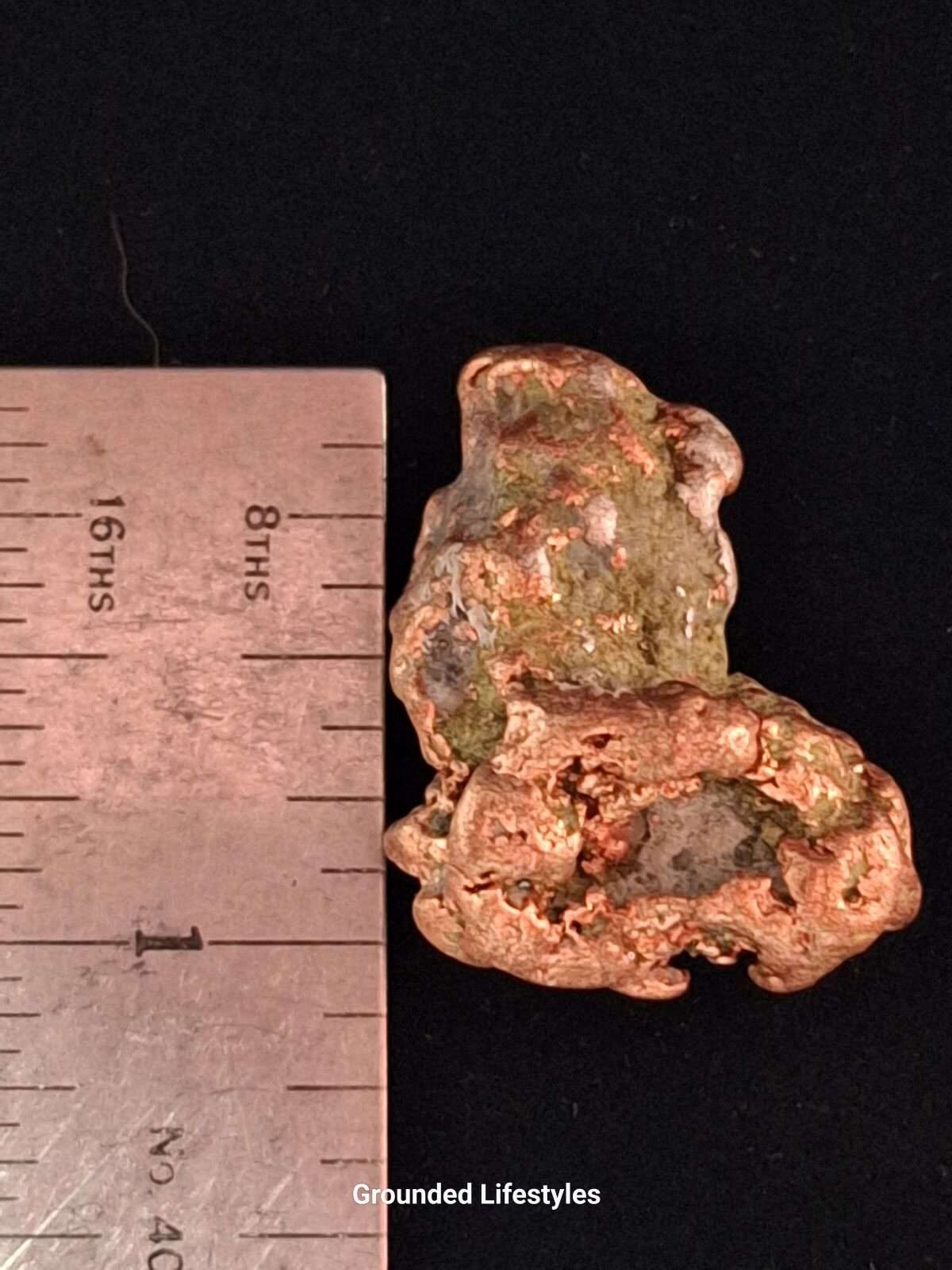
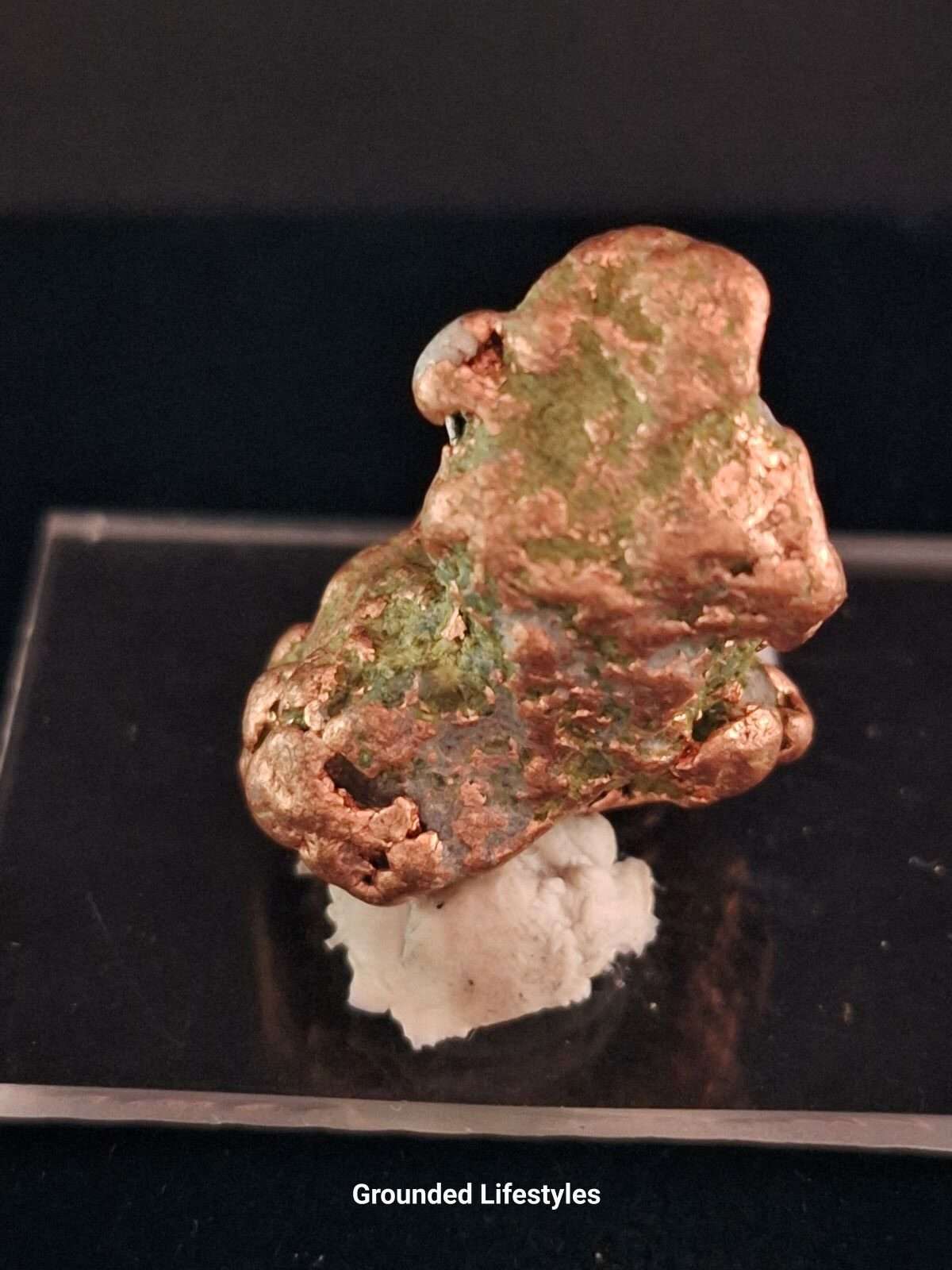
This half-breed measures roughly 1.25 inches long and about 1 inch high, and it brings two native metals together in one piece. The warm, reddish tone of native copper sits beside the paler, silvery tone of native silver, and the contrast is the reason collectors seek these specimens out. It is compact, easy to display, and unmistakably from one of the world’s most famous mineral districts.
What a Half-Breed Is
In the Lake Superior copper district, collectors use the term half-breed for a specimen in which native silver and native copper are intergrown. Silver can appear as small, branching, tree-like crystals on or within the copper, and in the best pieces both metals are plainly visible to the eye. The Keweenaw Peninsula is the classic locality for these pieces.
Why They Are Uncommon
Native copper dominates the Keweenaw by an enormous margin. The district produced roughly 15 billion pounds of copper between 1845 and 1996, but silver made up only about 0.1 percent of production, roughly 11 million pounds. That scarcity is why specimens that show both metals together are valued well above plain copper.
Geology and Formation
Native copper and silver in the Keweenaw formed about 1.06 billion years ago, long after the Midcontinent Rift began to open North America about 1.1 billion years ago. Hot, mineral-rich fluids moved through the permeable tops of ancient basalt lava flows and through conglomerates, and because those fluids are thought to have carried very little sulfur, the metals precipitated as native elements rather than as sulfide ores. Copper (Cu) and silver (Ag) both crystallize in the isometric system. Copper has a Mohs hardness of about 2.5 to 3, and silver is similar.
Collecting Notes
Half-breeds are among the most recognizable specimens from the Lake Superior copper district, and they pair naturally with other Keweenaw material such as native copper, mohawkite, and copper firebrick in a regional collection. Because the proportions of the two metals differ from piece to piece, every half-breed has its own character. This one is small enough for a thumbnail-sized display yet clear enough to show the pairing of metals at a glance.
Metaphysical Traditions
Copper is traditionally associated with warmth, vitality, and the flow of energy, while silver is associated with clarity, reflection, and calm. A half-breed is often admired as a symbol of balance between two complementary forces, and some people keep one as a touchstone for harmony. These meanings are traditional and personal symbolism, not scientifically demonstrated effects.
Care and Display
Handle the specimen by its edges and keep it dry. Silver tarnishes to gray or black in air that contains sulfur, and copper develops brown or green films, so avoid chemical dips, ultrasonic cleaners, and abrasives, which damage natural surfaces. A soft brush or dry cloth is enough. A closed display case or box slows tarnishing.
Dimensions
Length: roughly 1.25 inches. Height: about 1 inch. Locality: Keweenaw Peninsula, Michigan.
Why collectors seek half-breeds: The term refers to naturally associated native copper and native silver, which remain separate elemental metals rather than a cast alloy. The contrasting colors help reveal this unusual mineral association in a compact specimen.