Description
Donald Wininger Collection Provenance
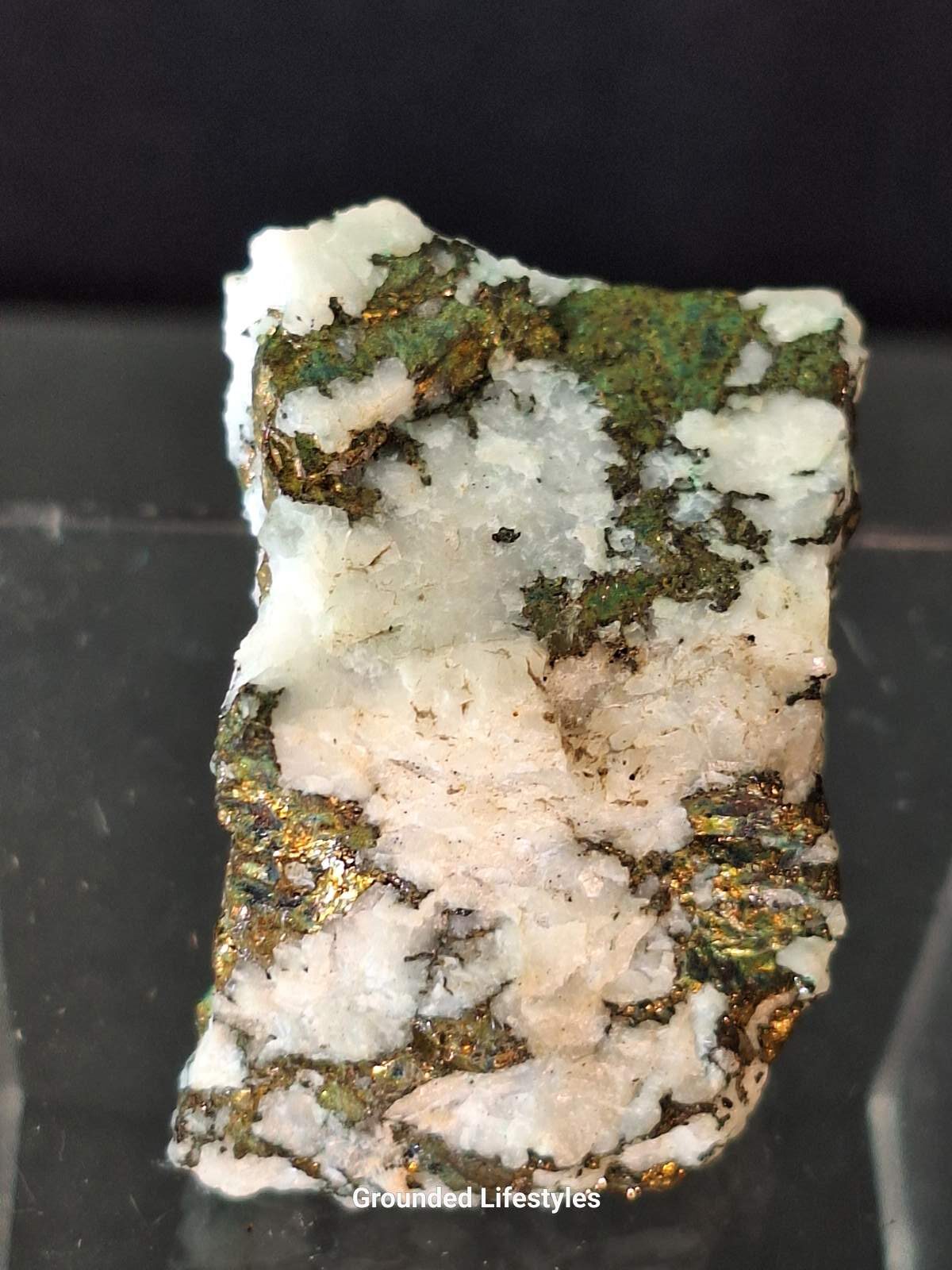
This exceptional Mohawkite specimen comes from the Donald Wininger Collection, representing material collected during the 1950s, an era many collectors consider the golden age of American mineral collecting. Specimens from this period often originated directly from producing mines that have long since closed or become inaccessible.
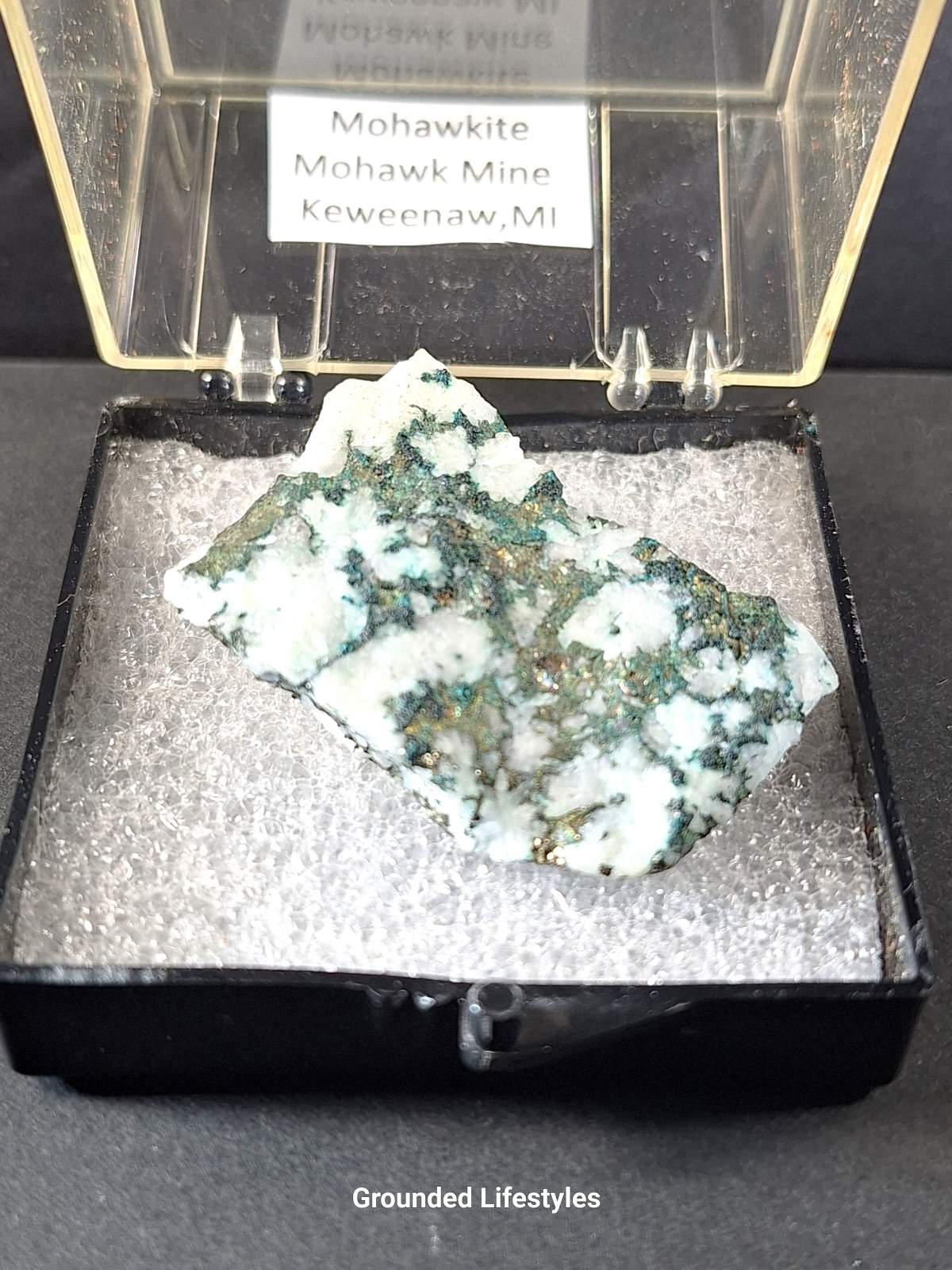
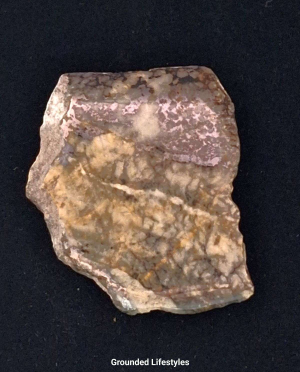
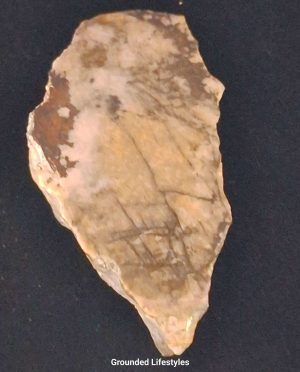
The specimen measures 1.50 inches long, 0.50 inches wide, and 1 inch high and is professionally housed in a 2.25-inch Perky display box, making it ideal for mineral cabinets, historical collections, educational exhibits, or gifts for serious collectors of classic American localities.
Geological Background
Mohawkite is one of the most famous metallic ores discovered on Michigan’s Keweenaw Peninsula. Originally described as a new mineral after its discovery in 1900 at the Mohawk Mine, later scientific research demonstrated that it is actually an intimate natural mixture of several copper and nickel arsenide minerals, primarily algodonite, domeykite, and arsenic-rich copper, rather than a single mineral species. Despite this reclassification, the historic name Mohawkite remains widely used by collectors because of its importance and distinctive appearance.
The Mohawk Mine became the type locality for Mohawkite and remains the world’s most famous source. Rich ore zones developed within the ancient volcanic rocks of Michigan’s Keweenaw Rift, where copper-bearing hydrothermal fluids deposited native copper together with uncommon arsenide minerals inside fissures and fractures over one billion years ago.
Scientific Classification
| Property |
Value |
| Material |
Mohawkite (historic mining name) |
| Classification |
Natural mixture of copper-nickel arsenides |
| Primary Components |
Algodonite, Domeykite, Arsenic-rich Copper |
| Metal Content |
Copper, Nickel, Arsenic with minor Cobalt and Silver |
| Mohs Hardness |
3–3.5 |
| Luster |
Metallic |
| Locality |
Mohawk Mine, Keweenaw County, Michigan, USA |
| Collection Era |
1950s |
History & Mining Heritage
The Mohawk Mine was one of the premier producers within Michigan’s historic Copper Country during the early twentieth century. When Mohawkite was discovered in 1900, it generated tremendous excitement because it appeared to represent an entirely new mineral species. Although later research refined its scientific classification, specimens from the original Mohawk Mine remain highly sought after due to their rarity and historical significance.
Vintage examples from the 1950s are especially desirable because they were collected while classic Keweenaw mining operations were still active or shortly after production ceased. Provenance from an established collection such as the Donald Wininger Collection further enhances the specimen’s historical value.
Metaphysical Properties
Traditional crystal symbolism associates Mohawkite with:
- Personal resilience, inspired by its formation under intense geological conditions.
- Transformation and adaptability, reflecting its complex mixture of several naturally occurring minerals.
- Grounded determination, symbolized by its dense metallic composition.
- Strength through history, honoring both the Earth’s ancient geological processes and the generations of miners who uncovered these remarkable ores.
These interpretations arise from traditional metaphysical practices and symbolic associations rather than scientific or medical evidence.
Aesthetic & Collector Evaluation
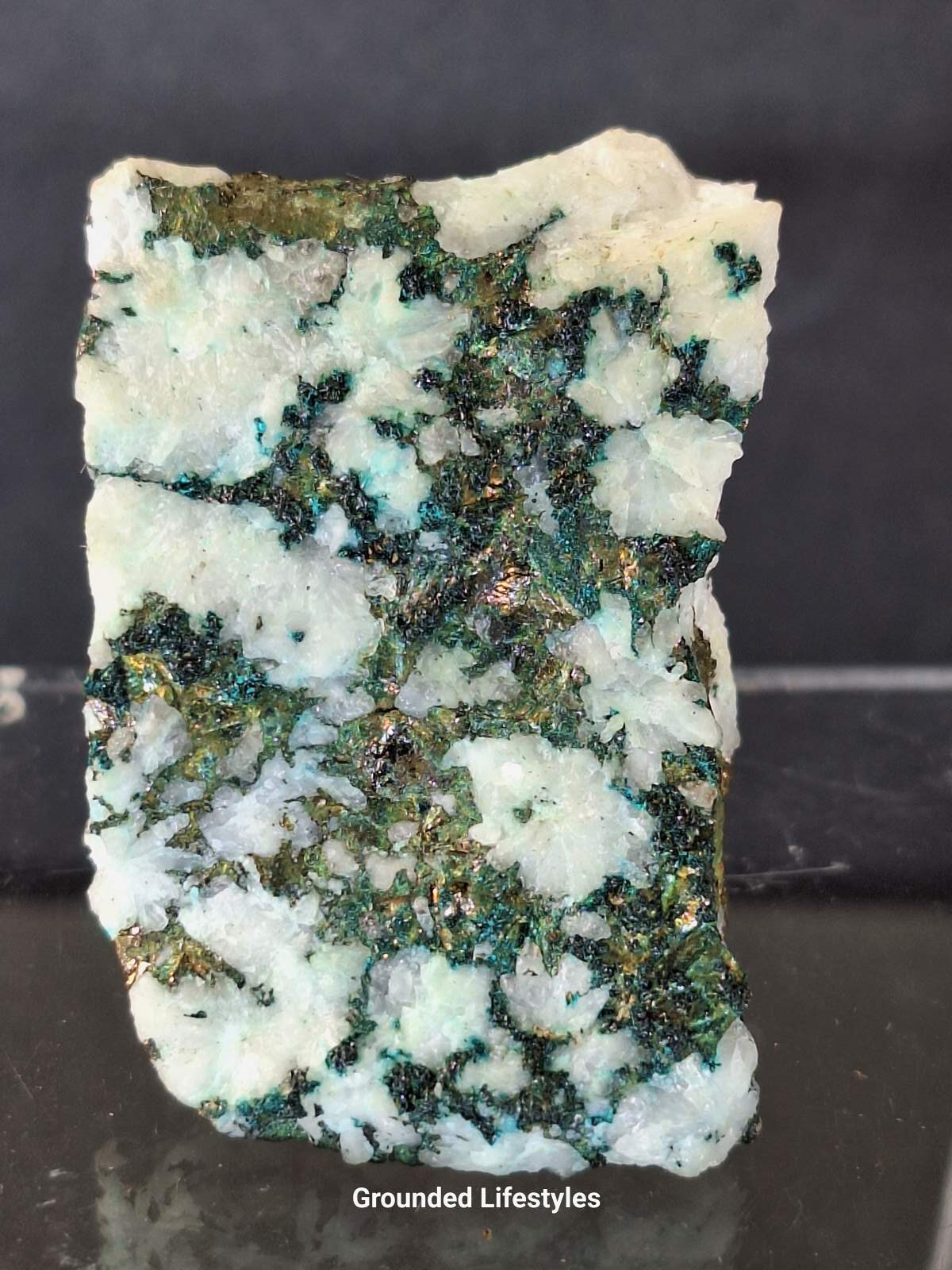
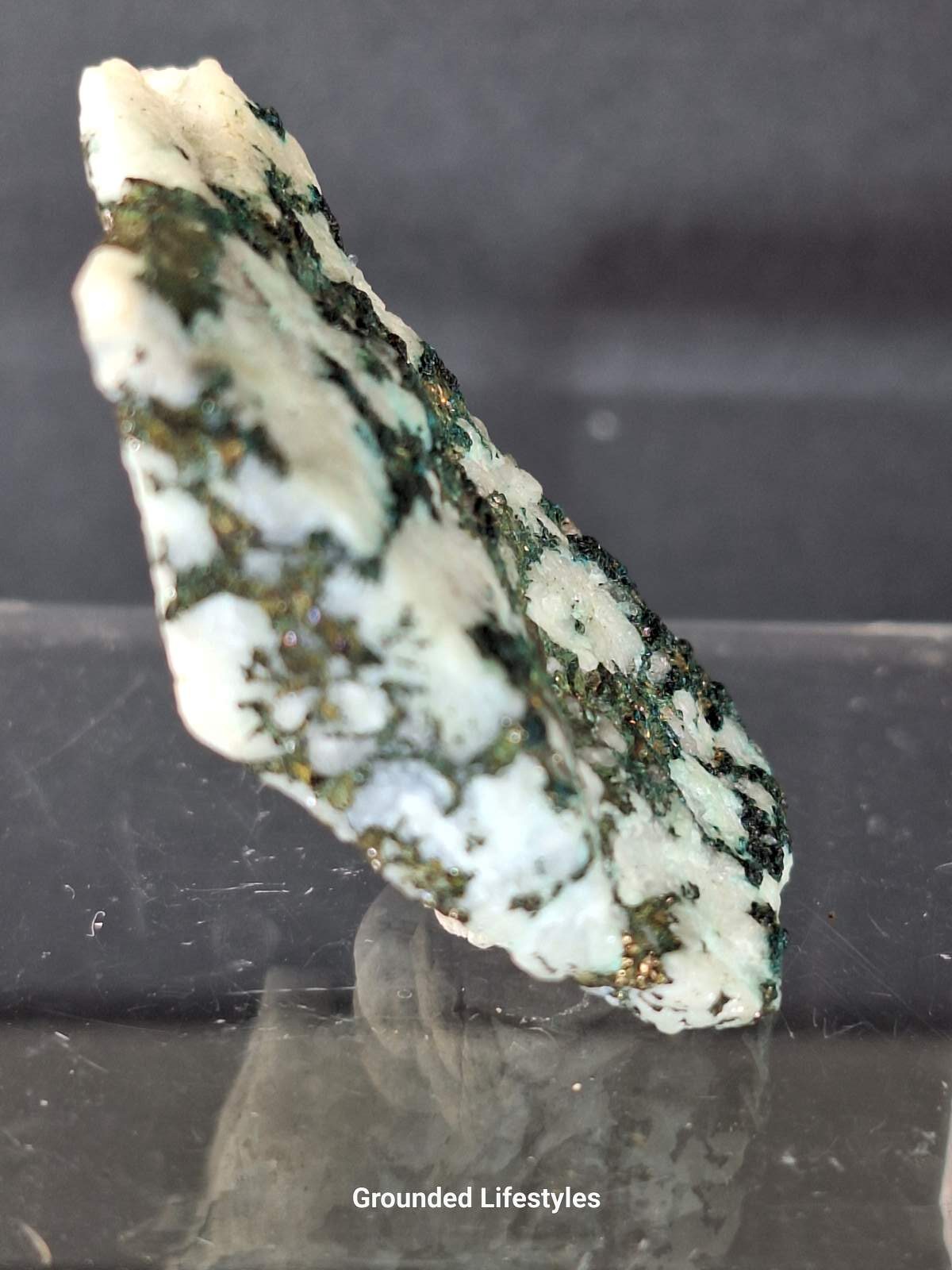
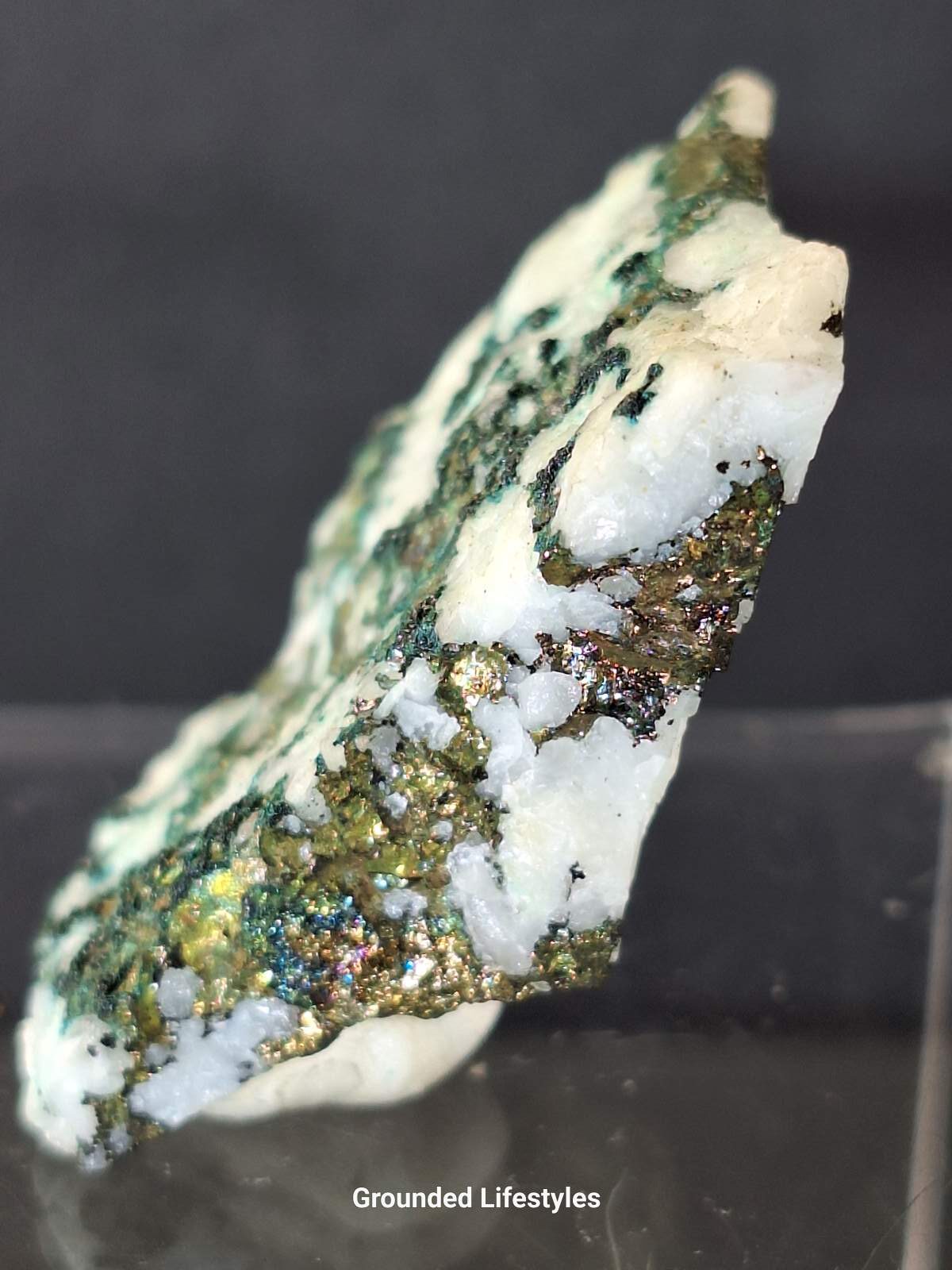
This specimen displays the metallic character that has made Mohawkite famous among collectors for more than a century. Depending on the composition and oxidation, Mohawkite can exhibit silvery-gray, brassy gold, bronze, or iridescent blue and green surface colors. The contrast between metallic arsenide minerals and any associated quartz matrix makes specimens from the Mohawk Mine immediately recognizable to experienced collectors.
Its compact size and protective Perky box make it ideal for display while preserving its historic integrity. For collectors specializing in Michigan Copper Country minerals, classic American localities, or historic mining specimens, Mohawkite remains one of the signature minerals of the Keweenaw Peninsula.
Care & Handling
Mohawkite naturally contains arsenide minerals. Although cabinet specimens are safe to display, it is good practice to wash your hands after handling the specimen directly and avoid creating dust through cutting or grinding. Keep the specimen dry and store it in its included Perky box to protect both the specimen and its historic provenance.