
Agates are banded varieties of chalcedony — a microcrystalline form of quartz (SiO₂) — formed when silica-rich fluids gradually fill natural cavities in rock over immense spans of geological time. These rhythmic deposits create the flowing bands, fortification patterns, plumes, mossy inclusions, and eye structures that make agates some of the most visually diverse stones on Earth.
Unlike macrocrystalline quartz, agates form from microscopic fibrous crystals, producing a dense, durable stone prized for both collecting and lapidary work. When polished, agate displays a waxy-to-vitreous luster and reveals internal depth that often remains hidden in rough form. Each band represents a distinct chemical or environmental shift during formation — making every agate a natural geological record.
At Grounded Lifestyles, our agate collection is hand-selected from historic localities worldwide. We curate for pattern sharpness, symmetry, color contrast, translucency, and provenance. Whether you’re seeking classic fortification agates, moss and plume varieties, fire agates with natural iridescence, or display-ready slabs and carvings, each piece is chosen for authenticity and visual integrity.
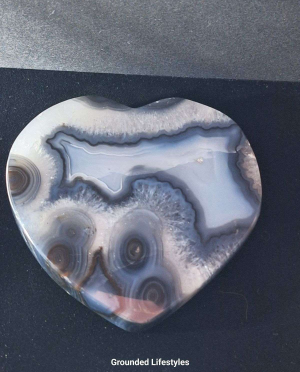
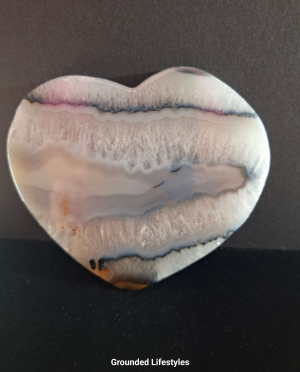
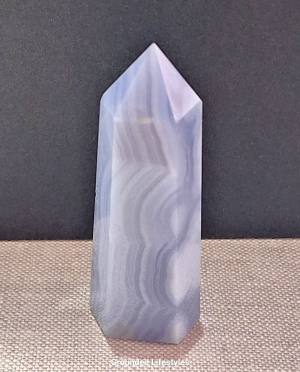
All agates offered here are individually photographed. You receive the exact specimen shown — never a stock substitute. Any treatments, such as dying or heat enhancement, are clearly disclosed so collectors can make informed decisions.
Quick Facts:
Mineral Class: Chalcedony (cryptocrystalline quartz)
Chemical Formula: SiO₂
Hardness: ~6.5–7 (Mohs)
Transparency: Translucent to opaque
Common Forms: Nodules, slices, points, carvings, jewelry
Typical Environments: Volcanic vesicles, hydrothermal veins, sedimentary voids
Common Treatments: Dying and heat (always disclosed)
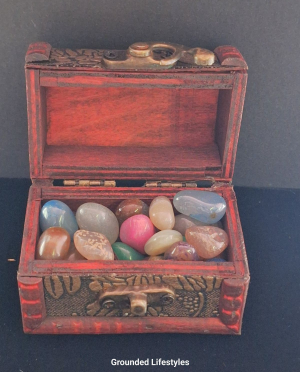
All products below are individually selected. You receive the exact stone or lot shown.
Showing 1–16 of 19 results
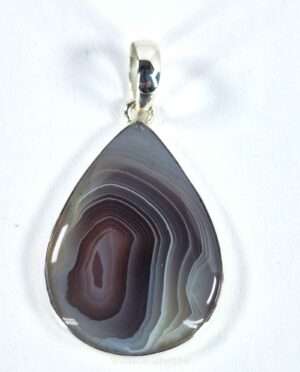
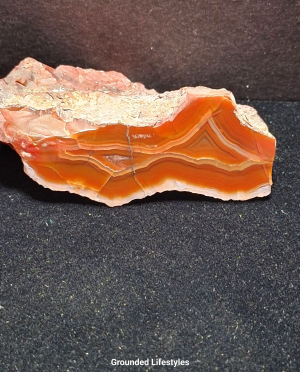
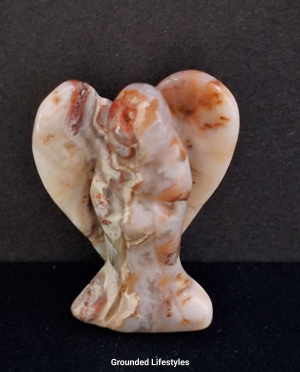
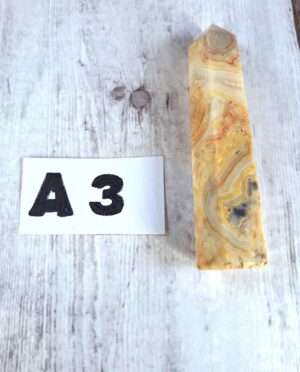
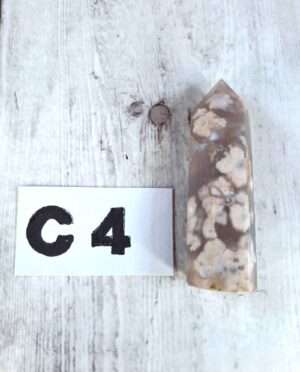
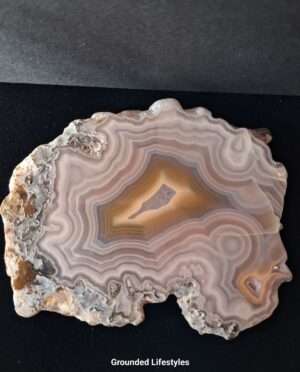
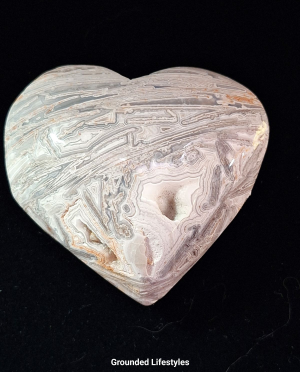
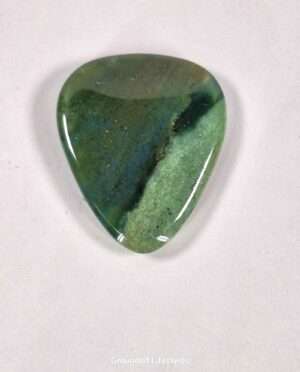
How to Evaluate & Choose Quality Agates
When selecting an agate, collectors and designers look beyond color alone. Quality is determined by a combination of structure, pattern clarity, and geological integrity.
Key evaluation factors include:
Pattern Sharpness & Symmetry: Tight, undistorted banding with rhythmic flow scores highest.
Color Saturation & Contrast: Natural palettes vary by locality; strong contrast without artificial uniformity is preferred.
Translucency: Back-lighting reveals internal structure and depth.
Structural Integrity: Minimal fractures, clean edges, and stable polish surfaces.
Provenance: Named localities such as Laguna (Mexico), Botswana, or Lake Superior command premiums.
Finish Quality: Skilled lapidary work enhances depth without artificial coatings.
Treatments & Disclosure:
Agates have been dyed since Roman times, including traditional sugar-acid blackening and modern chemical baths. While dyed agates are genuine chalcedony, natural coloration typically holds higher long-term collector value. Grounded Lifestyles clearly labels all enhanced material.
How Do Agates Form?
In short: agates form when silica-rich fluids repeatedly enter natural cavities in rock over millions of years, depositing microscopic layers of chalcedony that create banded structures.
Most agates originate in volcanic rocks such as basalt, rhyolite, or andesite. As lava cools, trapped gas bubbles (vesicles) form hollow cavities. Agates can also form in fractures, veins, or sedimentary voids created by dissolving organic material or porous rock.
Groundwater or hydrothermal fluids carrying dissolved silica percolate into these cavities. The silica initially precipitates as a gel that later crystallizes into fibrous chalcedony.
Fluctuations in temperature, chemistry, oxidation state, and trace elements (iron, manganese, titanium) produce alternating bands of color and translucency. Inclusions may create moss, plume, sagenitic, or eye patterns depending on mineral content and growth conditions.
In many agates, the final stage includes macrocrystalline quartz or amethyst forming in the center if silica continues to enter the cavity under slower cooling conditions. Some remain partially hollow, forming geodes.
Over geologic time, surrounding rock erodes, freeing agate nodules into riverbeds, glacial deposits, or surface exposures — where they are eventually collected and cut.
Modern studies using Raman spectroscopy and cathodoluminescence confirm low-temperature hydrothermal formation (20°C–200°C) and cyclic chalcedony–moganite crystallization, with agates ranging from millions to billions of years old.
Notable Agate Localities Worldwide
Brazil & Uruguay (Rio Grande do Sul / Artigas):
Massive Cretaceous basalt flows produce globally abundant agates with fortification banding, quartz centers, and rich purples, browns, and blues.
Mexico — Laguna & Crazy Lace:
Laguna Agate (Chihuahua) is famed for ultra-fine fortification bands and vivid reds and oranges. Crazy Lace Agate, formed in silicified limestone, displays chaotic lace-like patterns and earthy tones.
United States:
Lake Superior Agate: Iron-rich bands formed 1.1 billion years ago and dispersed by glaciers.
Montana Moss Agate: Dendritic inclusions from volcanic ash and silica replacement.
Oregon Thundereggs: Rhyolitic nodules with starburst interiors.
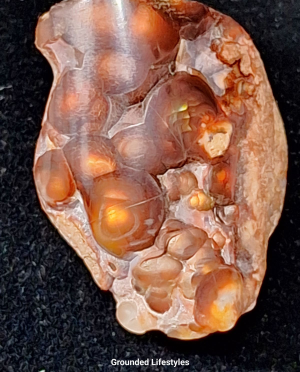
Arizona Fire Agate: Iridescence caused by goethite and limonite layers unique among agates.
Botswana:
Known for tight concentric banding in subtle grays and pinks; highly valued for lapidary precision.
Madagascar:
Pastel-toned agates formed in altered volcanic terrain, often used for carvings and décor.
India (Deccan Traps):
Historically traded agates with earthy reds, browns, and mossy inclusions.
Germany (Idar-Oberstein):
Historic cutting center that popularized agate artistry across Europe.
Australia & Morocco:
Includes some of Earth’s oldest agates (Warrawoona, 3.48 billion years) and North African fortification styles.
Evaluate:
Pattern sharpness & symmetry (tight, undistorted bands score high).
Color saturation & contrast (natural palettes vary by locality).
Translucency (back-lighting reveals internal structure).
Scale & stability (size without fractures; slabs that take a clean polish).
Provenance (named localities—Laguna, Botswana, Lake Superior—command premiums).
Treatments: Dyeing (incl. historic sugar–acid blackening) and heat are common in lower-grade material; disclose clearly. Look for unnaturally uniform color, dye concentrations in fractures, and overly vivid blues/greens.
1. What makes an agate “collector grade”?
Collector-grade agates display sharp, well-defined banding, balanced symmetry, strong color contrast, and minimal fracturing.
Premium nodules often have fine fortification patterns, clean translucency under back-light, and traceable locality provenance — such as Laguna (Mexico), Botswana, or Lake Superior (USA).
Pieces with eye structures, plumes, or sagenitic inclusions (needle-like crystals) can also elevate value when patterns are crisp and natural.
2. How are agates graded for quality and price?
Agates are typically evaluated using these key criteria:
Pattern Quality: Sharpness, rhythm, and visual flow of the banding.
Color Saturation: Vibrancy and contrast without artificial enhancement.
Transparency: Light transmission and internal clarity.
Structural Integrity: Absence of cracks or filled fractures.
Locality Rarity: Named sources (e.g., Laguna, Coyamito, Botswana) command premium pricing.
Finish: Expert polishing reveals internal depth and luster.
High-end collectors often classify pieces as Museum, Exhibition, Lapidary, or Decorative grade, depending on these combined factors.
3. Are dyed or enhanced agates considered real?
Yes — they are real chalcedony, but color-enhanced through traditional methods.
Historically, agate has been dyed since Roman times using sugar-acid treatments to darken bands. Modern lapidary uses chemical baths or heat to intensify color.
Grounded Lifestyles clearly labels all dyed material so collectors can make informed choices. Natural coloration always carries higher long-term value.
4. Why do some agates have quartz crystals or amethyst inside?
In some nodules, silica deposition ended before the cavity was fully filled. Later, when silica-rich fluids re-entered under slower cooling conditions, macrocrystalline quartz or amethyst grew inward from the walls — forming geode centers.
These pieces show both chalcedony banding and visible quartz terminations, creating spectacular display specimens.
5. What’s the difference between banded agate, moss agate, and plume agate?
Banded (Fortification) Agate: Rhythmic layers following cavity walls; most classic type.
Moss Agate: Chalcedony with dendritic (tree-like) manganese or iron inclusions — no true banding.
Plume Agate: Feathery, filament-like inclusions resembling coral or smoke, usually from mineral infiltration during growth.
Each type reflects unique geochemical environments and fluid chemistry.
6. Which agates are considered the most valuable?
Laguna Agate (Mexico): Ultra-fine concentric bands in vivid reds and oranges.
Botswana Agate (Africa): Subtle, perfect symmetry in soft grays and pinks.
Condor & Coyamito Agates (Argentina / Mexico): High color saturation and translucency.
Fire Agate (Arizona & Mexico): Iridescent goethite layers causing play-of-color — rare and gem-grade.
Lake Superior Agate (USA): Historical importance and warm iron-rich hues.
Exceptional specimens from these localities often appear in museum collections and command strong auction prices.
7. How can I tell if my agate has been artificially polished or coated?
Natural polishing via lapidary methods leaves a smooth, glass-like luster without residue. Artificial surface coatings can appear overly glossy, waxy, or uneven, sometimes clouding over time.
Authentic agates show clean edges and consistent sheen even under magnification — not a plasticized surface layer.
8. What’s the best way to display and preserve agates?
Keep agates out of direct sunlight to prevent dye fading.
Avoid prolonged moisture or acidic environments that could dull polish.
Use LED or halogen back-lighting to highlight banding and translucency.
For high-value pieces, store in a cabinet with desiccant to prevent micro-oxidation on associated minerals like iron or copper.
Many collectors also pair agates with crystal points, pyrite clusters, or wood bases for natural contrast.
9. Why do agates form in so many parts of the world?
Agate requires only three ingredients: silica, cavities, and time.
Because volcanic activity is widespread across Earth’s history, similar geologic conditions occurred on multiple continents — producing agates from Brazil to Botswana, Mexico to Madagascar, and Australia to the U.S.
Each region’s unique host rock chemistry and temperature cycle create its own signature color palette and pattern style.
10. Are agates considered healing or energy stones?
Across many cultures, agates symbolize stability, grounding, and protection. Their rhythmic banding is said to mirror emotional balance and patience.
While metaphysical properties are not scientifically proven, agates’ long association with calm and creativity continues to make them popular in wellness and décor spaces.