
$15.00
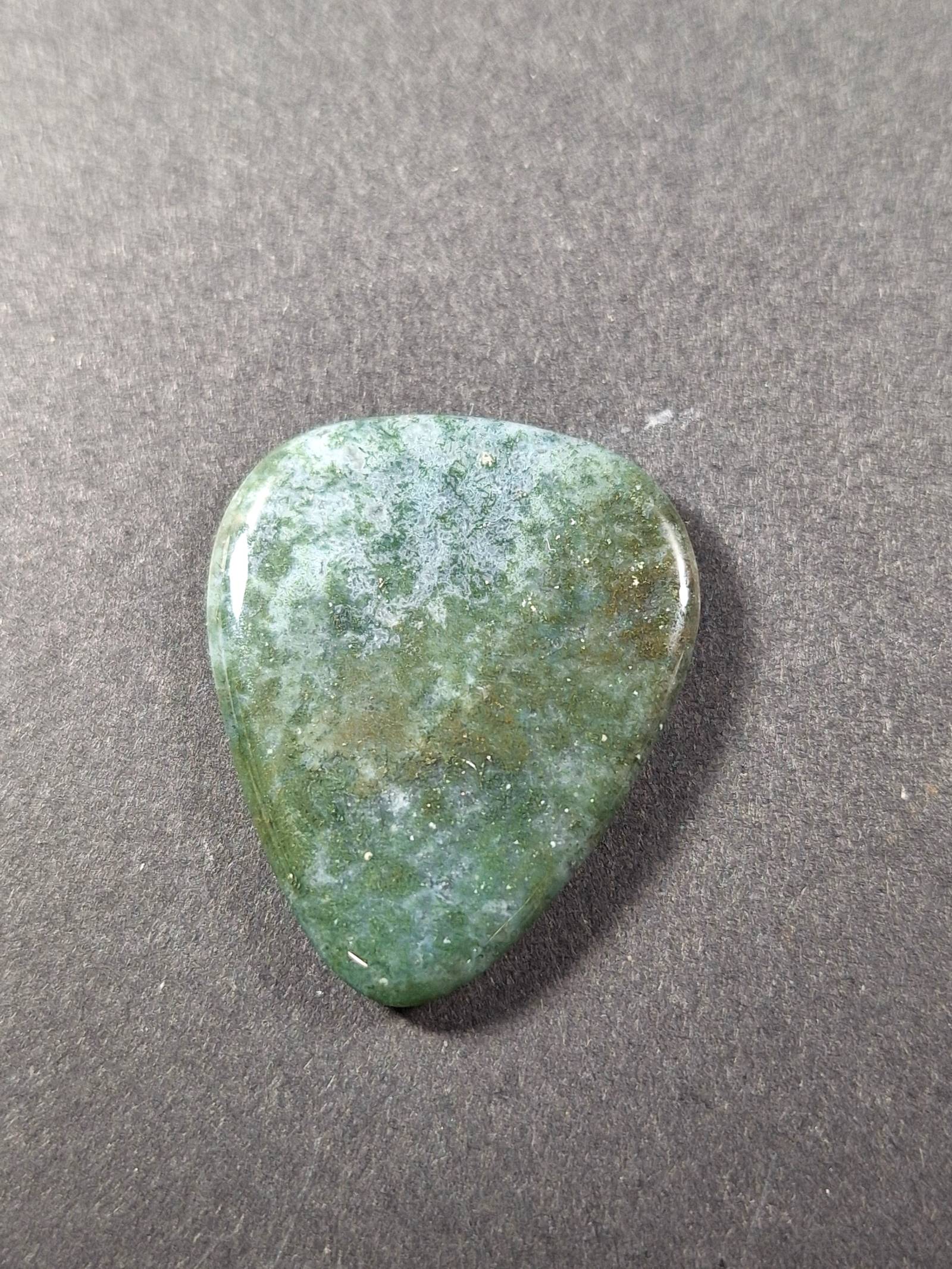
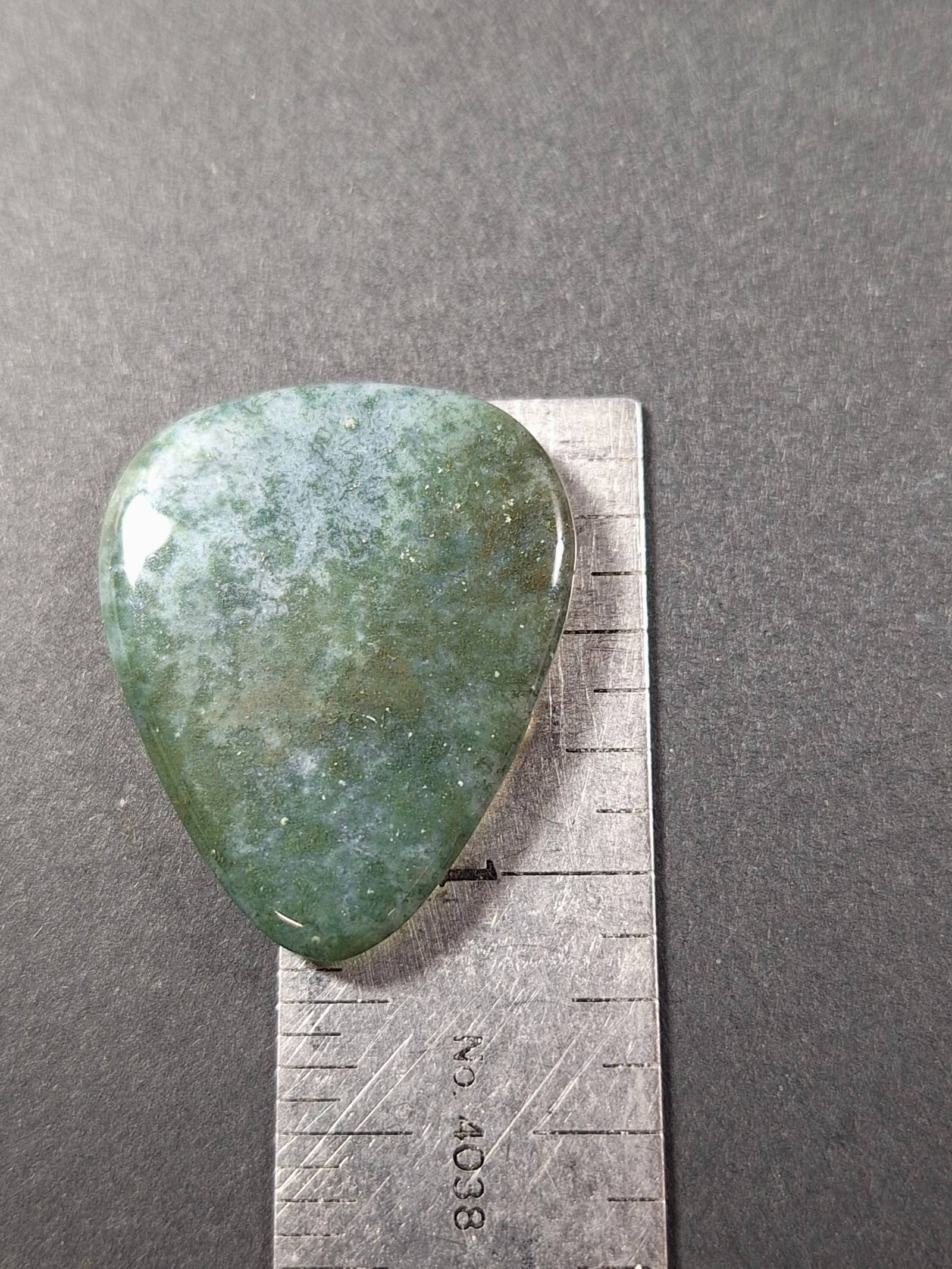
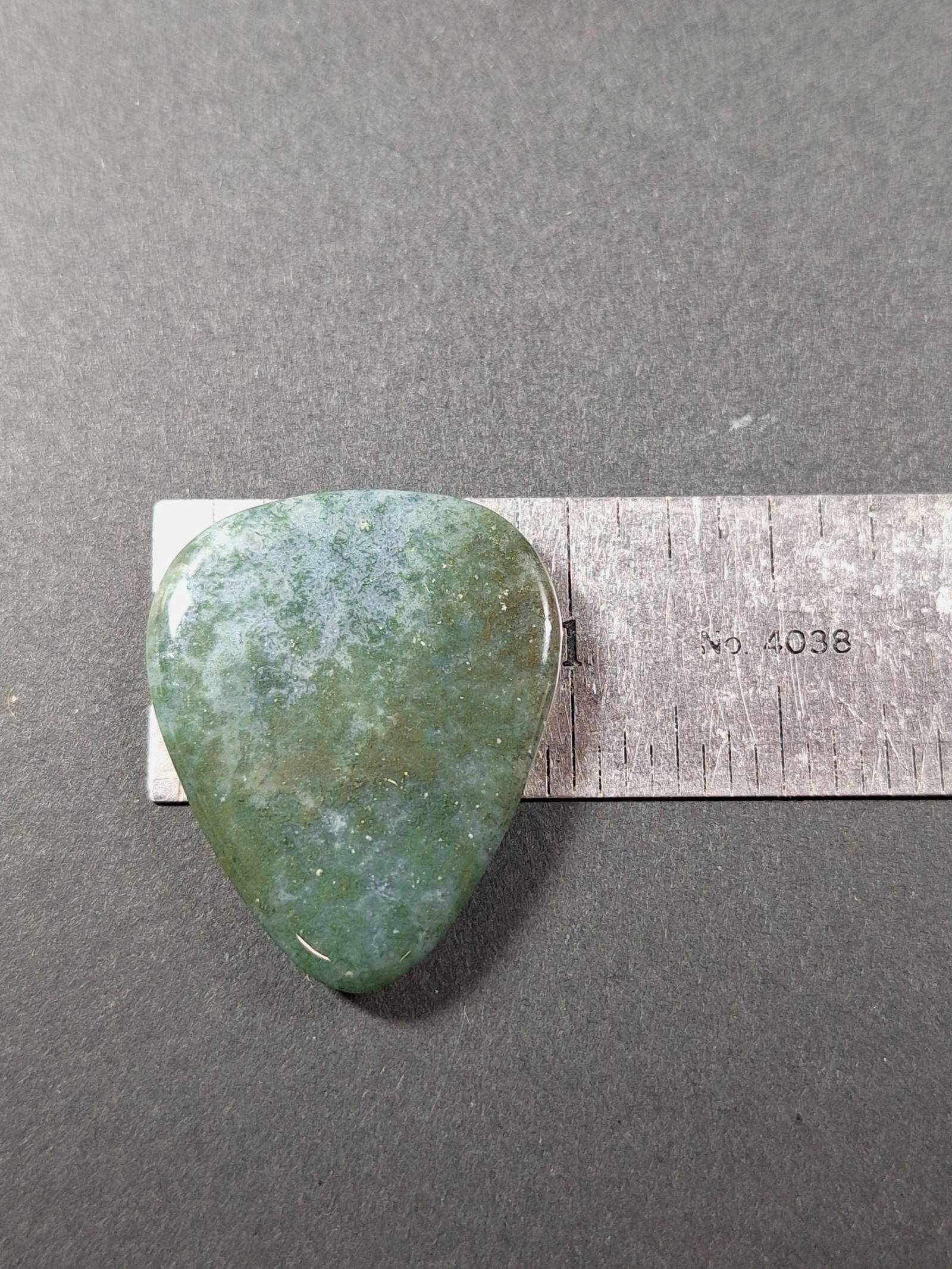
Bring a touch of nature to your music with this Moss Agate Guitar Pick, polished from chalcedony with distinctive green, moss-like mineral inclusions. Each stone develops its own patterns, giving the pick an individual appearance that ordinary manufactured picks cannot replicate. With a Mohs hardness of approximately 6.5–7, moss agate offers good scratch resistance and a firm, nonflexible feel against guitar strings. A distinctive accessory for musicians and a thoughtful gift for anyone who appreciates gemstones, music, and the beauty of natural stone.
In stock
You will receive the exact specimen shown.
Carefully packed and shipped from Arizona.
Free U.S. shipping on orders of $70 or more.
Some guitar picks are chosen for their flexibility or thickness. Others catch your attention because of the material they are made from. This Moss Agate Guitar Pick combines the familiar shape of a musical plectrum with one of the most recognizable patterns found in natural gemstones.
Moss agate is admired for its branching green inclusions, which can resemble tiny forests, moss-covered branches, or delicate plants suspended within the stone. When cut and polished, these markings create an appearance that is both earthy and artistic. The patterns are geological rather than botanical, but their resemblance to nature is what gives moss agate its name.
For musicians who enjoy collecting unusual accessories, a moss agate pick offers a different experience from an ordinary plastic pick. For gemstone enthusiasts, it is an opportunity to appreciate the stone in a small, functional form.
Despite its name, moss agate contains no actual moss or fossilized plant material. The green and dark branching patterns form from mineral inclusions within chalcedony, a fine-grained variety of silica.
Moss agate commonly develops in cavities and fractures where silica-rich solutions deposit chalcedony. During formation, other mineral-bearing fluids can introduce substances that create branching or dendritic patterns. Depending on the specimen, these inclusions may involve iron oxides, manganese oxides, or green minerals such as chlorite.
The resulting patterns can vary considerably. Some pieces display delicate green threads, while others show denser, landscape-like markings against a translucent, milky, or pale background.
Unlike the regular parallel bands associated with many agates, moss agate is recognized primarily for its inclusions. The exact appearance depends on the material and how the stone has been cut.
Traditional guitar picks are often made from nylon, celluloid, or other flexible materials. A moss agate pick behaves differently because the stone is rigid and does not bend readily when it contacts the strings.
This firmness can create a different sensation during picking. Some musicians enjoy experimenting with hard, polished picks because they change the way the pick meets the string and how the initial note attack feels.
However, the sound and playing response depend on the pick’s thickness, edge profile, finish, instrument, strings, and the player’s technique. A gemstone pick does not guarantee a particular tone or playing advantage.
A moss agate pick may be especially interesting for controlled picking, occasional use, or inclusion in a collection of unusual guitar accessories. Players who normally use flexible picks may need time to adjust their grip and picking pressure.
Moss agate belongs to the chalcedony family and is composed primarily of silicon dioxide (SiO₂). Chalcedony consists of extremely fine intergrowths of quartz and moganite, giving it a compact structure that can take an attractive polish.
Moss agate has a Mohs hardness of approximately 6.5–7. This means it resists scratching better than many softer ornamental stones and is well suited to polished lapidary work.
Hardness, however, is not the same as toughness. Although moss agate is relatively hard, it can fracture under sharp impact. The thin edges of a guitar pick are particularly vulnerable if the piece is dropped onto tile, concrete, or another hard surface.
Its natural inclusions and polished finish make each piece visually individual, especially when light passes through more translucent areas of the stone.
Moss agate is traditionally associated with nature, growth, stability, and new beginnings in contemporary crystal practices. Its green, plant-like inclusions have inspired symbolic connections with forests, gardens, and the gradual changes of the natural world.
In metaphysical traditions, moss agate is often linked with the heart chakra and themes of balance, patience, and connection to the earth.
For musicians and artists who appreciate gemstone symbolism, a moss agate pick may serve as a personal reminder of creative growth, steady practice, and finding inspiration in nature.
These associations are spiritual and cultural beliefs rather than scientifically established effects of the stone.
Keep the pick looking its best by wiping it with a soft cloth after playing or handling it. If necessary, use a small amount of mild soap and lukewarm water, then rinse gently and dry thoroughly.
Avoid dropping the pick or carrying it loose with metal objects that could strike its edges. Store it in a protective pouch or dedicated compartment when not in use.
Before playing, inspect the polished edges for chips or rough areas. If the pick develops a sharp edge, discontinue use to avoid catching or abrading guitar strings.
A Moss Agate Guitar Pick brings together music and the natural world in an unusual accessory. Its branching mineral patterns make it visually interesting, while its rigid construction offers a different playing experience from conventional flexible picks.
Whether used occasionally, displayed with a collection of specialty guitar picks, or given to a guitarist who appreciates gemstones, this polished moss agate pick offers a small but memorable example of the artistry found in natural stone.
| Weight | 3 oz |
|---|---|
| Dimensions | 1.75 × 0.25 × 2.5 in |
Only logged in customers who have purchased this product may leave a review.
Reviews
There are no reviews yet.