

Every crystal, mineral, fossil, meteorite, and handcrafted piece is selected with purpose. Whether you’re building a museum-worthy mineral collection, searching for a meaningful gift, decorating your home with natural beauty, or beginning your journey into the world of geology, you’ll discover authentic specimens with stories worth sharing.
Over 15 shows a year throughout the Southwest. Check to see if we are coming to a show near you!
Home > Blog > Crystal Healing Blog | Benefits, Chakras & Reiki Stones > opalite man made magic with the heart of crystal energy
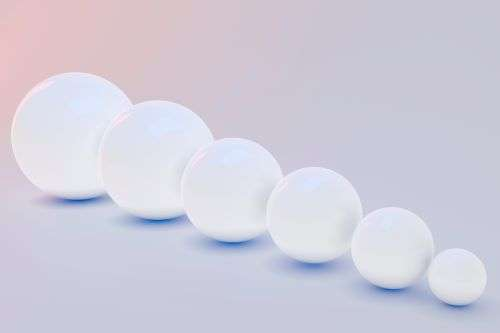
Opalite is one of those materials that can stop someone at a display before they know anything about it. In ordinary room light it may look milky white or pale blue, but move it toward a window or hold it against a darker background and the entire appearance seems to shift. Cool blue tones emerge from one direction while peach, gold, orange, or pink light appears from another. Polished into moons, towers, spheres, hearts, beads, animals, or jewelry, it has an unmistakable luminous quality.
That appearance has helped make opalite enormously popular in crystal shops, jewelry, decorative objects, and modern metaphysical practice.
It has also created decades of confusion.
Most of the glowing blue-white material sold today as opalite is not natural opal and is not a naturally occurring mineral. It is usually a manufactured opalescent glass specifically created for its optical appearance. Some materials marketed under the name have also been plastic or other opal simulants.
At the same time, the word opalite has a legitimate older geological and gemological history. Long before the modern glass became common in crystal shops, the term was used for certain forms of natural common opal, meaning opal that lacks the dramatic play-of-color associated with precious opal.
That gives one small word two very different identities.
Understanding the difference matters, especially for collectors and buyers. Man-made opalite can be beautiful, collectible, affordable, and meaningful without pretending that it formed naturally underground. Natural common opal is a completely different geological material with its own formation history.
Opalite is therefore an excellent example of a principle that applies throughout the crystal world: a material does not have to be rare or natural to be worth appreciating, but it should be represented honestly.
When someone walks into a modern crystal shop and sees a translucent, milky blue material labeled opalite, they are almost always looking at a manufactured product rather than a natural gemstone.
Modern opalite is generally an opalescent glass designed to scatter and transmit light in a way that produces its familiar ethereal glow. Against some backgrounds it can look almost icy blue. When light passes through the material, warmer orange, peach, yellow, or pink tones can become visible.
The effect gives opalite a dreamy appearance that sometimes leads people to confuse it with opal or moonstone.
It is neither.
Natural opal is a hydrated silica material produced by geological processes. Moonstone is a natural feldspar whose characteristic floating optical effect, known as adularescence, results from its internal structure.
Modern opalite glass is manufactured.
That distinction does not make one attractive and the other unattractive. It simply tells us what each material actually is.
Grounded Lifestyles identifies the material transparently as man-made glass throughout our Opalite collection, so buyers know exactly what they are adding to their collection.
This is where the subject becomes more complicated.
Yes, opalite has historically been used as a name for natural common opal.
Gemological references used the word for natural material before manufacturers began applying the name to imitation opal products during the late twentieth century. Older geological terminology may therefore use opalite for common opal or impure forms of opal.
Common opal is genuine natural opal that generally does not exhibit the dramatic shifting spectral colors known as play-of-color.
It can still be beautiful.
Natural common opal occurs in white, cream, yellow, pink, blue, green, orange, brown, purple, and other colors. Some material takes an excellent polish and is used for beads, cabochons, carvings, and jewelry.
In the modern retail crystal trade, however, calling common opal simply “opalite” creates unnecessary confusion because most consumers now understand opalite to mean the manufactured blue-white glass.
For clarity, we prefer to identify natural material as common opal and reserve opalite for the familiar manufactured material when discussing products.
That tells the customer exactly what they are buying.
Several terms become mixed together in online listings, so understanding the terminology can save collectors considerable confusion.
Natural common opal forms geologically and generally lacks play-of-color.
Natural precious opal forms naturally but possesses an internal structure capable of creating the flashes and shifting spectral colors known as play-of-color.
Synthetic opal is manufactured by humans but is intended to reproduce important chemical, physical, and structural characteristics of natural opal.
Imitation or simulated opal simply resembles opal visually but is made from a different material.
Modern opalite generally falls into this final category. It is usually an opal-like glass simulant, not synthetic opal in the strict gemological sense.
That distinction is important.
Calling opalite “synthetic opal” may sound reasonable conversationally, but gemologically the terminology can imply a manufactured material possessing essentially the same composition and properties as natural opal. The familiar blue opalite glass sold in crystal shops does not meet that definition.
The more accurate description is man-made opalescent glass.
This is another area where online descriptions frequently become more specific than the evidence supports.
You may encounter statements claiming that all opalite is made from one exact recipe involving silica, dolomite, metal oxides, or other particular ingredients.
There is no single universal opalite formula.
Glass manufacturers can produce opalescent materials through different formulations and production techniques, and exact commercial recipes may be proprietary. Some products historically sold under the name opalite have even been plastic rather than glass.
For the familiar glass material, manufacturers begin with ingredients that can be melted to form glass and control characteristics such as clarity, stability, color, and optical appearance. Very small particles, droplets, crystallites, or compositionally different phases within the glass can scatter light, producing the characteristic opalescent effect.
The glass can then be cooled, formed, cut, polished, molded, drilled, or carved into the shapes familiar to crystal and jewelry buyers.
So rather than saying all opalite contains one exact mixture, it is more accurate to say that modern opalite is usually manufactured opalescent glass whose internal structure has been engineered to create its characteristic light-scattering appearance.
The optical appearance is one of the most interesting things about opalite.
Many pieces appear cool blue, milky white, or bluish when viewed in ordinary reflected light or against a darker background. When strong light passes through the material, warm orange, peach, pink, or golden tones often become much more obvious.
This is not the same optical effect responsible for precious opal’s play-of-color.
Precious opal can contain remarkably ordered microscopic silica structures that interact with light to produce changing flashes of spectral color. Different wavelengths of light are diffracted depending on the spacing and organization of those structures.
Opalite glass generally produces its characteristic appearance through light scattering within the manufactured material.
That is why its color can look so different depending on lighting, background, thickness, and viewing angle.
Rather than being a poor imitation of natural opal, this distinctive blue-to-warm optical shift has become part of opalite’s own identity.
Another common source of confusion comes from trade names such as opal moonstone or opalite moonstone.
Natural moonstone belongs to the feldspar family.
Its characteristic glow is known as adularescence, an optical effect produced as light interacts with microscopic structural relationships within the feldspar. High-quality moonstone can display a floating blue or white light that appears to move beneath the surface as the stone changes position.
Opalite’s appearance has a different origin.
One is a naturally occurring feldspar with a particular internal structure. The other is generally manufactured glass designed to produce opalescent light effects.
Both can be beautiful, but they should not be sold as though they are the same material.
Technically, the modern glass material sold as opalite is not a crystal or mineral.
Minerals possess specific naturally occurring chemical compositions and ordered internal structures. Crystals display an orderly atomic arrangement.
Ordinary glass is different because its atoms do not possess the long-range crystalline organization that defines crystalline material.
So why is opalite found in crystal shops?
Because crystal is also used very broadly in the modern metaphysical and retail world to describe stones, minerals, glasses, tektites, carved materials, and other objects incorporated into crystal practice.
Obsidian provides another familiar example. Natural obsidian is volcanic glass rather than a crystalline mineral, yet it has occupied an important place in human history, collecting, lapidary work, and contemporary metaphysical practice.
Understanding classification does not require excluding opalite from a collection.
It simply means knowing what is on the shelf.
Natural opal is a hydrated form of silica commonly represented chemically as SiO₂·nH₂O.
Unlike quartz, opal does not possess the same long-range crystalline structure and is generally classified as a mineraloid rather than a mineral.
Opal can form when silica-rich water moves through cracks, cavities, sediments, or other openings in rock. As conditions change and water is lost, silica-rich material can accumulate.
Over time, opal may develop.
Not all natural opal shows spectacular colors.
Common opal lacks the play-of-color for which precious opal is famous but may still possess attractive body colors and patterns.
Precious opal, by contrast, can develop sufficiently ordered microscopic structures to diffract visible light, creating shifting flashes of green, blue, orange, red, violet, and other colors.
That geological process is completely different from manufacturing opalite glass.
Familiar opalite glass is often fairly easy to recognize once you know what to look for.
The classic material tends to have a remarkably consistent translucent or milky appearance with a cool bluish cast and strong warm orange or peach light when backlit. Polished pieces can look almost too visually uniform compared with many natural opals.
Small bubbles or glass-like swirls may sometimes be visible under magnification.
Natural opal is much more variable.
Common opal may show natural color zoning, matrix, inclusions, fractures, uneven translucency, or other geological characteristics. Precious opal may display patches, flashes, pinfire, broad areas, or other patterns of play-of-color.
No single visual clue should be treated as an absolute identification test, particularly with expensive material.
When significant money is involved, gemological testing is the better answer.
Another common mistake is assuming that opalite glass is especially durable because it is manufactured.
It is not indestructible.
Typical opalite glass is around Mohs 5, although the exact physical properties can vary because materials sold under the opalite name are not produced from one standardized formula.
Natural opal generally falls around Mohs 5 to 6.5.
That means both materials deserve thoughtful care.
Opalite can scratch, chip, or fracture, particularly along thin edges or pointed carvings. Dropping a sphere or tower on tile or concrete may cause significant damage even if the surface previously appeared flawless.
This matters for jewelry as well.
An opalite pendant or pair of earrings experiences relatively little impact during normal use, while a ring or bracelet is much more likely to strike hard objects throughout the day.
Beautiful does not necessarily mean durable.
Opalite is relatively easy to care for if you remember that it is glass.
Clean it with lukewarm water, mild soap when necessary, and a soft cloth. Avoid abrasive cleaners and rough scrubbing materials that could dull or scratch a polished surface.
Store individual pieces where they cannot repeatedly strike harder minerals, metal jewelry, or other objects.
Sudden temperature changes are also best avoided with glass objects.
If your piece is set into jewelry, consider the setting, adhesive, metal, or stringing material as well as the opalite itself before soaking it.
For ordinary display pieces and carvings, a soft dry or lightly damp cloth is usually sufficient.
Opalite has achieved something unusual for a manufactured material: instead of remaining merely an inexpensive substitute for opal, it has developed a visual identity and following of its own.
Affordability certainly helps.
Natural precious opal can become expensive very quickly, particularly when brightness, pattern, body tone, size, origin, and quality come together in exceptional material. Opalite gives someone a dramatic luminous object at a fraction of that cost.
But price alone does not explain its popularity.
Its glow photographs beautifully. Its translucent appearance works especially well in carvings and spheres. The material looks different as lighting conditions change, which makes it visually interactive.
It is also extremely approachable for someone buying a first crystal or decorative piece.
You do not need to be a mineral collector or gemologist to appreciate the way opalite catches light.
That accessibility has helped it become a fixture in modern crystal culture.
Opalite works particularly well in polished forms because its optical qualities become more obvious when light can pass through curved surfaces.
Spheres produce soft glowing centers. Moons emphasize the material’s association with celestial imagery. Hearts, stars, animals, and other carvings take advantage of the dramatic change between cool and warm light.
Beads are popular because each one responds slightly differently as a bracelet or necklace moves.
Larger decorative pieces can also look especially striking near natural light, although prolonged placement in extreme heat or direct exposure that creates large temperature swings is unnecessary.
Our Opalite collection includes pieces chosen specifically for this visual character. We identify them as man-made so their beauty does not depend upon pretending they are something they are not.
This is one of the most important questions surrounding opalite.
The answer depends on what someone claims the material is.
If a seller presents opalite glass as naturally mined precious opal, that representation is misleading.
If a seller accurately identifies it as opalite or man-made opalescent glass, there is nothing inherently fake about it.
It is a real manufactured material.
Glass has been used artistically for thousands of years. Humans deliberately manipulate silica-based materials to produce color, transparency, form, decoration, and optical effects. Art glass, stained glass, beads, vessels, jewelry, and decorative objects can all possess legitimate artistic and collectible value even though they did not form naturally underground.
The problem is not that opalite is manufactured.
The problem occurs when manufactured materials are intentionally represented as natural gemstones.
For Grounded Lifestyles, disclosure is the important distinction.
This question goes directly to the philosophy behind modern crystal practice.
Some people believe that only naturally formed minerals should be used metaphysically because their meaning comes partly from Earth’s geological processes.
Others believe symbolism, intention, color, personal association, and the experience of using an object can give a manufactured material a meaningful place in spiritual practice.
Opalite demonstrates that second approach particularly well.
Modern metaphysical traditions commonly associate it with transition, communication, reflection, emotional balance, hope, and new beginnings. Its changing optical appearance makes transformation an especially intuitive symbolic theme: the same object can look cool blue in one setting and glow warmly in another.
Those are metaphysical interpretations, not scientifically measured properties of the glass.
Opalite has not been demonstrated to emit a therapeutic frequency, regulate emotions, or alter human physiology.
But someone can still use it as a visual reminder of an intention.
A person going through a major transition might keep opalite nearby as a symbol that circumstances can look different when viewed from a new perspective. Someone working on communication may incorporate it into journaling or meditation because that meaning has become attached to the material within modern crystal culture.
Symbolism does not depend upon pretending the object is natural.
For a broader explanation of how Grounded Lifestyles approaches the difference between mineral science, metaphysical belief, ritual, and personal experience, see Crystal Healing: History, Science, Metaphysical Beliefs & Modern Practice.
Opalite is frequently described in crystal literature as a calming stone associated with emotional balance.
We prefer to frame that association more carefully.
There is no established evidence that opalite glass itself chemically or energetically regulates the nervous system or treats anxiety, stress, depression, or another condition.
The material can, however, become part of a calming routine.
Its smooth surface gives someone a tactile object to hold. Its changing colors provide something visually interesting on which attention can rest. If it has been intentionally associated with pausing, breathing, journaling, or reflection, simply picking it up may remind someone to return to that routine.
In metaphysical language, that may be described as working with opalite’s calming energy.
From another perspective, the object is functioning as a meaningful cue.
Both descriptions can coexist as long as the metaphysical interpretation is not presented as proven medical treatment.
Our article on Crystals for Emotional Balance explores this distinction in more detail.
Communication is another major modern association with opalite.
Some practitioners connect it with the Throat Chakra because of its blue appearance, while others associate its shifting colors with emotional honesty and the ability to see an issue from more than one perspective.
That symbolism can be incorporated practically.
Before a difficult conversation, an opalite palm stone or small carving might become a reminder to decide what actually needs to be communicated, what can be left unsaid, and whether listening is receiving as much attention as speaking.
The glass itself does not need to physically alter the Throat Chakra for the ritual to be useful.
Readers interested in the history of chakra-crystal correspondences can explore Chakras and Corresponding Crystals: A Guide to Balancing Your Energy.
Of all opalite’s metaphysical associations, transformation and new beginnings may be the most natural fit.
The material itself is created deliberately.
Raw ingredients are transformed through heat and controlled manufacturing into something with an appearance that did not exist before. Light then changes how the finished material is perceived.
That provides a powerful metaphor without requiring any supernatural claim.
A person beginning a new career, moving to a new place, ending an old chapter, changing a routine, or simply trying to approach life differently may connect with opalite because it visually represents transformation.
That metaphor became unexpectedly important in popular culture as well.
Opalite received an enormous surge of mainstream attention when Taylor Swift used “Opalite” as the title of the third track on her 2025 album The Life of a Showgirl.
At first, fans naturally developed theories about why she had chosen such an unusual word. Some focused on opal as an October birthstone, while others connected the material’s shifting appearance with transformation, relationships, or emotional renewal.
Swift later explained the metaphor herself.
She said she had learned about opalite as a man-made version or imitation of opal and was attracted to the idea that something beautiful could be deliberately created. Opal also had a personal association for her because it is connected with the October birthstone of Travis Kelce.
More importantly, she connected the manufactured nature of opalite with making your own happiness.
That is a much more interesting connection than trying to force the song into traditional crystal-healing meanings.
The symbolism comes directly from the defining characteristic of modern opalite: it is created rather than naturally discovered.
The metaphor turns something sometimes treated as opalite’s weakness—its man-made origin—into the entire point.
Happiness, like opalite in Swift’s metaphor, does not always simply appear. Sometimes it has to be created deliberately after disappointment, change, or a period when life did not unfold according to plan.
For a deeper look at the way the song pushed an obscure gem-trade term into mainstream searches and crystal conversations, read Taylor Swift’s “Opalite”: How Pop Culture Fuels Crystal Trends.
There is an interesting irony in the sudden popularity of the word opalite.
Millions of people began searching for a material whose name does not have one perfectly simple definition.
Some discovered luminous blue glass.
Others encountered natural common opal.
Still others found synthetic opal, precious opal, moonstone, or sellers using the terms interchangeably.
That makes the trend more than a pop-culture moment.
It is a lesson in why gemological terminology matters.
A collector should be able to ask:
Is this natural?
Is it glass?
Is it plastic?
Is it natural opal without play-of-color?
Is it synthetic opal?
Is it merely a simulant that resembles opal?
None of those materials needs to be disparaged.
They simply should not be confused with one another.
Collectors build trust around information.
When someone purchases a natural mineral, locality and identity matter. When someone purchases treated material, the treatment should be disclosed when relevant. When an object is synthetic or manufactured, that fact should also be clear.
That becomes particularly important as buyers move between mineral shows, online marketplaces, metaphysical shops, jewelry sellers, and social media, where terminology is not always used consistently.
A beautiful manufactured glass sold honestly as opalite can be an excellent purchase.
The same glass sold as a rare natural opal is a completely different situation.
Education allows buyers to appreciate both without confusing value, rarity, formation, or origin.
Most manufactured opalite is relatively inexpensive because it can be produced in quantity.
Its retail value therefore comes primarily from size, workmanship, carving quality, jewelry construction, design, finish, and presentation rather than mineral rarity.
That makes it accessible to beginning collectors and gift buyers.
Natural opal operates under an entirely different value structure. Fine precious opal can command high prices depending on play-of-color, brightness, pattern, body tone, transparency, origin, size, durability, cutting quality, and other factors.
The fact that the two materials can both be attractive does not mean they should be evaluated using the same criteria.
A collector buys fine natural opal partly for rarity and geological character.
Someone may buy opalite because they simply love the glow.
Both are legitimate reasons to own something.
Yes, provided the buyer understands what it is.
Opalite can actually be an excellent teaching material because it opens the door to several larger subjects: natural versus manufactured materials, glass structure, optical effects, opal formation, gemological terminology, simulation versus synthesis, trade names, disclosure, and metaphysical symbolism.
A beginning collector who learns why opalite is not the same as opal has already learned one of the most important lessons in collecting:
appearance alone does not identify a material.
That lesson becomes increasingly important as collections grow.
The familiar translucent blue-white opalite commonly sold in crystal shops is generally man-made opalescent glass, not a naturally occurring mineral. Historically, however, the word opalite has also been used for some forms of natural common opal, which is why the term can be confusing.
Modern opalite glass is not natural opal. Natural opal is hydrated silica formed through geological processes. Manufactured opalite is usually glass designed to create an opalescent appearance.
Yes, in historical geological and gemological terminology opalite has been used as a synonym or related term for natural common opal. Because modern consumers usually associate opalite with manufactured glass, identifying natural material specifically as common opal is clearer.
Modern opalite glass is technically not a mineral crystal because glass lacks the long-range ordered atomic structure that defines crystalline material. It is nevertheless commonly included in the broader retail and metaphysical category of “crystals.”
Most familiar modern opalite is glass, but the trade name has been applied to different manufactured materials, including plastic opal simulants. This is another reason sellers should identify the actual material rather than relying entirely on the name opalite.
There is no single universal recipe. Most modern opalite is produced as opalescent glass using glass-forming ingredients and controlled internal features that scatter light. The material is then shaped, cut, polished, carved, or formed into beads and decorative objects.
Some online sources and manufacturers describe recipes involving dolomite or particular oxides, but there is no single standardized formulation shared by all materials sold as opalite. Without documentation from the manufacturer, it is better not to assume one exact recipe.
Microscopic structures or phases within the manufactured glass scatter light, helping produce the familiar cool blue or milky appearance under reflected light.
Its optical behavior changes depending on how light travels through the material. The same scattering that contributes to the blue appearance in reflected light can allow warmer orange, peach, or golden tones to become prominent when the material is backlit.
The familiar blue-white opalite glass generally produces a different optical effect from precious opal. Precious opal’s play-of-color results from light interacting with sufficiently ordered microscopic silica structures. Opalite’s characteristic glow is produced by its manufactured glass structure and light scattering.
No. Natural moonstone is a feldspar mineral material whose characteristic adularescence results from its internal structure. Opalite is generally manufactured opalescent glass. Trade names such as “opal moonstone” can create confusion between the two.
Modern opalite glass is generally around Mohs 5, although properties can vary among manufactured materials. Natural opal is commonly around Mohs 5–6.5. Both should be protected from scratching and hard impacts.
Yes. Because opalite is usually glass, it can chip, scratch, or fracture when dropped or struck against a hard surface. Thin points, carving details, rings, and bracelets may be particularly vulnerable.
Use lukewarm water, mild soap when needed, and a soft cloth. Avoid abrasive cleaners, rough polishing materials, extreme temperature changes, and unnecessary chemical exposure.
Manufactured opalite is generally affordable because it can be produced in quantity. Larger carvings, detailed workmanship, jewelry construction, and artistic quality can increase the price, but it does not derive value from geological rarity in the way fine natural opal does.
Modern metaphysical traditions commonly associate opalite with transition, communication, emotional balance, reflection, hope, and new beginnings. These are spiritual and symbolic associations rather than scientifically demonstrated properties of the glass.
Whether a manufactured material can carry metaphysical meaning ultimately depends on the practitioner’s beliefs. Some people use only natural minerals, while others believe intention, symbolism, color, and personal association can give opalite a meaningful place in their practice.
Modern practitioners most commonly connect opalite with the Throat Chakra because of its blue appearance, although it may also be used in practices involving the Third Eye or Crown Chakra. These are contemporary metaphysical correspondences rather than measurable physical relationships.
There is no scientific evidence that opalite itself treats anxiety, regulates the nervous system, or medically reduces stress. Someone may still use an opalite stone as a tactile or visual cue during meditation, breathing, journaling, or another calming routine.
Transformation and new beginnings are among opalite’s most common modern symbolic associations. Its manufactured origin and changing appearance make it particularly suited to themes involving deliberate change, renewal, and creating something new.
Swift explained that she was interested in opalite because of its association with a man-made version or imitation of opal and used that idea as a metaphor for creating your own happiness. Opal also carried a personal connection because of its association with the October birthstone of Travis Kelce.
Yes. “Opalite” is track three on Taylor Swift’s 2025 album The Life of a Showgirl. Its release brought substantial mainstream attention to a term that had previously been much more familiar within gem, crystal, and jewelry communities.
Grounded Lifestyles identifies its opalite as man-made material rather than natural opal. You can explore current pieces in our Opalite collection.
Opalite may be one of the best examples of why collecting becomes more interesting when we stop asking only whether something is “real” and start asking what it actually is.
The answer is surprisingly complicated.
The name opalite has genuine historical use for natural common opal. In the modern crystal and jewelry market, however, the luminous blue-white material most people recognize as opalite is generally manufactured opalescent glass.
That manufactured origin should be disclosed.
It should not be treated as a flaw that needs to be hidden.
Natural precious opal tells an extraordinary geological story involving silica, water, microscopic structure, and the slow processes that occur within Earth. Modern opalite tells a very different story involving glass technology, optical effects, human design, lapidary work, jewelry, contemporary crystal culture, and symbolism.
Each can be appreciated on its own terms.
For metaphysical practitioners, opalite has developed modern associations with communication, transition, reflection, emotional balance, and new beginnings. Those meanings do not turn glass into a natural mineral or demonstrate that it emits healing energy. They represent the symbolism people have built around an object whose appearance itself seems to change depending on how it is viewed.
That symbolism acquired an unexpected new chapter when Taylor Swift chose “Opalite” for a song and later explained the idea of something man-made as a metaphor for happiness that can also be deliberately created.
It is difficult to imagine a better modern metaphor for the material.
Something does not have to emerge untouched from the Earth to be beautiful. Something created intentionally does not automatically have less meaning. What matters is understanding its origin and deciding what significance it has for you without needing to misrepresent what it is.
That is why Grounded Lifestyles clearly identifies the pieces in our Opalite collection as man-made. Transparency allows collectors to appreciate the material for the right reasons.
To explore the broader relationship among geology, manufactured materials, personal symbolism, and modern metaphysical practice, continue with Crystal Healing: History, Science, Metaphysical Beliefs & Modern Practice. If the Taylor Swift connection brought you here, our article Taylor Swift’s “Opalite”: How Pop Culture Fuels Crystal Trends looks more closely at what happens when pop culture suddenly shines a spotlight on an obscure gem-trade term.
Opalite may begin in a furnace rather than a mine, but its story now reaches far beyond either one.

At Grounded Lifestyles, our love for crystals began in the peaceful flow of Reiki and energy healing sessions — where we saw how natural stones could amplify intentions, restore balance, and bring comfort. But the more time we spent with these treasures, the more curious we became about their origins. That curiosity led us into the fascinating world of geology and mineral specimen collecting. We fell in love not just with the energy of crystals, but with the science and artistry of their creation — the intricate crystal structures, the vibrant mineral hues, and the wonder of holding a piece of Earth’s history in our hands.

