
Every crystal, mineral, fossil, meteorite, and handcrafted piece is selected with purpose. Whether you’re building a museum-worthy mineral collection, searching for a meaningful gift, decorating your home with natural beauty, or beginning your journey into the world of geology, you’ll discover authentic specimens with stories worth sharing.
Over 15 shows a year throughout the Southwest. Check to see if we are coming to a show near you!
Home > Blog > Lifestyle Blog | Mindful Living, Décor & Inspiration > Display Fossils & Meteorites
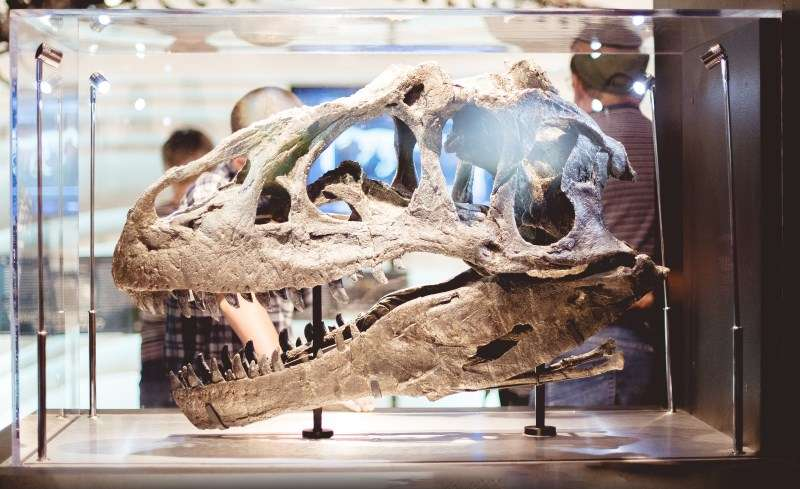
Fossils and meteorites may share a display cabinet, but they tell stories from opposite directions. Fossils preserve evidence of ancient life and environments on Earth, while meteorites bring material from asteroids—and in rare cases the Moon or Mars—into our homes and collections. Place an ammonite beside a meteorite and you are looking at two extraordinary records of natural history: one documenting life on our planet and the other preserving material that originated beyond it.
That contrast is one reason fossils and meteorites make such compelling display pieces. A fossil fish plate can function visually as natural artwork while preserving an organism from an ancient ecosystem. A pallasite meteorite slice can resemble stained glass when illuminated, even though it is a genuine extraterrestrial specimen composed of olivine and metal. A tiny lunar or Martian meteorite may occupy only an inch of space while representing a journey from another world.
Displaying these specimens responsibly requires more thought than simply finding an attractive shelf. Fossils can contain fragile matrix, repaired areas, mineralized material, or components that respond poorly to moisture and excessive handling. Meteorites containing metallic iron can oxidize under unfavorable conditions. Heavy specimens require stable support, while small specimens can easily become separated from the labels and provenance that give them scientific and collector context.
The goal is not to turn your home into a conservation laboratory. It is to understand what you own well enough to display it beautifully without creating unnecessary risks.
For a broader look at integrating crystals, minerals, fossils, and meteorites throughout the home, our companion guide, From Showcase to Shelf: How Collectors Display Crystals, Fossils & Meteorites at Home, explores collection design, cabinets, shelving, lighting, labels, micromounts, specimen rotation, and creating a home collection that feels intentional rather than crowded.
Before deciding where a fossil or meteorite will look best, determine what the specimen actually needs.
This sounds obvious, but it prevents many display problems. An ammonite preserved primarily as mineralized shell in stable matrix does not necessarily require the same care as a pyritized fossil. A solid stony meteorite presents different concerns from an iron meteorite. A thick, stable fossil plate can potentially stand upright with proper support, while a thin or repaired specimen may be much safer lying flat or resting at a slight angle.
Collectors should therefore resist universal rules. There is no single humidity level, cleaning method, mounting material, or display case appropriate for every fossil and every meteorite.
Start with identification. Know what the specimen is, what material it contains, whether it has been repaired or stabilized, and whether there are known vulnerabilities associated with that material. For meteorites, understanding the classification is particularly useful because stony meteorites, iron meteorites, stony-irons, lunar meteorites, and Martian meteorites are not physically identical simply because they all arrived from space.
Our Meteorite Classification: Types, Science and Collector’s Guide explains the major meteorite groups and provides a useful starting point for understanding why different meteorites can require different approaches to handling, preservation, and display.
That small amount of research before setting up a display can prevent a beautiful idea from becoming an expensive mistake.
Fossilization is not one single process. Depending on the organism and the conditions in which it was preserved, original biological material may be replaced or mineralized, compressed into a thin carbon film, preserved in amber, or represented by molds, casts, impressions, and other forms of preservation.
That means two fossils sitting beside one another can respond very differently to the same environment.
A robust ammonite in solid matrix may tolerate ordinary household display quite well. A delicate plant impression in shale can be much more fragile. Fossils containing pyrite deserve additional attention because deterioration of sulfide minerals can damage both the fossil and surrounding matrix under unfavorable environmental conditions. Amber presents another set of concerns because it is fossilized organic resin rather than an ordinary mineral specimen.
If you want to understand why fossils can vary so dramatically, The Science of Fossilization: How Life Becomes Stone explores the different processes that allow ancient organisms and traces of life to enter the fossil record.
Understanding how a fossil formed helps explain why preservation begins with knowing the specimen rather than simply following a generic care checklist.
Even within the fossil world, display needs vary considerably.
Ammonites are often substantial enough to stand upright when properly supported, making them natural focal points for shelves, consoles, libraries, and collection cabinets. Their spiral form is visually recognizable even to people who know little about paleontology, which makes them particularly effective conversation pieces.
Trilobites present a different challenge. Some are preserved in substantial matrix, while others may have projecting spines, prepared areas, repairs, or delicate structures that should not carry the weight of the specimen. The matrix, rather than the fossil itself, should generally provide the stable point of support.
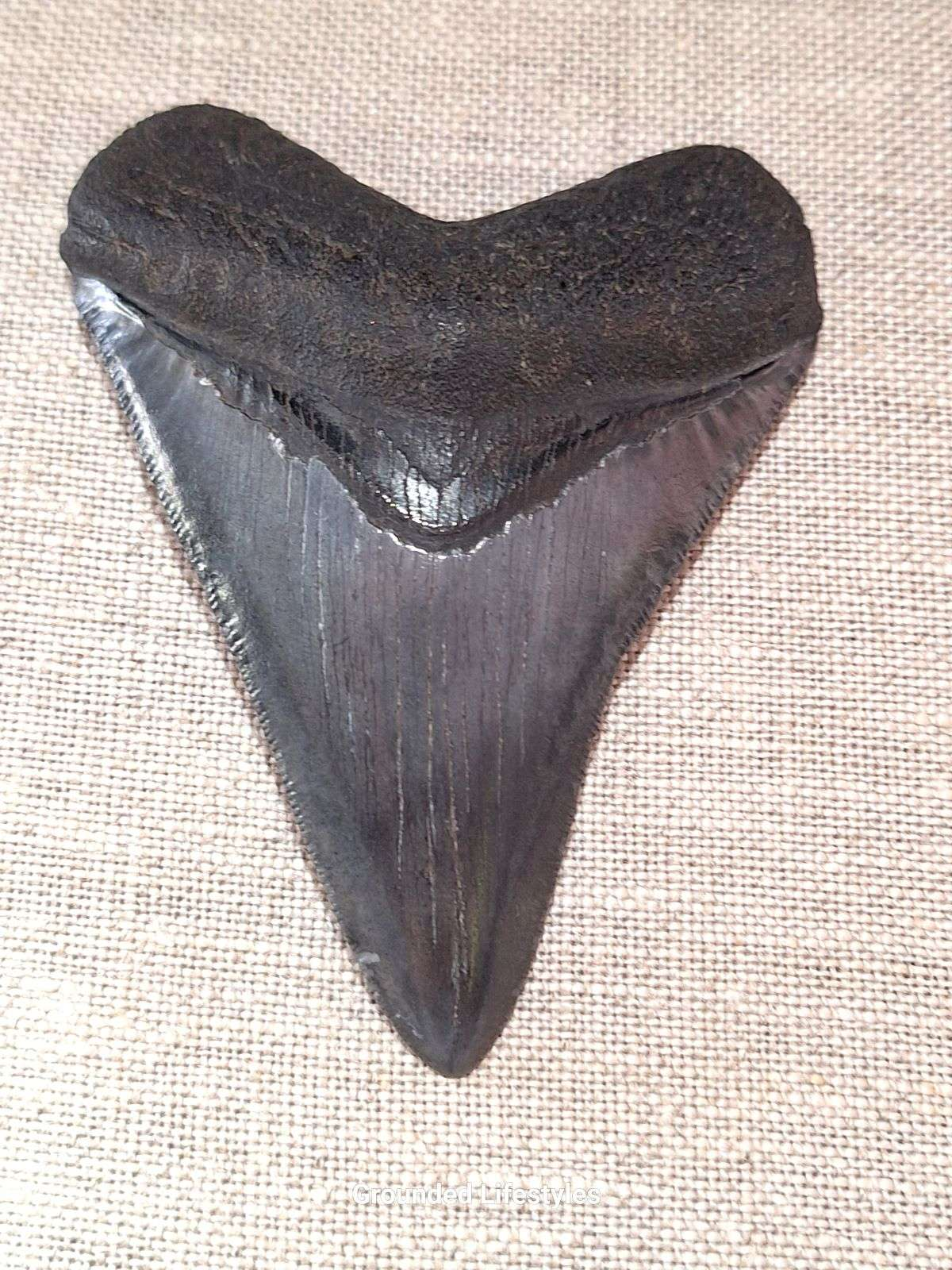
Shark teeth can be displayed individually on small stands or arranged into educational groupings, while fossil fish and plant plates may work well as framed or supported wall displays when their weight and matrix condition allow it.
Our guide to Ammonites, Trilobites & Shark Teeth explores these familiar fossil groups in greater detail and provides additional geological context for specimens that frequently appear in home collections.
The larger lesson is that a fossil’s appearance should not dictate its support system. Its physical structure should.
Meteorites require the same specimen-by-specimen thinking.
A stony chondrite, an iron meteorite, a pallasite, a lunar meteorite, and a Martian meteorite may all have arrived on Earth from space, but they are different materials with different compositions and histories.
Many meteorites contain metallic iron, and iron reacts with moisture and oxygen. How readily an individual meteorite develops oxidation depends on its composition, preparation, terrestrial history, storage conditions, and exposure to contaminants. A meteorite that remained stable for years in one collection may sometimes behave differently after moving into another environment.
Collectors should watch iron-bearing meteorites for new orange or brown areas, flaking, surface changes, or other evidence of corrosion. Keeping susceptible specimens dry and avoiding unnecessary exposure to moisture are sensible preventive steps.
Prepared slices deserve additional care because cutting exposes interior material that was previously protected. Etched iron meteorites have surfaces intentionally prepared to reveal their internal crystalline structure, including the distinctive Widmanstätten pattern visible in many octahedrites. Aggressive polishing or abrasive cleaning can destroy the very structure the preparation was intended to reveal.
For a broader foundation in meteorite care, identification, authenticity, and collecting, our Meteorites 101: Identifying, Collecting & Preserving Space Rocks provides the scientific and collector background behind many of the display recommendations discussed here.
A lunar meteorite may look understated compared with a polished iron meteorite or translucent pallasite, but its story is extraordinary. These are genuine fragments of lunar rock blasted from the Moon by impacts, launched into space, and eventually delivered naturally to Earth.
Because lunar meteorites are stony meteorites rather than large masses of metallic iron, their display considerations are different from the corrosion concerns most commonly associated with iron meteorites. Protection from unnecessary handling, contamination, moisture, and accidental damage is more useful than applying one extremely dry iron-meteorite storage rule to every lunar specimen.
Small lunar fragments are particularly well suited to labeled specimen boxes or acrylic displays because the label provides context that appearance alone cannot. A visitor looking at a small gray, brecciated, or dark stone may have no idea that they are seeing material from the Moon until its origin is explained.
For a deeper look at how lunar meteorites are ejected from the Moon, travel through space, reach Earth, and are scientifically recognized, read Lunar Meteorites: From the Moon to Earth.
A lunar meteorite also works especially well in a library or office alongside astronomy books, lunar maps, or other material connected with planetary science. The specimen does not need elaborate decoration. Its documented lunar origin already provides the story.
Martian meteorites create an equally remarkable display because they are actual pieces of Mars.
These rocks were ejected from the Martian surface by powerful impacts, traveled through interplanetary space, and eventually intersected Earth. Scientists have been able to establish their Martian origin through several lines of evidence, including characteristics of their mineralogy and chemistry and, in some specimens, trapped gases that correspond closely with measurements of the Martian atmosphere.
Shergottites, nakhlites, and chassignites represent important groups of Martian meteorites and give scientists direct physical material from another planet without having to retrieve those particular rocks through a spacecraft sample-return mission.
For the home collector, Martian meteorites are often relatively small, making presentation and labeling especially important. A protective display box containing the meteorite name or classification, recovery information when known, and its Martian origin gives a small specimen enough visual and educational presence to become a meaningful display.
Our Mars Meteorites: From the Red Planet to Earth article explores their journey, geology, classification, identification, scientific importance, and collector significance in greater depth.
Grounded Lifestyles also offers planetary material through our Meteorites & Tektites Collection, where available lunar, Martian, iron, stony, and other meteorite specimens can be explored together.
Few meteorites have the visual impact of a well-prepared pallasite slice.
Pallasites are stony-iron meteorites containing olivine crystals surrounded by an iron-nickel metal matrix. When a sufficiently thin slice is illuminated from behind, translucent olivine can glow in shades ranging from golden yellow to green, producing an appearance unlike almost anything else in a meteorite collection.
That makes pallasites particularly suited to intentional display. A small stand with controlled backlighting can reveal features that are difficult to appreciate when the specimen lies flat in a case. The lighting does not need to remain on continuously. Turning it on when the specimen is being viewed provides the dramatic effect while keeping the presentation practical.
The metallic portion of a pallasite still means environmental conditions matter, so a beautiful illuminated display should not come at the expense of sensible moisture control.
The science is equally interesting. Pallasites were traditionally described as material representing the boundary between the metallic core and rocky mantle of differentiated asteroids, although research into their formation has produced a more complicated picture involving mixing and impact processes.
Our Pallasite Meteorites guide explores their olivine crystals, metal matrix, formation, famous examples, scientific importance, and collector appeal.
Pallasites demonstrate why meteorite display should respond to the specimen itself. Their scientific structure and visual character are inseparable, so good presentation actually helps the viewer understand what makes the meteorite unusual.
Iron meteorites often have the strongest sculptural presence in a collection. Their dense metallic appearance, natural surface features, and prepared etched slices make them look very different from most terrestrial rocks.
They also deserve careful environmental attention because their iron-nickel metal can corrode when exposed to unfavorable moisture conditions.
Prepared slices frequently reveal the Widmanstätten pattern, an interlocking crystalline structure that developed during extraordinarily slow cooling inside a meteorite parent body. The pattern is one of the most recognizable features associated with many octahedrite iron meteorites, but it is not simply decoration. It records part of the meteorite’s thermal history.
That makes abrasive cleaning, sanding, or casual refinishing particularly inappropriate for an etched slice. If corrosion develops, the goal should be to address the actual problem without unnecessarily destroying the prepared surface.
Gibeon Meteorites provide a particularly good example. Gibeon is famous among collectors for the beautiful crystalline pattern revealed on properly prepared slices, making it an excellent meteorite for understanding the relationship between internal structure, scientific history, and display.
The broader Meteorites 101 guide provides additional information about iron meteorites alongside stony and stony-iron types.
Humidity is often discussed as though every collection requires one precise number. A private collector generally benefits more from understanding which specimens are sensitive and preventing unfavorable extremes than from trying to turn an entire house into museum storage.
For stable fossils, a reasonably consistent indoor environment away from damp basements, bathrooms, exterior moisture, and dramatic temperature swings may be sufficient. Fossils containing unstable minerals require more attention.
Iron-bearing meteorites are an obvious example on the extraterrestrial side. A dry display environment can help reduce corrosion risk, and a small sealed or well-designed enclosure with an appropriate desiccant can create a more controlled microenvironment around a sensitive specimen without requiring the entire room to be maintained at unusually low humidity.
A small digital humidity monitor can be useful when a collector owns particularly sensitive material. The purpose is not to obsess over every percentage point. It is to recognize whether a supposedly dry display case is actually becoming humid.
Silica gel can help manage moisture inside an appropriate enclosure, but it is not something that can simply be placed in a case and forgotten indefinitely. Desiccants eventually need to be monitored, regenerated, or replaced according to the product being used.
For valuable, historically significant, unusually reactive, or actively deteriorating specimens, conservation guidance appropriate to the individual piece is preferable to experimenting with treatments at home.
A sunny windowsill may make a fossil or meteorite look dramatic for a few hours, but it is rarely the best long-term display location.
Direct sunlight introduces heat and ultraviolet exposure while creating repeated temperature changes as the sun moves across the room. Those changes can affect specimens, adhesives, labels, mounts, display cases, and restoration materials.
Fossils can be particularly complicated because a single specimen may contain several materials. The fossil, matrix, consolidant, repair, paint, or restoration material may not respond identically to prolonged light and heat.
Meteorites are not normally displayed for color preservation in the same way as light-sensitive minerals, but direct sunlight can still heat the specimen and its enclosure unnecessarily.
Controlled LED lighting is usually a more practical choice because it allows you to illuminate a display when it is being viewed and turn the light off when it is not needed. Good lighting should reveal texture, relief, metallic structure, and form without becoming the main event.
For fossils, light coming slightly from the side can be particularly effective because small shadows emphasize ribs, impressions, shell structure, bone texture, and other surface details.
For many collectors, an enclosed glass or acrylic cabinet provides the best compromise between visibility and protection.
Cases reduce dust and unnecessary handling while making it easier to control the immediate environment around sensitive specimens. They also give fossils and meteorites visual separation from ordinary household objects, which can make even a modest collection feel more intentional.
The cabinet does not need to resemble institutional museum furniture. Wood and glass can create a traditional natural-history feeling, while metal and glass work beautifully with meteorites and contemporary interiors. A simple acrylic case can protect one small specimen without requiring an entire cabinet.
Inside the case, avoid crowding. One large ammonite with enough space around it can be far more impressive than several fossils competing for attention. A meteorite placed on a small stand with its identification visible becomes a defined object rather than a dark stone disappearing at the back of a shelf.
The case should protect the collection, but it should also make you want to look at it.
Fossil fish, plant impressions, trackways, and other slab-form specimens can work beautifully on walls because their shapes already resemble framed natural artwork.
Weight and stability have to come before appearance.
A heavy fossil should never be mounted using hardware selected as though the specimen were an ordinary picture frame. The mounting system needs to account for the total weight of the fossil and frame, the wall construction, mounting points, and the condition of the specimen itself.
Thin matrix can fracture if stress is concentrated in the wrong location. Repaired specimens may contain joints that are strong enough for ordinary display but inappropriate for load-bearing mounting. A fossil that cannot safely support a vertical orientation should be displayed on an angled stand or horizontal surface instead.
When wall mounting is appropriate, give the fossil enough visual space to be appreciated. Several related specimens can create a gallery wall, but they do not need to be arranged with perfect symmetry. Different sizes often produce a more natural composition when the spacing between them remains intentional.
This is where fossils cross beautifully into home design without losing their scientific character.
Small fossils often disappear on a large shelf. Shadow boxes solve that problem by giving them boundaries and context.
A trilobite, shark tooth, small ammonite, brachiopod, or other modest specimen can become much more visually important when displayed against a contrasting background with a simple identification label. Several related fossils can also be combined to tell a story about a locality, geological period, or ancient environment.
The important distinction is between mounting and permanently attaching.
Collectors should avoid unnecessary irreversible adhesives, particularly on specimens with scientific, historical, or monetary value. Whenever practical, use a support system that holds the fossil securely without permanently altering it.
Labels can include the specimen name, locality, geological age, formation, or other known information. A few lines are usually enough for the visible display. Detailed records can remain in the collection catalog.
That small label transforms the experience. Instead of seeing an interesting object, a visitor begins to understand that they are looking at an organism that lived millions of years ago.
A meteorite without its identification can quickly become an anonymous piece of rock or metal. A fossil separated from its locality loses part of its scientific history.
Keep the labels.
For fossils, useful information can include identification, locality, geological formation, age, collector, and acquisition history when known. Meteorite labels may include the recognized meteorite name, classification, find or fall location, weight, acquisition information, and collection history.
Not all of that information needs to appear on the visible display card. A small card can contain the most important details while complete records remain elsewhere.
Older labels deserve particular care. A handwritten card from a previous collection may look insignificant, but it can document provenance that cannot be reconstructed later.
This becomes especially important when specimens pass from one generation of collectors to another. The specimen preserves natural history, while the label may preserve decades of human collecting history surrounding it.
Fossils and meteorites can be displayed together beautifully because the contrast between them immediately creates a story about time.
A fossil represents ancient life and geological environments on Earth. A meteorite represents material formed elsewhere in the solar system. Place the two together and the display can move from Earth history to planetary history without needing an elaborate explanation.
You can take that concept further by giving individual meteorite types their own context. A lunar meteorite can sit near material about the Moon, while a Martian meteorite naturally connects with books or imagery related to Mars. A pallasite can become a visual centerpiece because its olivine-and-metal structure is so striking, while a Gibeon iron meteorite can introduce the story of asteroid interiors, iron-nickel crystallization, and extremely slow cooling.
The result does not need to resemble a classroom display. A few carefully chosen specimens, good spacing, discreet labels, and related books or natural materials can make the scientific relationships visible without overwhelming the room.
A fossil can become part of an interior without becoming generic décor.
Large ammonites, fossil fish plates, petrified wood, and other visually substantial pieces can serve as focal points. Smaller fossils work well on bookshelves where their scientific story complements books, maps, antiques, artwork, or other objects collected over time.
Libraries and home offices are particularly natural settings because fossils invite close examination. A trilobite beside a paleontology book immediately creates context. A fossil displayed with an old geological map connects the specimen to place and exploration.
Living rooms offer more freedom to treat fossils as natural sculpture. A large ammonite on a substantial stand can anchor a console or shelving arrangement, while smaller fossils can be incorporated without turning the entire room into a themed space.
The objective is not to make a home look like a museum gift shop. It is to allow meaningful natural objects to live comfortably alongside everything else that tells the story of the people who live there.
That relationship between nature, collecting, home, and everyday surroundings is explored throughout the Grounded Lifestyles Lifestyle articles, where natural materials are considered not only as things to collect but as part of the environments we create around ourselves.
Meteorites have a particularly strong presence in offices, libraries, and study areas because their scientific story encourages people to look more closely.
An iron meteorite can feel almost architectural. A pallasite slice becomes natural cosmic art when illuminated. A lunar meteorite introduces the geology of the Moon, while a Martian meteorite brings material from another planet into a space no larger than a desk.
Small specimens benefit the most from good labeling. A tiny meteorite sitting loose on a shelf can look insignificant to someone who does not recognize it. Put that same specimen in a labeled display explaining that it came from the Moon or Mars, and its physical size suddenly becomes almost irrelevant.
Likewise, a pallasite meteorite becomes more interesting when the viewer understands why olivine occurs within its metallic structure, while an iron specimen becomes more meaningful when the viewer understands the crystalline patterns that can develop during extremely slow cooling.
This is one of the reasons meteorite collecting is so compelling. A specimen does not have to be visually enormous to represent an enormous story.
Natural-history specimens can also work in meditation rooms, reading spaces, or other areas designed to feel quieter and less cluttered, but this is one area where it is important to distinguish science from personal symbolism.
Scientifically, an ammonite represents an extinct marine cephalopod preserved through geological processes, and a meteorite is extraterrestrial material that survived its passage through Earth’s atmosphere and reached the surface. Those facts do not establish specific medical or wellness effects.
People may nevertheless choose these objects for personal, cultural, spiritual, or metaphysical reasons. The spiral form of an ammonite may symbolize cycles, continuity, growth, or deep time. Someone may choose a meteorite as a symbol of resilience, transformation, connection to the cosmos, or simply the extraordinary scale of the universe.
Those meanings can be personally valuable without presenting them as scientific or medical claims.
For readers interested in that broader relationship between natural objects, mindfulness, home, and intentional living, our Lifestyle articles explore ways that nature, collecting, creativity, and personal surroundings can become part of everyday life.
Meteorite preservation advice sometimes becomes surprisingly aggressive. Collectors encounter recommendations involving oils, waxes, chemicals, abrasives, rust removers, sealants, and repeated refinishing.
More treatment is not automatically better preservation.
An etched iron meteorite has a prepared surface. A historic specimen may have an existing conservation history. A slice may have been stabilized or coated before you acquired it. Applying another material without understanding what is already present can complicate future treatment and alter the appearance of the specimen.
Microcrystalline wax is used in some conservation and collection contexts, but that does not mean every meteorite should automatically receive a scheduled coat of wax every year or two.
For the private collector, prevention is generally the better starting point. Keep susceptible material dry, handle it appropriately, monitor it for changes, and preserve its documentation. If a valuable meteorite begins actively deteriorating, obtaining advice appropriate to that particular specimen is preferable to experimenting with a generalized treatment found online.
Our Meteorites 101: Identifying, Collecting & Preserving Space Rocks provides additional information for collectors who want to understand preservation in the context of meteorite composition and identification.
Many collection accidents occur during handling rather than while a specimen is sitting quietly on a shelf.
Before moving a heavy fossil, decide where it is going and how you will support it. Lift from a stable base or matrix rather than projecting fossil structures. Do not pick up an ammonite by an exposed edge simply because it provides a convenient grip, and do not place pressure on trilobite spines, thin fossil plates, or repaired areas.
Meteorites also benefit from deliberate handling, particularly prepared metal surfaces and slices. Clean, dry hands may be appropriate for some stable specimens, while clean gloves can be useful when avoiding oils and fingerprints is important. The correct approach depends on the specimen and surface rather than a universal rule that every meteorite must always be handled the same way.
The same restraint applies to cleaning. Dust does not automatically justify water, chemicals, polishing, or aggressive brushing.
Know the specimen first. Once you understand its composition and condition, you can decide whether cleaning is actually necessary and what method is appropriate.
One of the easiest preservation habits costs nothing: look closely at your collection.
A specimen that has been in the same cabinet for years can become so familiar that subtle changes go unnoticed. Periodically examine iron-bearing meteorites for corrosion, fossils for cracking or flaking, mounts for movement, labels for deterioration, and display cases for unexpected moisture.
Photographs can help. An occasional clear image of an important specimen provides a reference that can make gradual changes easier to recognize.
This is particularly useful when you inherit an older collection or acquire material that has already spent decades under unknown conditions.
Preservation does not have to mean constant intervention. Often it means noticing a problem early enough that intervention remains unnecessary or minimal.
A collector does not need to display everything at once.
Rotation reduces clutter, gives individual specimens more visual importance, and allows fragile pieces to spend periods in protected storage. It also creates one of the most overlooked pleasures of collecting: rediscovery.
Choose a theme for several months. Display Paleozoic fossils, meteorites from several classifications, planetary meteorites, specimens connected to Arizona, or pieces acquired during a particular collecting period. Later, replace them with another group.
The room changes without buying anything new.
For a serious collector, this approach also creates a useful distinction between the collection and the exhibit. The collection may contain hundreds of objects. The exhibit is the smaller group you have chosen to tell a particular story right now.
That is essentially what museums do, and the concept works just as well at home.
Yes. They actually create an unusually strong pairing because fossils represent Earth’s biological and geological past while meteorites introduce material from beyond our planet. Keep the individual preservation requirements of each specimen in mind rather than assuming everything in a shared cabinet needs identical conditions.
Not necessarily. Lunar and Martian meteorites are stony achondrites, while iron meteorites contain much larger amounts of metallic iron and can present greater corrosion concerns. Care should reflect the actual meteorite type rather than applying one storage rule to every extraterrestrial specimen. Our Meteorite Classification Guide explains these differences in greater detail.
Thin pallasite slices can contain translucent olivine crystals surrounded by an iron-nickel matrix. Controlled backlighting allows light to pass through the olivine and reveals the internal structure dramatically. Our Pallasite Meteorites article explains their structure, formation, and collector appeal.
Small planetary meteorites benefit from protective specimen boxes and strong labeling because appearance alone rarely communicates their significance. Include the meteorite classification and planetary origin, along with recovery or locality information when known. Readers can then learn more through our guides to Lunar Meteorites and Mars Meteorites.
Controlled LED lighting is a practical choice for most home displays because it provides good visibility without the heat associated with some older lighting technologies. Positioning light at an angle can reveal fossil relief and meteorite texture particularly well. Avoid relying on prolonged direct sunlight as the primary display lighting.
Potentially, but the mounting system must be appropriate for the specimen’s weight, condition, matrix, frame, and wall construction. A heavy fossil should not be treated like an ordinary framed print. When there is uncertainty about the specimen or mounting surface, professional mounting is the safer option.
Keep susceptible specimens away from moisture and unnecessarily humid environments, avoid introducing contaminants during handling, and consider a dry microenvironment for reactive material. Monitor the meteorite for changes rather than assuming that one treatment will permanently prevent corrosion.
Not automatically. Some prepared iron meteorites may have protective coatings or previous conservation treatments, but the correct approach depends on the meteorite and its existing condition. Do not apply wax, oil, rust remover, or another coating simply because it appears in a generic care recommendation.
Yes, particularly when locality and geological information are known. Even a discreet label with identification, locality, and age makes the display more informative while helping preserve provenance. Keep original collection and dealer labels even if you create a cleaner modern display card.
A fossil and a meteorite can occupy only a few inches of shelf space while representing almost unimaginable spans of time and distance.
A fossil connects the room around you with an environment that disappeared millions of years ago. An ordinary chondrite carries primitive material from the early history of the solar system. An iron meteorite can preserve evidence of processes that occurred inside an ancient asteroid. A pallasite combines metal and olivine into one of the most visually distinctive meteorite types. A lunar meteorite brings genuine material from the Moon into the collection, while a Martian meteorite provides a physical connection to the geology of Mars.
That is what makes fossils and meteorites so powerful as both collector objects and home displays. Their stories are already extraordinary. Good display design simply makes those stories easier to see while protecting the specimens well enough that those stories can continue to be shared.
If the fossil side of the collection interests you most, continue with The Science of Fossilization: How Life Becomes Stone and Ammonites, Trilobites & Shark Teeth, or explore the complete Grounded Lifestyles Fossil Articles.
Meteorite collectors can begin with Meteorite Classification and Meteorites 101 before moving deeper into Lunar Meteorites, Mars Meteorites, Pallasite Meteorites, and Gibeon Meteorites. The complete Meteorites Blog brings the broader extraterrestrial collection of articles together.
For a wider look at incorporating an entire natural-history collection into your home, continue with From Showcase to Shelf: How Collectors Display Crystals, Fossils & Meteorites at Home, or explore our Lifestyle articles for more connections among natural materials, collecting, home, creativity, and intentional living.
When you are ready to add another piece of natural history to your own collection, browse the Grounded Lifestyles Fossils Collection and Meteorites & Tektites Collection, or visit the Grounded Lifestyles Shop to explore minerals, crystals, fossils, meteorites, jewelry, lapidary materials, and natural pieces for collectors and the home.

At Grounded Lifestyles, our love for crystals began in the peaceful flow of Reiki and energy healing sessions — where we saw how natural stones could amplify intentions, restore balance, and bring comfort. But the more time we spent with these treasures, the more curious we became about their origins. That curiosity led us into the fascinating world of geology and mineral specimen collecting. We fell in love not just with the energy of crystals, but with the science and artistry of their creation — the intricate crystal structures, the vibrant mineral hues, and the wonder of holding a piece of Earth’s history in our hands.