

Every crystal, mineral, fossil, meteorite, and handcrafted piece is selected with purpose. Whether you’re building a museum-worthy mineral collection, searching for a meaningful gift, decorating your home with natural beauty, or beginning your journey into the world of geology, you’ll discover authentic specimens with stories worth sharing.
Over 15 shows a year throughout the Southwest. Check to see if we are coming to a show near you!
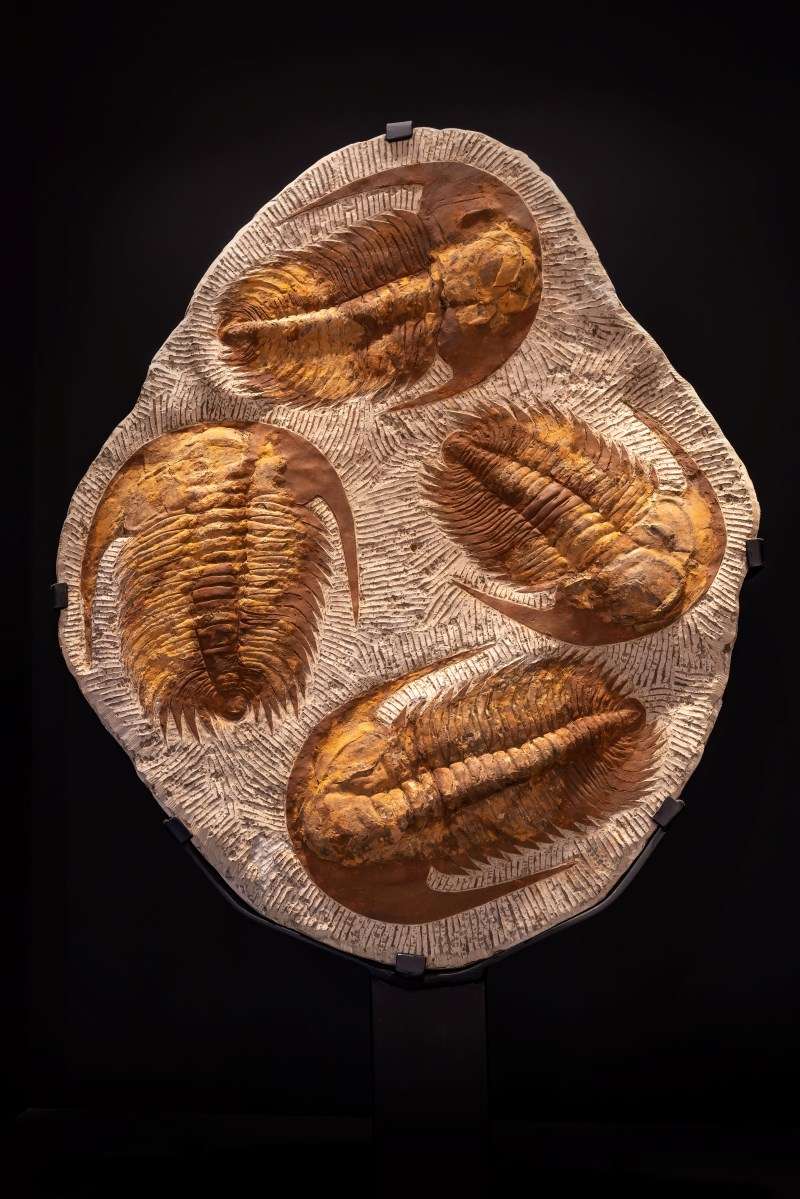
Ammonites, trilobites, and fossil shark teeth are among the most recognizable fossils in the collecting world, but each preserves a very different chapter of Earth’s history. Ammonites record the evolution of marine cephalopods through hundreds of millions of years. Trilobites take us much farther back into the Paleozoic seas, where some of the earliest complex marine ecosystems flourished. Fossil shark teeth preserve evidence of predators whose skeletons were largely made of cartilage and therefore rarely fossilized as complete animals.
For collectors, their appeal goes well beyond age. These fossils can teach us how organisms lived, how their remains were preserved, how geological conditions changed them after burial, and why two specimens of the same general type can differ dramatically in quality and value.
Learning to recognize natural anatomy, mineralization, preparation, repair, and restoration also makes you a better buyer. A beautifully prepared fossil can be completely authentic, while an impressive-looking specimen can contain extensive reconstruction. Neither preparation nor restoration automatically makes a fossil undesirable—the important issue is knowing what you are buying.
This guide takes a collector-focused look at ammonites, trilobites, and shark teeth, including identification, fossilization, preparation, authenticity, provenance, value, and long-term care.
If you are new to the science behind preservation itself, begin with our guide to how fossils form or explore The Science of Fossilization for a closer look at permineralization, replacement, recrystallization, molds, casts, and other fossilization processes.
Before evaluating a fossil, it helps to understand what actually survived.
A fossil does not necessarily consist of the organism’s original material. Groundwater, sediment chemistry, pressure, and time can alter remains substantially after burial.
Permineralization occurs when mineral-bearing groundwater enters pores and voids in material such as bone or wood and deposits minerals within them.
Replacement occurs when original material is dissolved and new mineral material forms in its place.
Recrystallization changes the mineral structure of original hard parts. Aragonite in shells, for example, may transform into more stable calcite during diagenesis.
Carbonization can preserve organisms as thin carbon-rich films, while molds and casts may preserve shape even after the original material has disappeared.
These processes matter to collectors because preservation affects far more than appearance. It influences hardness, stability, color, detail, preparation methods, and care.
It also helps explain why locality matters. Two ammonites from different formations may have experienced completely different geological histories and consequently look nothing alike.
Few fossils are as immediately recognizable as an ammonite.
Ammonites were marine cephalopods related more broadly to living squid, octopuses, cuttlefish, and nautiluses. They appeared during the Paleozoic and became extraordinarily diverse during the Mesozoic before disappearing during the end-Cretaceous mass extinction approximately 66 million years ago.
Their abundance, diversity, and relatively rapid evolutionary changes make many ammonite groups particularly useful to paleontologists for correlating and dating marine rock sequences.
For collectors, however, much of the fascination begins with the shell.
The familiar spiral is only the beginning.
An ammonite shell was divided internally into chambers by walls called septa. As the animal grew, it occupied the newest and largest portion of the shell while previously occupied chambers became part of a buoyancy system.
Where the septa met the outer shell wall, they produced patterns called suture lines. These can range from relatively simple to extraordinarily intricate.
Traditionally, collectors encounter three broad descriptive suture styles:
Goniatitic sutures are relatively simple and are characteristic of many Paleozoic ammonoids.
Ceratitic sutures have more complex lobes while the saddles remain comparatively smooth and are strongly associated with many Triassic ammonoids.
Ammonitic sutures can be highly divided and elaborate and are especially familiar among Jurassic and Cretaceous ammonites.
Suture complexity can be visually spectacular, but collectors should not assume that more elaborate sutures automatically make a specimen more valuable. Species, locality, rarity, completeness, size, preservation, preparation, aesthetics, and provenance all matter.
Other features—including ribs, keels, tubercles, shell shape, and ornamentation—can be important for identification.
Some ammonites departed dramatically from the classic tightly coiled form. These heteromorph ammonites developed unusual open coils, hooks, shafts, or irregular shell forms and are especially interesting examples of ammonoid diversity.
Collectors encounter ammonites ranging from dark fossils embedded in matrix to polished specimens filled with colorful calcite.
That variation reflects geology.
Some specimens retain or preserve portions of shell material. Others occur primarily as internal molds. Some have been replaced or filled with calcite, pyrite, silica, or other minerals.
Pyritized ammonites can display a metallic golden-brassy appearance created by iron sulfide mineralization. They can be beautiful, but pyrite-bearing fossils require more careful environmental management because oxidation can cause deterioration.
Some ammonites preserve iridescent shell material. In exceptional cases, ammonite shell can produce gem-quality material such as ammolite, particularly associated with certain Cretaceous ammonites from western North America.
Polished ammonites from Madagascar are another familiar form in the commercial fossil market. Cutting and polishing can reveal internal chambers, mineral fillings, and septal patterns that would otherwise remain hidden.
A polished fossil is not inherently inferior to an unpolished specimen. It is simply a different presentation. Collectors interested primarily in paleontology may prefer natural surfaces and matrix, while others value polished specimens for their internal geometry and decorative appeal.
Locality can dramatically affect both appearance and collector interest.
Madagascar is well known for abundant Cretaceous ammonites, including specimens cut and polished to reveal internal chambers and mineralization.
The Jurassic Coast of southern England, including the Dorset region around Lyme Regis, is internationally famous for Jurassic fossils and ammonites.
Morocco supplies a tremendous variety of fossil material to the international market, including ammonites. The volume of Moroccan fossil production also makes disclosure especially important because specimens can range from largely natural fossils with ordinary preparation to heavily restored or reconstructed pieces.
The correct response is not to assume that a fossil from a particular country is fake. Instead, evaluate the individual specimen, seller disclosure, preparation, anatomy, matrix, and provenance.
Start with the anatomy.
Natural sutures should correspond logically to the shell and its chambers rather than appearing as arbitrary decorative lines. Look at whether ribs and other ornamentation continue naturally around the fossil.
Examine repairs and breaks. Fossils are brittle objects that have survived enormous geological processes, extraction, and preparation. A repaired break is not unusual and does not automatically make a specimen undesirable.
What matters is disclosure.
Look closely at the relationship between fossil and matrix. Changes in texture, color, cracks, fillers, or unnatural boundaries can indicate repair or reconstruction, although none of these observations alone proves a specimen is fake.
Ultraviolet light can sometimes reveal differences among adhesives, fillers, coatings, fossil material, and matrix, but fluorescence is not a definitive authenticity test. Different natural minerals fluoresce as well.
For a deeper discussion of composites, restoration, carving, repairs, and reproductions, see our guide to fossil fakes and restoration.
Long before dinosaurs appeared, trilobites were already thriving in Earth’s oceans.
Trilobites were marine arthropods that first appeared during the Cambrian Period more than 500 million years ago. They diversified into thousands of species and survived for roughly 270 million years before disappearing during the end-Permian mass extinction.
Their diversity makes trilobites one of the great fossil groups for collectors. Some specimens are relatively simple and abundant. Others possess elaborate spines, unusual body shapes, or exceptionally preserved eyes.
A good trilobite is not simply an old object. It is a remarkably detailed record of arthropod anatomy from an ecosystem that vanished hundreds of millions of years ago.
Understanding a few anatomical terms dramatically improves your ability to evaluate a specimen.
The cephalon is the head region. Its central raised portion is called the glabella.
The segmented middle section is the thorax, which allowed many trilobites to flex and, in some species, enroll defensively.
The rear portion is the pygidium, composed of fused segments.
Some trilobites also possessed prominent genal spines extending from the cephalon, while other species developed elaborate body spines.
Eyes are particularly fascinating.
Most trilobites possessed holochroal eyes, containing many small lenses beneath a common corneal surface. Certain trilobites, particularly phacopids, developed schizochroal eyes with larger, individually separated calcite lenses.
When those structures are genuinely preserved, they can be among the most compelling details in a trilobite specimen.
Many trilobites could enroll their bodies, bringing the head and tail regions together as a defensive response.
An authentic enrolled specimen can therefore preserve actual behavior as well as anatomy.
Collectors should still examine enrolled specimens carefully. Completeness, preparation, matrix, repairs, and restoration remain important. A dramatic pose does not automatically establish authenticity.
The best specimens combine recognizable anatomy with believable preservation and competent preparation.
Many trilobites do not emerge from the ground looking like finished display specimens.
They may be partially or almost completely enclosed in matrix. Revealing delicate eyes, segments, and spines can require many hours of skilled preparation.
Professional preparators commonly use pneumatic tools such as air scribes to remove matrix in controlled increments. Fine abrasive techniques may also be used when appropriate to the fossil and surrounding rock.
Good preparation reveals anatomy without inventing it.
That distinction matters. Aggressive preparation can remove natural detail, while reconstruction can create structures that were never preserved.
An extremely elaborate trilobite offered at an implausibly low price deserves closer inspection, particularly when delicate spines, eyes, and body segments appear suspiciously perfect.
That does not mean inexpensive trilobites are necessarily fake. Many genuine trilobites are common and affordable. Price becomes meaningful only when considered alongside species, preparation difficulty, completeness, locality, and preservation.
Look first at the relationship between the fossil and its matrix.
Natural bedding, fractures, grain size, and coloration should make geological sense. Areas of reconstruction may display different textures or surfaces.
Examine the eyes when present. Genuine calcite lenses have organized geometry associated with the animal’s anatomy. Artificial reconstruction can sometimes appear overly smooth or poorly integrated with the surrounding cephalon.
Look at spines and segment boundaries under magnification. Tool marks are not necessarily a problem—prepared fossils will often show evidence of preparation—but anatomical features should still make sense.
Repairs to broken specimens and restoration of small missing areas are common. A repaired spine tip is very different from a largely reconstructed animal.
Again, disclosure is the key.
Sharks present paleontologists with an interesting preservation problem.
Unlike mammals and dinosaurs, sharks have skeletons composed primarily of cartilage rather than heavily mineralized bone. Cartilage generally has a much lower preservation potential.
Their teeth are different.
Sharks continually shed and replace teeth throughout their lives. Those durable mineralized teeth can enter marine sediments and survive long after the rest of the animal disappears.
That is why shark teeth dominate much of the shark fossil record and why collectors can encounter them in extraordinary numbers.
A single tooth can still reveal information about anatomy, feeding strategy, geological age, and the marine environment in which it was deposited.
The crown is the exposed cutting or grasping portion of the tooth. Depending on the shark, it may be broad, narrow, smooth-edged, or serrated.
The root anchors the tooth during life and is often critical to collector quality. Complete roots are generally more desirable than heavily damaged ones.
Some fossil shark teeth also display a bourlette, a darker band or region between the crown and root that can be especially noticeable on large megatooth shark teeth.
Some species possess small accessory cusps called cusplets.
Shape, serrations, root structure, cusplets, crown proportions, and geological context can all contribute to identification.
Few fossil teeth receive more attention than those of Megalodon.
Today the giant megatooth shark is generally referred to as Otodus megalodon, although collectors may encounter older literature and labels using names such as Carcharocles megalodon.
Megalodon teeth can reach impressive sizes, but size alone does not determine quality or value.
Collectors also examine serration preservation, tip condition, enamel quality, root completeness, symmetry, feeding wear, repairs, restoration, coloration, and locality.
Pathological teeth can be especially interesting. Abnormal growth, unusual curvature, damage during development, or other irregularities can produce specimens that differ dramatically from typical teeth.
Those differences can make a tooth scientifically and aesthetically interesting even when it would not receive a conventional “perfect” grade.
The color of a fossil shark tooth usually does not represent the color of the tooth during the animal’s life.
Instead, color develops through interactions with the surrounding sediment and groundwater during burial and fossilization.
Iron compounds, phosphate-rich sediments, and other minerals can contribute blacks, grays, browns, reds, creams, greens, and other colors.
This is one reason locality is valuable. Similar-looking teeth from different deposits can have very different geological histories.
The southeastern United States, including Florida and the Carolinas, is famous for fossil shark teeth from marine deposits, rivers, beaches, and phosphate-rich sediments. Morocco and Peru are also major sources of fossil shark material in the international collector market.
Large shark teeth deserve careful inspection because damaged specimens can be repaired or reconstructed.
Look closely at the transition between crown and root. An unnatural seam, abrupt color difference, or inconsistent texture may indicate a repaired or composite specimen.
Inspect serrations under magnification. Natural serrations should be consistent with the tooth’s anatomy and wear. Artificially reshaped edges may display tool marks or unnatural geometry.
Excessive polishing can also change a fossil’s appearance by removing natural surface texture.
Do not apply solvents such as acetone to a fossil simply to test for paint, glue, or coatings. Solvents can affect adhesives, consolidants, restoration materials, labels, or even portions of a specimen. When authenticity is uncertain, magnification, seller disclosure, provenance, comparison with known specimens, and professional evaluation are safer approaches.
One of the most important lessons for a beginning collector is understanding the difference between preparation, repair, restoration, reconstruction, and fabrication.
Preparation removes surrounding material to reveal the fossil.
Repair reconnects genuine portions of a specimen that have broken apart.
Restoration replaces limited missing areas to improve stability or presentation.
Reconstruction can involve rebuilding substantial missing portions.
A fabricated fossil is represented as genuine even though significant structures—or sometimes the entire specimen—were artificially created.
Those distinctions matter.
A fossil that was professionally repaired is still a genuine fossil. A prepared trilobite is still genuine. An ammonite cut and polished to expose its chambers is still genuine.
The issue becomes problematic when substantial restoration or reconstruction is hidden from the buyer.
Our detailed guide to spotting fossil fakes and restorations goes further into the warning signs collectors can learn to recognize.
Professional fossil preparation can involve mechanical tools, air scribes, fine abrasive equipment, microscopes, adhesives, and consolidants.
The exact method depends on both the fossil and its matrix. A technique appropriate for a durable fossil in limestone may be completely inappropriate for a fragile specimen in shale.
Conservators and preparators may use reversible conservation materials such as Paraloid B-72, an acrylic copolymer widely used in museum conservation. However, collectors should not automatically apply consolidants simply because a specimen appears fragile.
Conservation treatments should be chosen for the individual specimen, and any treatment becomes part of that fossil’s history.
When purchasing a significant prepared fossil, useful questions include: How much restoration is present? Which portions were repaired? Is the matrix original? Has the specimen been consolidated? Are reconstructed areas disclosed?
A knowledgeable seller should be willing to discuss those issues.
There is no single formula for fossil value.
Scientific and collector interest often begin with identification and preservation. Important anatomical features should be present and recognizable.
Completeness matters, but differently for different fossils. A complete trilobite may be far more desirable than an isolated fragment. A shark tooth with an intact root, tip, and serrations usually attracts more interest than a heavily worn example. An ammonite with excellent sutures or unusual preservation may command attention even if it is not enormous.
Rarity matters, but rarity must be specific. A fossil type may be common overall while a particular species, locality, preservation style, or size is uncommon.
Provenance is increasingly important as well. A specimen accompanied by reliable locality, geological formation, collection history, or an old collection label carries information that an unidentified fossil cannot provide.
Preparation quality can substantially influence value. Skilled preparation may reveal important structures; aggressive preparation can destroy them.
Finally, disclosure matters. A specimen with an honestly documented repair can be more desirable than an apparently flawless specimen whose reconstruction is hidden.
Our article on the fossil market and fossil value examines these factors in greater detail.
A fossil’s label can be almost as important as the fossil itself.
At minimum, preserve any information about locality, formation, geological age, species identification, previous collection, seller, and acquisition date.
Never discard an old handwritten collection label merely because a newer printed label looks better. Historic labels can document provenance that may be impossible to reconstruct later.
This is especially important with older collections and specimens from historic or restricted localities.
The same principle applies when purchasing. “Morocco” or “USA” is better than no locality, but a documented formation, region, quarry, mine, river, or collecting site can add significantly more geological meaning.
For collectors who want to develop this habit from the beginning, Fossil Collecting 101 covers collecting, preparation, documentation, and responsible collection practices.
There is no universal fossil-care rule because fossils can contain very different minerals and occur in very different matrices.
The safest general approach is a stable indoor environment with minimal rapid fluctuations in temperature and humidity.
Avoid prolonged exposure to direct sunlight, particularly for specimens with light-sensitive coatings, labels, or certain forms of preservation.
Handle fossils by their strongest portions or by the supporting matrix. Do not lift a trilobite by a spine or a shark tooth by its tip.
For routine dust removal, a soft brush or gentle air blower is often preferable to washing.
Avoid acids, bleach, household cleaners, oils, and untested chemicals. Even water can be inappropriate for some fossils or matrices.
Pyritized ammonites and other pyrite-bearing fossils deserve additional care.
Pyrite can oxidize under unfavorable environmental conditions. Once deterioration begins, a specimen may develop cracking, powdery alteration products, discoloration, or an acidic odor.
Humidity management is therefore particularly important for susceptible pyrite fossils.
If deterioration is suspected, isolate the specimen from other fossils and seek appropriate conservation advice rather than experimenting with household chemicals.
A stable fossil that has survived for decades does not necessarily need treatment. Preventive environmental care is generally preferable to unnecessary intervention.
For broader advice about creating a safe display environment, see our guide to displaying fossils and meteorites safely.
No single visual clue proves that a fossil is fake, but several observations should prompt more questions.
An elaborate specimen offered at an implausibly low price deserves closer examination.
Large differences between the color or texture of a fossil and surrounding matrix may indicate repair or reconstruction.
Repeated textures, unnatural symmetry, obvious molding characteristics, extensive filler, or anatomical features that do not make biological sense can be warning signs.
An extremely glossy surface may indicate coating or polishing, although polishing itself is common and legitimate in many decorative fossils.
The goal is not to become suspicious of every prepared fossil. It is to learn enough about genuine anatomy and preparation that you can ask better questions.
Responsible fossil collecting also means understanding where specimens came from.
Fossil-collecting laws vary dramatically by country, state, land ownership, fossil type, and locality. Vertebrate fossils are often subject to stricter regulations than common invertebrate or plant fossils, particularly on public land.
Do not assume that because a fossil is legal to own, collecting it personally from any location would also be legal.
Protected sites, parks, scientific localities, cultural heritage laws, export restrictions, and landowner rights can all affect collection and sale.
Documented, legally sourced specimens protect both the collector and the scientific information associated with the fossil.
A strong collection does not need to begin with the biggest or most expensive fossils.
Start with representative specimens that teach you something.
A well-preserved ammonite with visible sutures can teach shell anatomy and preservation. A trilobite with recognizable cephalon, thorax, pygidium, and eyes can teach arthropod anatomy. A complete shark tooth can teach crown, root, serration, and mineralization.
From there, build depth.
You might collect ammonites from several geological periods or localities. You could compare different trilobite eye structures or body forms. A shark tooth collection might explore different species, ages, localities, sizes, or preservation colors.
You can also build around geology rather than taxonomy by collecting different fossilization styles: pyritization, silicification, calcite replacement, molds, casts, carbon films, and fossils preserved in concretions.
That approach connects the specimen directly to the geological processes explored in The Science of Fossilization.
Most importantly, document what you acquire. Keep locality information, seller records, old labels, restoration disclosures, and any known collection history with the specimen.
A collection becomes more meaningful when it preserves information as carefully as it preserves objects.
When evaluating a fossil for purchase, slow down and look beyond immediate appearance.
Ask what it is and where it came from. Examine the features that support the identification. Look for preparation, repairs, restoration, and reconstructed areas. Consider whether the preservation makes geological sense for the stated locality.
Then decide why you want the specimen.
A polished ammonite may be perfect for someone who loves chamber structure and natural décor. A trilobite in matrix may appeal to a collector focused on anatomy and preparation. A worn shark tooth with excellent locality documentation may be more meaningful to one collector than a larger but poorly documented specimen.
There is no single correct way to collect fossils.
The goal is to understand what you are buying.
When browsing the Grounded Lifestyles Fossils Collection, compare locality, preservation, condition, preparation, and geological character rather than judging specimens by size alone.
Some are and many are not. All three groups include common material as well as genuinely scarce species, localities, sizes, preservation styles, or exceptional specimens. “Millions of years old” does not automatically mean rare.
Start with anatomy, matrix continuity, preparation marks, eyes, segment geometry, and restoration disclosure. No single test establishes authenticity. Learning what genuine examples of the species look like is one of the most useful tools a collector can develop.
Yes. Repairing broken pieces of an authentic fossil does not make the fossil fake. The important issue is whether repair and restoration are accurately disclosed.
They can absolutely be genuine. Cutting and polishing are preparation choices that expose internal chambers and mineralization. A polished fossil should simply be represented accurately as polished.
Some ammonites have been mineralized with pyrite or related iron sulfide minerals. These specimens can display a metallic brassy appearance and may require more careful humidity management.
The color develops through mineralization and interaction with the surrounding sediments and groundwater. Fossil shark teeth can be black, gray, brown, cream, red, green, or other colors depending on their burial environment.
Collectors may encounter several names in older literature and specimen labels, but the giant megatooth shark is now commonly classified as Otodus megalodon. Older collection labels should generally be preserved because they are part of a specimen’s history even when taxonomy later changes.
Keep the identification, locality, geological formation and age when known, seller, purchase date, restoration information, previous collection history, and original labels. Provenance that is lost may be impossible to recover later.
Not automatically. A consolidant is a conservation treatment and should be appropriate for the fossil, matrix, and condition. Stable fossils generally should not receive unnecessary chemical treatment.
In many places, yes, but collection laws depend on location, land ownership, fossil type, and local regulations. Always check the rules governing the exact collecting location before removing fossils.
Ammonites, trilobites, and fossil shark teeth are popular for good reason. Each is visually distinctive, accessible to beginning collectors, and capable of opening a much larger window into paleontology and geology.
Once you learn to read them, the details become part of the experience. An ammonite’s sutures reveal its shell architecture. A trilobite’s segments and eyes preserve the anatomy of an arthropod that lived hundreds of millions of years ago. A shark tooth records a predator whose cartilaginous skeleton was far less likely to survive fossilization.
The geology is equally important. Mineral replacement, pyritization, calcite, silica, sediment chemistry, and diagenesis help explain why specimens look and behave the way they do today.
Good collecting therefore combines curiosity with discernment. Look for sound identification, appropriate preparation, honest restoration disclosure, and as much locality and provenance as possible. Preserve old labels and collection records instead of separating them from their specimens.
Continue learning through our Fossils articles, including How Fossils Form, Fossil Fakes and Restoration, and our guide to the fossil market and specimen value.
When you are ready to put that knowledge into practice, explore the Grounded Lifestyles Fossils Collection for authentic specimens selected for their natural history, geology, collector interest, and display appeal.
You can also explore our Free E-Book Library for additional Grounded Lifestyles guides covering fossils, minerals, meteorites, crystals, collecting, and Earth’s natural history.

At Grounded Lifestyles, our love for crystals began in the peaceful flow of Reiki and energy healing sessions — where we saw how natural stones could amplify intentions, restore balance, and bring comfort. But the more time we spent with these treasures, the more curious we became about their origins. That curiosity led us into the fascinating world of geology and mineral specimen collecting. We fell in love not just with the energy of crystals, but with the science and artistry of their creation — the intricate crystal structures, the vibrant mineral hues, and the wonder of holding a piece of Earth’s history in our hands.

