Description
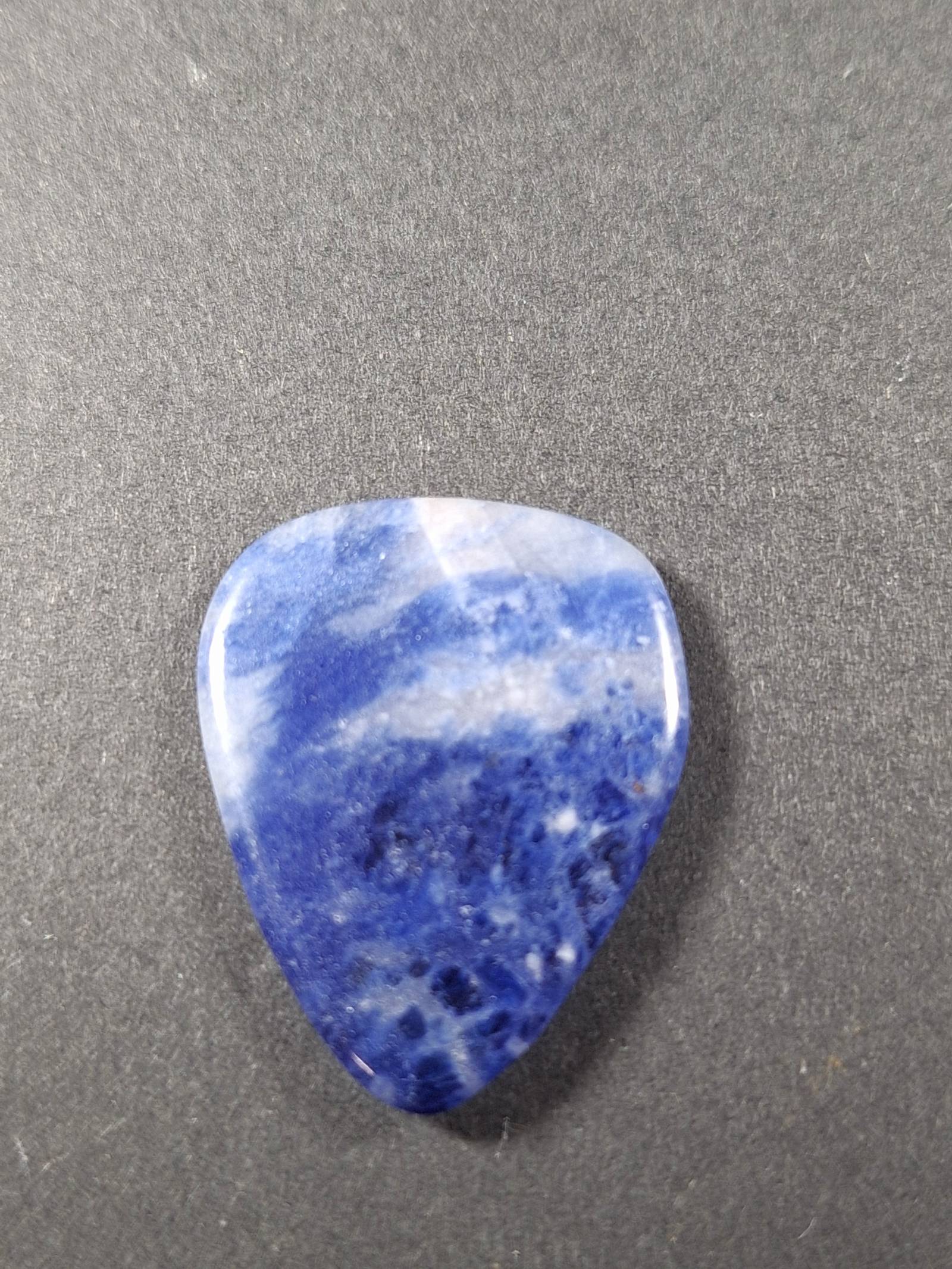
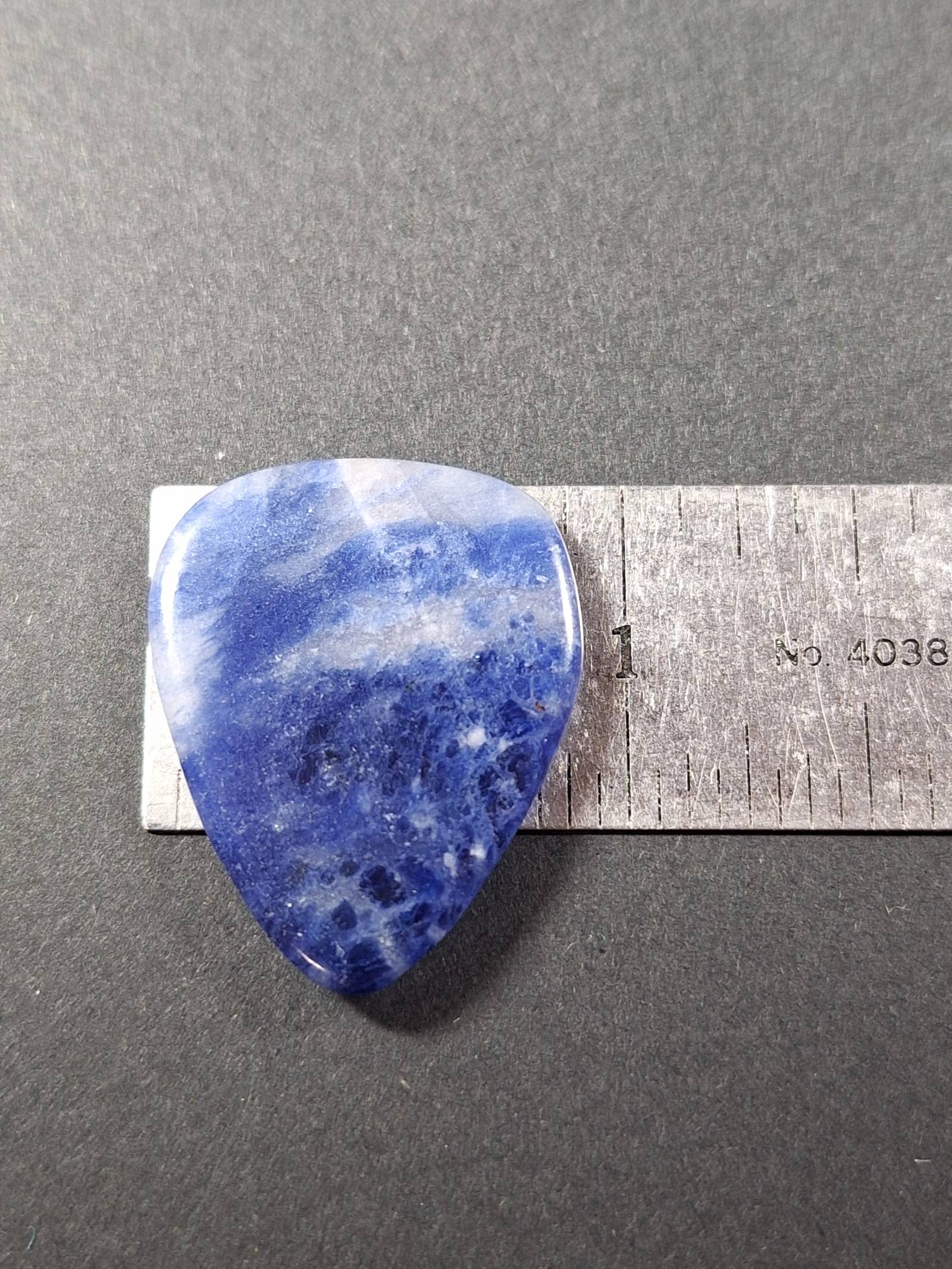
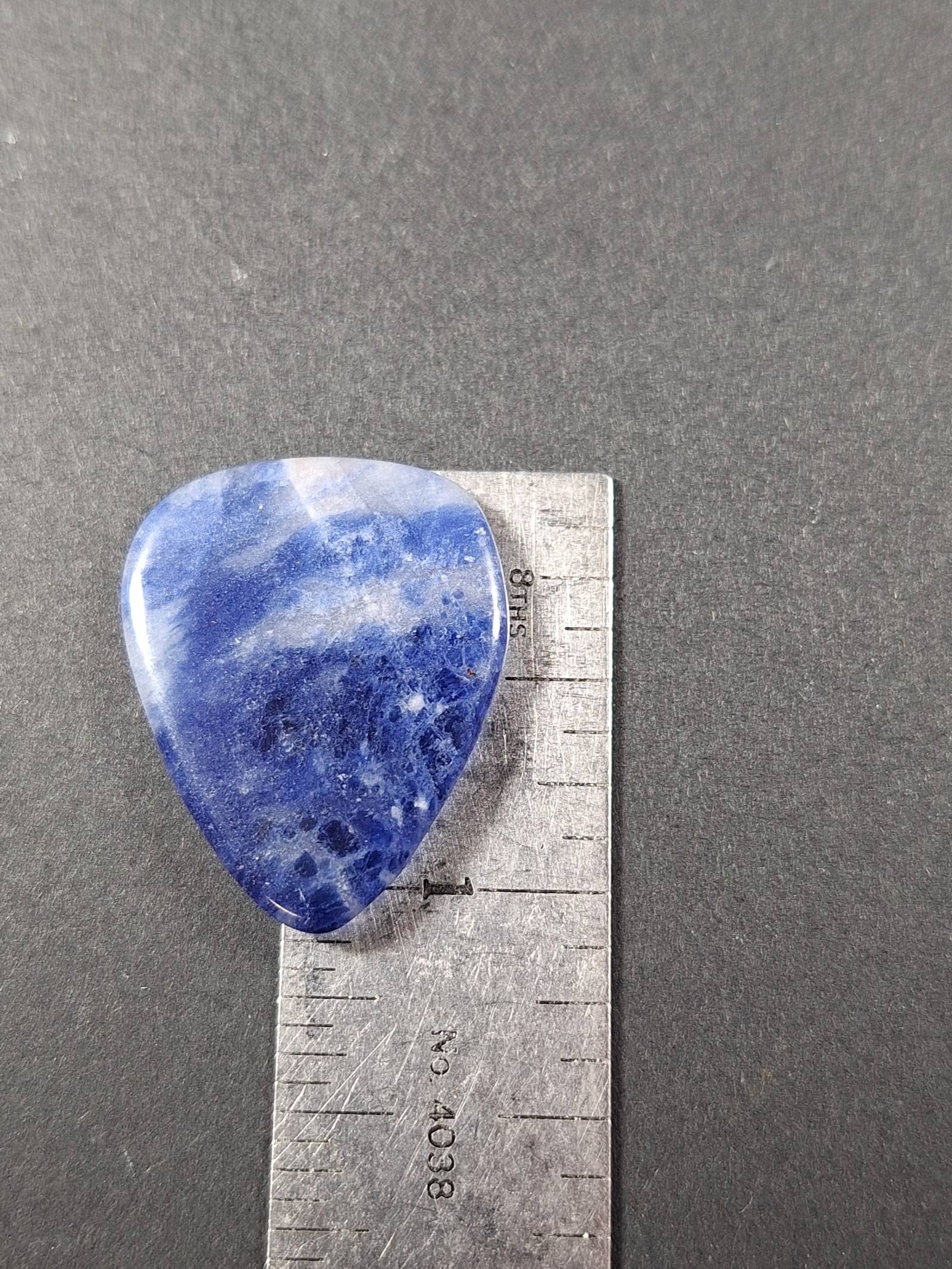
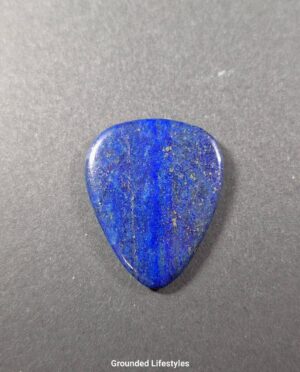
Sodalite Guitar Pick
Sodalite brings a distinctive mineral story to a small music accessory. The name comes from its sodium-rich chemistry, while the blue coloring has made it popular in carvings, cabochons, and decorative stones. Some sodalite-rich material displays irregular white patches or veins, frequently from associated minerals such as calcite.
Blue Sodalite Versus Lapis Lazuli
Sodalite is a sodium- and chlorine-bearing aluminosilicate mineral, with a typical Mohs hardness of 5.5–6. It often appears blue with white mineral markings, which can make it resemble lapis lazuli; however, the two materials are not interchangeable identifications. Its relative softness makes a protective pouch and gentle handling especially important.
Material and Geological Background
Sodalite is a sodium aluminum silicate chloride mineral, Na₈(Al₆Si₆O₂₄)Cl₂, belonging to the feldspathoid group. Its Mohs hardness is approximately 5.5–6. It can occur in silica-poor igneous rocks and associated metamorphic environments. Stone rigidity should not be confused with resistance to breakage: thin edges can chip if dropped.
Playing with a Rigid Plectrum
Unlike a thin nylon or celluloid pick, this polished piece does not bend easily when it meets a string. Some players enjoy exploring a firmer point of contact, but tone depends on the instrument, string type, pick edge, thickness, and playing technique. No particular sound is guaranteed.
Traditional Associations
Sodalite is associated in contemporary crystal practices with clear communication, thoughtful expression, and self-reflection. These are symbolic traditions rather than scientifically verified effects.
Care and Handling
Use a soft cloth for cleaning, avoid acidic cleaners and prolonged soaking, and protect the pick from drops. Check the edge before playing to avoid contact with rough or chipped stone.
Only logged in customers who have purchased this product may leave a review.


Reviews
There are no reviews yet.