
$20.00
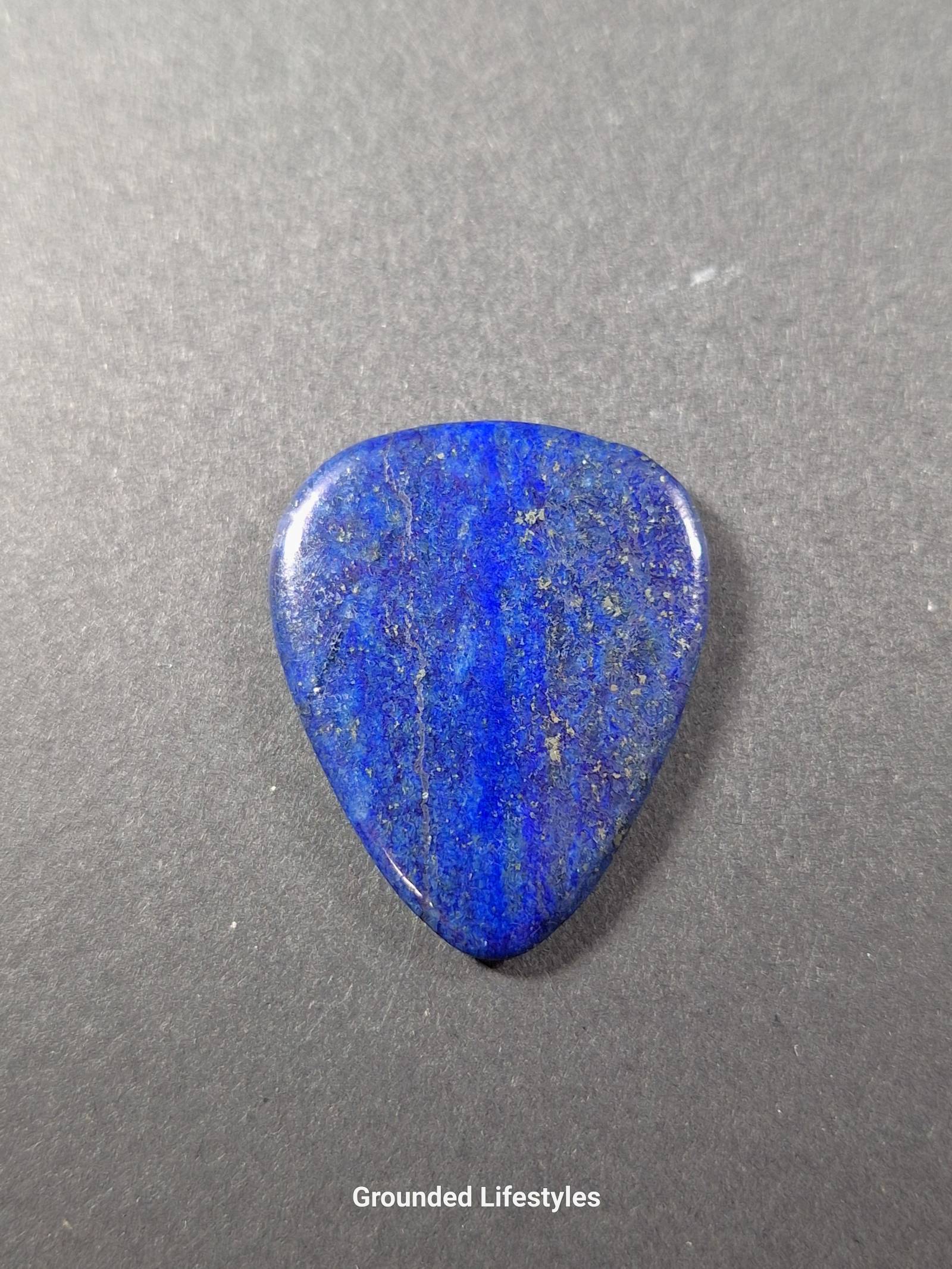
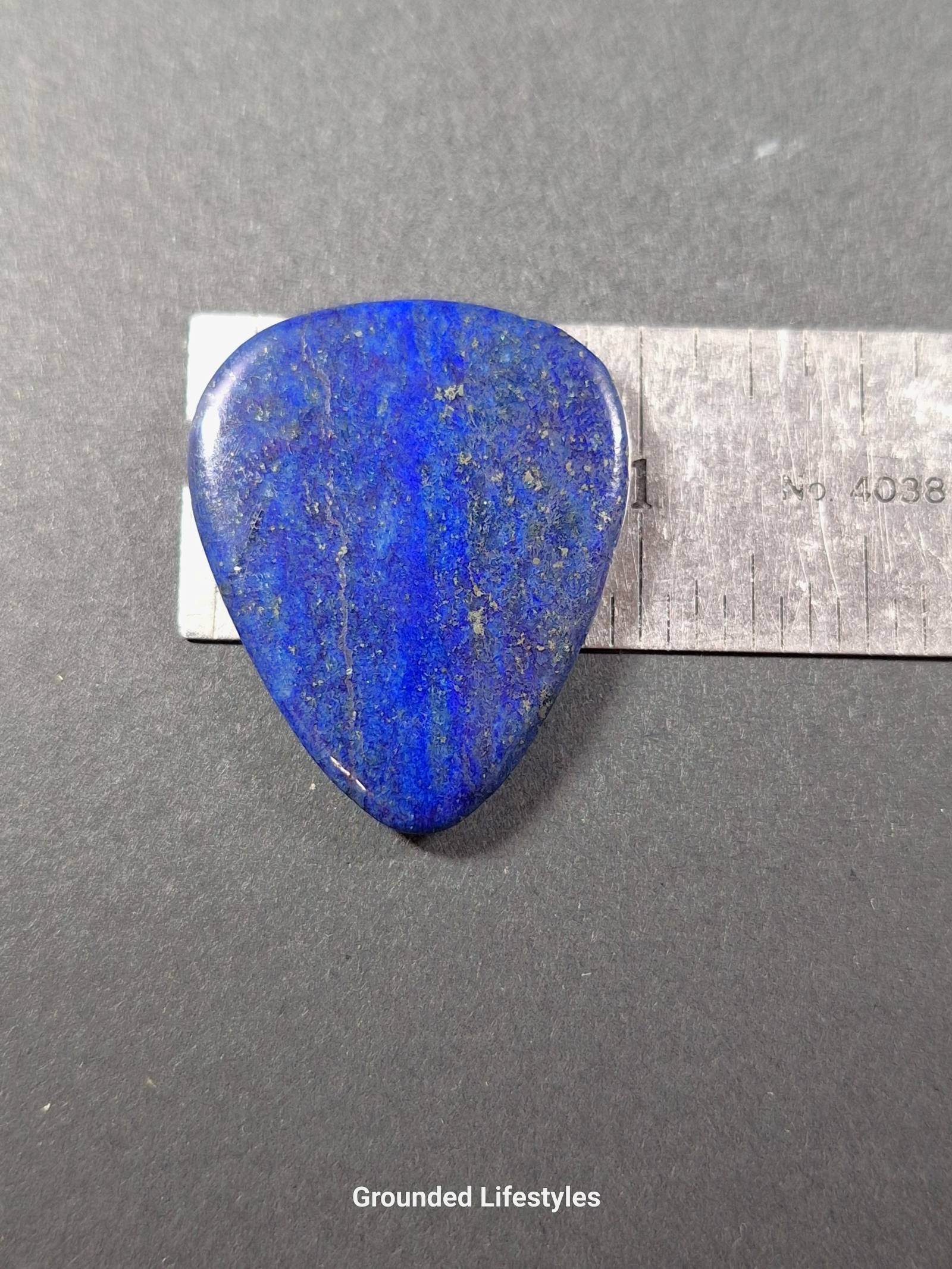
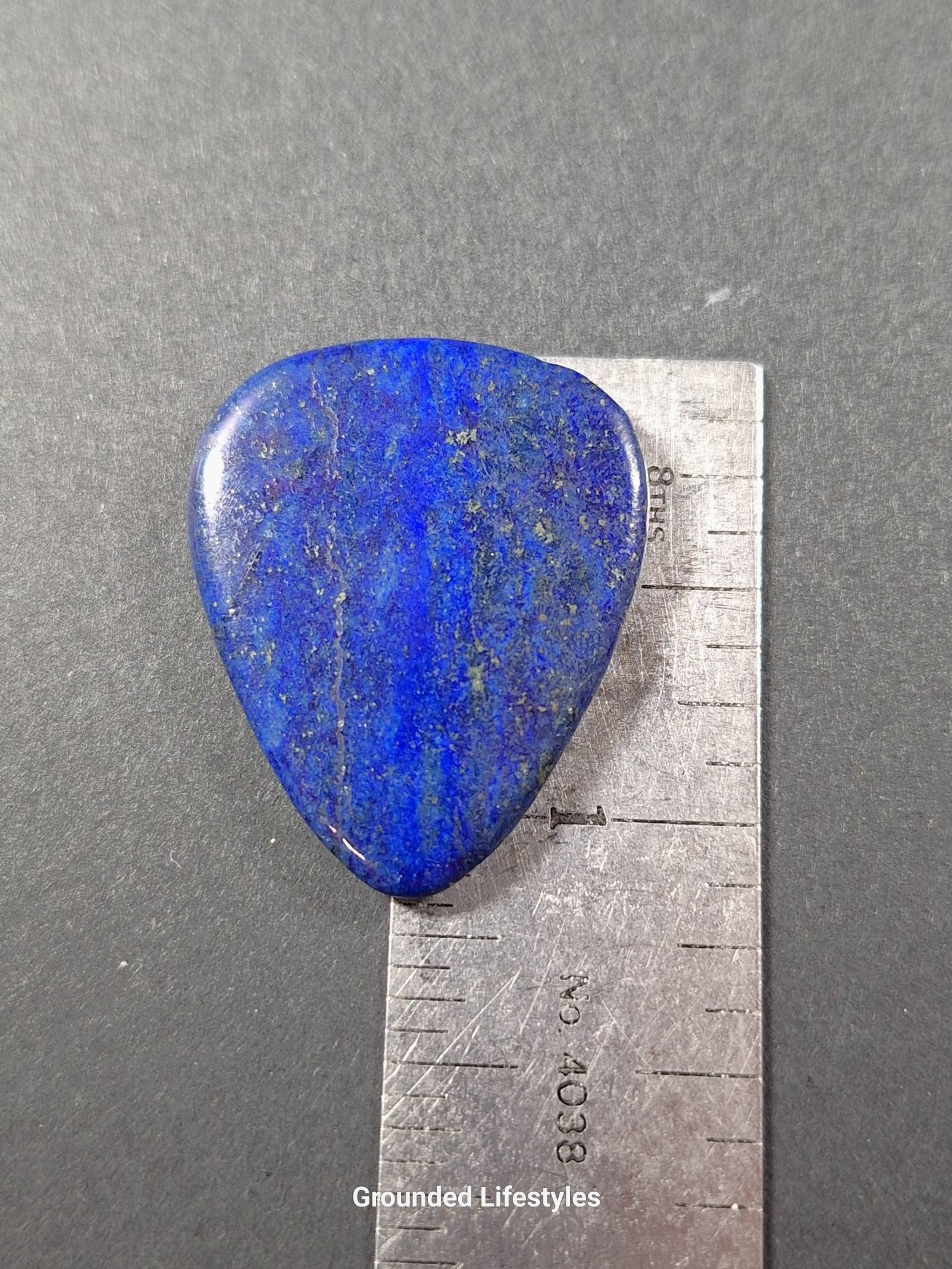
Bring a rich blue gemstone into your music collection with this Lapis Lazuli Guitar Pick. Cut and polished from lapis lazuli, this rigid stone plectrum offers a different playing feel from conventional flexible plastic picks. Lapis is admired for its deep blue color, sometimes accented by golden pyrite flecks and white calcite markings. With a typical Mohs hardness of approximately 5–6, it is best handled with care. A distinctive guitar accessory and thoughtful gift for musicians who appreciate gemstones and natural materials.
In stock
You will receive the exact specimen shown.
Carefully packed and shipped from Arizona.
Free U.S. shipping on orders of $70 or more.
For thousands of years, lapis lazuli has been admired for its remarkable blue color. Ancient artisans used it for jewelry, decorative objects, and pigments, while modern lapidaries continue to shape it into beautiful polished pieces. This Lapis Lazuli Guitar Pick gives the historic gemstone a different purpose, combining its unmistakable appearance with the familiar shape of a musical plectrum.
Unlike an ordinary plastic pick, a lapis lazuli pick brings natural mineral character into a musician’s collection. Its polished surface, rich blue coloring, and potentially contrasting mineral markings make it equally interesting as a musical accessory or a small collectible.
Whether you’re a guitarist curious about alternative picking materials or a gemstone enthusiast looking for an unusual gift, this pick offers a distinctive combination of music and geology.
Traditional guitar picks are commonly made from nylon, celluloid, and other synthetic materials that offer varying degrees of flexibility. Lapis lazuli behaves differently because it is a rigid stone.
When a rigid pick contacts a string, it does not bend like a thin plastic plectrum. This can change the sensation of picking, particularly for musicians who prefer controlled movements and a firmer response. Depending on the pick’s thickness, edge shape, polish, and the instrument being played, the result may also affect the attack of individual notes.
There is no guaranteed sound associated with every lapis lazuli pick. Guitar tone depends on several factors, including the player’s technique, string type, and instrument. For that reason, a gemstone pick is best appreciated as an alternative material to explore rather than a promise of a particular tone.
Because lapis is softer and less impact-resistant than some other decorative stones, careful handling is especially important if the pick will be used regularly.
Lapis lazuli is often called a gemstone, but geologically it is a rock composed of several minerals, rather than a single mineral species.
Its celebrated blue color comes primarily from lazurite, a sulfur-bearing aluminosilicate mineral belonging to the sodalite group. Many lapis specimens also contain calcite, which may appear as white streaks or patches, and pyrite, which can produce metallic gold-colored flecks.
These minerals create the striking visual contrast that has made lapis lazuli desirable for thousands of years. Some polished pieces are nearly uniform blue, while others display more noticeable mineral variations.
Lapis lazuli generally has a Mohs hardness of approximately 5–6, depending on its composition. The United States Geological Survey lists a typical range of 5–5.5, while the Gemological Institute of America gives a broader range of 5–6.
This makes lapis softer than quartz or jasper and means it can be scratched by harder materials. Its mineral composition can also affect its resistance to chipping, especially where softer calcite is present.
Lapis lazuli has a remarkable cultural history. Deposits in Afghanistan have supplied prized blue stone for thousands of years, and the material traveled along ancient trade routes into Mesopotamia, Egypt, and other regions.
Its color made it especially desirable for jewelry, carved objects, and decorative inlays. During later centuries, finely ground lapis was also used to produce natural ultramarine pigment, one of the most valued blue pigments in European painting.
Today, lapis lazuli continues to be appreciated for its historical significance and distinctive color. Other recognized sources include Chile and Russia, although the geographical origin of this particular guitar pick has not been established.
In contemporary metaphysical traditions, lapis lazuli is associated with wisdom, communication, self-expression, and personal insight. Its deep blue color has helped establish symbolic connections with the throat chakra and third eye chakra.
For musicians, these traditional associations can offer a personal connection to the creative process. Some people choose lapis as a symbolic reminder to express themselves clearly, trust their creative instincts, or approach their art with intention.
These meanings reflect cultural and spiritual beliefs rather than scientifically demonstrated properties of the stone.
Lapis lazuli requires gentler care than harder gemstones such as quartz. Its polished surface can be scratched by harder objects, and its edges may chip if dropped onto a hard floor.
After handling or playing, wipe the pick gently with a soft, dry cloth. If additional cleaning is needed, use a slightly damp cloth with mild soap, then dry it promptly. Avoid soaking the stone, especially when its treatment history is unknown.
Do not use ultrasonic cleaners, steam, acids, solvents, or abrasive polishing compounds. Some lapis lazuli is dyed, waxed, or otherwise treated to improve its appearance, and harsh cleaning methods can damage these finishes.
Store the pick separately in a soft pouch or protective compartment. If you use it to play, avoid excessive picking pressure and inspect the edges regularly for chips or rough areas.
This Lapis Lazuli Guitar Pick combines an ancient decorative stone with a familiar musical accessory. Its blue coloring gives it a striking appearance, while its rigid construction provides a different experience from ordinary flexible picks.
It makes an interesting gift for guitarists, music teachers, songwriters, and gemstone enthusiasts who enjoy objects with both practical and collectible appeal.
Whether displayed with a collection of unusual picks or used occasionally to explore a different playing feel, lapis lazuli brings a little geological history into the world of music.
| Weight | 3 oz |
|---|---|
| Dimensions | 1.75 × .25 × 2.5 in |
Only logged in customers who have purchased this product may leave a review.

Reviews
There are no reviews yet.