Description
Rare Dravite Tourmaline with Magnesite – Brumado, Brazil
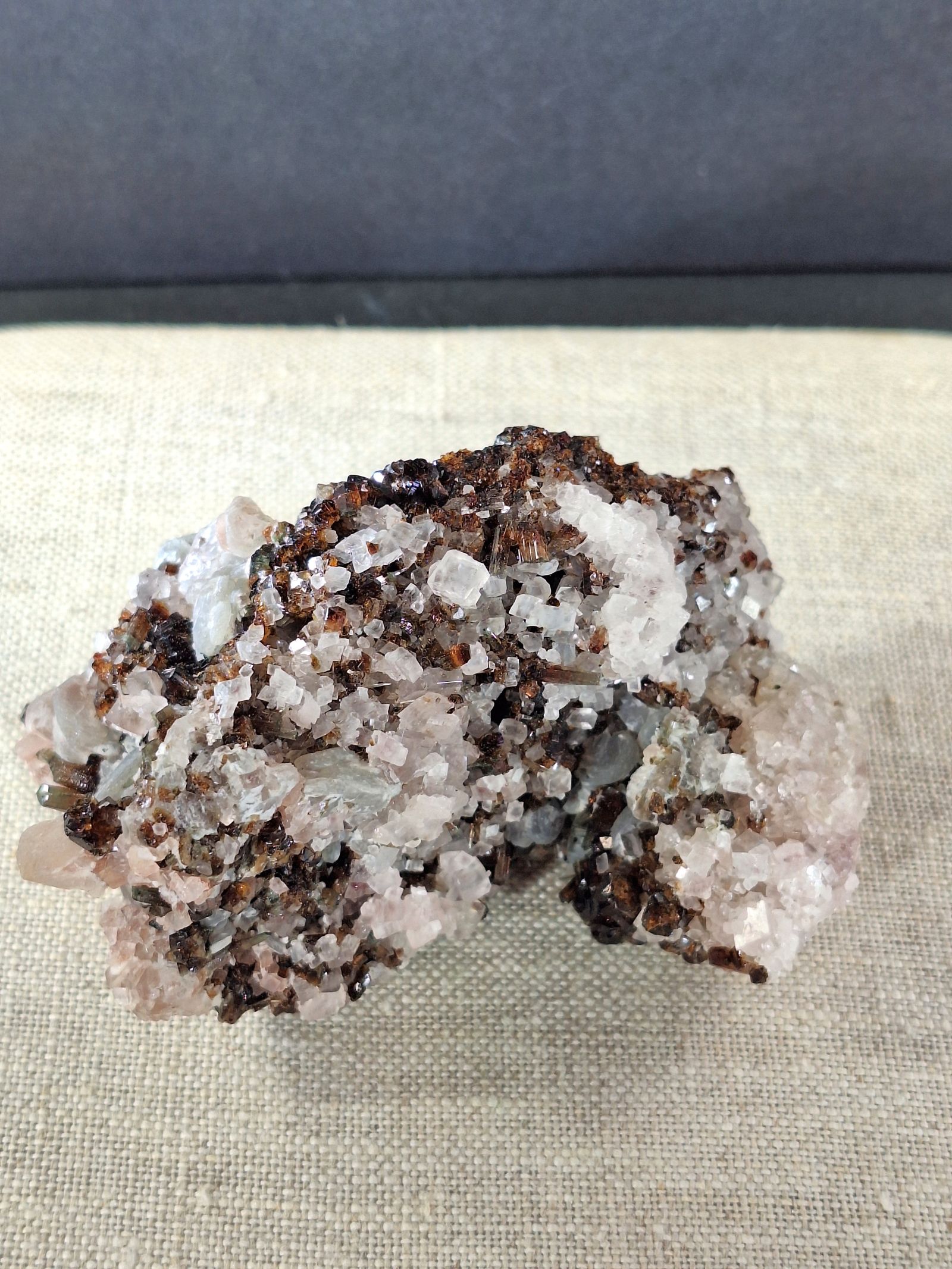
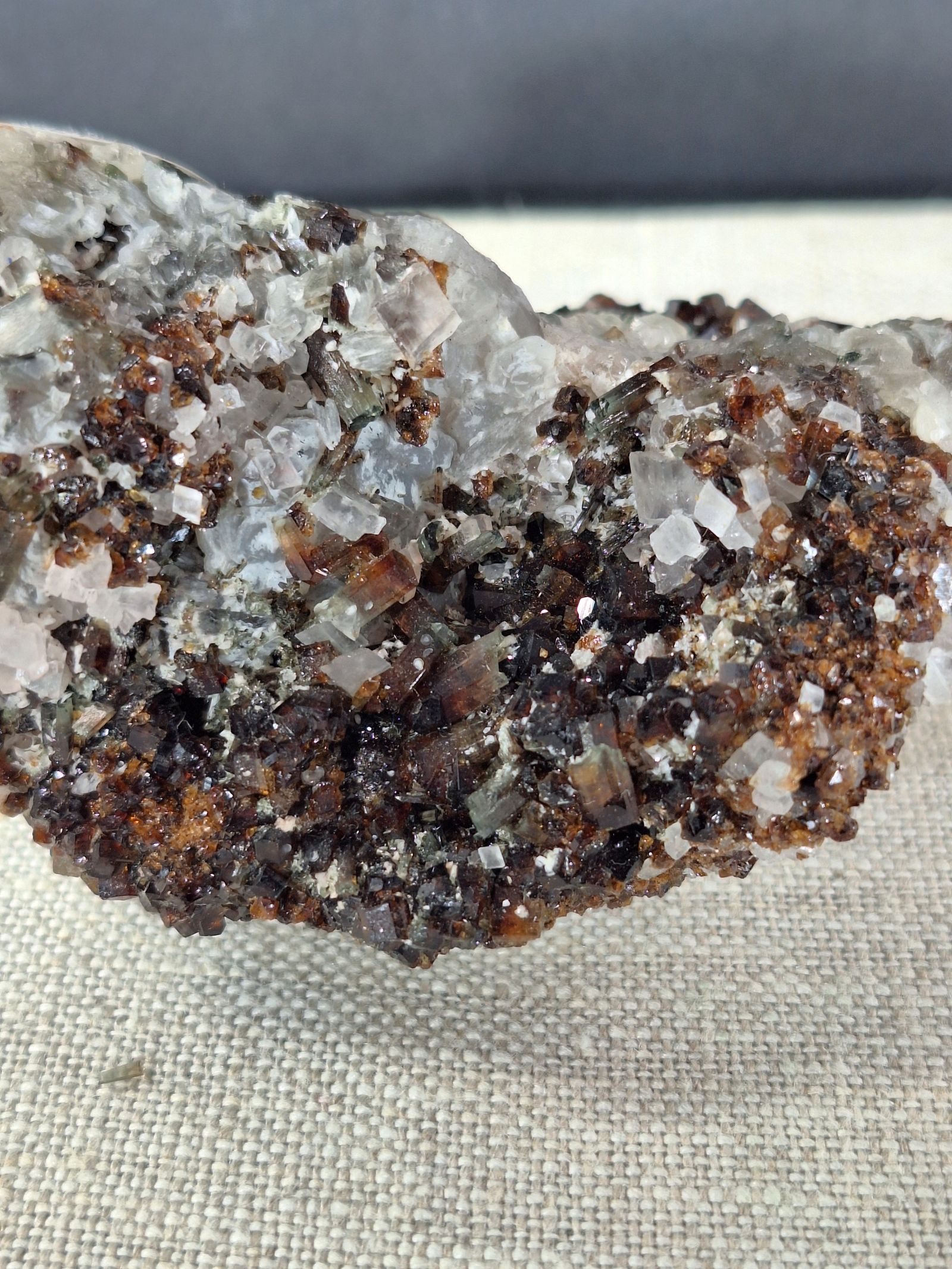
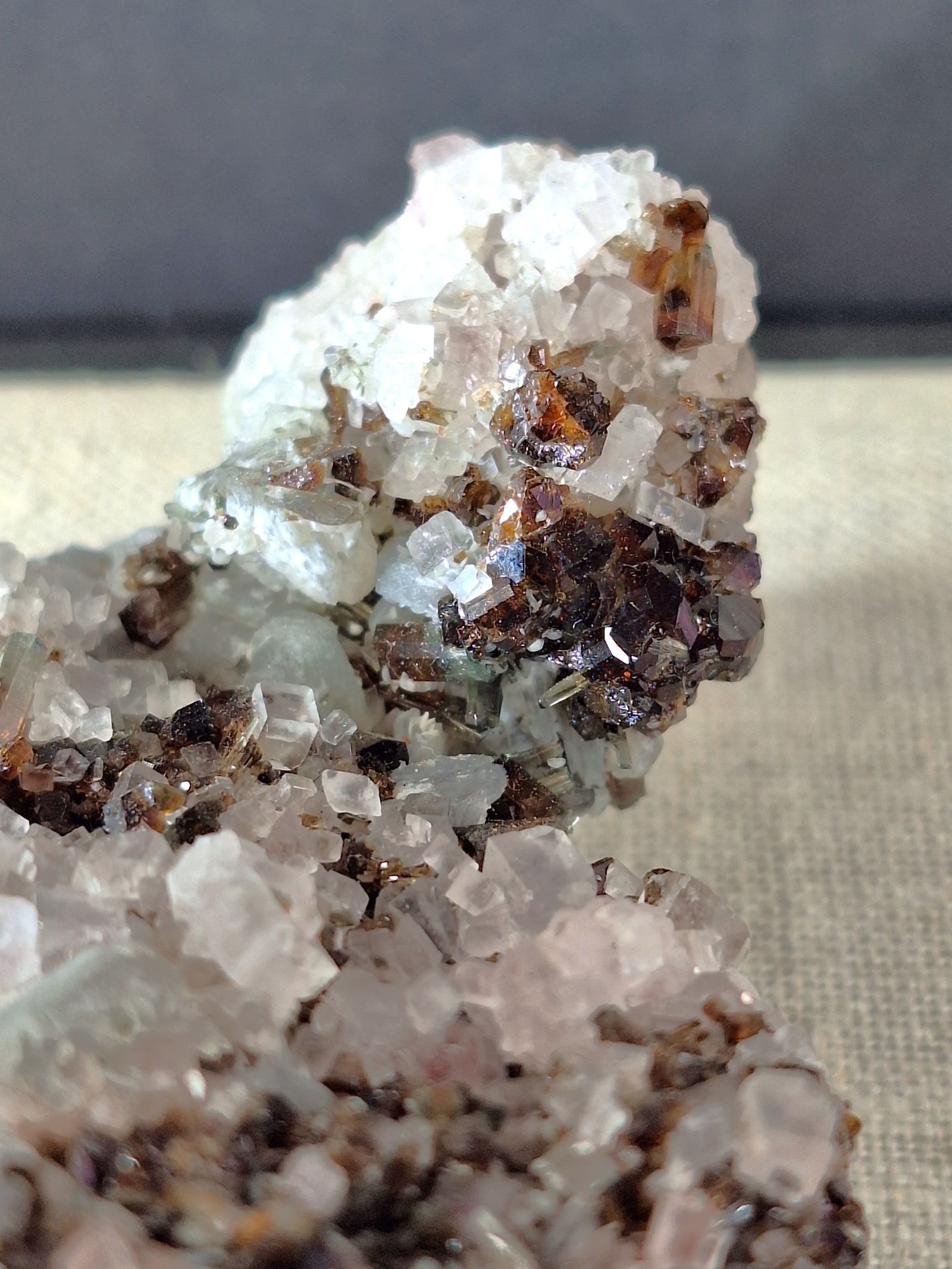
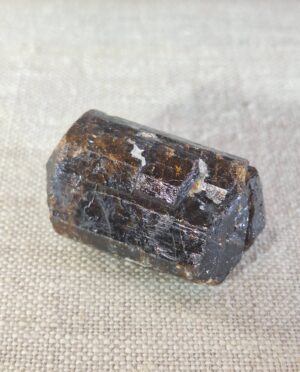
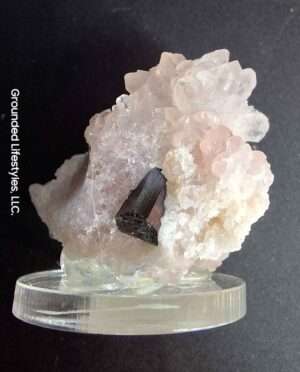
A remarkable mineral association from one of Brazil’s most celebrated collecting localities, this rare Dravite Tourmaline with Magnesite specimen from Brumado, Bahia, brings together dark brown tourmaline crystals and contrasting white to pale blush magnesite. The difference in color and mineral structure gives the specimen a striking appearance, while its unusual combination makes it particularly appealing to serious mineral collectors.
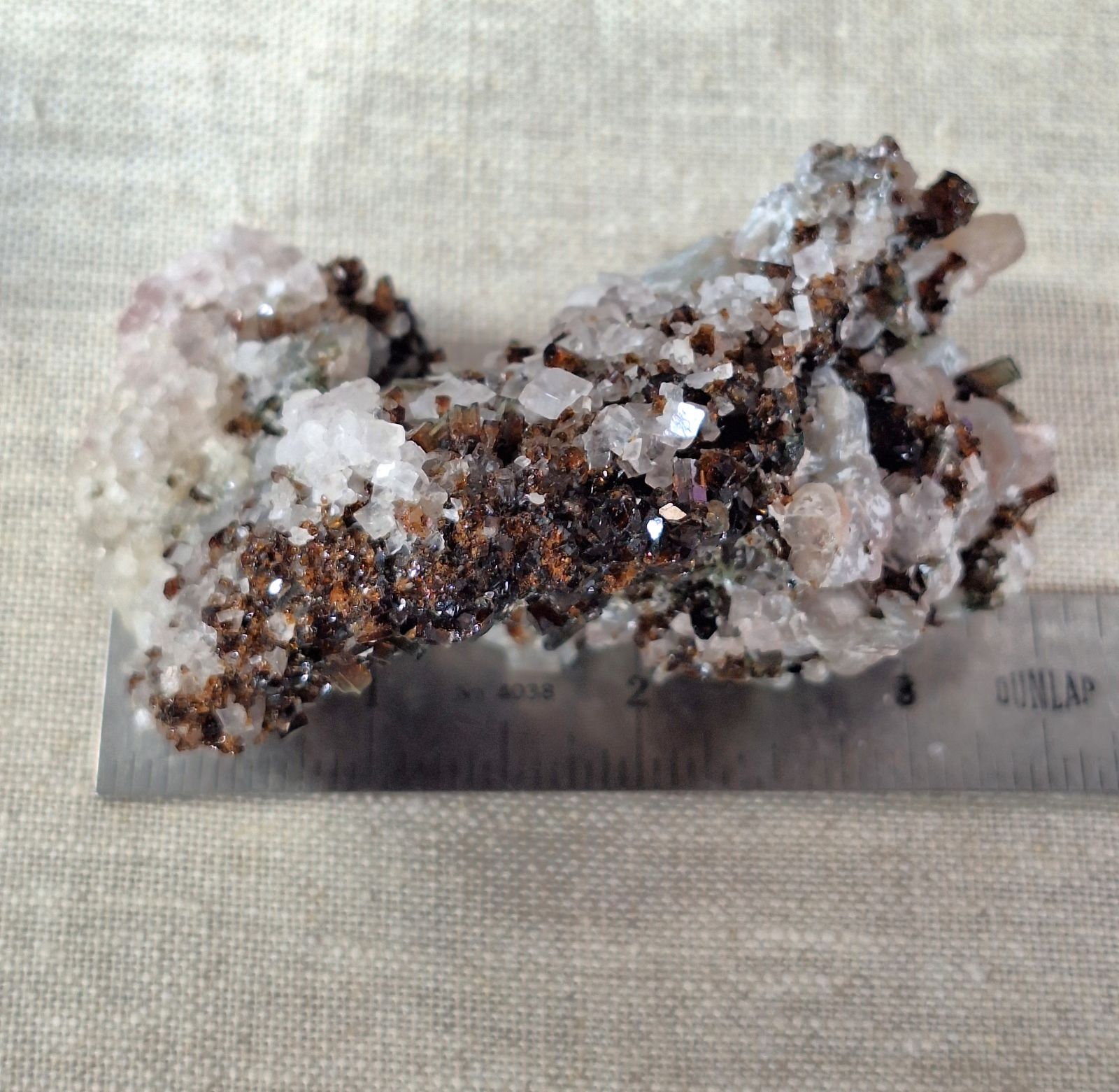
Measuring 3.5 × 1.5 × 1.5 inches, this natural specimen offers an opportunity to examine two very different minerals formed within the same geological environment.
A Distinctive Tourmaline Association
Dravite is a magnesium-rich member of the tourmaline group, commonly recognized by its brown, reddish-brown, and occasionally greenish colors. Like other tourmalines, it belongs to a complex family of boron-bearing silicate minerals. Its crystals can develop the elongated, striated forms characteristic of tourmaline, although crystal habit varies with growing conditions.
The dark brown crystals in this specimen contrast with the pale magnesite, a magnesium carbonate mineral with the chemical formula MgCO₃. Magnesite is an important part of the geological story at Brumado, where extensive deposits have produced an impressive variety of collectible mineral associations.
Together, these minerals create a specimen that is interesting not only for its appearance but also for what it reveals about mineral formation.
From the Famous Brumado Mineral District
The Serra das Éguas district near Brumado, in Bahia, Brazil, is internationally known among mineral collectors for exceptional specimens recovered from its magnesite deposits.
The district has produced distinctive tourmalines belonging to the dravite–uvite compositional range. These minerals occur in magnesium-rich geological environments, where changing chemical conditions during mineral formation can produce complex crystal associations.
Scientific studies of Brumado tourmalines have documented crystals occurring in cavities with magnesite, quartz, and dolomite. These natural openings allowed minerals to grow into recognizable crystal forms rather than remaining confined within solid rock.
Brumado specimens are especially appreciated for their contrasting mineral colors, well-developed crystal forms, and the unusual associations produced by the district’s geological history.
Why This Specimen Is Collectible
Although dravite occurs in several parts of the world, attractive specimens displaying brown tourmaline crystals together with pale magnesite are a distinctive and comparatively uncommon association from Brumado.
The appeal of this piece lies in several details: the dark tourmaline crystals, the soft white-to-blush magnesite, the natural relationship between the minerals, and the specimen’s connection to a locality with an established place in mineralogical literature.
It is a particularly interesting addition for collectors specializing in tourmaline, Brazilian minerals, carbonate-associated crystals, or unusual mineral combinations.
Displayed in a mineral cabinet or examined under directional lighting, the contrasting colors and crystal structures offer plenty to appreciate. This is a specimen worth viewing closely, rather than simply admiring from a distance.
Traditional Crystal Symbolism
In modern crystal traditions, brown dravite is associated with grounding, stability, and a connection to the natural world. Magnesite is often linked symbolically with calmness, patience, and reflection.
These associations are cultural and spiritual interpretations rather than scientifically established properties.
Specimen Details
- Minerals: Dravite tourmaline with magnesite
- Locality: Brumado, Bahia, Brazil
- Region: Serra das Éguas mineral district
- Color: Dark brown tourmaline with white to pale blush magnesite
- Dimensions: 3.5″ × 1.5″ × 1.5″
- Specimen Type: Natural mineral association
- Collection Interest: Tourmaline, Brazilian minerals, unusual mineral associations
Care and Display: Handle by the sturdier matrix rather than individual crystals. Keep away from impacts, ultrasonic cleaning, and chemical cleaners. Use a soft brush to remove loose dust and display on a stable surface away from areas where the specimen could be knocked over.
Only logged in customers who have purchased this product may leave a review.


Reviews
There are no reviews yet.