Description
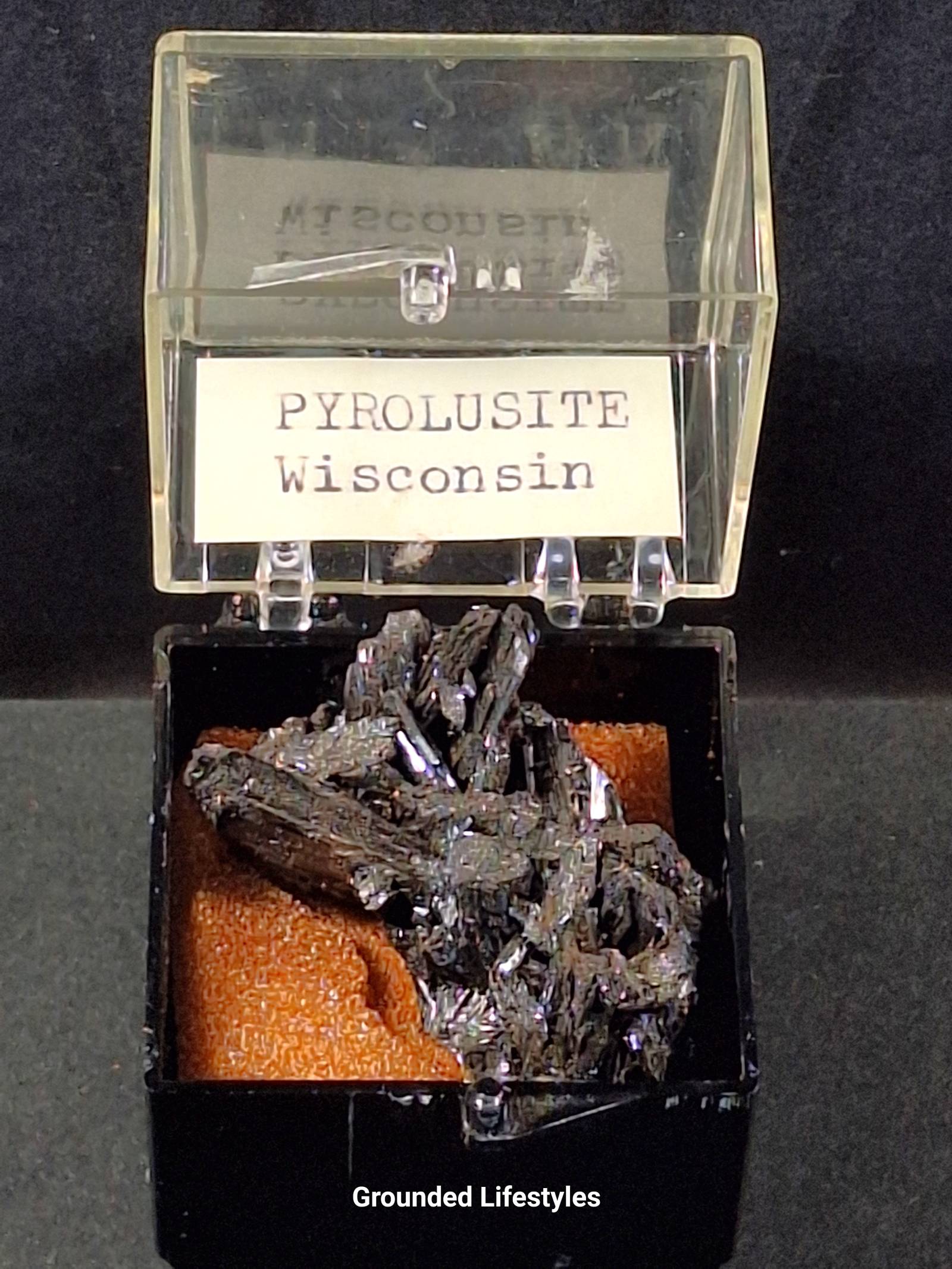
Pyrolusite from Wisconsin — Donald Wininger Collection
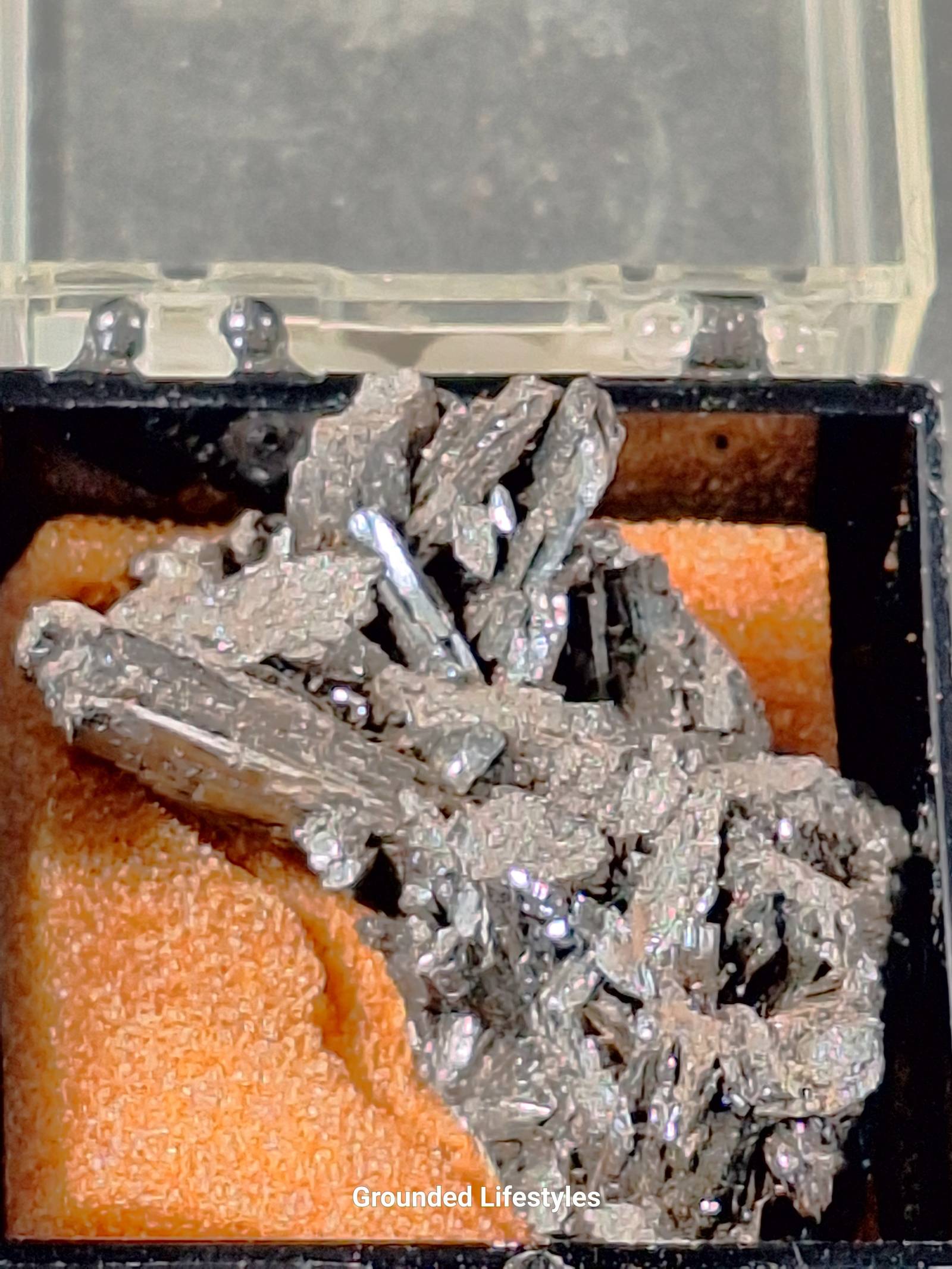
This pyrolusite specimen is attributed to Wisconsin and comes from the Donald Wininger Collection, a collection that preserves minerals acquired across generations. Pyrolusite may be modest in color compared with brightly colored gemstones, but its importance lies in its chemistry, distinctive mineral textures, and place in the history of manganese mining. The specimen is presented in a 1.25 × 1.25 × 1.25-inch perky display box, a practical format for a labeled miniature collection. Those are the dimensions of the box, not a measurement of the stone itself.
Wisconsin Locality and Collecting History
Wisconsin’s mineral history is closely associated with its lead and zinc districts, iron-bearing formations, and numerous smaller mineral occurrences. Pyrolusite has been documented in the state’s northern Gogebic iron range, including at the Montreal Mine in Iron County. That occurrence helps establish the mineral’s presence in Wisconsin, but it does not identify the mine from which this particular specimen originated. The recorded provenance for this piece is Wisconsin only, and no more specific source is claimed.
For collectors, the Wisconsin attribution adds regional interest, particularly alongside specimens from the Upper Midwest’s historic mining districts. A manganese oxide specimen also broadens a collection beyond the more familiar silicates, carbonates, and sulfides, offering an opportunity to explore the mineral chemistry behind dark oxide coatings, masses, and crystal aggregates.
Geology and Mineral Formation
Pyrolusite is manganese dioxide, with the chemical formula MnO₂, and belongs to the oxide mineral group. Its crystal system is tetragonal. It is typically black to very dark gray, with luster that can range from metallic to dull or earthy depending on the form. Pyrolusite occurs as crusts, fibrous or columnar aggregates, massive material, and less commonly well-formed crystals. These are characteristics of the mineral species; without examining the individual specimen closely, no particular crystal habit or associated matrix is asserted here.
The mineral commonly forms where manganese-bearing material is exposed to oxidizing conditions. Such settings include weathered ore deposits, sedimentary environments, and areas affected by circulating groundwater. Pyrolusite’s hardness varies considerably with its form: massive or earthy material can be much softer than well-crystallized examples. Manganese dioxide has also been important as an industrial raw material, giving this species relevance well beyond decorative mineral collecting.
Metaphysical Meaning and Traditional Associations
In contemporary crystal and mineral traditions, dark manganese oxide minerals such as pyrolusite are sometimes associated with grounding, perseverance, self-reflection, and the ability to approach change with steadiness. Some practitioners use dark mineral specimens as visual reminders to establish boundaries, maintain focus, or return attention to the present moment during meditation and intention-setting. These interpretations are symbolic and spiritual rather than scientifically established properties of pyrolusite.
Collectors may appreciate the contrast between these modern interpretations and the mineral’s geological story: a substance formed through the movement of water, changing chemical conditions, and the transformation of manganese-bearing deposits over time.
Care, Handling, and Display
Keep this specimen in its perky box when possible to protect its surface and limit handling. Some pyrolusite forms are soft or powdery and may leave dark residue on fingers or nearby materials. Avoid scrubbing, soaking, abrasive cleaning, and creating dust. Handle gently, wash hands afterward, and keep mineral specimens away from food and children. Display in a dry location away from unnecessary contact or vibration.
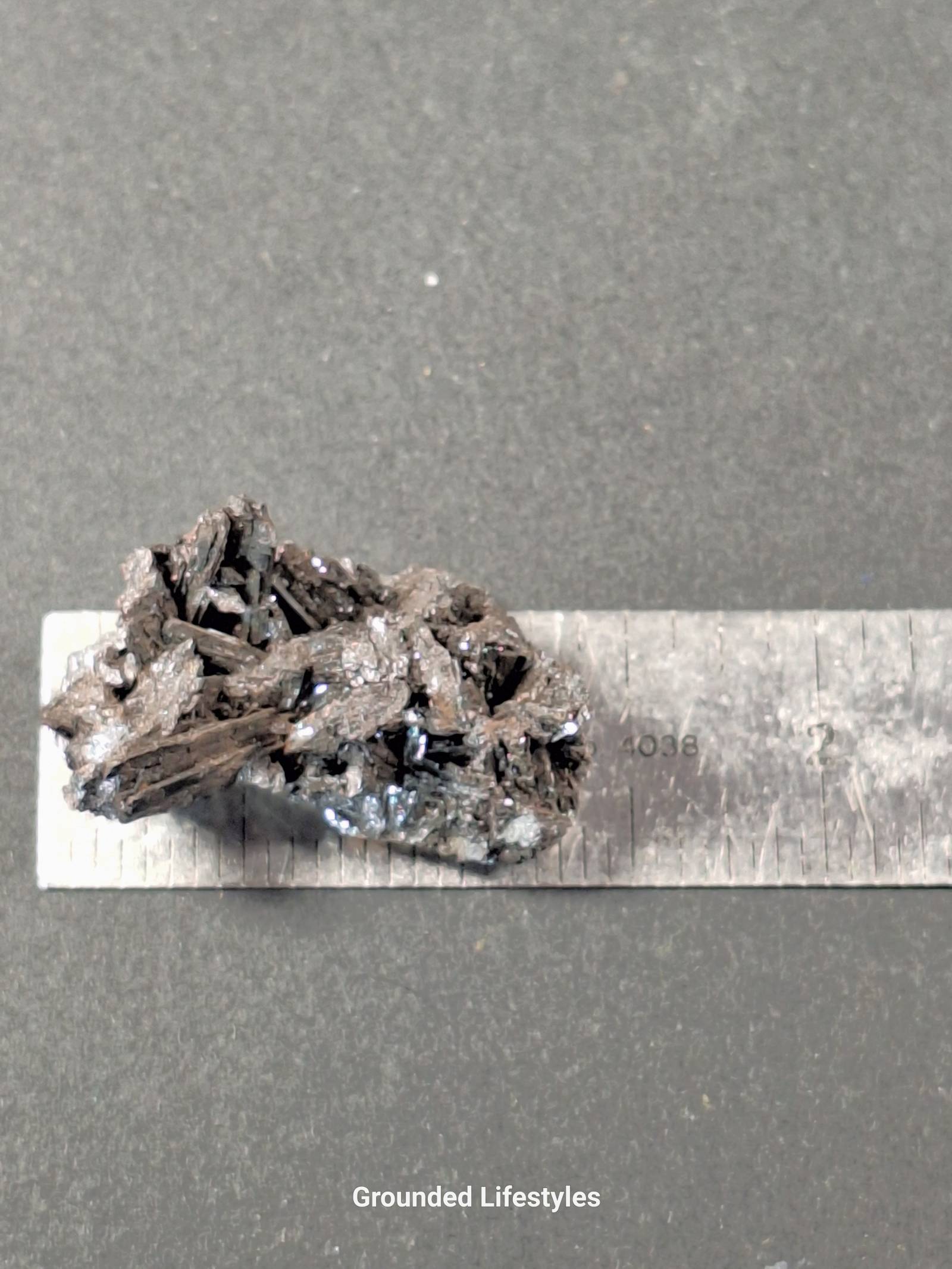
Specimen details: Pyrolusite; Wisconsin, USA; Donald Wininger Collection. Included perky box measures 1.25 × 1.25 × 1.25 inches. Actual specimen measurements and a specific mine locality have not been provided.
Only logged in customers who have purchased this product may leave a review.

Reviews
There are no reviews yet.