Description
Orange Gypsum Crystals from Historic Grand Rapids, Michigan
Long before Grand Rapids, Michigan, became widely known for its furniture industry, the city was an important center of American gypsum mining. Its underground deposits produced an unusually colorful material recognized by collectors for its reddish-orange tones and attractive selenite crystals.
This orange bladed gypsum specimen from Grand Rapids, Michigan, comes from the Donald Wininger Collection, assembled during the 1950s and 1960s. Its distinctive crystal formation and mid-20th-century collection provenance connect it to an important chapter in Michigan’s mineral history.
The Distinctive Orange Gypsum of Grand Rapids
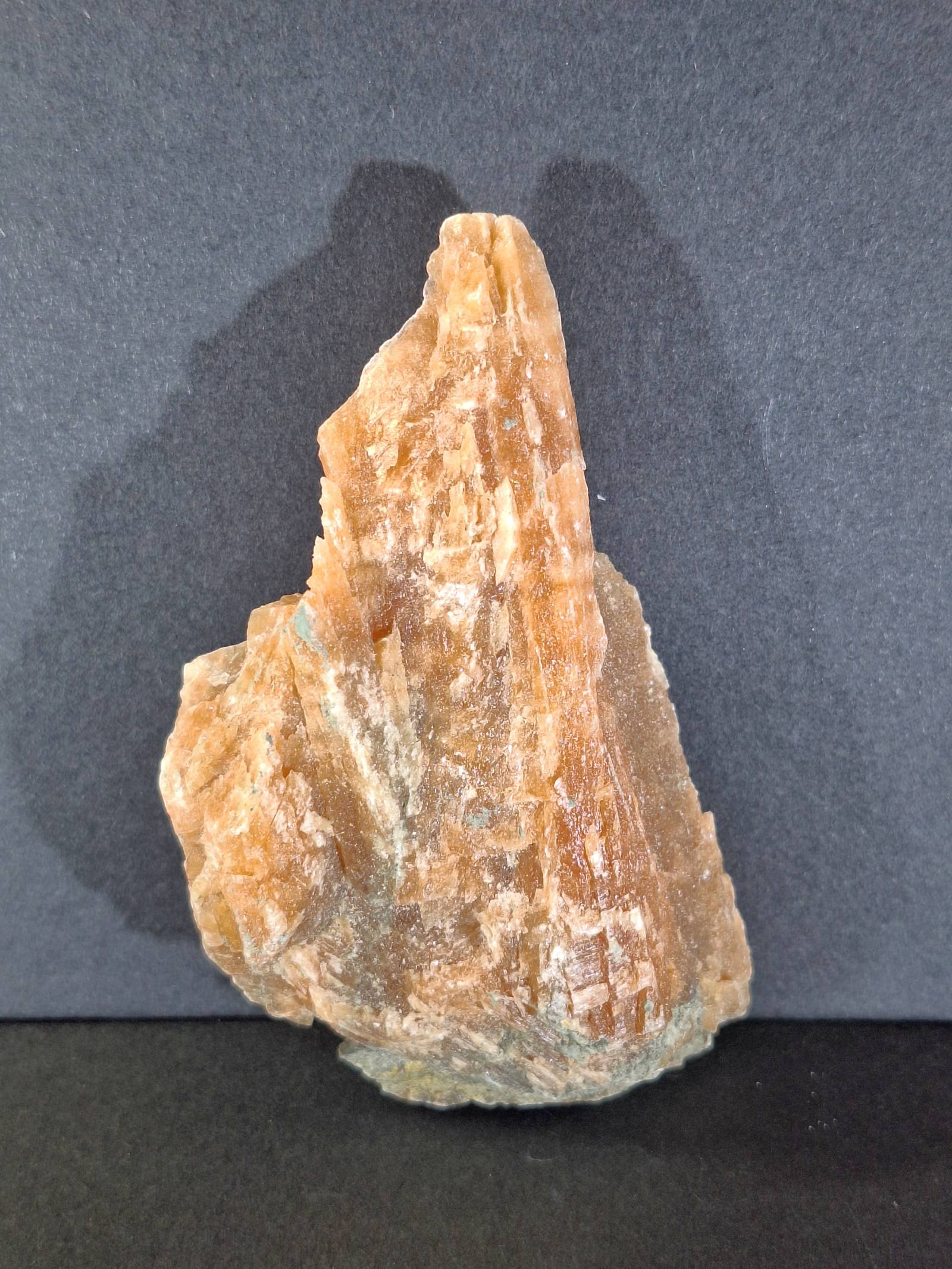
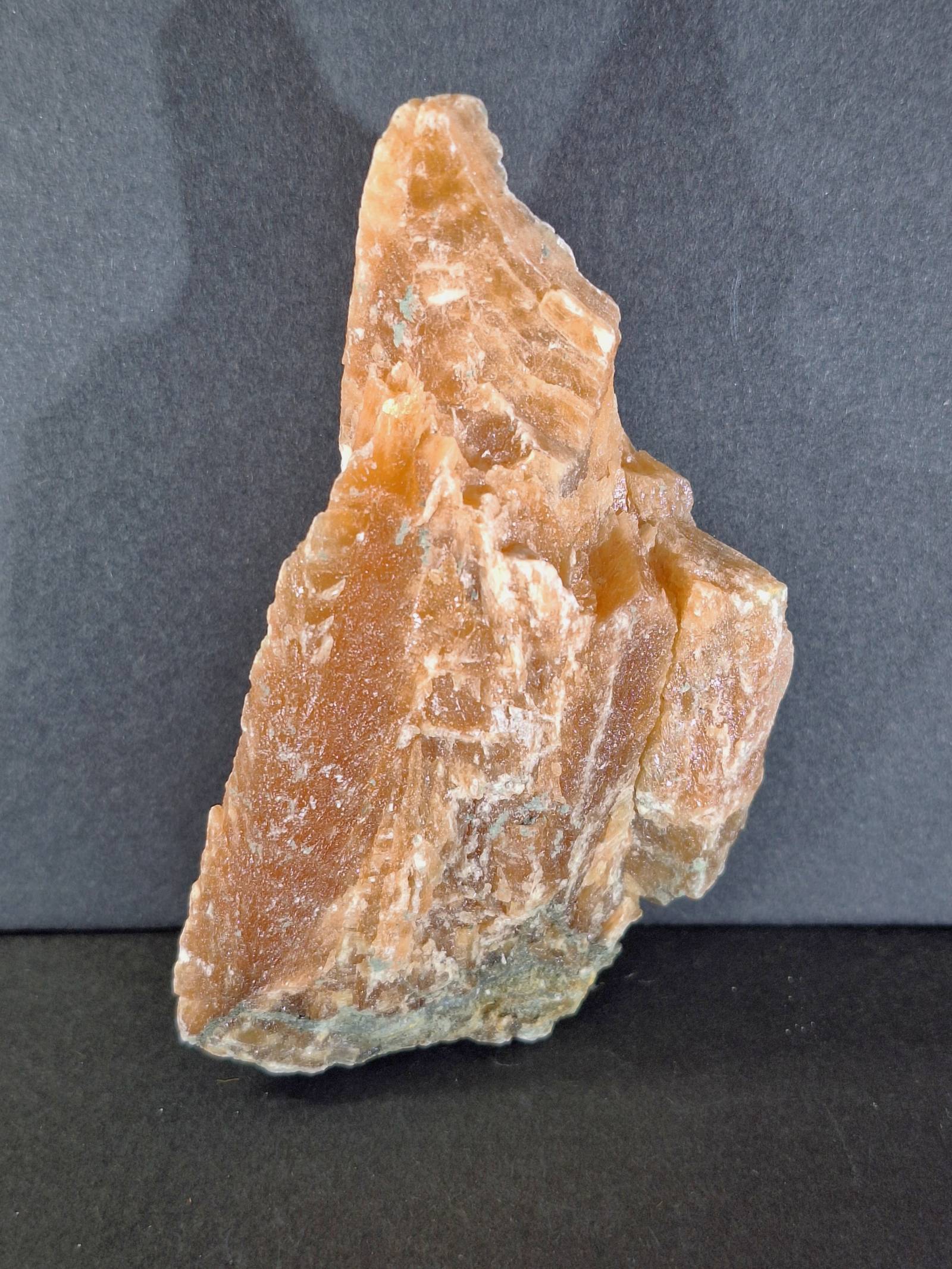
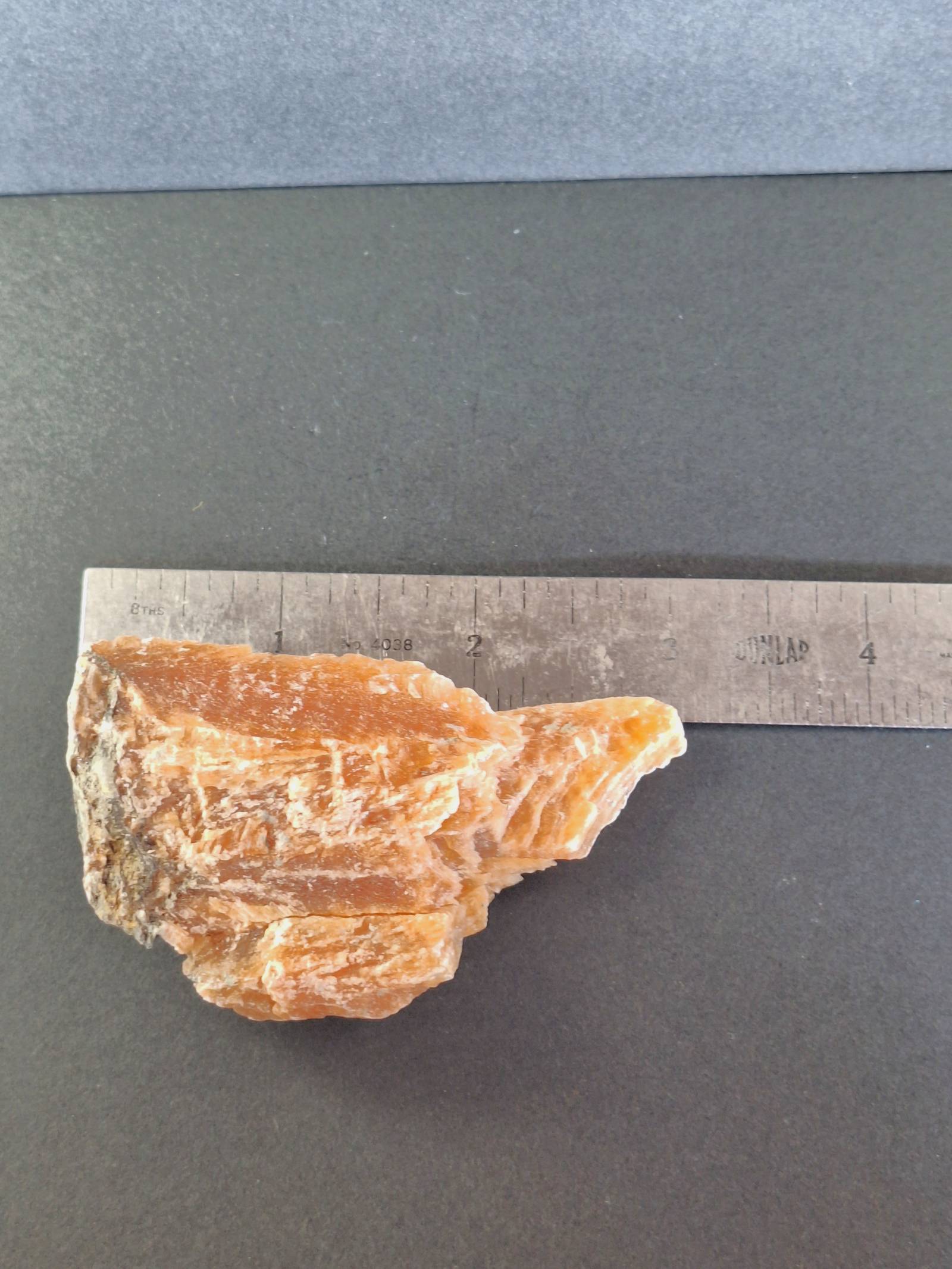
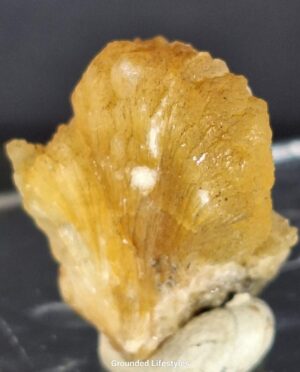
Measuring approximately 3 × 0.75 × 1.5 inches, this specimen features an upright arrangement of flattened, blade-like crystals. Its surfaces display a combination of orange, honey-brown, and cream coloration, with variations in translucency and texture visible throughout the formation.
The Grand Rapids area is particularly noted for naturally colored gypsum. Unlike the white satin spar commonly encountered in decorative mineral shops, gypsum from these historic Michigan deposits can exhibit striking reddish, orange, salmon, and brown hues.
Iron-oxide inclusions have been documented in gypsum crystals from the Grand Rapids mines and are associated with their characteristic orange coloration. The precise distribution of coloring minerals within this individual specimen has not been analytically tested.
Grand Rapids: A Historic American Gypsum Locality
Gypsum was discovered near Grand Rapids in the early nineteenth century, and commercial mining began in 1841. Over time, underground workings and quarries developed across the Grand Rapids and Grandville district.
These deposits formed part of the Michigan Basin’s sedimentary geology. Gypsum accumulated through evaporative processes involving ancient mineral-rich waters, producing beds that were eventually buried beneath younger sediments.
Much of the region’s gypsum was extracted for plaster and other industrial applications. However, collectors also recognized the aesthetic appeal of the area’s crystalline material, particularly its transparent to translucent selenite and vividly colored gypsum.
Historic Grand Rapids gypsum mines are no longer active mining operations, and some former underground workings have been repurposed for storage. Specimens preserved in older mineral collections provide a tangible connection to this former mining district.
From the Donald Wininger Collection
This specimen was preserved within the Donald Wininger Collection, assembled during the 1950s and 1960s.
Collections from this period offer a window into an earlier generation of American mineral collecting, when specimens circulated through mineral clubs, regional dealers, field trips, and exchanges between collectors.
The Grand Rapids locality is especially relevant to that history. Mineral clubs continued visiting some former gypsum workings during the twentieth century, collecting gypsum and selenite crystals from accessible areas.
Although the exact mine and original collecting date for this individual specimen have not been established, its Grand Rapids attribution and Wininger Collection provenance make it an interesting addition to a collection of historic Michigan minerals.
Gypsum Mineralogy and Crystal Formation
Gypsum is a hydrated calcium sulfate mineral with the chemical formula CaSO₄·2H₂O. It crystallizes in the monoclinic system and may develop tabular, bladed, elongated, or twinned crystals.
The transparent to translucent crystalline variety is commonly called selenite. Gypsum has a Mohs hardness of 2, making it soft enough to scratch with a fingernail.
Its softness and excellent cleavage require careful handling, especially when preserving thin crystal blades and delicate terminations.
Display and Care
The specimen’s upright structure and warm coloration make it well suited to a protected mineral display, particularly alongside other Michigan locality specimens or historic American mining minerals.
Keep gypsum dry, avoid washing or soaking it, and protect it from abrasion, prolonged direct sunlight, and sudden impacts. Gentle handling will help preserve the crystal surfaces.
In some crystal traditions, gypsum and selenite are associated with clarity and reflection. These are traditional metaphysical associations, not scientifically established effects.
Specimen Details
- Mineral: Gypsum
- Variety: Crystalline gypsum, selenite-type habit
- Locality: Grand Rapids, Kent County, Michigan, USA
- Collection: Donald Wininger Collection
- Collection period: 1950s–1960s
- Color: Orange, honey-brown, and cream
- Crystal habit: Upright, bladed formation
- Dimensions: Approximately 3 × 0.75 × 1.5 inches
- Chemical formula: CaSO₄·2H₂O
- Mohs hardness: 2
- Specimen quantity: One
You will receive the actual historic collection specimen shown in the photographs.
Only logged in customers who have purchased this product may leave a review.

Reviews
There are no reviews yet.