Description
A Duck Shaped by Nature
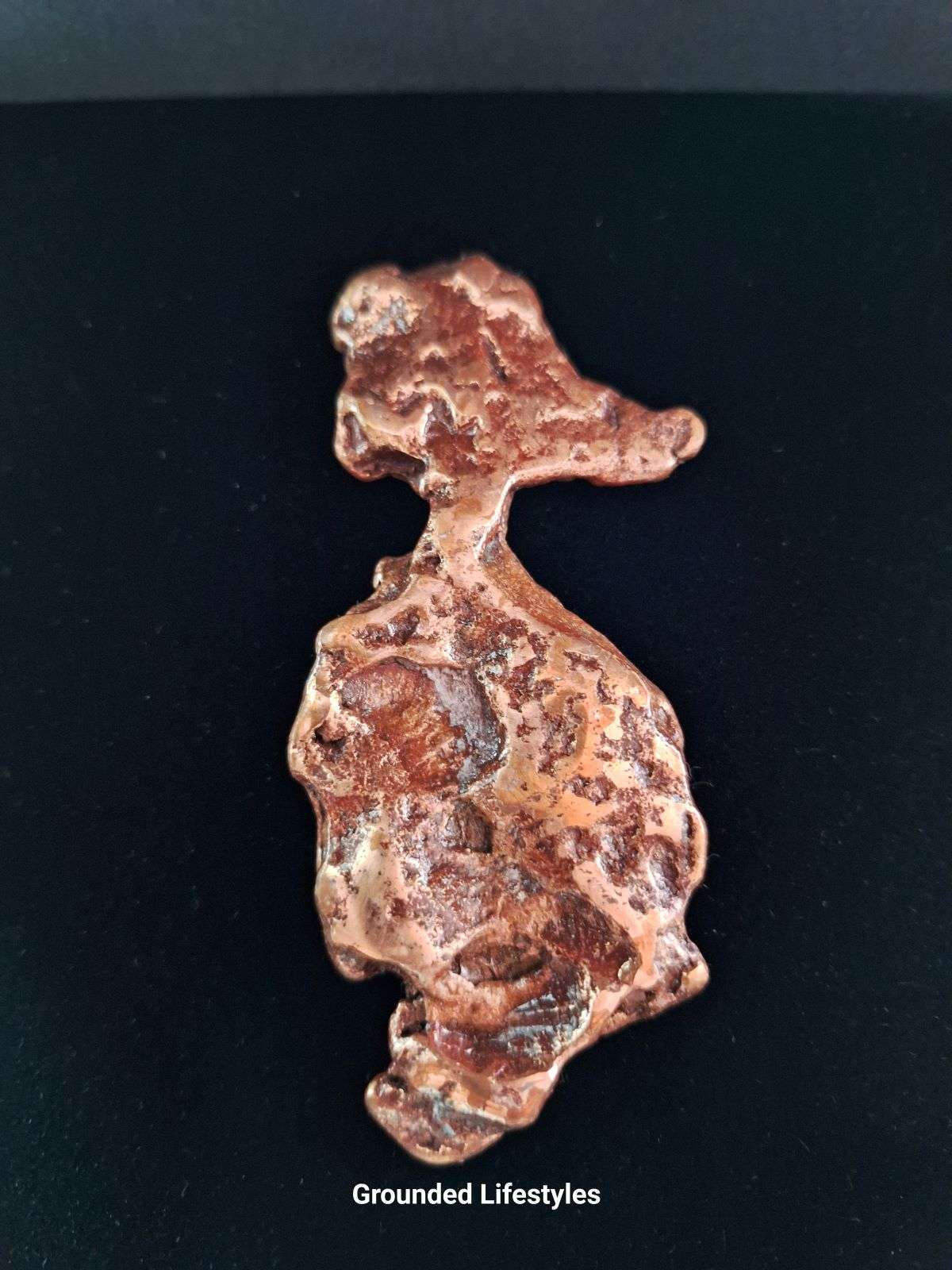
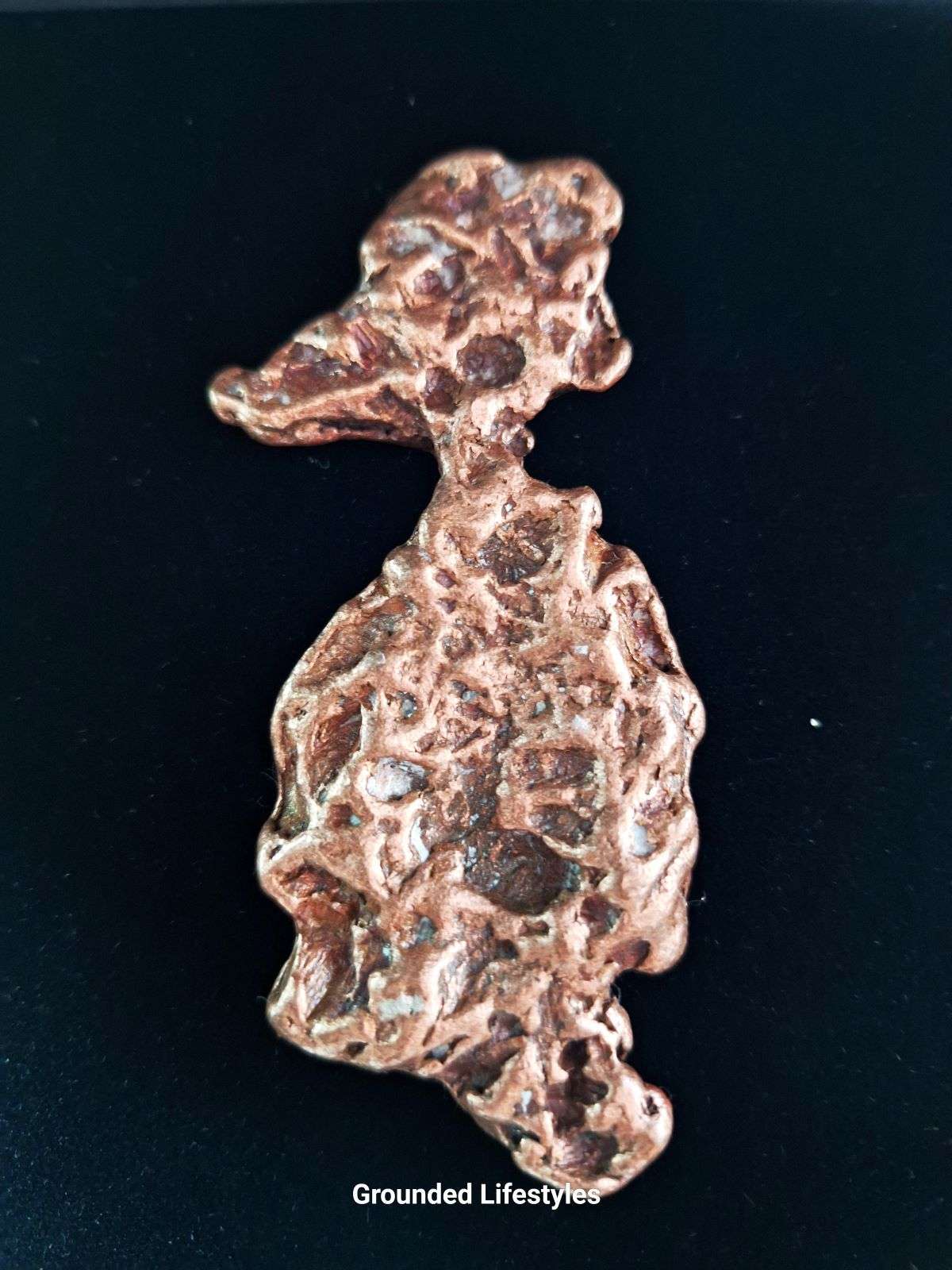
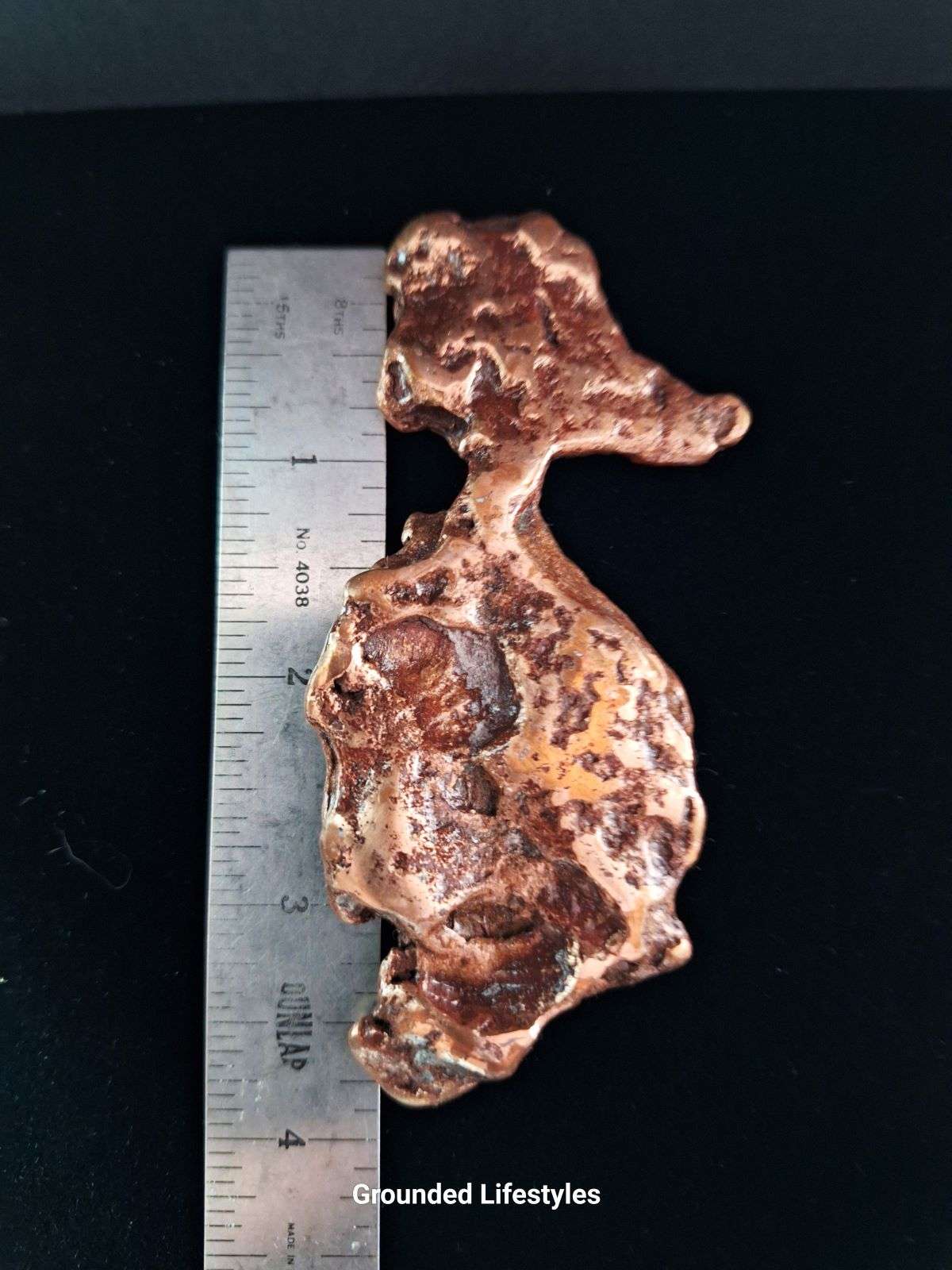
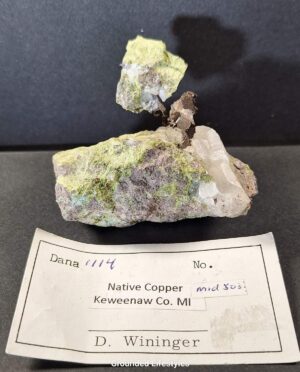
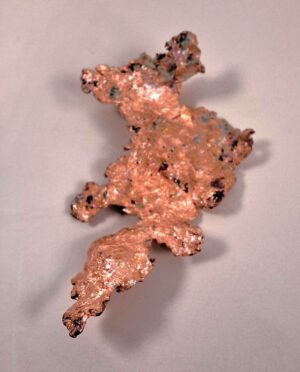
At 4 inches tall, this specimen of native copper looks remarkably like a duck, with a rounded body and a sweeping neck and head that read clearly from across a room. No one carved it. The shape grew as the copper crystallized and weathered into a free-form mass, and the resemblance is a happy accident of geology. Pieces like this are the ones people notice first in a cabinet, and they are as welcome with serious collectors of Michigan copper as with anyone who simply enjoys natural oddities.
Keweenaw Copper Country
The Keweenaw Peninsula of Michigan holds the largest concentration of native copper on Earth, and native copper makes up more than 99 percent of the metallic minerals ever mined there. Commercial mining ran from 1845 to 1996 and produced roughly 15 billion pounds of copper. The district’s largest single deposit, the Calumet and Hecla Conglomerate, is described as the largest native copper lode in the world. Indigenous miners were gathering copper in the Lake Superior region thousands of years before European mining began, and the metal they collected was traded over long distances.
How Native Copper Forms
The story begins about 1.1 billion years ago, when North America started to pull apart along the Midcontinent Rift and thick basalt lava flows filled the widening trough. Roughly 1.06 billion years ago, hot, mineral-rich fluids moved through the permeable tops of those flows and the conglomerates between them. Because the fluids are thought to have carried very little sulfur, copper precipitated as the native metal rather than as a sulfide ore. The copper filled voids, cracks, and spaces in the rock, and free-form pieces like this one grew in those open spaces. Native copper is the element Cu, crystallizes in the isometric system, and has a Mohs hardness of about 2.5 to 3. About 58 percent of the district’s copper came from flow tops and about 40 percent from conglomerates.
Why Collectors Value It
Native copper from Michigan is widely collected, but pieces that resemble something recognizable, such as an animal or a face, tend to stand out from ordinary masses. A shape-oddity specimen like this duck combines geological authenticity with personality, and it can be displayed on its own as a focal point or grouped with other Michigan copper, halfbreeds, and mohawkite.
Metaphysical Traditions
Copper is traditionally associated with conducting energy and intention, with vitality, and with the warmth of the earth. The duck is a symbol of adaptability, since it moves comfortably between water, land, and sky, and some collectors enjoy this piece as a playful emblem of flexibility and good humor. These meanings are traditional and personal symbolism rather than scientifically demonstrated effects.
Care and Display
Keep the specimen dry and handle it with clean hands, since skin oils speed tarnishing. Native copper darkens naturally and may develop brown or green surface films, which many collectors regard as part of its character. Avoid acids, ammonia, and abrasive cleaners. Display it on a stable base where the profile is visible, away from damp areas.
Dimensions
Height: 4 inches. Material: natural native copper. Locality: Keweenaw Peninsula, Michigan.