Description
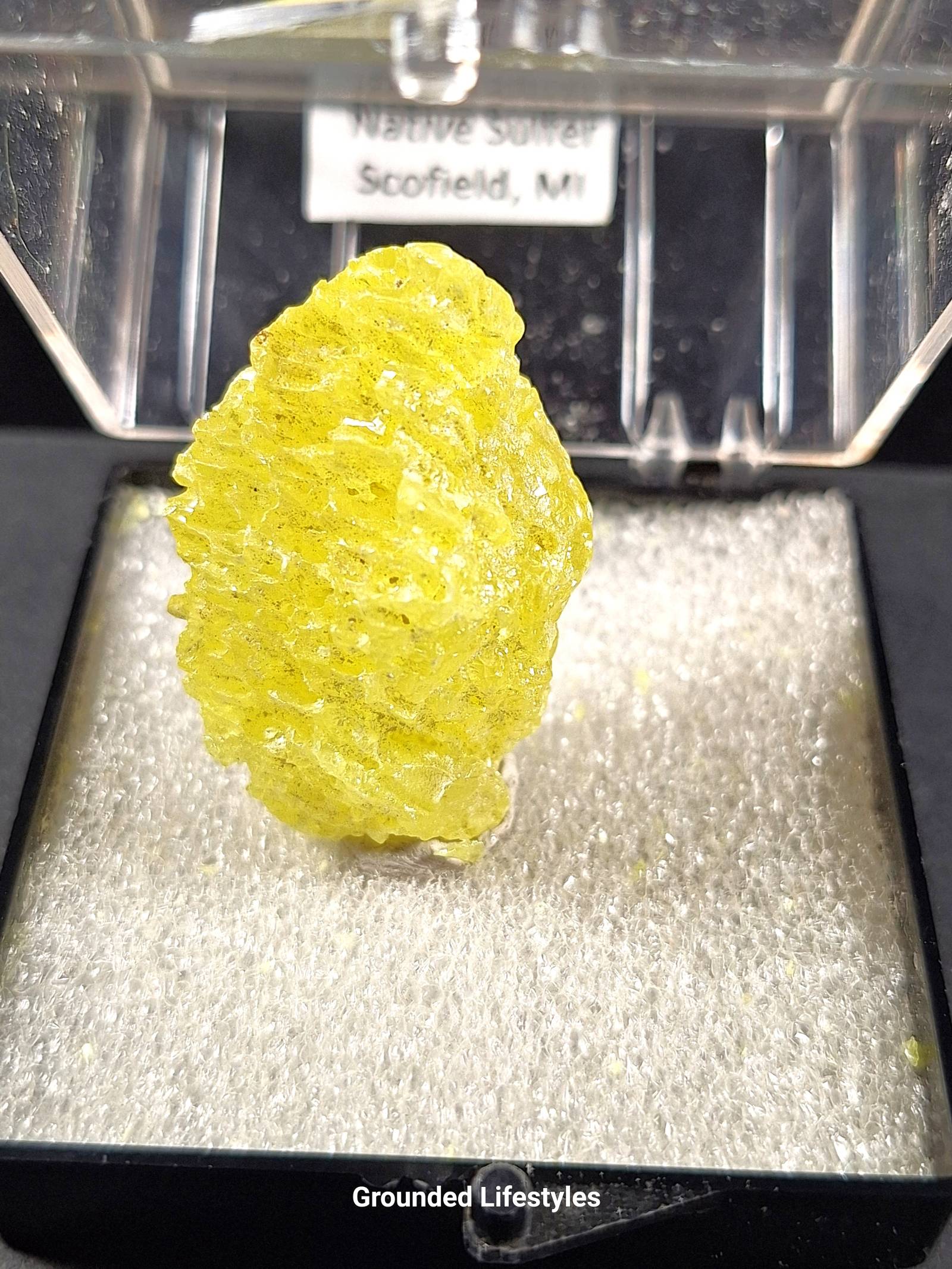
Native Sulfur from Scofield Quarry, Michigan
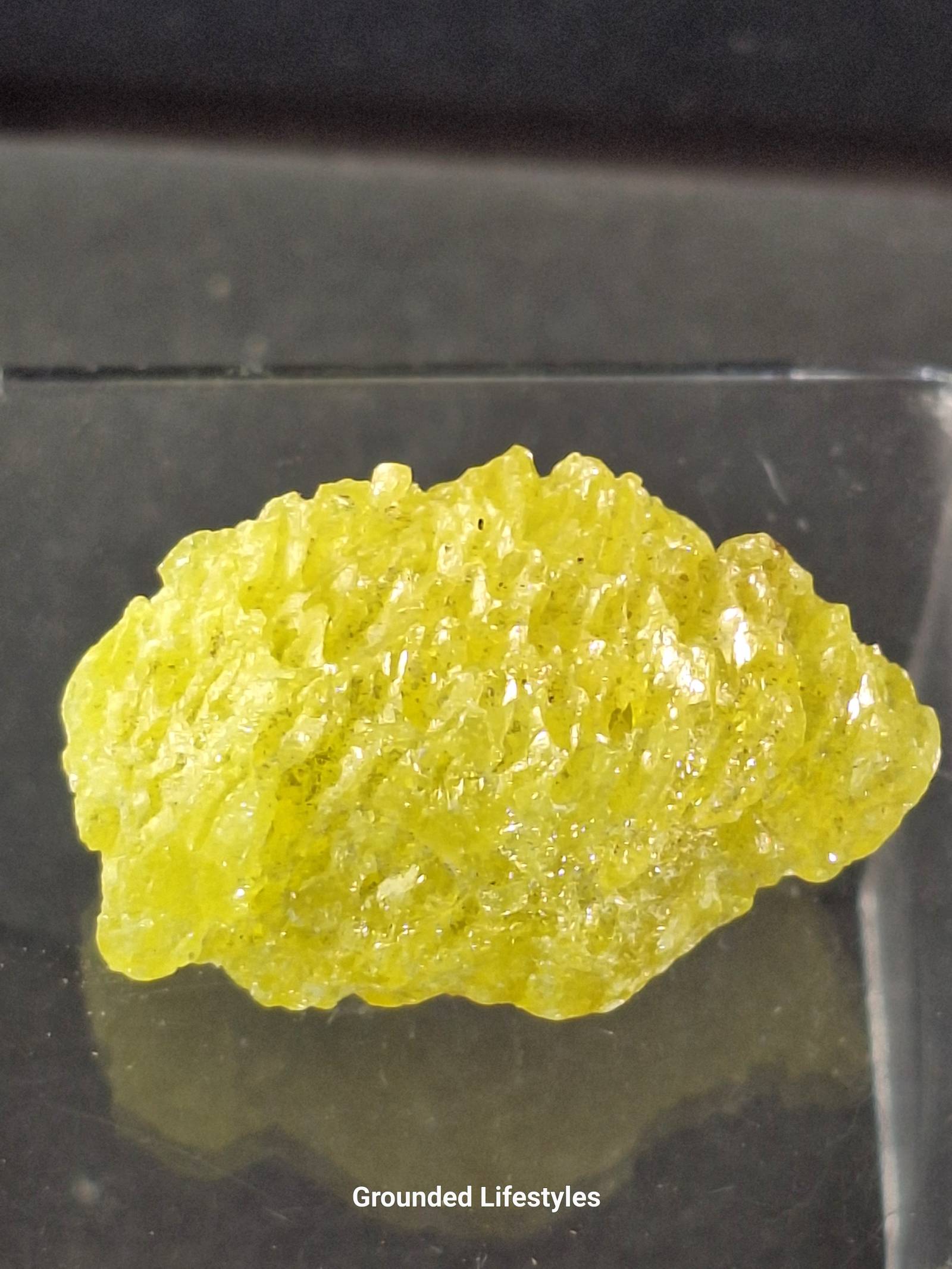
Not every striking sulfur specimen comes from a volcanic landscape. This native sulfur originates from Scofield Quarry in the Maybee area of Monroe County, southeastern Michigan, where mineral collectors have long valued yellow sulfur from limestone and dolostone quarry environments. Its saturated yellow appearance is characteristic of elemental sulfur, a mineral that stands apart from the many sulfur-bearing minerals in which sulfur is chemically combined with metals or oxygen. This is a natural mineral specimen rather than a manufactured crystal.
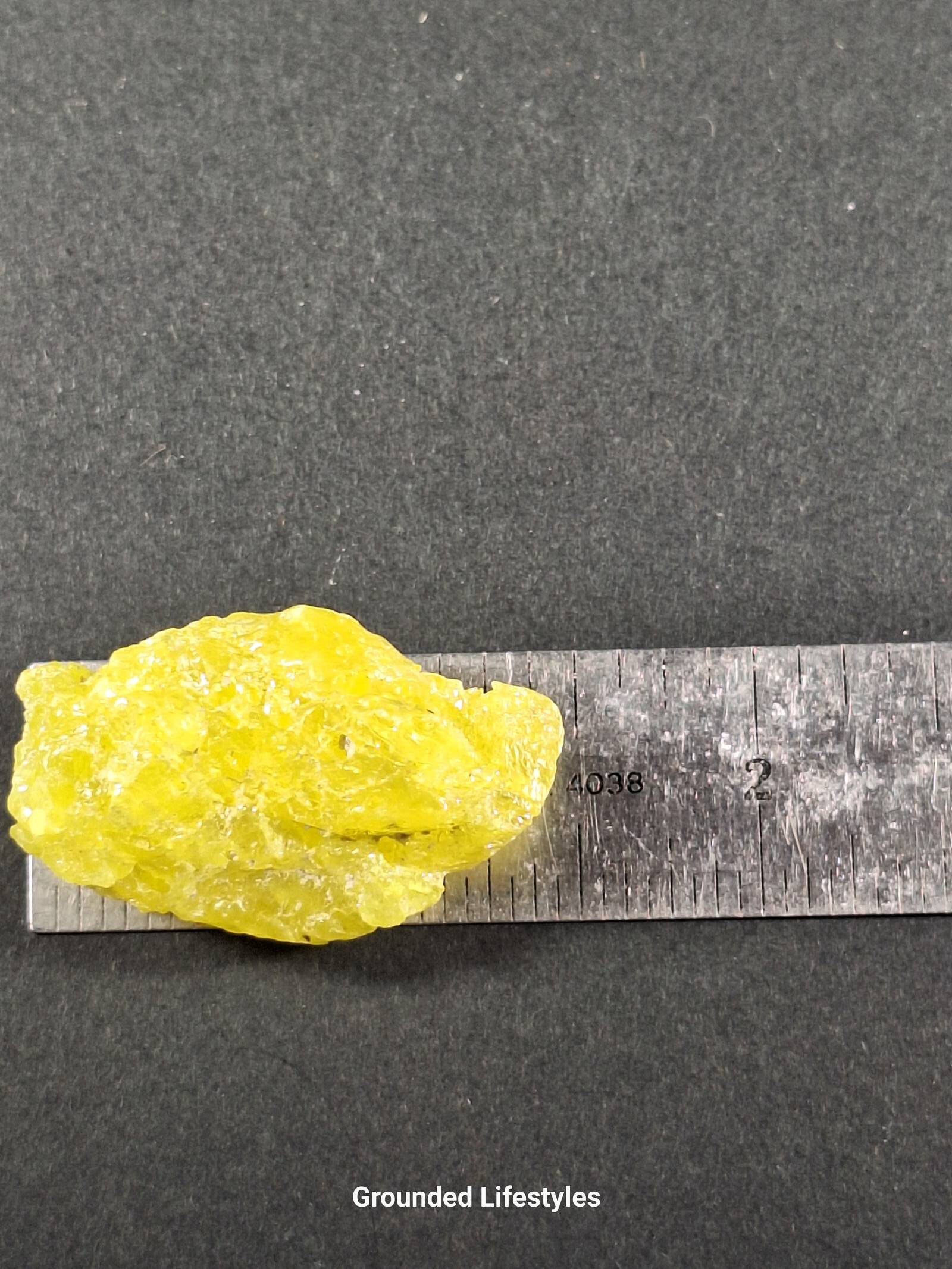
At approximately 2 × 2 × 2 inches, the piece offers a compact example of a locality that is easy to overlook when thinking about Michigan minerals. The specimen weighs approximately 1 ounce and belongs to the Donald Wininger Collection. It is offered as a single, individually photographed collectible specimen.
Why the Maybee Area Produces Sulfur
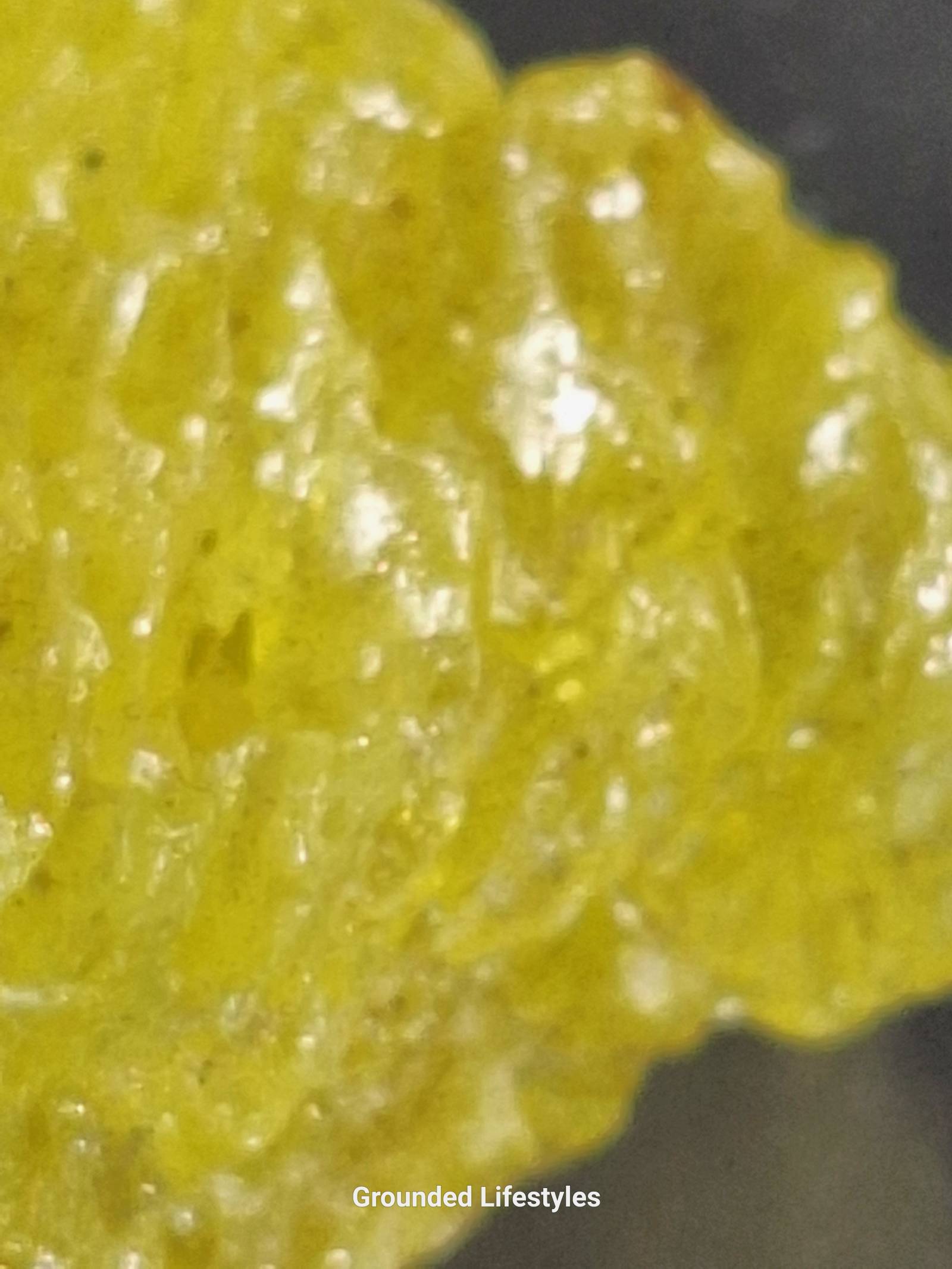
Native sulfur is an elemental mineral whose stable common form consists of S₈ molecules arranged in an orthorhombic crystal structure. It can develop well-defined crystals, but it also occurs as irregular crystalline aggregates, masses, and coatings. Its yellow color, resinous-to-greasy luster, and unusually low hardness of roughly 1.5–2.5 on the Mohs scale are useful identifying characteristics.
In southeastern Michigan, the geological setting is particularly interesting because the sulfur is associated with sedimentary carbonate rocks rather than the volcanic fumaroles many people associate with sulfur deposits. Historical mineralogical research on the nearby Woolmith Quarry describes native sulfur occurring in dolomitic rocks alongside celestite, calcite, and sometimes gypsum. Sulfur can form in sedimentary settings when sulfate-bearing materials undergo chemical reduction, including processes influenced by microorganisms. That regional explanation helps place Scofield-area sulfur in context, although it should not be mistaken for a documented, specimen-specific formation history.
Scofield Quarry and Michigan Mineral Collecting
Scofield Quarry, near Maybee in Monroe County, appears in specialist mineral-dealer and collection records as a source of native sulfur. Collectors recognize the broader Maybee quarry district for sulfur and associated carbonate-environment minerals, especially celestine and calcite. Individual specimens from these localities vary considerably: some display distinct sulfur crystals, while others preserve more massive or aggregate growth. The significance of this piece lies in its identifiable southeastern Michigan origin and its place within that quarry-collecting tradition, not in an unsupported claim that it is rare or unusually large.
Michigan’s mineral history is often told through Keweenaw copper, but Monroe County’s carbonate quarries reveal another side of the state’s geology. Quarrying exposed cavities and mineral-bearing rock that could otherwise have remained inaccessible, allowing collectors and museums to preserve examples of native sulfur from the region.
From the Donald Wininger Collection
This specimen comes from the Donald Wininger Collection, assembled across three generations and acquired by Grounded Lifestyles in 2026. That collection history adds a personal dimension to the specimen: it was preserved as part of a larger interest in mineral localities and geological finds. Its individual collection date and original field circumstances have not been independently established, so no specific year of discovery is claimed.
Traditional Metaphysical Associations
In modern crystal traditions, sulfur is sometimes associated with change, clearing stagnant patterns, motivation, and the willingness to begin again. Its unmistakable yellow color also lends itself to symbolic interpretations involving energy and personal initiative. These are cultural and spiritual associations rather than scientifically demonstrated effects, and the specimen is intended for collecting, display, or personal symbolic use—not for medical treatment.
Care and Display
Native sulfur is soft and brittle, so handle this specimen by supporting it from underneath rather than gripping exposed projections. Display it away from direct heat, open flames, and prolonged intense sunlight. Avoid soaking, detergents, ultrasonic cleaning, and abrasive brushing; if necessary, remove loose dust gently with a dry, soft brush. Do not grind the mineral or inhale its dust, and wash your hands after handling. A stable shelf or enclosed display case is a sensible choice for preserving its surface.
Specimen Dimensions and Details
This is one natural native sulfur specimen from Scofield Quarry, Maybee area, Monroe County, Michigan, USA, in the Donald Wininger Collection. It measures approximately 2 inches long × 2 inches wide × 2 inches high and has an actual specimen weight of approximately 1 ounce. The product is sold as one specimen.
Only logged in customers who have purchased this product may leave a review.

Reviews
There are no reviews yet.