Description
Heulandite – Paterson, New Jersey
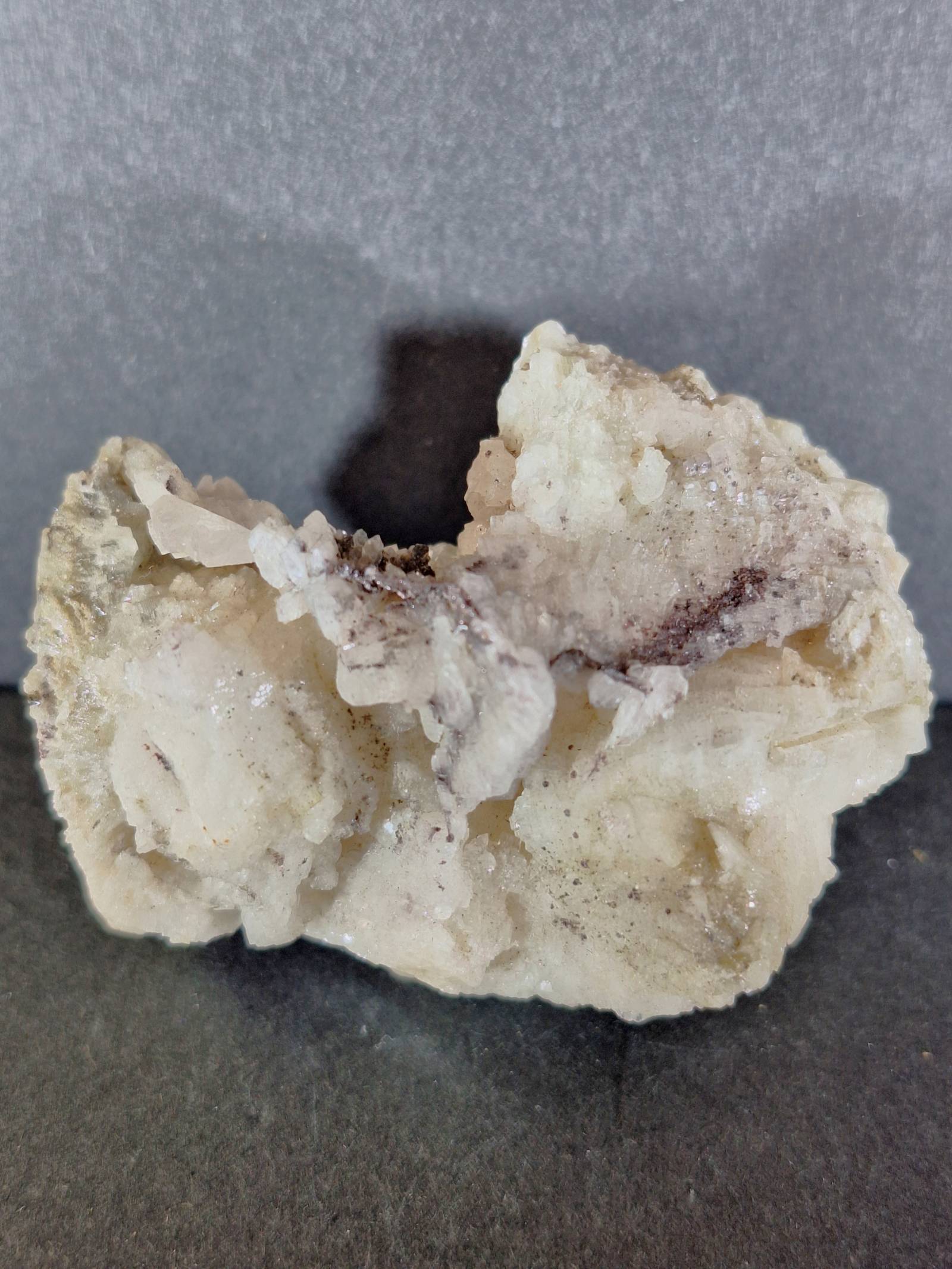
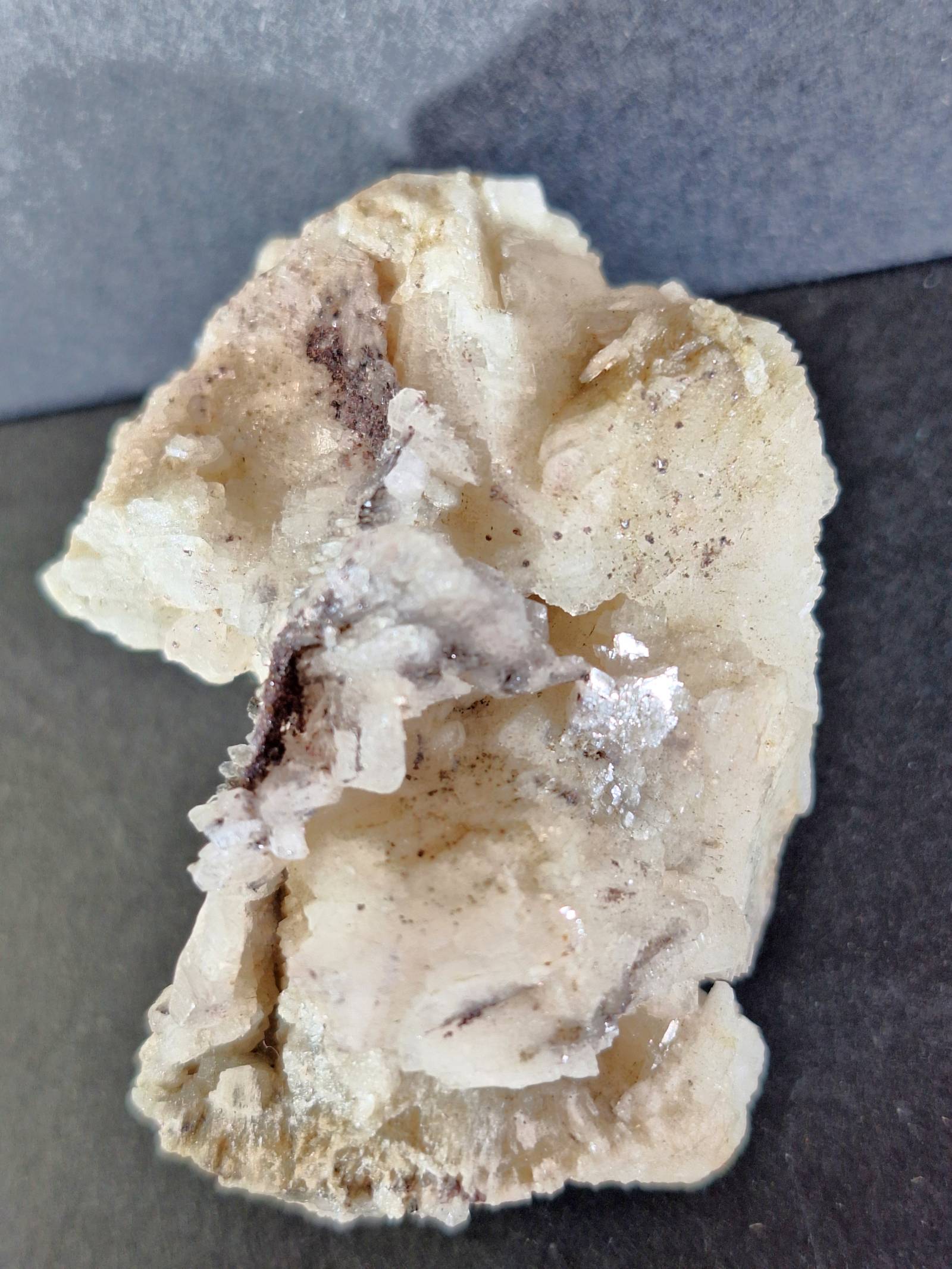
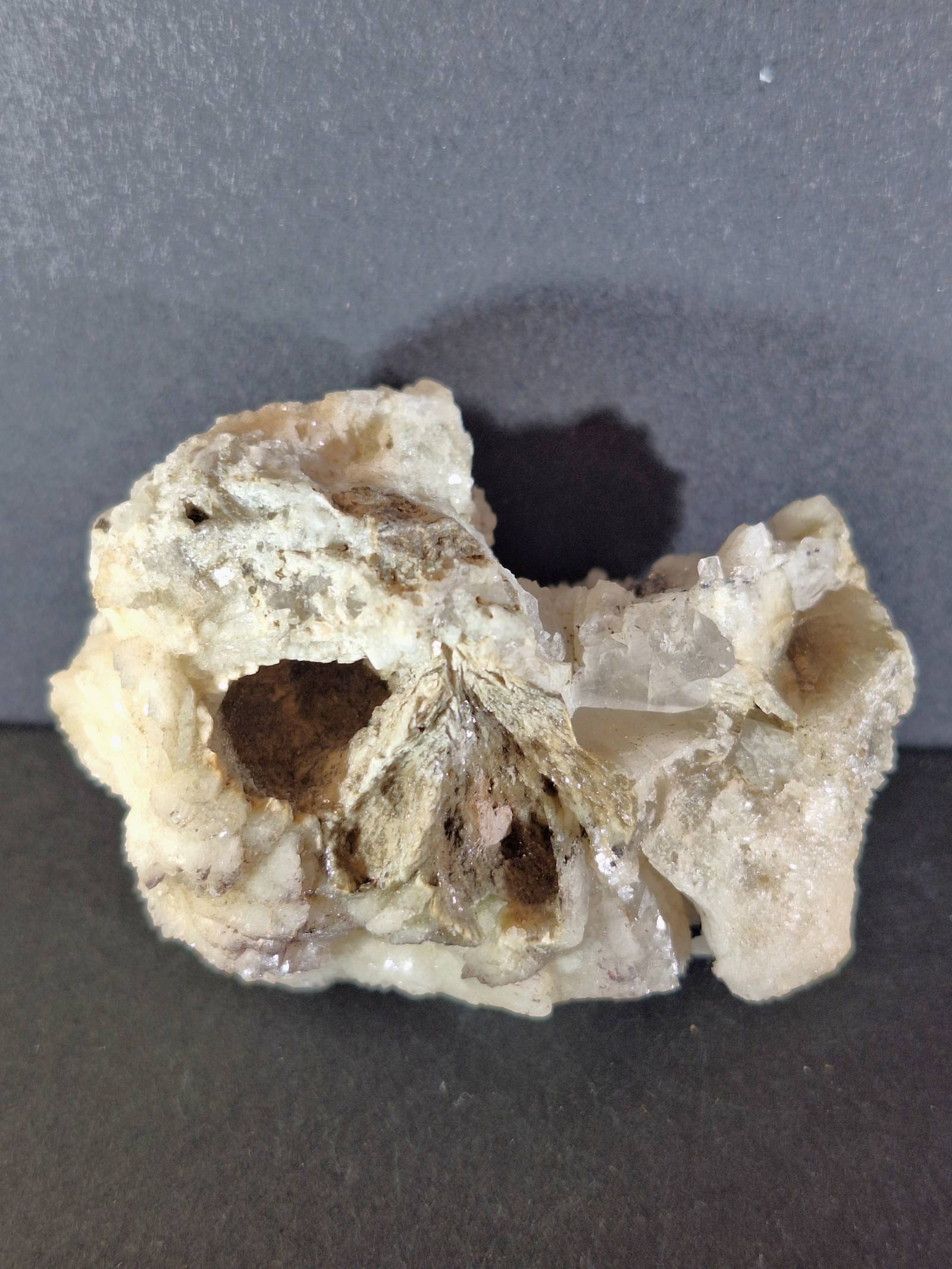
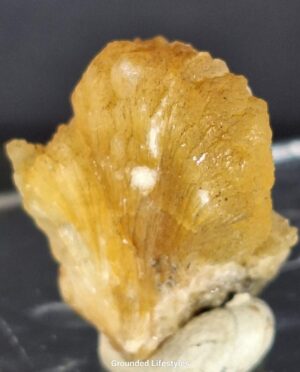
A sculptural cluster of pale cream and white heulandite fills this Paterson specimen. Its many overlapping, plate-like crystal surfaces create stepped edges, small cavities, and pockets of fine sparkle. Tiny brown specks and darker stained areas add contrast without overwhelming the pale mineral. The formation is not a single isolated crystal; it is an irregular aggregate whose intergrown faces reward close inspection. Measuring approximately 2 inches, it is a compact cabinet specimen with a distinctive three-dimensional structure.
Historic Locality and Collection Provenance
Paterson, New Jersey, is one of the classic American localities for minerals found in basaltic traprock. Quarrying exposed cavities and fractures where zeolites and other secondary minerals crystallized. Historic Paterson localities include the New Street quarries, where heulandite-group minerals and heulandite-Ca are documented.
Mineralogy and Crystal Growth
Heulandite belongs to a group of hydrated calcium- and sodium-bearing aluminosilicate zeolites. Zeolites commonly crystallize in cavities where groundwater or hydrothermal fluids alter volcanic rocks. Heulandite crystals often have tabular habits and a pearly to vitreous luster; their delicate intergrowths may form clusters such as the one visible here. Heulandite-group minerals generally have a Mohs hardness around 3.5 to 4. The exact species within the group has not been chemically verified for this individual piece.
Paterson’s Zeolite-Collecting Tradition
Paterson mineral specimens are valued partly because they document the mineral-rich cavities exposed during the region’s long quarrying history. Collectors have described many zeolite habits from these traprock workings, and heulandite’s layered crystal growth is among the recognizable forms. In this piece, the small projecting plates overlap in several directions, producing a rugged, almost architectural appearance. The darker flecks should be viewed as visible staining or associated material rather than assigned to an additional mineral without identification. Displaying this heulandite beside other New Jersey traprock minerals can make differences in zeolite crystal habit especially easy to appreciate. Its historic Wininger provenance adds a second collecting story beyond the geological locality.
Traditional Crystal Associations
Within contemporary crystal traditions, heulandite is sometimes associated with perspective, reflection, and openness to change. Its layered crystal structure offers a visual symbol for examining a situation from more than one angle. Such meanings are matters of personal belief rather than established physical effects.
Care and Display
Heulandite is a comparatively delicate zeolite with good cleavage and hydrated crystal structure. Avoid prolonged soaking, heat, rapid temperature changes, and vigorous brushing. Support the specimen from below and protect projecting plates in a closed display case.
Specimen size: 2x1x1.5 inches. Locality: Paterson, New Jersey. Provenance: Donald Wininger Collection, assembled during the 1950s–1960s. The individual specimen photographed is the one offered.
Only logged in customers who have purchased this product may leave a review.


Reviews
There are no reviews yet.