
$35.00
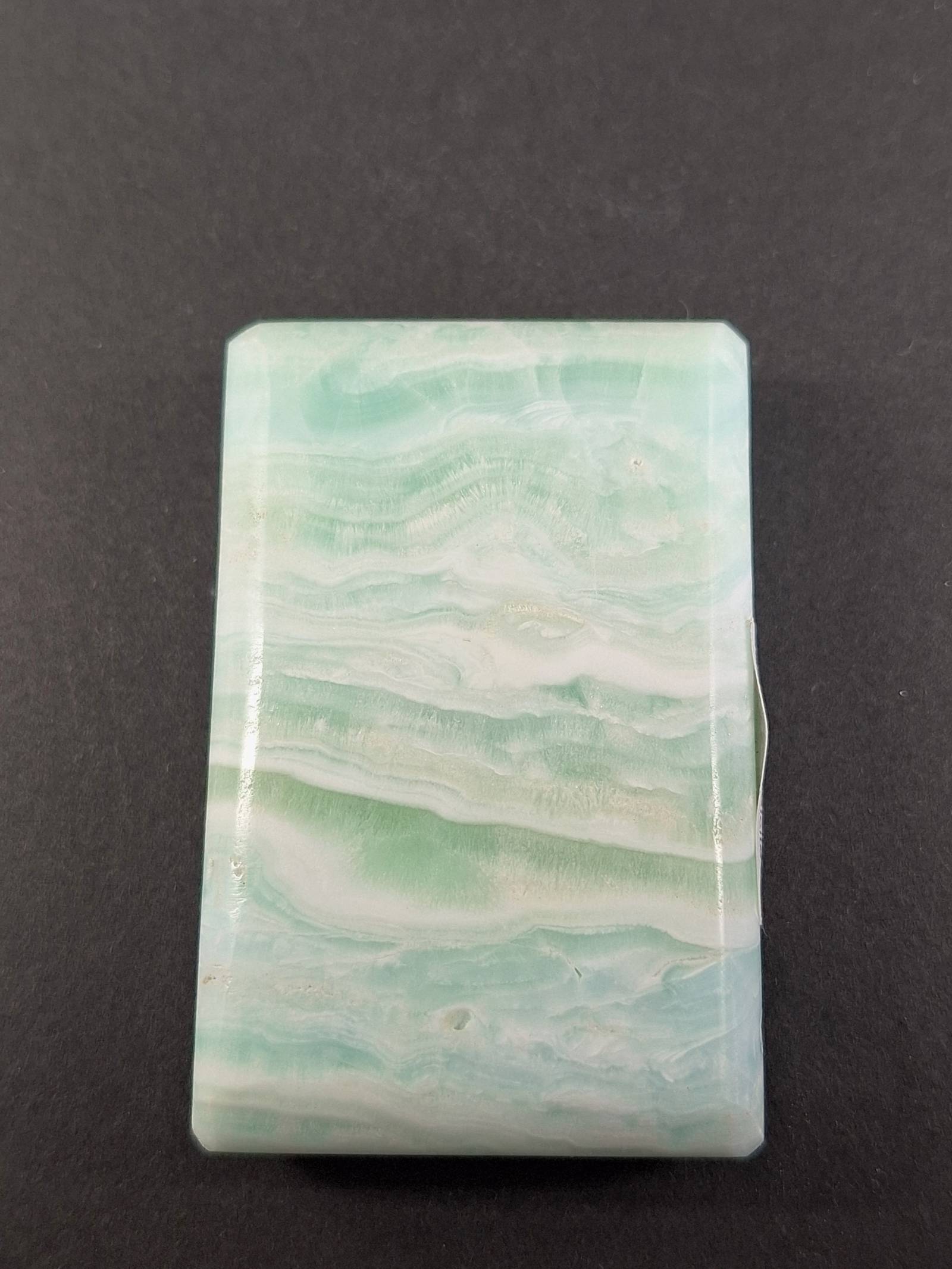
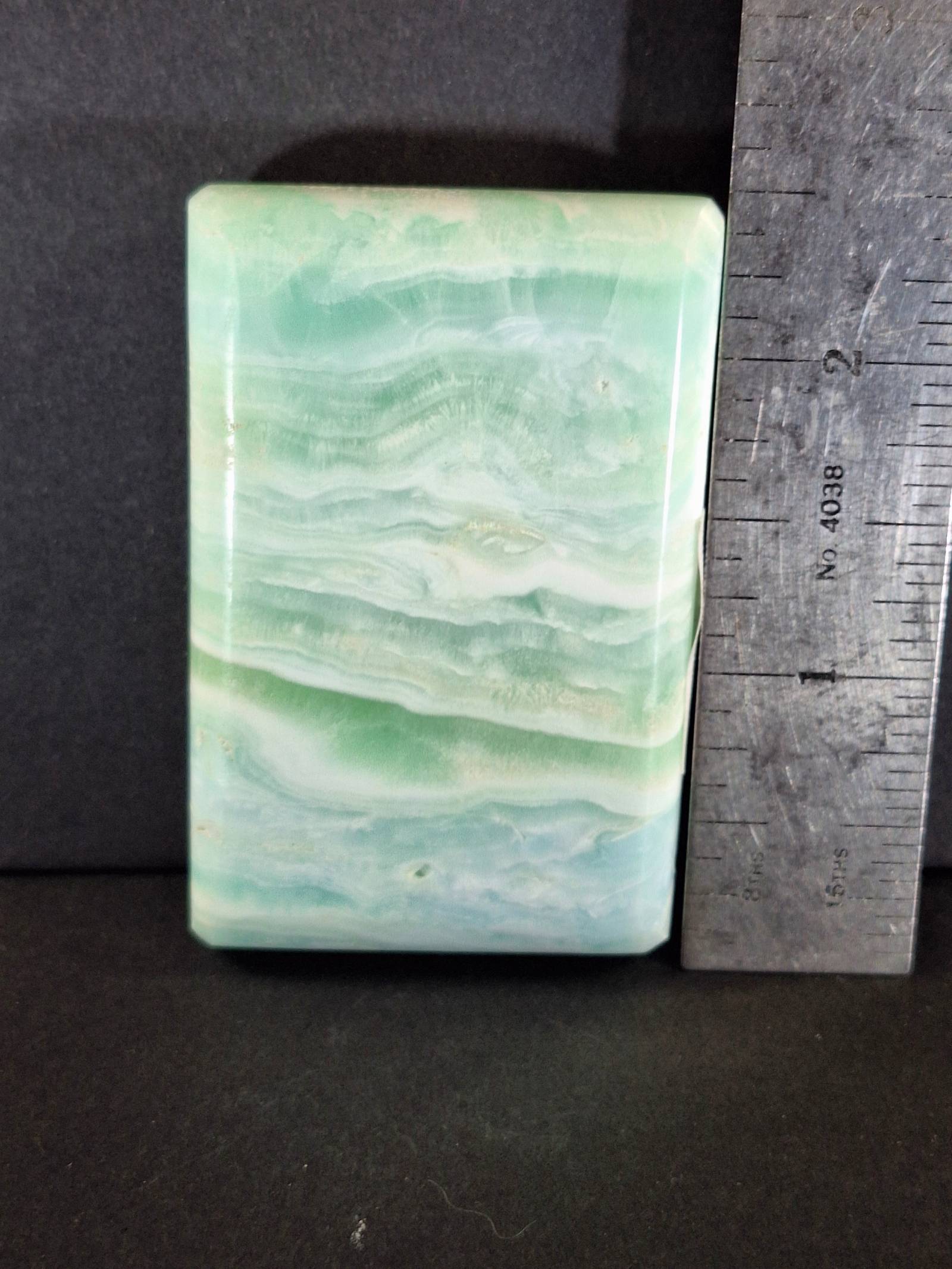
Soft aqua-blue, mint-green, and creamy white bands give this 2.25-inch Caribbean Calcite polished rectangle from Afghanistan its distinctive appearance. Broad, gently shifting color zones are accented by delicate feathered markings, creating a natural pattern reminiscent of water moving across pale stone. Its smooth, compact rectangular shape makes the individual piece easy to appreciate up close, whether displayed among polished minerals or chosen for its understated color and contemporary natural-stone appeal. You will receive the exact specimen pictured.
In stock
You will receive the exact specimen shown.
Carefully packed and shipped from Arizona.
Free U.S. shipping on orders of $70 or more.
Delicate transitions of aqua-blue, mint-green, and creamy white distinguish this 2.25-inch Caribbean Calcite polished rectangle from Afghanistan. Across its smooth face, broad areas of pale color meet in uneven, feathered boundaries, producing a layered appearance that changes subtly as the stone is viewed from different angles. Rather than the strong brown contrast found in some Caribbean Calcite specimens, this piece draws its character from its softer palette and the intricate markings within its lighter bands.
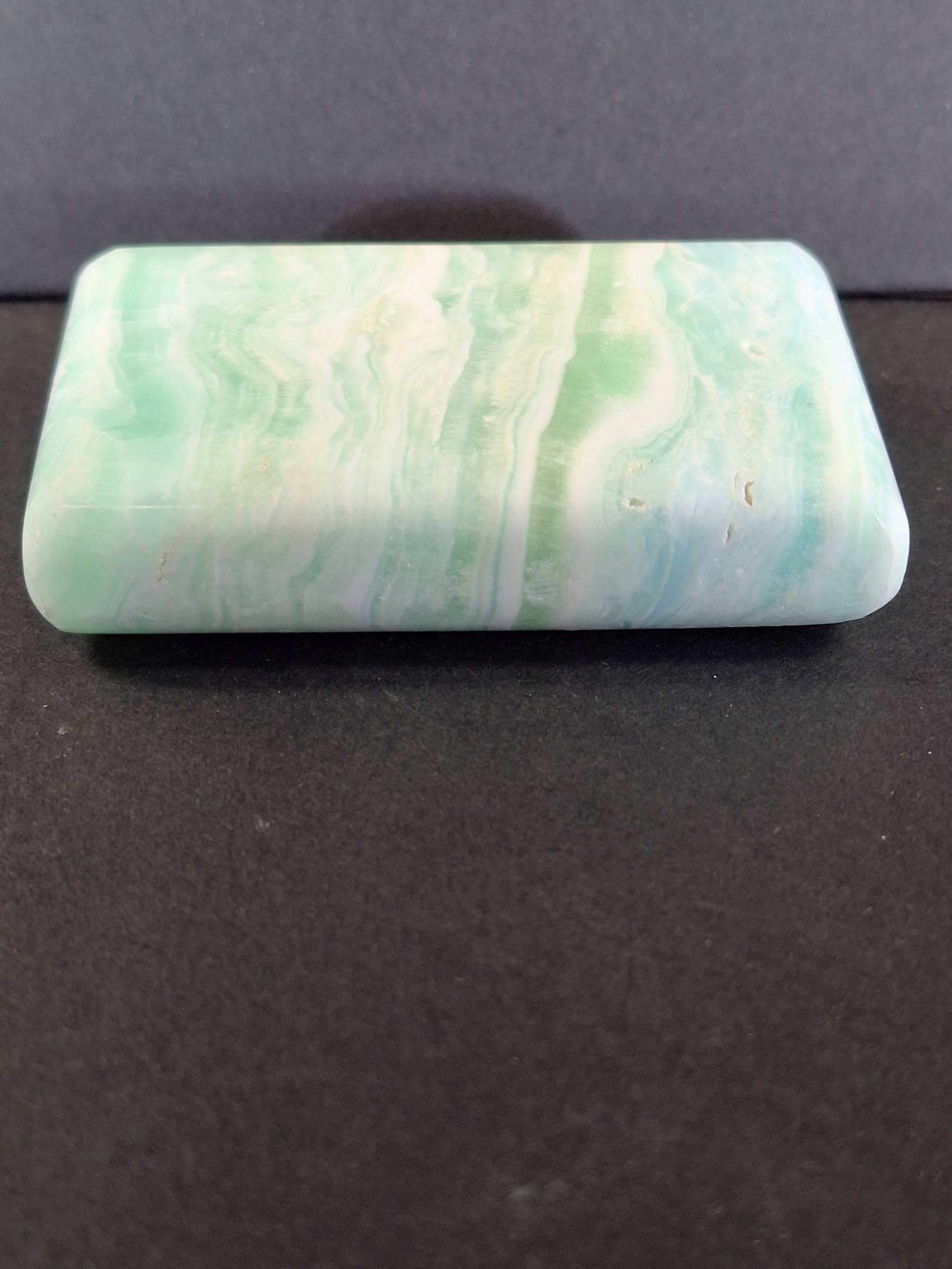
The stone has a compact rectangular silhouette with gently softened corners, giving it a clean, contemporary appearance without losing the individuality of its natural mineral pattern. The polished surface reveals the variations in color and texture, while its relatively small size makes it suitable for a mineral display, desk, shelf, or carefully arranged collection of polished stones.
What makes this Caribbean Calcite rectangle especially appealing is the relationship between its larger color fields and finer internal markings. Pale aqua-green areas alternate with cloudy white ribbons, while more delicate lines create subtle movement through the central portion of the specimen. These patterns are not applied to the surface. They reflect variations within the carbonate material itself, exposed and enhanced through cutting and polishing. The result is a piece that rewards closer inspection, particularly under soft natural lighting.
Collectors of polished minerals often appreciate specimens like this because they reveal a different aspect of mineral beauty from sharply formed crystals. Instead of prominent crystal faces, the visual interest comes from the arrangement of colors, mineral boundaries, and the textures preserved within the stone.
Caribbean Calcite is a commercial name used for attractive blue, greenish-blue, white, and sometimes tan banded carbonate material. The name refers to its ocean-like appearance rather than an origin in the Caribbean.
Material sold under this name is commonly associated with calcite and aragonite, two minerals that share the chemical formula CaCO₃ but have different crystal structures. Calcite crystallizes in the trigonal system, while aragonite belongs to the orthorhombic system. Their differing structures influence how they grow and the physical characteristics they exhibit. Both minerals can develop in environments where calcium-carbonate-rich fluids deposit mineral material. Changes in mineral growth conditions and the presence of additional constituents can produce contrasting layers, irregular boundaries, and varied coloration.
This specimen is identified commercially as Caribbean Calcite from Afghanistan. The precise mineral proportions within the individual polished piece have not been established through laboratory analysis.
The restrained colors of this rectangle make it particularly suitable for collectors who enjoy polished carbonate minerals and decorative natural stone. Its rectangular form provides a different presentation from the towers, spheres, and irregular freeforms commonly encountered in the crystal trade. It can be displayed alongside contrasting minerals such as dark fluorite, smoky quartz, or metallic pyrite, where its lighter colors provide visual balance. It is equally attractive as an individual piece, especially where its aqua and white bands can be viewed without competing patterns nearby.
Because this is an individual natural-stone specimen, its markings are specific to the piece pictured rather than a standardized pattern reproduced across multiple products.
In contemporary crystal traditions, Caribbean Calcite is associated with peaceful reflection, communication, intuition, and personal clarity. Its blue-green colors are often connected symbolically with the throat chakra, while its softer white areas are sometimes associated with calmness and thoughtful awareness. Some crystal enthusiasts use polished Caribbean Calcite as a visual focus during meditation, quiet reflection, or intention-setting. Its flowing patterns can serve as a reminder of gradual change and the natural rhythms found in the world around us. These interpretations are spiritual and cultural associations, not scientifically established effects or medical benefits.
Caribbean Calcite should be handled more carefully than harder stones such as quartz or agate. Calcite has a Mohs hardness of approximately 3, while aragonite is generally harder, around 3.5–4. Both are relatively soft carbonate minerals and can be scratched by harder objects. Keep this polished rectangle away from abrasive surfaces, sharp edges, acidic cleaning products, and prolonged contact with water. Use a soft, dry microfiber cloth to remove fingerprints and dust. Avoid soaking, ultrasonic cleaners, and chemical polishing agents. Store or display it separately from harder minerals to help preserve the smooth finish and delicate surface markings.
With its understated aqua and mint-green coloration, cloudy white banding, and compact polished form, this Caribbean Calcite rectangle offers a distinctive example of the decorative beauty found in banded carbonate stone.
| Weight | 4 oz |
|---|---|
| Dimensions | 2.25 × 0.25 × 0.25 in |
Only logged in customers who have purchased this product may leave a review.
Reviews
There are no reviews yet.