Description
Caribbean Calcite from Afghanistan – Polished Blue and Brown Specimen
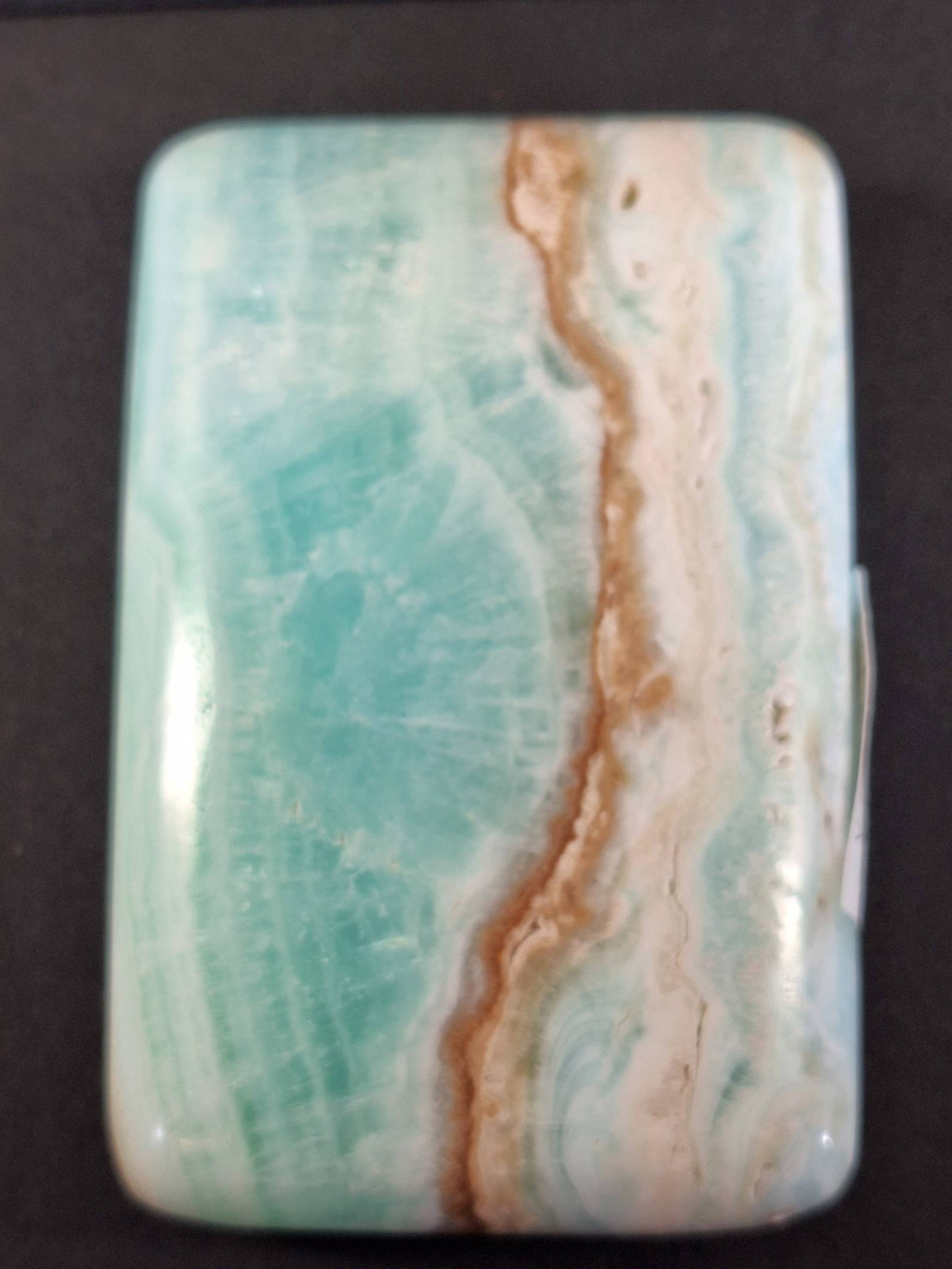
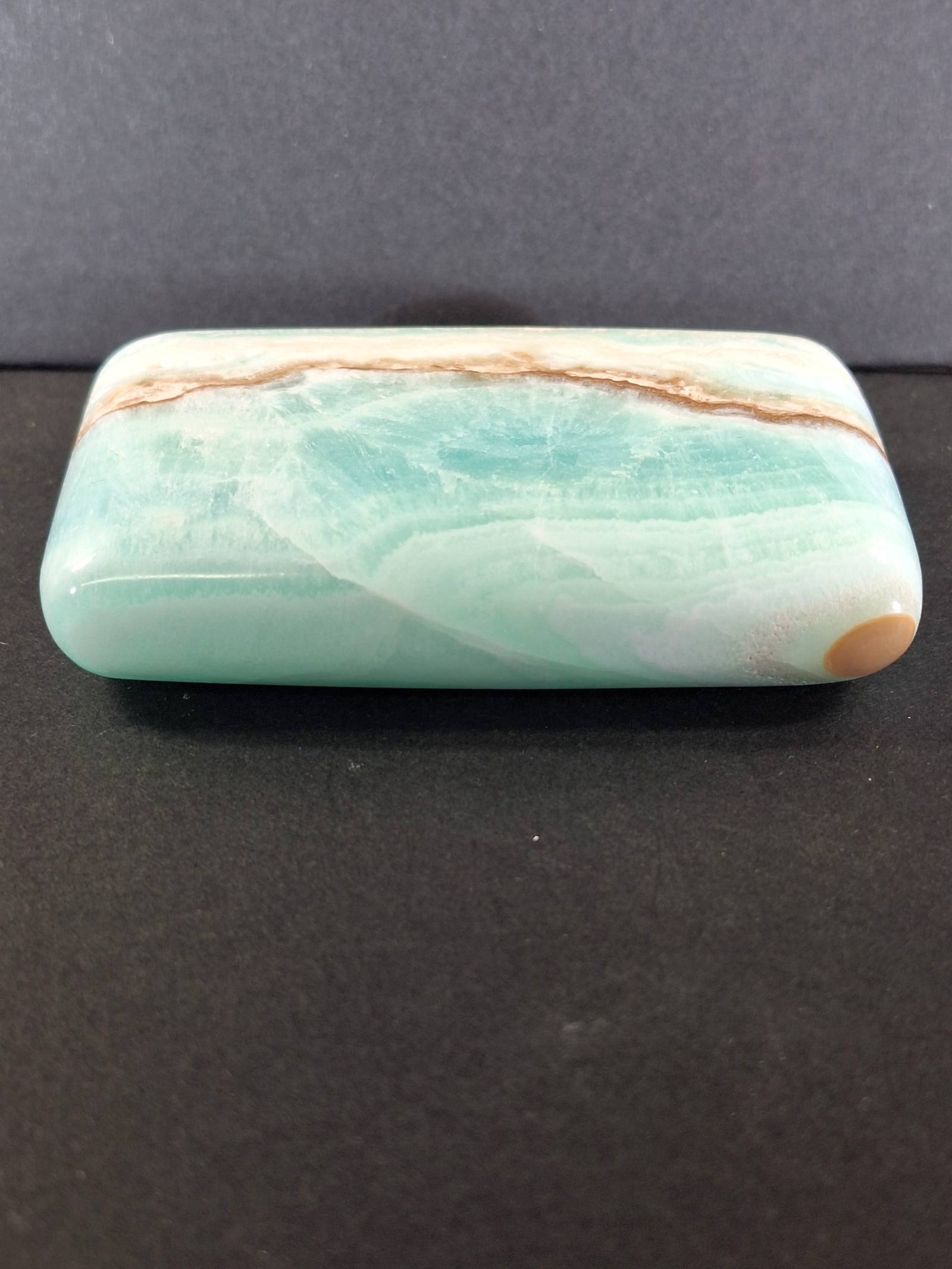
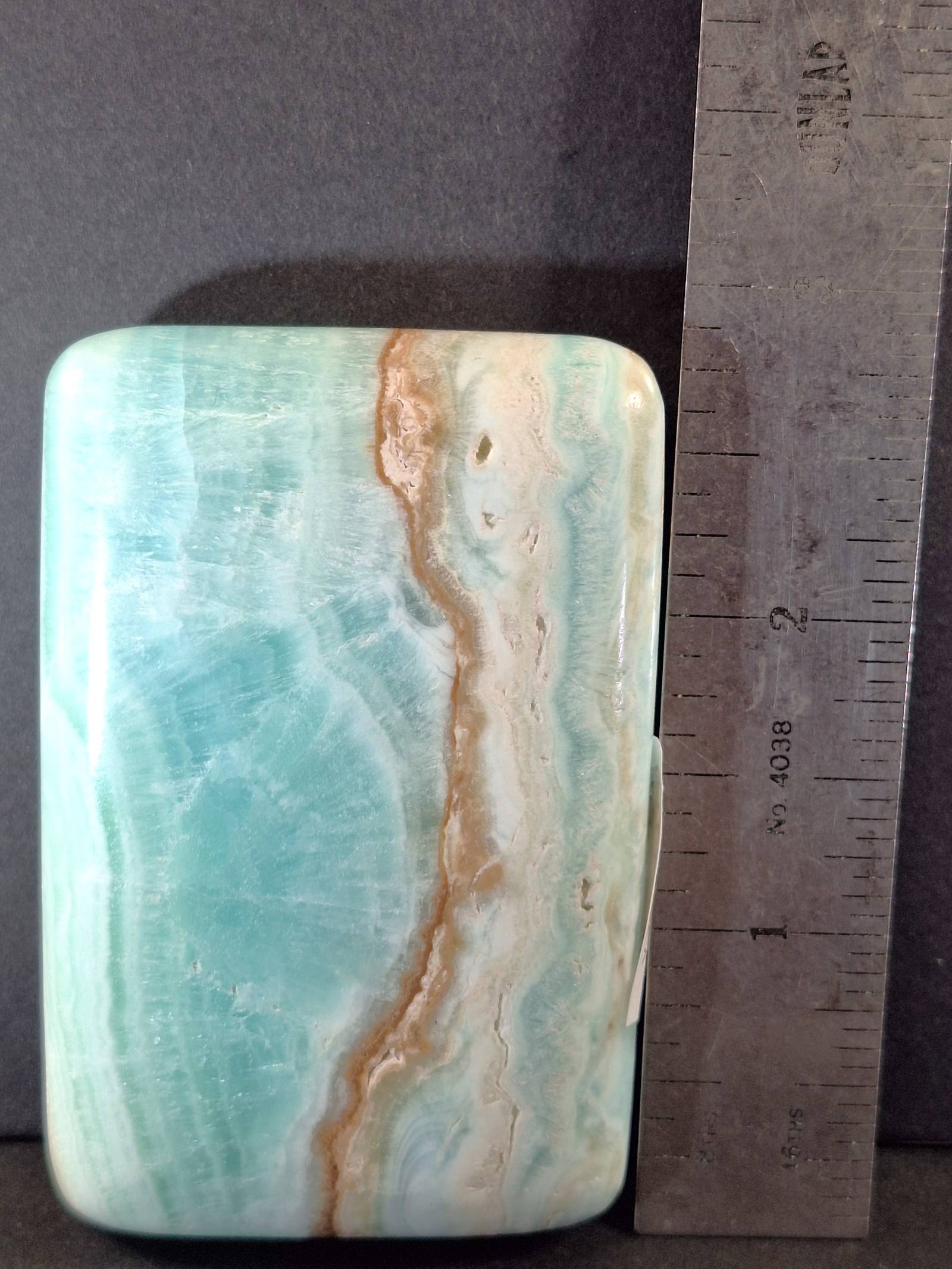
Soft aqua-blue mineral patterns surround a striking caramel-brown band in this polished Caribbean Calcite specimen from Afghanistan. The contrast between the cool blue areas, creamy white transitions, and earthy brown markings gives the stone an almost landscape-like appearance. Its rectangular shape has gently rounded corners and a smooth polished face that reveals the natural variations within the material.
One of the most interesting details is the irregular brown band extending through the specimen. Along its edges, the color shifts through warm tan and white before meeting the blue mineral areas. Near the lower portion of the stone, delicate curved bands create another layer of visual interest. These details make the piece especially appealing when viewed closely under natural light.
What Is Caribbean Calcite?
Despite its name, Caribbean Calcite does not come from the Caribbean Sea. The name is a commercial trade designation inspired by the stone’s resemblance to tropical water and pale sandy beaches. Material sold under this name is commonly described as a combination of blue calcite and aragonite, two naturally occurring calcium carbonate minerals. Their contrasting colors and patterns produce the characteristic appearance associated with Caribbean Calcite. Calcite and aragonite share the chemical formula CaCO₃, but their crystal structures differ. Calcite belongs to the trigonal crystal system and has a Mohs hardness of approximately 3, while aragonite belongs to the orthorhombic system and generally measures 3.5–4.
Geological Formation and Origin
Caribbean Calcite is associated with carbonate-rich geological environments where mineral-bearing water deposits calcium carbonate. Changes in mineral growth, impurities, and the conditions of deposition can produce contrasting layers and irregular boundaries between differently colored areas. The material has been commercially associated with deposits in the Pakistan–Afghanistan border region. This specimen is identified as originating from Afghanistan. The combination of blue, cream, and brown makes Caribbean Calcite especially attractive for polishing. Cutting and polishing expose patterns that might otherwise be difficult to appreciate in rough material.
Metaphysical Meaning and Traditional Associations
In contemporary crystal traditions, Caribbean Calcite is associated with tranquility, reflection, and clear communication. Its pale blue coloration is often connected with the throat chakra, while its gentle appearance has made it a popular stone for meditation and intention-setting. Some crystal enthusiasts also associate calcite with personal growth, renewed perspective, and the symbolic release of unhelpful patterns. These interpretations belong to spiritual and metaphysical traditions rather than scientifically demonstrated effects.
Care and Display
Caribbean Calcite is relatively soft compared with quartz and many other decorative minerals. Handle the polished surface carefully and avoid storing it against harder stones that could cause scratches. Clean with a soft, dry cloth. Avoid vinegar, acidic cleaners, prolonged soaking, ultrasonic cleaning, and abrasive polishing compounds. Carbonate minerals can react with acids, and unnecessary moisture or harsh cleaning may affect the finish. The specimen’s contrasting blue and brown colors make it particularly attractive against a dark display background, where the natural banding becomes more noticeable. This individually photographed Caribbean Calcite piece offers a distinctive combination of polished form, soft aqua coloration, and dramatic natural patterns from Afghanistan.