Description
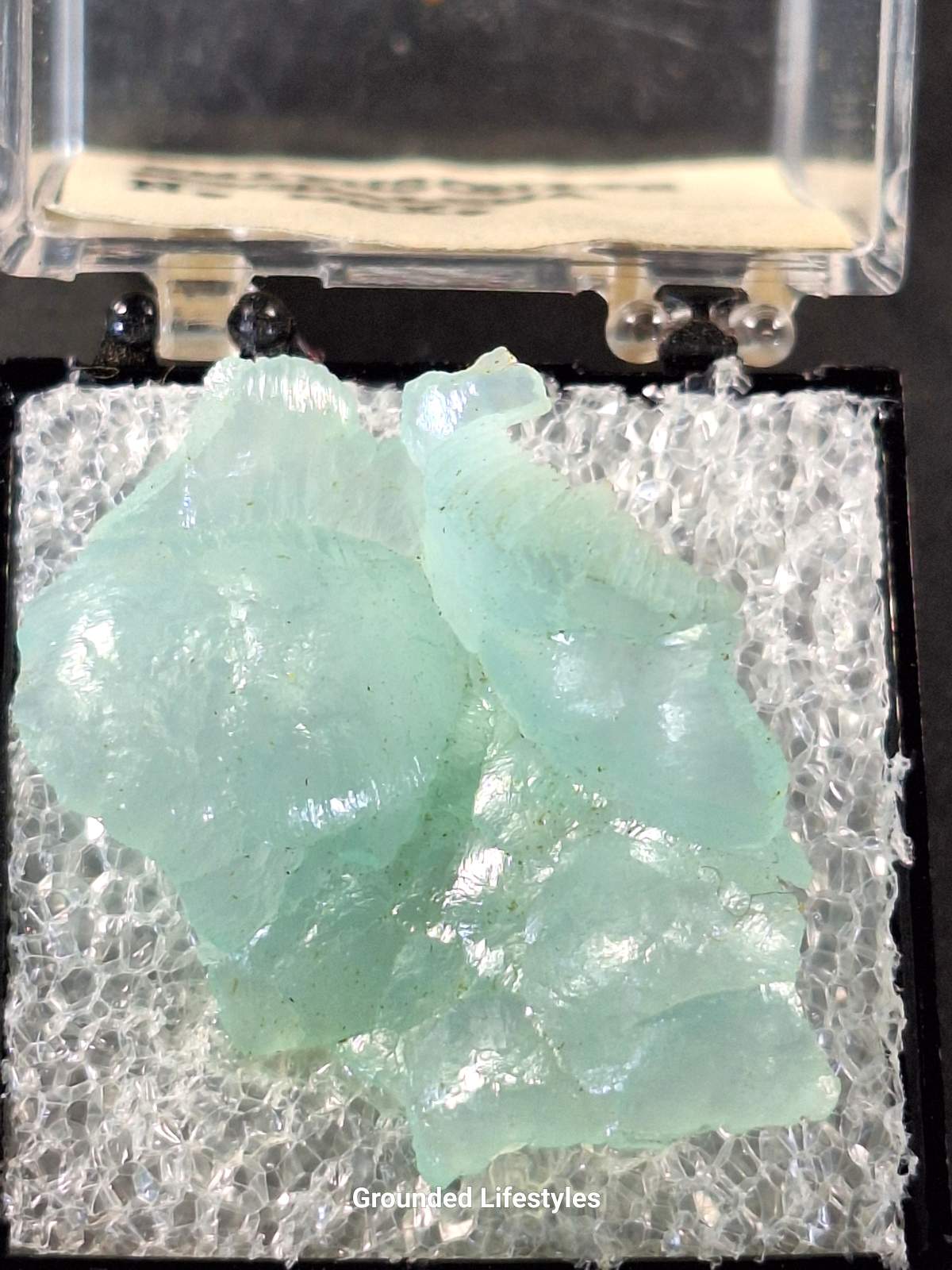
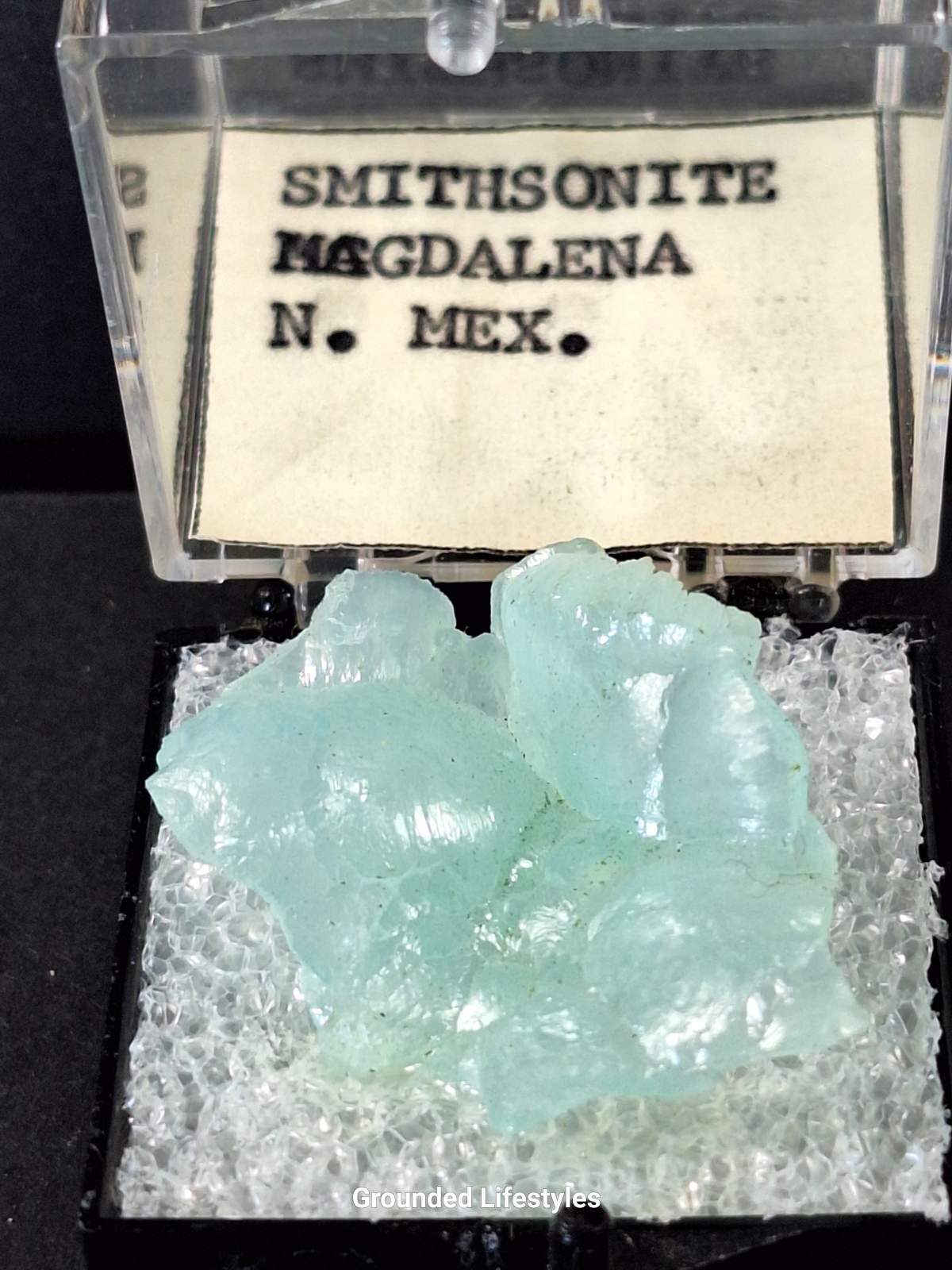
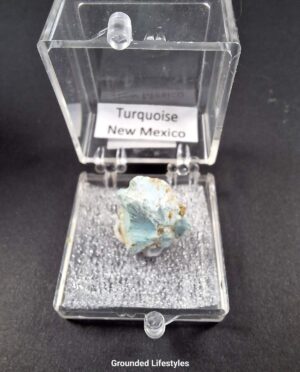
From the Donald Wininger Collection Blue Smithsonite measures approximately 1.25 inches long, 0.25 inches wide, and 0.25 inches high and comes in the 1.25-inch Perky box shown.
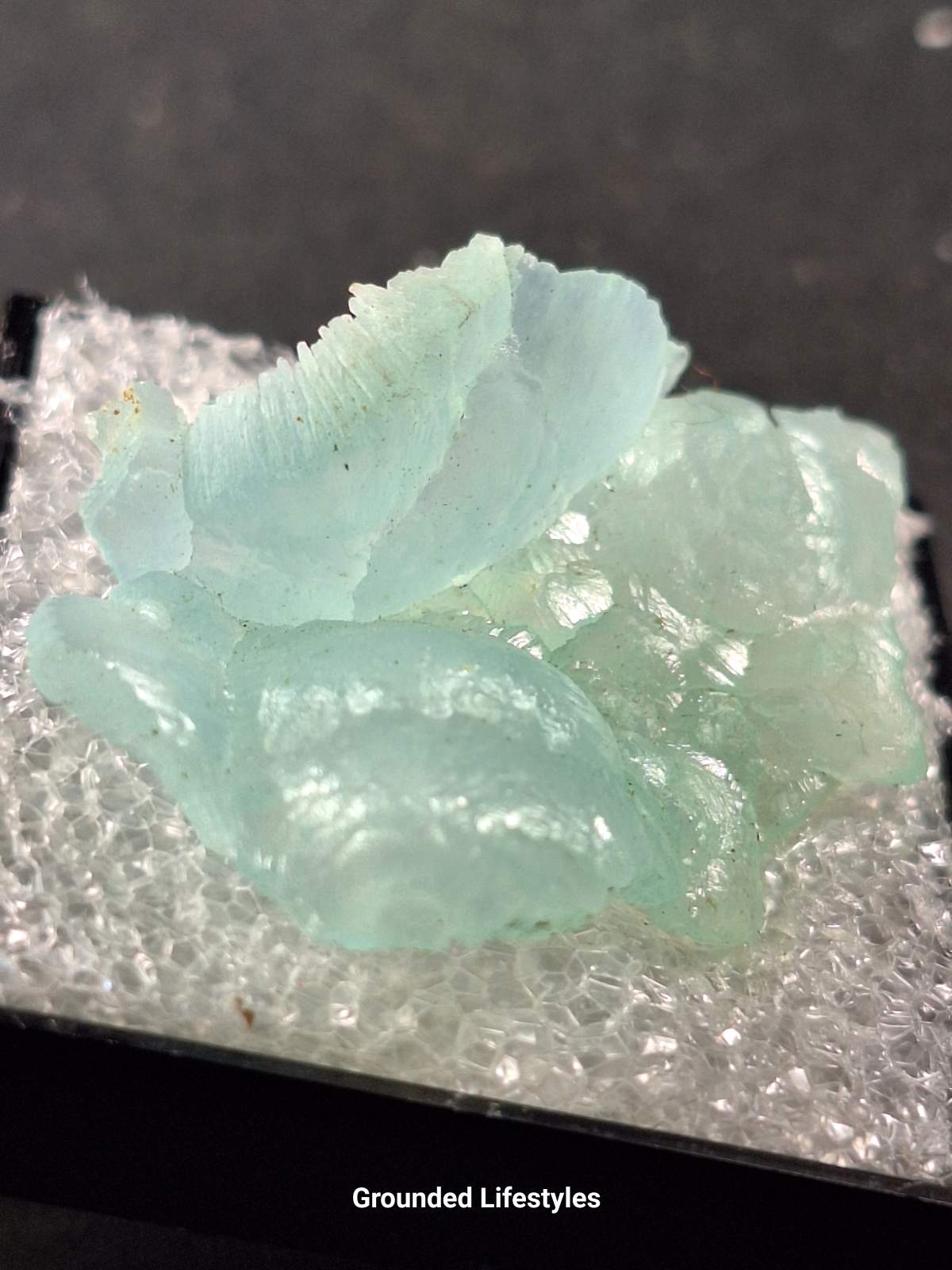
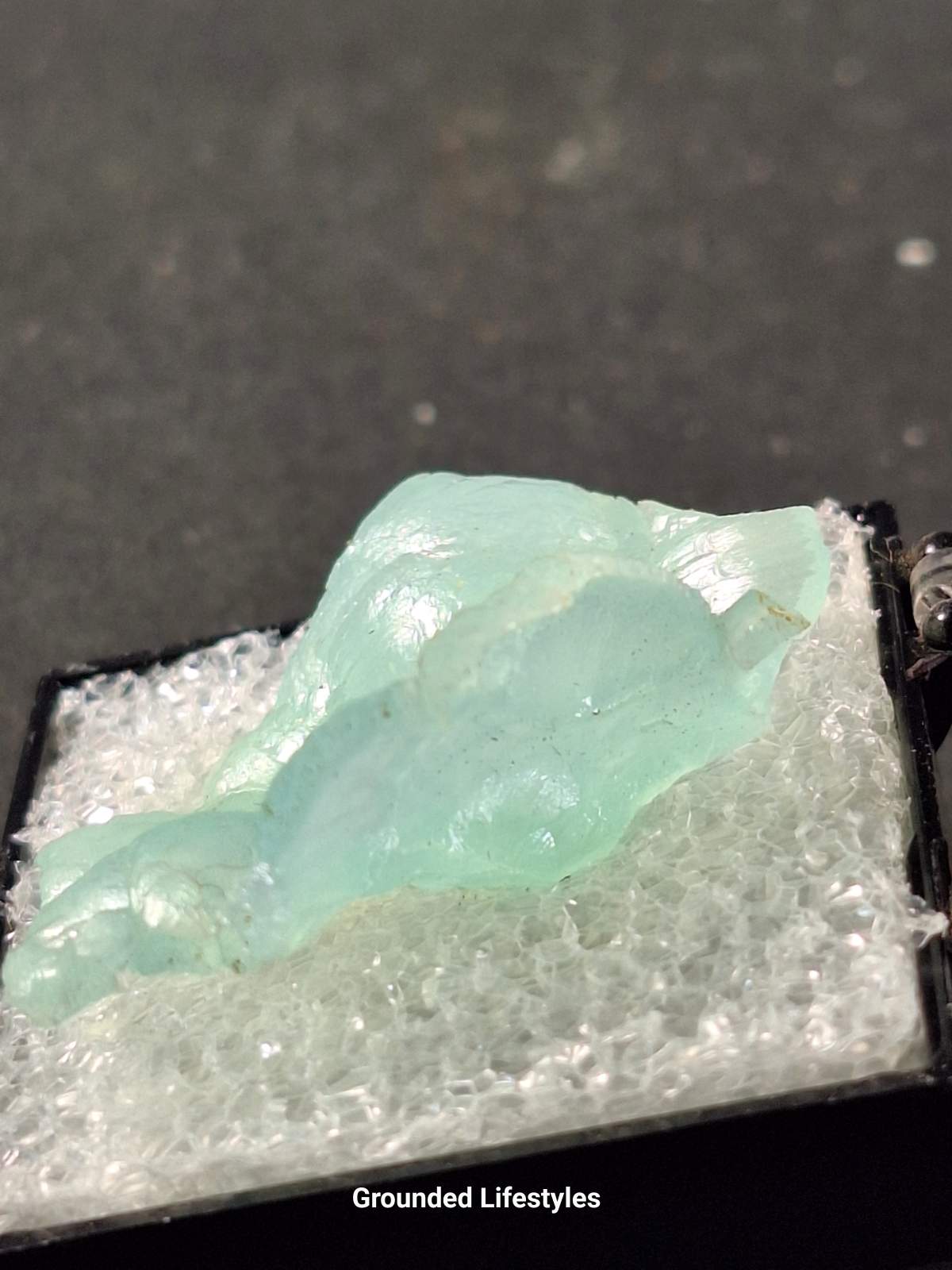
The photograph shows a mass of pale aqua to blue-green Smithsonite with softly rounded, overlapping growths. Its surface has a particularly attractive luster—some areas appear almost silky, while others reflect the light strongly enough to look wet or glassy. The translucency is also important. Light penetrates the thinner portions of the mineral rather than simply reflecting from an opaque surface, giving the blue-green color considerably more depth. The rounded surface is known as botryoidal growth. The word comes from the Greek word for a bunch of grapes. Instead of developing as large individual crystals with obvious flat faces, countless tiny crystals grow outward from multiple points. As those groups expand, they form interconnected rounded or globular surfaces. Smithsonite is particularly famous for doing this.
The Magdalena Mining District lies in the Magdalena Mountains west of Socorro, New Mexico. Mining began there during the nineteenth century, initially concentrating heavily on lead and silver. Zinc later became increasingly important.
Smithsonite—zinc carbonate, ZnCO₃—became one of the district’s signature minerals.
The New Mexico Bureau of Geology reports that the district produced substantial quantities of zinc and became internationally known for its apple-green Smithsonite. Historic records describe translucent green Smithsonite occurring in substantial masses within cavities in the district’s zinc deposits. Today, however, collectors probably know Magdalena Smithsonite best for its extraordinary green, blue-green and pale blue colors.
The New Mexico Bureau of Geology specifically identifies the blues and blue-greens of the Magdalena district as notable colors among New Mexico Smithsonites.
Mineral Information
| Property |
Information |
| Mineral |
Smithsonite |
| Formula |
ZnCO₃ |
| Mineral Class |
Carbonate |
| Crystal System |
Trigonal |
| Mohs Hardness |
4–4.5 |
| Luster |
Vitreous to pearly |
| Color Here |
Pale aqua to blue-green |
| Transparency |
Translucent |
| Habit |
Botryoidal aggregate |
| Locality |
Magdalena Mining District, Socorro County, New Mexico |
| Collection |
Donald Wininger Collection |
Metaphysical Properties
In modern crystal traditions, Smithsonite is associated with calm, compassion, emotional balance, self-expression and adapting gracefully to change.
Blue and blue-green Smithsonite are particularly associated with thoughtful communication, tranquility and the throat chakra. Its softly rounded botryoidal form is also symbolically connected with gentleness and steady personal growth.
These are traditional metaphysical associations and are not medical claims.
Display & Care
Smithsonite is moderately soft at approximately 4–4.5 on the Mohs scale, and its botryoidal surfaces can be damaged by careless handling.
Keep this specimen in its 1.25-inch Perky box whenever practical. Avoid acids, chemical cleaners, ultrasonic cleaning and prolonged soaking. Dust gently with a very soft, dry brush.
Because Smithsonite is a zinc-bearing mineral, avoid cutting, grinding or creating mineral dust.