Description
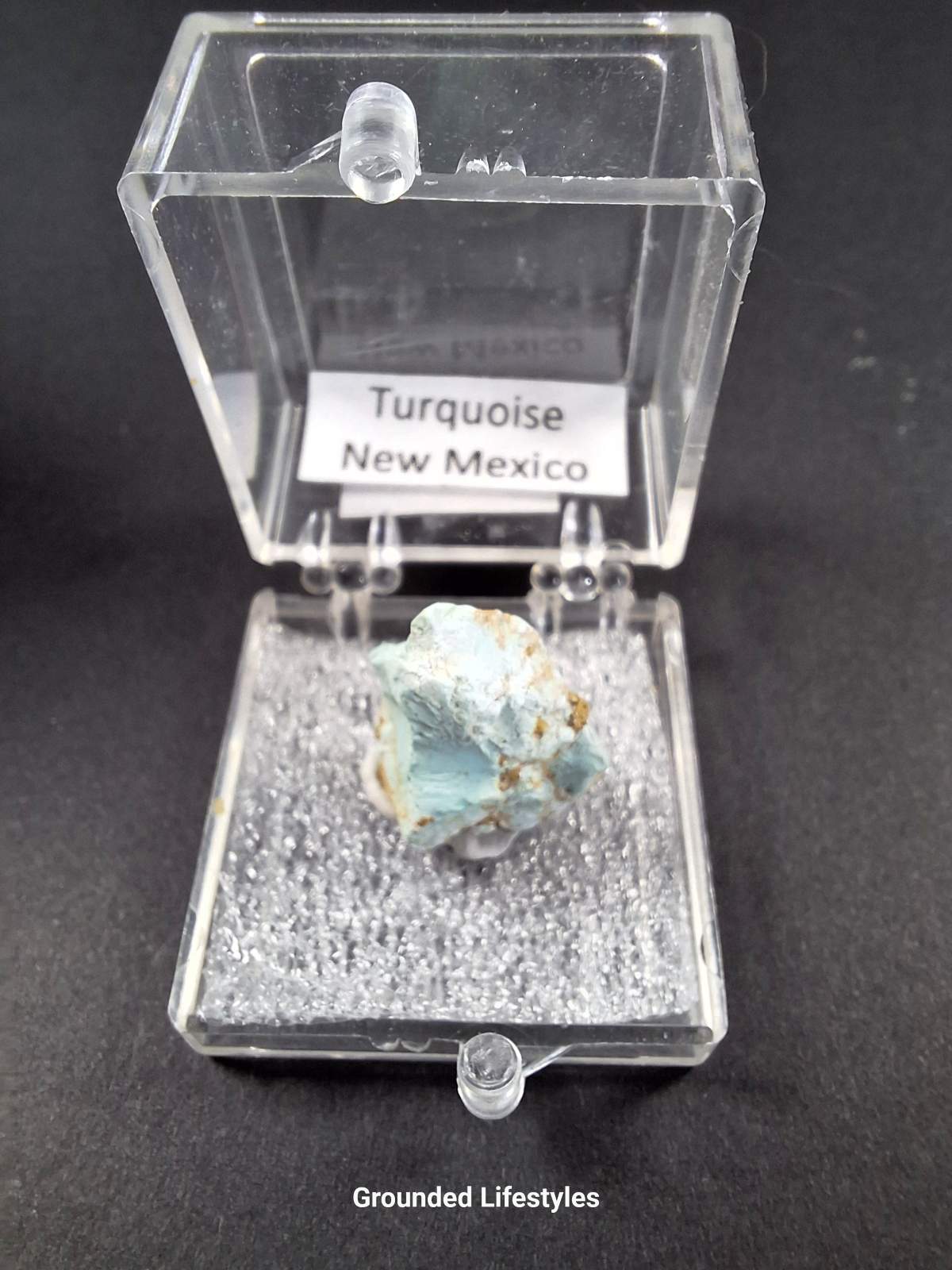
This natural Turquoise specimen from the Jarilla Mountains of New Mexico is part of the Donald Wininger Collection, a three-generation mineral collection assembled from the 1940s through the early 2000s.
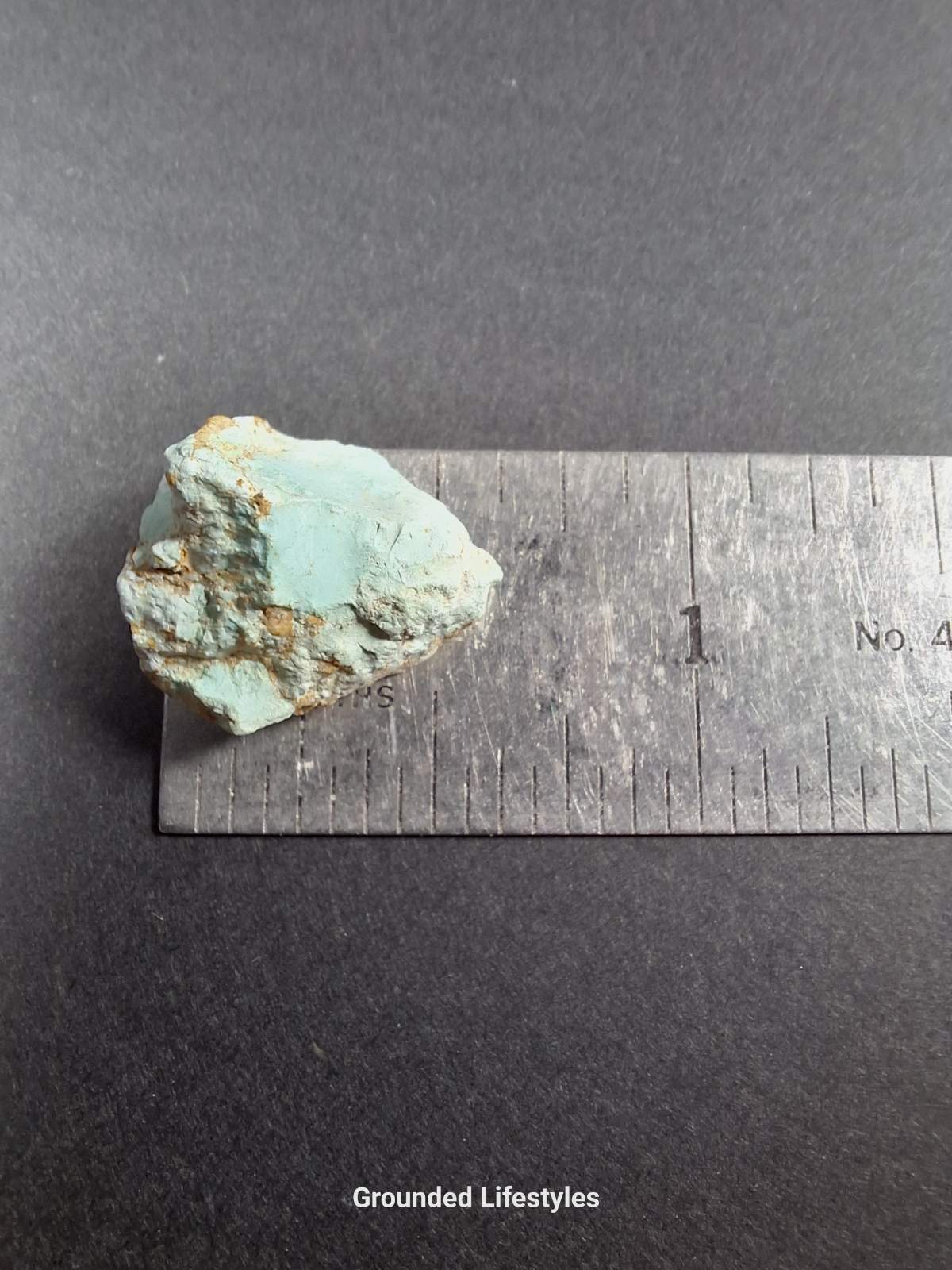
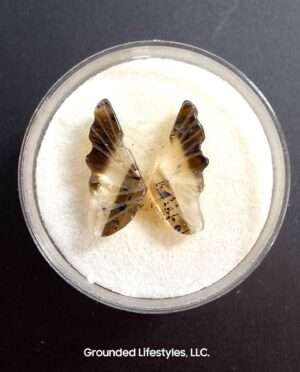
The specimen measures approximately 0.50 inches long, 0.75 inches wide, and 0.50 inches high and comes housed in the 1 × 1 × 1 inch Perky box shown.
For this piece, the locality is especially important. The Jarilla Mountains are part of the historic Orogrande Mining District in Otero County, New Mexico, an area with a turquoise-mining history extending far beyond modern commercial mining.
Jarilla Mountains Turquoise
The Jarilla Mountains are a documented and historically important source of Southwestern turquoise. Geological research has identified turquoise at more than 50 localities within the Orogrande district, where it occurs in thin seams along fractures and as nodules within altered monzonite and quartz monzonite.
Colors reported from the district range from green through blue, including deeper blue material.
Unlike many primary metallic ores in the district, Jarilla turquoise is a secondary or supergene mineral. It developed near the surface as groundwater weathered and chemically altered copper- and aluminum-bearing rocks.
Mineral Information
| Property |
Information |
| Mineral |
Turquoise |
| Chemical Formula |
CuAl₆(PO₄)₄(OH)₈·4H₂O |
| Mineral Class |
Phosphate |
| Crystal System |
Triclinic |
| Mohs Hardness |
Approximately 5–6 |
| Typical Habit |
Massive, nodular and vein-filling |
| Color |
Blue to blue-green and green |
| Locality |
Jarilla Mountains, Orogrande Mining District, Otero County, New Mexico |
A Remarkably Old Turquoise Locality
What makes Jarilla Mountains turquoise especially interesting to collectors is the age of its mining history.
Archaeological evidence demonstrates that turquoise was extracted from the Orogrande/Jarilla deposits during the precontact period, long before modern mining reached southern New Mexico. Recent isotopic research has connected turquoise artifacts from Jornada Mogollon archaeological sites directly with the Orogrande deposits.
Modern prospecting followed much later. Historic turquoise mining developed during the late nineteenth century, followed by exploration for gold, copper, silver, lead and iron throughout the district.
Metaphysical Properties
Turquoise has one of the longest symbolic traditions of any gemstone. In modern crystal practices it is commonly associated with wisdom, protection, communication, balance and connection to the natural world.
Its importance in Southwestern cultures extends far beyond modern metaphysical use, however, and the archaeological history of Jarilla turquoise gives this particular specimen an especially meaningful connection to the human history of the region.
These metaphysical associations are traditional and symbolic rather than medical claims.
Display & Care
Its 1-inch Perky box makes this specimen well suited for a mineral cabinet, historic-locality collection, New Mexico mineral collection, or specialized turquoise collection.
Turquoise is softer and more porous than quartz. Avoid prolonged water exposure, oils, household chemicals, ultrasonic cleaning and excessive handling. Keep the specimen in its included display box when possible to protect both the mineral and its collection provenance.