
Every crystal, mineral, fossil, meteorite, and handcrafted piece is selected with purpose. Whether you’re building a museum-worthy mineral collection, searching for a meaningful gift, decorating your home with natural beauty, or beginning your journey into the world of geology, you’ll discover authentic specimens with stories worth sharing.
Over 15 shows a year throughout the Southwest. Check to see if we are coming to a show near you!
Home > Blog > Crystal Healing Blog | Benefits, Chakras & Reiki Stones > Do Crystals Have Frequency? The Science and Energy Behind Their Healing Power
The idea that crystals have a “frequency” appears everywhere in modern crystal healing. Quartz is described as high vibration, black tourmaline as grounding, amethyst as spiritually elevating, and certain stones are said to resonate with chakras, emotions, intentions, or even the human energy field. The language sounds scientific because words such as frequency, vibration, resonance, energy, piezoelectricity, and electromagnetic fields are all genuine terms used in physics.
The interesting part is that crystals really do vibrate.
Their atoms are not motionless. Crystalline solids possess ordered atomic structures, and those atoms participate in complex vibrational behavior that scientists can measure, calculate, and use in technology. Quartz is genuinely piezoelectric. Carefully manufactured quartz resonators really do oscillate at extremely stable frequencies. Resonance is a real physical phenomenon, and vibration within crystal lattices is fundamental to understanding how solids carry heat, interact with light, and respond to mechanical or electrical forces.
Where the discussion becomes complicated is when those genuine physical properties are used as proof that holding a crystal raises the frequency of the human body, clears an illness, restores an energetic blueprint, or automatically balances a chakra.
Science has not established those conclusions.
That does not require us to discard the language of crystal energy altogether. It means we need to understand when frequency refers to a measurable physical property and when it is being used as a metaphysical description of an experience, intention, or spiritual belief.
That distinction makes the subject far more interesting.
In physics, frequency describes how often a repeating event occurs during a given amount of time. The standard unit is the hertz, abbreviated Hz, with one hertz representing one cycle per second.
A pendulum can swing at a particular frequency. A guitar string vibrates at frequencies that produce sound. Radio waves have frequencies. Electrical circuits can oscillate at specific frequencies, and the atoms within solids participate in vibrational modes that can also be described mathematically in terms of frequency.
However, saying that something “has a frequency” is often an oversimplification.
A complex object does not necessarily possess one single frequency that defines it. A guitar string can vibrate in several modes simultaneously. A building has multiple mechanical resonance modes. Molecules have numerous vibrational modes, and crystals possess entire ranges of lattice vibrations rather than one mysterious number that represents their total energy.
This point is crucial when discussing crystals.
A quartz crystal is not simply sitting on a shelf broadcasting one universal frequency into the room.
Its physical behavior depends on its crystal structure, dimensions, orientation, temperature, mechanical conditions, electrical environment, and the type of vibration or interaction being measured.
A crystal is characterized by an ordered arrangement of atoms or ions extending through its structure. Although diagrams often depict those atoms as stationary balls arranged neatly in a lattice, real atoms are continually moving around their equilibrium positions.
In solid-state physics, collective vibrations of a crystal lattice are described in terms of phonons.
A helpful way to picture this is to imagine atoms connected by tiny springs. When one atom moves, interactions with neighboring atoms allow disturbances to travel through the lattice. The real physics is much more complicated than the spring analogy, but it captures the basic idea that atoms in a solid do not vibrate independently of everything around them.
Different vibrational modes occur at different frequencies and wavelengths. These lattice vibrations influence some of the most important physical properties of materials, including heat transport, electrical behavior, optical properties, and structural stability.
The American Physical Society describes these lattice vibrations as fundamental to understanding crystals, including common minerals such as quartz.
So when someone says that crystals vibrate, there is genuine physics behind the statement.
The next question is whether that physics is the same thing crystal practitioners mean when they describe a stone as having “high vibration.”
Usually, it is not.
One of the most common misunderstandings in crystal-healing literature is the idea that every mineral possesses a single fixed frequency.
Lists sometimes assign quartz, amethyst, rose quartz, tourmaline, or other minerals particular numerical frequencies and then compare those numbers as though they were permanent identities of the stones.
Real crystal physics does not work that way.
A crystal contains many possible vibrational modes. The frequencies depend on the atomic masses involved, the strength of the bonds between atoms, the arrangement of the lattice, the direction of propagation, temperature, pressure, and other conditions.
A single mineral can therefore participate in many different kinds of vibration.
This is not a weakness in the idea that crystals vibrate. It is actually much more remarkable than the simplified version.
Crystals are complex physical systems whose ordered atomic structures produce entire spectra of measurable behavior.
Quartz deserves particular attention because it is one of the clearest places where crystal physics enters everyday life.
Quartz is crystalline silicon dioxide, SiO₂, and certain orientations of quartz exhibit the piezoelectric effect. When mechanical stress is applied to a piezoelectric material, electrical polarization can develop. The inverse effect also occurs: applying an electric field can produce mechanical deformation.
This coupling between mechanical motion and electrical behavior makes quartz extremely useful for producing stable oscillations.
Quartz resonators have been used in watches, clocks, radios, communication equipment, computers, frequency-control systems, sensors, and many other electronic devices.
That technology is real and extraordinarily important.
What it does not demonstrate is that an ordinary quartz point sitting beside you is transmitting a healing frequency into your body.
The technological behavior occurs because a properly prepared piece of quartz is incorporated into an engineered electrical circuit designed to excite and measure a specific resonant mode.
Understanding that difference allows us to appreciate quartz without asking the science to prove something it has not shown.
You can explore natural quartz varieties and specimens in our Quartz collection, where clear quartz, amethyst, smoky quartz, and other varieties demonstrate just how much diversity can occur within the same mineral species.
The number 32,768 Hz appears constantly in articles about crystal frequency, usually accompanied by the statement that quartz naturally vibrates at this extremely high frequency.
That description is misleading.
Quartz wristwatches commonly use a specially manufactured quartz resonator designed to oscillate at 32,768 cycles per second when driven by an electronic circuit. The National Institute of Standards and Technology, or NIST, lists 32,768 Hz as the standard resonance frequency associated with quartz wristwatch oscillators.
The number was not discovered as the universal vibration of quartz.
It was chosen for engineering reasons.
The number 32,768 equals 2 raised to the fifteenth power. An electronic circuit can repeatedly divide that frequency by two fifteen times and arrive at one pulse per second, making it exceptionally convenient for timekeeping while consuming relatively little power.
A natural quartz cluster from Arkansas, Brazil, Madagascar, or another locality is therefore not automatically broadcasting a 32,768 Hz signal because it happens to be quartz.
The 32,768 Hz number describes a particular engineered quartz oscillator.
This distinction is one of the most important corrections we can make when discussing crystal frequency.
Resonance is another genuine physical phenomenon frequently borrowed by crystal-healing explanations.
A physical system often responds particularly strongly when it is driven near one of its natural frequencies. A familiar example is a playground swing. Push randomly and the motion remains limited, but apply small pushes at the right point in each cycle and the swing’s motion becomes larger.
Musical instruments provide another example. Strings, air columns, instrument bodies, and surrounding structures have resonance behavior that shapes the sounds we hear.
Crystals can also exhibit resonant behavior.
Quartz resonators are useful precisely because carefully prepared quartz can oscillate predictably when excited under appropriate conditions.
This is genuine resonance.
What has not been demonstrated is that placing a crystal beside a person causes the body to automatically shift into the crystal’s supposed spiritual frequency in the same way that one physical oscillator can drive another.
The human body is an enormously complex biological system rather than a single tuning fork waiting to be matched to a gemstone.
A popular crystal-healing explanation asks you to imagine two violins tuned to the same note. If one string begins vibrating, another properly tuned string nearby may respond through sympathetic resonance because acoustic energy from the first instrument couples into the second.
The example illustrates real physics.
The problem appears when it is immediately followed with the statement that crystals therefore retune the human body’s energy field.
Those are two separate claims.
In the violin example, we can identify the vibrating strings, measure their frequencies, observe acoustic energy traveling through air, and measure the resulting vibration in the second instrument.
To demonstrate the equivalent biological claim, we would need evidence identifying the crystal’s relevant emitted signal, the human system receiving it, the coupling mechanism, and the measurable physiological change caused by that interaction.
That evidence has not been established for crystal healing.
The analogy may still be meaningful within a metaphysical philosophy, but it should not be presented as though the violin demonstration scientifically proves crystal healing.
Piezoelectricity is one of the most fascinating genuine physical properties associated with certain crystals.
In suitable materials, mechanical deformation alters the distribution of electric charge within the crystal structure, producing an electrical response. The reverse effect also allows an applied electric field to produce mechanical deformation.
Quartz is one of the best-known naturally occurring piezoelectric materials, although it is not the only one.
This property is why quartz and other piezoelectric materials appear in technologies involving timing, sensing, microphones, ultrasound, actuators, pressure detection, and electronic frequency control.
Tourmaline also exhibits electrical properties related to its crystal structure, including piezoelectric and pyroelectric behavior.
These properties reveal something extraordinary about crystalline materials: atomic arrangement matters. The symmetry of a crystal structure determines what kinds of physical behaviors are possible.
But again, piezoelectricity should not be transformed into proof that simply holding quartz transfers healing electrical energy into the body.
In most technological applications, the crystal is cut, oriented, electrically connected, and deliberately stimulated under controlled conditions.
That is very different from holding a polished stone during meditation.
This is one of the most understandable questions in the entire crystal-energy discussion.
If quartz is powerful enough to regulate clocks and electronic systems, it seems reasonable at first to wonder whether it could also regulate human energy.
The problem is the word powerful.
Quartz does not make a watch function simply by existing inside it.
The crystal is part of a deliberately engineered oscillator circuit. Electrical energy from the battery drives the quartz, the crystal’s mechanical and electrical properties provide a stable resonant response, and electronic components count those oscillations to measure time.
The quartz is remarkably useful because its behavior is predictable under those conditions.
Human physiology works through completely different systems involving electrochemical gradients, ion channels, neurotransmitters, hormones, tissues, circulation, electrical impulses, metabolism, and countless interacting biological processes.
The fact that quartz performs one remarkable job in an electronic circuit does not demonstrate that it performs an unrelated therapeutic job in the body.
Quartz remains fascinating without that leap.
The human body certainly produces measurable electrical and mechanical signals.
The heart’s electrical activity can be measured with an electrocardiogram. Brain activity produces electrical patterns measurable through electroencephalography. Muscles generate electrical activity, and tissues can respond to mechanical vibrations, sound, electromagnetic radiation, temperature, and other physical inputs.
Various biological rhythms also operate over different timescales.
But describing all of that as a person’s single vibrational frequency is misleading.
There is no accepted scientific measurement showing that one person is vibrating at a spiritually “high frequency” while another is vibrating at a low one, nor is there an established clinical scale on which gratitude, fear, anger, abundance, trauma, or enlightenment each correspond to one numerical frequency.
The language may function symbolically within spiritual traditions, but it is not equivalent to measuring a quartz oscillator in hertz.
Another common claim in crystal-healing literature says that healthy cells vibrate harmoniously while stress, fear, trauma, poor nutrition, or negative thoughts lower their frequency and eventually create illness.
This sounds scientific because it combines biological language with concepts from acoustics and physics.
The body does respond to stress through real physiological pathways involving the nervous system, hormones, immune signaling, sleep, cardiovascular function, behavior, and other mechanisms.
Those processes are extensively studied.
However, describing illness as the result of cells falling out of their correct vibrational frequency is not an established explanation of disease.
That distinction matters particularly when crystal healing enters health discussions. Someone experiencing illness, persistent anxiety, depression, chronic pain, or another medical concern should not be led to believe that the problem developed because their vibration became too low or that restoring a gemstone frequency will return the body to an ideal state.
Crystals can remain part of meditation, spiritual practice, reflection, symbolism, and personal ritual without carrying that responsibility.
When crystal practitioners describe a mineral as high vibration, they usually are not making a laboratory measurement.
The phrase functions as metaphysical language.
A stone described as high vibration may be associated with spiritual awareness, intuition, clarity, transformation, meditation, or expanded consciousness. Clear quartz, selenite, moldavite, phenakite, amethyst, and other materials are frequently described this way in contemporary crystal traditions.
Grounding stones such as black tourmaline, hematite, smoky quartz, and obsidian may instead be described as having heavier, stabilizing, or Earth-connected energy.
Those descriptions can be meaningful within a spiritual system without being converted into hertz.
Trying to attach arbitrary numerical frequencies to metaphysical concepts can actually make the tradition less coherent because it creates the appearance of scientific precision where none has been established.
It is more accurate to say:
In metaphysical traditions, clear quartz is associated with amplification and clarity.
That statement clearly communicates the belief.
Saying:
Clear quartz emits a specific healing frequency that raises human cellular vibration
makes a scientific claim requiring evidence that has not been demonstrated.
The first statement respects the tradition. The second confuses categories.
Another number frequently used in wellness and crystal discussions is 7.83 Hz, usually described as “the frequency of the Earth.”
There is real science behind the number, but the popular description oversimplifies it.
The Earth and the electrically conducting ionosphere form an enormous electromagnetic cavity. Lightning activity can excite extremely low-frequency electromagnetic standing waves within this region. These are known as the Schumann resonances, named after physicist Winfried Otto Schumann.
The lowest resonance is commonly near 7.8 Hz, with additional resonance modes occurring at higher frequencies.
That does not mean that everything on Earth naturally vibrates at 7.83 Hz or that 7.83 Hz represents the planet’s single life-giving frequency.
It is an electromagnetic resonance associated with the Earth-ionosphere cavity.
The existence of Schumann resonances is established physics. Claims that crystals somehow tune a person’s consciousness directly to the Schumann resonance require additional evidence and should not be treated as automatically proven simply because the atmospheric phenomenon itself is real.
This pattern appears repeatedly in crystal discussions: the starting scientific fact is often correct, while the conclusion added afterward goes much further than the evidence.
Much of the confusion surrounding crystal healing comes from the word energy because science and spirituality often use the same word in very different ways.
In physics, energy has precise meanings and can be measured in units such as joules. Kinetic energy, electromagnetic energy, thermal energy, chemical energy, and electrical energy can be quantified and analyzed.
In metaphysical practice, energy may describe a felt atmosphere, spiritual quality, intuitive impression, emotional state, sense of connection, or perceived quality associated with a person, room, object, or crystal.
When someone says, “This room has heavy energy,” they usually are not claiming that an instrument measured additional joules in the room.
They are describing an experience.
Likewise, someone who describes rose quartz as having loving energy may be referring to symbolism, personal association, spiritual interpretation, or the emotional meaning they attach to the stone.
Problems arise when a metaphysical use of the word is presented as though it were automatically equivalent to physical energy.
Both conversations can exist, but they need different standards of evidence.
People frequently report that certain crystals feel different when held. One stone may feel grounding, another stimulating, and another particularly comfortable or meaningful.
There are many possible layers to that experience.
Different minerals genuinely have different physical properties. They vary in density, thermal conductivity, surface texture, crystal habit, transparency, color, luster, magnetism, electrical behavior, and temperature response. A dense hematite specimen feels very different in the hand from lightweight porous material. Smooth polished quartz provides a different tactile experience from bladed kyanite or layered mica.
Appearance also matters. Color, pattern, translucency, and crystal structure can influence the emotional associations we make with an object.
Personal history matters as well. A stone received during an important period may immediately evoke memories or emotions that an identical mineral purchased somewhere else does not.
Metaphysical practitioners may interpret additional sensations as energetic properties of the crystal.
Those experiences do not need to be mocked or dismissed simply because science has not demonstrated a specific healing field. The responsible distinction is between describing the experience and claiming a proven physical mechanism for it.
Meditation is one of the easiest places for scientific and metaphysical perspectives on crystals to coexist comfortably.
A crystal provides a stable visual or tactile object on which attention can rest. A polished palm stone has weight and texture. A quartz point provides crystal faces, inclusions, and internal structures to observe. A stone associated with a particular intention can add symbolic meaning to the practice.
Someone who works metaphysically may choose amethyst for spiritual reflection, black tourmaline for grounding, rose quartz for compassion, or clear quartz for clarity and amplification.
The meditation does not require proof that the stone is transmitting a therapeutic frequency.
The crystal becomes part of the environment, symbolism, and attention structure of the practice.
Our article Crystals for Emotional Balance explores this idea further by showing how crystals can become tactile cues for breathing, journaling, grounding, work routines, and mindfulness without being presented as treatments for stress or anxiety.
Reiki and crystal healing are frequently combined because both traditions use the language of energy, intention, balance, and energetic flow.
Reiki originated as a Japanese spiritual healing practice in the early twentieth century and developed its own concepts, techniques, and traditions. Modern Reiki practitioners sometimes incorporate crystals into sessions by placing them around a space, assigning them intentions, including them within chakra layouts, or holding them during meditation.
Within that metaphysical framework, a practitioner may describe a crystal as amplifying or stabilizing Reiki energy.
Physics does not currently establish that Reiki energy alters a crystal lattice, programs quartz with information, or produces a measurable frequency that remains stored in the mineral.
That does not prevent practitioners from using the stone symbolically or spiritually.
The distinction between quartz physics and Reiki interpretation is explored more fully in The Role of Reiki in Crystal Energy Work.
Frequency language is also common in modern chakra systems.
Charts frequently assign specific numerical frequencies—such as 396 Hz, 417 Hz, 528 Hz, 639 Hz, 741 Hz, or 963 Hz—to individual chakras and then associate crystals with those same numbers.
Those precise frequency assignments should not be confused with the historical origins of the chakra traditions.
Chakras developed within South Asian religious and philosophical traditions long before modern electronic frequency measurements or contemporary “Solfeggio frequency” charts became popular in Western wellness culture.
Modern practitioners may find those sound-frequency systems meaningful as part of meditation or ritual, but the numerical assignments are not established measurements of anatomical energy centers.
Crystals can still be incorporated symbolically according to color, traditional correspondences, personal preference, or spiritual intention.
Our Chakra Alignment with Crystals guide examines how crystal and chakra practices can be approached while keeping their historical, spiritual, and physical claims distinct.
The aura presents a similar distinction.
Many spiritual and metaphysical traditions describe a subtle field surrounding a person. Modern aura systems may connect that field with chakras, colors, layers, emotions, spiritual development, or intuitive perception.
People who practice energy work may describe crystals as interacting with, cleansing, protecting, or strengthening that field.
There is not currently an accepted scientific instrument that has demonstrated the existence of the aura exactly as described in those metaphysical systems or measured a crystal raising its vibrational frequency.
This does not prevent aura practices from functioning as spiritual frameworks.
It does mean that electromagnetic fields produced by biological processes should not automatically be presented as scientific proof of the metaphysical aura.
Our article on Aura & Chakras explores those concepts from within the crystal and energy-work tradition.
Crystal practitioners often speak about programming a stone with an intention, charging it during meditation, placing it under moonlight, or using Reiki to imprint a desired energetic purpose.
There is no established evidence that thinking an intention at quartz permanently changes its atomic lattice frequency in a way that stores that thought as physical information.
But the practice may still change something important:
your relationship with the object.
If you intentionally designate a piece of smoky quartz as the stone you hold before meditation, its presence begins to represent meditation. If rose quartz becomes connected with a journaling practice centered on compassion, simply seeing the stone may remind you of that intention. If clear quartz is placed on a desk to represent focus, it can become a visual cue to return to the task in front of you.
Within metaphysical traditions, this may be described as programming the crystal.
From a psychological perspective, it can also be understood as assigning meaning to an object.
Those descriptions do not have to cancel each other out.
People sometimes react negatively to any discussion of placebo because the word is interpreted as meaning imaginary, foolish, or fake.
That is not an accurate way to understand it.
Expectations, ritual, context, attention, and meaning can influence subjective experience and, in certain situations, measurable physiological responses. The mechanisms and limitations vary enormously depending on the condition and context, so placebo should not be used as a universal explanation for every healing claim.
However, it does demonstrate an important point: the meaning surrounding an experience can influence the experience itself.
A ritual involving a crystal may therefore matter to the person practicing it even when the proposed physical mechanism has not been demonstrated.
Our article Crystal Healing & the Placebo Effect: Science, Ritual & Meaning explores this question in much greater depth.
The most productive response is neither “the crystal scientifically healed you” nor “nothing happened.”
It is to ask what actually happened, what evidence supports the explanation, and what role ritual, expectation, attention, symbolism, and the physical object may each have played.
The phrase raise your vibration is deeply embedded in modern spiritual and wellness culture. Used literally as a scientific statement about a person’s single measurable frequency, it does not hold up well.
Used metaphorically, it can communicate something entirely understandable.
A person may use “higher vibration” to describe feeling more hopeful, attentive, connected, compassionate, creative, spiritually engaged, or intentional. “Low vibration” may describe feeling disconnected, angry, exhausted, pessimistic, or emotionally overwhelmed.
Those states are real human experiences even if they do not correspond to one numerical frequency measured in hertz.
Someone who says that meditation, spending time in nature, gratitude, music, art, supportive relationships, or crystal practice helps them “raise their vibration” may simply be describing a meaningful shift in attention or emotional state.
There is no need to attach a fabricated scientific measurement to that experience.
Once the pressure to prove crystal healing through physics is removed, crystals can actually become more interesting rather than less.
Clear quartz can symbolize clarity or amplification because those meanings have developed within contemporary metaphysical traditions. Rose quartz can represent compassion and connection. Amethyst can become associated with reflection and spiritual awareness, while black tourmaline can symbolize boundaries and grounding.
A person may carry one of those stones, meditate with it, wear it, place it in a workspace, or incorporate it into a ritual.
The symbolism becomes part of the practice.
For people who prefer polished tactile stones, our Tumbled Stone collection offers materials suited to pocket carry, meditation, grids, and everyday use. Readers interested in natural crystal structures and intentional display pieces can also explore our Crystal Points & Towers collection.
The geology remains real whether a specimen is being collected scientifically, displayed aesthetically, or incorporated into metaphysical practice.
Crystal points are frequently described as focusing or directing energy through their termination.
From a geological standpoint, a crystal termination is simply the set of crystal faces that develops when a crystal has sufficient space to complete its natural growth form. Quartz terminations reflect the underlying symmetry and atomic structure of the mineral.
Metaphysical traditions interpret the pointed form differently, often using it as a symbol for directing intention or energy.
Someone building a crystal grid may orient points toward or away from a central object depending on the intention of the arrangement. A meditation practitioner may hold a point facing outward as a symbol of release or inward as a symbol of receiving.
Science does not establish that invisible healing energy is physically projected from the termination like a beam.
But the geometry of the crystal gives the ritual an obvious visual direction.
That is an excellent example of how natural structure and symbolic interpretation can overlap without being confused.
The language of crystal frequency also appears in products such as gemstone essential-oil rollers.
A roller containing rose quartz or amethyst may be described as combining the vibration of the crystal with the aroma of an essential oil blend.
The practical reality is more nuanced.
The essential oil contributes aromatic plant compounds. The carrier oil determines how the blend behaves on the skin. The gemstone contributes color, geology, appearance, and whatever metaphysical meaning the user associates with it.
There is no established evidence that a crystal chemically transfers a healing frequency into the carrier oil.
That does not prevent someone from using the stone as a symbol of the intention attached to the roller.
Our updated guide to Crystal-Infused Essential Oil Rollers explains how to create these blends while keeping essential-oil safety, mineral stability, and metaphysical practice separate.
Natural crystal shape and manufactured shape can affect physical resonance under specific engineered conditions. Dimensions, orientation, geometry, and crystal cut are critically important when quartz is designed as an electronic resonator.
This fact is sometimes generalized into the claim that every sphere, tower, pyramid, heart, or carved crystal automatically emits a different spiritual frequency.
Science does not establish that conclusion.
Within metaphysical practice, however, shape has developed symbolic meaning. Spheres may represent wholeness or radiating energy in all directions. Towers and points are commonly associated with direction and focus. Hearts symbolize love or compassion, while palm stones emphasize touch and grounding.
Those meanings belong to the practice rather than to an instrument reading a unique spiritual frequency from each shape.
Again, separating physics from symbolism allows both conversations to remain clearer.
Absolutely, and this is another reason universal frequency charts should be approached cautiously.
One person may find amethyst deeply calming because they associate purple with quiet, spirituality, or a familiar meditation practice. Another person may feel almost nothing when holding it.
Someone may feel strongly drawn to black tourmaline because its dense black appearance and striated structure fit their idea of grounding. Another person may prefer a bright piece of citrine, fluorite, or agate.
Personal history also changes the experience.
A mineral inherited from a family member may evoke powerful emotion that has nothing to do with its supposed energetic frequency. A specimen collected on an important trip may feel completely different from another piece of the same mineral purchased anonymously.
Metaphysical practitioners may interpret these differences as individual energetic resonance.
Psychology may describe them through expectation, association, memory, sensory response, or personal meaning.
Either way, the variation itself tells us why simple charts cannot completely determine how someone will experience a stone.
You do not have to choose between appreciating physics and practicing crystal spirituality.
Begin by learning what the mineral actually is. Understand its chemical composition, crystal structure, formation environment, hardness, locality, and physical properties.
Then explore its cultural and metaphysical associations.
If you use the stone during meditation, Reiki, chakra work, journaling, intention-setting, or another personal practice, allow those traditions to speak in their own language.
There is no need to claim that piezoelectricity proves Reiki, that quartz watches prove chakra balancing, or that Schumann resonance proves the human body needs to vibrate at 7.83 Hz.
Those arguments do not strengthen crystal practice.
They weaken the credibility of both the science and the spiritual tradition.
A crystal can be scientifically fascinating and spiritually meaningful without one being used as false proof of the other.
This question requires the same distinction.
Science has not established that crystals emit frequencies capable of treating disease, correcting cellular vibration, or restoring the body to an ideal energetic state.
That means crystal healing should not replace appropriate medical or mental-health care.
However, healing is sometimes used in a broader personal or spiritual sense rather than a clinical one. A meditation practice can feel restorative. A meaningful ritual can help someone process a transition. A stone inherited from someone important can provide comfort. Carrying a crystal may remind a person to pause, breathe, reflect, or return attention to the present.
Those experiences may matter tremendously.
The safest and most intellectually consistent approach is to describe them for what they are rather than turning them into medical promises.
Yes, but not in the simplified sense commonly presented in crystal-healing charts. Crystalline materials contain atoms that participate in many vibrational modes, and those lattice vibrations can be scientifically measured and described. A crystal generally does not possess one universal frequency that represents its entire identity or spiritual energy.
A quartz watch resonator is commonly engineered to oscillate at 32,768 Hz when incorporated into an electronic circuit. That number is not the universal natural frequency of all quartz. It was chosen because 32,768 equals 2¹⁵, allowing electronics to divide the oscillator signal down to one pulse per second efficiently.
In physics, resonance occurs when a system responds strongly to stimulation near one of its natural frequencies. Quartz resonators use this principle in electronics. Metaphysical practitioners also use “resonance” to describe a perceived energetic or intuitive connection with a crystal, but that is a different use of the term.
Some are. Quartz is a well-known naturally occurring piezoelectric material, and tourmaline also displays related electrical properties. Piezoelectricity means mechanical deformation and electrical polarization are coupled within an appropriate crystal structure. It does not by itself demonstrate a healing effect on the human body.
Quartz can produce an electrical response under suitable mechanical conditions, and an electric field can also deform the crystal. That physical property does not establish that an ordinary quartz specimen emits a therapeutic electrical field capable of balancing human energy simply by being held.
Phonons are the quantized collective excitations used by physicists to describe vibrations traveling through a crystal lattice. They are important for understanding thermal, electrical, acoustic, and optical behavior in solids. Phonons are part of real solid-state physics but are not evidence of metaphysical healing energy.
Approximately 7.8 Hz is the lowest of the Schumann resonances, electromagnetic standing-wave modes associated with the cavity between Earth’s surface and the ionosphere and excited largely by lightning activity. Calling 7.83 Hz “the frequency of the Earth” oversimplifies the phenomenon. Earth does not possess a single universal vibration at that frequency.
There is no established scientific measurement showing that holding a crystal raises a person’s overall biological frequency. Within metaphysical practice, however, “raising vibration” is often used symbolically to describe greater clarity, optimism, spiritual connection, or intentional awareness. The phrase can therefore have spiritual meaning without being treated as a laboratory measurement.
Human emotions involve complex patterns of brain activity, nervous-system responses, hormones, memory, cognition, and behavior. Science does not assign individual emotions such as love, fear, anger, or gratitude one fixed frequency in hertz. Charts that assign numerical frequencies to emotional states should therefore be understood as metaphysical systems rather than established measurements.
Chakra balancing with crystals is a spiritual and metaphysical practice. There is no established scientific measurement demonstrating that crystals tune anatomical chakras through matching physical frequencies. Practitioners may nevertheless use crystal color, symbolism, traditional correspondences, meditation, and intention as part of chakra work.
Reiki practitioners may intentionally “charge” or program crystals as part of their spiritual practice. There is no established evidence showing that Reiki permanently changes the crystal lattice or stores a measurable healing frequency in the stone. The practice can still function symbolically and spiritually for the practitioner.
In engineered resonance systems, size, shape, orientation, and cut absolutely influence resonant behavior. That is why quartz resonators are manufactured to precise specifications. This should not be confused with the claim that a larger natural crystal necessarily has a stronger spiritual frequency.
Within metaphysical traditions, crystal towers and points are often used symbolically to direct or focus intention. Their pointed geometry provides a natural visual direction. Science does not demonstrate that a crystal termination projects a beam of healing energy from its tip.
Different minerals have genuinely different physical properties, including density, thermal conductivity, surface texture, shape, color, electrical behavior, and weight. Personal associations, expectations, memories, symbolism, and spiritual interpretation can also influence how a stone is experienced. Science has not established a single measurable metaphysical strength scale for crystals.
There is no reliable evidence that crystals treat illness by transmitting a corrective resonant frequency to the body. Crystal practices can be incorporated into meditation, ritual, spiritual practice, mindfulness, and personal reflection, but they should not replace appropriate healthcare.
The surprising truth is more interesting than the myth.
Crystals really do contain continually moving atoms. Their ordered structures support complex lattice vibrations. Quartz genuinely exhibits piezoelectric behavior, and carefully engineered quartz resonators are so stable that billions of electronic devices rely on them. Resonance is real, frequency is measurable, phonons are fundamental to solid-state physics, and crystal structure produces extraordinary physical properties.
None of that requires us to claim that quartz automatically raises human vibration, that illness results from cells falling out of frequency, or that a 32,768 Hz watch oscillator proves crystal healing.
Those conclusions are not supported by the physics.
Metaphysical crystal practice occupies a different space. People may experience stones as grounding, uplifting, protective, contemplative, or spiritually meaningful. Crystals can become part of meditation, chakra practices, Reiki, intention-setting, journaling, home environments, and everyday rituals. A stone can carry personal symbolism that becomes stronger through repeated use and association.
Those experiences do not become less meaningful because we understand the difference between them and solid-state physics.
In fact, understanding the real science can make crystals even more extraordinary.
A quartz point no longer needs a fabricated universal frequency to be impressive. Its atomic structure, piezoelectric behavior, geological formation, crystal symmetry, optical properties, and ability to become an extraordinarily precise engineered resonator already tell an astonishing story.
That is the approach behind Crystal Healing: History, Science, Metaphysical Beliefs & Modern Practice, where we examine crystal traditions without asking geology or physics to prove spiritual beliefs they were never designed to test.
For readers interested in how expectation, meaning, and ritual can influence an experience, continue with Crystal Healing & the Placebo Effect: Science, Ritual & Meaning. Those interested in energetic traditions can explore The Role of Reiki in Crystal Energy Work and our Chakra Alignment with Crystals guide.
You can also explore the physical minerals behind these traditions through our Quartz collection, Tumbled Stone collection, and Crystal Points & Towers.
The strongest crystal practice does not require choosing between science and spirituality. It begins by understanding which claims belong to physics, which belong to metaphysical tradition, and which belong to personal experience—and allowing each one to be interesting on its own terms.
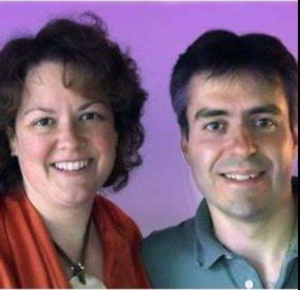
At Grounded Lifestyles, our love for crystals began in the peaceful flow of Reiki and energy healing sessions — where we saw how natural stones could amplify intentions, restore balance, and bring comfort. But the more time we spent with these treasures, the more curious we became about their origins. That curiosity led us into the fascinating world of geology and mineral specimen collecting. We fell in love not just with the energy of crystals, but with the science and artistry of their creation — the intricate crystal structures, the vibrant mineral hues, and the wonder of holding a piece of Earth’s history in our hands.