Every crystal, mineral, fossil, meteorite, and handcrafted piece is selected with purpose. Whether you’re building a museum-worthy mineral collection, searching for a meaningful gift, decorating your home with natural beauty, or beginning your journey into the world of geology, you’ll discover authentic specimens with stories worth sharing.
Over 15 shows a year throughout the Southwest. Check to see if we are coming to a show near you!
Home > Blog > Minerals Blog | Crystal Guides, Geology & Metaphysical Meaning > Animal Carvings in Stone: Meanings, Minerals & Craftsmanship
The stone matters just as much as the animal. Its hardness determines how easily it can be carved and how carefully it must be handled. Its color, banding, translucency, inclusions, or optical effects influence how the finished sculpture looks. A labradorite wolf can reveal shifting blue and green flash as it turns in the light, while an agate animal may use natural banding as part of the design. Fluorite allows beautiful color zoning but requires gentler handling, while quartz can take a bright polish and hold relatively crisp detail.
Grounded Lifestyles carries these pieces within our Crystal Animals & Figurines collection, where animals, mythical creatures, carved figures, and natural-stone sculptures change continually as individual pieces are sold and new carvings arrive.
Understanding a crystal animal therefore involves more than choosing a favorite species. The most interesting pieces sit at the intersection of geology, lapidary skill, symbolism, design, and sometimes cultural tradition.
Animals appear in some of humanity’s earliest artistic traditions because people have always shared their environments with other species. Animals provided food, materials, transportation, danger, companionship, and inspiration, so it is not surprising that they became powerful subjects for sculpture, ornament, ritual objects, and personal symbols.
Across different civilizations, animal forms developed meanings based on the culture observing them. Egyptian art incorporated animals associated with deities and divine attributes. Chinese carving traditions developed complex symbolism around dragons, tortoises, lions, fish, bats, cranes, and many other creatures. Throughout the Americas, animal imagery appeared in objects connected with hunting, ancestry, cosmology, social identity, and spiritual practice.
These traditions should not be compressed into one universal dictionary of animal meanings. A bear, serpent, bird, or turtle can have very different significance depending upon the culture, period, and context.
Modern crystal animal carvings draw from some of this long human fascination with animals, but they also belong to contemporary lapidary and decorative traditions. Many people now choose them simply because they love the animal, enjoy the stone, appreciate the carving, or connect personally with a symbolic interpretation.
Before powered tools existed, shaping hard stone required extraordinary patience. Abrasives, harder minerals, drilling, grinding, sawing, and polishing methods developed gradually across cultures as craftspeople learned how different materials responded to pressure and abrasion.
Softer stones could be shaped comparatively quickly, while harder materials such as quartz and jade demanded considerably greater labor.
Modern lapidary workshops use diamond saws, rotary tools, flexible shafts, grinding wheels, diamond burrs, sanding systems, and polishing compounds, but the fundamental problem has not changed: the carver must understand the material before deciding how to shape it.
Natural stone is not uniform like plastic or resin. It contains fractures, veins, inclusions, color zoning, cleavage planes, grain structures, and changes in hardness. Good carving requires working with those features rather than pretending they are not there.
Readers interested in how rough stone becomes a finished object can explore our Lapidary 101 guide for a deeper look at cutting, grinding, sanding, polishing, and the characteristics that make one mineral easier to work than another.
One of the most interesting aspects of mineral carving is the relationship between the stone and the finished subject.
A carver may begin with a design in mind, but the rough material can change that plan. A fracture may determine where a leg or wing can safely be placed. A band of color may become an eye, stripe, feather, shell, or facial marking. An area of transparency may be deliberately positioned within the body, while an optical effect such as labradorescence may determine the angle at which the entire animal is carved.
This makes natural-stone carvings fundamentally different from objects molded from manufactured materials.
Two wolves carved from the same type of jasper will never be exactly alike because the geological pattern within each piece is different. The same is true of agate banding, fluorite zoning, moss-like inclusions, labradorite flash, obsidian sheen, or the color variations found in jade and serpentine.
The best carvings often make those natural features feel intentional.
The Mohs hardness scale measures a mineral’s resistance to scratching, from talc at 1 to diamond at 10. For carved pieces, hardness affects not only how difficult the material is to shape but also how the carving should be displayed and handled afterward.
Soapstone, or steatite, is extremely soft and usually falls around 1–2.5 on the Mohs scale. Its softness makes it excellent for carving rounded forms and fine detail, but it can scratch very easily.
Calcite ranks about 3 and can produce beautiful carvings, particularly where translucency and color are attractive, but sharp edges and projecting details require protection.
Fluorite ranks 4. Its color zoning makes it especially appealing in animals, figures, and decorative objects, although its perfect cleavage and relatively low hardness mean thin wings, ears, legs, or points can chip.
Obsidian is volcanic glass rather than a crystalline mineral and generally falls around 5–5.5. It can take a brilliant reflective polish and produce dramatic black or mahogany carvings, but chipped obsidian can develop extremely sharp edges.
Jade requires a more nuanced explanation. Nephrite commonly falls around 6–6.5 and jadeite around 6.5–7, but the historical importance of jade carving is tied as much to toughness as hardness. The interlocking structure of nephrite in particular makes it exceptionally resistant to breaking despite not being among the hardest gemstones.
Quartz varieties such as clear quartz, amethyst, rose quartz, citrine, jasper, and agate generally rank around 7. They can take an excellent polish and are durable enough for detailed carvings, although projecting points and delicate carved features can still chip if dropped.
Knowing the stone is therefore part of knowing how to care for the sculpture.
Quartz is one of the most versatile carving materials because the quartz family includes clear quartz, smoky quartz, amethyst, rose quartz, citrine, agate, jasper, and many other familiar materials.
With a hardness of approximately 7 on the Mohs Scale, quartz can take a strong polish and withstand ordinary handling better than softer carving materials such as fluorite or calcite.
The appearance varies enormously.
Clear quartz may emphasize transparency and internal inclusions. Rose quartz creates softer pink figures. Amethyst adds purple coloration, while agate and jasper introduce natural patterning that can become part of the sculpture itself.
When evaluating a quartz carving, look at how well the artist used those natural features. An interesting mineral pattern is often more important than perfect uniformity.
Labradorite is particularly effective in animal carvings because its famous optical effect, labradorescence, changes as the carving moves in relation to the light.
A seemingly dark gray wolf, owl, dragon, eagle, skull, or other figure can suddenly reveal areas of blue, green, gold, orange, or multicolored flash. Orientation is critical because the effect comes from internal feldspar structures rather than surface color.
A well-planned carving positions strong flash where it contributes to the design. Color across a wolf’s face, an owl’s chest, or a dragon’s head can make the sculpture much more dynamic.
A carving can still be attractive when the flash appears only at a limited angle, but buyers should consider how the piece will normally be displayed rather than judging it from one photograph taken at the strongest possible orientation.
For more about labradorite and related feldspars, see our Labradorite, Moonstone & Sunstone Feldspar Guide.
Fluorite is popular for animals because few minerals offer its combination of translucency and dramatic color zoning. Green, purple, blue, clear, and multicolored bands may all occur within a single carving.
Its beauty comes with a tradeoff.
At approximately 4 on the Mohs scale, fluorite is considerably softer than quartz, and it also has perfect cleavage. Large rounded forms can be reasonably stable for display, but delicate ears, legs, tails, wings, horns, or other projecting details need careful handling.
Fluorite carvings are best treated as display pieces rather than objects that are frequently carried or handled.
Obsidian’s dark reflective surface works particularly well with wolves, cats, bears, ravens, dragons, snakes, and other forms where a strong silhouette contributes to the design.
Because obsidian is natural volcanic glass, it breaks differently from crystalline minerals. Fresh fractures can be extremely sharp, which is one reason obsidian has been used historically for cutting tools as well as decorative objects.
Polished carvings can be durable under normal display conditions, but they should not be dropped or struck against hard surfaces.
Black, mahogany, snowflake, and other obsidian varieties can each create a different visual effect.
Few materials have a carving history as significant as jade.
The term jade traditionally encompasses nephrite and jadeite, two different mineral materials with different geological compositions but overlapping cultural and artistic histories.
Chinese carving traditions made extensive use of jade for animals, ritual forms, ornaments, personal objects, and symbolic figures. Tortoises, dragons, fish, lions, bats, horses, birds, and other subjects developed layers of cultural meaning over centuries.
Jade’s appeal for carving is not based simply on hardness. Its toughness allows skilled artisans to create detailed forms that can survive considerable handling.
Modern jade animal carvings range from traditional symbolic subjects to contemporary decorative figures.
When cultural symbolism is important to the design, it is worth learning about the specific tradition rather than assuming every jade animal carries one universal meaning.
Zuni fetish carvings deserve separate treatment from ordinary commercial crystal animals because they belong to the cultural and religious traditions of the A, or Zuni people of New Mexico.
Historic and museum collections document Zuni fetish figures carved from materials including stone, turquoise, shell, and other natural materials. Animal forms have longstanding significance within Zuni religious and cultural practice.
That cultural context should not be reduced to the idea that a Zuni fetish is simply a small stone animal with a particular personality trait attached to it.
Contemporary Zuni artists also produce carvings for collectors and the art market, and individual artists have developed recognizable styles, material preferences, and carving techniques.
For a buyer, attribution matters. An object should not be marketed as an authentic Zuni carving simply because it resembles the style or depicts an animal associated with Southwestern traditions.
A reliable artist attribution, gallery provenance, documentation, or purchase from a knowledgeable source provides much more confidence than visual appearance alone.
Likewise, the phrase “Zuni-style” should not be used casually to imply cultural authenticity when the piece was mass-produced elsewhere.
Respecting this distinction helps preserve both collector accuracy and the cultural importance of genuine Zuni work.
Animal symbolism is appealing because people naturally associate particular qualities with animal behavior, but symbolic meanings are not fixed scientific facts and are rarely universal across cultures.
A wolf may represent loyalty and cooperation to one person, independence or instinct to another, and hold a much more specific cultural meaning within a particular tradition.
An owl is often associated in contemporary Western symbolism with wisdom because of its connection with Athena in ancient Greek tradition, yet owls carry very different meanings in other cultural settings.
Snakes can symbolize transformation because they shed their skin, but they have also represented healing, danger, rebirth, fertility, guardianship, and spiritual knowledge in different traditions.
For modern crystal collectors, it is often most useful to treat animal symbolism as a combination of historical associations, cultural traditions, contemporary metaphysical interpretation, and personal meaning rather than as a fixed dictionary.
Bear carvings are commonly associated with strength, protection, confidence, endurance, and leadership. Their powerful physical presence makes them especially effective in heavier stones such as jasper, obsidian, onyx, or quartz.
A bear can also symbolize rest, inward reflection, and the importance of knowing when to withdraw and conserve energy.
Owls are frequently connected with wisdom, observation, intuition, and the ability to notice what others overlook.
Their large eyes and detailed feathers also make them excellent subjects for mineral carving because contrasting stone patterns can become part of the design.
Amethyst, fluorite, sodalite, lapis-colored stones, and darker materials can all produce distinctive owl carvings.
Wolves are commonly associated with instinct, loyalty, family bonds, independence, guardianship, and pathfinding.
Labradorite works especially well for wolves because shifting flash can add visual movement to the face and body, while obsidian gives a more dramatic silhouette.
Turtles and tortoises are widely associated with longevity, patience, stability, endurance, and grounded movement.
The shell also gives the carver a natural area for displaying banding, matrix, color zoning, or pattern.
In Feng Shui traditions, the tortoise has a particularly important association with support and stability.
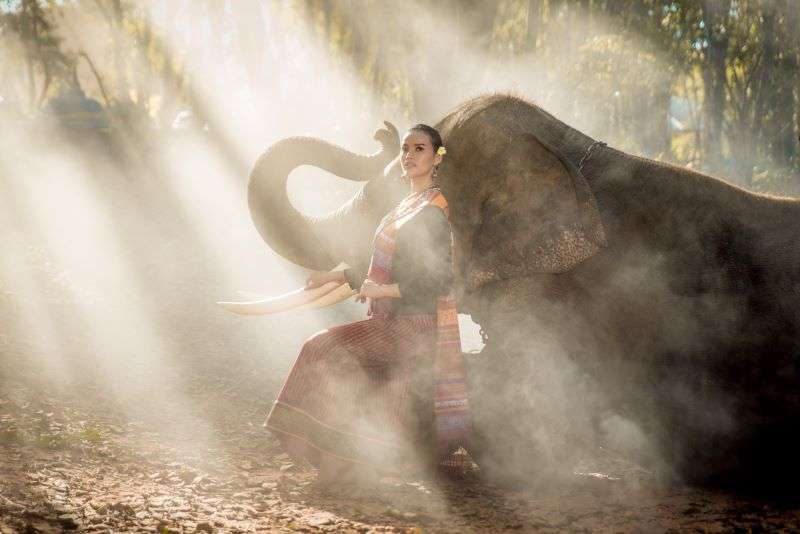
Elephants are commonly associated with wisdom, strength, memory, family, prosperity, and good fortune.
Carvings may depict the trunk raised or lowered, and contemporary Feng Shui interpretations often assign slightly different meanings to those positions.
Regardless of symbolic use, an elephant is a technically demanding carving because the trunk, ears, legs, and tusks can create vulnerable areas depending upon the stone.
Horse carvings are associated with freedom, movement, determination, stamina, success, and forward momentum.
Their symbolism works particularly well in offices or spaces centered on ambition and progress, while the flowing mane and body shape give carvers opportunities to work with natural banding or color transitions.
Frogs are broadly associated with transformation because they move through distinct stages of development and live between aquatic and terrestrial environments. They may also symbolize fertility, renewal, adaptability, and abundance.
The three-legged Money Frog, also called a Money Toad in Feng Shui contexts, is a more specific Chinese prosperity symbol and should not be confused with generic frog symbolism.
Money Frog carvings are commonly used in contemporary Feng Shui practices associated with wealth and abundance.
Dragon symbolism varies enormously between traditions.
In Chinese culture, dragons have longstanding associations with auspicious power, vitality, authority, rain, prosperity, and good fortune. European dragon traditions developed very differently and often portray dragons as dangerous or adversarial creatures.
A generic statement that “dragons mean power” misses much of this complexity.
Modern crystal dragon carvings often draw most strongly from Asian-inspired prosperity and protective symbolism, fantasy art, or personal interest in mythical creatures.
Cats are commonly connected with independence, observation, curiosity, mystery, protection, and self-possession.
Black obsidian and onyx are particularly dramatic carving materials for cats, while tiger’s eye and patterned jaspers can naturally suggest fur and markings.
Eagles and hawks are frequently associated with vision, perspective, courage, freedom, leadership, and the ability to see a larger picture.
These associations occur in many modern symbolic systems, but specific eagle meanings within Indigenous traditions should not be generalized into one universal “Native American” interpretation.
That distinction is important whenever culturally significant animals are discussed.
Animal imagery has an important role in traditional Chinese cosmology and in modern Feng Shui practice, but different schools of Feng Shui may interpret placement somewhat differently.
One of the best-known systems involves the Four Symbols, often described in contemporary Feng Shui as four celestial animals associated with directions and landscape forms.
The Azure or Green Dragon is associated with the east and supportive rising energy. The White Tiger is associated with the west and protection. The Vermilion Bird or Red Phoenix is associated with the south and open space, opportunity, visibility, and recognition. The Black Tortoise is associated with the north and support or protection behind.
In practical modern Feng Shui, these ideas are sometimes translated into the arrangement of buildings, furniture, gardens, desks, and symbolic objects.
Other popular animal symbols include elephants for strength and good fortune, horses for movement and success, and the three-legged Money Frog for prosperity.
These practices have evolved over centuries, and modern decorative Feng Shui often simplifies ideas that are considerably more complex in classical practice.
For placement ideas and a broader introduction to these systems, visit the Grounded Lifestyles Free E-Book Library, which includes both Feng Shui for Real Homes and our Crystal Animal Symbolism & Carving Guide.
Most modern mineral carvings involve a combination of machine-assisted shaping and detailed hand finishing rather than being produced entirely by one method.
A lapidary may first trim rough stone with a diamond saw, establish the general form with grinding equipment, and then refine the animal using rotary tools and increasingly small diamond burrs.
Details such as eyes, feathers, fur, scales, paws, claws, or facial features require increasingly precise tools.
After carving, the piece is sanded through progressively finer abrasives until tool marks are removed. Polishing compounds and wheels are then chosen according to the mineral.
A high polish works particularly well with quartz, obsidian, agate, and many feldspars, while some carvings deliberately retain satin, matte, or textured surfaces.
The phrase hand-carved can therefore mean different things. A carving does not have to be shaped entirely with non-powered hand tools to involve substantial hand craftsmanship. Most contemporary lapidary artists use powered equipment while controlling each stage manually.
For buyers, the more meaningful question is how well the carving was executed.
A good carving should first make structural sense for the material.
Thin projecting details can be impressive, but on brittle or cleavage-prone stones they can also indicate a piece that will be extremely easy to damage.
Look closely at symmetry where symmetry is intended, but do not assume perfect symmetry is always desirable. An artisan may deliberately adapt the design to natural features in the stone.
Fine carving can be seen in clean transitions between forms, facial expression, proportion, surface finish, and the way small details have been resolved.
The polish should suit the material. Visible tool marks, poorly finished recesses, flattened details, or rough patches may indicate rushed finishing unless those textures are intentional.
Natural fractures should also be evaluated. A healed internal feature is different from an open structural crack running through a leg, neck, wing, or tail.
Finally, consider how the stone itself was used. In an exceptional mineral carving, color and pattern feel integrated into the sculpture rather than incidental to it.
Price alone does not determine whether a carving was individually made.
Modern workshops can produce large numbers of carvings using skilled labor, templates, powered lapidary equipment, and repeated forms. They may still involve substantial handwork even when the design is produced in quantity.
At the other end of the spectrum are individually designed artisan pieces in which the carver works around the exact characteristics of one stone.
Neither category is automatically appropriate or inappropriate for a collection.
An affordable polished animal can be an enjoyable decorative piece, gift, or metaphysical object. An individually attributed carving may appeal more strongly to buyers interested in craftsmanship, provenance, or cultural art.
The important distinction is accurate representation.
There is no universal grading system for crystal animal carvings.
Value generally reflects several factors working together: the mineral material, size, craftsmanship, complexity, condition, quality of polish, natural pattern or color, rarity of the stone, optical phenomena, cultural attribution where applicable, and provenance.
A small carving in an exceptional piece of labradorite may be more desirable than a much larger piece with little visible flash. A highly detailed carving in ordinary quartz may be valuable primarily because of craftsmanship rather than mineral rarity.
Culturally attributed carvings require another level of evaluation. A documented work by a recognized artist cannot be judged by the same standards as an anonymous commercial carving.
Buy the complete object rather than the label alone.
Crystal animal carvings should not look exactly alike.
Natural stone contains bands, veins, pits, inclusions, crystal boundaries, color changes, and other geological features. These variations are not automatically flaws.
In fact, they are often what separates a natural mineral carving from a manufactured imitation.
A line running through an agate animal may be a natural band rather than a crack. Spots within jasper may reflect mineral inclusions. A translucent zone in fluorite or quartz can reveal internal growth features.
Buyers should distinguish between natural mineral character and actual structural damage.
Natural pattern contributes to individuality. Open fractures, broken details, repaired areas, or unstable cracks affect condition and should be evaluated separately.
Animal carvings work particularly well as gifts because there are several ways to make the choice personal.
One approach is to begin with the animal. Someone who loves owls, horses, elephants, wolves, cats, turtles, frogs, bears, or dragons may appreciate the form regardless of metaphysical symbolism.
Another approach is to choose by stone. A person who collects amethyst, labradorite, obsidian, agate, jade, or fluorite may enjoy seeing a familiar material used in a new way.
Symbolism can create a third layer. A turtle may suit someone beginning a new chapter that requires patience and stability, while a horse might represent movement or ambition. An owl can recognize someone valued for wisdom, while a bear can symbolize strength or protection.
The most successful gift does not have to follow a rigid symbolic rule. Personal connection is often more meaningful than a predetermined interpretation.
In modern crystal practice, animal carvings are often used by combining the traditional or personal symbolism of the animal with the metaphysical associations of the stone.
A labradorite wolf might combine contemporary associations of the wolf with instinct and loyalty and labradorite with transformation and intuition. A rose quartz elephant might bring together elephant symbolism involving family and strength with rose quartz traditions centered on compassion and connection.
These combinations are interpretive rather than fixed.
The same stone can take on a very different feeling when carved into a different animal because the object invites the owner to focus on different qualities.
Some people incorporate carvings into meditation spaces, crystal grids, altar arrangements, Feng Shui-inspired décor, or personal collections. Others simply enjoy them as mineral art.
Both approaches can coexist without needing to treat symbolism as a scientific property of the mineral.
The best display depends on both the stone and the carving.
Pieces with optical effects benefit from directional lighting. Labradorite should be positioned where its flash can be seen from the normal viewing angle, while translucent quartz, fluorite, and calcite can look especially attractive when soft light reaches them from the side or behind.
Highly polished obsidian and onyx benefit from light that reveals the contours without creating overwhelming glare.
Groupings can be organized by animal, stone type, color, symbolic theme, or geography. A collection of owls in different minerals highlights geological variation, while a group of animals carved from the same stone emphasizes how artists interpret one material in different ways.
Carvings can also bridge the gap between traditional mineral specimens and home décor. Pairing a carved animal with rough specimens of the same material can create an especially interesting display because the viewer sees both the natural mineral and the finished lapidary work.
There is no single cleaning method appropriate for every crystal animal because the materials can range from extremely soft soapstone to much harder quartz.
The safest general approach is gentle dry dusting with a soft cloth or brush, followed by a slightly damp cloth only when the material is known to tolerate water.
Softer stones such as soapstone and calcite should be protected from scratching and aggressive cleaning.
Fluorite should be handled carefully because of its hardness and cleavage. It is better suited to protected display than frequent handling.
Quartz, agate, and jasper are more durable, but thin carved features can still break if dropped.
Obsidian can chip and form sharp edges.
Jade is exceptionally tough compared with many ornamental stones, but a finely carved jade piece can still be damaged at delicate projecting details.
Avoid assuming that a hard mineral means an indestructible carving. Shape matters just as much as mineral hardness.
Some mineral carvings should not be left for long periods in intense direct sunlight.
Amethyst can gradually lose color under prolonged strong light, and some fluorite can also change or fade.
This does not mean these stones must be kept in darkness. Ordinary indoor display is generally very different from leaving a specimen for months in a bright sun-facing window.
For valuable or strongly colored carvings, indirect light is a safer long-term display choice.
Animal carvings often contain the very features most vulnerable to damage: ears, beaks, horns, tails, wings, tusks, legs, or raised paws.
When moving a carving, hold it by the solid body rather than lifting it by one of these features.
Leave enough space between objects that they cannot strike one another when a shelf is bumped or items are moved.
A carving that stands securely is also preferable to one balanced precariously on a narrow base.
These simple precautions often matter more than elaborate conservation methods.
For most modern commercial carvings, provenance may simply mean knowing the stone type and country where the carving was produced.
For higher-end artisan or culturally significant pieces, provenance becomes much more important.
Artist name, workshop, date, purchase history, original receipt, gallery information, or older collection labels can add meaning and collector value.
This is particularly important with Indigenous art. A carving attributed to a Zuni artist should have a reasonable basis for that attribution rather than being identified by appearance alone.
Documentation should remain with the carving whenever possible.
A crystal animal carving is a sculpture shaped from natural mineral, gemstone, rock, or ornamental stone. Common materials include quartz, agate, jasper, fluorite, obsidian, jade, serpentine, labradorite, onyx, sodalite, lapis lazuli, calcite, and soapstone.
Many are produced through a combination of powered lapidary tools and hand-controlled carving, sanding, detailing, and polishing. “Hand-carved” does not necessarily mean that no powered equipment was used.
Not necessarily. Modern lapidary tools allow artists to work efficiently and precisely with hard stone. Quality depends more on design, execution, material selection, finishing, and how well the carver worked with the stone.
There is no single best material. Quartz is durable and takes a strong polish, fluorite offers exceptional color but requires more care, labradorite provides optical flash, obsidian produces dramatic reflective surfaces, and softer stones such as soapstone allow detailed carving.
Hardness affects scratching resistance and influences carving and care. A quartz carving at about 7 on the Mohs Scale generally resists scratches better than fluorite at 4 or calcite at 3, although shape, cleavage, toughness, and delicate details also influence durability.
No. Hardness measures scratching resistance rather than resistance to impact. Minerals with cleavage can still break even when moderately hard, and thin carved features can chip regardless of the stone’s hardness.
Owls, wolves, elephants, turtles, bears, cats, horses, frogs, snakes, eagles, dragons, and other mythical creatures are all common. Popularity changes, and many collectors simply choose animals with personal meaning.
In contemporary symbolism, wolves are often associated with instinct, loyalty, family, guardianship, independence, and pathfinding. Meanings vary among cultures and individuals.
Owls are commonly connected with wisdom, observation, intuition, knowledge, and seeing what may otherwise remain hidden.
Turtles and tortoises are often associated with longevity, patience, stability, protection, and grounded movement. The tortoise also has important symbolism within Chinese Feng Shui traditions.
Elephants are commonly associated with strength, wisdom, memory, family, prosperity, and good fortune.
Frogs are commonly associated with transformation, adaptability, fertility, renewal, and abundance. A three-legged Money Frog is a more specific Chinese Feng Shui prosperity symbol.
Bear carvings are often associated with strength, protection, leadership, endurance, courage, and periods of inward reflection.
The meaning depends strongly on cultural context. In Chinese traditions, dragons are associated with auspicious power, vitality, prosperity, authority, and good fortune. European dragon traditions developed very differently.
A Zuni fetish carving belongs to a specific A cultural and religious tradition and should not be treated as simply another name for a stone animal figurine. Contemporary Zuni artists also create carvings for collectors, and accurate artist attribution and provenance are important.
Do not rely on appearance alone. Artist attribution, documentation, reputable galleries or dealers, collection history, and knowledge of individual Zuni carvers provide much stronger evidence than generic stylistic resemblance.
No. Meanings vary among cultures, spiritual systems, historical periods, and individuals. Contemporary symbolism can be useful, but it should not be presented as though every culture assigns the same meaning to an animal.
Not always. Agate bands, mineral boundaries, veins, inclusions, and color zoning can all create lines within a carving. An open fracture that reaches the surface or weakens a structural area should be evaluated differently from normal mineral patterning.
Material, carving quality, size, condition, complexity, polish, natural color or pattern, optical effects, artist attribution, cultural origin, and provenance can all contribute to value.
No. A smaller carving with exceptional stone quality or craftsmanship may be much more desirable than a larger but poorly finished piece.
Use a soft cloth or gentle brush first. A slightly damp cloth may be appropriate for many stable stones, but cleaning should be based on the actual mineral. Avoid harsh chemicals, aggressive scrubbing, steam, and ultrasonic cleaning unless you know the material can tolerate them.
Some materials can. Amethyst and certain fluorites, for example, may lose color after prolonged exposure to intense light. Indirect indoor lighting is safer for long-term display.
Position it so normal room lighting reaches the surface at an angle that reveals the labradorescence. Moving the carving or adjusting the light slightly can make an enormous difference.
Yes, animal imagery is widely used in traditional and modern Feng Shui practice, although meanings and placement can vary by school. Dragons, tigers, tortoises, phoenix imagery, horses, elephants, and Money Frogs are among the best-known examples.
Absolutely. Symbolism can add meaning, but there is no requirement to choose a carving according to a prescribed metaphysical interpretation. Personal connection, mineral preference, craftsmanship, and visual appeal are all valid reasons to collect one.
Grounded Lifestyles offers a free Crystal Animal Symbolism & Carving Guide through our Free Crystal & Mineral E-Book Library. The guide expands on animal meanings, stone pairings, Feng Shui ideas, care, and collecting.
Grounded Lifestyles carries natural-stone animals, figurines, mythical creatures, and carved decorative pieces within our Crystal Animals & Figurines collection. Because individual carvings are often one-of-a-kind or available in limited quantities, linking to the category allows you to see what is currently available as inventory changes.
Crystal animal carvings are compelling because the mineral and the form contribute equally to the finished piece. The geology determines color, pattern, hardness, translucency, and durability, while the carver transforms those natural characteristics into an animal with artistic and often symbolic meaning. A well-chosen carving can therefore function as mineral specimen, sculpture, décor, gift, or personal symbol without needing to fit into only one category.
Explore the changing selection in our Crystal Animals & Figurines collection, or continue into the Free Crystal & Mineral E-Book Library for the Crystal Animal Symbolism & Carving Guide and our Feng Shui resources.
At Grounded Lifestyles, our love for crystals began in the peaceful flow of Reiki and energy healing sessions — where we saw how natural stones could amplify intentions, restore balance, and bring comfort. But the more time we spent with these treasures, the more curious we became about their origins. That curiosity led us into the fascinating world of geology and mineral specimen collecting. We fell in love not just with the energy of crystals, but with the science and artistry of their creation — the intricate crystal structures, the vibrant mineral hues, and the wonder of holding a piece of Earth’s history in our hands.

