Description
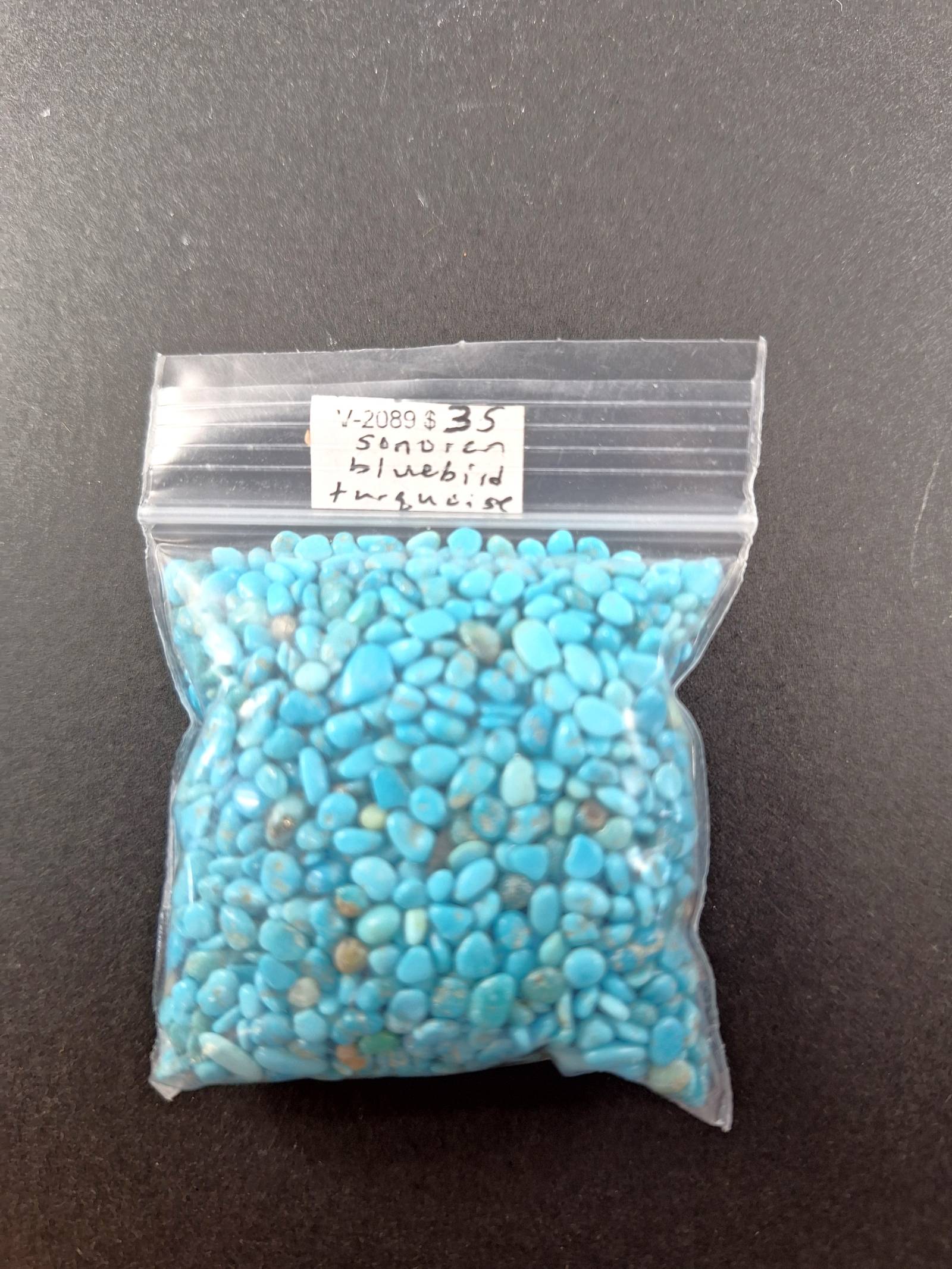
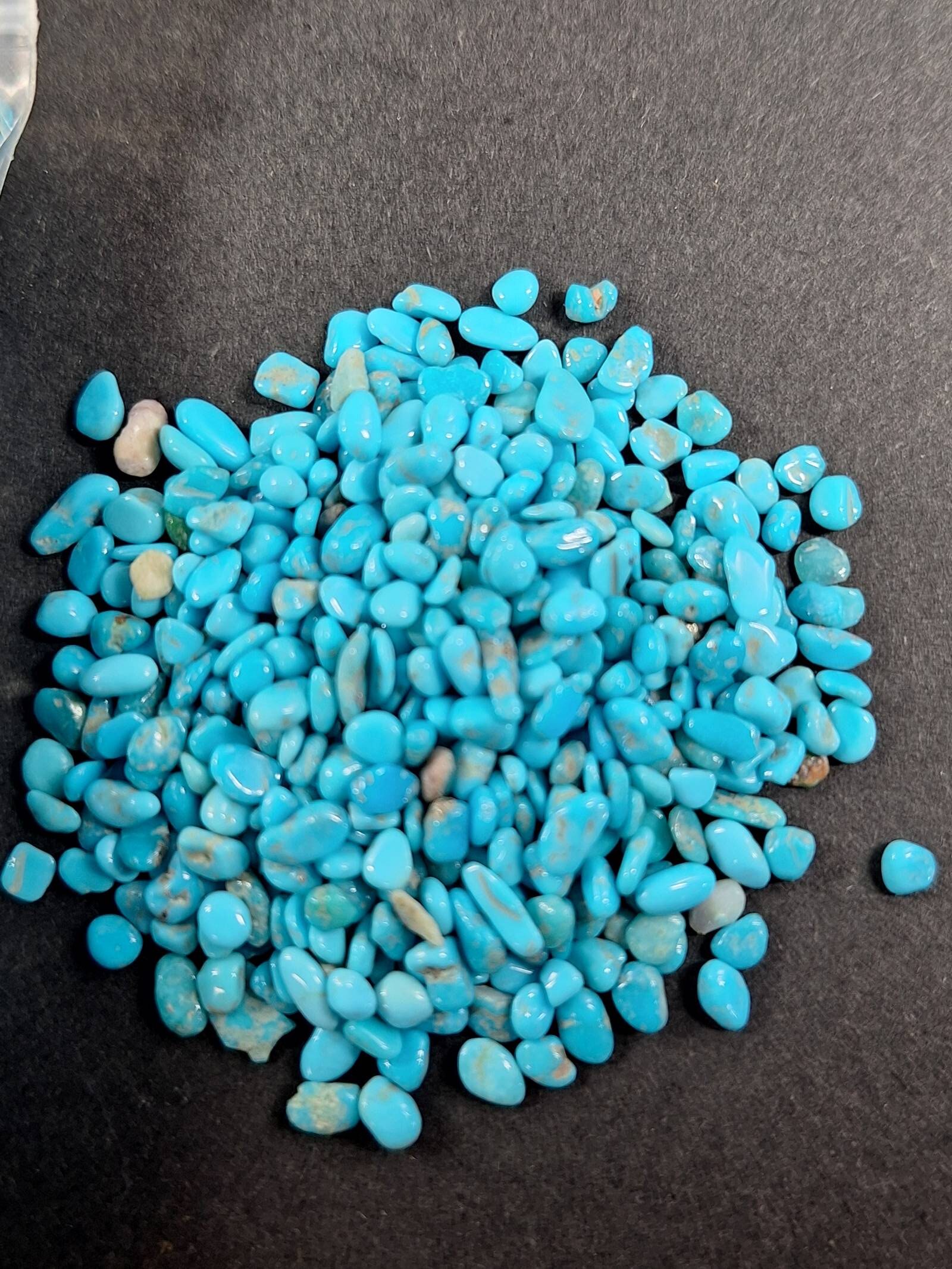
Sonoran Bluebird Turquoise Grain – 1.3 oz Lot
Working with loose turquoise offers a different experience from purchasing a finished cabochon or polished gemstone. This 1.3-ounce lot of Sonoran Bluebird turquoise grain from Sonora, Mexico, provides material for collectors, lapidary enthusiasts, and artists who appreciate turquoise in an unfinished form.
For small creative projects, a measured parcel offers the flexibility to select and arrange individual pieces rather than adapting a design around a single larger stone. The material may be considered for decorative inlay, mosaic work, resin compositions, or specimen displays, depending on the size and characteristics of the individual grains.
Turquoise for Small Inlay and Lapidary Projects
Turquoise has a long history in decorative arts, particularly in jewelry and ornamental inlay. Loose grain offers opportunities for working with smaller spaces where a full cabochon would not be practical.
In jewelry making, crushed or granular turquoise can be incorporated into recessed designs, often with an appropriate binding material. Similar techniques appear in decorative woodworking, where mineral fragments create colorful accents in carved channels or natural openings.
The grain size, hardness, and treatment of the material influence which techniques are appropriate. Artists should sort and inspect the pieces before use and select adhesives, abrasives, and finishing methods suited to turquoise.
Sonoran Turquoise and Its Geological Origins
Sonora, Mexico, is associated with several varieties of copper-bearing gemstones and minerals. Turquoise develops in geological environments where copper-bearing groundwater interacts with aluminum- and phosphorus-bearing minerals, typically in weathered rock near the Earth’s surface.
The resulting mineral is a hydrated copper aluminum phosphate, with a chemical composition commonly expressed as CuAl₆(PO₄)₄(OH)₈·4H₂O. Turquoise belongs to the triclinic crystal system and generally measures 5–6 on the Mohs hardness scale.
Its recognizable blue and green colors are closely associated with copper and iron chemistry. Variations in texture, mineral inclusions, and surrounding rock can create differences between individual pieces, which is part of the appeal of collecting turquoise as a natural mineral rather than solely as a finished gemstone.
Traditional Meaning and Symbolism
Turquoise has been valued by cultures across the world for thousands of years. It holds particular historical significance in the decorative and ceremonial traditions of the American Southwest, where turquoise has been fashioned into ornaments, beads, and intricate jewelry.
In contemporary metaphysical traditions, turquoise is associated with protection, communication, wisdom, and self-expression. It is commonly connected with the throat chakra and may be included in personal intention-setting or meditation practices. These interpretations are cultural and spiritual beliefs rather than scientifically established effects.
Care and Handling
Turquoise can be sensitive to oils, chemicals, excessive heat, and certain cleaning products. Store loose grain in a clean, dry container, away from cosmetics, solvents, and prolonged exposure to moisture.
Avoid steam and ultrasonic cleaning. When cutting, grinding, or crushing mineral material, use appropriate dust-control equipment and respiratory protection.
This 1.3-ounce Sonoran Bluebird turquoise grain lot provides a manageable quantity of unfinished material for collectors and creative work, allowing the character of the mineral to remain part of the finished presentation.
Only logged in customers who have purchased this product may leave a review.


Reviews
There are no reviews yet.