
$230.00
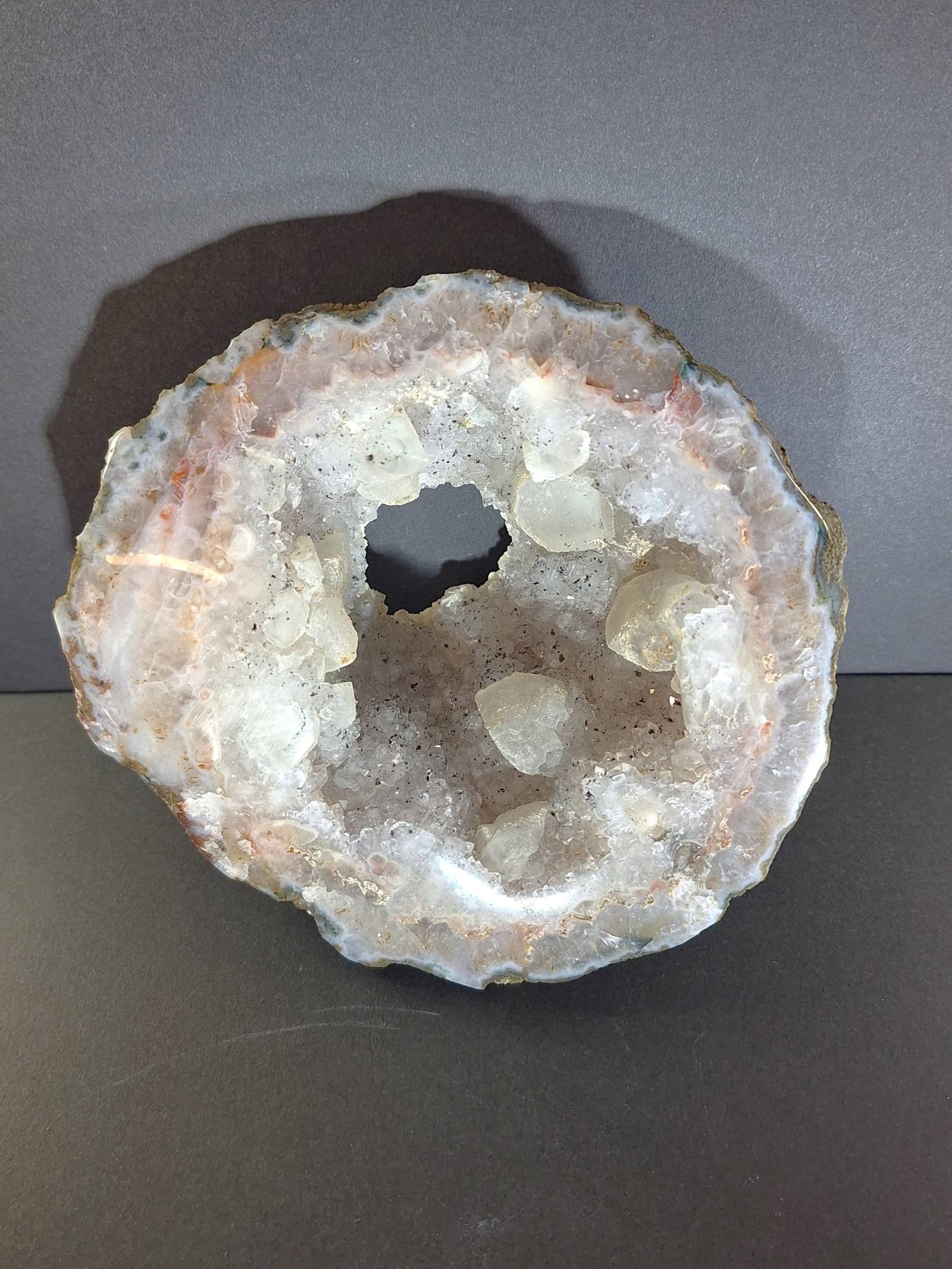
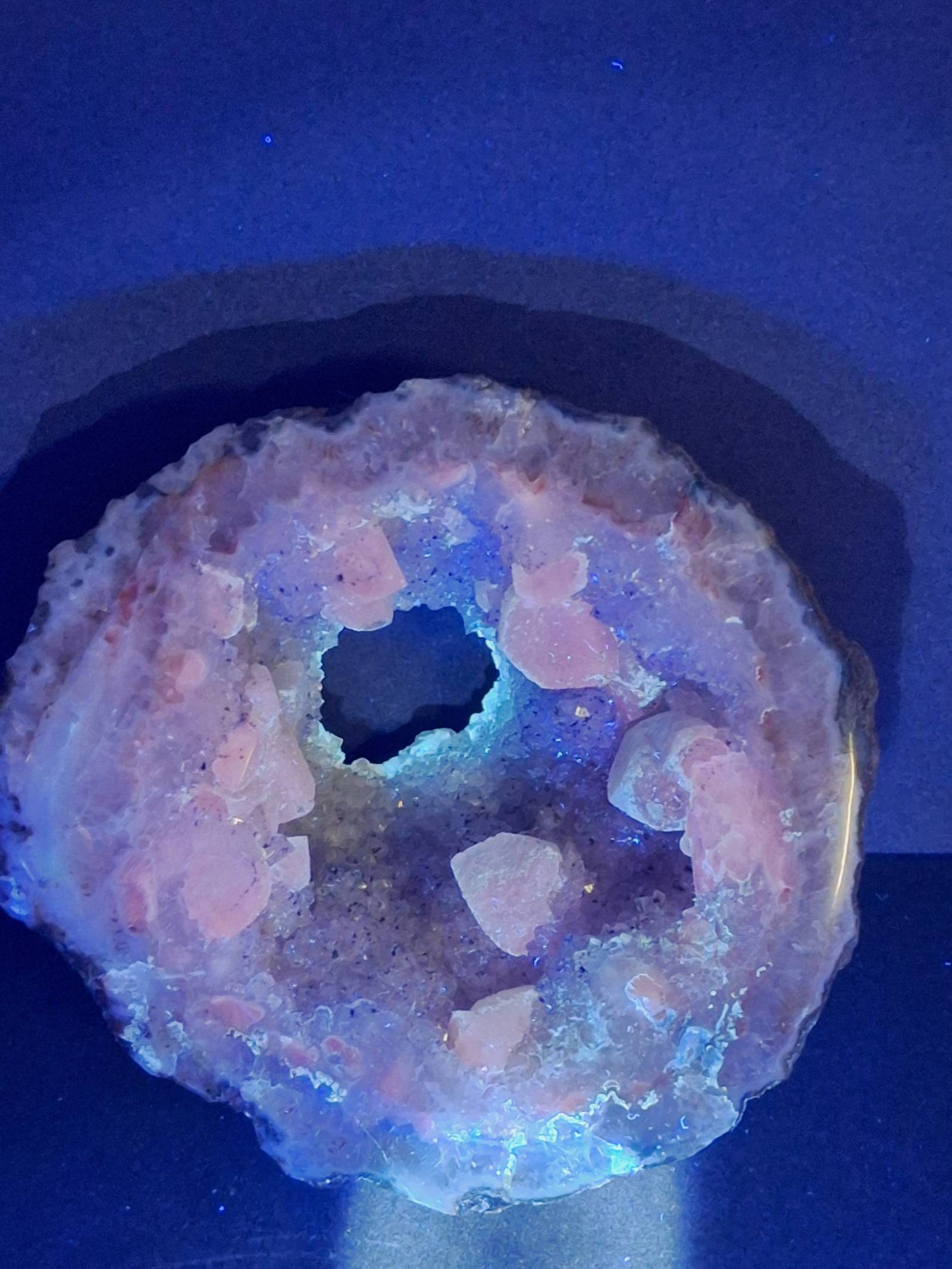
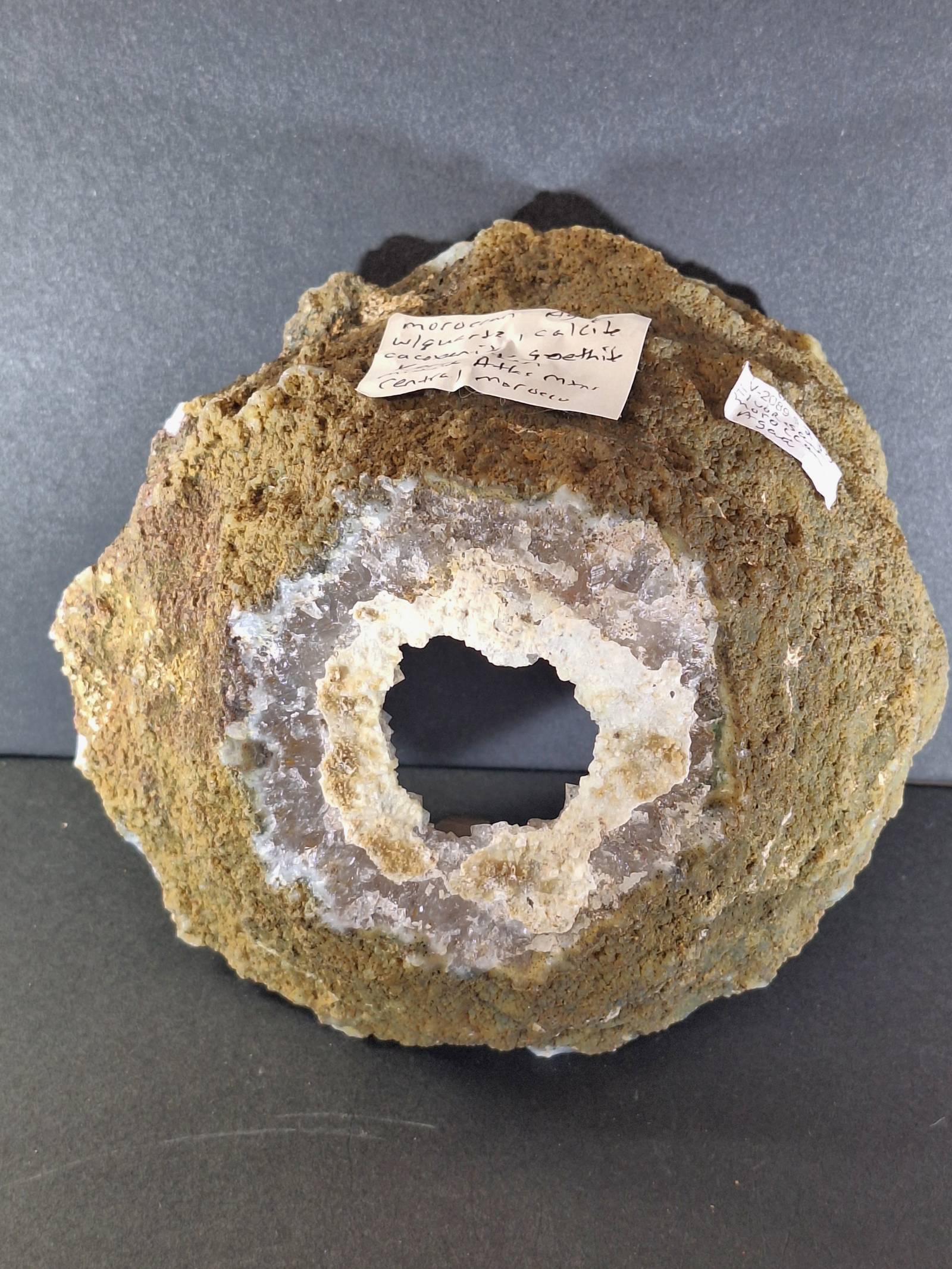
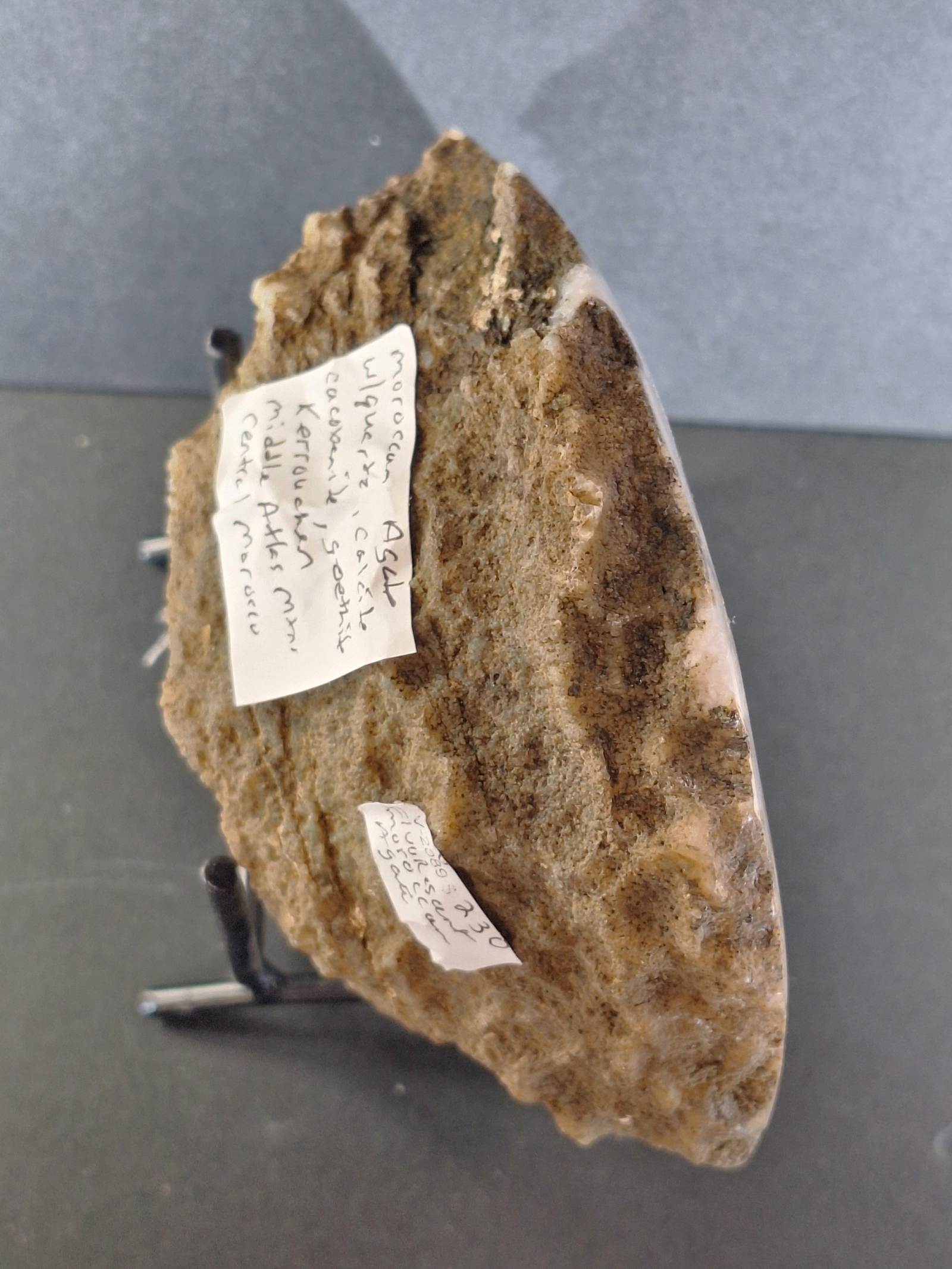
Discover a different side of Moroccan agate with this distinctive geode half, where a natural opening reveals a cavity lined with quartz crystals. The contrast between its surrounding agate and exposed crystalline interior makes the specimen especially appealing to collectors interested in mineral growth and unusual geological formations. Its reported fluorescence adds another dimension to explore under ultraviolet light, offering a second way to appreciate the mineral structure. An individual Moroccan collector specimen for enthusiasts of geodes, crystalline cavities, and fluorescent minerals. You will receive the exact specimen pictured.
In stock
You will receive the exact specimen shown.
Carefully packed and shipped from Arizona.
Free U.S. shipping on orders of $70 or more.
There is something especially compelling about an agate that has not completely filled its original cavity. Instead of presenting only solid bands of chalcedony, this Moroccan agate geode half reveals an open interior lined with quartz crystals. The exposed cavity creates a natural contrast between the surrounding silica-rich material and the more visibly crystalline growth within, preserving two distinct aspects of the geode’s formation in one specimen.
What makes this example particularly interesting is its reported response to ultraviolet light. In ordinary illumination, the cavity provides a close view of the crystal surfaces and their relationship to the surrounding agate. Under suitable UV illumination, fluorescent material may reveal a different aspect of the specimen’s mineral chemistry. This combination makes the piece appealing to both traditional agate collectors and enthusiasts who enjoy studying fluorescent minerals.
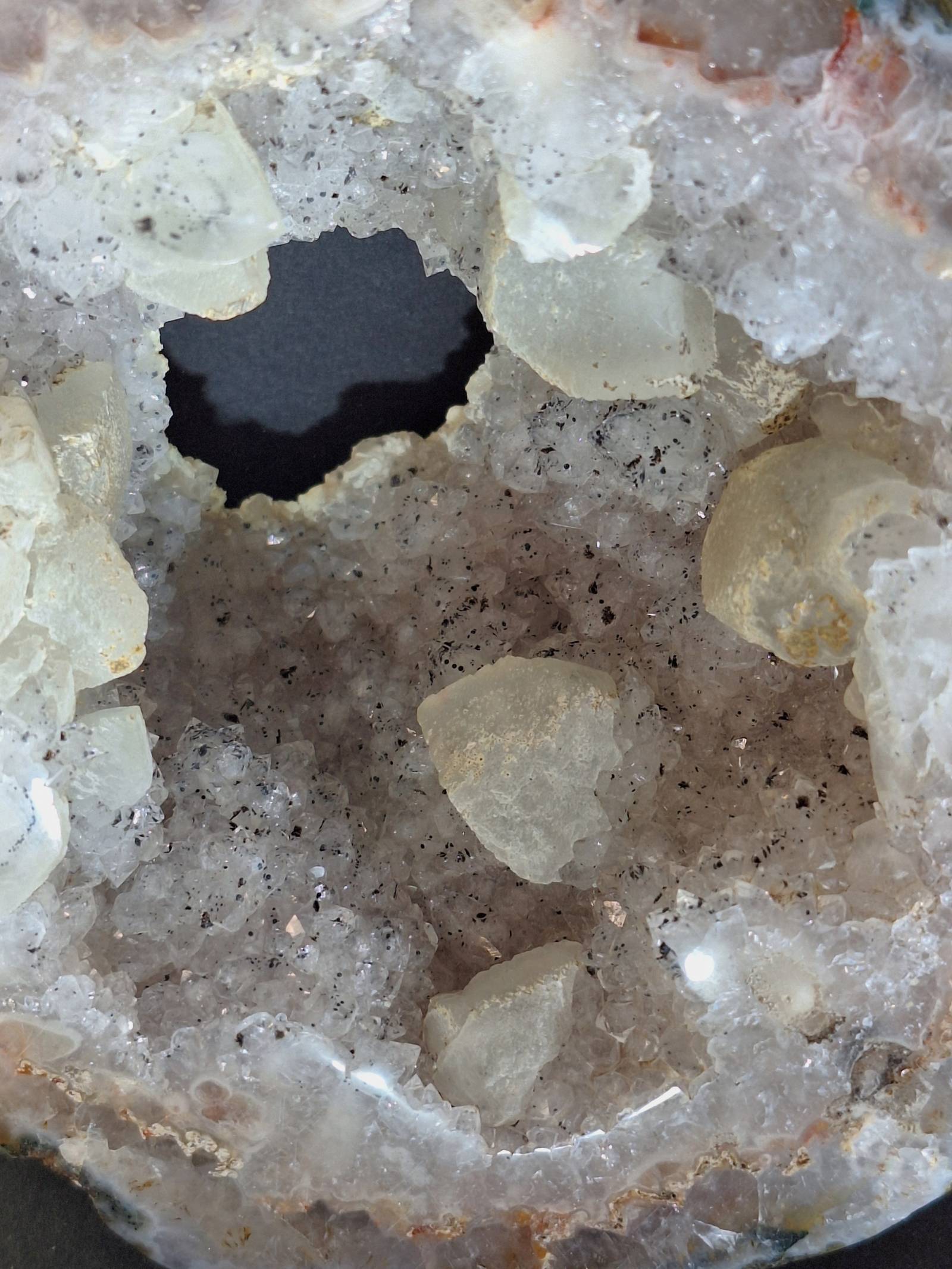
The defining feature of this Moroccan agate geode half is its open crystal cavity. The interior offers a view of mineral growth that would otherwise remain concealed inside the nodule. The quartz lining provides a different texture from the surrounding agate, creating a natural transition from finely crystalline silica to more readily visible crystals.
Agate is principally composed of chalcedony, a finely crystalline form of silica. Quartz shares the same chemical formula, SiO₂, but can develop larger, individually recognizable crystals when conditions permit. Both can occur within the same cavity as mineral-bearing fluids change over time.
The relationship between these textures is one of the most educational features of the specimen. The surrounding agate records earlier stages of silica deposition, while the crystalline opening provides evidence that at least part of the original cavity remained available for subsequent crystal growth.
Morocco is an important source of agates and quartz-bearing geodes, particularly in areas associated with ancient volcanic rocks. Cavities and openings within those rocks can become sites of mineral deposition when silica-bearing fluids move through the surrounding formation.
As dissolved silica precipitates, chalcedony may develop along the cavity walls, sometimes producing successive layers with different textures and colors. If the cavity is not completely filled, later silica deposition can form quartz crystals projecting into the remaining open space.
The result is a specimen that preserves a sequence of mineral growth rather than a single uniform mass. Its interior can reveal differences in crystal size, texture, and growth direction that are less obvious in a completely solid agate nodule.
Moroccan agates have also attracted scientific attention for their complex mineral associations. Published mineralogical research documents chalcedony, quartz, calcite, iron-bearing minerals, and other phases in agates from studied Moroccan localities. These findings help explain the diversity of structures found in Moroccan material, although they do not establish the precise composition or collecting site of this individual specimen.
Fluorescence occurs when certain substances absorb ultraviolet energy and re-emit part of that energy as visible light. In mineral specimens, this response can result from trace elements, structural defects, organic substances, or particular mineral phases.
This Moroccan geode is described as having a fluorescent crystal cavity, making ultraviolet examination part of its collecting appeal. A fluorescent response can reveal features that are difficult or impossible to distinguish in ordinary light.
However, fluorescence is not a reliable mineral identification test by itself. Quartz, calcite, chalcedony, and associated materials may exhibit different responses depending on their composition and the wavelength of UV light used. A glowing area should not automatically be identified as calcite or attributed to a particular trace element without further testing.
Collectors should also recognize the difference between longwave and shortwave UV illumination. A specimen may respond strongly under one wavelength and weakly under another. For that reason, the exact fluorescence color and tested wavelength are useful details to document when purchasing a fluorescent mineral.
Agate collectors often concentrate on banding, color contrast, and internal patterns. A geode with an exposed crystalline cavity offers another feature to investigate: the way mineral growth progressed from the cavity walls toward its open center.
The specimen can be appreciated as a decorative natural formation, but it also serves as a compact example of silica mineralization. Its combination of agate and quartz provides a useful comparison between fine-grained and visibly crystalline mineral textures.
For a collector who already owns polished Moroccan agates, this geode half introduces a different presentation. Instead of relying primarily on a flat polished surface, it emphasizes the natural three-dimensional structure of the cavity.
Its reported UV response adds another reason to examine it closely and makes it an interesting candidate for a collection that includes fluorescent minerals.
Agate has long been associated in crystal traditions with grounding, patience, stability, and balance. Its gradual formation through successive mineral deposits is often viewed symbolically as a reminder of persistence and steady personal growth.
Clear and white quartz crystals are commonly associated with clarity, intention, and focused awareness in contemporary metaphysical practices. When agate and quartz occur together, some crystal enthusiasts interpret the combination as representing both stability and openness to new perspectives.
Collectors who enjoy these traditions may use the geode as a visual focal point during meditation or quiet reflection. These meanings are spiritual and cultural associations rather than scientifically demonstrated effects.
Position this Moroccan agate geode half so that its crystal-lined cavity is visible without placing pressure on exposed crystal points. Gentle side lighting can help reveal the texture and depth of the opening.
Agate and quartz have a Mohs hardness of approximately 6.5–7, but exposed crystal tips and thin edges may still chip if struck. Handle the specimen by its more substantial outer surfaces and avoid contact with harder or sharp-edged minerals.
Remove dust from the cavity with a soft, dry brush. Avoid abrasive cleaners, ultrasonic cleaning, and unnecessary soaking, particularly if additional mineral phases are present.
For ultraviolet viewing, use a mineral-collecting UV lamp appropriate to the documented response. Never look directly into a UV lamp, and use suitable eye and skin protection, especially with shortwave equipment.
This Moroccan agate geode half combines the visual appeal of an open quartz crystal cavity with the additional interest of reported fluorescence. It offers collectors an opportunity to appreciate the mineral growth preserved inside a geode and the ways that natural materials can reveal different characteristics under different lighting conditions.
| Weight | 24 oz |
|---|---|
| Dimensions | 4.5 × 2.5 × 4.5 in |
Only logged in customers who have purchased this product may leave a review.
Reviews
There are no reviews yet.