$200.00
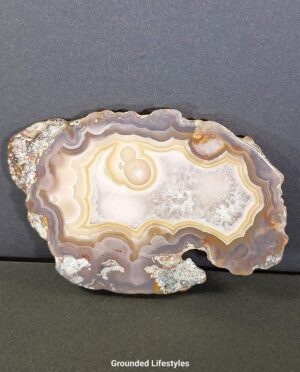
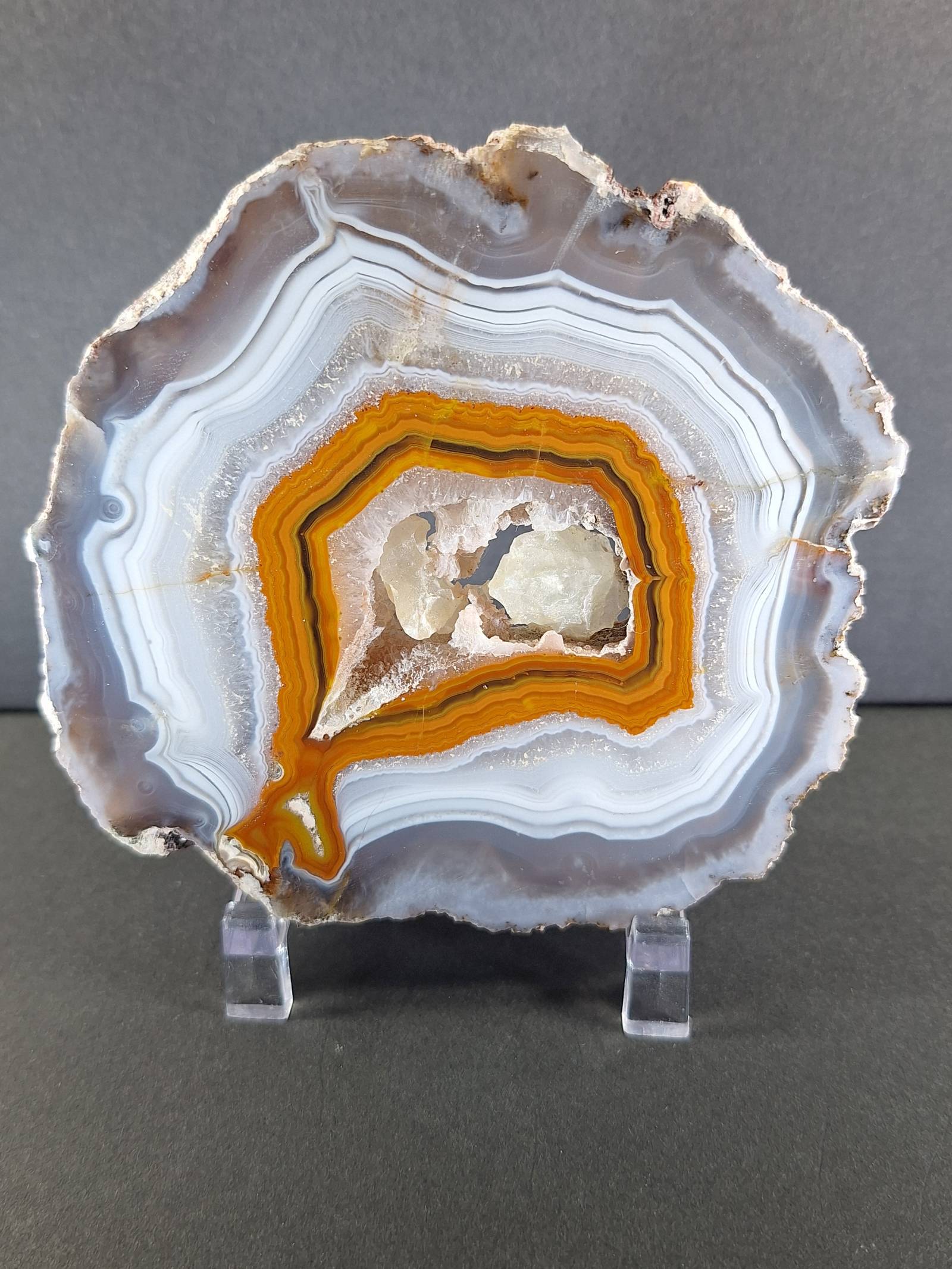
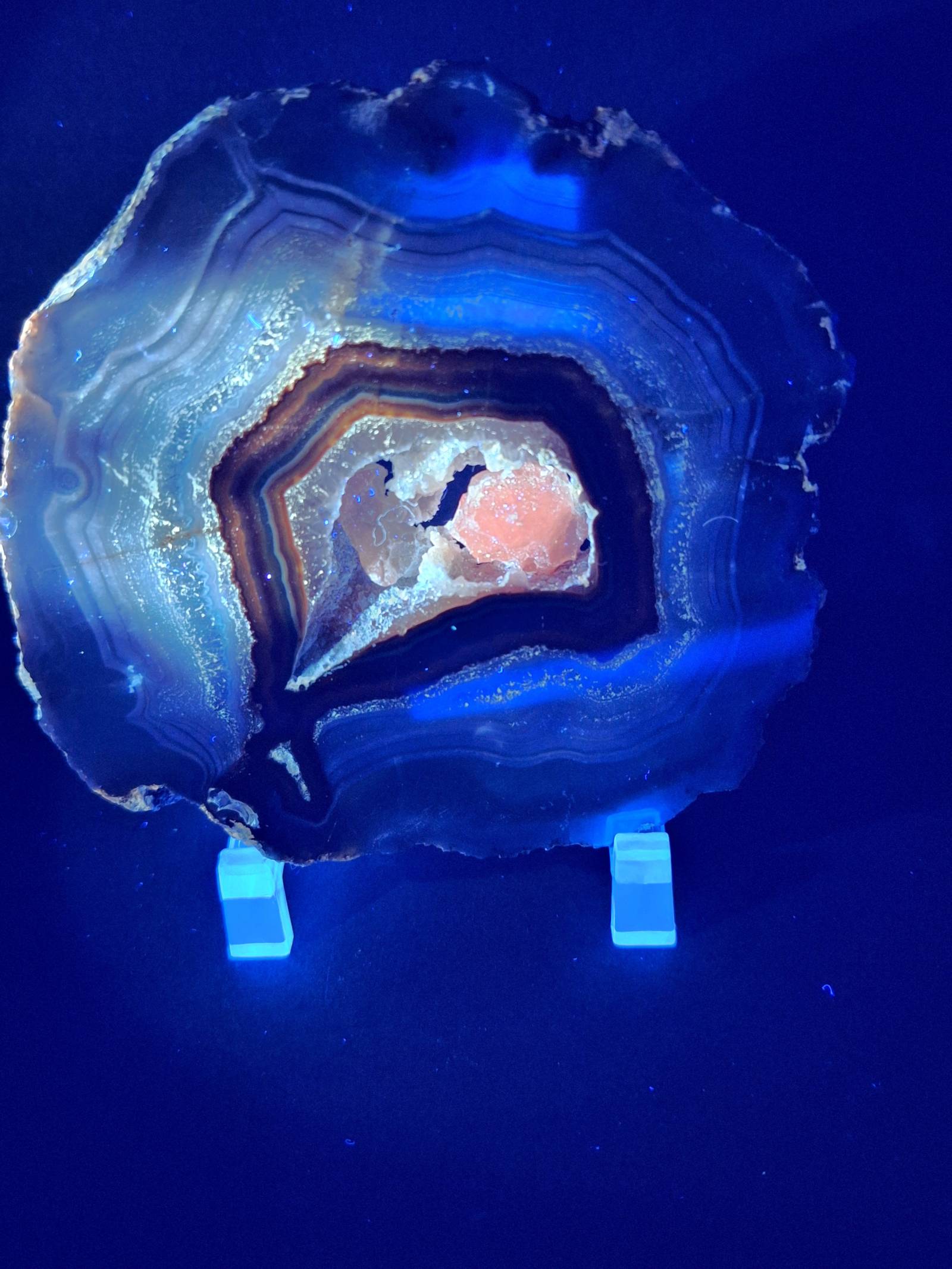
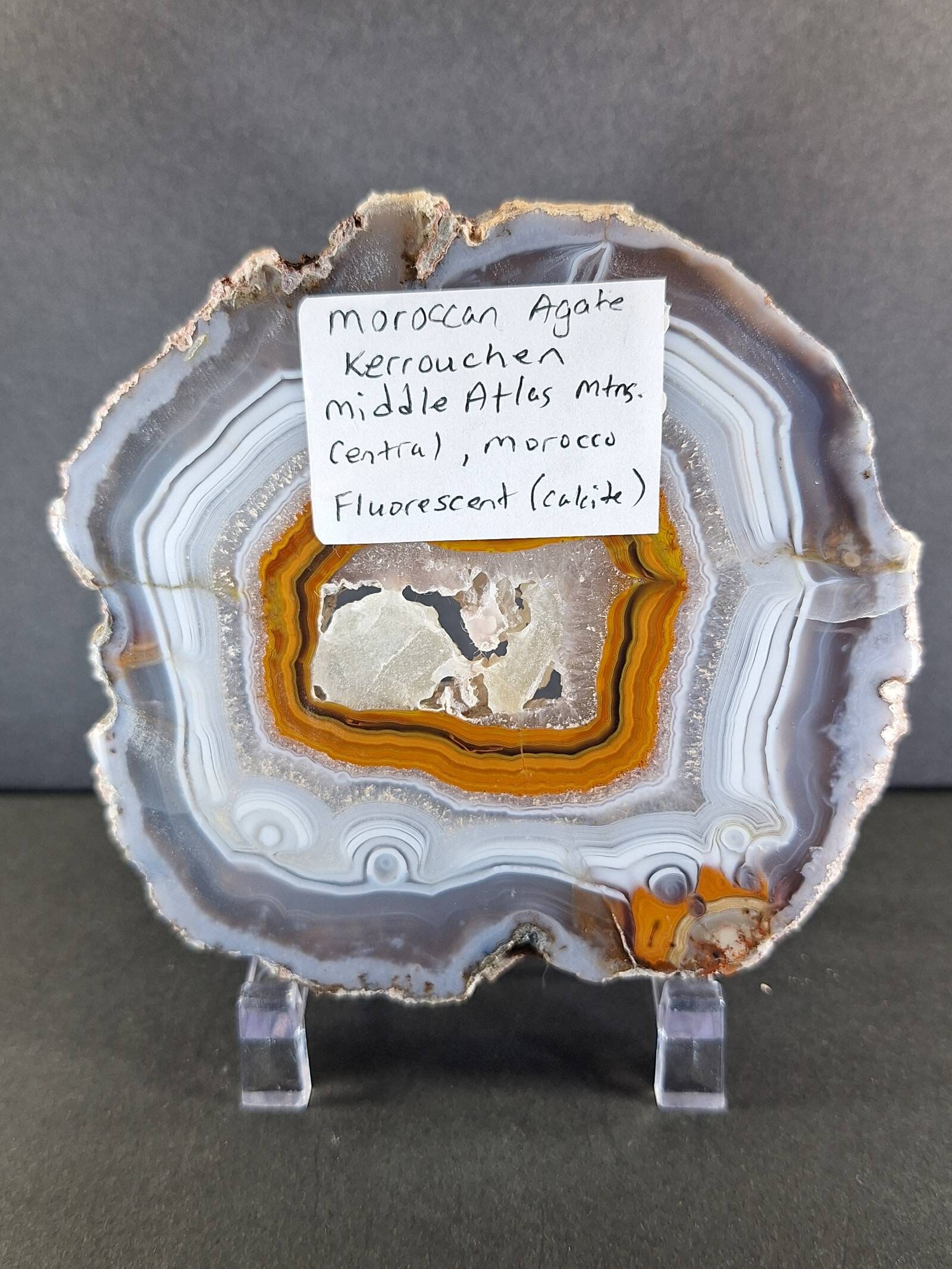
This exceptional 3.5-inch Moroccan agate slice from Kerroucha in the Middle Atlas Mountains features dramatic amber-orange bands surrounded by delicate layers of gray, white, and translucent chalcedony. At its center, an open cavity contains pale calcite that reveals a striking pink-orange fluorescence under ultraviolet light. The polished face displays intricate natural banding, while portions of the slice allow light to pass through, adding depth to its patterns. Measuring approximately 3.5 × 0.50 × 3.25 inches, this is a distinctive, one-of-a-kind Moroccan collector specimen.
In stock
You will receive the exact specimen shown.
Carefully packed and shipped from Arizona.
Free U.S. shipping on orders of $70 or more.
Some agates are remarkable for their color, others for their banding, and a few reveal something entirely unexpected when exposed to ultraviolet light. This Moroccan agate slice from Kerroucha in the Middle Atlas Mountains brings all three qualities together in one striking mineral specimen.
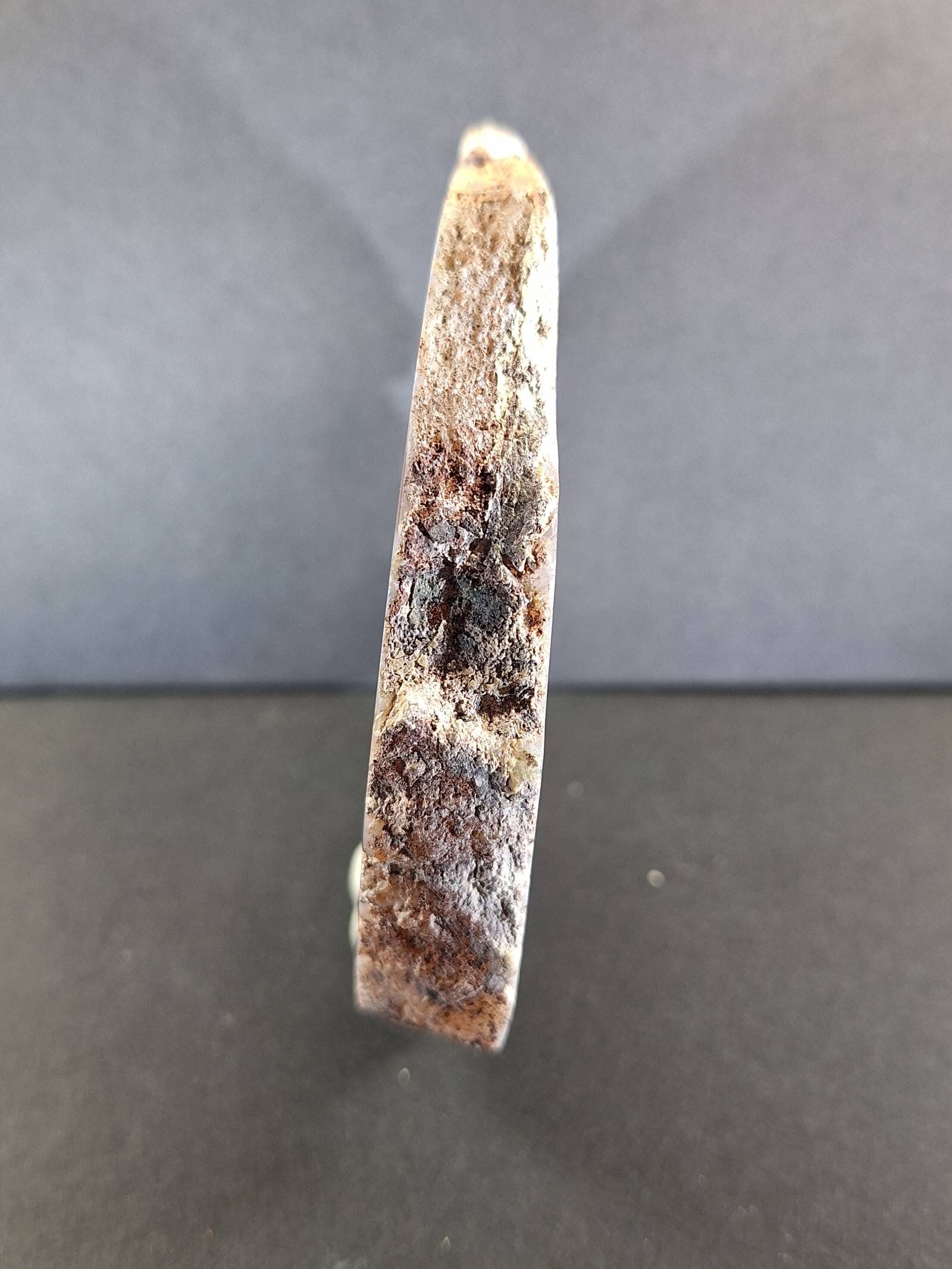
Measuring approximately 3.5 inches across and 3.25 inches high, with a thickness of 0.50 inch, this polished slice displays a beautifully developed series of concentric bands surrounding an open, crystal-bearing cavity. Its vivid orange interior, finely layered chalcedony, natural translucency, and fluorescent calcite create an especially engaging piece for a mineral collection.
The first feature that catches the eye is the rich amber-orange banding surrounding the central opening. Thin, closely spaced layers of golden orange, rust, and dark brown follow the irregular shape of the cavity, creating an almost architectural pattern.
Moving outward, the colors transition into fine white and pale gray bands, some of which are so closely spaced that they resemble delicate lines drawn across the polished surface. Beyond these layers lies a broader area of smoky gray chalcedony, bordered by the natural, uneven exterior of the original agate nodule.
The polished face reveals the remarkable precision of the mineral’s internal growth patterns. The natural outer edge provides a contrasting reminder of the stone’s original formation within volcanic rock.
Unlike a solid agate slice, this specimen retains an open center containing pale crystalline material. That cavity gives the piece additional depth and makes it particularly interesting when viewed from different angles.
One of the most compelling characteristics of this specimen is the fluorescent calcite within its central cavity.
Under ordinary lighting, the calcite appears pale and translucent to whitish against the warm orange agate bands. Under ultraviolet illumination, portions of the central material respond with a noticeable pink-orange glow, revealing an entirely different visual character.
Fluorescence occurs when certain minerals absorb ultraviolet energy and release part of that energy as visible light. In calcite, trace elements and imperfections within the crystal structure can produce a variety of fluorescent colors, including orange, red, and pinkish tones.
The result is a specimen that offers two different viewing experiences: the intricate natural colors and banding seen in daylight, and the contrasting fluorescent response revealed under UV illumination.
For collectors who enjoy fluorescent minerals, this combination of decorative agate and responsive calcite adds another dimension to an already distinctive piece.
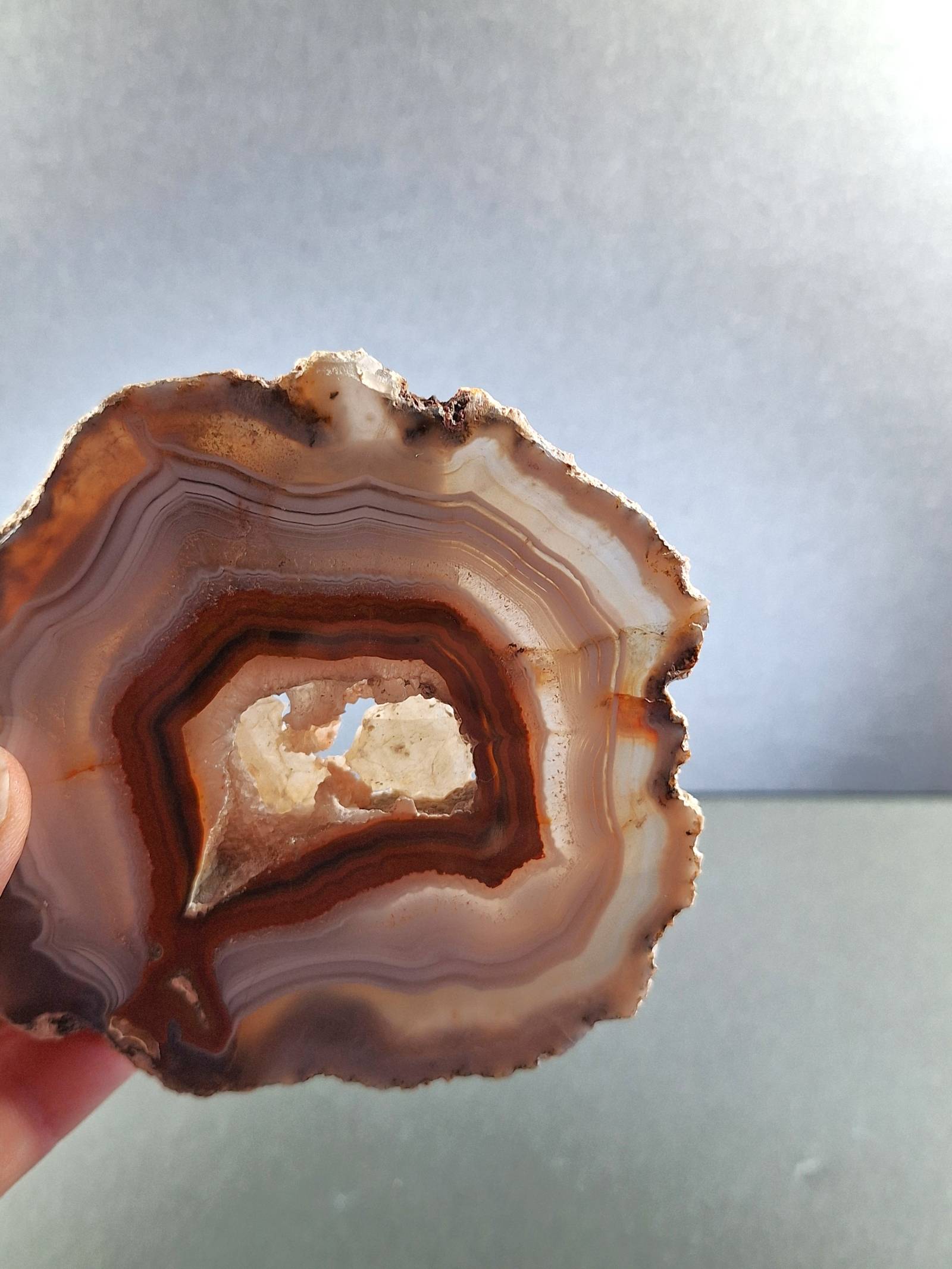
Another attractive feature of this Moroccan agate is the translucency visible through portions of its banded structure.
When held toward a light source, some of the gray and amber-colored chalcedony allows light to pass through, revealing changes in thickness, internal texture, and color saturation. The translucent areas create a softer appearance than the more opaque orange and dark brown bands.
This interplay between opaque and translucent material is particularly effective in a polished slice. Displaying the specimen where it can receive gentle backlighting allows the natural banding to take on additional depth without altering its appearance.
The combination of translucency, open crystal cavity, and fluorescence makes this an appealing specimen to examine under several lighting conditions.
The Kerroucha, also known as Kerrouchen or Kerrouchene, agate locality is associated with the Atlas Mountains of central Morocco. The region is recognized among collectors for agates displaying unusually varied internal structures and complex combinations of gray, white, yellow, orange, red, and brown.
Scientific studies of Kerrouchen agates have documented their occurrence within ancient basaltic volcanic rocks dating to the Triassic period. These volcanic formations provided the cavities and geological conditions necessary for the development of agate nodules.
The locality is especially interesting because its agates can display different growth patterns, including concentric banding, multiple centers of deposition, and unusual cavity structures. The patterns revealed by cutting and polishing are part of what makes Moroccan agates so appealing to collectors.
This specimen’s sharply contrasting orange and gray bands, along with its open center, beautifully illustrate the mineral diversity associated with the region.
In contemporary crystal traditions, agate is associated with stability, patience, grounding, and emotional balance. Its slowly developed layers are often interpreted as symbols of persistence and gradual personal growth.
Orange agate is frequently connected with creativity, enthusiasm, and confidence, while gray agate is associated with calm reflection and steadiness. Calcite is traditionally linked with renewal and clarity.
These symbolic meanings reflect cultural and metaphysical beliefs rather than scientifically established effects. Collectors may appreciate this specimen for those associations, its unusual geological structure, or simply its striking appearance.
This slice is well suited to upright display on a suitable mineral stand, where its concentric bands and open central cavity can be fully appreciated.
For fluorescent viewing, use an appropriate mineral UV light and avoid looking directly into the ultraviolet source. Fluorescent colors and intensity can vary with the wavelength and strength of the lamp.
Handle the slice carefully around its natural edges and central cavity. The exposed calcite is softer and more fragile than the surrounding agate, so avoid abrasive cleaning, prolonged soaking, and acidic solutions.
Gently remove dust with a soft, dry brush or cloth. Keep the specimen in a stable location where it will not be knocked over or subjected to unnecessary pressure.
| Weight | 6 oz |
|---|---|
| Dimensions | 3.5 × .50 × 3.25 in |