Description
Hexagonite Tremolite – Fowler, New York
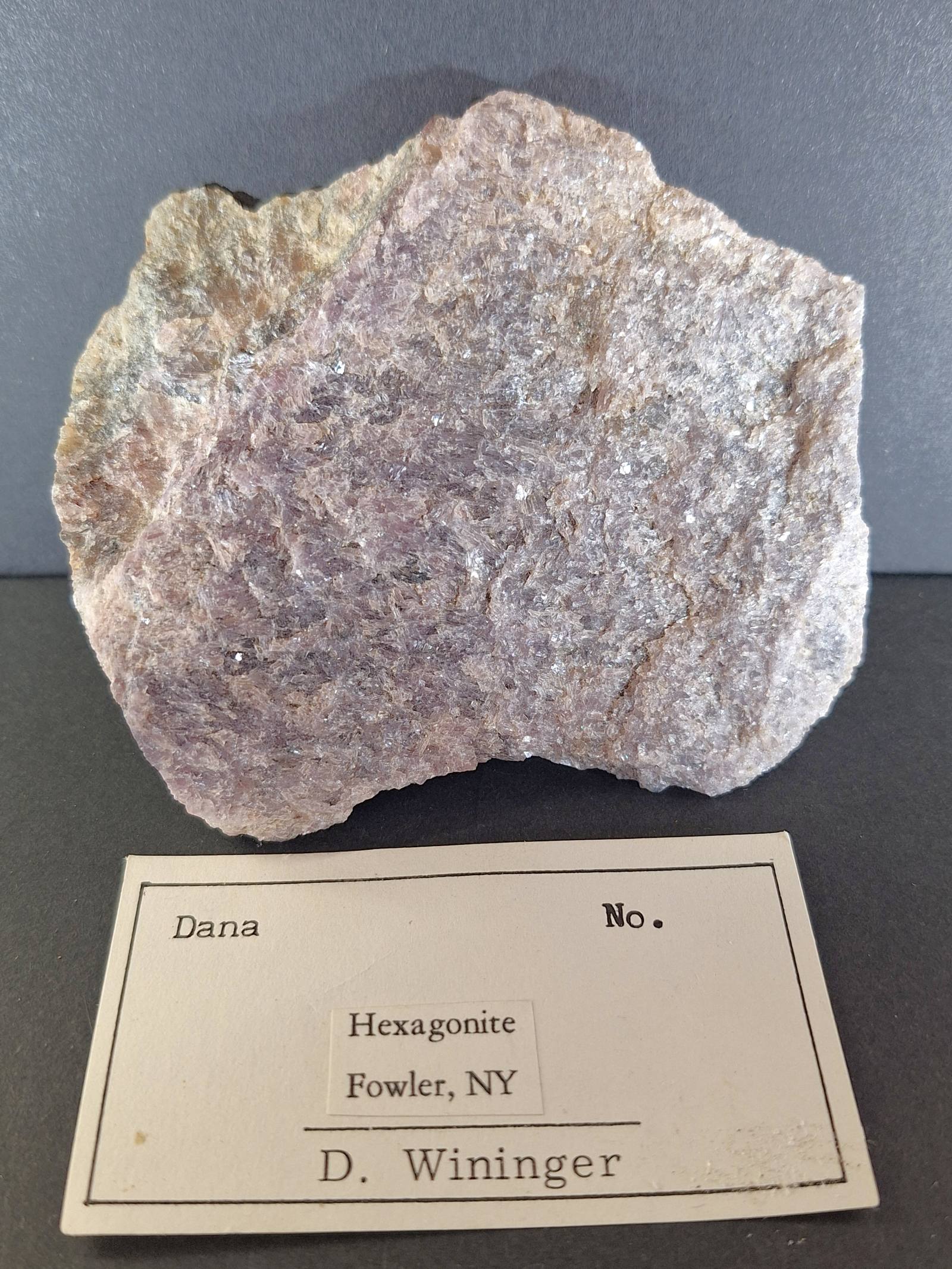
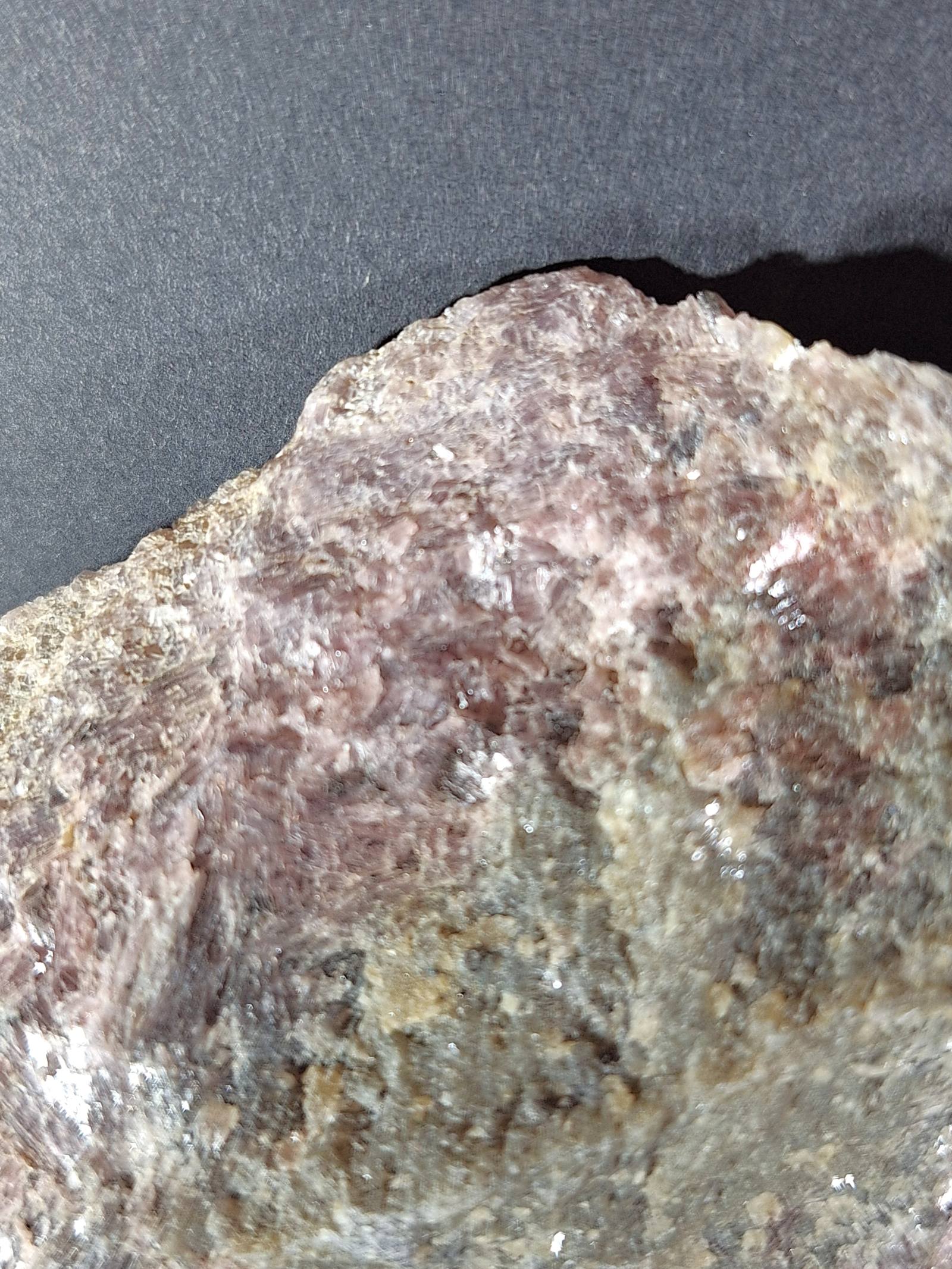
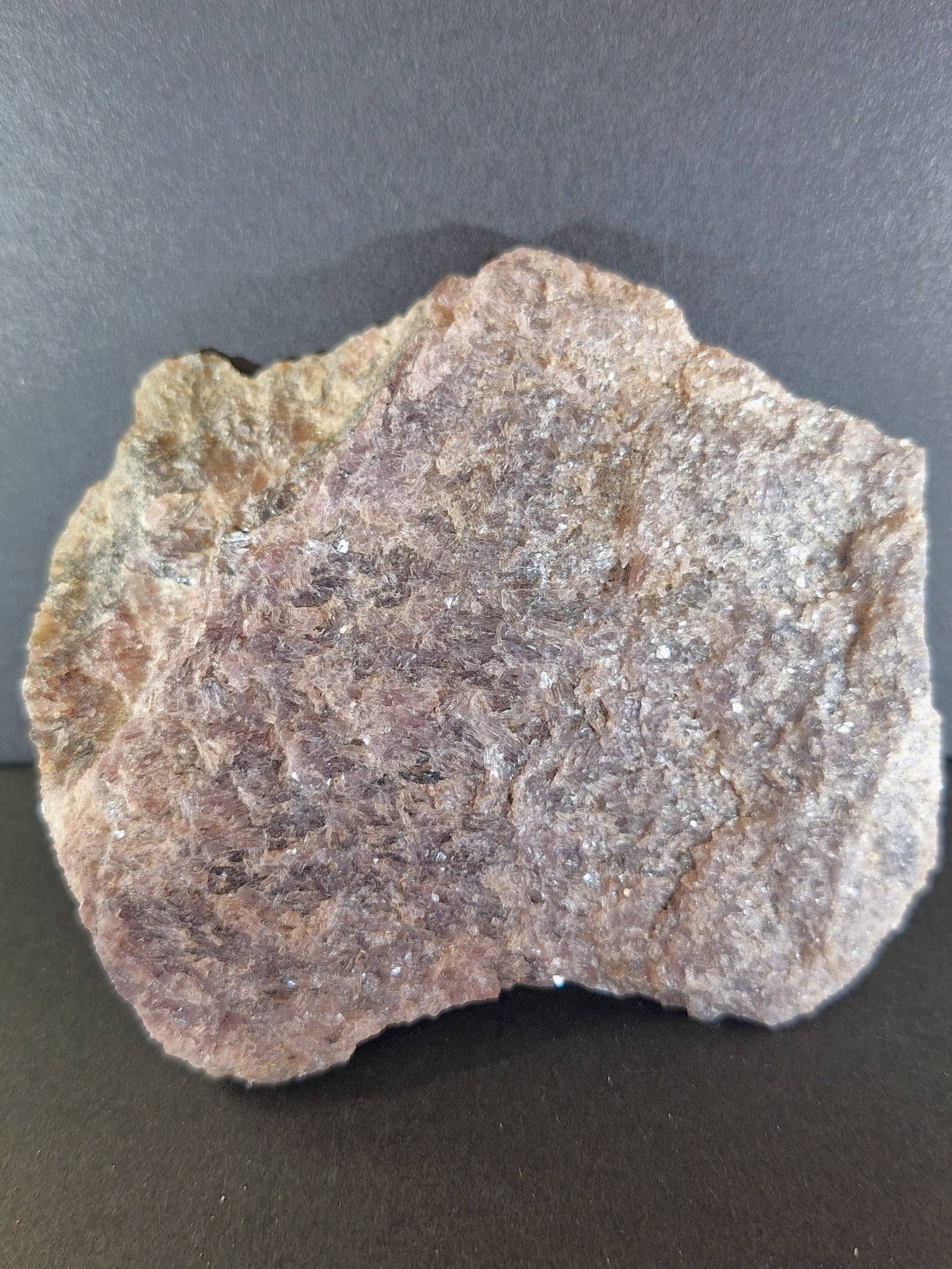
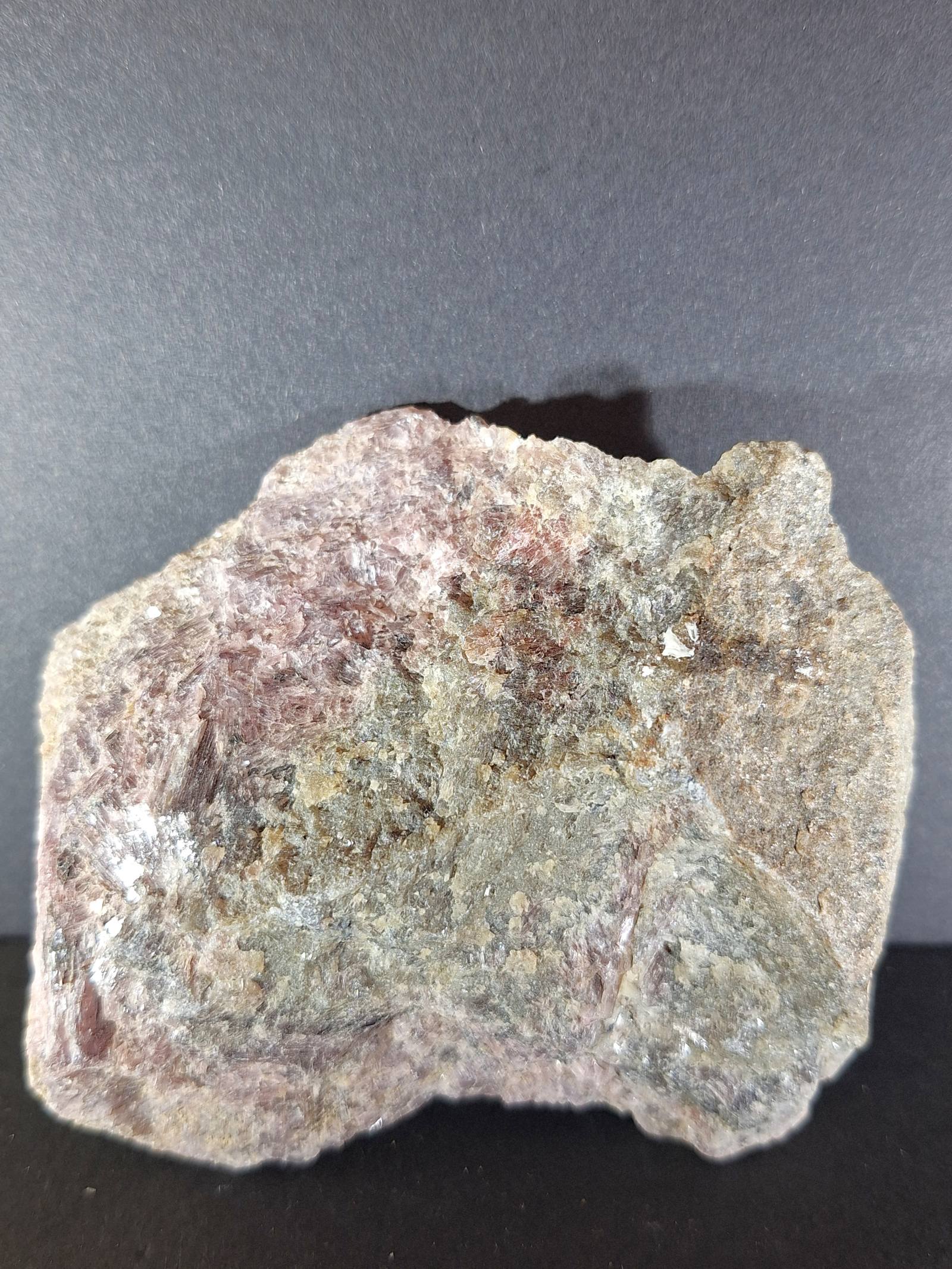
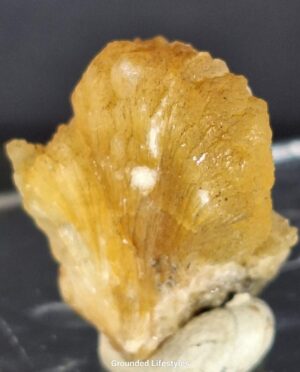
This lavender hexagonite tremolite specimen from Fowler, St. Lawrence County, New York, features a dense growth of fine, interwoven crystals with soft violet-gray coloring and subtle reflective surfaces. Its broad, somewhat flattened form reveals the distinctive fibrous crystal habit of this unusual manganese-bearing mineral. Tan-brown areas along the edges provide a natural contrast to the lavender tones.
Part of the Donald Wininger Collection, assembled during the 1950s and 1960s, this specimen retains its original handwritten locality label reading “Hexagonite / Fowler, NY.” The combination of historic provenance, unusual coloration, and recognizable mineral texture makes it an interesting addition to a collection of American minerals.
Hexagonite: The Purple Variety of Tremolite
Hexagonite is a manganese-bearing variety of tremolite, a calcium-magnesium silicate mineral belonging to the amphibole group. While tremolite commonly occurs in white, gray, or pale green shades, manganese substitution within its crystal structure can produce the lavender, pinkish-purple, and violet colors associated with hexagonite.
Despite its name, hexagonite crystallizes in the monoclinic system rather than the hexagonal system. The name dates to early mineral classifications and remains familiar to collectors today. Tremolite has a Mohs hardness of approximately 5–6 and may develop elongated crystals, parallel growths, or tightly interwoven fibrous aggregates like those visible in this specimen.
Historic Fowler Mineral District, New York
Fowler is situated within the Gouverneur mineral region of northern New York, an area known for its complex Precambrian metamorphic geology and historic talc mining operations. Ancient magnesium-rich carbonate rocks were transformed by intense heat, pressure, and mineral-rich fluids during the Grenville mountain-building events, creating conditions favorable for tremolite and other calcium-magnesium silicate minerals.
Manganese-rich zones within the Fowler talc belt produced distinctive purple hexagonite, sometimes associated with minerals such as braunite, quartz, and red uvite tourmaline. These unusual mineral assemblages helped establish the Fowler area as an important locality for collectors interested in manganese-bearing amphiboles and northeastern American mineralogy.
A Historic Donald Wininger Collection Specimen
Collected during an earlier era of American mineral collecting, this Fowler hexagonite retains its original Donald Wininger Collection label. Historic labels add an important dimension to mineral specimens by preserving their locality and connection to established collections.
The specimen’s closely packed lavender fibers and textured surface are best appreciated under gentle directional lighting, which brings out the subtle reflections within the crystalline growth. It is particularly well suited to a display featuring historic New York minerals, amphibole varieties, or unusual manganese-bearing specimens.
Specimen Details
- Mineral: Hexagonite, a manganese-bearing variety of tremolite
- Locality: Fowler, St. Lawrence County, New York, USA
- Color: Lavender-gray, violet, and tan-brown
- Crystal habit: Fine, densely interwoven fibrous crystals
- Crystal system: Monoclinic
- Mohs hardness: 5–6
- Collection: Donald Wininger Collection, 1950s–1960s
- Provenance: Original “Hexagonite / Fowler, NY” locality label
Display and Care: Hexagonite’s delicate fibrous structure makes an enclosed mineral display case ideal for preserving its natural appearance. As a fibrous amphibole, the specimen should remain undisturbed and should not be brushed, cut, or abraded.
This historic Fowler hexagonite offers collectors a distinctive example of purple tremolite, combining the mineralogical character of northern New York’s manganese-rich deposits with the provenance of the Donald Wininger Collection.
Care and Display
Do not cut, grind, polish, brush aggressively, or otherwise disturb the fibers. Keep it enclosed in a clear specimen box or sealed display case, away from children and pets, and wash hands after handling.
Specimen size: 3.5X.25×2.75 inches. Locality: Fowler, New York. Provenance: Donald Wininger Collection, assembled during the 1950s–1960s. The individual specimen photographed is the one offered.
Only logged in customers who have purchased this product may leave a review.

Reviews
There are no reviews yet.