Description
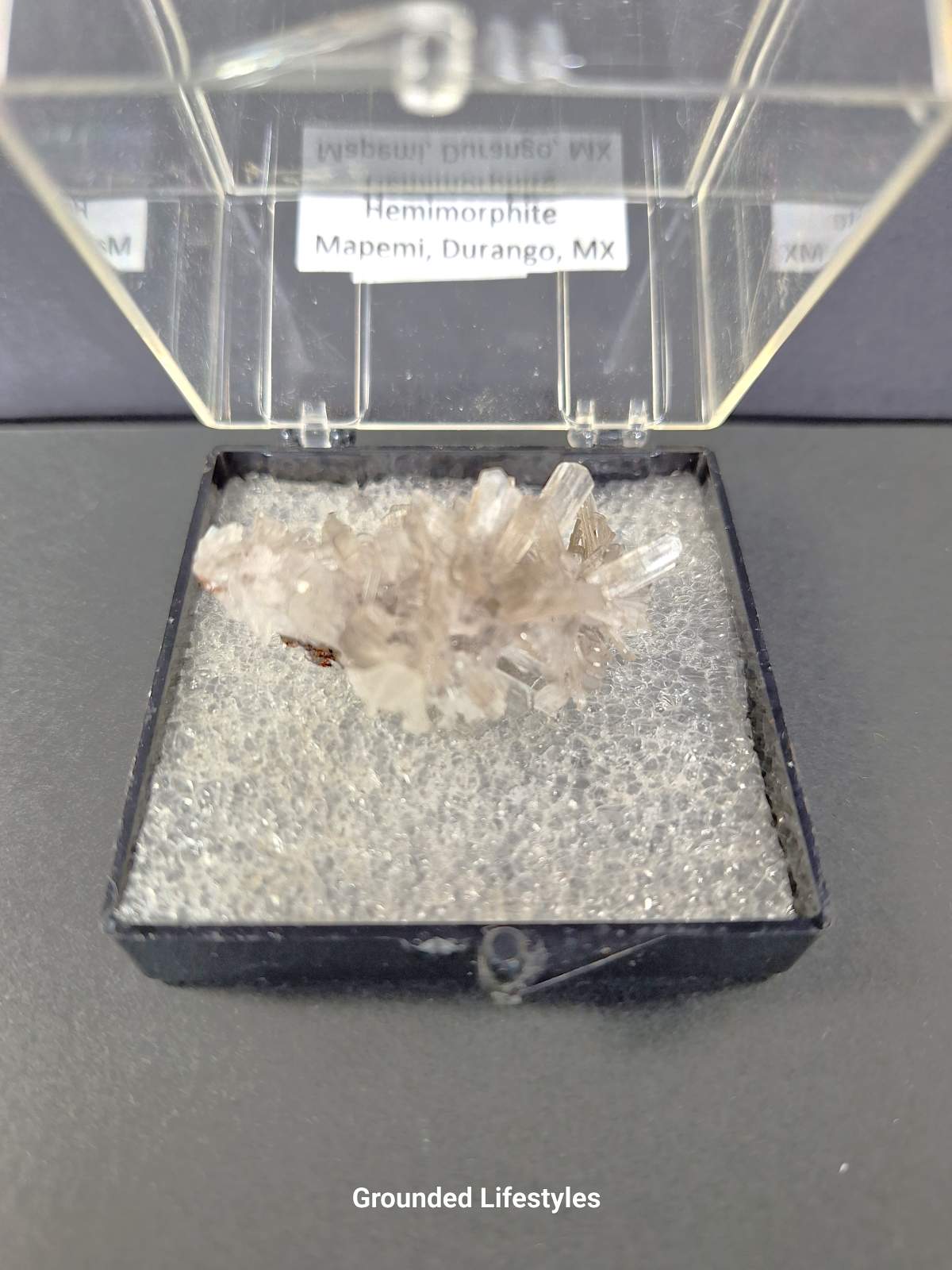
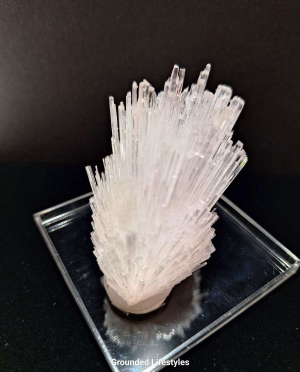
Hemimorphite from Mapimí, Durango, Mexico comes from the Donald Wininger Collection and represents one of the mineral habits for which the famous Ojuela Mine is particularly well known.
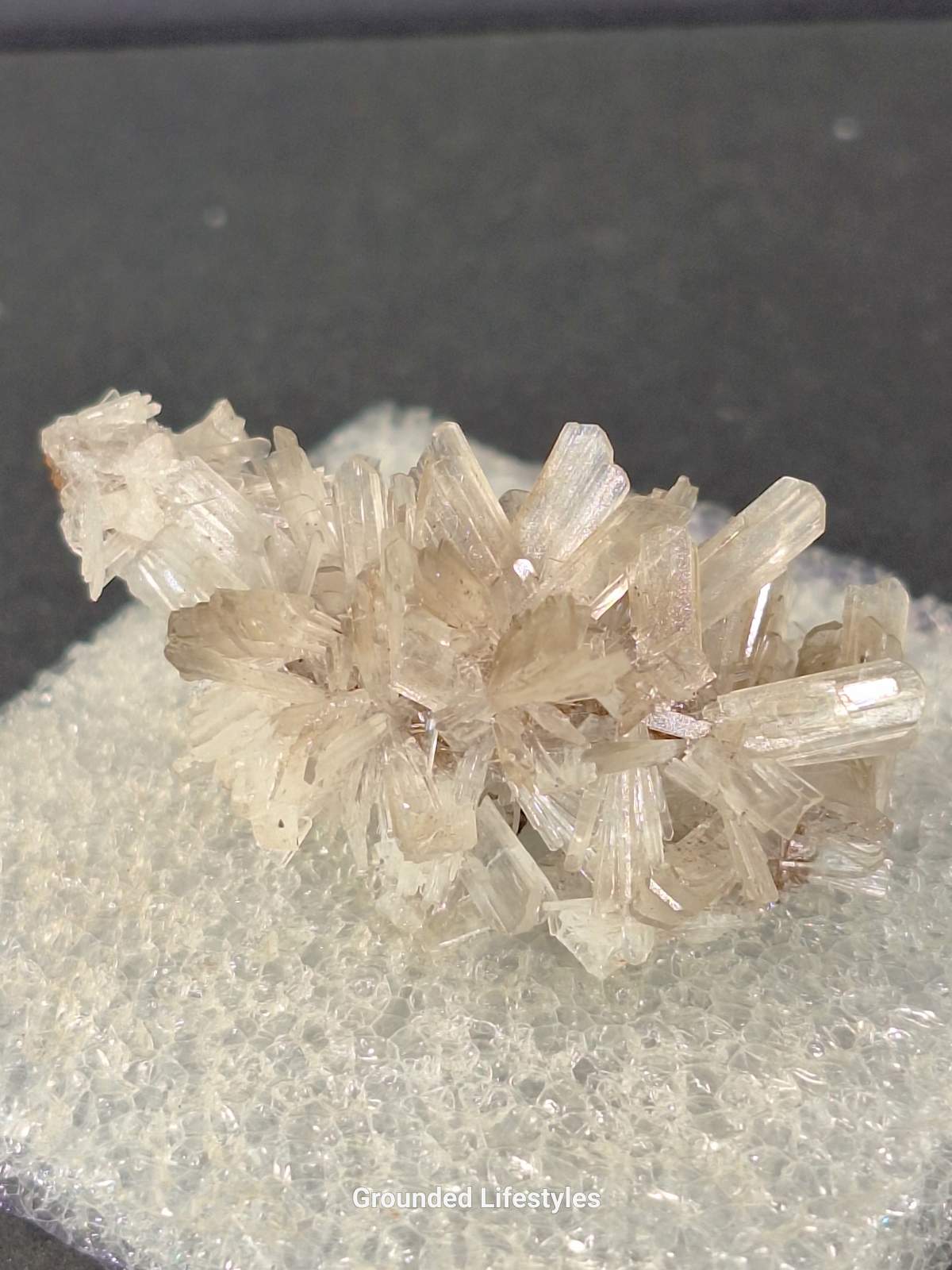
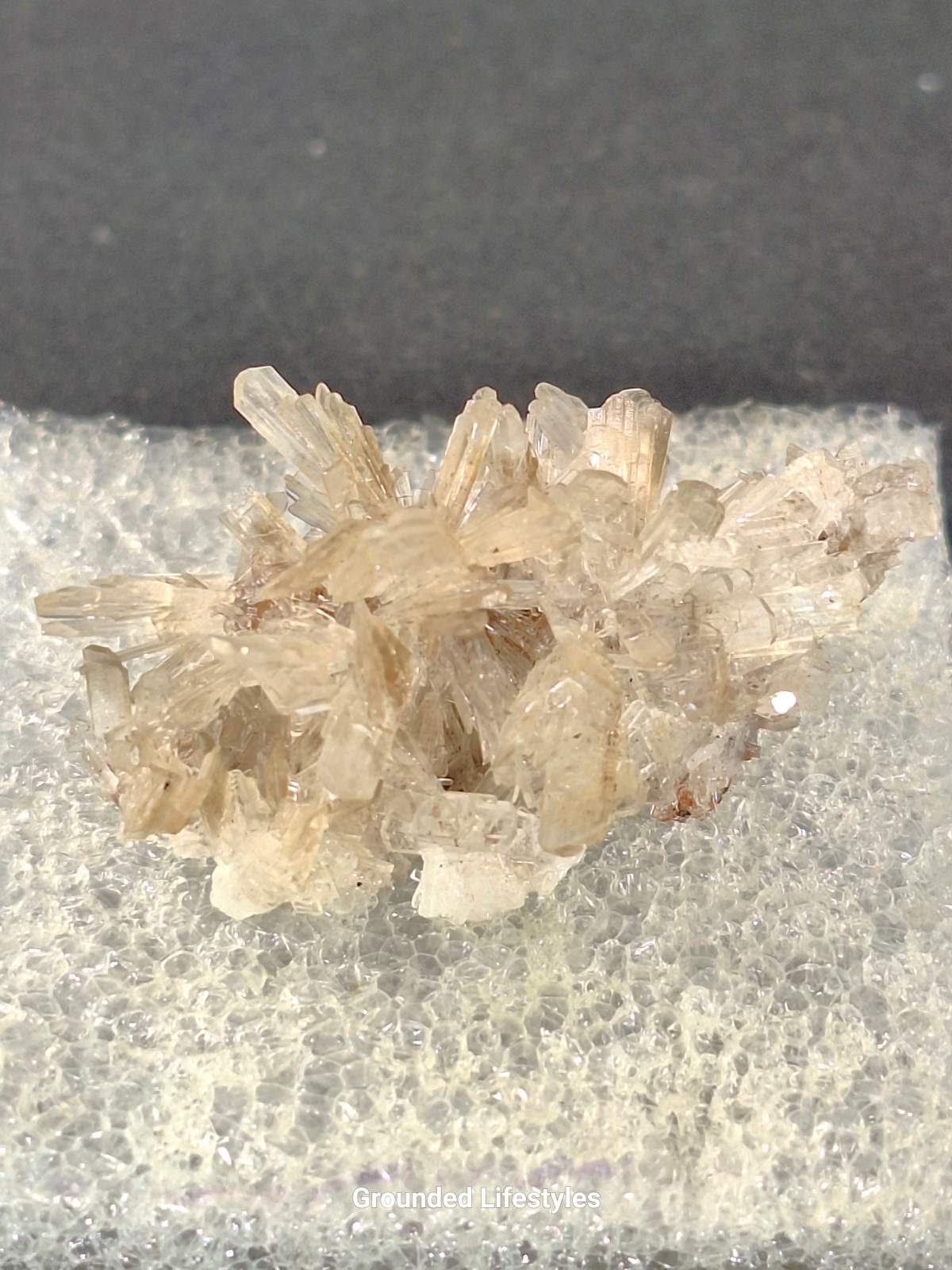
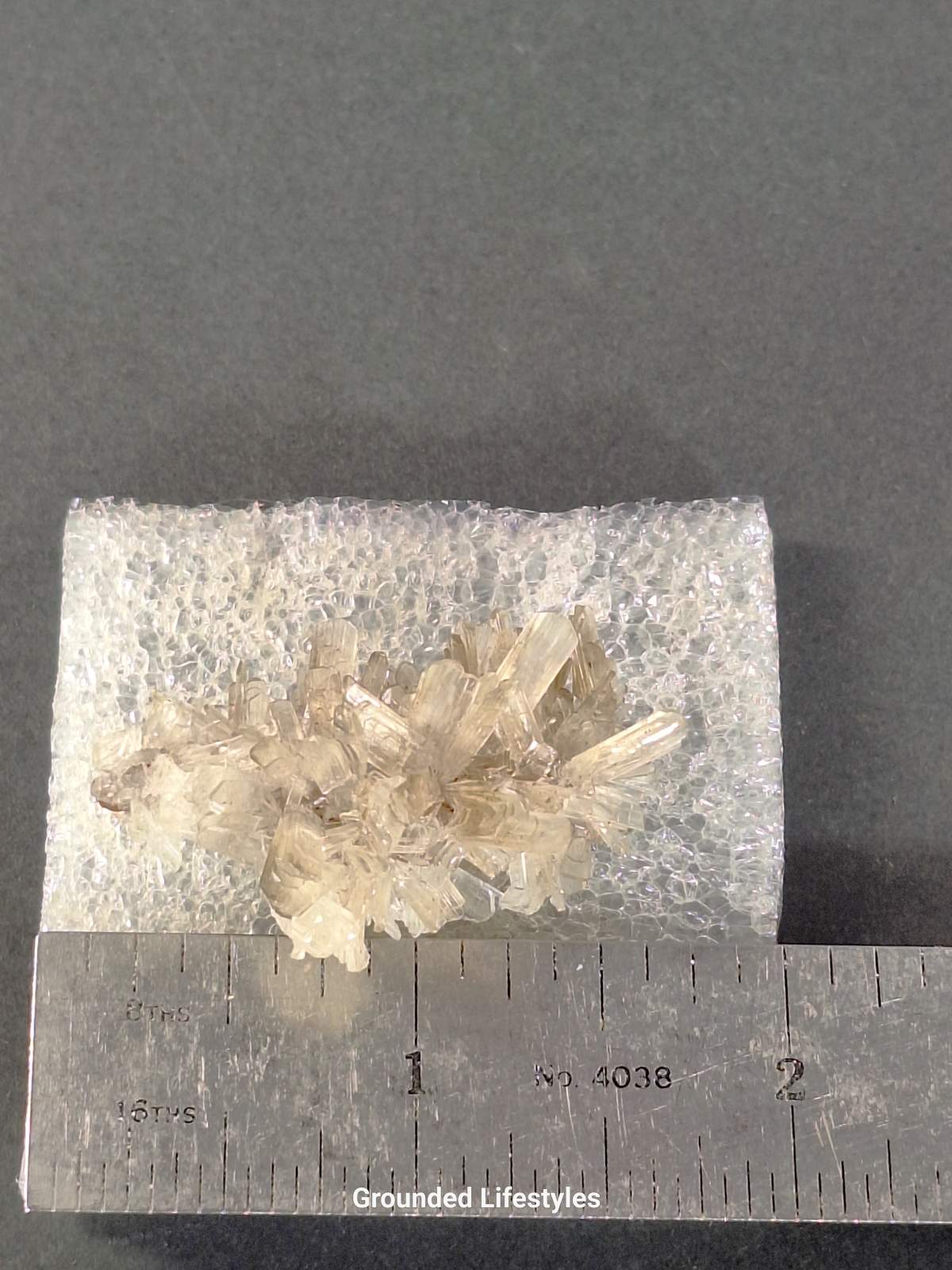
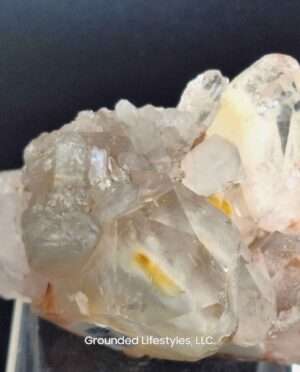
Measuring approximately 1.5 inches long, 1 inch wide, and 0.5 inches high, the specimen consists of numerous colorless to pale translucent Hemimorphite crystals growing together in radiating sprays. The elongated crystals have a bright vitreous luster, giving this relatively small specimen considerable sparkle when viewed under direct light.
It comes in the 2.25-inch Perky display box shown, which is especially useful for protecting the delicate crystal formations.
What Makes This Specimen Different
Hemimorphite can look dramatically different depending upon how it forms. Many customers recognize the mineral as pale blue botryoidal material, but crystallized Ojuela Hemimorphite can be almost colorless and develop sharp, elongated crystals.
Looking closely at this specimen, the crystals form prismatic to bladed sprays and fan-like groups, with individual crystals projecting outward in several directions. Some are nearly transparent while others appear milky or translucent depending upon thickness and internal features.
This style is characteristic of collectible Ojuela material. Documented specimens from the mine include sharp, lustrous prismatic crystals, sword-shaped blades, and distinctive radiating or sheaf-like formations.
Mineral Information
| Property |
Information |
| Mineral |
Hemimorphite |
| Chemical Formula |
Zn₄Si₂O₇(OH)₂·H₂O |
| Mineral Class |
Sorosilicate |
| Crystal System |
Orthorhombic |
| Mohs Hardness |
4.5–5 |
| Luster |
Vitreous to pearly |
| Appearance |
Colorless to pale translucent |
| Crystal Habit |
Prismatic/bladed radiating sprays |
| Locality |
Ojuela Mine, Mapimí, Durango, Mexico |
| Collection |
Donald Wininger Collection |
How Hemimorphite Formed at Ojuela
Hemimorphite is a secondary zinc mineral. Rather than crystallizing with the original deep-seated sulfide ores, it develops as zinc-bearing minerals are chemically altered in the oxidized portions of an ore deposit.
At Ojuela, groundwater and oxygen acted upon primary zinc-bearing ores over immense periods of time. Zinc was mobilized and redeposited under favorable chemical conditions, producing Hemimorphite along with the extraordinary suite of secondary minerals for which Ojuela became famous.
Open fractures and cavities gave some Hemimorphite crystals room to grow freely, creating the delicate sprays visible on this specimen.
Metaphysical Properties
In modern crystal traditions, Hemimorphite is associated with personal growth, compassionate communication, self-awareness, emotional balance, and openness to change.
Clear and colorless Hemimorphite is also symbolically associated with clarity of intention and honest self-expression.
These associations are traditional metaphysical interpretations and are not medical claims.
Display & Care
This specimen’s radiating crystals are its greatest visual feature—and also the portion requiring the most protection. Hemimorphite is harder than minerals such as calcite, but thin projecting crystals can still chip or break from impact.
Keep the specimen in its included 2.25-inch Perky box whenever practical. Handle it by the base rather than by the crystal sprays and clean only with a very soft, dry brush.