Description
Fluoro-Richterite from Bancroft, Ontario, Canada comes from the Donald Wininger Collection and is a particularly attractive example of the unusual amphibole mineralization found throughout this famous Canadian collecting region.
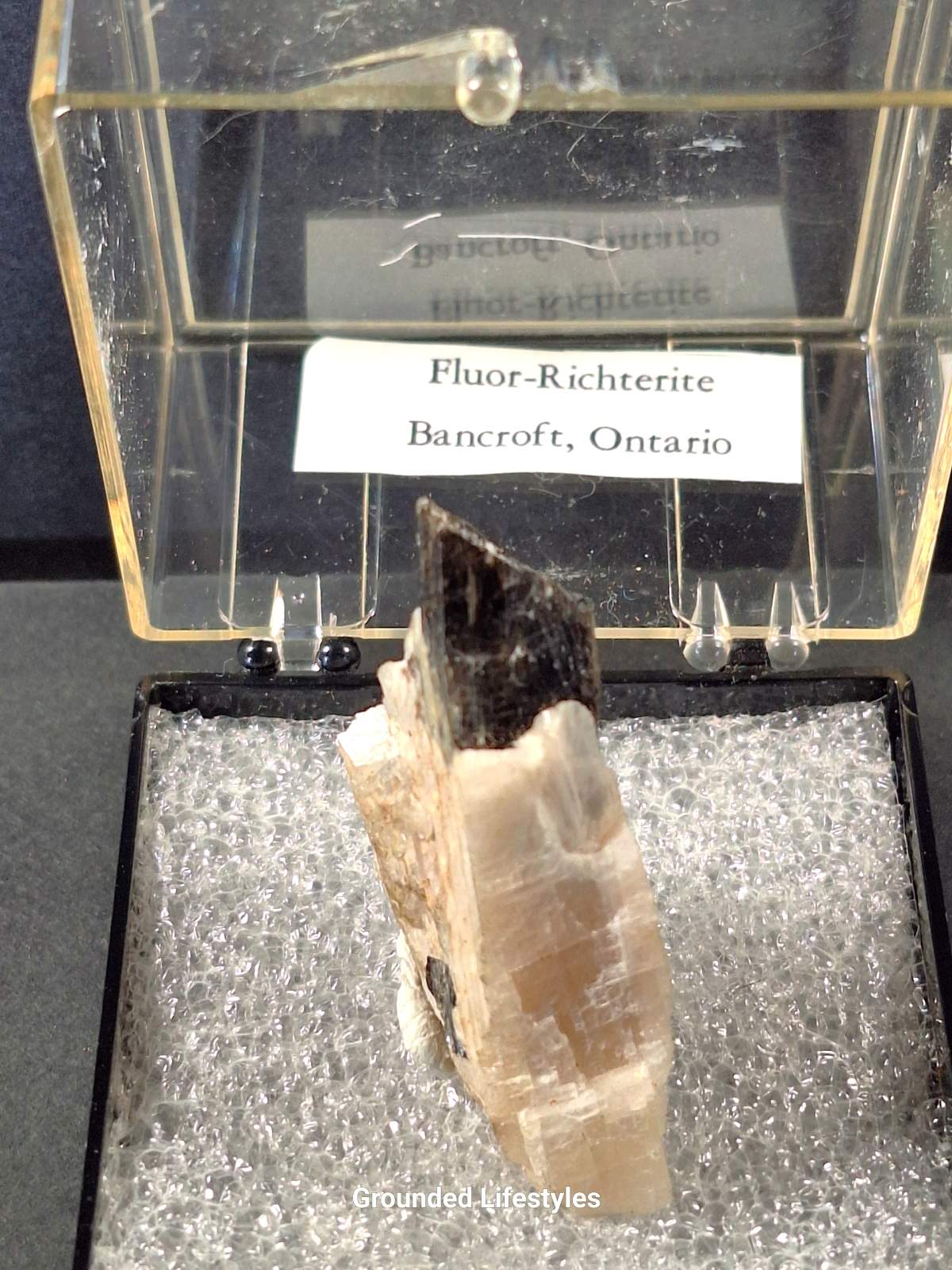
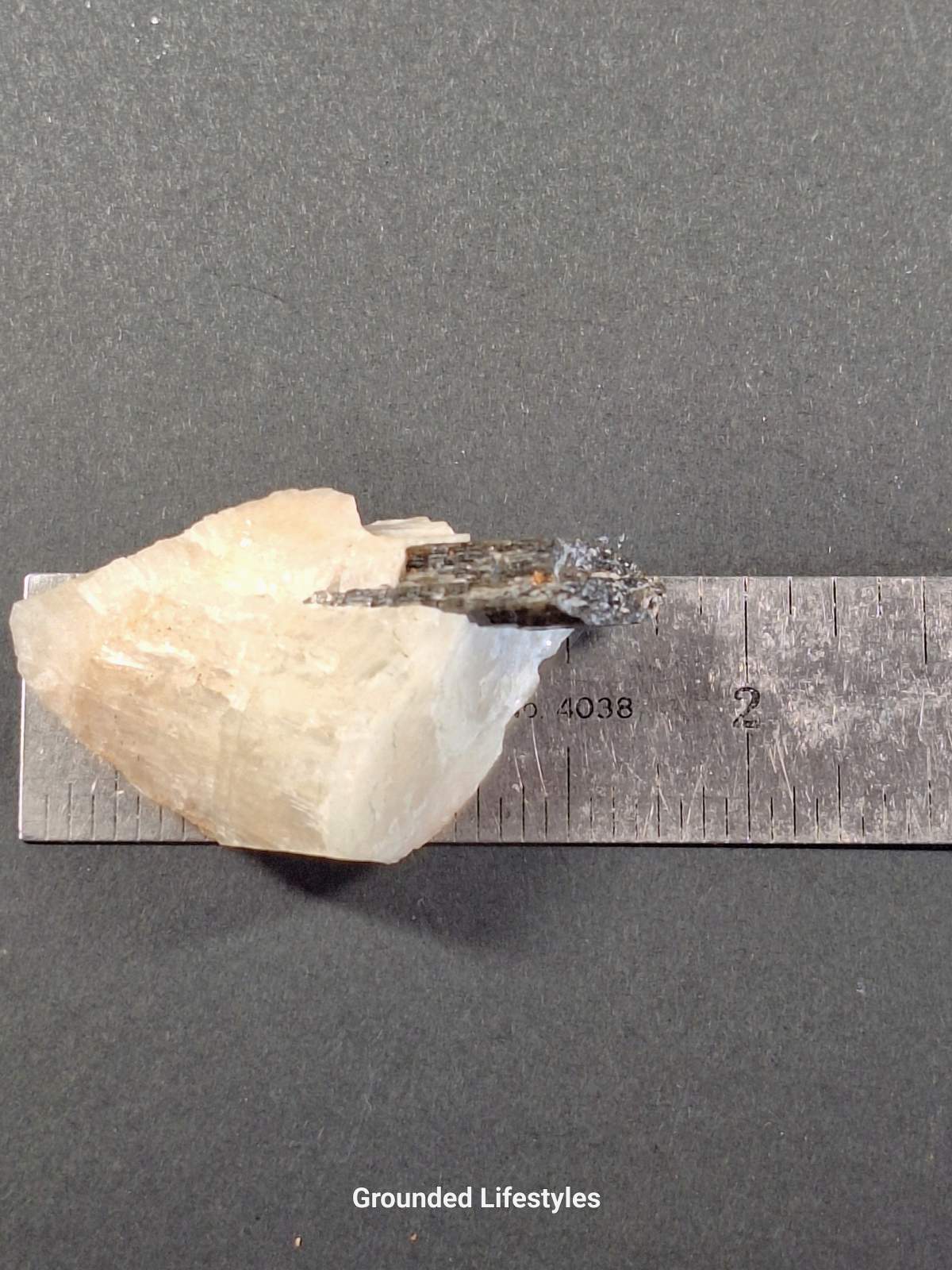
The specimen measures approximately 1.75 inches long, 0.50 inches wide, and 1.25 inches high and comes housed in the 2 × 2 × 2 inch Perky box shown.
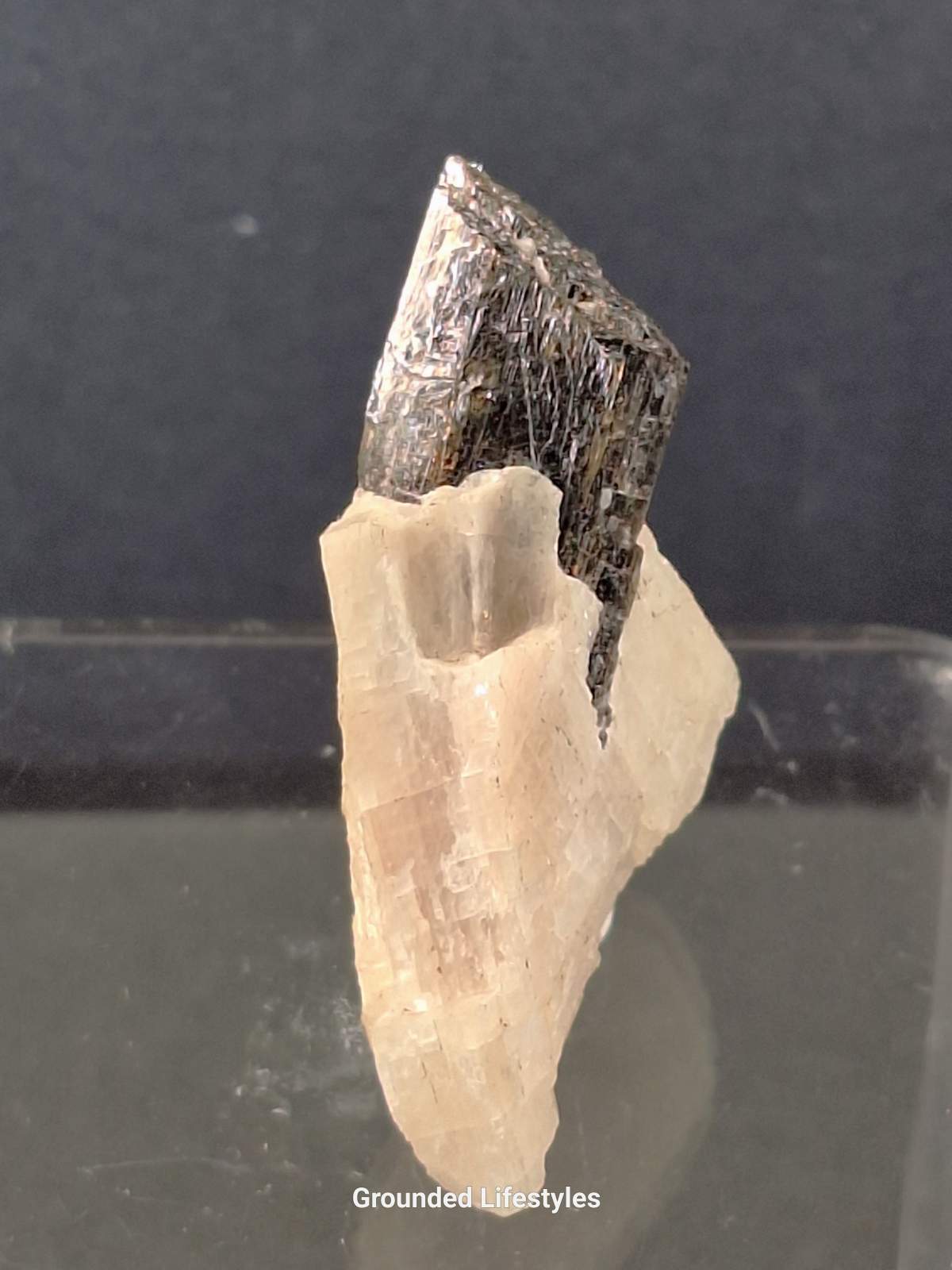
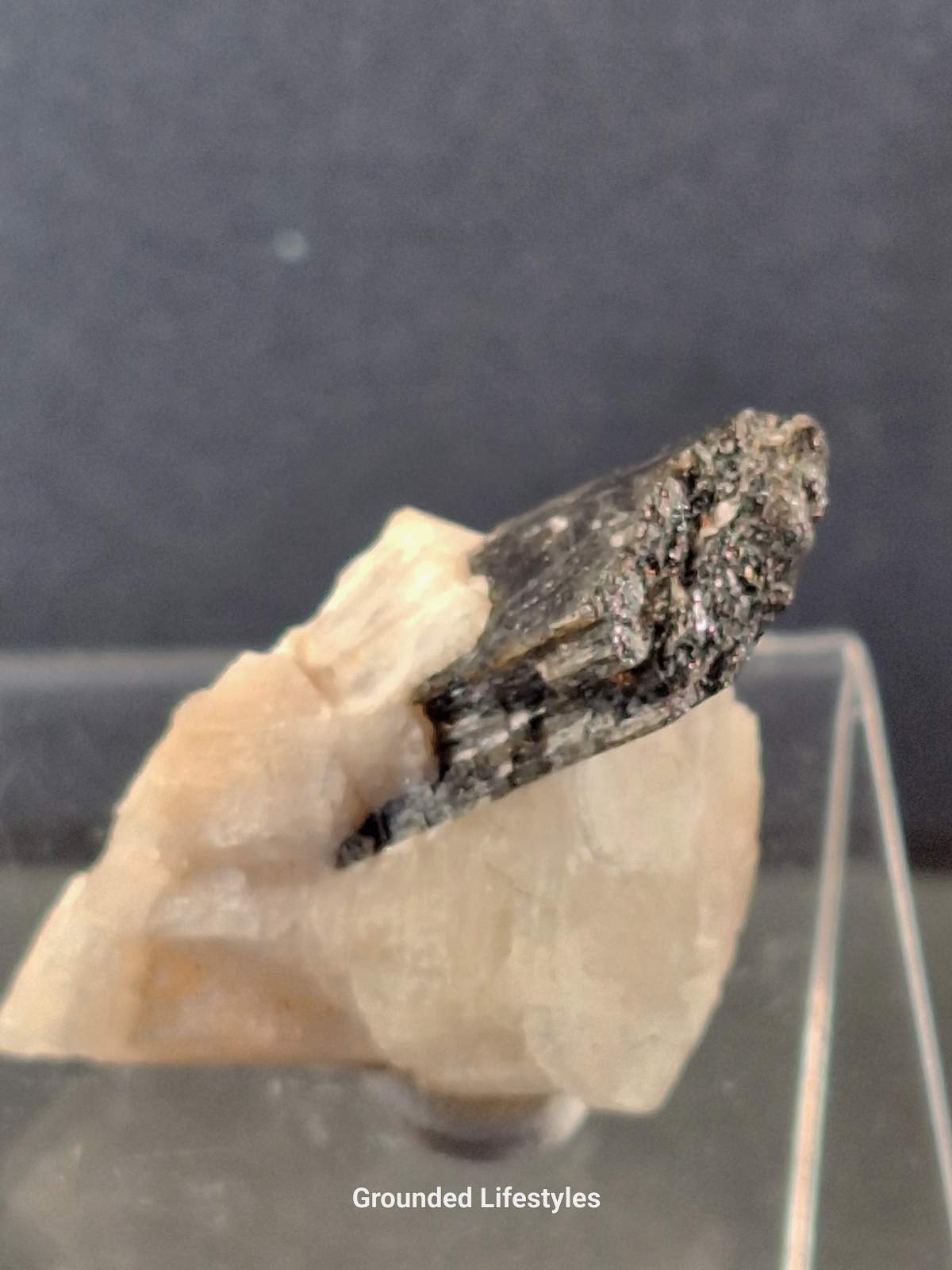
What immediately draws the eye is the contrast. A substantial dark Fluoro-Richterite crystal projects upward from a much lighter matrix. In the photograph, the exposed crystal displays pronounced lengthwise striations and a bright reflective luster, while the surrounding pale matrix provides a natural frame around it.
Why Bancroft Fluoro-Richterite Is Special
The Bancroft region is internationally known for an extraordinary diversity of minerals created during the complex geological history of the Grenville Province.
Fluoro-Richterite is one of the more distinctive species associated with the region’s unusual calcite vein-dykes. Geological work on these structures indicates an approximately 930-million-year-old carbonatitic intrusive event, which introduced unusual mineral chemistry into the already ancient metamorphic rocks of the region.
Fluoro-Richterite crystals can occur embedded within coarse crystalline calcite, sometimes weathering free as complete prisms. Documented Ontario specimens range from bluish-gray and brown to nearly black.
The specimen pictured here shows that classic relationship particularly well: a dark amphibole crystal surrounded by pale carbonate matrix.
Mineral Information
| Property |
Information |
| Mineral |
Fluoro-Richterite |
| Mineral Group |
Amphibole |
| Formula |
{Na}{CaNa}{Mg₅}(Si₈O₂₂)(F,OH)₂ |
| Crystal System |
Monoclinic |
| Mohs Hardness |
Approximately 5–6 |
| Luster |
Vitreous |
| Appearance |
Dark gray to nearly black |
| Habit |
Elongated prismatic crystal |
| Matrix |
Pale calcite-rich material |
| Locality |
Bancroft area, Ontario, Canada |
| Collection |
Donald Wininger Collection |
How These Crystals Formed
The story behind this specimen is one of the reasons Bancroft minerals are so fascinating. During the Grenville geological events roughly a billion years ago, the region experienced intense metamorphism and igneous activity. Later carbonate-rich fluids or melts penetrated fractures within the metamorphic rocks, forming the unusual calcite vein-dykes found throughout the Bancroft-Tory Hill region. These systems provided a chemically unusual environment rich enough to grow large crystals of Fluoro-Richterite together with minerals such as calcite, phlogopite, apatite, titanite and various pyroxenes.
Metaphysical Properties
Within modern mineral and crystal traditions, Fluoro-Richterite is associated with grounding, determination, inner strength, focus and maintaining stability during periods of change.
Its strong, elongated crystal form is also symbolically associated with direction and purposeful movement.
These associations are traditional metaphysical interpretations rather than medical claims.
Display & Care
The specimen’s naturally dramatic architecture makes it particularly well suited for display. The pale matrix emphasizes the dark Fluoro-Richterite crystal without the need for artificial enhancement.
Keep it in the included 2-inch Perky box when possible to protect the projecting crystal. Avoid chemical cleaners and ultrasonic cleaning. Dust gently with a soft, dry artist’s brush and handle the specimen by the matrix rather than the exposed crystal.