Description
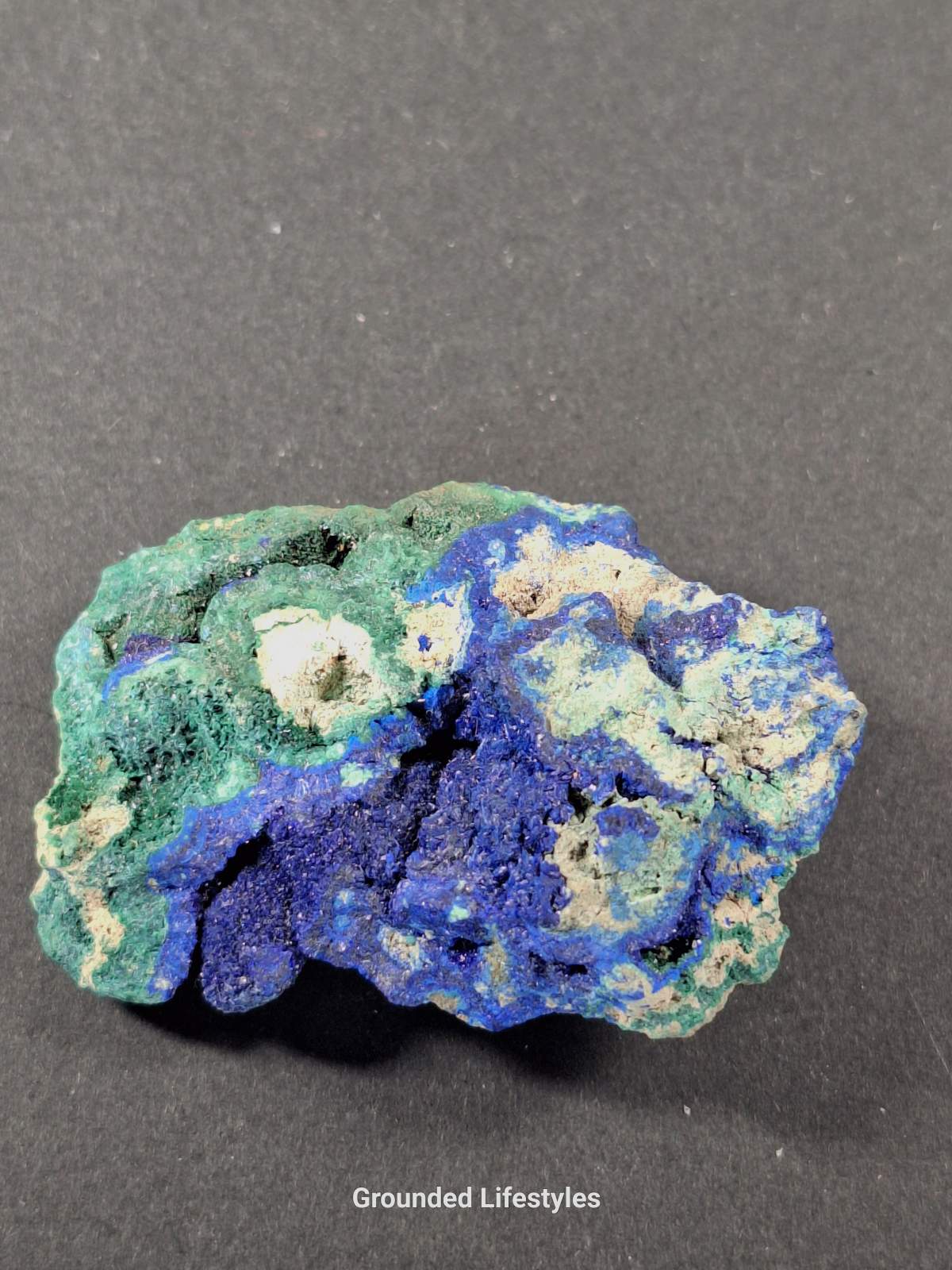
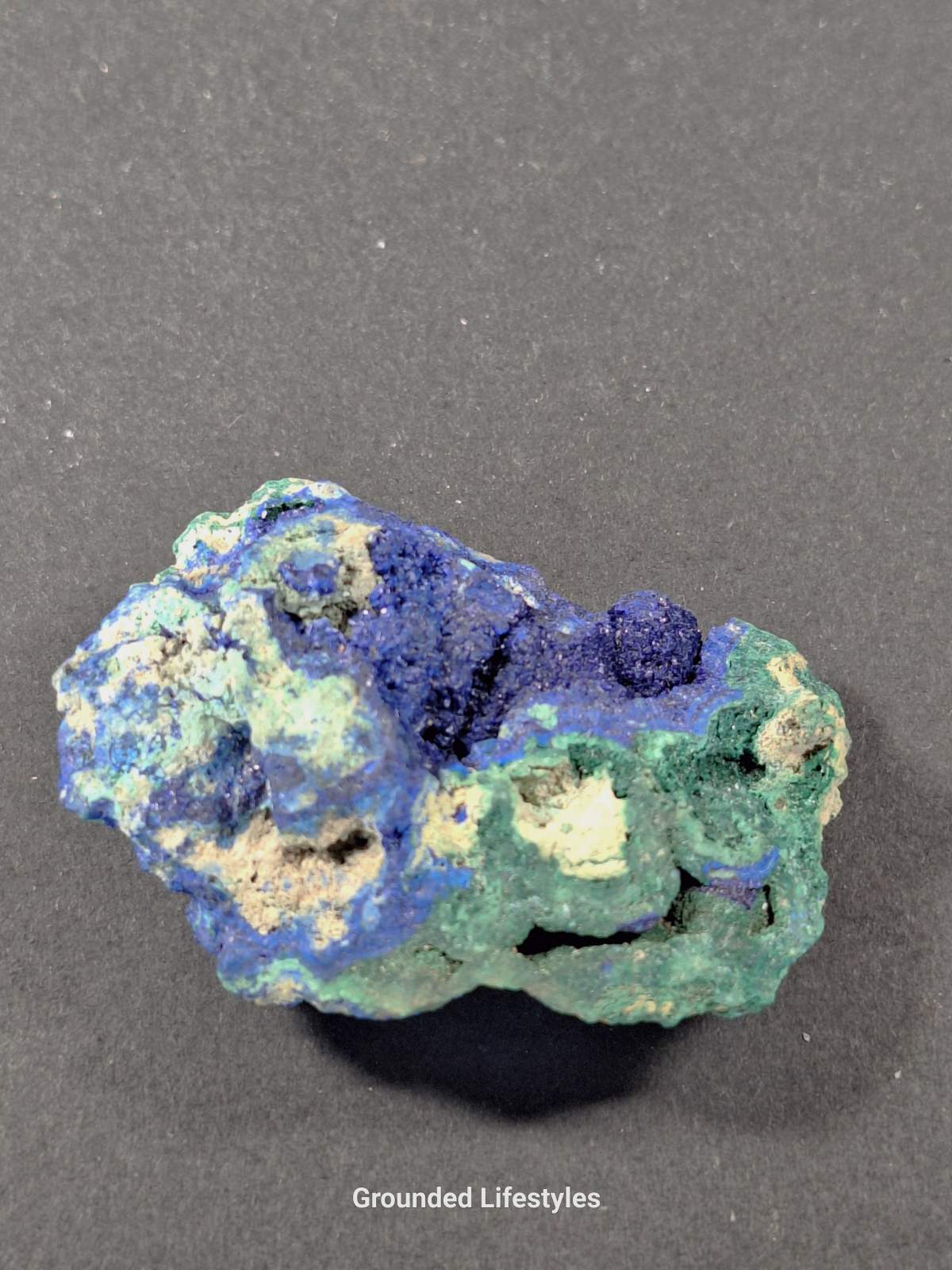
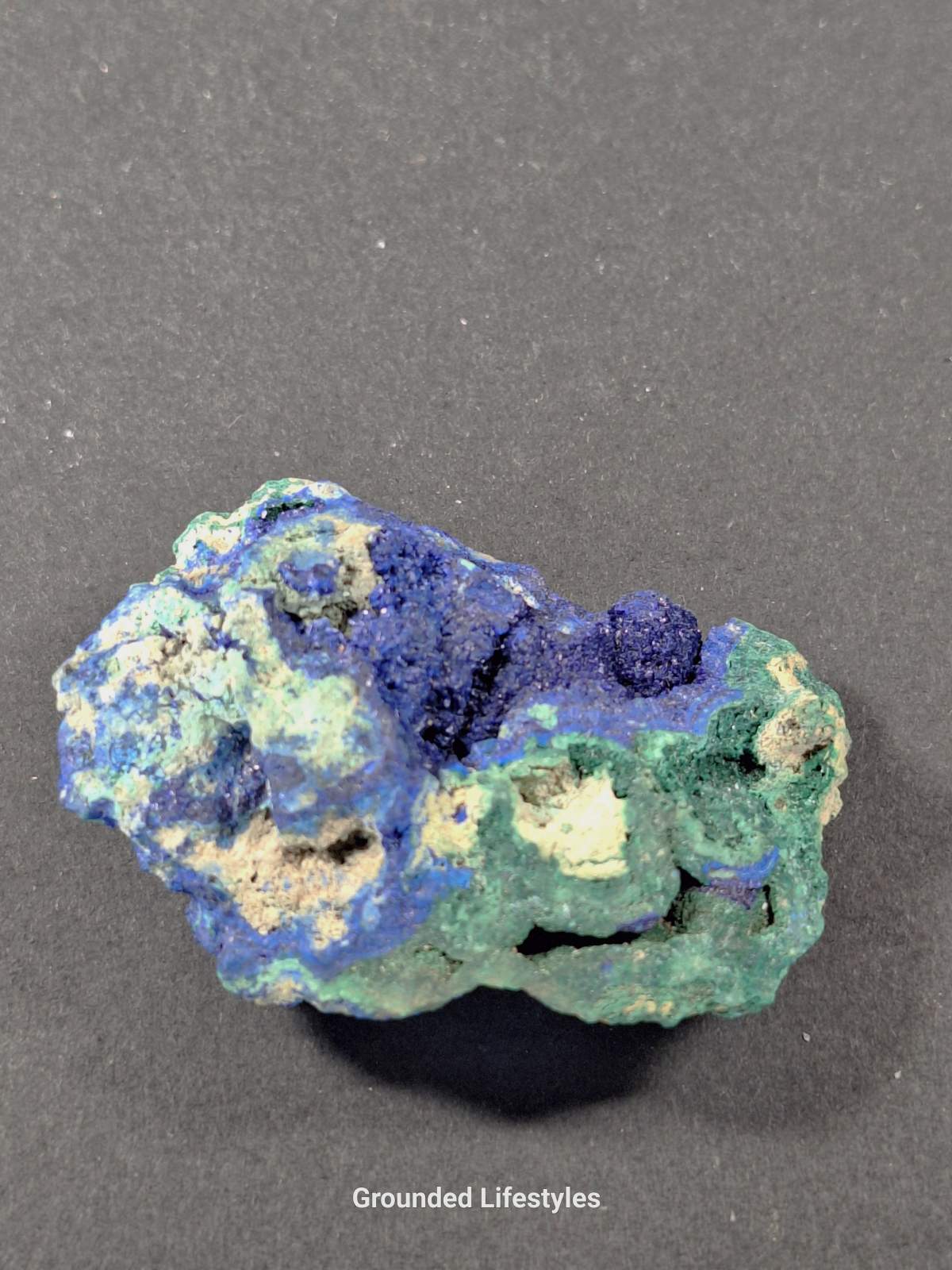
Chrysocolla with Azurite from Bisbee, Arizona comes from the Donald Wininger Collection and captures the colors that made this historic mining district famous.
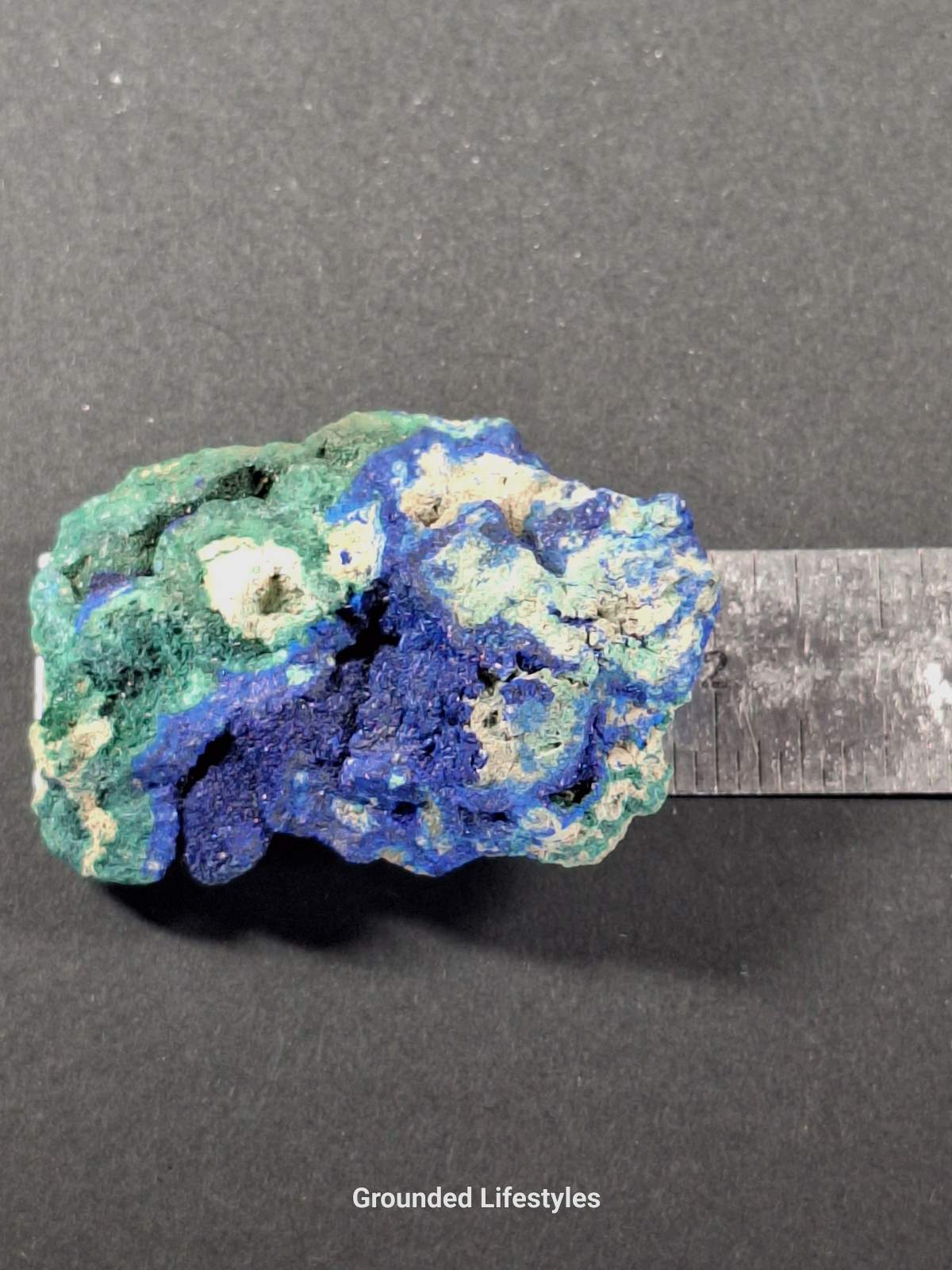
The specimen measures approximately 2 inches long, 0.5 inches wide, and 0.5 inches high.
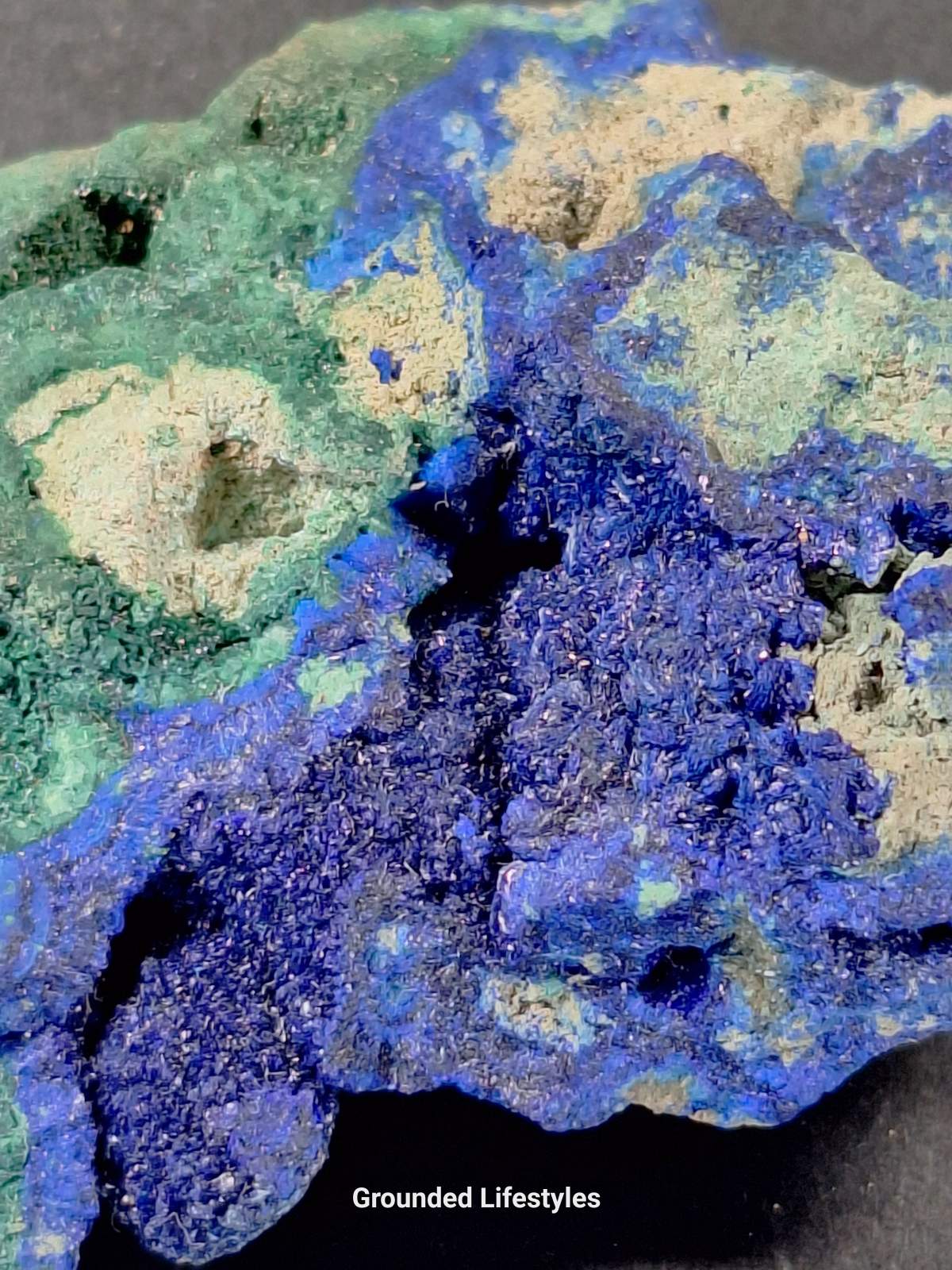
Rather than being dominated by one large crystal, this piece is about color, texture, and mineral association. Deep royal-blue Azurite spreads through the center of the specimen, surrounded by areas of green to blue-green Chrysocolla. Pale areas of matrix break up the color and make the blues and greens stand out even more strongly.
Looking closely at the photograph, portions of the blue surface have a fine sparkling texture, while the Chrysocolla develops softer rounded and irregular formations. Small cavities running through the specimen add depth and reveal additional mineralization within the piece.
Located in the Mule Mountains of Cochise County, the Bisbee/Warren Mining District became one of Arizona’s major copper-producing regions. Mining exposed an extraordinary oxidized mineral zone containing Azurite, Malachite, Chrysocolla, Cuprite and numerous other secondary copper minerals.
The district became especially famous for Azurite and Malachite. Historical accounts describe rich underground cavities with green Malachite-covered walls, brilliant blue Azurite crystals and Calcite formations. Bisbee Azurite remains among the most sought-after American Azurite in serious mineral collecting.
Mineral Information
| Property |
Chrysocolla |
Azurite |
| Composition |
Hydrated copper aluminum silicate |
Copper carbonate hydroxide |
| Formula |
Cu₂−xAlx(H₂−xSi₂O₅)(OH)₄·nH₂O |
Cu₃(CO₃)₂(OH)₂ |
| Mineral Class |
Silicate-related copper mineral |
Carbonate |
| Typical Color |
Blue, turquoise, blue-green, green |
Deep blue to azure blue |
| Mohs Hardness |
Variable, generally soft |
3.5–4 |
| Formation |
Secondary copper mineral |
Secondary copper mineral |
| Locality |
Bisbee, Cochise County, Arizona |
Bisbee, Cochise County, Arizona |
The great historic Bisbee copper mines are no longer operating as major commercial copper producers.
Bisbee’s mining district developed through numerous underground mines, including the famous Copper Queen complex, and later through large-scale open-pit operations such as the Lavender Pit. Today, the district is primarily historic rather than an active source continuously supplying the mineral market.
Metaphysical Properties
In modern crystal traditions, Chrysocolla is associated with communication, tranquility, personal expression and emotional balance.
Azurite is traditionally associated with intuition, insight, concentration and expanded awareness. Its deep blue coloration is commonly connected symbolically with the third-eye chakra.
Together, Chrysocolla and Azurite are often used symbolically for clear communication, thoughtful reflection, creativity and speaking with intention.
These are traditional metaphysical associations and are not medical claims.
Display & Care
This specimen benefits from bright, neutral lighting because the light reveals the distinction between the deep blue Azurite and greener Chrysocolla.
Both minerals deserve careful handling. Avoid prolonged soaking, acids, chemical cleaners and ultrasonic cleaning. A soft, dry artist’s brush is safest for routine dust removal.
Because this is a copper-bearing mineral specimen, wash your hands after direct handling and avoid cutting, grinding or creating mineral dust.